









statue en 30 secondes
- A statue is a 3D artistic representation of a person or animal, often made of stone or metal.
- Statues are typically found in public spaces like parks, squares, and museums as landmarks or memorials.
- The word is a countable noun and is often confused with 'statute' (law) or 'stature' (height/reputation).
- Creating a statue involves sculpting, carving, or casting, and they are valued for their permanence and historical significance.
A statue is a primary form of three-dimensional artistic expression, specifically a sculpture representing one or more people or animals, or occasionally an abstract concept personified. Unlike a painting, which is two-dimensional, a statue occupies physical space and can be viewed from all sides. Historically, statues have served as vessels for memory, religious devotion, and political power. When we speak of a statue, we are usually referring to a work that is life-sized or larger, though the term can technically apply to smaller figures as well. The essence of a statue lies in its permanence; it is an attempt to freeze a moment, a person, or an idea in a durable medium like stone or metal so that it may withstand the passage of time.
- Materiality
- Statues are typically crafted from enduring materials. Marble is prized for its translucent quality that mimics human skin, while bronze is favored for its strength and ability to capture fine detail through casting.
- Scale
- A statue is often 'monumental' when it exceeds life size, intended to inspire awe or represent the greatness of the subject. Smaller versions are often called figurines or statuettes.
- Subject Matter
- While most statues depict humans (anthropomorphic), they can also depict deities, animals (zoomorphic), or mythological creatures like centaurs or dragons.
The ancient Greeks believed that a statue was not just a representation of a god, but a physical dwelling place for the divine spirit during rituals.
In modern contexts, statues are frequently found in public squares, parks, and government buildings. They serve as landmarks and 'silent witnesses' to history. For example, the Statue of Liberty is perhaps the most famous statue in the world, symbolizing freedom and welcoming immigrants to the United States. The process of creating a statue involves either subtractive methods (carving away from a block of stone) or additive methods (modeling in clay and then casting in metal). This physical labor adds to the perceived value and gravitas of the object.
The bronze statue of the thinker shows a man lost in deep reflection, his chin resting on his hand.
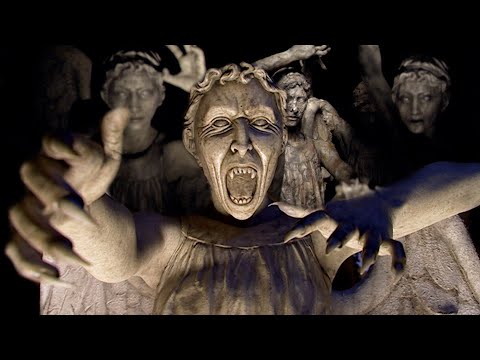
The cultural significance of statues cannot be overstated. They are often the focal point of public debate, especially when they represent historical figures whose legacies are being re-evaluated. To 'topple a statue' is a powerful symbolic act of revolution or social change. Conversely, to 'erect a statue' is an act of highest honor. In literature and film, statues often represent the 'uncanny'—objects that look human but lack life, sometimes coming to life in supernatural tales.
Walking through the museum, I felt the cold eyes of the marble statue following me across the room.
- Equestrian Statue
- A specific type of statue showing a person on horseback, common in military memorials.
- Bust
- A statue consisting only of the head, neck, and shoulders of a person.
The town square features a magnificent statue of the founding father, standing tall amidst the pigeons.
Finally, the word 'statue' is often used metaphorically. If someone stands 'like a statue,' they are completely still, perhaps due to fear, concentration, or shock. This highlights the defining characteristic of the object: its absolute immobility. Whether it is a religious icon in a cathedral or a modern abstract figure in a corporate lobby, a statue demands that the viewer stop and observe, bridging the gap between the past and the present through its physical presence.
The park was filled with various statues of local heroes, each telling a different story of the city's heritage.
Using the word statue correctly involves understanding its grammatical role as a countable noun and its typical collocations. You can have one statue or many statues. It is most frequently paired with verbs that describe its creation, its placement, or its appearance. For instance, an artist sculpts or carves a statue. A city commissions or unveils a statue. A tourist photographs or admires a statue. Because statues are physical objects, they are often described by their material (marble, bronze, stone, clay) or their size (colossal, life-sized, miniature).
- Verbs of Creation
- To carve, to cast, to mold, to sculpt, to fashion. 'The artist spent three years carving the statue from a single block of granite.'
- Verbs of Placement
- To erect, to install, to place, to situate, to unveil. 'The committee decided to erect a statue in the center of the plaza.'
- Verbs of State
- To stand, to tower, to overlook, to adorn. 'The statue stands at the entrance of the harbor.'
The mayor will unveil the statue during the ceremony on Saturday morning.
When describing a statue, use adjectives that help the listener visualize the scale and the emotional impact. A 'looming' statue might feel intimidating, while a 'graceful' statue might feel peaceful. In academic writing, you might refer to the 'iconography' of a statue, which means the symbolic meaning behind the way the figure is posed or what they are holding. For example, a statue of Justice holding scales represents fairness. If you are describing someone who is not moving, you can use the simile 'as still as a statue' or 'like a statue'. This is a common way to use the word in a figurative sense to emphasize lack of motion.
In plural forms, 'statues' often refers to a collection, such as 'the statues of Easter Island' or 'the statues in the Vatican Museums'. When discussing the removal of a statue, the terms 'topple', 'dismantle', or 'relocate' are common. 'The protesters attempted to topple the statue of the controversial general.' This highlights that statues are not just art; they are political and social markers. In travel writing, statues are often described as 'landmarks' or 'must-see attractions'. You might say, 'The statue is a focal point of the city's skyline.'
She stood as still as a statue, hoping the deer wouldn't notice her presence in the woods.
Technically, a statue can be categorized by its pose. An 'equestrian statue' shows someone on a horse. A 'recumbent statue' shows someone lying down (often on a tomb). A 'bust' is just the head and shoulders. Using these specific terms can make your English sound more advanced and precise. When talking about the condition of an old statue, you might use words like 'weathered', 'eroded', 'fragmented', or 'restored'. 'The weathered statue had lost much of its original detail due to centuries of rain and wind.'
- Prepositional Phrases
- A statue of [person], a statue in [location], a statue made of [material].
- Compound Nouns
- Statue garden, statue base, statue gallery, statue collector.
Finally, consider the register. In casual conversation, you might just say 'the big stone man in the park'. In a formal or artistic context, you would say 'the monumental marble statue'. Being able to switch between these levels of formality shows a high level of English proficiency. Always ensure you are using the correct article: 'a statue' for any statue, and 'the statue' when referring to a specific one previously mentioned.
The word statue is ubiquitous in several specific environments. The most common place is within the context of tourism and travel. Tour guides frequently use the word when pointing out landmarks: 'On your left, you will see the statue of the local poet.' Travel brochures and websites are filled with references to famous statues that define a city's identity, such as the Little Mermaid in Copenhagen or Christ the Redeemer in Rio de Janeiro. In these settings, the word is associated with sightseeing, photography, and historical trivia.
The tour guide explained that the statue was gifted to the city by a neighboring country in 1890.
Another major arena for this word is Art History and Museums. Curators, art critics, and students use 'statue' to categorize works. In a museum, you will see labels like 'Statue of a Young Man, Roman, 2nd Century AD'. Here, the word is used with technical precision, often accompanied by discussions of 'patina' (the surface color), 'provenance' (the history of ownership), and 'sculptural technique'. You will hear it in lectures, audio guides, and documentaries about the Renaissance or Ancient Egypt.
In News and Current Events, 'statue' has become a highly charged word. Reports often cover the unveiling of new monuments or the controversy surrounding old ones. Phrases like 'statue removal', 'vandalized statue', and 'historical statue' are common in headlines. Journalists use the word when discussing public memory and how societies choose to represent their past. You might hear a news anchor say, 'The city council voted today to remove the statue from the public square following months of protests.'
- Public Announcements
- 'Please do not climb on the statues.' (Common in parks and galleries).
- History Documentaries
- 'This colossal statue was carved from a single block of limestone over three thousand years ago.'
The news report featured a story about a hidden statue discovered during the construction of the new subway line.
In Literature and Storytelling, statues often play a symbolic or even magical role. From the myth of Pygmalion (who fell in love with a statue he carved) to modern fantasy novels where statues come to life as 'golems' or 'guardians', the word carries a sense of mystery. In poetry, a statue might represent the coldness of death or the immortality of fame. You'll hear it in phrases like 'the statue's stony gaze' or 'frozen like a statue in the moonlight'.
Finally, you will hear it in everyday conversation as a point of reference. 'I'll meet you by the statue in the park' is a common way to set a meeting point. Because statues are permanent and visible, they serve as excellent navigational markers. Even children use the word in games like 'Musical Statues', where they must freeze in place when the music stops. This shows that the concept of a statue—a human figure that does not move—is understood from a very young age.
Let's meet at the statue of the lion near the library entrance at 5 PM.
Despite being a relatively simple word, statue is frequently confused with other words that look or sound similar. The most common error is confusing it with statute or stature. These three words are known as 'confusable' or 'near-homophones' in some dialects, and mixing them up can significantly change the meaning of your sentence. A statute is a written law passed by a legislative body. A stature refers to a person's natural height or their level of respect and importance. If you say, 'The city passed a new statue,' people will be very confused!
- Statue vs. Statute
- Incorrect: 'The judge referred to the statue of limitations.'
Correct: 'The judge referred to the statute of limitations.' - Statue vs. Stature
- Incorrect: 'He was a man of great physical statue.'
Correct: 'He was a man of great physical stature.'
Common Error: Calling every piece of art a statue. If it's an abstract shape or a pile of bricks, it's a sculpture, not a statue.
Another mistake is the over-generalization of the word. While all statues are sculptures, not all sculptures are statues. A statue must represent a figure (person or animal). If you are looking at a modern art piece consisting of twisted metal beams, calling it a 'statue' is technically incorrect; it should be called a 'sculpture' or an 'installation'. Using 'statue' for abstract art can make you sound less informed about art. Similarly, don't confuse a 'statue' with a 'monument'. A monument is a broad term for any structure built to commemorate something; a statue is often part of a monument, but a monument could also be an arch, an obelisk, or a building.
Pronunciation can also be a pitfall. Some learners might mispronounce it as 'statu-way' or 'statch-oo'. The standard American pronunciation is /ˈstætʃuː/ (STATCH-oo). Ensure the 't' sound in the middle blends into a 'ch' sound due to the following 'u'. Mispronouncing the 'u' at the end can lead to confusion with 'status' (/ˈstætəs/). 'Status' refers to a person's social or professional standing. 'What is the statue of your application?' is incorrect; it should be 'What is the status of your application?'
Incorrect: 'The statue of the project is currently on hold.'
Correct: 'The status of the project is currently on hold.'
Finally, watch out for pluralization and articles. Because 'statue' is a countable noun, it almost always needs an article (a, an, the) or to be in plural form. You cannot say 'I saw statue in park.' It must be 'I saw a statue in the park.' Also, be careful with the preposition. We usually say a statue of someone, not from someone, unless you are talking about who gave it as a gift. 'A statue of Napoleon' (depicting him) vs. 'A statue from France' (sent by France).
- Preposition Error
- Incorrect: 'This is a statue from my grandfather.' (meaning it looks like him).
Correct: 'This is a statue of my grandfather.'
To truly master the word statue, it is helpful to understand the nuances of its synonyms and related terms. The most direct synonym is sculpture, but as discussed, 'sculpture' is a broader category. Every statue is a sculpture, but a sculpture can be abstract, while a statue is representational. If you want to sound more sophisticated, you might use the word effigy. An effigy is a representation of a person, often used in a funerary context (like on a tomb) or, more negatively, a crude dummy of someone intended to be damaged or burned in protest.
- Sculpture
- The general art form of creating three-dimensional objects. Use this for abstract works.
- Effigy
- A likeness of a person, often used in historical or political contexts. 'The king's effigy was carved onto his sarcophagus.'
- Bust
- A statue of just the upper part of the human body. 'The library has a marble bust of Shakespeare.'
While the museum has many statues, its collection of modern sculptures includes works made of plastic and light.
Another related word is monument. While a statue is a specific object, a monument is a structure built to commemorate a person or event. A statue can be a monument, but so can a large wall with names on it (like the Vietnam Veterans Memorial). If a statue is very small, we call it a figurine or a statuette. These are often found on shelves or desks rather than in public squares. Idol is another similar word, but it specifically refers to a statue that is worshipped as a god. Using the word 'idol' instead of 'statue' adds a religious or spiritual connotation.
In the context of public art, you might hear the word memorial. A memorial statue is one created specifically to help people remember someone who has died. For example, a war memorial often includes statues of soldiers. Cenotaph is a more specific term for a monument (often resembling a tomb) erected in honor of a person or group whose remains are elsewhere. While not a synonym for statue, it is often found in the same locations. Icon is also related, especially in Eastern Orthodox Christianity, though an icon is usually a flat painting rather than a 3D statue.
The small statuette on the mantelpiece was a miniature replica of the colossal statue in the city harbor.
Finally, consider the word figure. In art, a 'figure' is a representation of the human form. You might talk about the 'central figure' of a statue. If a statue is carved into a pillar or wall, it might be called a relief (high relief or low relief) rather than a free-standing statue. Understanding these distinctions allows you to describe art with much greater clarity. For instance, you could say, 'The monument consists of a central bronze statue surrounded by several stone reliefs depicting scenes from the war.'
- Figurine
- A very small statue, often decorative.
- Colossus
- A statue of gigantic size, like the Colossus of Rhodes.
How Formal Is It?
Niveau de difficulté
Grammaire à connaître
Countable vs. Uncountable nouns
Adjective order
Passive voice (The statue was built...)
Similes with 'as...as'
Proper nouns (Statue of Liberty)
Exemples par niveau
The statue is in the park.
La statue est dans le parc.
Simple subject + verb + prepositional phrase.
I like this statue.
J'aime cette statue.
Subject + verb + direct object.
Is that a statue of a dog?
Est-ce une statue de chien ?
Question form with 'is that'.
The statue is very big.
La statue est très grande.
Adjective 'big' modifying the noun.
Look at the stone statue.
Regarde la statue en pierre.
Imperative verb 'look at'.
There are many statues in the museum.
Il y a beaucoup de statues dans le musée.
Plural form 'statues'.
The statue is white.
La statue est blanche.
Color adjective.
He is standing like a statue.
Il se tient comme une statue.
Simile using 'like'.
We took a photo of the statue yesterday.
Nous avons pris une photo de la statue hier.
Past simple tense.
The statue of the king is made of bronze.
La statue du roi est en bronze.
Describing material with 'made of'.
You can see the statue from the bus window.
On peut voir la statue depuis la fenêtre du bus.
Modal verb 'can'.
It is a famous statue in London.
C'est une statue célèbre à Londres.
Adjective 'famous' before the noun.
The artist finished the statue last month.
L'artiste a fini la statue le mois dernier.
Subject 'artist' + past tense.
Don't touch the statues in the gallery.
Ne touchez pas aux statues dans la galerie.
Negative imperative.
The statue is taller than a house.
La statue est plus haute qu'une maison.
Comparative adjective 'taller than'.
I want to visit the Statue of Liberty.
Je veux visiter la Statue de la Liberté.
Proper noun usage.
The city decided to erect a statue to honor the poet.
La ville a décidé d'ériger une statue pour honorer le poète.
Infinitive of purpose 'to honor'.
She stood as still as a statue while the bird landed.
Elle est restée aussi immobile qu'une statue pendant que l'oiseau se posait.
Idiomatic simile 'as still as a statue'.
The statue has been standing here for over a hundred years.
La statue se trouve ici depuis plus de cent ans.
Present perfect continuous.
Many tourists gather around the statue every morning.
De nombreux touristes se rassemblent autour de la statue chaque matin.
Present simple for habitual action.
The statue was damaged during the storm.
La statue a été endommagée pendant la tempête.
Passive voice.
I've never seen such a lifelike statue before.
Je n'ai jamais vu une statue aussi réaliste auparavant.
Present perfect with 'never'.
The museum contains several ancient Greek statues.
Le musée contient plusieurs statues grecques antiques.
Adjective order (age + origin).
They are cleaning the statue to remove the dirt.
Ils nettoient la statue pour enlever la saleté.
Present continuous.
The monumental statue dominates the city's skyline.
La statue monumentale domine l'horizon de la ville.
Strong verb 'dominates'.
Controversy arose regarding the removal of the historical statue.
Une controverse a éclaté concernant le retrait de la statue historique.
Complex subject with 'regarding'.
The sculptor used a single block of marble to create the statue.
Le sculpteur a utilisé un seul bloc de marbre pour créer la statue.
Specific vocabulary 'sculptor', 'marble'.
The statue's intricate details are visible only upon close inspection.
Les détails complexes de la statue ne sont visibles qu'en l'examinant de près.
Possessive 'statue's' and 'upon'.
The statue serves as a poignant reminder of the war.
La statue sert de rappel poignant de la guerre.
Metaphorical 'serves as'.
Despite its age, the bronze statue remains in excellent condition.
Malgré son âge, la statue en bronze reste en excellent état.
Concession with 'Despite'.
The unveiling of the statue was attended by thousands of people.
L'inauguration de la statue a été suivie par des milliers de personnes.
Noun phrase 'The unveiling of the statue'.
The statue depicts a scene from local folklore.
La statue dépeint une scène du folklore local.
Formal verb 'depicts'.
The statue embodies the neoclassical ideals of the era.
La statue incarne les idéaux néoclassiques de l'époque.
Abstract verb 'embodies'.
The erosion of the limestone statue has softened its features over time.
L'érosion de la statue en calcaire a adouci ses traits au fil du temps.
Scientific/Artistic vocabulary.
Scholars debate the original placement of the fragmented statue.
Les érudits débattent de l'emplacement original de la statue fragmentée.
Academic context.
The statue's posture conveys a sense of quiet dignity.
La posture de la statue transmet un sentiment de dignité tranquille.
Analyzing artistic expression.
The equestrian statue was cast in bronze using the lost-wax method.
La statue équestre a été coulée en bronze selon la technique de la cire perdue.
Technical art terminology.
The statue stands as a testament to the city's enduring resilience.
La statue témoigne de la résilience durable de la ville.
Idiomatic 'stands as a testament to'.
The museum's lighting accentuates the dramatic shadows of the statue.
L'éclairage du musée accentue les ombres dramatiques de la statue.
Describing visual aesthetics.
Critics praised the statue for its anatomical precision.
Les critiques ont loué la statue pour sa précision anatomique.
Formal critique vocabulary.
The statue's inscrutable expression invites myriad interpretations from viewers.
L'expression inscrutable de la statue invite à une multitude d'interprétations de la part des spectateurs.
Advanced adjectives 'inscrutable', 'myriad'.
The monumental colossus was intended to project an image of absolute hegemony.
Le colosse monumental était destiné à projeter une image d'hégémonie absolue.
Political/Historical analysis.
There is a haunting quality to the way the statue's eyes seem to follow you.
Il y a une qualité obsédante dans la façon dont les yeux de la statue semblent vous suivre.
Nuanced descriptive language.
The juxtaposition of the ancient statue with modern architecture is striking.
La juxtaposition de la statue antique et de l'architecture moderne est frappante.
High-level vocabulary 'juxtaposition'.
The statue functions as a semiotic anchor within the urban landscape.
La statue fonctionne comme une ancre sémiotique au sein du paysage urbain.
Theoretical/Academic terminology.
The artist sought to capture the ephemeral nature of life in the permanence of a statue.
L'artiste a cherché à capturer la nature éphémère de la vie dans la permanence d'une statue.
Philosophical contrast.
The controversy surrounding the statue highlights the fluidity of historical narrative.
La controverse entourant la statue souligne la fluidité du récit historique.
Sociological observation.
The statue's patina serves as a chronological record of its environmental exposure.
La patine de la statue sert de registre chronologique de son exposition environnementale.
Highly technical description.
Collocations courantes
Phrases Courantes
Souvent confondu avec
Expressions idiomatiques
Facile à confondre
Structures de phrases
Comment l'utiliser
In legal contexts, ensure you use 'statute' instead.
Standard usage.
Standard usage.
- Using 'statue' for abstract art (use 'sculpture').
- Spelling it 'statute' (which means a law).
- Confusing it with 'stature' (height).
- Forgetting the article 'a' or 'the'.
- Saying 'statue from' instead of 'statue of' to describe the subject.
Astuces
Be Precise
If you are talking about a law, use 'statute'. If you are talking about art, use 'statue'.
Count It
Always remember that 'statue' is countable. You need 'a' or 'the' before it.
The 'CH' Sound
Make sure to say 'statch-oo', not 'stat-oo'.
Adjective Use
Use words like 'monumental', 'colossal', or 'lifelike' to describe statues.
Landmarks
When traveling, use 'statue' to ask for directions to famous landmarks.
Materials
Learn the names of materials like marble, bronze, and granite to describe statues better.
Visual Association
Visualize the Statue of Liberty to remember the word.
Freeze!
Use 'as still as a statue' in your stories to show someone is scared or focused.
Museums
Look for the word 'statue' on labels in museums to see it used in a formal way.
The Ending
Remember the '-ue' at the end, just like in 'blue' or 'true'.
Mémorise-le
Moyen mnémotechnique
A STATUE is a STATE of a person that is STUCK in STONE.
Origine du mot
Latin
Contexte culturel
Often used for abstract public art or social commentary.
Focus on realism and individual achievement.
Statues were 'ka' houses for the soul after death.
Pratique dans la vie réelle
Contextes réels
Amorces de conversation
"What is the most famous statue in your country?"
"Do you think statues are important for a city?"
"Have you ever seen a 'living statue' street performer?"
"If you could have a statue of anyone in your garden, who would it be?"
"What material do you think makes the best statues?"
Sujets d'écriture
Describe a statue you saw recently. What did it make you feel?
If you were to build a statue to represent your life, what would it look like?
Should controversial historical statues be removed or kept with explanations?
Write a story about a statue that comes to life at night.
Why do humans feel the need to create statues of themselves?
Questions fréquentes
10 questionsA sculpture is any 3D piece of art. A statue is a specific type of sculpture that represents a person or animal.
It is both. It is a statue because it depicts a figure, and a monument because it commemorates freedom.
It is pronounced 'STATCH-oo' (/ˈstætʃuː/).
Yes, statues can be carved from wood, though stone and metal are more common for outdoor statues.
A bust is a statue that only shows the head, neck, and shoulders of a person.
It is a simile used to describe someone who is not moving at all.
Bronze statues turn green over time due to a chemical reaction with air and water called oxidation.
It is a statue of a person sitting on a horse.
A statuette is a very small statue, often used as a decoration or an award (like an Oscar).
They are usually made using the 'lost-wax' casting process, where metal is poured into a mold.
Teste-toi 180 questions
/ 180 correct
Perfect score!
Summary
A statue is a permanent, three-dimensional figure of a living being used for art, memory, or decoration. It is a key element of public space and cultural heritage worldwide.
- A statue is a 3D artistic representation of a person or animal, often made of stone or metal.
- Statues are typically found in public spaces like parks, squares, and museums as landmarks or memorials.
- The word is a countable noun and is often confused with 'statute' (law) or 'stature' (height/reputation).
- Creating a statue involves sculpting, carving, or casting, and they are valued for their permanence and historical significance.
Be Precise
If you are talking about a law, use 'statute'. If you are talking about art, use 'statue'.
Count It
Always remember that 'statue' is countable. You need 'a' or 'the' before it.
The 'CH' Sound
Make sure to say 'statch-oo', not 'stat-oo'.
Adjective Use
Use words like 'monumental', 'colossal', or 'lifelike' to describe statues.
Exemple
The Statue of Liberty is in New York.
Contenu associé
Voir dans les vidéos


Apprendre en contexte
Ce mot dans d'autres langues
Plus de mots sur Culture
creon
C2Creon est le souverain de Thèbes dans la mythologie grecque, célèbre pour son conflit avec Antigone.
ethnic
B2Un membre d'un groupe ethnique est une personne qui appartient à un groupe ayant sa propre culture.
wukong’s
B1La forme possessive de Wukong, utilisée pour désigner ce qui appartient au Roi Singe.
germanic
B2Relatif à la famille de langues comprenant l'anglais et l'allemand. L'anglais est une langue germanique.
hercules
C1Hercule est un héros de la mythologie romaine célèbre pour sa force surhumaine.
moroccan
A2Relatif au Maroc, à ses habitants ou à sa culture. Un Marocain est un citoyen du Maroc.
daedalus
B2Dédale était un inventeur et architecte légendaire de la mythologie grecque, célèbre pour avoir conçu le Labyrinthe.
oedipus’
C1Oedipus' est la forme possessive du nom Oedipe, utilisée pour désigner ce qui lui appartient ou ce qui lui est associé.
turkish
A1Relatif à la Turquie, à ses habitants ou à leur langue.
imp
B2Un imp est un petit démon malicieux dans le folklore.

