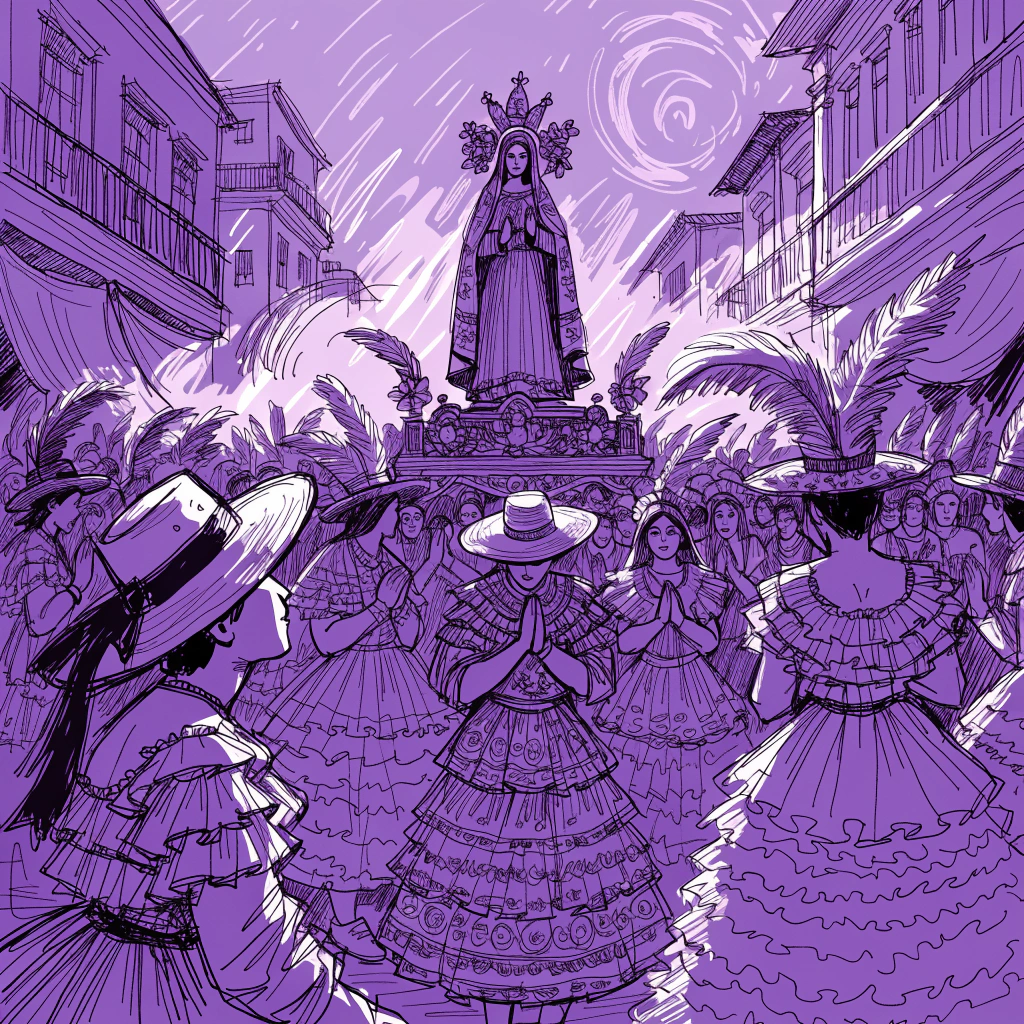
A Big Festival in Brazil
Belém is a city in Brazil. Every October, there is a big festival. It is the Círio de Nazaré. Many people go to the streets. More than two million people walk together. They follow a statue of Our Lady of Nazareth. People call this festival 'Christmas in the North.' It is a very happy time. Families eat special food. There is music and light. It is a very old and beautiful tradition. People wear white clothes. They carry a long rope. It is a special day for everyone.
Grammar Spotlight
Pattern: Present Simple 'To Be'
"Belém is a city in Brazil."
Use 'is' for one person or thing. It describes facts or states that are always true.
Pattern: There is / There are
"There is music and light."
Use 'there is' for one thing and 'there are' for two or more things to show they exist.
Test Your Understanding
10 questions · A1 Beginner · 1 free preview
Test what you learned from this article. Answer all questions to earn XP!
Where is the festival of Círio de Nazaré?
Want to finish the quiz?
9 more questions are waiting for you. Sign up free to unlock the full quiz and earn XP!
Sign Up FreeAlready have an account? Sign In
Question Breakdown
Where is the festival of Círio de Nazaré?
Your answer:
Correct answer: In Belém
The festival is in December.
Your answer:
Correct answer: False
What does 'walk' mean?
Your answer:
Correct answer: To move with your legs
Families eat special _____.
Your answer:
Correct answer: food
Círio de Nazaré: A Great Festival in Brazil
The Círio de Nazaré is a famous religious festival in Belém, Brazil. People call it "Christmas in the North" because it is very important for the local culture. It happens every year on the second Sunday of October.
The story started a long time ago. In 1700, a man found a small wooden statue of Our Lady of Nazareth near a river. He took it home, but the statue returned to the same place. People believed this was a miracle. Later, they built a large church there.
Today, more than two million people join the main procession. It is bigger and louder than many other festivals in the world. Many people pull a long rope to show their faith. They walk for many hours in the hot sun, but they are happy because they are together. Families eat traditional food and celebrate this special day. It is a beautiful tradition in the Amazon region.
Grammar Spotlight
Pattern: Past Simple (Regular and Irregular)
"In 1700, a man found a small wooden statue of Our Lady of Nazareth."
We use the past simple to talk about finished actions in the past. 'Found' is the irregular past form of 'find'.
Pattern: Comparatives
"It is bigger and louder than many other festivals in the world."
To compare two things, we add '-er' to short adjectives and use 'than'. This shows how one thing is different from another.
Test Your Understanding
11 questions · A2 Elementary · 1 free preview
Test what you learned from this article. Answer all questions to earn XP!
Where does the Círio de Nazaré take place?
Want to finish the quiz?
10 more questions are waiting for you. Sign up free to unlock the full quiz and earn XP!
Sign Up FreeAlready have an account? Sign In
Question Breakdown
Where does the Círio de Nazaré take place?
Your answer:
Correct answer: Belém, Brazil
The festival happens every year in December.
Your answer:
Correct answer: False
What does 'statue' mean?
Your answer:
Correct answer: A model of a person or animal
Many people pull a long _____ to show their faith.
Your answer:
Correct answer: rope
How many people join the main procession?
Your answer:
Correct answer: More than two million
Círio de Nazaré: The Great Festival of the Amazon
Belém, a beautiful city known as the gateway to the Amazon, hosts one of the largest religious festivals in the world. Every October, more than two million people gather for the Círio de Nazaré. This massive gathering is so important to the local culture that it is often called 'Christmas in the North.'
The tradition started many years ago. In 1700, a small wooden statue of Our Lady of Nazareth was found by a hunter near a stream. He took the statue home, but it mysteriously returned to the place where it was discovered. Since then, the people of Belém have celebrated this miracle every year with great passion.
The main event is the Sunday morning procession, which has been recognized by UNESCO as Intangible Cultural Heritage of Humanity. During this walk, thousands of pilgrims try to touch a long rope that is tied to the carriage carrying the statue. This rope, which represents the connection between the people and the divine, is over 400 meters long and is very heavy.
The atmosphere in the city is incredible during the festival. Families prepare traditional food like 'maniçoba,' and the streets are decorated with bright lights and flowers. People who have traveled from far away share stories of faith and gratitude. It is a time when the whole community comes together to show their devotion. The Círio is not just a religious event; it is a powerful symbol of identity for the people of the Amazon region. Visitors who experience the Círio often say that the energy of the crowd is something they will never forget.
Grammar Spotlight
Pattern: Passive Voice
"In 1700, a small wooden statue of Our Lady of Nazareth was found by a hunter near a stream."
The passive voice is used to focus on the person or thing that receives an action. It is formed using 'to be' + the past participle.
Pattern: Relative Clauses
"The main event is the Sunday morning procession, which has been recognized by UNESCO as Intangible Cultural Heritage of Humanity."
Relative clauses give extra information about a noun. 'Which' is used here to provide more details about the procession.
Test Your Understanding
11 questions · B1 Intermediate · 1 free preview
Test what you learned from this article. Answer all questions to earn XP!
Where is the city of Belém located?
Want to finish the quiz?
10 more questions are waiting for you. Sign up free to unlock the full quiz and earn XP!
Sign Up FreeAlready have an account? Sign In
Question Breakdown
Where is the city of Belém located?
Your answer:
Correct answer: At the gateway to the Amazon
The Círio de Nazaré festival takes place every December.
Your answer:
Correct answer: False
What does 'heritage' mean?
Your answer:
Correct answer: Traditions and culture from the past
The statue was found by a _____ in 1700.
Your answer:
Correct answer: hunter
What is the nickname for the Círio de Nazaré?
Your answer:
Correct answer: Christmas in the North
The Círio de Nazaré: A Tapestry of Faith and Tradition in the Amazon
Every October, the city of Belém, often regarded as the gateway to the Brazilian Amazon, undergoes a remarkable transformation. This period marks the arrival of the Círio de Nazaré, a religious phenomenon so vast that it is frequently referred to as 'Christmas in the North.' While the festival encompasses various events, the centerpiece is undoubtedly the grand procession on the second Sunday of the month, which attracts over two million pilgrims. It is a time when the humid air of the Amazon is filled with hymns and the scent of traditional dishes, creating an atmosphere that is both solemn and celebratory.
The origins of this profound devotion date back to 1700, when a small wooden statue of Our Lady of Nazareth was reportedly discovered by a hunter named Plácido. According to local legend, the statue would mysteriously return to its original site in the forest whenever it was moved to a different location. This was interpreted as a divine sign, leading the community to believe that a permanent sanctuary should be established on that very spot. Today, this site is home to the Basilica of Our Lady of Nazareth, the final destination for the millions who participate in the arduous walk.
One of the most striking aspects of the Círio is the 'corda'—a massive sisal rope that stretches for several hundred meters, linking the carriage carrying the statue to the sea of faithful followers. For many, reaching the rope and holding onto it for hours represents a physical manifestation of their faith and gratitude for miracles received. The atmosphere is intensely charged with emotion as the crowd moves through the streets in a display of collective endurance. Such is the cultural and historical significance of this event that it has been officially recognized by UNESCO as an Intangible Cultural Heritage of Humanity.
Furthermore, the Círio is not merely a religious gathering; it is an essential component of the regional identity. Families converge from across the country, sharing traditional meals like 'pato no tucupi' and reinforcing social bonds that have lasted generations. The sheer scale of the event provides a significant boost to the local economy, yet its spiritual essence remains the primary focus. Analysts suggest that the event's longevity is due to its ability to adapt while maintaining its core values. In conclusion, the Círio de Nazaré represents a unique blend of historical tradition and contemporary fervor, uniting millions in a shared experience of hope.
Grammar Spotlight
Pattern: Passive Voice (Past Simple)
"a small wooden statue of Our Lady of Nazareth was reportedly discovered by a hunter named Plácido."
The passive voice is used here because the action (the discovery) is more important than the person who performed it. It is formed using 'was/were' + the past participle.
Pattern: Non-defining Relative Clauses
"the grand procession on the second Sunday of the month, which attracts over two million pilgrims."
This pattern provides extra information about a noun that is already clearly identified. It is always separated by commas and uses 'which' for things or 'who' for people.
Pattern: Present Perfect Passive
"it has been officially recognized by UNESCO as an Intangible Cultural Heritage of Humanity."
This is used to describe an action that happened at an unspecified time in the past and has a current result. It is formed with 'has/have been' + the past participle.
Test Your Understanding
11 questions · B2 Upper Intermediate · 1 free preview
Test what you learned from this article. Answer all questions to earn XP!
What is the primary reason the Círio de Nazaré is called 'Christmas in the North'?
Want to finish the quiz?
10 more questions are waiting for you. Sign up free to unlock the full quiz and earn XP!
Sign Up FreeAlready have an account? Sign In
Question Breakdown
What is the primary reason the Círio de Nazaré is called 'Christmas in the North'?
Your answer:
Correct answer: It is a massive cultural and religious event that defines the region.
The festival is only attended by people who live in the city of Belém.
Your answer:
Correct answer: False
What does 'intangible' mean in the context of cultural heritage?
Your answer:
Correct answer: Traditions or beliefs that do not have a physical form.
The massive _____ used in the procession is a symbol of faith for the pilgrims.
Your answer:
Correct answer: rope
Why was the Basilica of Our Lady of Nazareth built on its specific site?
Your answer:
Correct answer: Legend says the found statue kept returning to that exact spot.
The Visceral Fervor of Círio de Nazaré: A Tapestry of Faith in the Amazon
Rarely does one encounter a spectacle so visceral and all-encompassing as the Círio de Nazaré. Held annually in Belém, the gateway to the Brazilian Amazon, this religious phenomenon transcends mere liturgical practice, evolving into a profound cultural hallmark often dubbed 'Christmas in the North.' At its core, the festival is a veneration of Our Lady of Nazareth, whose small wooden statuette, purportedly discovered by a hunter named Plácido in 1700, serves as the focal point for over two million pilgrims. The institutionalization of the event by UNESCO as Intangible Cultural Heritage of Humanity underscores its global significance, yet for the locals, it remains an inextricably personal and communal experience.
What the pilgrims seek is not merely a blessing, but a communal catharsis that manifests during the main procession on the second Sunday of October. The air in Belém thickens with an amalgamation of incense, humidity, and the collective chanting of the multitude. Central to this experience is the 'corda'—a long sisal rope that pilgrims vie to hold, symbolizing their physical and spiritual connection to the deity. To grasp the rope is to participate in a grueling act of devotion, where the heat and the crush of the crowd test the limits of human endurance. It is this collective effervescence that transforms the urban landscape of Belém into a living, breathing entity of faith.
Critical analysis of the Círio reveals a complex interplay between traditional Catholicism and indigenous Amazonian influences. While the ecclesiastical authorities manage the official rites, the popular devotion often bypasses formal structures, favoring a more immediate, emotional engagement. This dichotomy is what gives the Círio its unique character; it is both a highly organized religious event and a spontaneous eruption of regional identity. The economic implications are equally significant, as the influx of tourists necessitates a sophisticated logistical framework, yet the event avoids the sterile commercialization often found in global festivals.
Furthermore, the nominalization of faith into a visible, tangible struggle on the streets provides a fascinating case study in sociology. The 'promesseiros'—those who have made vows in exchange for divine intervention—carry heavy miniature houses or wax body parts, externalizing their internal gratitude. Seldom has a manifestation of faith been so physically demanding. As the procession winds through the city, the distinction between the sacred and the profane blurs, culminating in a celebration that is as much about the resilience of the human spirit as it is about religious dogma. Ultimately, the Círio de Nazaré epitomizes the convergence of history, myth, and modern identity in a way that few other global events can claim to achieve.
Grammar Spotlight
Pattern: Inversion
"Rarely does one encounter a spectacle so visceral and all-encompassing as the Círio de Nazaré."
Inversion is used here for rhetorical emphasis. When a negative or restrictive adverbial (like 'Rarely') starts a sentence, the auxiliary verb comes before the subject.
Pattern: Cleft Sentences
"It is this collective effervescence that transforms the urban landscape of Belém into a living, breathing entity of faith."
This 'It-cleft' structure focuses on a specific part of the sentence (the collective effervescence) to emphasize that this specific factor, and not another, is responsible for the transformation.
Pattern: Nominalization
"The institutionalization of the event by UNESCO underscores its global significance..."
Nominalization involves turning verbs (institutionalize) into nouns. This is common in C1-level academic and formal writing to create more concise and objective-sounding arguments.
Test Your Understanding
12 questions · C1 Advanced · 1 free preview
Test what you learned from this article. Answer all questions to earn XP!
What is the primary reason the author refers to the Círio as 'Christmas in the North'?
Want to finish the quiz?
11 more questions are waiting for you. Sign up free to unlock the full quiz and earn XP!
Sign Up FreeAlready have an account? Sign In
Question Breakdown
What is the primary reason the author refers to the Círio as 'Christmas in the North'?
Your answer:
Correct answer: It is a cultural hallmark of immense local importance.
The 'corda' is a symbol of spiritual and physical connection for the pilgrims.
Your answer:
Correct answer: True
What does 'epitomize' mean in the context of the article?
Your answer:
Correct answer: To be a perfect example of
The author notes that the event avoids sterile _____, despite its large-scale logistics.
Your answer:
Correct answer: commercialization
What does the text suggest about the role of official ecclesiastical authorities?
Your answer:
Correct answer: Their influence is often bypassed by spontaneous popular devotion.
The Círio de Nazaré has been recognized by UNESCO.
Your answer:
Correct answer: True
The Liturgy of the Multitude: Phenomenological Dimensions of the Círio de Nazaré
The Círio de Nazaré, an annual manifestation of profound devotion in Belém, Brazil, transcends the conventional boundaries of religious observance, morphing into a complex socio-cultural phenomenon that warrants rigorous phenomenological analysis. Often colloquially designated as 'Christmas in the North,' this event constitutes a profound apotheosis of faith, drawing a throng of over two million participants into a singular, rhythmic vortex of spiritual fervor on the second Sunday of October. To the uninitiated, the sheer scale of the procession might seem overwhelming, yet for the denizens of the Amazonian gateway, it represents an inextricable component of their collective identity and ontological security.
The historical genesis of the Círio is intricately shrouded in a blend of hagiography and local lore. It is purported that in 1700, a hunter named Plácido José de Souza discovered a small wooden effigy of Our Lady of Nazareth nestled in the humid crevices of the Igarapé Murutucu. Despite repeated, documented attempts to relocate the statue to various ecclesiastical chapels, the icon allegedly returned to its original site of discovery—a narrative that fostered a localized sacralization of the space. Were one to scrutinize this origin story through a critical lens, one might perceive it as a foundational myth that anchors the community to its specific Amazonian geography, effectively merging the sacred with the soil.
Central to the Sunday morning procession is the 'Corda,' a two-hundred-meter sisal rope that serves as a visceral synecdoche for the collective struggle and interconnectedness of the faithful. The competition to grasp even a few inches of this rope is intense, reflecting a primal desire for physical proximity to the divine. The heat is stifling, the humidity near saturation, and the air is thick with the scent of manioc and traditional maniçoba cooking in the streets. Lest the reader perceive this merely as a parochial gathering of regional significance, it is imperative to acknowledge the event's recognition by UNESCO as an Intangible Cultural Heritage of Humanity. This global designation underscores the unique confluence of indigenous, European, and Afro-Brazilian influences that have synthesized into the festival's distinctive liturgy.
Furthermore, the Círio functions as a liminal space where social hierarchies are momentarily suspended. The 'promesseiros,' or vow-makers, navigate the streets on their knees or carry heavy miniatures of houses on their heads, performing acts of extreme physical penance. These spectacles of devotion are not merely performative; they are deeply personal negotiations with the sacred. However, the academic observer must apply a degree of hedging when discussing the 'miraculous' nature of these acts, as the subjective experience of the participant often defies empirical quantification.
The economic and logistical ramifications of the Círio are equally staggering. The influx of pilgrims necessitates a temporary but radical expansion of the city's infrastructure, turning Belém into a pulsating megalopolis for a fortnight. Yet, the ephemeral nature of the festival’s peak does not diminish its long-term impact on the regional psyche. Not only does the Círio serve as a spiritual anchor for the diaspora of Pará, but it also functions as a vital catalyst for regional discourse on cultural preservation. One might posit that the festival’s enduring vitality lies in its uncanny ability to adapt to the pressures of modernity while retaining a potent vestige of its colonial and pre-colonial origins.
Ultimately, the Círio de Nazaré is a testament to the power of collective ritual in the 21st century. It is a moment where the historical, the spiritual, and the social converge in a cacophony of bells, hymns, and tears. As the procession concludes and the statue of 'Nazinha' returns to the Basilica, the lingering atmosphere suggests that the Círio is not merely a historical relic to be studied, but a living, breathing entity that continues to define the very essence of Amazonian existence.
Grammar Spotlight
Pattern: Inverted Conditional (Should/Were/Had)
"Were one to scrutinize this origin story through a critical lens, one might perceive it as a foundational myth."
This construction replaces 'If one were to...' with an inverted structure to sound more formal and academic. It is commonly used in C2 level prose to express hypothetical situations.
Pattern: Negative Purpose Clause with 'Lest'
"Lest the reader perceive this merely as a parochial gathering of regional significance, it is imperative to acknowledge the event's recognition by UNESCO."
The word 'lest' is a formal conjunction meaning 'to avoid the risk of.' It is typically followed by the subjunctive mood or 'should' to indicate a negative purpose.
Pattern: Negative Inversion for Emphasis
"Not only does the Círio serve as a spiritual anchor for the diaspora of Pará, but it also functions as a vital catalyst for regional discourse."
When a sentence starts with a negative adverbial phrase like 'Not only,' the auxiliary verb and subject must be inverted. This structure is used to add rhetorical weight to the statement.
Test Your Understanding
12 questions · C2 Mastery · 1 free preview
Test what you learned from this article. Answer all questions to earn XP!
What is the primary analytical lens the author suggests using for the Círio de Nazaré?
Want to finish the quiz?
11 more questions are waiting for you. Sign up free to unlock the full quiz and earn XP!
Sign Up FreeAlready have an account? Sign In
Question Breakdown
What is the primary analytical lens the author suggests using for the Círio de Nazaré?
Your answer:
Correct answer: Phenomenological analysis
The Círio de Nazaré has been officially recognized by UNESCO as Intangible Cultural Heritage.
Your answer:
Correct answer: True
What does 'apotheosis' refer to in the context of the article?
Your answer:
Correct answer: The highest point or climax of faith
The event draws a _____ of over two million participants into a spiritual vortex.
Your answer:
Correct answer: throng
What does the 'Corda' symbolize according to the text?
Your answer:
Correct answer: A visceral synecdoche for collective struggle
The hunter Plácido discovered the statue in an urban cathedral in 1700.
Your answer:
Correct answer: False
