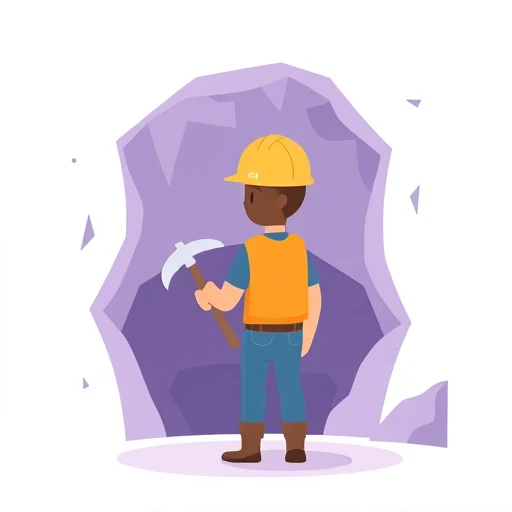
minero en 30 secondes
- A 'minero' is a person who works in a mine extracting resources like coal or gold.
- As an adjective, 'minero' describes anything related to the mining industry or culture.
- The word has deep historical and social roots in Spain and Latin America.
- In modern times, it also refers to people or computers mining cryptocurrency.
The Spanish word minero is a versatile term that functions both as a noun and an adjective. At its most fundamental level, as a noun, it refers to a person who works in a mine, extracting minerals, metals, or coal from the earth. This profession is historically significant in the Spanish-speaking world, from the silver mines of Potosí in Bolivia to the coal mines of Asturias in Spain. When used as an adjective, it describes anything pertaining to the industry, the geography, or the culture of mining. For instance, a 'pueblo minero' is a town whose economy and social structure revolve around a nearby mine.
- The Human Element
- As a noun, 'el minero' (masculine) or 'la minera' (feminine) represents a figure of resilience and hard labor. In many cultures, the miner is a symbol of the working class struggle and industrial heritage.
- The Descriptive Element
- As an adjective, it modifies nouns to indicate a connection to mining. Examples include 'industria minera' (mining industry) or 'casco minero' (miner's helmet).
In modern contexts, the word has expanded into the digital realm. With the rise of cryptocurrencies, a 'minero de bitcóin' refers to a person or a computer system that performs complex calculations to validate transactions on a blockchain. This metaphorical shift maintains the core concept of 'extracting' something of value through intensive effort, though the 'pickaxe' has been replaced by high-powered processors. Understanding this word requires recognizing its deep roots in physical labor while acknowledging its contemporary technological evolution.
El minero descendió a las profundidades de la tierra al amanecer.
The cultural weight of the word cannot be overstated. In Spain, the 'cuencas mineras' (mining basins) are regions with distinct identities, songs, and political histories. The 'Santa Bárbara' hymn is a famous song dedicated to the patron saint of miners, often sung during strikes or celebrations. When you use the word 'minero', you aren't just describing a job; you are often invoking a legacy of danger, brotherhood, and economic necessity. It is a word that carries the smell of damp earth and the sound of machinery.
Furthermore, the term appears frequently in economic news. You will hear about 'el sector minero' when discussing a country's GDP, especially in nations like Chile, Peru, or Mexico, where copper, silver, and gold extraction are pillars of the economy. In these contexts, 'minero' is less about the individual and more about the corporate and geological enterprise. The word bridges the gap between the gritty reality of the tunnels and the abstract numbers of the stock market.
La reforma minera busca proteger los derechos de los trabajadores locales.
Finally, the word is used in specialized fields like engineering and geology. A 'técnico minero' is a professional who designs the safety protocols and extraction methods. This highlights that 'minero' covers a spectrum from manual labor to high-level engineering. Whether you are reading a historical novel about the colonial era or a technical report on lithium extraction for electric car batteries, 'minero' remains a central, indispensable term in the Spanish vocabulary.
Using minero correctly depends on whether you are identifying a person or describing a thing. As a noun, it follows standard Spanish noun patterns. You can say 'El minero es valiente' (The miner is brave). If the miner is female, you use 'la minera'. In the plural, it becomes 'los mineros' or 'las mineras'. It is important to note that 'los mineros' can refer to a group of men or a mixed-gender group, following the traditional masculine plural rule in Spanish.
- As a Subject
- 'Los mineros chilenos fueron rescatados tras sesenta y nueve días.' (The Chilean miners were rescued after sixty-nine days.)
- As an Adjective
- 'El conflicto minero paralizó la región durante semanas.' (The mining conflict paralyzed the region for weeks.)
When used as an adjective, 'minero' usually follows the noun it modifies. For example, 'ingeniería minera' (mining engineering) or 'explotación minera' (mining exploitation/operation). Notice how 'minero' changes to 'minera' to match the feminine nouns 'ingeniería' and 'explotación'. This is a common point of error for English speakers, as the English word 'mining' doesn't change form. In Spanish, the harmony between the noun and its adjective is crucial for grammatical correctness.
El equipo minero encontró una nueva veta de plata en la montaña.
In more complex sentence structures, 'minero' can be part of prepositional phrases. You might say 'trabajador del sector minero' (worker of the mining sector). Here, 'minero' is modifying 'sector'. If you are talking about the tools, you might say 'lámpara de minero' (miner's lamp). In this case, 'minero' is a noun acting as a possessive or descriptive element within the phrase. This structure is very common when describing equipment or specific roles within the industry.
Metaphorical usage is also frequent. In the world of data science, you might encounter 'minero de datos' (data miner). While this is a direct translation from English, it is perfectly standard in technical Spanish. You would use it just like the physical profession: 'Contrataron a un minero de datos para analizar las tendencias de consumo.' This shows the word's adaptability to modern, non-physical contexts while retaining the original sense of digging for valuable information.
Cada minero debe llevar su propio equipo de seguridad por ley.
To sound more natural, pay attention to the verbs that typically accompany 'minero'. Miners 'extraen' (extract), 'pican' (pick/chip away), 'excavan' (excavate), and 'trabajan' (work). When talking about the industry, we often use 'desarrollar' (to develop) or 'explotar' (to exploit/operate). Using these collocations will make your Spanish sound much more authentic and professional. For example, 'La empresa minera decidió explotar el yacimiento de litio' sounds much better than simply saying they 'started' the mine.
You will encounter the word minero in a variety of real-world settings, ranging from the evening news to historical documentaries. In countries like Chile, Peru, and Bolivia, mining is a massive part of the national identity and economy. Therefore, news reports frequently discuss 'huelgas mineras' (mining strikes), 'concesiones mineras' (mining concessions), or 'accidentes mineros' (mining accidents). If you are watching a Spanish-language news broadcast, especially from South America, 'minero' is a word you are almost guaranteed to hear when the economy or labor rights are being discussed.
- In the News
- Reports on the price of copper or gold often mention the 'gremio minero' (miners' union) and their influence on the market.
- In Literature and Film
- Books like 'Sub Terra' by Baldomero Lillo describe the harsh lives of coal miners in Chile, making 'minero' a central theme in classic Latin American literature.
In Spain, specifically in the northern regions like Asturias and León, the word has a deep emotional and political resonance. You might hear it in folk songs or during local festivals. The 'Santa Bárbara Bendita' is a song that almost every Spaniard knows, and it tells the story of a miner returning from the pit. In these regions, being a 'minero' is a source of immense pride, and the word is often spoken with a sense of respect for the danger and difficulty of the work. It is not just a job title; it is a social class and a cultural heritage.
El documental narra la vida cotidiana de un minero en las tierras altas de Bolivia.
In the tech world, if you attend a conference on blockchain or cryptocurrency in Madrid or Mexico City, you will hear 'minero' used constantly. Speakers will talk about 'granjas de mineros' (miner farms) and the 'poder de minado' (mining power/hash rate). This is a great example of how a traditional word adapts to new technologies. If you are a developer or an investor, 'minero' is part of your daily technical jargon, even if you've never stepped foot in a real cave.
Furthermore, in educational settings, 'minero' appears in geography and history textbooks. Students learn about the 'ciclo minero' (mining cycle) of the colonial era, which shaped the borders and economies of modern Latin American nations. In this context, the word is used to explain the movement of populations and the development of infrastructure like railroads. Whether in a classroom, a mine shaft, or a computer lab, 'minero' is a word that connects the physical earth to human ambition and survival.
La canción 'Soy minero' de Antonio Molina es un clásico de la copla española.
Finally, you might hear it in casual conversation when someone is describing their family history. Many people in Spain and Latin America have 'abuelos mineros' (miner grandfathers). In these stories, the word is associated with sacrifice and the desire for a better life for the next generation. It is a word that evokes the darkness of the mine but also the light of the family home. Understanding 'minero' means understanding a significant part of the collective memory of the Spanish-speaking world.
One of the most frequent mistakes English speakers make with minero is confusing it with the word 'menor'. While they sound somewhat similar to a beginner's ear, 'menor' means 'younger' or 'minor'. Saying 'Mi hermano es minero' means your brother is a miner, whereas 'Mi hermano es menor' means your brother is younger. This can lead to some very confusing (and sometimes funny) misunderstandings in conversation. Always pay attention to the 'i' sound in 'minero' versus the 'e' sound in 'menor'.
- Gender Agreement
- Forgetting to change 'minero' to 'minera' when referring to a woman or a feminine noun. Example: 'La zona minero' is incorrect; it must be 'La zona minera'.
- Noun vs. Adjective
- Using 'minería' (the industry) when you mean 'minero' (the adjective). Example: 'El equipo minería' is wrong; it should be 'El equipo minero'.
Another common error is the misuse of the word 'mina'. While 'mina' is the place (the mine), 'minero' is the person or the adjective. Some learners might say 'Él trabaja en el minero', which is incorrect; he works *in* the mine ('en la mina') and *is* a miner ('es minero'). It is helpful to think of 'mina' as the location and 'minero' as the actor or the description. Keeping these two distinct in your mind will prevent basic structural errors.
Incorrecto: Ella es un minero muy trabajadora. (Should be: Ella es una minera...)
English speakers also tend to over-rely on the word 'mining' as a gerund and try to translate it directly. In English, 'mining' can be a noun (the act of mining), an adjective (mining equipment), or a verb (he is mining). In Spanish, these are often three different words: 'la minería' (the industry/act), 'minero' (the adjective), and 'minando' (the present participle of the verb 'minar'). If you try to use 'minando' where you should use 'minero', the sentence will sound very clunky. For example, 'equipo minando' is incorrect for 'mining equipment'; it should be 'equipo minero'.
In the context of Bitcoin and technology, some people use the English word 'miner' even when speaking Spanish. While this is understood in tech circles, it is considered poor style in formal Spanish. Using the correct Spanish term 'minero' shows a higher level of fluency and respect for the language's own technical vocabulary. Similarly, avoid using 'minería' when you are specifically talking about the hardware; the hardware is the 'minero' or 'equipo de minado'.
Incorrecto: El pueblo es muy minería. (Should be: El pueblo es muy minero.)
Lastly, be careful with the pluralization of compound terms. For 'mining towns', it is 'pueblos mineros'. Both words must be plural. Some learners forget to pluralize the adjective, saying 'pueblos minero', which is a basic but frequent mistake. Consistent practice with noun-adjective agreement is the best way to overcome this. Remember: if the noun has an 's', the adjective 'minero' usually needs one too!
While minero is the most common and general term, there are several other words you can use depending on the specific context or the type of mining being discussed. Understanding these nuances will help you describe the industry with more precision. For example, if you are talking about someone who specifically works with explosives in a mine, you might use the word 'barrenero'. This is a more technical term for a person who drills holes for blasting.
- Minero vs. Excavador
- A 'minero' works specifically in a mine to extract minerals. An 'excavador' (excavator) is a more general term for someone who digs, often in construction or archaeology.
- Minero vs. Cantero
- A 'cantero' works in a 'cantera' (quarry), usually extracting stone for building, whereas a 'minero' usually works underground for metals or coal.
In the context of the mining industry as a whole, you might use 'extractivo' (extractive). For example, 'la industria extractiva' is a more formal and academic way to refer to mining, oil, and gas industries combined. If you want to sound more professional in a business setting, using 'sector extractivo' can be more appropriate than just saying 'sector minero' if you are including other types of resource extraction.
El barrenero preparó las cargas para la voladura en el túnel principal.
Another interesting alternative is 'pirquinero', a term used specifically in Chile and other parts of the Andes. A 'pirquinero' is an independent, often artisanal miner who works on a small scale, sometimes in abandoned mines. This word carries a specific cultural and socio-economic connotation that 'minero' does not. If you are reading about the history of mining in the Atacama desert, you will almost certainly encounter this term.
For the adjective 'minero', you might sometimes use 'metalúrgico' if the context is specifically about the processing of metals after they have been mined. While 'minero' refers to the extraction, 'metalúrgico' refers to the science and technology of the metals themselves. In many industrial regions, you will find 'sindicatos minero-metalúrgicos' (mining and metallurgical unions), showing how these two fields are closely linked but distinct.
La empresa extractiva presentó su informe de impacto ambiental.
Finally, in the digital world, instead of 'minero de datos', you might hear 'analista de datos' (data analyst). While 'minero' implies the act of searching through raw data to find patterns, 'analista' is the broader professional title. Similarly, in cryptocurrency, people might refer to 'nodos' (nodes) or 'validadores' (validators), which are more technical terms for the roles that 'mineros' perform in different types of blockchain systems (like Proof of Stake vs. Proof of Work). Knowing these alternatives allows you to tailor your language to your audience perfectly.
How Formal Is It?
Le savais-tu ?
The word 'minar' (to mine) is also the root for 'minar la moral' (to undermine morale), showing how the physical act of digging under something became a metaphor for weakening it.
Guide de prononciation
- Pronouncing the 'r' as an English 'r' (rhotic).
- Rolling the 'r' too much (like 'rr').
- Confusing the 'i' with an 'e' (sounding like 'menero').
- Making the 'o' at the end too long (like 'oh').
- Stressing the first syllable (MI-nero).
Niveau de difficulté
Easy to recognize due to its similarity to 'miner' and 'mine'.
Requires attention to gender agreement when used as an adjective.
The tapped 'r' can be tricky for English speakers to get perfect.
Distinctive sound, though can be confused with 'menor' if spoken fast.
Quoi apprendre ensuite
Prérequis
Apprends ensuite
Avancé
Grammaire à connaître
Noun-Adjective Agreement
La empresa (fem) minera (fem).
Gender of Professions
El minero (masc) / La minera (fem).
Pluralization of Adjectives
Los pueblos (pl) mineros (pl).
Use of 'de' for possession/origin
El casco de minero.
Personal 'a' with people
Veo a los mineros.
Exemples par niveau
Mi abuelo era minero.
My grandfather was a miner.
Uses the imperfect tense 'era' for a past profession.
El minero tiene un casco.
The miner has a helmet.
Simple subject-verb-object structure.
Hay muchos mineros en esta ciudad.
There are many miners in this city.
Plural form 'mineros' with the quantifier 'muchos'.
La minera trabaja mucho.
The (female) miner works a lot.
Feminine form 'la minera'.
El trabajo del minero es difícil.
The miner's job is difficult.
Possessive structure using 'del' (de + el).
Un minero extrae carbón.
A miner extracts coal.
Indefinite article 'un'.
Los mineros son valientes.
Miners are brave.
Adjective agreement in plural.
Quiero ser minero.
I want to be a miner.
Verb 'ser' used for professions.
Visitamos un antiguo pueblo minero.
We visited an old mining town.
'Minero' acts as an adjective modifying 'pueblo'.
El casco minero es muy fuerte.
The mining helmet is very strong.
Adjective 'minero' following the noun 'casco'.
Ella compró una lámpara minera.
She bought a mining lamp.
Feminine adjective 'minera' matching 'lámpara'.
Los mineros usan herramientas pesadas.
Miners use heavy tools.
Plural noun and adjective agreement.
El sector minero es importante aquí.
The mining sector is important here.
Abstract noun 'sector' modified by 'minero'.
Vimos a los mineros salir de la mina.
We saw the miners leaving the mine.
Personal 'a' used before the direct object 'los mineros'.
Mi padre tiene un amigo minero.
My father has a miner friend.
Adjective 'minero' describing 'amigo'.
La zona minera está lejos de aquí.
The mining zone is far from here.
Feminine agreement 'zona minera'.
El conflicto minero duró varios meses.
The mining conflict lasted several months.
Use of 'minero' in a socio-political context.
La empresa minera anunció nuevas inversiones.
The mining company announced new investments.
Feminine adjective 'minera' modifying 'empresa'.
Muchos mineros sufren enfermedades respiratorias.
Many miners suffer from respiratory diseases.
Discussing health issues related to the profession.
El sindicato minero negoció un mejor sueldo.
The miners' union negotiated a better salary.
Term 'sindicato minero' (miners' union).
Es un experto en derecho minero.
He is an expert in mining law.
Specific field of study 'derecho minero'.
La producción minera cayó este año.
Mining production fell this year.
Feminine adjective 'minera' matching 'producción'.
Los mineros de bitcóin consumen mucha energía.
Bitcoin miners consume a lot of energy.
Modern technological use of 'minero'.
El paisaje minero es muy particular.
The mining landscape is very unique.
Descriptive use of 'minero'.
La huelga minera paralizó la economía nacional.
The mining strike paralyzed the national economy.
Using 'minera' to describe a strike.
Se requiere una licencia minera para excavar aquí.
A mining license is required to excavate here.
Legal term 'licencia minera'.
El patrimonio minero debe ser preservado.
The mining heritage must be preserved.
Concept of 'patrimonio minero'.
Los ingenieros mineros diseñan los túneles.
Mining engineers design the tunnels.
Professional title 'ingenieros mineros'.
La actividad minera a gran escala es controvertida.
Large-scale mining activity is controversial.
Discussing industrial scale.
El desastre minero provocó cambios en la ley.
The mining disaster caused changes in the law.
Noun-adjective pair 'desastre minero'.
Buscamos un minero de datos con experiencia.
We are looking for an experienced data miner.
Professional tech role.
La cuenca minera ha sufrido la desindustrialización.
The mining basin has suffered from deindustrialization.
Geographical/Economic term 'cuenca minera'.
La reconversión minera fue un proceso doloroso.
The mining restructuring was a painful process.
Economic term 'reconversión minera'.
El folclore minero es rico en leyendas y canciones.
Mining folklore is rich in legends and songs.
Cultural term 'folclore minero'.
La legislación minera actual es muy estricta.
Current mining legislation is very strict.
Formal term 'legislación minera'.
El auge minero transformó la demografía de la región.
The mining boom transformed the region's demography.
Historical/Economic term 'auge minero'.
Se debate la sostenibilidad del modelo minero.
The sustainability of the mining model is being debated.
Abstract concept 'modelo minero'.
El espíritu minero se basa en la solidaridad.
The mining spirit is based on solidarity.
Metaphorical 'espíritu minero'.
La prospección minera requiere tecnología de punta.
Mining prospection requires cutting-edge technology.
Technical term 'prospección minera'.
El impacto ambiental de los vertidos mineros es grave.
The environmental impact of mining waste is serious.
Plural adjective 'mineros' matching 'vertidos'.
La idiosincrasia minera está forjada en el peligro.
The mining idiosyncrasy is forged in danger.
Advanced noun 'idiosincrasia'.
El ocaso del imperio minero dejó un vacío social.
The twilight of the mining empire left a social vacuum.
Literary/Metaphorical use.
Analizamos la geopolítica minera de las tierras raras.
We analyze the mining geopolitics of rare earths.
High-level political term.
La narrativa minera en la literatura chilena es clave.
The mining narrative in Chilean literature is key.
Literary criticism context.
La precariedad minera en minas ilegales es alarmante.
Mining precariousness in illegal mines is alarming.
Socio-economic analysis.
El determinismo geográfico y el desarrollo minero.
Geographical determinism and mining development.
Academic/Philosophical context.
La mística minera envuelve a los trabajadores del carbón.
The mining mystique surrounds the coal workers.
Abstract 'mística minera'.
Se cuestiona la ética de la explotación minera en el Ártico.
The ethics of mining exploitation in the Arctic is questioned.
Ethical/Environmental debate.
Collocations courantes
Phrases Courantes
— To be a miner by profession. It implies a life of hard work.
Él está orgulloso de ser minero.
— A geographical area where mining is the main activity.
Vivimos en una zona minera del norte.
— A tragic event occurring within a mine.
Hubo un accidente minero ayer por la tarde.
— The specific lamp used by miners, often attached to a helmet.
La lámpara minera iluminaba el túnel.
— A geological basin rich in minerals, often used to describe mining regions.
La cuenca minera asturiana es famosa.
— A change in the laws governing the mining industry.
La reforma minera fue aprobada por el congreso.
— The total amount of minerals extracted in a period.
La producción minera de plata aumentó.
— The social group formed by miners and their families.
La comunidad minera es muy unida.
— A museum dedicated to the history of mining.
Visitamos el museo minero el fin de semana.
Souvent confondu avec
Means 'younger' or 'minor'. Easy to confuse due to similar vowels.
Means 'way' or 'manner'. Distant meaning but similar rhythm.
Means 'missionary'. Longer word but shares some sounds.
Expressions idiomatiques
— To work hard from the bottom up, often in a repetitive or difficult task. Derived from the miner's action.
Lleva años picando piedra para ser director.
Informal— To be a source of great wealth or valuable information.
Ese negocio es una mina de oro.
General— To be in a very bad situation or depressed (metaphor for being deep in a mine shaft).
Desde que perdió su empleo, está en el pozo.
Informal— To get the absolute most out of a difficult or poor situation.
El entrenador sacó petróleo de un equipo mediocre.
Colloquial— To insist on something repeatedly until it becomes annoying (like a miner's drill).
Me está barrenando la cabeza con sus problemas.
Slang— To be resilient, hardworking, and used to hardship.
Ese hombre tiene alma de minero, nunca se rinde.
Literary— To get down to work, especially hard manual work.
Venga, vamos a bajar al tajo que hay mucho que hacer.
Informal— Someone with great potential but lacking refinement (mined but not polished).
Ese joven jugador es un diamante en bruto.
General— To fall for a trap (not strictly mining, but related to the action of 'picar').
Le dije una mentira y picó el anzuelo.
Informal— To hit the nail on the head (related to the precision needed in manual mining labor).
Con ese comentario diste en el clavo.
GeneralFacile à confondre
Both relate to the same industry.
'Mina' is the place (the mine), while 'minero' is the person or the adjective.
El minero trabaja en la mina.
Both relate to the industry.
'Minería' is the abstract noun for the industry/activity, while 'minero' is the person or adjective.
La minería es el motor del pueblo minero.
Related to the objects being extracted.
'Mineral' is the substance being mined, 'minero' is the person doing it.
El minero busca el mineral.
The verb form.
'Minar' is the action, 'minero' is the actor.
El minero tiene que minar la roca.
Phonetic similarity.
'Menor' refers to age or size, 'minero' refers to a profession.
Mi hermano menor no es minero.
Structures de phrases
[Subject] es minero.
Pedro es minero.
Es un [Noun] minero.
Es un pueblo minero.
El sector minero es [Adjective].
El sector minero es fundamental.
Debido al conflicto minero, [Result].
Debido al conflicto minero, la carretera está cerrada.
La [Noun] minera ha provocado [Consequence].
La explotación minera ha provocado daños ambientales.
A pesar de la mística minera, [Contrast].
A pesar de la mística minera, las condiciones son deplorables.
Trabajar como [Profession].
Trabajar como minero es arriesgado.
[Noun] de minero.
El casco de minero es amarillo.
Famille de mots
Noms
Verbes
Adjectifs
Apparenté
Comment l'utiliser
High, especially in Spanish-speaking countries with natural resources.
-
El pueblo es minería.
→
El pueblo es minero.
You used the noun 'minería' (the industry) instead of the adjective 'minero' (mining).
-
Mi hermano es menor.
→
Mi hermano es minero.
You confused 'menor' (younger) with 'minero' (miner). This is a common phonetic error.
-
La zona minero.
→
La zona minera.
The adjective must agree with the feminine noun 'zona'.
-
Trabajo en el minero.
→
Trabajo en la mina / Soy minero.
You cannot work 'in the miner'. You work in the mine or you are a miner.
-
Equipo minando.
→
Equipo minero.
Don't use the gerund 'minando' as an adjective. Use 'minero'.
Astuces
Adjective Agreement
Always match 'minero' with the noun. 'Pueblo minero' (masc), 'Empresa minera' (fem). This is the most common mistake for learners.
Minería vs Minero
Use 'minería' for the concept/industry and 'minero' for the person or the description. 'Me gusta la minería' vs 'Soy minero'.
Regional Terms
In Chile, look out for 'pirquinero'. In Spain, 'cuenca minera' is a very common term for mining regions.
The Tapped R
The 'r' in 'minero' is not rolled. It's a single tap. Practice by saying 'pot of tea' quickly; the 't' sound is similar to the Spanish 'r'.
Digital Mining
Don't be afraid to use 'minero' for Bitcoin. It's the standard term and sounds much more natural than using the English word.
Picar Piedra
Use 'picar piedra' when talking about someone working hard to build a career. It makes you sound very native!
Context Clues
If you hear 'minero' in a news report, look for words like 'cobre' (copper), 'carbón' (coal), or 'huelga' (strike) to confirm the context.
Compound Adjectives
When combining with other industries, use a hyphen: 'minero-metalúrgico'. Only the second part changes for gender/number.
Potosí
Learning about the 'Cerro Rico' of Potosí will give you great context for why mining is so important in Latin American history.
Terminology
In a mine, 'seguridad minera' is the most important term. It refers to all the safety protocols.
Mémorise-le
Moyen mnémotechnique
Think of a 'Miner' who is 'Near' (minero) the gold. He is 'Mine-ero' - the person of the mine.
Association visuelle
Imagine a person with a bright lamp on their head, covered in coal dust, holding a shiny piece of silver.
Word Web
Défi
Try to use 'minero' as both a noun and an adjective in the same sentence. For example: 'El minero trabaja en el sector minero'.
Origine du mot
From the Spanish word 'mina' (mine), which comes from the Late Latin 'mina'. The suffix '-ero' is used in Spanish to denote a profession or relationship.
Sens originel : A person associated with a mine or the act of digging.
Romance (Latin root).Contexte culturel
Be respectful when discussing mining, as it is a dangerous profession with a history of labor exploitation and environmental controversy.
In English, 'miner' is often associated with the Gold Rush or coal mining in Appalachia. The Spanish 'minero' has a similar but more politically active connotation.
Pratique dans la vie réelle
Contextes réels
Industrial/Economic
- El sector minero
- Exportación minera
- Inversión minera
- Producción minera
Labor/Social
- Sindicato minero
- Huelga minera
- Derechos del minero
- Seguridad minera
Geographical
- Pueblo minero
- Zona minera
- Cuenca minera
- Distrito minero
Technological
- Minero de bitcóin
- Minería de datos
- Granja de mineros
- Poder de minado
Historical
- Pasado minero
- Patrimonio minero
- Tradición minera
- Auge minero
Amorces de conversation
"¿Sabías que Chile es el mayor productor minero de cobre del mundo?"
"¿Alguna vez has visitado un antiguo pueblo minero?"
"¿Qué opinas sobre el impacto ambiental del sector minero?"
"¿Crees que el trabajo de minero es el más peligroso que existe?"
"¿Conoces la historia de los 33 mineros que fueron rescatados en Chile?"
Sujets d'écriture
Imagina que eres un minero en el siglo XIX. Describe un día típico en la mina.
Escribe sobre la importancia de la industria minera para la tecnología moderna (como las baterías de litio).
¿Te gustaría trabajar como minero de datos? Explica por qué o por qué no.
Describe cómo cambiaría un pueblo si se cerrara su principal empresa minera.
Reflexiona sobre el simbolismo del minero en la cultura popular de tu país.
Questions fréquentes
10 questionsNo, 'minero' is a general term for anyone extracting any resource from a mine, including gold, silver, copper, or diamonds. In Spanish, you would specify if needed, like 'minero del carbón' or 'minero del oro'.
It depends on the context. As a noun (the industry), use 'la minería'. As an adjective (mining town), use 'minero/a'. As a verb (he is mining), use 'minando'.
Yes, you simply change the ending to 'minera'. For example, 'Ella es una minera experimentada'. In the plural, 'las mineras' refers to a group of women.
It is a direct translation of 'data miner'. It refers to a professional who analyzes large sets of data to find patterns and useful information. It's a very common term in modern tech Spanish.
Usually, no. Oil workers are called 'petroleros'. However, the term 'industria extractiva' covers both mining and oil industries.
Literally 'to pick stone', it is a common idiom meaning to work very hard at something difficult or repetitive, usually to achieve a long-term goal. It's like 'paying your dues'.
It is not as common as 'Herrero' (Smith) or 'Zapatero' (Shoemaker), but it does exist as a surname in Spain and Latin America.
Santa Bárbara is the patron saint of miners (and also of artillery and firefighters). Her feast day is December 4th, which is a big celebration in mining communities.
You can say 'equipo minero' or 'maquinaria minera'. Both are perfectly correct and widely used in the industry.
Sometimes, but the more specific term for a quarry worker is 'cantero'. A 'cantera' is an open-air quarry, while a 'mina' is usually underground.
Teste-toi 180 questions
Describe el trabajo de un minero en tres frases.
Well written! Good try! Check the sample answer below.
¿Qué es un pueblo minero?
Well written! Good try! Check the sample answer below.
Explica la diferencia entre 'minero' y 'minería'.
Well written! Good try! Check the sample answer below.
¿Por qué es peligroso el trabajo minero?
Well written! Good try! Check the sample answer below.
Escribe una frase usando 'minero' como adjetivo.
Well written! Good try! Check the sample answer below.
¿Qué herramientas usa un minero tradicional?
Well written! Good try! Check the sample answer below.
Describe la importancia del sector minero en tu país o en uno que conozcas.
Well written! Good try! Check the sample answer below.
¿Qué es un minero de datos?
Well written! Good try! Check the sample answer below.
Escribe un pequeño diálogo entre dos mineros.
Well written! Good try! Check the sample answer below.
¿Qué significa la expresión 'picar piedra' en sentido figurado?
Well written! Good try! Check the sample answer below.
Imagina que eres un minero. ¿Qué es lo primero que haces al entrar en la mina?
Well written! Good try! Check the sample answer below.
¿Cómo afecta la actividad minera al medio ambiente?
Well written! Good try! Check the sample answer below.
¿Qué es la 'reconversión minera'?
Well written! Good try! Check the sample answer below.
Escribe una frase sobre los '33 mineros' de Chile.
Well written! Good try! Check the sample answer below.
¿Qué es un sindicato minero?
Well written! Good try! Check the sample answer below.
Describe un casco minero.
Well written! Good try! Check the sample answer below.
¿Qué es un yacimiento minero?
Well written! Good try! Check the sample answer below.
¿Cuál es la importancia de Santa Bárbara para los mineros?
Well written! Good try! Check the sample answer below.
Escribe sobre el futuro de la industria minera.
Well written! Good try! Check the sample answer below.
¿Te gustaría ser minero? ¿Por qué?
Well written! Good try! Check the sample answer below.
Pronuncia la palabra: minero.
Read this aloud:
Tu as dit :
Speech recognition is not supported in your browser. Try Chrome or Edge.
Di en voz alta: 'El minero trabaja en la mina'.
Read this aloud:
Tu as dit :
Speech recognition is not supported in your browser. Try Chrome or Edge.
Explica qué es un casco minero.
Read this aloud:
Tu as dit :
Speech recognition is not supported in your browser. Try Chrome or Edge.
Di: 'La industria minera es importante'.
Read this aloud:
Tu as dit :
Speech recognition is not supported in your browser. Try Chrome or Edge.
Pronuncia: minería de datos.
Read this aloud:
Tu as dit :
Speech recognition is not supported in your browser. Try Chrome or Edge.
Describe un pueblo minero que imagines.
Read this aloud:
Tu as dit :
Speech recognition is not supported in your browser. Try Chrome or Edge.
Di: 'Los mineros están en huelga'.
Read this aloud:
Tu as dit :
Speech recognition is not supported in your browser. Try Chrome or Edge.
Explica la frase 'picar piedra'.
Read this aloud:
Tu as dit :
Speech recognition is not supported in your browser. Try Chrome or Edge.
Di: 'El sector minero genera empleos'.
Read this aloud:
Tu as dit :
Speech recognition is not supported in your browser. Try Chrome or Edge.
Pronuncia: yacimiento minero.
Read this aloud:
Tu as dit :
Speech recognition is not supported in your browser. Try Chrome or Edge.
¿Qué opinas de la minería? (Respuesta libre)
Read this aloud:
Tu as dit :
Speech recognition is not supported in your browser. Try Chrome or Edge.
Di: 'La seguridad minera es vital'.
Read this aloud:
Tu as dit :
Speech recognition is not supported in your browser. Try Chrome or Edge.
Explica qué hace un minero de bitcóin.
Read this aloud:
Tu as dit :
Speech recognition is not supported in your browser. Try Chrome or Edge.
Di: 'El conflicto minero se agravó'.
Read this aloud:
Tu as dit :
Speech recognition is not supported in your browser. Try Chrome or Edge.
Describe el uniforme de un minero.
Read this aloud:
Tu as dit :
Speech recognition is not supported in your browser. Try Chrome or Edge.
Di: 'La cuenca minera está en crisis'.
Read this aloud:
Tu as dit :
Speech recognition is not supported in your browser. Try Chrome or Edge.
Pronuncia: reconversión minera.
Read this aloud:
Tu as dit :
Speech recognition is not supported in your browser. Try Chrome or Edge.
¿Cómo es el paisaje de una zona minera?
Read this aloud:
Tu as dit :
Speech recognition is not supported in your browser. Try Chrome or Edge.
Di: 'El patrimonio minero es cultura'.
Read this aloud:
Tu as dit :
Speech recognition is not supported in your browser. Try Chrome or Edge.
Explica la importancia de los mineros en la historia.
Read this aloud:
Tu as dit :
Speech recognition is not supported in your browser. Try Chrome or Edge.
¿Qué palabra escuchas? (Audio: minero)
¿Es masculino o femenino? (Audio: la minera)
¿Qué objeto se menciona? (Audio: el casco minero)
¿De qué industria se habla? (Audio: el sector minero)
¿Cuántos mineros hay? (Audio: tres mineros)
¿Qué tipo de minero es? (Audio: minero de datos)
¿Qué pasó en la mina? (Audio: un accidente minero)
¿Qué se está negociando? (Audio: el convenio minero)
¿A quién pertenece la lámpara? (Audio: la lámpara del minero)
¿Qué región se menciona? (Audio: la cuenca minera)
¿Qué tipo de pueblo es? (Audio: un pueblo minero)
¿Qué se extrae? (Audio: el mineral minero)
¿Quién protestó? (Audio: el sindicato minero)
¿Qué se aprobó? (Audio: la ley minera)
¿Qué se analiza? (Audio: el impacto minero)
/ 180 correct
Perfect score!
Summary
The word 'minero' bridges the gap between traditional manual labor and modern technology. Whether referring to a person with a pickaxe or a computer validating Bitcoin, it always implies the extraction of value through hard work. Example: 'El sector minero es vital para Chile.'
- A 'minero' is a person who works in a mine extracting resources like coal or gold.
- As an adjective, 'minero' describes anything related to the mining industry or culture.
- The word has deep historical and social roots in Spain and Latin America.
- In modern times, it also refers to people or computers mining cryptocurrency.
Adjective Agreement
Always match 'minero' with the noun. 'Pueblo minero' (masc), 'Empresa minera' (fem). This is the most common mistake for learners.
Minería vs Minero
Use 'minería' for the concept/industry and 'minero' for the person or the description. 'Me gusta la minería' vs 'Soy minero'.
Regional Terms
In Chile, look out for 'pirquinero'. In Spain, 'cuenca minera' is a very common term for mining regions.
The Tapped R
The 'r' in 'minero' is not rolled. It's a single tap. Practice by saying 'pot of tea' quickly; the 't' sound is similar to the Spanish 'r'.