The video owner has disabled playback on external websites.
This video is no longer available on YouTube.
This video cannot be played right now.
Watch on YouTube
Débloquez les outils d'apprentissage IA
Inscrivez-vous pour accéder à des outils puissants qui vous aident à apprendre plus vite avec chaque vidéo.
Medieval Europe: Crash Course European History #1
Statistiques d apprentissage
Niveau CECRL
Difficulté
Sous-titres (183 segments)
Hello and welcome to Crash Course European history, I'm John Green,
and as you may know medieval Europe has a terrible reputation.
We often hear that it was disease and famine-ridden (which it was).
Children were supposedly forced to marry at six or eight or ten years old, which was not common,
although people did start marrying younger,
in part because they were also dying younger.
We hear that knights in shining armor slaughtered wantonly, albeit with good manners called chivalry, which is partly true,
although the chivalric code was in decline.
And we also hear that it wasn't safe to drink the water, so they drank beer exclusively,
which more on that in a moment. But yeah, today we're turning our attention to these so-called "Middle Ages."
But right, so about beer. In those days, people did drink beer and ale.
The were nutritious (and still are), but they also drank other things: milk, other beverages, and especially water.
There were wells with safe and delicious drinking water.
Still, it's true that a lot of bad things did happen in the 14th and 15th centuries:
The Black Death, the Great Schism in the Catholic Church, and the Hundred Years War.
Also, in the 14th century,
the Little Ice Age began, which meant cooler temperatures and declining harvests,
and that contributed to stunting and starvation.
But let's begin with the Black Death, a huge pandemic of a disease called Bubonic Plague,
which spread to Europe from Asia. Many experts believe the plague originated in Tibet as a localized epidemic
but then spread carried by rats and mice and fleas.
And those animals were able to travel widely because humans were traveling, and the fleas and rats hitched rides with us,
so in that sense,
the plague was a product of growing human interconnectedness.
Bubonic plague is a horrible disease. After infection with the bacterium Yersinia Pestis,
lymph nodes swell and sometimes burst; victims often get high fevers and vomit blood;
gangrene can cause extremities and facial features to turn black with necrosis,
hence "the Black Death";
and depending on the strain, somewhere between 50 and 60 percent of people infected died.
These days, bubonic plague is treatable by antibiotics,
But such treatments have only been around for a few decades. As recently as the 20th century, outbreaks in India and China
killed more than 12 million people.
But the 14th century's Black Death was even worse.
Around 25 million people had died in Asia by the time the plague reached Constantinople in 1347,
and within four years, a staggering number of Europeans had died from it,
often within two days of becoming infected.
People faced a heartbreaking decision: whether to risk caring for their ailing loved ones,
Sous-titres complets disponibles dans le lecteur vidéo
Entraînez-vous avec des exercices
Générez des exercices de vocabulaire, grammaire et compréhension à partir de cette vidéo
Commentaires (0)
Connectez-vous pour CommenterInscris-toi pour débloquer toutes les fonctionnalités
Suis ta progression, sauvegarde du vocabulaire et entraîne-toi
Mode interactif
Quiz
Rponse correcte :
Vidéos liées

Joey Risked His Life for a Sandwich | Friends

Mind Reading

A Frog goes into a Bank to get a Loan (Norm Macdonald Joke)
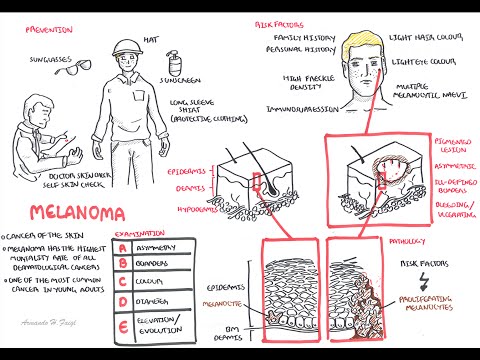
Melanoma - Overview (signs and symptoms, pathology, risk factors, treatment)

What Went Behind Max’s Running Up That Hill Scene? | Stranger Things | Sadie Sink | Netflix India

CrashCourse
Quiz
Rponse correcte :
Les quiz apparaissent pendant que tu regardes la vidéo
Astuce mémo
Dans cette vidéo
Apprendre les langues gratuitement

