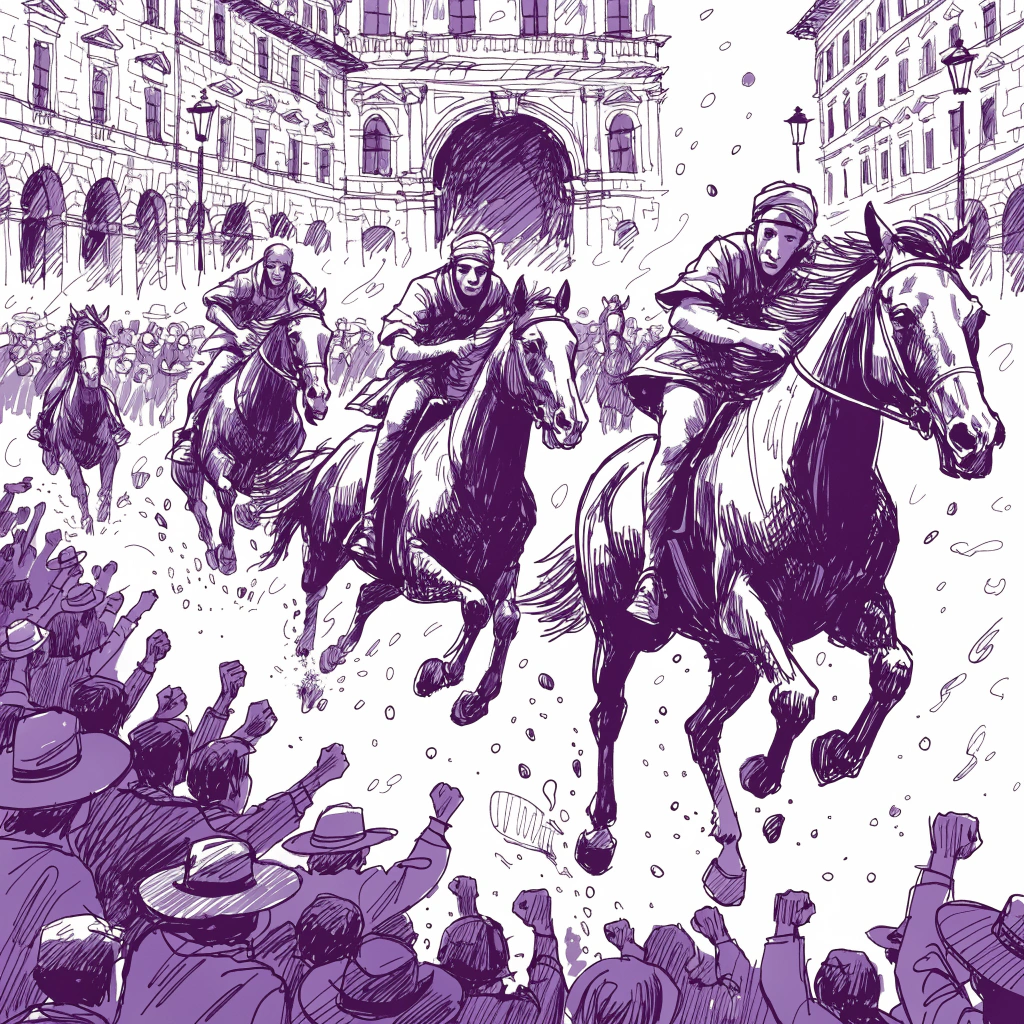
A Famous Horse Race in Italy
Siena is a beautiful city in Italy. Every year, there is a famous horse race. It is the Palio di Siena. The race is in a big square. The square is the Piazza del Campo.
Ten horses run in the race. They represent different districts of the city. These districts are called 'Contrade'. Each district has a special flag and colors.
The race is very short, but it is very exciting. People come from all over the world. They watch the horses and cheer for their district. It is a big party for the people of Siena.
व्याकरण स्पॉटलाइट
पैटर्न: Present Simple (to be)
"Siena is a beautiful city in Italy."
We use 'is' for a single place or thing. It describes a fact or state in the present.
पैटर्न: Present Simple (Action Verbs)
"Ten horses run in the race."
We use the base form of the verb for plural subjects like 'horses'. This describes a regular event.
अपनी समझ जाँचें
10 सवाल · A1 शुरुआती · 1 मुफ्त प्रीव्यू
इस लेख से आपने जो सीखा उसकी जाँच करें। सभी सवालों के जवाब दें और XP कमाएँ!
Where is the Palio di Siena?
क्या आप क्विज़ समाप्त करना चाहते हैं?
9 और सवाल आपका इंतज़ार कर रहे हैं। पूरा क्विज़ अनलॉक करने और XP कमाने के लिए मुफ्त साइन अप करें!
मुफ़्त साइन अप करोपहले से अकाउंट है? साइन इन करो
बहुत बढ़िया!
अभ्यास जारी रखें!
पहले से पूर्ण — कोई अतिरिक्त XP नहीं
XP कमाने के लिए साइन अप करोसवालों का विवरण
Where is the Palio di Siena?
आपका जवाब:
सही जवाब: In Italy
The race is in a big square.
आपका जवाब:
सही जवाब: सही
What is a 'square'?
आपका जवाब:
सही जवाब: An open area in a city
The race is very _____, but it is very exciting.
आपका जवाब:
सही जवाब: short
The Palio: Italy's Most Famous Horse Race
Siena is a beautiful city in Italy. Every summer, there is a very famous horse race called the Palio. It is more than just a race; it is the soul of the city. The race happens twice a year, on July 2nd and August 16th.
The race takes place in the Piazza del Campo, which is the main square. The city has seventeen districts called 'Contrade.' Each district has its own flag and colors. However, only ten horses run in each race. The jockeys ride the horses without saddles. This makes the race very fast and dangerous.
Before the race, there is a colorful parade. People wear traditional clothes and play drums. The race is very short because the square is small. It usually lasts only ninety seconds! The winner gets a silk banner called a 'Palio.' This race is older than many other sports, and the people of Siena love it very much because it is part of their history.
व्याकरण स्पॉटलाइट
पैटर्न: Comparatives
"This race is older than many other sports."
We use comparatives to compare two things. For short adjectives like 'old', we add '-er' and the word 'than'.
पैटर्न: Connectors (because)
"The race is very short because the square is small."
We use 'because' to give a reason for something. It connects the result (short race) with the cause (small square).
अपनी समझ जाँचें
11 सवाल · A2 बिगिनर · 1 मुफ्त प्रीव्यू
इस लेख से आपने जो सीखा उसकी जाँच करें। सभी सवालों के जवाब दें और XP कमाएँ!
How many times a year does the Palio race happen?
क्या आप क्विज़ समाप्त करना चाहते हैं?
10 और सवाल आपका इंतज़ार कर रहे हैं। पूरा क्विज़ अनलॉक करने और XP कमाने के लिए मुफ्त साइन अप करें!
मुफ़्त साइन अप करोपहले से अकाउंट है? साइन इन करो
बहुत बढ़िया!
अभ्यास जारी रखें!
पहले से पूर्ण — कोई अतिरिक्त XP नहीं
XP कमाने के लिए साइन अप करोसवालों का विवरण
How many times a year does the Palio race happen?
आपका जवाब:
सही जवाब: Twice
The jockeys use saddles when they ride the horses.
आपका जवाब:
सही जवाब: गलत
What is a 'banner' in the text?
आपका जवाब:
सही जवाब: A piece of silk cloth
The race takes place in the main _____, which is called Piazza del Campo.
आपका जवाब:
सही जवाब: square
In which city does the Palio take place?
आपका जवाब:
सही जवाब: Siena
पालियो डी सिएना: इटली की एक ऐतिहासिक घुड़दौड़
इटली के सिएना शहर में आयोजित होने वाला 'पालियो डी सिएना' सिर्फ एक घुड़दौड़ नहीं है, बल्कि यह शहर की आत्मा है। यह सदियों पुरानी परंपरा साल में दो बार, शहर के मध्यकालीन हृदय में, बड़े उत्साह के साथ मनाई जाती है। यह आयोजन शहर के विभिन्न 'कॉन्ट्राडे' (ज़िलों) के बीच एक भयंकर प्रतिस्पर्धा है।
कुल मिलाकर 17 कॉन्ट्राडे हैं, लेकिन हर दौड़ में केवल 10 ही भाग लेते हैं। इनमें से सात वे कॉन्ट्राडे होते हैं जिन्होंने पिछले साल की संबंधित पालियो दौड़ में भाग नहीं लिया था, और बाकी तीन लॉटरी द्वारा चुने जाते हैं। यह दौड़ 2 जुलाई को (पालियो डी प्रोवेन्ज़ानो के रूप में) और फिर 16 अगस्त को (पालियो डेल'असुन्टा के रूप में) आयोजित की जाती है।
दौड़ सिएना के प्रसिद्ध पियाज़ा डेल कैम्पो में होती है, जो एक शंख के आकार का ऐतिहासिक चौक है। इस दौड़ में कोई नियम नहीं होते, और यह बहुत तेज़ और रोमांचक होती है। विजेता कॉन्ट्राडा को पूरे साल गर्व महसूस होता है। यह आयोजन सिर्फ एक खेल नहीं है, बल्कि सिएना के लोगों के लिए पहचान और समुदाय का प्रतीक है, जो दुनिया भर से पर्यटकों को आकर्षित करता है। हर साल हज़ारों लोग इस अनूठी परंपरा को देखने आते हैं, और इसके रंगीन नज़ारे और जोशीले माहौल को महसूस करते हैं।
व्याकरण स्पॉटलाइट
पैटर्न: प्रेजेंट परफेक्ट (होती रही है / मनाई जाती रही है)
"यह सदियों पुरानी परंपरा साल में दो बार, शहर के मध्यकालीन हृदय में, बड़े उत्साह के साथ मनाई जाती है।"
यह क्रिया का वह रूप है जो यह बताता है कि कोई क्रिया अतीत में शुरू हुई और वर्तमान में भी जारी है या उसका प्रभाव वर्तमान में भी है। 'जाती है' से यहाँ निष्क्रिय वाक्य का भी बोध होता है।
पैटर्न: सापेक्ष खंड (जो... वह...)
"दौड़ सिएना के प्रसिद्ध पियाज़ा डेल कैम्पो में होती है, जो एक शंख के आकार का ऐतिहासिक चौक है।"
'जो' एक सापेक्ष सर्वनाम है जो मुख्य वाक्य में किसी संज्ञा के बारे में अतिरिक्त जानकारी देता है। 'जो' वाले खंड को सापेक्ष खंड कहते हैं, जो वाक्य को अधिक विस्तृत बनाता है।
अपनी समझ जाँचें
11 सवाल · B1 मध्यम · 1 मुफ्त प्रीव्यू
इस लेख से आपने जो सीखा उसकी जाँच करें। सभी सवालों के जवाब दें और XP कमाएँ!
पालियो डी सिएना साल में कितनी बार आयोजित होती है?
क्या आप क्विज़ समाप्त करना चाहते हैं?
10 और सवाल आपका इंतज़ार कर रहे हैं। पूरा क्विज़ अनलॉक करने और XP कमाने के लिए मुफ्त साइन अप करें!
मुफ़्त साइन अप करोपहले से अकाउंट है? साइन इन करो
बहुत बढ़िया!
अभ्यास जारी रखें!
पहले से पूर्ण — कोई अतिरिक्त XP नहीं
XP कमाने के लिए साइन अप करोसवालों का विवरण
पालियो डी सिएना साल में कितनी बार आयोजित होती है?
आपका जवाब:
सही जवाब: दो बार
पालियो डी सिएना में कुल 17 कॉन्ट्राडे भाग लेते हैं।
आपका जवाब:
सही जवाब: गलत
'प्रतिस्पर्धा' का अर्थ क्या है?
आपका जवाब:
सही जवाब: होड़
दौड़ सिएना के प्रसिद्ध पियाज़ा डेल कैम्पो में ______ है।
आपका जवाब:
सही जवाब: होती
जुलाई में होने वाली दौड़ को क्या कहते हैं?
आपका जवाब:
सही जवाब: पालियो डी प्रोवेन्ज़ानो
पालियो डी सिएना: परंपरा और जुनून का एक अद्वितीय संगम
इटली के टस्कनी क्षेत्र में स्थित ऐतिहासिक सिएना शहर, अपनी मध्ययुगीन वास्तुकला और समृद्ध सांस्कृतिक विरासत के लिए विश्वविख्यात है। इस शहर के हृदय में, साल में दो बार, एक ऐसा असाधारण आयोजन होता है जिसे पालियो डी सिएना के नाम से जाना जाता है। यह मात्र एक घुड़दौड़ नहीं है, बल्कि सिएना की आत्मा, उसकी पहचान और उसके निवासियों के गहरे जुनून का प्रतीक है। यह सदियों पुरानी परंपराओं और स्थानीय निष्ठा में गहराई से निहित है, जो इसे सिर्फ एक खेल प्रतियोगिता से कहीं बढ़कर बनाती है।
सिएना शहर को सत्रह 'कॉन्ट्राडे' (ऐतिहासिक ज़िलों या पड़ोसों) में विभाजित किया गया है, और प्रत्येक कॉन्ट्राडा की अपनी विशिष्ट पहचान, प्रतीक, रंग और संरक्षक संत होते हैं। पालियो में प्रतिस्पर्धा इन कॉन्ट्राडे के बीच गौरव और श्रेष्ठता के लिए एक गहन संघर्ष है। हालांकि कुल सत्रह कॉन्ट्राडे हैं, प्रत्येक दौड़ में केवल दस ही भाग लेते हैं। इन दस में से सात कॉन्ट्राडे वे होते हैं जिन्होंने पिछले वर्ष की संबंधित पालियो दौड़ में हिस्सा नहीं लिया था, और शेष तीन का चयन लॉटरी प्रणाली के माध्यम से किया जाता है। यह सुनिश्चित करता है कि समय के साथ सभी कॉन्ट्राडे को प्रतिस्पर्धा करने का अवसर मिले, जिससे पूरे शहर में उत्साह और प्रतिद्वंद्विता का स्तर ऊँचा बना रहे।
यह भव्य आयोजन साल में दो बार होता है: पहला 2 जुलाई को, जिसे पालियो डी प्रोवेंज़ानो (Palio di Provenzano) के नाम से जाना जाता है, और दूसरा 16 अगस्त को, जिसे पालियो डेल'असुंटा (Palio dell'Assunta) कहा जाता है। ये तिथियाँ धार्मिक महत्व रखती हैं, जो शहर के संरक्षक संतों को समर्पित हैं। दौड़ का मंच पियाज़ा डेल कैम्पो (Piazza del Campo) है, जो सिएना का मुख्य शंख के आकार का मध्ययुगीन चौक है। इस ऐतिहासिक चौक को दौड़ के लिए विशेष रूप से तैयार किया जाता है; इसकी परिधि पर रेत की एक मोटी परत बिछाई जाती है और दर्शकों की सुरक्षा सुनिश्चित करने के लिए मजबूत बाधाएँ स्थापित की जाती हैं।
दौड़ स्वयं में बेहद तेज़, खतरनाक और नाटकीय होती है। जॉकी बिना काठी के घोड़ों पर सवार होते हैं, जिससे प्रतियोगिता की तीव्रता और जोखिम बढ़ जाता है। यह केवल तीन चक्करों की एक छोटी, तीव्र प्रतियोगिता होती है, जिसमें रणनीति, भाग्य और कॉन्ट्राडे के प्रति अटूट निष्ठा का गहरा मिश्रण होता है। दौड़ शुरू होने से पहले और उसके दौरान, पूरे शहर में एक विद्युतीय ऊर्जा और उन्मादी उत्साह का माहौल होता है। जीतने वाला कॉन्ट्राडे एक 'पालियो' नामक रेशमी बैनर प्राप्त करता है, जो सिर्फ एक पुरस्कार नहीं, बल्कि पूरे वर्ष के लिए गौरव, सम्मान और सामाजिक श्रेष्ठता का प्रतीक होता है।
पालियो डी सिएना केवल एक वार्षिक उत्सव या पर्यटन आकर्षण नहीं है, बल्कि सिएनावासियों के लिए उनकी पहचान, इतिहास और सामुदायिक भावना का एक जीवंत प्रदर्शन है। यह एक सांस्कृतिक घटना है जो पीढ़ियों से चली आ रही है और जिसने आधुनिकता के बावजूद अपनी मूल आत्मा और परंपरा को बरकरार रखा है। यह वास्तव में इटली के सबसे अनूठे, आकर्षक और भावनात्मक आयोजनों में से एक है, जो आगंतुकों को सिएना के वास्तविक सार को अनुभव करने का अवसर प्रदान करता है।
व्याकरण स्पॉटलाइट
पैटर्न: मात्र... नहीं, बल्कि...
"यह मात्र एक घुड़दौड़ नहीं है, बल्कि सिएना की आत्मा, उसकी पहचान और उसके निवासियों के गहरे जुनून का प्रतीक है।"
यह पैटर्न दो विपरीत या पूरक विचारों को जोड़ने के लिए उपयोग होता है, जहाँ पहला भाग एक सामान्य धारणा को अस्वीकृत करता है और दूसरा भाग उसकी वास्तविक प्रकृति को उजागर करता है। 'मात्र' नकारात्मकता के साथ 'केवल' का अर्थ देता है, जबकि 'बल्कि' एक मजबूत विकल्प या विस्तार प्रस्तुत करता है।
पैटर्न: जिसे... के नाम से जाना जाता है
"पहला 2 जुलाई को, जिसे पालियो डी प्रोवेंज़ानो (Palio di Provenzano) के नाम से जाना जाता है..."
यह संरचना किसी व्यक्ति, वस्तु या घटना को उसके विशिष्ट नाम या उपाधि से परिचित कराने के लिए प्रयोग की जाती है। 'जिसे' सापेक्ष सर्वनाम है जो पूर्ववर्ती संज्ञा को संदर्भित करता है, और 'के नाम से जाना जाता है' एक मानक वाक्यांश है जो पहचान स्थापित करता है।
पैटर्न: यह सुनिश्चित करता है कि...
"यह सुनिश्चित करता है कि समय के साथ सभी कॉन्ट्राडे को प्रतिस्पर्धा करने का अवसर मिले..."
यह पैटर्न किसी क्रिया या स्थिति के परिणाम या उद्देश्य को व्यक्त करने के लिए उपयोग होता है। 'यह' पूर्ववर्ती कथन या क्रिया को संदर्भित करता है, और 'सुनिश्चित करता है कि' एक निश्चित परिणाम की गारंटी देता है। इसके बाद एक उपवाक्य आता है जो उस परिणाम को बताता है।
अपनी समझ जाँचें
11 सवाल · B2 अपर इंटरमीडिएट · 1 मुफ्त प्रीव्यू
इस लेख से आपने जो सीखा उसकी जाँच करें। सभी सवालों के जवाब दें और XP कमाएँ!
पालियो डी सिएना कहाँ आयोजित होता है?
क्या आप क्विज़ समाप्त करना चाहते हैं?
10 और सवाल आपका इंतज़ार कर रहे हैं। पूरा क्विज़ अनलॉक करने और XP कमाने के लिए मुफ्त साइन अप करें!
मुफ़्त साइन अप करोपहले से अकाउंट है? साइन इन करो
बहुत बढ़िया!
अभ्यास जारी रखें!
पहले से पूर्ण — कोई अतिरिक्त XP नहीं
XP कमाने के लिए साइन अप करोसवालों का विवरण
पालियो डी सिएना कहाँ आयोजित होता है?
आपका जवाब:
सही जवाब: सिएना
पालियो डी सिएना साल में एक बार आयोजित होता है।
आपका जवाब:
सही जवाब: गलत
'जुनून' शब्द का क्या अर्थ है?
आपका जवाब:
सही जवाब: उत्साह
दौड़ का मंच पियाज़ा डेल ______ है।
आपका जवाब:
सही जवाब: कैम्पो
प्रत्येक दौड़ में कितने कॉन्ट्राडे भाग लेते हैं?
आपका जवाब:
सही जवाब: दस
Beyond the Spectacle: The Sociocultural Tapestry of Siena’s Palio
Seldom does a tradition so profoundly dictate the heartbeat of a modern city as the Palio di Siena does to this Tuscan gem. To the uninitiated observer, the event might appear to be a mere equestrian race, a chaotic three-lap dash around the Piazza del Campo. However, such a reductionist view ignores the intricate sociocultural tapestry that defines the Sienese identity. The Palio is not an event staged for the amusement of tourists; rather, it is the culmination of a year-long cycle of clandestine strategy, communal fervor, and atavistic loyalty.
Central to this phenomenon are the Contrade, the seventeen city districts whose origins stretch back to the Middle Ages. Only ten districts participate in any given race—the seven that were excluded from the previous year’s corresponding event, supplemented by three drawn by lot. This selection process alone is fraught with tension, as the mere prospect of exclusion can be a source of profound communal grief. It is the visceral connection to one’s Contrada that fuels the intense rivalries characterizing the lead-up to the race. From birth to death, a Sienese citizen’s life is inextricably linked to their district’s colors, symbols, and history.
The race itself, held on July 2nd and August 16th, is a masterclass in controlled chaos. The Piazza del Campo is transformed into a dusty, treacherous track where the jockeys ride bareback. What is truly remarkable is the prowess required to navigate the sharp corners of the piazza, particularly the notorious San Martino curve. The race is often won by a horse that has lost its rider—the 'cavallo scosso'—underscoring the belief that the horse, more than the man, embodies the spirit of the district.
The preparation for these few minutes of action is meticulously planned. Beyond the physical training of the horses, there is a complex web of diplomatic negotiations. The 'partiti'—secret agreements between jockeys and districts—illustrate the sociopolitical machinations inherent in the event. It is through these clandestine dealings that the Palio transcends sport, becoming an exercise in political acumen and strategic maneuvering.
Critics often point to the perceived brutality of the race, yet for the Sienese, the preservation of this medieval legacy is non-negotiable. The Palio is a quintessential example of how tradition can persist in the face of global homogenization. It serves as a bulwark against the ephemeral nature of modern culture, providing a sense of permanence and belonging. The animosity between rival districts, while seemingly archaic, provides a structured outlet for communal expression.
In conclusion, the Palio di Siena remains one of the last vestiges of a bygone era, where the honor of one's neighborhood outweighs personal gain. It is a spectacle of raw emotion, where the past and present collide in a cloud of dust and ancient pageantry. To understand the Palio is to understand the very soul of Siena—a city where history is not merely remembered, but lived with unrelenting passion.
व्याकरण स्पॉटलाइट
पैटर्न: Inversion with Negative Adverbials
"Seldom does a tradition so profoundly dictate the heartbeat of a modern city..."
When using negative or restrictive adverbs like 'seldom' at the start of a sentence for emphasis, the auxiliary verb comes before the subject. This creates a more formal and dramatic tone typical of C1 writing.
पैटर्न: Cleft Sentences
"It is the visceral connection to one’s Contrada that fuels the intense rivalries..."
Cleft sentences use the structure 'It is/was + [emphasized part] + that/who' to focus the reader's attention on a specific element of the sentence. Here, it emphasizes the 'visceral connection' as the primary cause.
पैटर्न: Nominalisation
"The preservation of this medieval legacy is non-negotiable."
Nominalisation involves turning verbs (preserve) into nouns (preservation). It is a hallmark of formal, academic, and advanced English, allowing for more concise and abstract argumentation.
अपनी समझ जाँचें
12 सवाल · C1 उन्नत · 1 मुफ्त प्रीव्यू
इस लेख से आपने जो सीखा उसकी जाँच करें। सभी सवालों के जवाब दें और XP कमाएँ!
Which statement best describes the author's view of the Palio?
क्या आप क्विज़ समाप्त करना चाहते हैं?
11 और सवाल आपका इंतज़ार कर रहे हैं। पूरा क्विज़ अनलॉक करने और XP कमाने के लिए मुफ्त साइन अप करें!
मुफ़्त साइन अप करोपहले से अकाउंट है? साइन इन करो
बहुत बढ़िया!
अभ्यास जारी रखें!
पहले से पूर्ण — कोई अतिरिक्त XP नहीं
XP कमाने के लिए साइन अप करोसवालों का विवरण
Which statement best describes the author's view of the Palio?
आपका जवाब:
सही जवाब: It is a complex sociocultural phenomenon central to Sienese identity.
A horse can win the Palio even if its jockey is no longer on its back.
आपका जवाब:
सही जवाब: सही
What does the word 'ephemeral' imply in the context of the article?
आपका जवाब:
सही जवाब: Fading and short-lived
The secret agreements between jockeys and districts are known as _____.
आपका जवाब:
सही जवाब: partiti
How are the ten participating districts chosen for each race?
आपका जवाब:
सही जवाब: Seven excluded from the previous year are joined by three drawn by lot.
The author suggests that the Palio is a way for Siena to resist global homogenization.
आपका जवाब:
सही जवाब: सही
The Crucible of Identity: Sociocultural Stratification and Ritualistic Fervour in the Sienese Palio
To the uninitiated observer, the Piazza del Campo might appear as a mere architectural marvel of the Tuscan Gothic style. However, twice annually, this shell-shaped void is transmuted into a primordial arena where the very essence of Sienese identity is contested. The Palio di Siena is not a horse race in the contemporary sporting sense; rather, it represents a vestigial fragment of medieval civic life, a ritualistic liturgy that defies the encroaching homogeneity of the globalized world. Were it not for the visceral connection each citizen maintains with their 'Contrada,' the event might have long since succumbed to the sterile pressures of modern tourism. The Contrade are not merely administrative districts but are, in fact, stratified socio-psychological entities that command absolute fealty. There are seventeen such districts, yet the constraints of the Piazza necessitate that only ten participate in any given race. This selection process—a complex interplay of historical precedence and the arbitrary hand of lot—ensures that the tension remains perpetually taut. Seven positions are granted to those who did not compete in the previous year’s corresponding race, while the remaining three are drawn by lot, a mechanism that highlights the Sienese preoccupation with 'destiny.' The atmosphere within the city during the days leading up to the race is one of profound, almost suffocating, anticipation. Should one traverse the narrow, winding alleys of Siena during this period, one would encounter an environment where the mundane is suspended. The race itself lasts a mere ninety seconds, yet its brevity is inversely proportional to its significance. It is an ephemeral explosion of violence and grace, where the 'fantini' (jockeys) ride bareback, often wielding the 'nerbo'—a whip made of dried ox hide—not only to urge their steeds but to impede their rivals. One must acknowledge the inherent contradictions of the Palio. While it is a celebration of community, it is also a theater of profound animosity. The rivalries between specific Contrade are atavistic, predating modern political structures and existing as a core component of an individual's self-conception. Success in the Palio offers no financial reward; the prize is the 'Drappellone,' a silk banner that serves as a temporary effigy of victory. This lack of material gain underscores the symbolic weight of the event, where the vicissitudes of fortune can elevate a district to glory or plunge it into a year of collective mourning. Critics often point to the perceived brutality of the race, yet such a perspective often fails to grasp the cultural context in which the Palio operates. To the Sienese, the horse is not a tool but a sacred participant, often brought into the Contrada’s church to be blessed before the race. The relationship is symbiotic, rooted in a tradition that is inimical to the sanitized, risk-averse nature of modern life. The Palio is a crucible where the past and present collide, a spectacular rejection of the notion that history is a linear progression away from the tribal. In conclusion, the Palio di Siena remains a singular phenomenon in the European landscape. It is a testament to the enduring power of localized identity and the necessity of ritual in providing a sense of continuity. As long as the bells of the Torre del Mangia continue to toll, the Piazza del Campo will remain the heart of a city that refuses to let its soul be diluted by the tides of modernity.
व्याकरण स्पॉटलाइट
पैटर्न: Second Conditional with Inversion
"Should one traverse the narrow, winding alleys of Siena during this period, one would encounter an environment where the mundane is suspended."
The use of 'Should' at the beginning of the clause replaces 'If one should traverse.' It is a formal rhetorical device used to express a hypothetical situation in a more sophisticated tone.
पैटर्न: Mixed Subjunctive for Hypothetical Negation
"Were it not for the visceral connection each citizen maintains with their 'Contrada,' the event might have long since succumbed to the sterile pressures of modern tourism."
This structure uses 'Were it not for' to describe a current condition that prevents a hypothetical past or present outcome. It emphasizes the necessity of the Contrada connection.
पैटर्न: Passive Voice with Modal Perfect
"...the event might have long since succumbed to the sterile pressures of modern tourism."
The modal 'might' combined with 'have' and the past participle 'succumbed' indicates a possibility that did not happen in the past, often used for academic speculation.
अपनी समझ जाँचें
12 सवाल · C2 महारत · 1 मुफ्त प्रीव्यू
इस लेख से आपने जो सीखा उसकी जाँच करें। सभी सवालों के जवाब दें और XP कमाएँ!
According to the text, how is the participation of the ten Contrade determined?
क्या आप क्विज़ समाप्त करना चाहते हैं?
11 और सवाल आपका इंतज़ार कर रहे हैं। पूरा क्विज़ अनलॉक करने और XP कमाने के लिए मुफ्त साइन अप करें!
मुफ़्त साइन अप करोपहले से अकाउंट है? साइन इन करो
बहुत बढ़िया!
अभ्यास जारी रखें!
पहले से पूर्ण — कोई अतिरिक्त XP नहीं
XP कमाने के लिए साइन अप करोसवालों का विवरण
According to the text, how is the participation of the ten Contrade determined?
आपका जवाब:
सही जवाब: Through a combination of historical rotation and random selection.
The primary reward for winning the Palio is a substantial monetary prize.
आपका जवाब:
सही जवाब: गलत
What does the word 'inimical' imply in the context of the article?
आपका जवाब:
सही जवाब: Directly opposed or harmful to a specific way of life.
The author describes the Palio as a _____ where the past and present collide.
आपका जवाब:
सही जवाब: crucible
What role does the 'nerbo' play during the race?
आपका जवाब:
सही जवाब: It is a whip used for both acceleration and sabotaging opponents.
The author suggests that the Palio is a rejection of modern, risk-averse culture.
आपका जवाब:
सही जवाब: सही

