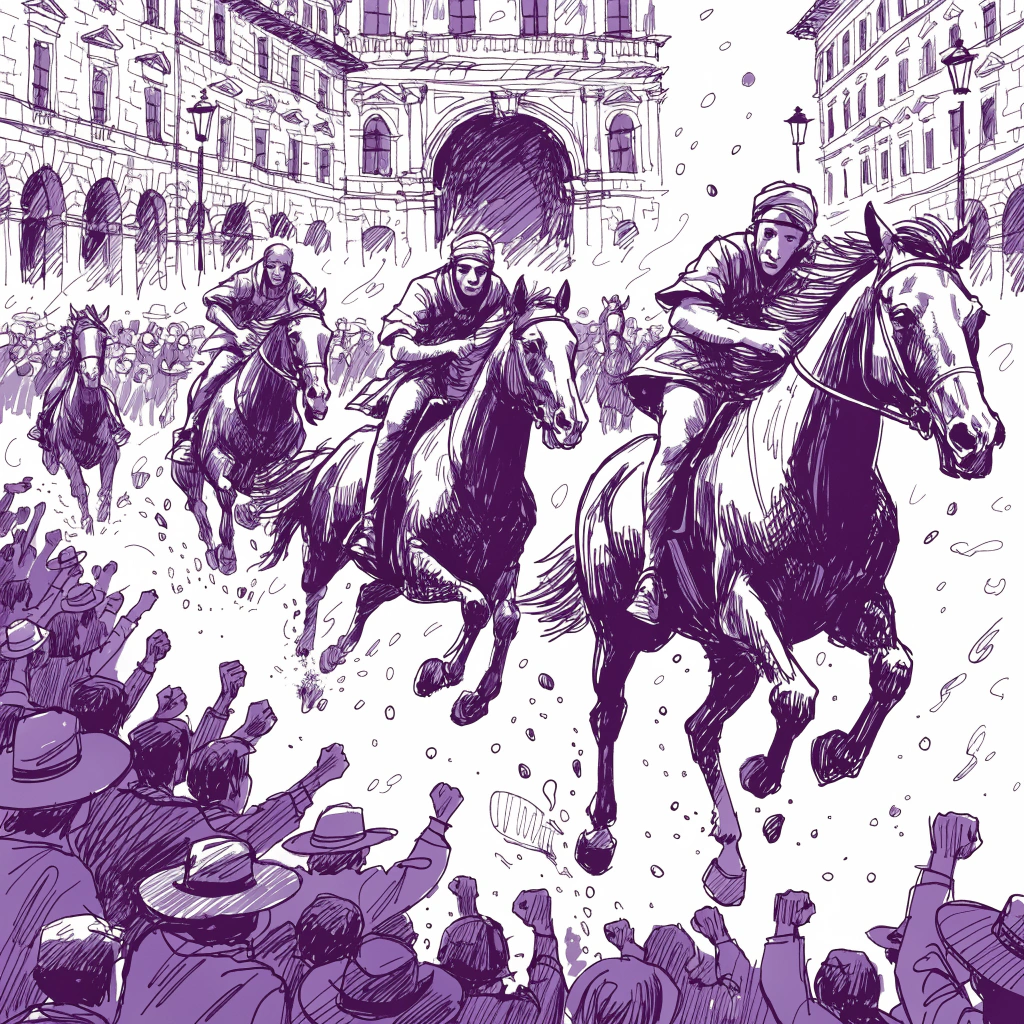
시에나의 뜨거운 축제, 팔리오
이탈리아 시에나에는 아주 유명한 축제가 있습니다. 이 축제의 이름은 '팔리오'입니다. 팔리오는 도시의 중심에서 하는 오래된 말 경주입니다. 매년 7월 2일과 8월 16일에 이 축제를 합니다. 시에나의 아름답고 큰 광장에서 말을 탑니다. 10마리의 말이 아주 빨리 달립니다. 시에나에는 여러 구역의 팀이 있습니다. 이 팀들의 이름은 '콘트라데'입니다. 마을 사람들은 광장에 모두 모입니다. 그리고 자기 팀을 아주 크게 응원합니다. 이 경주는 정말 재미있고 유명합니다. 시에나 사람들은 이 축제를 정말 많이 사랑합니다.
문법 스포트라이트
패턴: -에
"이탈리아 시에나에는 아주 유명한 축제가 있습니다."
장소나 시간을 나타낼 때 사용합니다. 명사 뒤에 붙어서 위치나 때를 알려줍니다.
패턴: -은/는
"이 축제의 이름은 '팔리오'입니다."
문장에서 무엇에 대해 말하는지 주제를 나타냅니다. 받침이 있으면 '은', 없으면 '는'을 씁니다.
이해도를 테스트하세요
10 질문 · A1 초급 · 무료 미리보기 1회
이 기사에서 배운 내용을 테스트하세요. 모든 질문에 답하여 XP를 획득하세요!
팔리오는 무엇입니까?
문제별 결과
팔리오는 무엇입니까?
내 답변:
정답: 말 경주
팔리오 축제는 겨울에 합니다.
내 답변:
정답: 거짓
'광장'은 무슨 뜻입니까?
내 답변:
정답: 넓은 곳
시에나의 큰 _____에서 말을 탑니다.
내 답변:
정답: 광장
The Palio: Italy's Most Famous Horse Race
Siena is a beautiful city in Italy. Every summer, there is a very famous horse race called the Palio. It is more than just a race; it is the soul of the city. The race happens twice a year, on July 2nd and August 16th.
The race takes place in the Piazza del Campo, which is the main square. The city has seventeen districts called 'Contrade.' Each district has its own flag and colors. However, only ten horses run in each race. The jockeys ride the horses without saddles. This makes the race very fast and dangerous.
Before the race, there is a colorful parade. People wear traditional clothes and play drums. The race is very short because the square is small. It usually lasts only ninety seconds! The winner gets a silk banner called a 'Palio.' This race is older than many other sports, and the people of Siena love it very much because it is part of their history.
문법 스포트라이트
패턴: Comparatives
"This race is older than many other sports."
We use comparatives to compare two things. For short adjectives like 'old', we add '-er' and the word 'than'.
패턴: Connectors (because)
"The race is very short because the square is small."
We use 'because' to give a reason for something. It connects the result (short race) with the cause (small square).
이해도를 테스트하세요
11 질문 · A2 초등급 · 무료 미리보기 1회
이 기사에서 배운 내용을 테스트하세요. 모든 질문에 답하여 XP를 획득하세요!
How many times a year does the Palio race happen?
문제별 결과
How many times a year does the Palio race happen?
내 답변:
정답: Twice
The jockeys use saddles when they ride the horses.
내 답변:
정답: 거짓
What is a 'banner' in the text?
내 답변:
정답: A piece of silk cloth
The race takes place in the main _____, which is called Piazza del Campo.
내 답변:
정답: square
In which city does the Palio take place?
내 답변:
정답: Siena
이탈리아 시에나의 심장, 팔리오 말 경주
이탈리아 토스카나 지방의 심장부에 위치한 아름다운 도시 시에나에는 수백 년 동안 변치 않고 이어져 온 특별한 전통이 있습니다. 바로 '팔리오 디 시에나(Palio di Siena)'라고 불리는 역사적인 말 경주 축제입니다. 이 축제는 시에나 시민들에게 단순한 스포츠 경기를 넘어선, 그들의 영혼과 삶의 역사가 고스란히 담긴 매우 중요한 행사로 여겨집니다.
팔리오는 매년 여름, 7월 2일과 8월 16일에 두 번 개최됩니다. 시에나 시는 '콘트라다(Contrada)'라고 불리는 17개의 자치 구역으로 나누어져 있습니다. 하지만 한 경주에 모든 구역이 동시에 참여할 수는 없습니다. 규칙에 따라 10개의 구역만이 경주에 나설 수 있는데, 지난 경기에 참여하지 못했던 7개 구역이 우선권을 가지고, 나머지 3개 구역은 공정한 추첨을 통해 결정됩니다.
경주가 펼쳐지는 무대는 도시의 중심이자 세계에서 가장 아름다운 광장 중 하나로 꼽히는 캄포 광장입니다. 평소에는 평화롭고 낭만적인 분위기를 자랑하는 광장이지만, 축제 날이 되면 모래가 깔리고 말을 타는 기수들과 수만 명의 열정적인 관중들로 가득 차게 됩니다. 특히 기수들은 안장 없이 맨몸으로 말을 타야 하기 때문에 경주는 매우 위험하면서도 박진감이 넘칩니다.
경주에서 승리한 구역의 주민들은 승리의 깃발을 들고 며칠 동안 마을 전체에서 큰 잔치를 벌이며 기쁨을 나눕니다. 이 축제를 직접 경험하게 된다면 시에나 사람들이 조상으로부터 물려받은 전통에 대해 얼마나 깊은 자부심을 느끼는지 알 수 있을 것입니다. 팔리오는 단순한 볼거리가 아니라, 지역 공동체의 결속을 다지는 소중한 문화유산입니다.
문법 스포트라이트
패턴: -아/어 오다
"수백 년 동안 변치 않고 이어져 온 특별한 전통이 있습니다."
과거부터 현재까지 어떤 상태나 행동이 계속 유지되고 있음을 나타낼 때 사용합니다. 여기서는 전통이 과거부터 지금까지 계속되고 있다는 의미입니다.
패턴: -게 되다
"축제 날이 되면 모래가 깔리고... 관중들로 가득 차게 됩니다."
자신의 의지와 상관없이 상황이 바뀌거나 어떤 결과에 이르게 되었을 때 사용합니다. 평화로운 광장이 축제 때문에 북적거리는 상태로 변했음을 보여줍니다.
이해도를 테스트하세요
11 질문 · B1 중급 · 무료 미리보기 1회
이 기사에서 배운 내용을 테스트하세요. 모든 질문에 답하여 XP를 획득하세요!
팔리오 경주는 일 년에 몇 번 열립니까?
문제별 결과
팔리오 경주는 일 년에 몇 번 열립니까?
내 답변:
정답: 두 번
모든 17개 구역이 매 경주에 함께 참여한다.
내 답변:
정답: 거짓
'광장'의 의미로 알맞은 것은 무엇입니까?
내 답변:
정답: 사람들이 모이는 넓은 장소
기수들은 _____ 없이 말을 타야 하기 때문에 경주가 매우 위험합니다.
내 답변:
정답: 안장
경주가 열리는 장소는 어디입니까?
내 답변:
정답: 캄포 광장
The Palio di Siena: More Than Just a Race
Deeply embedded in the heart of Tuscany, the city of Siena hosts an event that transcends the boundaries of a typical sporting spectacle. The Palio di Siena, held twice annually in the historic Piazza del Campo, is a centuries-old horse race that serves as a profound expression of local heritage and communal pride. While many outsiders perceive it as a mere tourist attraction, for the Sienese, it is a life-defining ritual that dictates the social calendar and emotional state of the city's inhabitants.
The competition is structured around the 'Contrade,' or city districts. Although there are seventeen distinct Contrade, only ten are permitted to participate in any single race. This selection process is meticulously organized: the seven districts that did not compete in the previous year’s corresponding race are automatically entered, while the remaining three are chosen by lot. This system ensures a rotating sense of anticipation and fairness, though it also intensifies the long-standing rivalries that have characterized Sienese life since the Middle Ages.
Preparation for the Palio is an arduous process involving months of planning. The Piazza del Campo is transformed into a temporary racetrack, with thick layers of tuff clay laid down to protect the horses. The race itself is notoriously brief, lasting approximately ninety seconds, yet it is fraught with danger and intensity. Jockeys ride bareback, wearing the vibrant colors of their respective districts. Interestingly, the rules dictate that a horse can win even if it has lost its rider during the dash, provided that it crosses the finish line first while still carrying its decorative headpiece.
Beyond the physical race, the Palio is an intricate tapestry of tradition. Each victory brings immense prestige to the winning district, while defeat can lead to profound disappointment. The event is preceded by magnificent processions and followed by weeks of celebration. Critics occasionally question the ethics of the race regarding animal welfare; however, the Sienese argue that the horses are treated with the utmost reverence, often being blessed in local churches before the event.
In conclusion, the Palio di Siena remains a testament to the power of tradition in a rapidly modernizing world. It is not just an equestrian event but a living museum of cultural authenticity. By maintaining these ancient customs, Siena preserves a unique social cohesion that is rarely found elsewhere, proving that history is not just something to be remembered, but something to be lived.
문법 스포트라이트
패턴: Passive Voice
"The selection process is meticulously organized."
The passive voice is used here to focus on the action (the process) rather than who is organizing it. It is formed using 'to be' + the past participle.
패턴: Participial Phrases
"The race itself is notoriously brief, lasting approximately ninety seconds."
The present participle 'lasting' introduces a phrase that provides additional information about the race. This structure helps combine ideas into more complex, fluid sentences.
패턴: Concessive Clauses with 'While'
"While many outsiders perceive it as a mere tourist attraction, for the Sienese, it is a life-defining ritual."
The word 'while' is used here to contrast two different perspectives. It introduces a concession, showing that although one thing is true, another contrasting thing is also true.
이해도를 테스트하세요
11 질문 · B2 중상급 · 무료 미리보기 1회
이 기사에서 배운 내용을 테스트하세요. 모든 질문에 답하여 XP를 획득하세요!
How are the final three participants for the Palio selected?
문제별 결과
How are the final three participants for the Palio selected?
내 답변:
정답: They are drawn by lot
A horse can win the Palio even if the jockey falls off during the race.
내 답변:
정답: 참
Which word describes something that requires a lot of effort and is very difficult?
내 답변:
정답: Arduous
The city of Siena is divided into seventeen districts known as _____.
내 답변:
정답: Contrade
What material is used to prepare the Piazza del Campo for the horses?
내 답변:
정답: Tuff clay
이탈리아 시에나의 심장박동, '팔리오': 중세의 열기가 빚어낸 현대의 서사
이탈리아 토스카나의 보석이라 불리는 도시 시에나, 그 중세적 풍광의 중심부인 캄포 광장(Piazza del Campo)에서는 매년 두 차례 전 세계 어디에서도 찾아볼 수 없는 기이하고도 강렬한 의식이 거행된다. 바로 '팔리오 디 시에나(Palio di Siena)'이다. 이를 단순한 경마 대회로 치부하기에는 그 속에 담긴 시에나 시민들의 역사적 무게와 정체성이 결코 가볍지 않다. 팔리아야말로 시에나인들의 자부심이 투영된 결정체라 할 수 있으며, 이는 시에나를 구성하는 각 자치 구역인 '콘트라다(Contrada)' 간의 명예와 자존심이 격돌하는 숙명적인 전장이다.
총 17개의 콘트라다 중 매 경기에는 단 10개의 구역만이 참여할 수 있는 자격을 얻는다. 전년도에 출전하지 못했던 7개 구역이 우선권을 가지며, 나머지 3개 구역은 추첨을 통해 선정되는 방식이다. 이러한 선발 과정에서부터 이미 시에나 전역은 팽팽한 긴장감에 휩싸인다. 7월 2일과 8월 16일, 뜨거운 태양 아래 펼쳐지는 이 경주를 위해 시에나 사람들은 일 년 내내 준비하며, 공동체의 결속을 다짐으로써 그들의 정체성을 공고히 한다. 경주 당일, 화려한 중세 복장을 갖춘 행렬인 '코르테오 스토리코'는 관객들을 수백 년 전의 과거로 순식간에 이동시킨다.
경주가 열리는 캄포 광장은 본래 경마장이 아닌 도시의 공공 광장이다. 이 가파르고 좁은 부채꼴 모양의 광장 바닥에 흙을 깔아 만든 임시 트랙을 안장도 없이 말에 올라탄 기수들이 질주하는 모습은 가히 압권이다. 불과 90초 남짓한 짧은 시간 동안 승패가 결정되지만, 그 찰나를 위해 쏟아붓는 열정은 광적이기까지 하다. 여기서 주목해야 할 점은 팔리오가 현대 스포츠의 일반적인 공정성보다는 중세적 관습과 고유한 전략을 중시한다는 사실이다. 상대 구역의 승리를 저지하기 위한 물밑 협상과 견제는 이 대회의 빼놓을 수 없는 묘미이거니와, 외부인의 시선으로는 쉽게 이해하기 힘든 그들만의 복잡한 사회적 함의를 담고 있다.
물론 동물의 권리 보호라는 현대적 가치관과 충돌하며 팔리오를 향한 비판의 목소리가 제기되는 것도 사실이다. 그러나 시에나인들에게 팔리오는 단순한 볼거리가 아니라, 조상으로부터 물려받은 유구한 전통을 계승하고 공동체의 응집력을 확인하는 신성한 의식이다. 현대 사회의 개인주의가 팽배한 오늘날, 팔리오는 지역 공동체가 어떻게 하나의 서사를 공유하며 그 생명력을 유지해 나가는지를 보여주는 살아있는 박물관과 같다. 이처럼 팔리오는 과거와 현재가 공존하는 시에나의 심장박동이며, 그 울림은 광장을 가득 메운 함성 속에 영원히 박동하고 있다.
문법 스포트라이트
패턴: -야말로
"팔리아야말로 시에나인들의 자부심이 투영된 결정체라 할 수 있으며..."
어떤 대상을 강조하여 말할 때 사용하는 조사입니다. '정말로 바로 그것'이라는 의미를 전달합니다.
패턴: -(으)ㅁ으로써
"공동체의 결속을 다짐으로써 그들의 정체성을 공고히 한다."
명사형 어미 '-(으)ㅁ' 뒤에 조사 '으로써'가 붙어, 어떤 일의 수단이나 방법을 나타냅니다.
패턴: -거니와
"상대 구역의 승리를 저지하기 위한 물밑 협상과 견제는 이 대회의 빼놓을 수 없는 묘미이거니와..."
앞의 사실을 인정하면서 그에 더하여 뒤의 사실을 덧붙일 때 사용하는 연결 어미입니다.
이해도를 테스트하세요
12 질문 · C1 고급 · 무료 미리보기 1회
이 기사에서 배운 내용을 테스트하세요. 모든 질문에 답하여 XP를 획득하세요!
팔리오 경주에 참여하는 콘트라다를 선정하는 기준은 무엇입니까?
문제별 결과
팔리오 경주에 참여하는 콘트라다를 선정하는 기준은 무엇입니까?
내 답변:
정답: 전년도 미출전 7개 구역과 추첨된 3개 구역이 참여한다.
팔리오 경주는 현대적인 스포츠의 공정성을 가장 중요한 가치로 여긴다.
내 답변:
정답: 거짓
'압권'의 의미로 가장 적절한 것은 무엇입니까?
내 답변:
정답: 가장 뛰어난 장면이나 부분
팔리오는 단순한 경마가 아니라 시에나인들의 조상으로부터 물려받은 _____ 전통을 계승하는 의식이다.
내 답변:
정답: 유구한
경주가 열리는 장소인 캄포 광장의 특징이 아닌 것은?
내 답변:
정답: 본래 경마를 위해 지어진 전용 경기장이다.
팔리오 경주 중에는 기수들이 안장 없이 말에 올라탄다.
내 답변:
정답: 참
The Crucible of Identity: Sociocultural Stratification and Ritualistic Fervour in the Sienese Palio
To the uninitiated observer, the Piazza del Campo might appear as a mere architectural marvel of the Tuscan Gothic style. However, twice annually, this shell-shaped void is transmuted into a primordial arena where the very essence of Sienese identity is contested. The Palio di Siena is not a horse race in the contemporary sporting sense; rather, it represents a vestigial fragment of medieval civic life, a ritualistic liturgy that defies the encroaching homogeneity of the globalized world. Were it not for the visceral connection each citizen maintains with their 'Contrada,' the event might have long since succumbed to the sterile pressures of modern tourism. The Contrade are not merely administrative districts but are, in fact, stratified socio-psychological entities that command absolute fealty. There are seventeen such districts, yet the constraints of the Piazza necessitate that only ten participate in any given race. This selection process—a complex interplay of historical precedence and the arbitrary hand of lot—ensures that the tension remains perpetually taut. Seven positions are granted to those who did not compete in the previous year’s corresponding race, while the remaining three are drawn by lot, a mechanism that highlights the Sienese preoccupation with 'destiny.' The atmosphere within the city during the days leading up to the race is one of profound, almost suffocating, anticipation. Should one traverse the narrow, winding alleys of Siena during this period, one would encounter an environment where the mundane is suspended. The race itself lasts a mere ninety seconds, yet its brevity is inversely proportional to its significance. It is an ephemeral explosion of violence and grace, where the 'fantini' (jockeys) ride bareback, often wielding the 'nerbo'—a whip made of dried ox hide—not only to urge their steeds but to impede their rivals. One must acknowledge the inherent contradictions of the Palio. While it is a celebration of community, it is also a theater of profound animosity. The rivalries between specific Contrade are atavistic, predating modern political structures and existing as a core component of an individual's self-conception. Success in the Palio offers no financial reward; the prize is the 'Drappellone,' a silk banner that serves as a temporary effigy of victory. This lack of material gain underscores the symbolic weight of the event, where the vicissitudes of fortune can elevate a district to glory or plunge it into a year of collective mourning. Critics often point to the perceived brutality of the race, yet such a perspective often fails to grasp the cultural context in which the Palio operates. To the Sienese, the horse is not a tool but a sacred participant, often brought into the Contrada’s church to be blessed before the race. The relationship is symbiotic, rooted in a tradition that is inimical to the sanitized, risk-averse nature of modern life. The Palio is a crucible where the past and present collide, a spectacular rejection of the notion that history is a linear progression away from the tribal. In conclusion, the Palio di Siena remains a singular phenomenon in the European landscape. It is a testament to the enduring power of localized identity and the necessity of ritual in providing a sense of continuity. As long as the bells of the Torre del Mangia continue to toll, the Piazza del Campo will remain the heart of a city that refuses to let its soul be diluted by the tides of modernity.
문법 스포트라이트
패턴: Second Conditional with Inversion
"Should one traverse the narrow, winding alleys of Siena during this period, one would encounter an environment where the mundane is suspended."
The use of 'Should' at the beginning of the clause replaces 'If one should traverse.' It is a formal rhetorical device used to express a hypothetical situation in a more sophisticated tone.
패턴: Mixed Subjunctive for Hypothetical Negation
"Were it not for the visceral connection each citizen maintains with their 'Contrada,' the event might have long since succumbed to the sterile pressures of modern tourism."
This structure uses 'Were it not for' to describe a current condition that prevents a hypothetical past or present outcome. It emphasizes the necessity of the Contrada connection.
패턴: Passive Voice with Modal Perfect
"...the event might have long since succumbed to the sterile pressures of modern tourism."
The modal 'might' combined with 'have' and the past participle 'succumbed' indicates a possibility that did not happen in the past, often used for academic speculation.
이해도를 테스트하세요
12 질문 · C2 마스터 · 무료 미리보기 1회
이 기사에서 배운 내용을 테스트하세요. 모든 질문에 답하여 XP를 획득하세요!
According to the text, how is the participation of the ten Contrade determined?
문제별 결과
According to the text, how is the participation of the ten Contrade determined?
내 답변:
정답: Through a combination of historical rotation and random selection.
The primary reward for winning the Palio is a substantial monetary prize.
내 답변:
정답: 거짓
What does the word 'inimical' imply in the context of the article?
내 답변:
정답: Directly opposed or harmful to a specific way of life.
The author describes the Palio as a _____ where the past and present collide.
내 답변:
정답: crucible
What role does the 'nerbo' play during the race?
내 답변:
정답: It is a whip used for both acceleration and sabotaging opponents.
The author suggests that the Palio is a rejection of modern, risk-averse culture.
내 답변:
정답: 참

