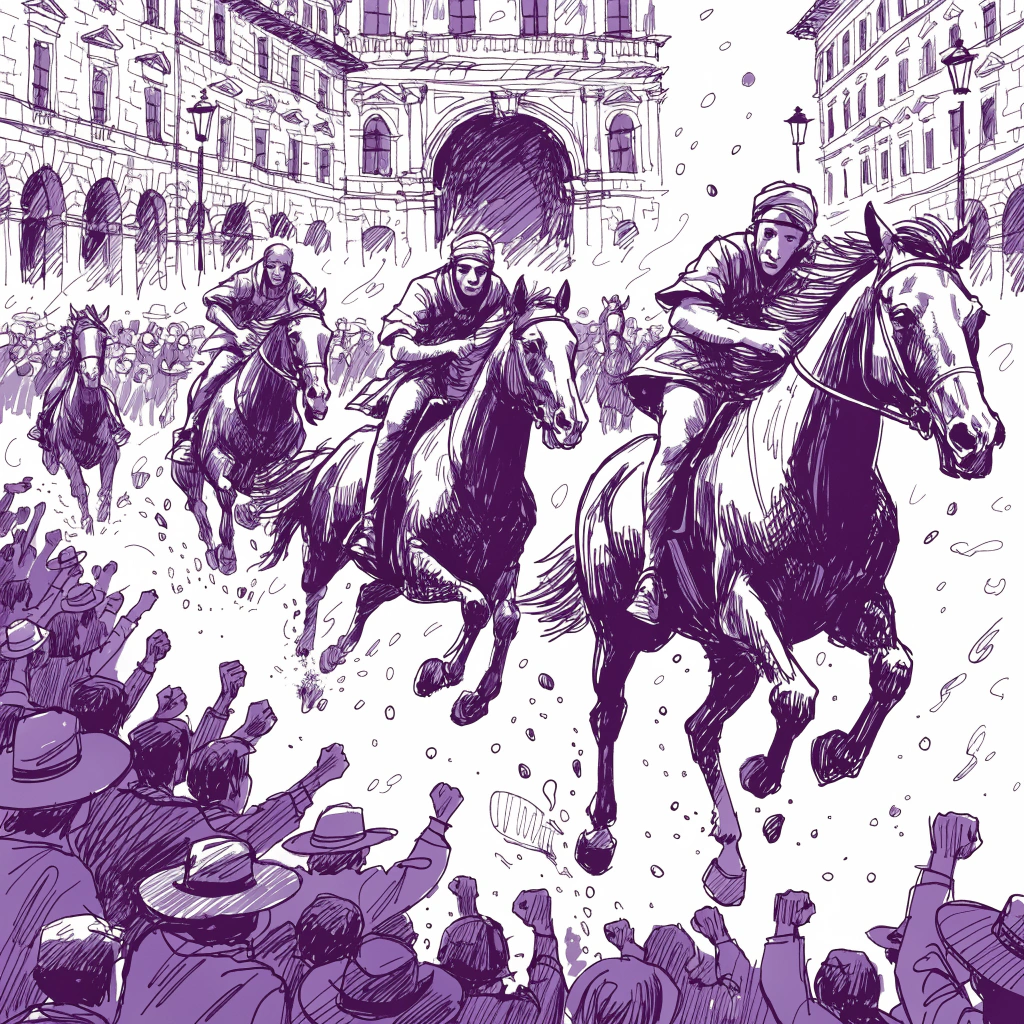
A Famous Horse Race in Italy
Siena is a beautiful city in Italy. Every year, there is a famous horse race. It is the Palio di Siena. The race is in a big square. The square is the Piazza del Campo.
Ten horses run in the race. They represent different districts of the city. These districts are called 'Contrade'. Each district has a special flag and colors.
The race is very short, but it is very exciting. People come from all over the world. They watch the horses and cheer for their district. It is a big party for the people of Siena.
文法スポットライト
パターン: Present Simple (to be)
"Siena is a beautiful city in Italy."
We use 'is' for a single place or thing. It describes a fact or state in the present.
パターン: Present Simple (Action Verbs)
"Ten horses run in the race."
We use the base form of the verb for plural subjects like 'horses'. This describes a regular event.
理解度をチェック
10 問 · A1 初級 · 無料プレビュー 1回
この記事で学んだことをテストしよう。全問正解してXPを獲得!
Where is the Palio di Siena?
問題の内訳
Where is the Palio di Siena?
あなたの回答:
正解: In Italy
The race is in a big square.
あなたの回答:
正解: 正しい
What is a 'square'?
あなたの回答:
正解: An open area in a city
The race is very _____, but it is very exciting.
あなたの回答:
正解: short
The Palio: Italy's Most Famous Horse Race
Siena is a beautiful city in Italy. Every summer, there is a very famous horse race called the Palio. It is more than just a race; it is the soul of the city. The race happens twice a year, on July 2nd and August 16th.
The race takes place in the Piazza del Campo, which is the main square. The city has seventeen districts called 'Contrade.' Each district has its own flag and colors. However, only ten horses run in each race. The jockeys ride the horses without saddles. This makes the race very fast and dangerous.
Before the race, there is a colorful parade. People wear traditional clothes and play drums. The race is very short because the square is small. It usually lasts only ninety seconds! The winner gets a silk banner called a 'Palio.' This race is older than many other sports, and the people of Siena love it very much because it is part of their history.
文法スポットライト
パターン: Comparatives
"This race is older than many other sports."
We use comparatives to compare two things. For short adjectives like 'old', we add '-er' and the word 'than'.
パターン: Connectors (because)
"The race is very short because the square is small."
We use 'because' to give a reason for something. It connects the result (short race) with the cause (small square).
理解度をチェック
11 問 · A2 初級 · 無料プレビュー 1回
この記事で学んだことをテストしよう。全問正解してXPを獲得!
How many times a year does the Palio race happen?
問題の内訳
How many times a year does the Palio race happen?
あなたの回答:
正解: Twice
The jockeys use saddles when they ride the horses.
あなたの回答:
正解: 間違い
What is a 'banner' in the text?
あなたの回答:
正解: A piece of silk cloth
The race takes place in the main _____, which is called Piazza del Campo.
あなたの回答:
正解: square
In which city does the Palio take place?
あなたの回答:
正解: Siena
The Palio di Siena: Italy's Most Intense Tradition
The city of Siena, which is located in the heart of Tuscany, is famous for a historic horse race called the Palio. This event has been held for hundreds of years and represents the soul of the city. It is not just a sport; it is a fierce competition between different neighborhoods, known as 'Contrade.'
There are seventeen districts in Siena, but only ten horses are allowed to participate in each race. Seven districts are chosen because they did not run the previous year, while the other three are selected by lot. The race is held twice every summer, on July 2nd and August 16th. Each Contrada has its own flag, colors, and loyal followers who support their horse with great passion.
The race takes place in the Piazza del Campo, which is the main medieval square of the city. For the event, the square is covered with thick sand. The race is very short, lasting only about ninety seconds, but it is extremely intense. The jockeys ride without saddles, and it is common for them to fall off during the sharp turns.
Since the 17th century, the Palio has been a symbol of local identity. The winner receives a silk banner called the 'Palio,' which is painted by a different artist every year. Although the race is very fast, the preparations last for months. It is an experience that connects the past with the present, showing the deep traditions that have survived in modern Italy.
文法スポットライト
パターン: Passive Voice
"For the event, the square is covered with thick sand."
The passive voice (be + past participle) is used when the action or the object is more important than the person doing the action. In this case, the focus is on the square and the sand.
パターン: Relative Clauses
"The city of Siena, which is located in the heart of Tuscany, is famous for a historic horse race."
Relative clauses starting with 'which' or 'who' provide extra information about a noun. Here, 'which is located in the heart of Tuscany' adds detail about the city of Siena.
理解度をチェック
11 問 · B1 中級 · 無料プレビュー 1回
この記事で学んだことをテストしよう。全問正解してXPを獲得!
How many districts (Contrade) participate in a single race?
問題の内訳
How many districts (Contrade) participate in a single race?
あなたの回答:
正解: Ten
The jockeys in the Palio ride their horses using leather saddles.
あなたの回答:
正解: 間違い
What does the word 'intense' mean in the context of the article?
あなたの回答:
正解: Very strong, extreme, or serious
The winner of the race receives a silk _____.
あなたの回答:
正解: banner
When is the second Palio race held each year?
あなたの回答:
正解: August 16th
The Palio di Siena: More Than Just a Race
Deeply embedded in the heart of Tuscany, the city of Siena hosts an event that transcends the boundaries of a typical sporting spectacle. The Palio di Siena, held twice annually in the historic Piazza del Campo, is a centuries-old horse race that serves as a profound expression of local heritage and communal pride. While many outsiders perceive it as a mere tourist attraction, for the Sienese, it is a life-defining ritual that dictates the social calendar and emotional state of the city's inhabitants.
The competition is structured around the 'Contrade,' or city districts. Although there are seventeen distinct Contrade, only ten are permitted to participate in any single race. This selection process is meticulously organized: the seven districts that did not compete in the previous year’s corresponding race are automatically entered, while the remaining three are chosen by lot. This system ensures a rotating sense of anticipation and fairness, though it also intensifies the long-standing rivalries that have characterized Sienese life since the Middle Ages.
Preparation for the Palio is an arduous process involving months of planning. The Piazza del Campo is transformed into a temporary racetrack, with thick layers of tuff clay laid down to protect the horses. The race itself is notoriously brief, lasting approximately ninety seconds, yet it is fraught with danger and intensity. Jockeys ride bareback, wearing the vibrant colors of their respective districts. Interestingly, the rules dictate that a horse can win even if it has lost its rider during the dash, provided that it crosses the finish line first while still carrying its decorative headpiece.
Beyond the physical race, the Palio is an intricate tapestry of tradition. Each victory brings immense prestige to the winning district, while defeat can lead to profound disappointment. The event is preceded by magnificent processions and followed by weeks of celebration. Critics occasionally question the ethics of the race regarding animal welfare; however, the Sienese argue that the horses are treated with the utmost reverence, often being blessed in local churches before the event.
In conclusion, the Palio di Siena remains a testament to the power of tradition in a rapidly modernizing world. It is not just an equestrian event but a living museum of cultural authenticity. By maintaining these ancient customs, Siena preserves a unique social cohesion that is rarely found elsewhere, proving that history is not just something to be remembered, but something to be lived.
文法スポットライト
パターン: Passive Voice
"The selection process is meticulously organized."
The passive voice is used here to focus on the action (the process) rather than who is organizing it. It is formed using 'to be' + the past participle.
パターン: Participial Phrases
"The race itself is notoriously brief, lasting approximately ninety seconds."
The present participle 'lasting' introduces a phrase that provides additional information about the race. This structure helps combine ideas into more complex, fluid sentences.
パターン: Concessive Clauses with 'While'
"While many outsiders perceive it as a mere tourist attraction, for the Sienese, it is a life-defining ritual."
The word 'while' is used here to contrast two different perspectives. It introduces a concession, showing that although one thing is true, another contrasting thing is also true.
理解度をチェック
11 問 · B2 中上級 · 無料プレビュー 1回
この記事で学んだことをテストしよう。全問正解してXPを獲得!
How are the final three participants for the Palio selected?
問題の内訳
How are the final three participants for the Palio selected?
あなたの回答:
正解: They are drawn by lot
A horse can win the Palio even if the jockey falls off during the race.
あなたの回答:
正解: 正しい
Which word describes something that requires a lot of effort and is very difficult?
あなたの回答:
正解: Arduous
The city of Siena is divided into seventeen districts known as _____.
あなたの回答:
正解: Contrade
What material is used to prepare the Piazza del Campo for the horses?
あなたの回答:
正解: Tuff clay
Beyond the Spectacle: The Sociocultural Tapestry of Siena’s Palio
Seldom does a tradition so profoundly dictate the heartbeat of a modern city as the Palio di Siena does to this Tuscan gem. To the uninitiated observer, the event might appear to be a mere equestrian race, a chaotic three-lap dash around the Piazza del Campo. However, such a reductionist view ignores the intricate sociocultural tapestry that defines the Sienese identity. The Palio is not an event staged for the amusement of tourists; rather, it is the culmination of a year-long cycle of clandestine strategy, communal fervor, and atavistic loyalty.
Central to this phenomenon are the Contrade, the seventeen city districts whose origins stretch back to the Middle Ages. Only ten districts participate in any given race—the seven that were excluded from the previous year’s corresponding event, supplemented by three drawn by lot. This selection process alone is fraught with tension, as the mere prospect of exclusion can be a source of profound communal grief. It is the visceral connection to one’s Contrada that fuels the intense rivalries characterizing the lead-up to the race. From birth to death, a Sienese citizen’s life is inextricably linked to their district’s colors, symbols, and history.
The race itself, held on July 2nd and August 16th, is a masterclass in controlled chaos. The Piazza del Campo is transformed into a dusty, treacherous track where the jockeys ride bareback. What is truly remarkable is the prowess required to navigate the sharp corners of the piazza, particularly the notorious San Martino curve. The race is often won by a horse that has lost its rider—the 'cavallo scosso'—underscoring the belief that the horse, more than the man, embodies the spirit of the district.
The preparation for these few minutes of action is meticulously planned. Beyond the physical training of the horses, there is a complex web of diplomatic negotiations. The 'partiti'—secret agreements between jockeys and districts—illustrate the sociopolitical machinations inherent in the event. It is through these clandestine dealings that the Palio transcends sport, becoming an exercise in political acumen and strategic maneuvering.
Critics often point to the perceived brutality of the race, yet for the Sienese, the preservation of this medieval legacy is non-negotiable. The Palio is a quintessential example of how tradition can persist in the face of global homogenization. It serves as a bulwark against the ephemeral nature of modern culture, providing a sense of permanence and belonging. The animosity between rival districts, while seemingly archaic, provides a structured outlet for communal expression.
In conclusion, the Palio di Siena remains one of the last vestiges of a bygone era, where the honor of one's neighborhood outweighs personal gain. It is a spectacle of raw emotion, where the past and present collide in a cloud of dust and ancient pageantry. To understand the Palio is to understand the very soul of Siena—a city where history is not merely remembered, but lived with unrelenting passion.
文法スポットライト
パターン: Inversion with Negative Adverbials
"Seldom does a tradition so profoundly dictate the heartbeat of a modern city..."
When using negative or restrictive adverbs like 'seldom' at the start of a sentence for emphasis, the auxiliary verb comes before the subject. This creates a more formal and dramatic tone typical of C1 writing.
パターン: Cleft Sentences
"It is the visceral connection to one’s Contrada that fuels the intense rivalries..."
Cleft sentences use the structure 'It is/was + [emphasized part] + that/who' to focus the reader's attention on a specific element of the sentence. Here, it emphasizes the 'visceral connection' as the primary cause.
パターン: Nominalisation
"The preservation of this medieval legacy is non-negotiable."
Nominalisation involves turning verbs (preserve) into nouns (preservation). It is a hallmark of formal, academic, and advanced English, allowing for more concise and abstract argumentation.
理解度をチェック
12 問 · C1 上級 · 無料プレビュー 1回
この記事で学んだことをテストしよう。全問正解してXPを獲得!
Which statement best describes the author's view of the Palio?
問題の内訳
Which statement best describes the author's view of the Palio?
あなたの回答:
正解: It is a complex sociocultural phenomenon central to Sienese identity.
A horse can win the Palio even if its jockey is no longer on its back.
あなたの回答:
正解: 正しい
What does the word 'ephemeral' imply in the context of the article?
あなたの回答:
正解: Fading and short-lived
The secret agreements between jockeys and districts are known as _____.
あなたの回答:
正解: partiti
How are the ten participating districts chosen for each race?
あなたの回答:
正解: Seven excluded from the previous year are joined by three drawn by lot.
The author suggests that the Palio is a way for Siena to resist global homogenization.
あなたの回答:
正解: 正しい
シエーナの魂「パリオ」:伝統と情熱が織りなす絢爛たる祭事
イタリア中部トスカーナ地方の古都シエーナにおいて、単なる競馬という範疇では到底括りきれない、街の根源的な魂そのものと看做される祭事がある。それが、毎年7月2日(聖母マリアの訪問を祝う「パリオ・ディ・プロヴェンツァーノ」)と8月16日(聖母被昇天を祝う「パリオ・デッラッスンタ」)の年二回開催される「パリオ・ディ・シエーナ」に他ならない。中世の面影を色濃く残すこの街の中心部、扇状のカンポ広場を舞台に繰り広げられるこの祭事は、シエーナ市民のアイデンティティと共同体意識が極限まで高揚する場であり、その熾烈な競争は、まさに街の歴史と文化の縮図と言えよう。
シエーナには「コントラーダ」と呼ばれる17の地区が存在し、それぞれが独自の旗、紋章、守護聖人、そして何よりも強固な結束力を持つ。パリオは、これらコントラーダ間の宿命的な対抗意識が公に発露される機会であり、その熱狂ぶりは想像を絶する。17のコントラーダ全てが一度にレースに参加するわけではない。各パリオには、前回の同名パリオに出場しなかった7つのコントラーダに加え、抽選で選ばれた3つのコントラーダ、計10のコントラーダのみが出走を許される。この抽選のプロセス自体が既にドラマの序章であり、選ばれしコントラーダとその市民にとっては、名誉と責任を一身に背負う覚悟を迫られる瞬間である。
レース当日までの数日間は、街全体が異様な熱気に包まれる。各コントラーダは、出走する馬が割り当てられると、それを自らの手足の如く扱い、入念な調教と聖職者による祝福をもってレースに臨む。夕食会や祝賀会が連日催され、コントラーダのメンバーは歌い、踊り、来るべき戦いに向け士気を高める。この期間中、コントラーダ間の駆け引きや密約が水面下で交わされることも珍しくなく、純粋な競技性のみならず、政治的な要素もパリオの醍醐味の一つを成している。勝つためには手段を選ばない、という非情なまでの勝利への執着が、この祭事をより複雑で深遠なものにしているのである。
レース自体は、カンポ広場に敷き詰められた土のトラックをわずか3周するという、非常に短距離かつ苛烈なものだ。騎手は鞍なしで馬に跨り、鞭一本で馬を操る。落馬しようが、馬が騎手を振り落として単独でゴールしようが、一番にゴールラインを駆け抜けた馬が属するコントラーダが勝者となる。このルールは、パリオが単なる騎手の腕比べではなく、馬とコントラーダ全体の運命が一体となった「運」と「情熱」の祭事であることを雄弁に物語っている。勝利の栄光はコントラーダ全体で分かち合われ、その歓喜は言葉では言い表せないほどである。敗れたコントラーダの落胆もまた深く、その感情の起伏こそがパリオの真髄と言えよう。
パリオは、シエーナ市民にとって単なる観光イベントや歴史的再現に留まらない。それは、祖先から脈々と受け継がれてきた生きた伝統であり、コントラーダという共同体への絶対的な忠誠心と、他者との融和よりも自己のアイデンティティを重んじるシエーナ人の気質を象徴する祭事である。この祭事を通じて、シエーナは中世の精神を現代にまで集約し、時代を超越した共同体の絆を謳歌している。グローバル化が進む現代社会において、このような強固な地域共同体の存在は、私たちに多くの示唆を与えてくれるに違いない。パリオ・ディ・シエーナは、単なる祭事の枠を凌駕し、人間社会における共同体の本質、そして歴史と伝統が現代に息づく様を鮮やかに描き出す、他に類を見ない文化現象なのである。
文法スポットライト
パターン: 〜に他ならない
"それが、毎年7月2日(聖母マリアの訪問を祝う「パリオ・ディ・プロヴェンツァーノ」)と8月16日(聖母被昇天を祝う「パリオ・デッラッスンタ」)の年二回開催される「パリオ・ディ・シエーナ」に他ならない。"
「〜に他ならない」は、「〜である」と断定する際に、その事実がまさにそれ以外の何物でもない、と強調する表現です。特に、ある事柄の性質や本質を強く主張する際に用いられ、論理的な結論や確信を示す文脈で使われます。
パターン: 〜と看做される
"単なる競馬という範疇では到底括りきれない、街の根源的な魂そのものと看做される祭事がある。"
「〜と看做される」は、「〜と見なされる」「〜と評価される」という意味で、ある物事が特定の性質や状態を持っていると一般的に判断されたり、そう評価されたりする状況を表します。客観的な視点や、ある共通認識に基づいた評価を述べる際に使われる、やや硬い表現です。
パターン: 〜のみならず
"純粋な競技性のみならず、政治的な要素もパリオの醍醐味の一つを成している。"
「〜のみならず」は、「〜だけでなく」「〜にとどまらず」という意味で、ある事柄が特定の範囲や側面にとどまらず、さらに別の側面や範囲にも及んでいることを示す表現です。追加的な要素や、予想以上の広がりがあることを強調する際に用いられます。
理解度をチェック
12 問 · C2 マスター · 無料プレビュー 1回
この記事で学んだことをテストしよう。全問正解してXPを獲得!
記事によると、パリオ・ディ・シエーナは年に何回開催されますか?
問題の内訳
記事によると、パリオ・ディ・シエーナは年に何回開催されますか?
あなたの回答:
正解: 2回
パリオ・ディ・シエーナは、単なる競馬イベントとして広く認識されている。
あなたの回答:
正解: 間違い
「範疇」という言葉の最も適切な意味はどれですか?
あなたの回答:
正解: 物事の範囲や区分
シエーナには「コントラーダ」と呼ばれる17の______が存在する。
あなたの回答:
正解: 地区
各パリオのレースには、合計何つのコントラーダが出走を許されますか?
あなたの回答:
正解: 10つ
パリオのレースでは、騎手が鞍なしで馬に乗り、鞭一本で操る。
あなたの回答:
正解: 正しい

