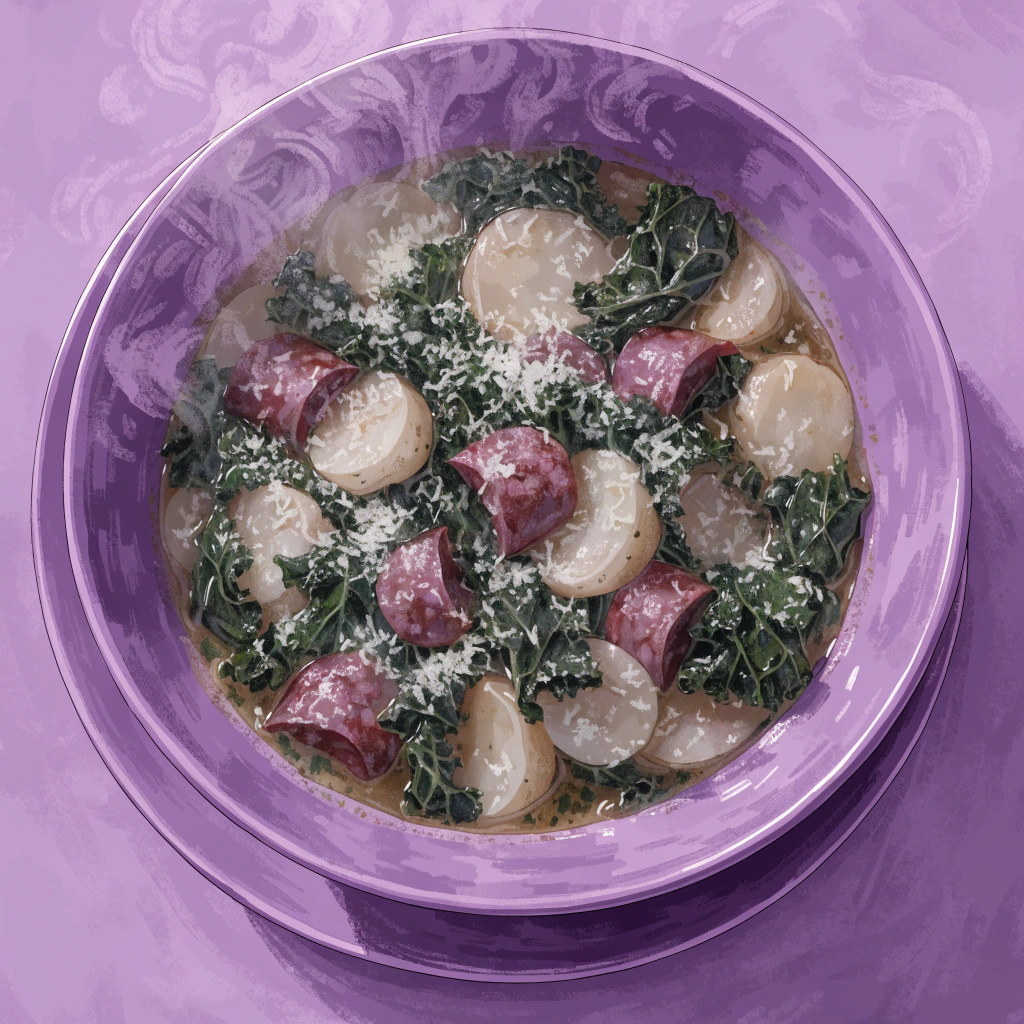
Caldo Verde: A Famous Soup from Portugal
Caldo Verde is a famous soup from Portugal. It is very popular in the north. People love this green soup because it is warm and healthy.
The soup is simple. It has potatoes, onions, and garlic. It also has a green vegetable called kale. Some people put olive oil on top.
Many families eat Caldo Verde for dinner. They eat it with fresh bread. It is a traditional meal. You can find this soup in many restaurants in Portugal. It is delicious!
व्याकरण स्पॉटलाइट
पैटर्न: The Verb 'To Be'
"It is a traditional meal."
We use 'is' with singular subjects like 'it', 'he', or 'she'. In this sentence, it describes a fact about the soup.
पैटर्न: Present Simple for Habits
"Many families eat Caldo Verde for dinner."
We use the base form of the verb (eat) for plural subjects like 'families'. This describes a regular action or habit.
अपनी समझ जाँचें
10 सवाल · A1 शुरुआती · 1 मुफ्त प्रीव्यू
इस लेख से आपने जो सीखा उसकी जाँच करें। सभी सवालों के जवाब दें और XP कमाएँ!
Where is Caldo Verde from?
क्या आप क्विज़ समाप्त करना चाहते हैं?
9 और सवाल आपका इंतज़ार कर रहे हैं। पूरा क्विज़ अनलॉक करने और XP कमाने के लिए मुफ्त साइन अप करें!
मुफ़्त साइन अप करोपहले से अकाउंट है? साइन इन करो
बहुत बढ़िया!
अभ्यास जारी रखें!
पहले से पूर्ण — कोई अतिरिक्त XP नहीं
XP कमाने के लिए साइन अप करोसवालों का विवरण
Where is Caldo Verde from?
आपका जवाब:
सही जवाब: Portugal
Caldo Verde is a red soup.
आपका जवाब:
सही जवाब: गलत
What does 'delicious' mean?
आपका जवाब:
सही जवाब: Very good taste
The soup has potatoes, onions, and _____.
आपका जवाब:
सही जवाब: garlic
पुर्तगाल का प्रसिद्ध सूप: काल्डो वर्दे
पुर्तगाल का खाना दुनिया भर में बहुत प्रसिद्ध है। "काल्डो वर्दे" वहाँ का सबसे लोकप्रिय सूप है। पुर्तगाली भाषा में इसका मतलब "हरा शोरबा" होता है। यह सूप उत्तरी पुर्तगाल के मिन्हो क्षेत्र से आया है। वहाँ के लोग इसे बहुत पसंद करते हैं क्योंकि यह सस्ता और अच्छा है।
इस सूप को बनाना बहुत आसान है। इसमें आलू, प्याज, लहसुन और जैतून के तेल का उपयोग होता है। लेकिन इसकी सबसे ज़रूरी सामग्री एक खास तरह की हरी गोभी है। इसे बहुत बारीक काटा जाता है ताकि सूप हरा दिखे। कुछ लोग इसमें मसालेदार मांस के टुकड़े भी डालते हैं जिसे "चोरिसो" कहते हैं।
पुर्तगाल में लोग इसे हर खास मौके पर खाते हैं। शादियों, जन्मदिनों और बड़े त्यौहारों में यह सूप ज़रूर होता है। सर्दियों के मौसम में गरम-गरम सूप पीना सेहत के लिए बहुत अच्छा होता है। यह सिर्फ एक खाना नहीं है, बल्कि पुर्तगाल की संस्कृति की एक बड़ी पहचान है।
व्याकरण स्पॉटलाइट
पैटर्न: सबसे + Adjective (तुलना)
""काल्डो वर्दे" वहाँ का सबसे लोकप्रिय सूप है।"
हिंदी में किसी चीज़ को सबसे श्रेष्ठ बताने के लिए 'सबसे' शब्द का प्रयोग विशेषण (adjective) से पहले किया जाता है। यह अंग्रेजी के 'most' के समान है।
पैटर्न: होता है (सामान्य सत्य)
"पुर्तगाली भाषा में इसका मतलब "हरा शोरबा" होता है।"
जब हम किसी सामान्य सत्य या स्वभाव के बारे में बात करते हैं, तो क्रिया के अंत में 'होता है' (पुल्लिंग) या 'होती है' (स्त्रीलिंग) लगाते हैं।
अपनी समझ जाँचें
11 सवाल · A2 बिगिनर · 1 मुफ्त प्रीव्यू
इस लेख से आपने जो सीखा उसकी जाँच करें। सभी सवालों के जवाब दें और XP कमाएँ!
"काल्डो वर्दे" का क्या अर्थ है?
क्या आप क्विज़ समाप्त करना चाहते हैं?
10 और सवाल आपका इंतज़ार कर रहे हैं। पूरा क्विज़ अनलॉक करने और XP कमाने के लिए मुफ्त साइन अप करें!
मुफ़्त साइन अप करोपहले से अकाउंट है? साइन इन करो
बहुत बढ़िया!
अभ्यास जारी रखें!
पहले से पूर्ण — कोई अतिरिक्त XP नहीं
XP कमाने के लिए साइन अप करोसवालों का विवरण
"काल्डो वर्दे" का क्या अर्थ है?
आपका जवाब:
सही जवाब: हरा शोरबा
यह सूप दक्षिण पुर्तगाल से आया है।
आपका जवाब:
सही जवाब: गलत
'प्रसिद्ध' शब्द का क्या अर्थ है?
आपका जवाब:
सही जवाब: मशहूर
"काल्डो वर्दे" पुर्तगाल का सबसे _____ सूप है।
आपका जवाब:
सही जवाब: लोकप्रिय
सूप में गोभी को कैसे काटा जाता है?
आपका जवाब:
सही जवाब: बहुत बारीक
Caldo Verde: The Heart of Portuguese Cuisine
Caldo Verde is a traditional Portuguese soup that has become a symbol of the country's national identity. While it originated in the Minho region of northern Portugal, it is now enjoyed in every city and village across the nation. The name literally means 'green broth,' which refers to the dark green color of the vegetables used in the recipe.
The dish is famous for its simplicity and healthy ingredients. To make a classic Caldo Verde, potatoes, onions, and garlic are boiled together until they are soft. Then, they are mashed to create a smooth, thick base. This base is seasoned with salt and high-quality olive oil. The most important ingredient is a specific type of kale, which is sliced into very thin ribbons before being added to the hot liquid.
In many Portuguese homes, this soup is served at the beginning of a meal or during special celebrations. It is often accompanied by 'broa,' a traditional cornbread, and a few slices of 'chouriço' sausage. Although it is a humble dish, it has been praised by poets and travelers for centuries because of its comforting flavor.
Today, Caldo Verde has spread to many other countries where Portuguese is spoken, such as Brazil and Angola. It remains a favorite choice for families who want a nutritious meal that is easy to prepare. Whether you are at a fancy wedding or a small village festival, you will likely find a bowl of this delicious green soup waiting for you.
व्याकरण स्पॉटलाइट
पैटर्न: Present Perfect Tense
"Caldo Verde is a traditional Portuguese soup that has become a symbol of the country's national identity."
The present perfect (have/has + past participle) is used here to describe an action that started in the past and continues to be true or relevant in the present.
पैटर्न: Passive Voice
"Then, they are mashed to create a smooth, thick base."
The passive voice (be + past participle) is used when the action is more important than the person doing it. Here, the focus is on what happens to the potatoes.
अपनी समझ जाँचें
11 सवाल · B1 मध्यम · 1 मुफ्त प्रीव्यू
इस लेख से आपने जो सीखा उसकी जाँच करें। सभी सवालों के जवाब दें और XP कमाएँ!
Where did Caldo Verde originally come from?
क्या आप क्विज़ समाप्त करना चाहते हैं?
10 और सवाल आपका इंतज़ार कर रहे हैं। पूरा क्विज़ अनलॉक करने और XP कमाने के लिए मुफ्त साइन अप करें!
मुफ़्त साइन अप करोपहले से अकाउंट है? साइन इन करो
बहुत बढ़िया!
अभ्यास जारी रखें!
पहले से पूर्ण — कोई अतिरिक्त XP नहीं
XP कमाने के लिए साइन अप करोसवालों का विवरण
Where did Caldo Verde originally come from?
आपका जवाब:
सही जवाब: The Minho region
Caldo Verde is only eaten during weddings.
आपका जवाब:
सही जवाब: गलत
What does 'nutritious' mean?
आपका जवाब:
सही जवाब: Good for your health
The name of the soup literally means green _____.
आपका जवाब:
सही जवाब: broth
What is 'broa'?
आपका जवाब:
सही जवाब: A traditional cornbread
The Cultural Significance of Caldo Verde: Portugal’s Green Legacy
Caldo Verde, which translates literally to 'green broth,' serves as an emblematic cornerstone of Portuguese national identity. Originating from the Minho province in the north, a region celebrated for its granite-walled vineyards and lush terrain, this soup has transcended its regional roots to become a staple across the Lusophone world. At its core, the dish is a testament to the idea that culinary excellence does not necessitate complexity. Instead, it relies on the authenticity and freshness of fundamental ingredients: potatoes, onions, garlic, olive oil, and the essential 'couve-galega' kale. The recipe's survival across centuries is a remarkable feat of cultural preservation.
The preparation process is deceptively straightforward, yet it requires a specific consistency to be considered authentic. The soup is typically prepared by boiling potatoes and onions together until they are tender enough to be mashed into a smooth, thick base. Furthermore, the kale must be sliced into extremely fine ribbons—a technique that requires considerable skill—before being added at the final stage to preserve its vibrant color and nutritional value. This meticulous attention to detail ensures that the texture remains light yet satisfying. If the kale were to be chopped coarsely, the dish would lose its characteristic elegance and mouthfeel.
Socio-culturally, Caldo Verde plays an integral role in Portuguese life, particularly during festivities such as the Feast of Saint John in Porto. It is often served at the end of a long night of celebration, providing comfort and sustenance to participants. The dish's versatility allows it to be enjoyed as either a light starter or a substantial late-night meal, often accompanied by a slice of 'chouriço' and traditional cornbread. Its presence at weddings, birthdays, and national holidays confirms its status as a communal bond that unites different generations.
From a sociological perspective, the preservation of this recipe highlights the Portuguese commitment to tradition in an increasingly globalized world. While contemporary chefs have experimented with more sophisticated versions, the classic iteration remains the most popular among the local population. This enduring preference suggests that for many, Caldo Verde is not merely food; it is a manifestation of historical continuity. Consequently, understanding the nuances of this soup offers a unique window into the values of Portuguese society, where the past is cherished through every spoonful.
व्याकरण स्पॉटलाइट
पैटर्न: Passive Voice
"The soup is typically prepared by boiling potatoes and onions together until they are tender enough to be mashed into a smooth, thick base."
The passive voice is used here to focus on the process rather than the person cooking. It is formed using the verb 'to be' followed by the past participle.
पैटर्न: Second Conditional (Hypothetical)
"If the kale were to be chopped coarsely, the dish would lose its characteristic elegance and mouthfeel."
This structure describes a hypothetical situation and its consequence. 'Were to' adds a formal tone to the condition, while 'would' indicates the result.
पैटर्न: Concessive Clause (While/Although)
"While contemporary chefs have experimented with more sophisticated versions, the classic iteration remains the most popular among the local population."
The word 'while' is used as a discourse marker to introduce a contrast between the actions of modern chefs and the general population's preference.
अपनी समझ जाँचें
11 सवाल · B2 अपर इंटरमीडिएट · 1 मुफ्त प्रीव्यू
इस लेख से आपने जो सीखा उसकी जाँच करें। सभी सवालों के जवाब दें और XP कमाएँ!
In which Portuguese province did Caldo Verde originate?
क्या आप क्विज़ समाप्त करना चाहते हैं?
10 और सवाल आपका इंतज़ार कर रहे हैं। पूरा क्विज़ अनलॉक करने और XP कमाने के लिए मुफ्त साइन अप करें!
मुफ़्त साइन अप करोपहले से अकाउंट है? साइन इन करो
बहुत बढ़िया!
अभ्यास जारी रखें!
पहले से पूर्ण — कोई अतिरिक्त XP नहीं
XP कमाने के लिए साइन अप करोसवालों का विवरण
In which Portuguese province did Caldo Verde originate?
आपका जवाब:
सही जवाब: Minho
The article suggests that the soup requires very expensive and complex ingredients.
आपका जवाब:
सही जवाब: गलत
What does 'authenticity' mean in the context of the article?
आपका जवाब:
सही जवाब: Being genuine and true to tradition
The dish's _____ allows it to be enjoyed as either a light starter or a substantial meal.
आपका जवाब:
सही जवाब: versatility
According to the text, what does the preservation of the recipe highlight?
आपका जवाब:
सही जवाब: A commitment to tradition in a globalized world
कैल्डो वर्दे: पुर्तगाल की पाक कला का हरा रत्न
पुर्तगाल की पाक कला के हृदय में, एक व्यंजन ऐसा है जो न केवल स्वाद कलिकाओं को तृप्त करता है, बल्कि देश की सांस्कृतिक पहचान का भी अभिन्न अंग बन गया है – कैल्डो वर्दे। शाब्दिक अर्थ में 'हरा शोरबा' कहलाने वाला यह सूप, पुर्तगाल का संभवतः सबसे प्रसिद्ध सूप है, और यह कहना अतिशयोक्ति न होगी कि यह राष्ट्रीय पहचान का एक स्तंभ है। इसकी सहजता में ही इसकी गहराई और विशिष्टता निहित है, जिसने इसे लुसोफोन दुनिया के कोने-कोने तक पहुँचाया है।
इसकी व्युत्पत्ति उत्तरी पुर्तगाल के मिन्हो प्रांत से हुई, एक ऐसा क्षेत्र जो अपने हरे-भरे परिदृश्य, ग्रेनाइट की दीवारों वाले अंगूर के बागानों और समृद्ध कृषि परंपराओं के लिए विख्यात है। यहीं से कैल्डो वर्दे ने अपनी यात्रा शुरू की, धीरे-धीरे पुर्तगाल के हर घर और रेस्तरां में अपनी जगह बनाते हुए। यह केवल एक सूप भर नहीं है; यह उत्सवों, पारिवारिक मिलन और यहाँ तक कि आधी रात के भोजन का भी पर्याय है। फडो संगीत के साथ, यह पुर्तगाल की आत्मा को प्रतिबिंबित करता है।
कैल्डो वर्दे की असाधारण लोकप्रियता का रहस्य इसकी सामग्री की उच्च गुणवत्ता और उसकी तैयारी की सरल विधि में छिपा है। इसके मुख्य घटक आलू, प्याज, लहसुन, जैतून का तेल और 'कौवे-गलेगा' नामक एक विशेष प्रकार की केल हैं। यह कौवे-गलेगा, जिसकी पत्तियाँ पतली और गहरे हरे रंग की होती हैं, इस सूप को इसका विशिष्ट रंग और थोड़ा कड़वा, मिट्टी जैसा स्वाद प्रदान करती है। आलू को उबालकर मैश किया जाता है ताकि एक गाढ़ा आधार बन सके, जिसमें फिर बारीक कटा हुआ केल मिलाया जाता है। लहसुन और प्याज को जैतून के तेल में भूनकर इसकी सुगंध और स्वाद को बढ़ाया जाता है।
परंपरागत रूप से, कैल्डो वर्दे को 'चोरीसो' (पुर्तगाली सॉसेज) के कुछ पतले टुकड़ों के साथ परोसा जाता है, जो इसे एक स्मोकी और नमकीन स्पर्श देते हैं। कुछ लोग इसमें थोड़ी सी ब्रेड डुबोकर खाना पसंद करते हैं। इस सूप की सबसे बड़ी खूबी इसकी बहुमुखी प्रतिभा है; यह ठंडा हो या गर्म, हर मौसम में इसका आनंद लिया जा सकता है, हालाँकि इसे आमतौर पर ठंडी शामों में गरमागरम परोसा जाता है। यह एक ऐसा व्यंजन है जो पुर्तगाली लोगों के जीवन के ताने-बाने में गहराई से बुना हुआ है, जो उनके इतिहास, उनके ज़मीन से जुड़ाव और उनके आतिथ्य का प्रतीक है।
आज, कैल्डो वर्दे ने पुर्तगाल की सीमाओं को लांघकर अंतरराष्ट्रीय स्तर पर भी अपनी पहचान बनाई है। दुनिया भर में पुर्तगाली प्रवासियों ने इसे अपने साथ ले जाकर, इसे एक वैश्विक व्यंजन बना दिया है। यह न केवल स्वादिष्ट है, बल्कि पौष्टिक भी है, जिससे यह बच्चों से लेकर बुजुर्गों तक सभी के लिए एक आदर्श भोजन बन जाता है। इस सूप की सहजता और इसके गहरे सांस्कृतिक निहितार्थ ही हैं जो इसे पुर्तगाल के सबसे प्यारे और स्थायी व्यंजनों में से एक बनाते हैं। यह केवल एक भोजन नहीं, बल्कि पुर्तगाल की समृद्ध विरासत का एक तरल उत्सव है, एक ऐसा अनुभव जो पुर्तगाली जीवन शैली की गर्माहट और सादगी को दर्शाता है।
व्याकरण स्पॉटलाइट
पैटर्न: क्रिया के साथ 'भर' का प्रयोग (Emphasis with 'bhar')
"यह केवल एक सूप भर नहीं है; यह उत्सवों, पारिवारिक मिलन और यहाँ तक कि आधी रात के भोजन का भी पर्याय है।"
'भर' का प्रयोग किसी संज्ञा या क्रिया के साथ करके उस पर जोर दिया जाता है, यह दर्शाने के लिए कि वह 'केवल' या 'मात्र' उतनी ही चीज़ है, या उससे अधिक है। यह वाक्य में एक विशिष्ट अर्थ जोड़ता है, जैसे 'यह केवल सूप नहीं, बल्कि उससे कहीं अधिक है'।
पैटर्न: नामधातु क्रियाओं का प्रयोग (Nominalization of Verbs)
"इसकी सहजता में ही इसकी गहराई और विशिष्टता निहित है, जिसने इसे लुसोफोन दुनिया के कोने-कोने तक पहुँचाया है।"
यहाँ 'निहित है' क्रिया का प्रयोग किसी गुण या विशेषता के 'मौजूद होने' को दर्शाता है। यह एक नामधातु क्रिया है जो किसी विशेष अवस्था या स्थिति को व्यक्त करती है। इसका उपयोग वाक्यों को अधिक औपचारिक और संक्षिप्त बनाने में मदद करता है।
पैटर्न: कारण-परिणाम संबंध के लिए 'जिसने/जिससे' (Relative Pronoun for Cause-Effect)
"इसकी सहजता में ही इसकी गहराई और विशिष्टता निहित है, जिसने इसे लुसोफोन दुनिया के कोने-कोने तक पहुँचाया है।"
यहाँ 'जिसने' (जो का एक रूप) पिछले खंड में बताई गई बात (सहजता, गहराई और विशिष्टता) को अगले खंड (सूप के दुनिया भर में फैलने) के कारण के रूप में जोड़ता है। यह जटिल वाक्यों में कारण और परिणाम को स्पष्ट रूप से जोड़ने का एक प्रभावी तरीका है।
अपनी समझ जाँचें
12 सवाल · C1 उन्नत · 1 मुफ्त प्रीव्यू
इस लेख से आपने जो सीखा उसकी जाँच करें। सभी सवालों के जवाब दें और XP कमाएँ!
कैल्डो वर्दे की असाधारण लोकप्रियता का मुख्य कारण क्या है?
क्या आप क्विज़ समाप्त करना चाहते हैं?
11 और सवाल आपका इंतज़ार कर रहे हैं। पूरा क्विज़ अनलॉक करने और XP कमाने के लिए मुफ्त साइन अप करें!
मुफ़्त साइन अप करोपहले से अकाउंट है? साइन इन करो
बहुत बढ़िया!
अभ्यास जारी रखें!
पहले से पूर्ण — कोई अतिरिक्त XP नहीं
XP कमाने के लिए साइन अप करोसवालों का विवरण
कैल्डो वर्दे की असाधारण लोकप्रियता का मुख्य कारण क्या है?
आपका जवाब:
सही जवाब: इसकी सामग्री की उच्च गुणवत्ता और तैयारी की सरल विधि।
कैल्डो वर्दे का शाब्दिक अर्थ 'नीला शोरबा' है।
आपका जवाब:
सही जवाब: गलत
'व्युत्पत्ति' शब्द का सबसे उपयुक्त अर्थ क्या है?
आपका जवाब:
सही जवाब: किसी चीज़ के उत्पन्न होने या विकसित होने का स्रोत
कैल्डो वर्दे में 'कौवे-गलेगा' नामक एक विशेष प्रकार की ______ का प्रयोग किया जाता है।
आपका जवाब:
सही जवाब: केल
कैल्डो वर्दे को पारंपरिक रूप से किस पुर्तगाली सॉसेज के साथ परोसा जाता है?
आपका जवाब:
सही जवाब: चोरीसो
मिन्हो प्रांत अपने हरे-भरे परिदृश्य और ग्रेनाइट की दीवारों वाले अंगूर के बागानों के लिए विख्यात है।
आपका जवाब:
सही जवाब: सही
The Gastronomic Ontogeny of Caldo Verde: A Sociocultural Synthesis of Lusitanian Identity
To contemplate Caldo Verde is to engage with the very bedrock of Portuguese ethnography. This 'green broth' transcends its humble nomenclature, manifesting as a culinary metonym for the nation’s historical trajectory and its agrarian roots. Originating in the verdant, granite-strewn province of Minho, the soup is not merely a sustenance-providing liquid but a visceral link to the land. Hardly had the first pot boiled in the rain-drenched hills of the north than it became an indissoluble facet of the regional psyche. The dish’s provenance is intrinsically tied to the 'couve-galega', a resilient variety of kale that thrives in the Atlantic climate, symbolizing the endurance of the Portuguese peasantry.
From an analytical perspective, the preparation of Caldo Verde represents a sophisticated exercise in minimalist alchemy. It is imperative that the potatoes be of a floury variety to ensure the requisite starch release during the boiling process. This starch, when combined with high-quality olive oil and the water in which the onions and garlic have been softened, undergoes a process of emulsification that creates a velvety texture without the need for dairy. Were one to omit the specific 'couve-galega', the resulting concoction would arguably cease to be Caldo Verde, as the specific bitterness and texture of this brassica are central to its identity. The kale must be sliced into filaments so fine they resemble hair—a technique known as 'cortada em juliana'—requiring a level of manual dexterity that borders on the ritualistic.
Furthermore, the ubiquity of Caldo Verde across the Lusophone world provides a fascinating case study in cultural diffusion. As the Portuguese maritime empire expanded, so too did its culinary staples. In Brazil, Angola, and Mozambique, the soup underwent various adaptations, yet its core essence remained a constant, serving as a culinary 'saudade' for the diaspora. It is often posited by sociologists that the soup acts as a leveling mechanism; it is served with equal reverence in the most austere rural taverns and the most opulent Lisbon restaurants. This dichotomy between its humble origins and its elevated status in the national canon highlights the fluidity of class boundaries through the lens of gastronomy.
Literature and music have also played a pivotal role in cementing the soup’s status. The renowned novelist Eça de Queirós frequently alluded to it as a symbol of domestic comfort and tradition, while Fado singers often evoke its warmth as a counterpoint to the melancholic themes of their songs. The ephemeral steam rising from a bowl of Caldo Verde is often described as the very breath of the Portuguese spirit. It is not merely a dish; it is an ontological statement of belonging. One might even argue that to understand the Portuguese soul, one must first navigate the depths of this emerald-hued broth.
In the contemporary era, the soup faces the dual challenge of globalization and the industrialization of food. While pre-packaged, machine-cut kale is now common in supermarkets, purists maintain that the soul of the dish is lost when human labor is removed from the equation. The tension between convenience and authenticity is a recurring theme in modern Portuguese discourse. Nevertheless, the enduring popularity of Caldo Verde suggests that it remains a quintessential pillar of identity. Whether enjoyed at a village festival in the Minho or at a sophisticated gala in the capital, it continues to evoke a sense of shared heritage that is both profound and enduring. Thus, Caldo Verde remains not just a staple of the diet, but a vibrant, living testament to the resilience and continuity of Portuguese culture across the centuries.
व्याकरण स्पॉटलाइट
पैटर्न: Negative Inversion
"Hardly had the first pot boiled in the rain-drenched hills of the north than it became an indissoluble facet of the regional psyche."
Inversion is used after restrictive or negative adverbials (like 'Hardly') at the beginning of a sentence for emphasis. The auxiliary verb precedes the subject.
पैटर्न: The Subjunctive Mood
"It is imperative that the potatoes be of a floury variety to ensure the requisite starch release."
The base form 'be' is used in a 'that' clause following an adjective of importance (imperative). This is a formal way to express necessity.
पैटर्न: Second Conditional (Inverted/Formal)
"Were one to omit the specific 'couve-galega', the resulting concoction would arguably cease to be Caldo Verde."
Replacing 'If one were to' with 'Were one to' creates a highly formal hypothetical structure common in scholarly writing.
अपनी समझ जाँचें
12 सवाल · C2 महारत · 1 मुफ्त प्रीव्यू
इस लेख से आपने जो सीखा उसकी जाँच करें। सभी सवालों के जवाब दें और XP कमाएँ!
What does the author suggest about the relationship between Caldo Verde and social class?
क्या आप क्विज़ समाप्त करना चाहते हैं?
11 और सवाल आपका इंतज़ार कर रहे हैं। पूरा क्विज़ अनलॉक करने और XP कमाने के लिए मुफ्त साइन अप करें!
मुफ़्त साइन अप करोपहले से अकाउंट है? साइन इन करो
बहुत बढ़िया!
अभ्यास जारी रखें!
पहले से पूर्ण — कोई अतिरिक्त XP नहीं
XP कमाने के लिए साइन अप करोसवालों का विवरण
What does the author suggest about the relationship between Caldo Verde and social class?
आपका जवाब:
सही जवाब: It acts as a leveling mechanism across different social strata.
The author argues that machine-cut kale is considered superior by purists due to its precision.
आपका जवाब:
सही जवाब: गलत
Which word describes the process of creating a velvety texture from oil and water?
आपका जवाब:
सही जवाब: Emulsification
The author describes the soup as a culinary _____ for the nation's historical trajectory.
आपका जवाब:
सही जवाब: metonym
In what way is the 'couve-galega' symbolically linked to the Portuguese people?
आपका जवाब:
सही जवाब: Its resilience represents the endurance of the peasantry.
The text mentions that the starch from floury potatoes is essential for the soup's texture.
आपका जवाब:
सही जवाब: सही

