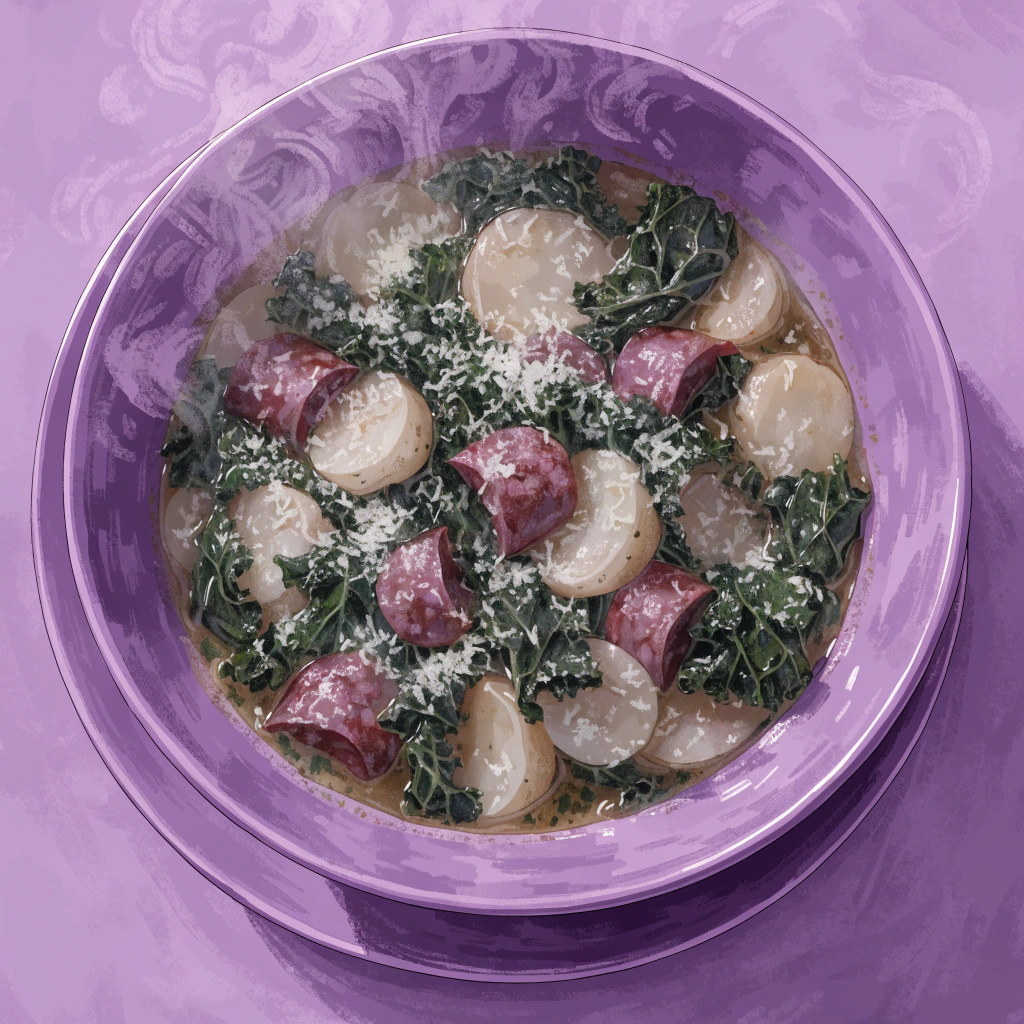
Caldo Verde: A Famous Soup from Portugal
Caldo Verde is a famous soup from Portugal. It is very popular in the north. People love this green soup because it is warm and healthy.
The soup is simple. It has potatoes, onions, and garlic. It also has a green vegetable called kale. Some people put olive oil on top.
Many families eat Caldo Verde for dinner. They eat it with fresh bread. It is a traditional meal. You can find this soup in many restaurants in Portugal. It is delicious!
تسليط الضوء على القواعد
نمط: The Verb 'To Be'
"It is a traditional meal."
We use 'is' with singular subjects like 'it', 'he', or 'she'. In this sentence, it describes a fact about the soup.
نمط: Present Simple for Habits
"Many families eat Caldo Verde for dinner."
We use the base form of the verb (eat) for plural subjects like 'families'. This describes a regular action or habit.
اختبر فهمك
10 أسئلة · A1 مبتدئ · معاينة مجانية واحدة
اختبر ما تعلمته من هذا المقال. أجب على جميع الأسئلة لكسب نقاط خبرة!
Where is Caldo Verde from?
هل تريد إنهاء الاختبار؟
9 أسئلة أخرى بانتظارك. سجّل مجاناً لفتح الاختبار الكامل وكسب نقاط خبرة!
سجل مجاناًلديك حساب بالفعل؟ دخول
تفصيل الأسئلة
Where is Caldo Verde from?
إجابتك:
الإجابة الصحيحة: Portugal
Caldo Verde is a red soup.
إجابتك:
الإجابة الصحيحة: خطأ
What does 'delicious' mean?
إجابتك:
الإجابة الصحيحة: Very good taste
The soup has potatoes, onions, and _____.
إجابتك:
الإجابة الصحيحة: garlic
Caldo Verde: The Most Famous Soup in Portugal
Caldo Verde is the most famous soup in Portugal. It comes from the north of the country, in a region called Minho. This area is very green and beautiful. People call the soup "green broth" because of its color.
The recipe for this soup is very simple, but the taste is delicious. To make it, you need potatoes, onions, garlic, and olive oil. The most important ingredient is a special type of dark green kale. People cut the kale into very thin pieces before cooking. In the past, farmers made this soup because it was cheap and healthy.
Today, Caldo Verde is more popular than other traditional dishes. You can find it at weddings, festivals, and in small restaurants. Usually, people serve the soup with a slice of "chouriço," which is a spicy Portuguese sausage. It is better to eat it with fresh bread. Many Portuguese people think Caldo Verde is a symbol of their culture because it is warm and welcoming.
تسليط الضوء على القواعد
نمط: Superlative Adjectives
"Caldo Verde is the most famous soup in Portugal."
We use 'the most' with long adjectives (like famous) to show that something is number one in a group. It is formed by 'the most' + adjective.
نمط: Comparative Adjectives
"Today, Caldo Verde is more popular than other traditional dishes."
We use 'more + adjective + than' to compare two different things. This is used for adjectives with two or more syllables.
اختبر فهمك
11 أسئلة · A2 ابتدائي · معاينة مجانية واحدة
اختبر ما تعلمته من هذا المقال. أجب على جميع الأسئلة لكسب نقاط خبرة!
Where does Caldo Verde come from?
هل تريد إنهاء الاختبار؟
10 أسئلة أخرى بانتظارك. سجّل مجاناً لفتح الاختبار الكامل وكسب نقاط خبرة!
سجل مجاناًلديك حساب بالفعل؟ دخول
تفصيل الأسئلة
Where does Caldo Verde come from?
إجابتك:
الإجابة الصحيحة: The north of Portugal
The soup is called 'green broth' because of its color.
إجابتك:
الإجابة الصحيحة: صحيح
What does 'ingredient' mean?
إجابتك:
الإجابة الصحيحة: A food used to make a dish
People cut the kale into very _____ pieces.
إجابتك:
الإجابة الصحيحة: thin
What is 'chouriço'?
إجابتك:
الإجابة الصحيحة: A spicy sausage
Caldo Verde: The Heart of Portuguese Cuisine
Caldo Verde is a traditional Portuguese soup that has become a symbol of the country's national identity. While it originated in the Minho region of northern Portugal, it is now enjoyed in every city and village across the nation. The name literally means 'green broth,' which refers to the dark green color of the vegetables used in the recipe.
The dish is famous for its simplicity and healthy ingredients. To make a classic Caldo Verde, potatoes, onions, and garlic are boiled together until they are soft. Then, they are mashed to create a smooth, thick base. This base is seasoned with salt and high-quality olive oil. The most important ingredient is a specific type of kale, which is sliced into very thin ribbons before being added to the hot liquid.
In many Portuguese homes, this soup is served at the beginning of a meal or during special celebrations. It is often accompanied by 'broa,' a traditional cornbread, and a few slices of 'chouriço' sausage. Although it is a humble dish, it has been praised by poets and travelers for centuries because of its comforting flavor.
Today, Caldo Verde has spread to many other countries where Portuguese is spoken, such as Brazil and Angola. It remains a favorite choice for families who want a nutritious meal that is easy to prepare. Whether you are at a fancy wedding or a small village festival, you will likely find a bowl of this delicious green soup waiting for you.
تسليط الضوء على القواعد
نمط: Present Perfect Tense
"Caldo Verde is a traditional Portuguese soup that has become a symbol of the country's national identity."
The present perfect (have/has + past participle) is used here to describe an action that started in the past and continues to be true or relevant in the present.
نمط: Passive Voice
"Then, they are mashed to create a smooth, thick base."
The passive voice (be + past participle) is used when the action is more important than the person doing it. Here, the focus is on what happens to the potatoes.
اختبر فهمك
11 أسئلة · B1 متوسط · معاينة مجانية واحدة
اختبر ما تعلمته من هذا المقال. أجب على جميع الأسئلة لكسب نقاط خبرة!
Where did Caldo Verde originally come from?
هل تريد إنهاء الاختبار؟
10 أسئلة أخرى بانتظارك. سجّل مجاناً لفتح الاختبار الكامل وكسب نقاط خبرة!
سجل مجاناًلديك حساب بالفعل؟ دخول
تفصيل الأسئلة
Where did Caldo Verde originally come from?
إجابتك:
الإجابة الصحيحة: The Minho region
Caldo Verde is only eaten during weddings.
إجابتك:
الإجابة الصحيحة: خطأ
What does 'nutritious' mean?
إجابتك:
الإجابة الصحيحة: Good for your health
The name of the soup literally means green _____.
إجابتك:
الإجابة الصحيحة: broth
What is 'broa'?
إجابتك:
الإجابة الصحيحة: A traditional cornbread
The Cultural Significance of Caldo Verde: Portugal’s Green Legacy
Caldo Verde, which translates literally to 'green broth,' serves as an emblematic cornerstone of Portuguese national identity. Originating from the Minho province in the north, a region celebrated for its granite-walled vineyards and lush terrain, this soup has transcended its regional roots to become a staple across the Lusophone world. At its core, the dish is a testament to the idea that culinary excellence does not necessitate complexity. Instead, it relies on the authenticity and freshness of fundamental ingredients: potatoes, onions, garlic, olive oil, and the essential 'couve-galega' kale. The recipe's survival across centuries is a remarkable feat of cultural preservation.
The preparation process is deceptively straightforward, yet it requires a specific consistency to be considered authentic. The soup is typically prepared by boiling potatoes and onions together until they are tender enough to be mashed into a smooth, thick base. Furthermore, the kale must be sliced into extremely fine ribbons—a technique that requires considerable skill—before being added at the final stage to preserve its vibrant color and nutritional value. This meticulous attention to detail ensures that the texture remains light yet satisfying. If the kale were to be chopped coarsely, the dish would lose its characteristic elegance and mouthfeel.
Socio-culturally, Caldo Verde plays an integral role in Portuguese life, particularly during festivities such as the Feast of Saint John in Porto. It is often served at the end of a long night of celebration, providing comfort and sustenance to participants. The dish's versatility allows it to be enjoyed as either a light starter or a substantial late-night meal, often accompanied by a slice of 'chouriço' and traditional cornbread. Its presence at weddings, birthdays, and national holidays confirms its status as a communal bond that unites different generations.
From a sociological perspective, the preservation of this recipe highlights the Portuguese commitment to tradition in an increasingly globalized world. While contemporary chefs have experimented with more sophisticated versions, the classic iteration remains the most popular among the local population. This enduring preference suggests that for many, Caldo Verde is not merely food; it is a manifestation of historical continuity. Consequently, understanding the nuances of this soup offers a unique window into the values of Portuguese society, where the past is cherished through every spoonful.
تسليط الضوء على القواعد
نمط: Passive Voice
"The soup is typically prepared by boiling potatoes and onions together until they are tender enough to be mashed into a smooth, thick base."
The passive voice is used here to focus on the process rather than the person cooking. It is formed using the verb 'to be' followed by the past participle.
نمط: Second Conditional (Hypothetical)
"If the kale were to be chopped coarsely, the dish would lose its characteristic elegance and mouthfeel."
This structure describes a hypothetical situation and its consequence. 'Were to' adds a formal tone to the condition, while 'would' indicates the result.
نمط: Concessive Clause (While/Although)
"While contemporary chefs have experimented with more sophisticated versions, the classic iteration remains the most popular among the local population."
The word 'while' is used as a discourse marker to introduce a contrast between the actions of modern chefs and the general population's preference.
اختبر فهمك
11 أسئلة · B2 فوق المتوسط · معاينة مجانية واحدة
اختبر ما تعلمته من هذا المقال. أجب على جميع الأسئلة لكسب نقاط خبرة!
In which Portuguese province did Caldo Verde originate?
هل تريد إنهاء الاختبار؟
10 أسئلة أخرى بانتظارك. سجّل مجاناً لفتح الاختبار الكامل وكسب نقاط خبرة!
سجل مجاناًلديك حساب بالفعل؟ دخول
تفصيل الأسئلة
In which Portuguese province did Caldo Verde originate?
إجابتك:
الإجابة الصحيحة: Minho
The article suggests that the soup requires very expensive and complex ingredients.
إجابتك:
الإجابة الصحيحة: خطأ
What does 'authenticity' mean in the context of the article?
إجابتك:
الإجابة الصحيحة: Being genuine and true to tradition
The dish's _____ allows it to be enjoyed as either a light starter or a substantial meal.
إجابتك:
الإجابة الصحيحة: versatility
According to the text, what does the preservation of the recipe highlight?
إجابتك:
الإجابة الصحيحة: A commitment to tradition in a globalized world
حساء "كالدو فيردي": ركيزة الهوية البرتغالية ورمز البساطة المتجذرة
يُعدّ حساء "كالدو فيردي" (Caldo Verde)، الذي يُترجم حرفيًا إلى "المرق الأخضر"، بلا منازع أحد أشهر الأطباق في البرتغال، بل يمكن القول إنه ركيزة أساسية من ركائز هويتها الوطنية. إن ما يميز هذا الحساء ليس فقط مذاقه الفريد، بل قدرته على تجسيد روح الثقافة البرتغالية في بساطته وعمق نكهته.
تتجلى أصول هذا الحساء في مقاطعة "مينهو" الشمالية، وهي منطقة تشتهر بجمال طبيعتها الخضراء الوارفة وكروم العنب المحاطة بجدران حجرية. من هذه البقعة الجغرافية الخصبة، انطلق "كالدو فيردي" ليغزو كل زاوية من زوايا العالم اللوسوفوني، حاملًا معه قصة تاريخ وتقاليد عريقة. فليس من قبيل الصدفة أن يصبح طبقًا وطنيًا؛ إنه نتاج بيئة غنية ومطبخ يعتمد على المكونات الطازجة عالية الجودة.
إن بساطة هذا الطبق خداعة؛ فخلف مظهره المتواضع تكمن براعة فائقة في اختيار المكونات الأساسية وتحضيرها. يعتمد الحساء بشكل رئيسي على البطاطس، البصل، الثوم، زيت الزيتون البكر الممتاز، ونوع معين من الكرنب يُعرف باسم "كوف غاليغا" (couve-galega). إن دقة تقطيع الكرنب إلى شرائح رفيعة جدًا، تكاد تكون كالشعر، هي ما تمنحه قوامه المميز وتسمح له بالاندماج بسلاسة مع قوام البطاطس المهروسة الغني. ولإضفاء لمسة إضافية من النكهة والقوام، غالبًا ما يُقدم الحساء مع شرائح من "تشوريزو" (chouriço) أو "لينغويسا" (linguiça) المدخنة، بالإضافة إلى خبز الذرة الريفي.
على الرغم من كونه طبقًا بسيطًا في جوهره، إلا أن "كالدو فيردي" يحمل دلالات ثقافية عميقة. إنه يُقدم في الاحتفالات العائلية، المهرجانات الشعبية، وحتى في أواخر الليل بعد السهرات الطويلة كوجبة دافئة ومغذية. إن هذه القدرة على التكيف مع مختلف المناسبات، من المآدب الفاخرة إلى اللقاءات الودية، إنما هي شهادة على مكانته الراسخة في قلوب البرتغاليين. فبقدر ما هو طعام للجسد، هو أيضًا غذاء للروح، يربط الأجيال ببعضها البعض ويحكي قصص الأجداد.
إن الحديث عن المطبخ البرتغالي يستحيل دون الإشارة إلى "كالدو فيردي". إنه ليس مجرد حساء، بل هو تجسيد حي لتاريخ أمة، وشاهد على ارتباطها العميق بأرضها وجودة منتجاتها. في كل ملعقة منه، تتذوق خلاصة قرون من التقاليد، وبساطة حياة الريف، وكرم الضيافة البرتغالية، مما يجعله رمزًا خالدًا لا يزال يتردد صداه في كل مكان يحل فيه البرتغاليون.
تسليط الضوء على القواعد
نمط: أسلوب الحصر بـ "إنما" (Cleft Sentence)
"إن ما يميز هذا الحساء ليس فقط مذاقه الفريد، بل قدرته على تجسيد روح الثقافة البرتغالية في بساطته وعمق نكهته."
يُستخدم أسلوب الحصر بـ "إنما" أو "إن ما... هو" لتركيز الانتباه على جزء معين من الجملة، مما يجعله المحور الأساسي للمعنى. في هذا المثال، يتم التركيز على قدرة الحساء على تجسيد روح الثقافة البرتغالية كخاصية مميزة له، وليس فقط مذاقه.
نمط: المصدر المؤول (Nominalization)
"فليس من قبيل الصدفة أن يصبح طبقًا وطنيًا؛ إنه نتاج بيئة غنية ومطبخ يعتمد على المكونات الطازجة عالية الجودة."
المصدر المؤول هو تحويل جملة فعلية (أن يصبح) إلى ما يُشبه الاسم المفرد في المعنى والإعراب. يُستخدم لإضفاء طابع رسمي واختصار العبارات، مما يجعله مناسبًا للتعبير عن الأفكار المعقدة بأسلوب موجز ومكثف.
نمط: تقديم الخبر على المبتدأ (Inversion for Emphasis)
"تتجلى أصول هذا الحساء في مقاطعة "مينهو" الشمالية."
في هذه الجملة، تم تقديم الخبر (تتجلى أصول) على المبتدأ (هذا الحساء) لغرض التوكيد والاهتمام بالخبر أولًا. هذا الأسلوب الشائع في العربية يضفي قوة على المعنى ويوجه انتباه القارئ مباشرة إلى المعلومة الأهم.
اختبر فهمك
12 أسئلة · C1 متقدم · معاينة مجانية واحدة
اختبر ما تعلمته من هذا المقال. أجب على جميع الأسئلة لكسب نقاط خبرة!
ما هو الأصل الجغرافي لحساء "كالدو فيردي"؟
هل تريد إنهاء الاختبار؟
11 أسئلة أخرى بانتظارك. سجّل مجاناً لفتح الاختبار الكامل وكسب نقاط خبرة!
سجل مجاناًلديك حساب بالفعل؟ دخول
تفصيل الأسئلة
ما هو الأصل الجغرافي لحساء "كالدو فيردي"؟
إجابتك:
الإجابة الصحيحة: مقاطعة مينهو
يعتمد حساء "كالدو فيردي" على مكونات معقدة وصعبة التحضير.
إجابتك:
الإجابة الصحيحة: خطأ
ماذا تعني كلمة "ركيزة" في سياق المقال؟
إجابتك:
الإجابة الصحيحة: أساس أو عمود
غالبًا ما يُقدم حساء "كالدو فيردي" مع شرائح من ______ المدخنة.
إجابتك:
الإجابة الصحيحة: تشوريزو
ما هي الميزة الرئيسية التي تمنح الكرنب قوامه المميز في الحساء؟
إجابتك:
الإجابة الصحيحة: تقطيعه إلى شرائح رفيعة جدًا
يقتصر تقديم "كالدو فيردي" على المناسبات الرسمية فقط.
إجابتك:
الإجابة الصحيحة: خطأ
The Gastronomic Ontogeny of Caldo Verde: A Sociocultural Synthesis of Lusitanian Identity
To contemplate Caldo Verde is to engage with the very bedrock of Portuguese ethnography. This 'green broth' transcends its humble nomenclature, manifesting as a culinary metonym for the nation’s historical trajectory and its agrarian roots. Originating in the verdant, granite-strewn province of Minho, the soup is not merely a sustenance-providing liquid but a visceral link to the land. Hardly had the first pot boiled in the rain-drenched hills of the north than it became an indissoluble facet of the regional psyche. The dish’s provenance is intrinsically tied to the 'couve-galega', a resilient variety of kale that thrives in the Atlantic climate, symbolizing the endurance of the Portuguese peasantry.
From an analytical perspective, the preparation of Caldo Verde represents a sophisticated exercise in minimalist alchemy. It is imperative that the potatoes be of a floury variety to ensure the requisite starch release during the boiling process. This starch, when combined with high-quality olive oil and the water in which the onions and garlic have been softened, undergoes a process of emulsification that creates a velvety texture without the need for dairy. Were one to omit the specific 'couve-galega', the resulting concoction would arguably cease to be Caldo Verde, as the specific bitterness and texture of this brassica are central to its identity. The kale must be sliced into filaments so fine they resemble hair—a technique known as 'cortada em juliana'—requiring a level of manual dexterity that borders on the ritualistic.
Furthermore, the ubiquity of Caldo Verde across the Lusophone world provides a fascinating case study in cultural diffusion. As the Portuguese maritime empire expanded, so too did its culinary staples. In Brazil, Angola, and Mozambique, the soup underwent various adaptations, yet its core essence remained a constant, serving as a culinary 'saudade' for the diaspora. It is often posited by sociologists that the soup acts as a leveling mechanism; it is served with equal reverence in the most austere rural taverns and the most opulent Lisbon restaurants. This dichotomy between its humble origins and its elevated status in the national canon highlights the fluidity of class boundaries through the lens of gastronomy.
Literature and music have also played a pivotal role in cementing the soup’s status. The renowned novelist Eça de Queirós frequently alluded to it as a symbol of domestic comfort and tradition, while Fado singers often evoke its warmth as a counterpoint to the melancholic themes of their songs. The ephemeral steam rising from a bowl of Caldo Verde is often described as the very breath of the Portuguese spirit. It is not merely a dish; it is an ontological statement of belonging. One might even argue that to understand the Portuguese soul, one must first navigate the depths of this emerald-hued broth.
In the contemporary era, the soup faces the dual challenge of globalization and the industrialization of food. While pre-packaged, machine-cut kale is now common in supermarkets, purists maintain that the soul of the dish is lost when human labor is removed from the equation. The tension between convenience and authenticity is a recurring theme in modern Portuguese discourse. Nevertheless, the enduring popularity of Caldo Verde suggests that it remains a quintessential pillar of identity. Whether enjoyed at a village festival in the Minho or at a sophisticated gala in the capital, it continues to evoke a sense of shared heritage that is both profound and enduring. Thus, Caldo Verde remains not just a staple of the diet, but a vibrant, living testament to the resilience and continuity of Portuguese culture across the centuries.
تسليط الضوء على القواعد
نمط: Negative Inversion
"Hardly had the first pot boiled in the rain-drenched hills of the north than it became an indissoluble facet of the regional psyche."
Inversion is used after restrictive or negative adverbials (like 'Hardly') at the beginning of a sentence for emphasis. The auxiliary verb precedes the subject.
نمط: The Subjunctive Mood
"It is imperative that the potatoes be of a floury variety to ensure the requisite starch release."
The base form 'be' is used in a 'that' clause following an adjective of importance (imperative). This is a formal way to express necessity.
نمط: Second Conditional (Inverted/Formal)
"Were one to omit the specific 'couve-galega', the resulting concoction would arguably cease to be Caldo Verde."
Replacing 'If one were to' with 'Were one to' creates a highly formal hypothetical structure common in scholarly writing.
اختبر فهمك
12 أسئلة · C2 إتقان · معاينة مجانية واحدة
اختبر ما تعلمته من هذا المقال. أجب على جميع الأسئلة لكسب نقاط خبرة!
What does the author suggest about the relationship between Caldo Verde and social class?
هل تريد إنهاء الاختبار؟
11 أسئلة أخرى بانتظارك. سجّل مجاناً لفتح الاختبار الكامل وكسب نقاط خبرة!
سجل مجاناًلديك حساب بالفعل؟ دخول
تفصيل الأسئلة
What does the author suggest about the relationship between Caldo Verde and social class?
إجابتك:
الإجابة الصحيحة: It acts as a leveling mechanism across different social strata.
The author argues that machine-cut kale is considered superior by purists due to its precision.
إجابتك:
الإجابة الصحيحة: خطأ
Which word describes the process of creating a velvety texture from oil and water?
إجابتك:
الإجابة الصحيحة: Emulsification
The author describes the soup as a culinary _____ for the nation's historical trajectory.
إجابتك:
الإجابة الصحيحة: metonym
In what way is the 'couve-galega' symbolically linked to the Portuguese people?
إجابتك:
الإجابة الصحيحة: Its resilience represents the endurance of the peasantry.
The text mentions that the starch from floury potatoes is essential for the soup's texture.
إجابتك:
الإجابة الصحيحة: صحيح

