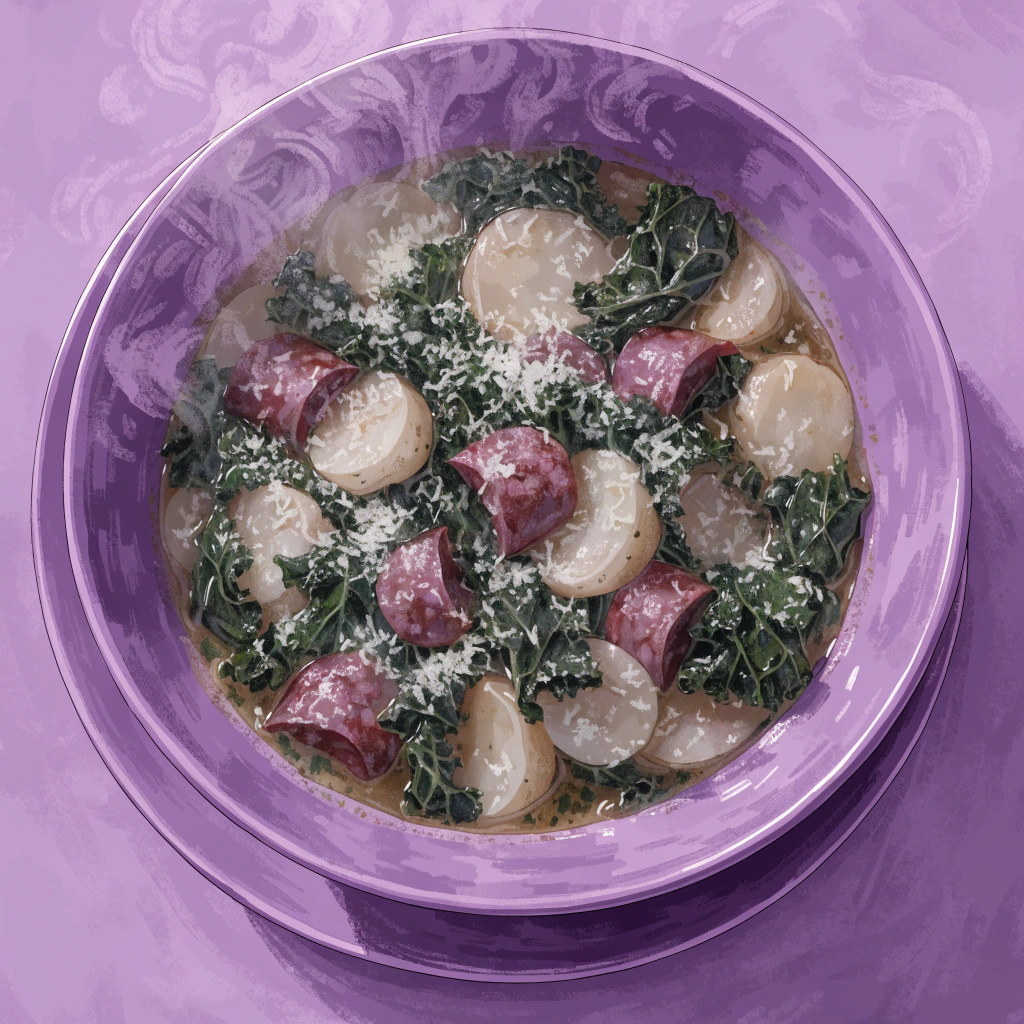
Caldo Verde: A Famous Soup from Portugal
Caldo Verde is a famous soup from Portugal. It is very popular in the north. People love this green soup because it is warm and healthy.
The soup is simple. It has potatoes, onions, and garlic. It also has a green vegetable called kale. Some people put olive oil on top.
Many families eat Caldo Verde for dinner. They eat it with fresh bread. It is a traditional meal. You can find this soup in many restaurants in Portugal. It is delicious!
문법 스포트라이트
패턴: The Verb 'To Be'
"It is a traditional meal."
We use 'is' with singular subjects like 'it', 'he', or 'she'. In this sentence, it describes a fact about the soup.
패턴: Present Simple for Habits
"Many families eat Caldo Verde for dinner."
We use the base form of the verb (eat) for plural subjects like 'families'. This describes a regular action or habit.
이해도를 테스트하세요
10 질문 · A1 초급 · 무료 미리보기 1회
이 기사에서 배운 내용을 테스트하세요. 모든 질문에 답하여 XP를 획득하세요!
Where is Caldo Verde from?
문제별 결과
Where is Caldo Verde from?
내 답변:
정답: Portugal
Caldo Verde is a red soup.
내 답변:
정답: 거짓
What does 'delicious' mean?
내 답변:
정답: Very good taste
The soup has potatoes, onions, and _____.
내 답변:
정답: garlic
Caldo Verde: The Most Famous Soup in Portugal
Caldo Verde is the most famous soup in Portugal. It comes from the north of the country, in a region called Minho. This area is very green and beautiful. People call the soup "green broth" because of its color.
The recipe for this soup is very simple, but the taste is delicious. To make it, you need potatoes, onions, garlic, and olive oil. The most important ingredient is a special type of dark green kale. People cut the kale into very thin pieces before cooking. In the past, farmers made this soup because it was cheap and healthy.
Today, Caldo Verde is more popular than other traditional dishes. You can find it at weddings, festivals, and in small restaurants. Usually, people serve the soup with a slice of "chouriço," which is a spicy Portuguese sausage. It is better to eat it with fresh bread. Many Portuguese people think Caldo Verde is a symbol of their culture because it is warm and welcoming.
문법 스포트라이트
패턴: Superlative Adjectives
"Caldo Verde is the most famous soup in Portugal."
We use 'the most' with long adjectives (like famous) to show that something is number one in a group. It is formed by 'the most' + adjective.
패턴: Comparative Adjectives
"Today, Caldo Verde is more popular than other traditional dishes."
We use 'more + adjective + than' to compare two different things. This is used for adjectives with two or more syllables.
이해도를 테스트하세요
11 질문 · A2 초등급 · 무료 미리보기 1회
이 기사에서 배운 내용을 테스트하세요. 모든 질문에 답하여 XP를 획득하세요!
Where does Caldo Verde come from?
문제별 결과
Where does Caldo Verde come from?
내 답변:
정답: The north of Portugal
The soup is called 'green broth' because of its color.
내 답변:
정답: 참
What does 'ingredient' mean?
내 답변:
정답: A food used to make a dish
People cut the kale into very _____ pieces.
내 답변:
정답: thin
What is 'chouriço'?
내 답변:
정답: A spicy sausage
포르투갈의 따뜻한 영혼, 칼두 베르드
포르투갈에는 '칼두 베르드'라는 아주 특별한 수프가 있습니다. 이 수프는 문자 그대로 '초록색 국물'이라는 뜻을 가지고 있으며, 포르투갈에서 가장 유명한 수프 중 하나로 널리 여겨지고 있습니다. 칼두 베르드는 단순한 음식이 아니라, 포르투갈 사람들의 정체성을 나타내는 중요한 부분입니다.
이 맛있는 수프는 포르투갈 북부의 미뉴(Minho) 지방에서 시작되었습니다. 미뉴 지방은 푸른 자연경관과 화강암 벽으로 둘러싸인 포도밭으로 유명한 곳입니다. 칼두 베르드는 이곳의 소박한 삶과 자연에서 영감을 받아 만들어진 것으로 보입니다.
겉보기에는 아주 간단해 보이는 이 수프는 사실 재료의 품질에 크게 의존합니다. 주요 재료로는 감자, 양파, 마늘, 올리브 오일, 그리고 '코우베 갈레가(couve-galega)'라고 불리는 특별한 종류의 케일이 사용됩니다. 이 케일은 칼두 베르드 특유의 색깔과 맛을 줍니다. 재료들이 잘 어우러져 깊고 풍부한 맛을 만들어냅니다.
칼두 베르드는 이제 포르투갈을 넘어 전 세계 포르투갈어권 국가들로 퍼져나갔습니다. 많은 사람들이 이 수프를 통해 포르투갈의 맛과 문화를 경험하고 있습니다. 집에서 편안하게 먹거나 축제에서 함께 나누는 등, 칼두 베르드는 포르투갈 사람들의 일상생활과 특별한 순간에 항상 함께하고 있습니다. 이 수프는 포르투갈의 따뜻함과 환대를 상징하게 되었습니다.
문법 스포트라이트
패턴: -아/어지다 (수동태/변화)
"포르투갈에서 가장 유명한 수프 중 하나로 널리 여겨지고 있습니다."
이 문법은 동사에 붙어 '어떤 상태가 되다' 또는 '누군가에 의해 무엇이 되다'라는 수동적인 의미를 나타냅니다. 주로 주어가 어떤 행위의 대상이 될 때 사용되며, 자동사에도 쓰여 변화된 상태를 나타내기도 합니다. 예를 들어, '만들다'는 '만들어지다'가 됩니다.
패턴: -는/은/을 명사 (관형절)
"'코우베 갈레가(couve-galega)'라고 불리는 특별한 종류의 케일이 사용됩니다."
이 문법은 동사나 형용사 뒤에 붙어 뒤에 오는 명사를 꾸며주는 역할을 합니다. 동사는 '-는' (현재), '-은/ㄴ' (과거), '-을/ㄹ' (미래)을 사용하고, 형용사는 '-은/ㄴ'을 사용합니다. 이 문장에서는 '불리다'라는 동사가 '케일'을 꾸며주고 있습니다.
이해도를 테스트하세요
11 질문 · B1 중급 · 무료 미리보기 1회
이 기사에서 배운 내용을 테스트하세요. 모든 질문에 답하여 XP를 획득하세요!
칼두 베르드 수프는 어떤 나라의 음식입니까?
문제별 결과
칼두 베르드 수프는 어떤 나라의 음식입니까?
내 답변:
정답: 포르투갈
칼두 베르드는 포르투갈 북부 미뉴 지방에서 시작되었습니다.
내 답변:
정답: 참
'정체성'의 의미는 무엇입니까?
내 답변:
정답: 변하지 않는 존재의 본질
칼두 베르드는 재료의 _______에 크게 의존합니다.
내 답변:
정답: 품질
다음 중 칼두 베르드의 주요 재료가 아닌 것은 무엇입니까?
내 답변:
정답: 토마토
The Cultural Significance of Caldo Verde: Portugal’s Green Legacy
Caldo Verde, which translates literally to 'green broth,' serves as an emblematic cornerstone of Portuguese national identity. Originating from the Minho province in the north, a region celebrated for its granite-walled vineyards and lush terrain, this soup has transcended its regional roots to become a staple across the Lusophone world. At its core, the dish is a testament to the idea that culinary excellence does not necessitate complexity. Instead, it relies on the authenticity and freshness of fundamental ingredients: potatoes, onions, garlic, olive oil, and the essential 'couve-galega' kale. The recipe's survival across centuries is a remarkable feat of cultural preservation.
The preparation process is deceptively straightforward, yet it requires a specific consistency to be considered authentic. The soup is typically prepared by boiling potatoes and onions together until they are tender enough to be mashed into a smooth, thick base. Furthermore, the kale must be sliced into extremely fine ribbons—a technique that requires considerable skill—before being added at the final stage to preserve its vibrant color and nutritional value. This meticulous attention to detail ensures that the texture remains light yet satisfying. If the kale were to be chopped coarsely, the dish would lose its characteristic elegance and mouthfeel.
Socio-culturally, Caldo Verde plays an integral role in Portuguese life, particularly during festivities such as the Feast of Saint John in Porto. It is often served at the end of a long night of celebration, providing comfort and sustenance to participants. The dish's versatility allows it to be enjoyed as either a light starter or a substantial late-night meal, often accompanied by a slice of 'chouriço' and traditional cornbread. Its presence at weddings, birthdays, and national holidays confirms its status as a communal bond that unites different generations.
From a sociological perspective, the preservation of this recipe highlights the Portuguese commitment to tradition in an increasingly globalized world. While contemporary chefs have experimented with more sophisticated versions, the classic iteration remains the most popular among the local population. This enduring preference suggests that for many, Caldo Verde is not merely food; it is a manifestation of historical continuity. Consequently, understanding the nuances of this soup offers a unique window into the values of Portuguese society, where the past is cherished through every spoonful.
문법 스포트라이트
패턴: Passive Voice
"The soup is typically prepared by boiling potatoes and onions together until they are tender enough to be mashed into a smooth, thick base."
The passive voice is used here to focus on the process rather than the person cooking. It is formed using the verb 'to be' followed by the past participle.
패턴: Second Conditional (Hypothetical)
"If the kale were to be chopped coarsely, the dish would lose its characteristic elegance and mouthfeel."
This structure describes a hypothetical situation and its consequence. 'Were to' adds a formal tone to the condition, while 'would' indicates the result.
패턴: Concessive Clause (While/Although)
"While contemporary chefs have experimented with more sophisticated versions, the classic iteration remains the most popular among the local population."
The word 'while' is used as a discourse marker to introduce a contrast between the actions of modern chefs and the general population's preference.
이해도를 테스트하세요
11 질문 · B2 중상급 · 무료 미리보기 1회
이 기사에서 배운 내용을 테스트하세요. 모든 질문에 답하여 XP를 획득하세요!
In which Portuguese province did Caldo Verde originate?
문제별 결과
In which Portuguese province did Caldo Verde originate?
내 답변:
정답: Minho
The article suggests that the soup requires very expensive and complex ingredients.
내 답변:
정답: 거짓
What does 'authenticity' mean in the context of the article?
내 답변:
정답: Being genuine and true to tradition
The dish's _____ allows it to be enjoyed as either a light starter or a substantial meal.
내 답변:
정답: versatility
According to the text, what does the preservation of the recipe highlight?
내 답변:
정답: A commitment to tradition in a globalized world
Caldo Verde: The Gastronomic Soul of the Lusosphere
Rarely does a single dish encapsulate the collective identity of a nation as poignantly as Caldo Verde. While ostensibly a humble cabbage soup, this 'green broth' serves as a profound culinary pillar, transcending socio-economic boundaries within Portugal and across its former colonies. Originating from the verdant, granite-strewn landscapes of the Minho province, the soup’s provenance is inextricably linked to the rural rhythms of northern life. It is the marriage of humble ingredients—potatoes, onions, and garlic—that defines the soup's essence, yet its preparation demands a precision that belies its simplicity. Furthermore, the soup acts as a sociological bridge, reconciling the rustic traditions of the peasantry with the urban sensibilities of the modern Portuguese citizen.
The defining characteristic of Caldo Verde is the couve-galega, a variety of kale that must be shredded into ribbons as fine as silk. This meticulous preparation is not merely aesthetic; the thinness of the greens ensures they wilt instantly in the hot broth, preserving their vibrant color and nuanced bitterness. To the uninitiated, the process might seem austere, yet the result is a sophisticated synthesis of textures. The transformation of the humble potato into a velvety base is a testament to the ingenuity of rural Portuguese cooking, where scarcity necessitated the elevation of basic staples into something sublime.
Seldom has a dish so simple commanded such reverence at every level of society. From the most clandestine fado houses in Lisbon to the opulent banquet halls of the elite, Caldo Verde remains a constant. It is often served with a solitary slice of chouriço, which provides a smoky, fatty counterpoint to the earthy broth, and a drizzle of high-quality olive oil. This communal dish is frequently consumed during the festivities of São João, where the aroma of grilled sardines and the steam from the soup bowls create an evocative sensory landscape that defines Portuguese summers.
The ubiquity of Caldo Verde across the Lusosphere—from the bustling markets of Luanda to the vibrant streets of Rio de Janeiro—highlights the enduring legacy of Portuguese migration. In each locale, the soup has undergone subtle adaptations, yet it remains a recognizable symbol of 'saudade,' that uniquely Portuguese sense of nostalgic longing. It is through the consumption of such dishes that diaspora communities maintain a tangible link to their ancestral roots. Ultimately, Caldo Verde epitomizes the concept of 'slow food' long before the term gained modern currency. Its endurance lies in its refusal to succumb to culinary fads, remaining instead a steadfast anchor in a rapidly globalizing world.
문법 스포트라이트
패턴: Inversion with Negative/Restrictive Adverbs
"Rarely does a single dish encapsulate the collective identity of a nation as poignantly as Caldo Verde."
When using restrictive adverbs like 'rarely' or 'seldom' at the beginning of a sentence for emphasis, the auxiliary verb comes before the subject. This creates a more formal and dramatic tone suitable for advanced writing.
패턴: It-Cleft Sentences
"It is through the meticulous shredding of the couve-galega that the soup achieves its distinctive texture."
Cleft sentences are used to focus on a specific piece of information. By starting with 'It is...', the writer emphasizes the method (shredding) as the primary cause for the result (texture).
패턴: Nominalization
"The transformation of the humble potato into a velvety base is a testament to the ingenuity of rural Portuguese cooking."
Nominalization involves turning verbs (transform) or adjectives into nouns (transformation). This allows for a higher information density and a more objective, academic style of prose.
이해도를 테스트하세요
12 질문 · C1 고급 · 무료 미리보기 1회
이 기사에서 배운 내용을 테스트하세요. 모든 질문에 답하여 XP를 획득하세요!
What is the primary reason for shredding the kale into very thin ribbons?
문제별 결과
What is the primary reason for shredding the kale into very thin ribbons?
내 답변:
정답: To allow the greens to wilt immediately while keeping their color
The article suggests that Caldo Verde is only consumed by the working class in rural areas.
내 답변:
정답: 거짓
What does the word 'austere' mean in the context of the article?
내 답변:
정답: Plain, simple, and without decoration
The soup's _____ is inextricably linked to the rural rhythms of northern life.
내 답변:
정답: provenance
What role does chouriço play in the dish according to the text?
내 답변:
정답: It provides a smoky and fatty contrast to the earthy base
The soup is considered a symbol of 'saudade' in Portuguese diaspora communities.
내 답변:
정답: 참
The Gastronomic Ontogeny of Caldo Verde: A Sociocultural Synthesis of Lusitanian Identity
To contemplate Caldo Verde is to engage with the very bedrock of Portuguese ethnography. This 'green broth' transcends its humble nomenclature, manifesting as a culinary metonym for the nation’s historical trajectory and its agrarian roots. Originating in the verdant, granite-strewn province of Minho, the soup is not merely a sustenance-providing liquid but a visceral link to the land. Hardly had the first pot boiled in the rain-drenched hills of the north than it became an indissoluble facet of the regional psyche. The dish’s provenance is intrinsically tied to the 'couve-galega', a resilient variety of kale that thrives in the Atlantic climate, symbolizing the endurance of the Portuguese peasantry.
From an analytical perspective, the preparation of Caldo Verde represents a sophisticated exercise in minimalist alchemy. It is imperative that the potatoes be of a floury variety to ensure the requisite starch release during the boiling process. This starch, when combined with high-quality olive oil and the water in which the onions and garlic have been softened, undergoes a process of emulsification that creates a velvety texture without the need for dairy. Were one to omit the specific 'couve-galega', the resulting concoction would arguably cease to be Caldo Verde, as the specific bitterness and texture of this brassica are central to its identity. The kale must be sliced into filaments so fine they resemble hair—a technique known as 'cortada em juliana'—requiring a level of manual dexterity that borders on the ritualistic.
Furthermore, the ubiquity of Caldo Verde across the Lusophone world provides a fascinating case study in cultural diffusion. As the Portuguese maritime empire expanded, so too did its culinary staples. In Brazil, Angola, and Mozambique, the soup underwent various adaptations, yet its core essence remained a constant, serving as a culinary 'saudade' for the diaspora. It is often posited by sociologists that the soup acts as a leveling mechanism; it is served with equal reverence in the most austere rural taverns and the most opulent Lisbon restaurants. This dichotomy between its humble origins and its elevated status in the national canon highlights the fluidity of class boundaries through the lens of gastronomy.
Literature and music have also played a pivotal role in cementing the soup’s status. The renowned novelist Eça de Queirós frequently alluded to it as a symbol of domestic comfort and tradition, while Fado singers often evoke its warmth as a counterpoint to the melancholic themes of their songs. The ephemeral steam rising from a bowl of Caldo Verde is often described as the very breath of the Portuguese spirit. It is not merely a dish; it is an ontological statement of belonging. One might even argue that to understand the Portuguese soul, one must first navigate the depths of this emerald-hued broth.
In the contemporary era, the soup faces the dual challenge of globalization and the industrialization of food. While pre-packaged, machine-cut kale is now common in supermarkets, purists maintain that the soul of the dish is lost when human labor is removed from the equation. The tension between convenience and authenticity is a recurring theme in modern Portuguese discourse. Nevertheless, the enduring popularity of Caldo Verde suggests that it remains a quintessential pillar of identity. Whether enjoyed at a village festival in the Minho or at a sophisticated gala in the capital, it continues to evoke a sense of shared heritage that is both profound and enduring. Thus, Caldo Verde remains not just a staple of the diet, but a vibrant, living testament to the resilience and continuity of Portuguese culture across the centuries.
문법 스포트라이트
패턴: Negative Inversion
"Hardly had the first pot boiled in the rain-drenched hills of the north than it became an indissoluble facet of the regional psyche."
Inversion is used after restrictive or negative adverbials (like 'Hardly') at the beginning of a sentence for emphasis. The auxiliary verb precedes the subject.
패턴: The Subjunctive Mood
"It is imperative that the potatoes be of a floury variety to ensure the requisite starch release."
The base form 'be' is used in a 'that' clause following an adjective of importance (imperative). This is a formal way to express necessity.
패턴: Second Conditional (Inverted/Formal)
"Were one to omit the specific 'couve-galega', the resulting concoction would arguably cease to be Caldo Verde."
Replacing 'If one were to' with 'Were one to' creates a highly formal hypothetical structure common in scholarly writing.
이해도를 테스트하세요
12 질문 · C2 마스터 · 무료 미리보기 1회
이 기사에서 배운 내용을 테스트하세요. 모든 질문에 답하여 XP를 획득하세요!
What does the author suggest about the relationship between Caldo Verde and social class?
문제별 결과
What does the author suggest about the relationship between Caldo Verde and social class?
내 답변:
정답: It acts as a leveling mechanism across different social strata.
The author argues that machine-cut kale is considered superior by purists due to its precision.
내 답변:
정답: 거짓
Which word describes the process of creating a velvety texture from oil and water?
내 답변:
정답: Emulsification
The author describes the soup as a culinary _____ for the nation's historical trajectory.
내 답변:
정답: metonym
In what way is the 'couve-galega' symbolically linked to the Portuguese people?
내 답변:
정답: Its resilience represents the endurance of the peasantry.
The text mentions that the starch from floury potatoes is essential for the soup's texture.
내 답변:
정답: 참

