









oyster 30秒で
- An oyster is a saltwater bivalve mollusk with a rough, stony shell, primarily known as a luxury seafood item and a producer of pearls.
- Ecologically, oysters are vital 'filter feeders' that clean ocean water and build reefs that protect coastlines and provide habitats for other species.
- The word is famously used in the idiom 'the world is your oyster,' which means having unlimited opportunities and the potential for great success.
- In London, 'Oyster' refers to the electronic smartcard used for public transportation, while in fashion, it describes a specific pale greyish-white color.
The term oyster refers primarily to a family of salt-water bivalve mollusks that thrive in marine or brackish habitats. These organisms are characterized by their highly calcified, irregular shells, which serve as a protective barrier against predators and environmental fluctuations. In a biological context, oysters are fascinating creatures that belong to the phylum Mollusca. They are renowned for their unique ability to filter large volumes of water, extracting plankton and organic particles for nourishment while simultaneously purifying their surrounding environment. This ecological role makes them 'ecosystem engineers,' as they create complex reef structures that provide habitats for numerous other marine species. Beyond their biological significance, the word 'oyster' carries heavy weight in the culinary world. It is often synonymous with luxury, sophistication, and the briny essence of the sea. When people discuss oysters in a restaurant setting, they are usually referring to the act of consuming them raw on the half-shell, often accompanied by a squeeze of lemon, a dash of mignonette sauce, or a drop of hot sauce. The experience of eating an oyster is as much about the texture—often described as silky, firm, or creamy—as it is about the complex flavor profile, which can range from metallic and salty to sweet and nutty depending on the water chemistry of their origin, a concept known as 'merroir.'
- Biological Classification
- Oysters belong to the superfamily Ostreoidea. The most commonly consumed species include the Eastern oyster (Crassostrea virginica) and the Pacific oyster (Crassostrea gigas).
The chef carefully used a specialized knife to shuck the oyster, revealing the glistening meat inside.
In addition to their culinary and ecological roles, oysters are famous for their ability to produce pearls. While the oysters we eat (family Ostreidae) are not the primary source of fine jewelry pearls—those come from pearl oysters in the family Pteriidae—the concept of an oyster hiding a precious gem has deeply influenced human language and metaphor. This leads to the common idiomatic use of the word. When someone says 'the world is your oyster,' they are suggesting that you are in a position to take advantage of the opportunities life presents, much like finding a pearl within a shell. This metaphorical layer adds a sense of potential and hidden value to the word. Furthermore, the word 'oyster' is used to describe a specific shade of off-white or light grey, mimicking the iridescent interior of the shell known as mother-of-pearl or nacre. This color is often used in interior design and fashion to evoke a sense of understated elegance and natural beauty. In modern urban contexts, 'Oyster' has also become a brand name, most notably for the electronic smartcard used for public transport in London, which was named to evoke the security of a shell and the 'pearl' of the city's travel network. Whether you are a marine biologist studying reef restoration, a gourmet diner exploring coastal flavors, or a student of English literature analyzing Shakespearean metaphors, the word 'oyster' encompasses a vast array of meanings that bridge the gap between the natural world and human culture. It is a word that suggests both the ruggedness of a rough, stony exterior and the delicate, valuable treasures that might be found within. Historically, oysters were once a staple food for the poor in coastal cities like London and New York during the nineteenth century, sold by street vendors in massive quantities. Over time, due to overharvesting and pollution, they transitioned into the luxury item we recognize today. This historical shift adds a layer of socio-economic meaning to the word, representing how our relationship with natural resources can change over centuries. Today, sustainable oyster farming, or aquaculture, is a growing industry that seeks to balance the high demand for this delicacy with the need to protect and restore marine ecosystems.
- Culinary Preparation
- Oysters can be served raw, steamed, boiled, baked, fried, roasted, stewed, canned, pickled, smoked, or used in various beverages like the oyster shooter.
Environmentalists are building artificial reefs made of recycled oyster shells to protect the shoreline from erosion.
The word is also frequently used in technical and specialized fields. In mechanics, an 'oyster' might refer to a specific type of watch case, famously pioneered by Rolex, which is hermetically sealed to be waterproof, much like a closed oyster shell. This usage highlights the word's association with protection and water-resistance. In the realm of social behavior, describing someone as 'clam-like' or 'as quiet as an oyster' implies a person who is secretive, reserved, or difficult to extract information from. This reinforces the imagery of a tightly shut shell that requires effort to open. The linguistic versatility of 'oyster' is truly remarkable, spanning from biology and gastronomy to fashion, technology, and idiomatic expressions. It serves as a reminder of how deeply our language is rooted in the observation of the natural world and the various ways we interact with its inhabitants. As we continue to navigate the complexities of environmental conservation and global trade, the oyster remains a symbol of both the fragility and the resilience of our oceans. It is a small creature that carries a heavy load of cultural and ecological significance, making it a vital word for any English learner to master in both its literal and figurative senses.
- Metaphorical Meaning
- To 'oyster' something can occasionally mean to keep it secret or to shut oneself away from the world, though this is less common than the noun form.
With your new degree and international experience, the whole world is truly your oyster.
She chose an oyster silk for her wedding dress to achieve a classic, muted glow.
Using the word oyster correctly requires an understanding of its various roles as a noun, an adjective, and a part of idiomatic expressions. In its most literal sense, it functions as a countable noun referring to the animal. For example, you might say, 'I would like to order six oysters,' or 'The oyster was firmly attached to the rock.' When using it in a culinary context, it is common to see it paired with verbs like 'shuck' (to open), 'slurp' (to eat quickly from the shell), or 'farm' (to raise in a controlled environment). It is important to remember that 'oyster' can also act as a collective noun in certain scientific contexts, though 'oysters' is the standard plural form. When you are describing the color, 'oyster' acts as an adjective or a noun of color, as in 'The walls were painted a soft oyster grey.' This usage is particularly common in the worlds of interior design, fashion, and automotive paint, where it suggests a specific, sophisticated hue that is not quite white and not quite beige.
- Grammar Tip: Countability
- 'Oyster' is a countable noun. Always use 'oysters' when referring to more than one, except when used as a modifier (e.g., 'oyster bed', 'oyster sauce').
We spent the afternoon at the oyster bar, enjoying the freshest catch of the day.
In figurative language, the most famous usage is the idiom 'the world is your oyster.' This phrase is often used in graduation speeches, career advice, or moments of great personal success. It implies that the person has the ability and the opportunity to achieve anything they desire. For instance, 'Now that you have finished your training, the world is your oyster.' Another figurative use, though less common, is describing a person as an 'oyster' to mean they are very private or uncommunicative. You might say, 'He’s a bit of an oyster when it comes to his personal life,' meaning he keeps his secrets locked away tightly. When writing about environmental issues, you will often use 'oyster' in compound nouns like 'oyster reef,' 'oyster restoration,' or 'oyster filtration.' These terms highlight the ecological importance of the species. For example, 'The restoration of the oyster reef has significantly improved the water quality in the bay.' In these cases, 'oyster' acts as an attributive noun, modifying the noun that follows it to specify the type of reef or restoration project.
- Common Collocations
- Commonly paired with: shuck, raw, pearl, shell, bed, sauce, farm, reef, knife, bar.
He used a specialized oyster knife to avoid injuring himself while opening the shells.
Furthermore, 'oyster' appears in the name of a popular condiment: 'oyster sauce.' This is a thick, savory sauce made from oyster extracts, sugar, salt, and water, thickened with cornstarch. It is a staple in Cantonese, Thai, and Vietnamese cuisines. When using this term, 'oyster' describes the primary flavoring agent. For example, 'Add two tablespoons of oyster sauce to the stir-fry for a deeper umami flavor.' It is also worth noting the term 'oyster mushroom,' which refers to a type of edible fungus that resembles the shape and color of an oyster shell. In a sentence, you might say, 'The recipe calls for sautéed oyster mushrooms and garlic.' This shows how the physical characteristics of the oyster shell have influenced the naming of unrelated species in the natural world. Finally, in the context of high-end watches, the 'Oyster Perpetual' is a famous model line. You might hear a collector say, 'I just added a vintage Oyster Perpetual to my collection.' Here, the word signifies a specific heritage of waterproof engineering. By understanding these diverse applications, you can use the word 'oyster' with precision and confidence in a wide variety of settings, from a seafood restaurant to a biology lab or a fashion studio.
- Phrasal Usage
- 'To shuck an oyster' is the standard way to describe opening the shell. 'To be as close as an oyster' means to be very secretive.
The stir-fry was seasoned with a rich oyster sauce that complemented the vegetables perfectly.
Marine biologists are studying how oyster populations react to increasing ocean acidity.
The word oyster is frequently heard in several distinct environments, each providing a different context for its meaning. The most common place is undoubtedly in the hospitality and culinary industry. If you are walking through a coastal town or a metropolitan area with a vibrant food scene, you will see 'Oyster Bars' advertised on signs and menus. In these settings, you will hear servers explaining the different varieties available, such as Blue Points, Kumamotos, or Belons. You will hear diners discussing the 'brininess' or 'finish' of the oysters they are tasting. Chefs might give instructions on how to 'shuck' them properly without losing the precious 'liquor' inside. This culinary context is where the word is most tactile and sensory, associated with ice-filled platters and the clinking of wine glasses. It is a word that signals a specific type of dining experience—one that is often celebratory or indulgent.
- Context: Fine Dining
- In upscale restaurants, the 'oyster course' is a standard part of many tasting menus, often served as an appetizer to awaken the palate.
'Would you like to start with a dozen oysters on the half-shell?' the waiter asked.
Another major arena for the word is in environmental science and conservation. You will hear 'oyster' mentioned in documentaries, news reports about climate change, and marine biology lectures. Scientists talk about 'oyster restoration projects' as a key strategy for cleaning up polluted waterways like the Chesapeake Bay or New York Harbor. They discuss how 'oyster reefs' act as natural storm barriers, absorbing wave energy and protecting coastlines from erosion. In this context, the word is associated with sustainability, ecology, and the health of our oceans. You might hear phrases like 'oyster spat' (young oysters) or 'oyster seeding.' This usage is more technical and serious, focusing on the animal's role as a biological filter and a foundation for marine biodiversity. It highlights the shift in public perception of oysters from just a food source to a vital component of a healthy planet.
- Context: Environmentalism
- The 'Billion Oyster Project' in New York is a well-known initiative aimed at restoring oyster reefs to the city's harbor.
The documentary explained how a single oyster can filter up to fifty gallons of water a day.
In the United Kingdom, specifically London, the word 'Oyster' is part of the daily vocabulary for millions of commuters. It refers to the 'Oyster card,' the electronic ticket used for public transport. You will hear announcements like 'Please have your Oyster cards ready,' or people asking, 'Do you have enough credit on your Oyster?' This usage is so ubiquitous that many Londoners might think of the transport card before they think of the shellfish. It is a perfect example of how a brand name can colonize a common word in a specific geographic location. Similarly, in the world of luxury goods, particularly horology, the word is heard in discussions about Rolex watches. The 'Oyster case' is a legendary term among collectors, representing the first waterproof watch case. You will hear it in watch boutiques, at auctions, and in YouTube reviews of high-end timepieces. Here, the word signifies durability, precision, and heritage.
- Context: Transportation
- 'I need to top up my Oyster card before we get on the bus,' she said.
The collector pointed out the signature oyster bracelet on the vintage timepiece.
In the movie, the protagonist realized that with his new-found wealth, the world was his oyster.
Finally, you will hear the word in casual conversation when people use the idiom 'the world is your oyster.' It is a common piece of encouragement given to young people starting a new chapter in their lives. You might hear it at a graduation party or a farewell dinner. It conveys a sense of optimism and limitless potential. Because of its Shakespearean roots, it also carries a slight touch of literary flair. Whether it is being used to describe a delicious meal, a vital environmental effort, a daily commute, a luxury watch, or a hopeful future, 'oyster' is a word that is deeply embedded in the English-speaking world. Listening for it in these different contexts will help you understand the nuances of its meaning and how it reflects various aspects of human life and the natural world.
While the word oyster seems straightforward, there are several common mistakes that learners and even native speakers often make. One of the most frequent errors is confusing oysters with other types of shellfish, such as clams, mussels, or scallops. While they are all bivalves (mollusks with two shells), they have distinct differences in appearance, habitat, and taste. Oysters have very rough, irregular, and stony shells, whereas clams usually have smoother, more symmetrical shells. Mussels are typically elongated and dark blue or black, and scallops have the iconic fan-shaped shell. Confusing these in a culinary or biological context can lead to misunderstandings. For example, if a recipe calls for oysters and you use clams, the texture and flavor profile will be significantly different. Another common mistake is the pronunciation of the word. Some learners might struggle with the 'oy' diphthong followed by the 'st' cluster. It should be pronounced /'ɔɪstə(r)/, with a clear 'oy' sound as in 'boy' or 'joy.' Mispronouncing it can sometimes make it sound like 'easter' or 'oister' with a different vowel sound, which can be confusing for listeners.
- Mistake: Shellfish Confusion
- Don't call a mussel an oyster. Oysters have rough, rocky shells; mussels are smooth and dark.
Incorrect: I found a beautiful blue oyster on the beach. (Likely a mussel).
In terms of grammar, a common mistake is using 'oyster' as an uncountable noun. Because we often see them served in large quantities, some might think it behaves like 'fish' or 'shrimp' (which can be both countable and uncountable). However, 'oyster' is strictly countable. You must say 'three oysters,' not 'three oyster.' The only exception is when 'oyster' is used as an adjective or part of a compound noun, like 'oyster sauce' or 'oyster bed.' Another area of confusion is the idiom 'the world is your oyster.' Some people mistakenly say 'the world is your clam' or 'the world is your pearl.' While the meaning might seem similar, the idiom is fixed. Using the wrong word makes the speaker sound unfamiliar with English idioms. Additionally, people sometimes misunderstand the meaning of the idiom, thinking it means the world is small or easy to open. In reality, it means the world is full of opportunities that you must 'shuck' or work for to obtain the 'pearl' or the reward.
- Mistake: Idiom Accuracy
- The phrase is 'the world is your oyster,' not 'the world is your pearl.' The oyster is the opportunity; the pearl is the reward.
Correct: With your talent, the world is your oyster.
There is also a common misconception regarding the 'pearl' in the oyster. Many people believe that every oyster they eat might contain a valuable pearl. In reality, the oysters used for food (edible oysters) very rarely produce pearls, and when they do, the pearls are usually small, dull, and of no commercial value. The 'pearl oysters' used in jewelry are a different family of mollusks altogether. Expecting to find a gem in your dinner is a common 'movie myth' that can lead to disappointment or even a chipped tooth! Furthermore, in the context of the London Oyster card, visitors often make the mistake of calling any travel card an 'Oyster.' While there are other cards like 'Contactless' or 'Travelcards,' the 'Oyster' is a specific brand. Using the term generically might lead to confusion when asking for help at a station. Finally, some people use 'oyster' to describe any off-white color, but in professional design, 'oyster' has a very specific cool, greyish undertone. Using it to describe a warm, yellowish cream color would be technically incorrect. By being aware of these biological, grammatical, idiomatic, and contextual nuances, you can avoid common pitfalls and use the word 'oyster' like a pro.
- Mistake: The 'R' Rule
- People often think you *can't* eat oysters in summer. While historically true, modern refrigeration and farming make them safe year-round, though the quality may vary.
Incorrect: I'm looking for a pearl in this oyster stew. (Highly unlikely and potentially dangerous).
Correct: The oyster mushrooms were a great addition to the pasta.
When exploring the word oyster, it is helpful to understand its relationship with other words in the same semantic field. The most direct alternatives are other types of bivalve mollusks. Clams are perhaps the most similar. However, clams are generally found buried in the sand or mud, whereas oysters are often attached to hard surfaces like rocks or other shells. Clams also tend to have a milder, sweeter flavor compared to the briny, complex taste of an oyster. Mussels are another close relative. They are easily distinguished by their smooth, dark, wedge-shaped shells and their tendency to grow in large clusters on rocks or piers. In cooking, mussels are almost always served cooked (steamed or in a sauce), while oysters are famously eaten raw. Scallops are also bivalves, but they are unique because they can 'swim' by clapping their shells together. The part of the scallop we usually eat is the large adductor muscle, which is very sweet and tender, quite different from the whole-body consumption of an oyster.
- Comparison: Oyster vs. Clam
- Oysters: Rough shell, attached to rocks, briny taste. Clams: Smooth shell, buried in sand, sweet taste.
While I enjoy oysters, I find the texture of steamed mussels to be more appealing.
In a broader sense, you can use the word mollusk or shellfish as a more general term. 'Mollusk' is a scientific category that includes not only oysters, clams, and mussels, but also snails, octopuses, and squids. 'Shellfish' is a culinary and common term that includes both mollusks and crustaceans (like shrimp, crabs, and lobsters). If you are talking about the ecological role of oysters, you might use the term filter feeder. This describes any animal that feeds by straining suspended matter and food particles from water. Other filter feeders include sponges, baleen whales, and many species of fish. Using this term emphasizes the oyster's function in the environment rather than its identity as a specific animal. In the context of the idiom 'the world is your oyster,' there aren't many direct synonyms that carry the same poetic weight, but you could say 'the sky is the limit' or 'you have the world at your feet.' These phrases convey a similar sense of unlimited potential and opportunity.
- Comparison: Oyster vs. Mussel
- Oysters: Often eaten raw, irregular shape. Mussels: Almost always cooked, symmetrical oval shape.
The menu featured a variety of shellfish, including oysters, clams, and shrimp.
When describing the color 'oyster,' alternatives might include pearl, ivory, off-white, cream, or alabaster. However, each of these has a slightly different nuance. 'Pearl' is usually more iridescent or shiny. 'Ivory' has a slight yellow or warm undertone. 'Oyster' is specifically valued for its cool, greyish-white quality. In fashion, you might hear 'champagne' or 'taupe' used in similar contexts, though they are generally darker or more colorful than oyster. If you are looking for a word to describe someone who is very private, instead of 'oyster,' you could use introvert, reserved, reticent, or uncommunicative. To describe someone who is very good at keeping secrets, you might call them a vault or say they are tight-lipped. While 'oyster' is a more metaphorical and colorful way to describe these traits, these alternatives are more direct and common in everyday speech. Understanding these synonyms and alternatives allows you to choose the most precise word for your specific needs, whether you are writing a scientific paper, a restaurant review, or a personal letter.
- Comparison: Oyster vs. Scallop
- Oysters: Sedentary, eaten whole. Scallops: Can swim, usually only the muscle is eaten.
The designer recommended an oyster finish for the cabinets to create a modern, clean look.
As a filter feeder, the oyster is essential for maintaining the clarity of the coastal waters.
How Formal Is It?
豆知識
The phrase 'the world is your oyster' was coined by William Shakespeare in his play 'The Merry Wives of Windsor' (1602). In the original context, the character Pistol says, 'Why then the world's mine oyster, which I with sword will open,' suggesting he will use force to get what he wants.
発音ガイド
- Pronouncing it like 'Easter' (EE-ster).
- Adding an extra syllable (oy-es-ter).
- Mispronouncing the 'oy' as 'eye' (eye-ster).
- Swapping the 's' and 't' (oy-tser).
- Making the 'oy' sound too short.
難易度
The word itself is easy, but technical or idiomatic contexts can be more challenging.
Spelling 'oyster' correctly is usually simple for B1 learners.
The 'oy' diphthong can be tricky for speakers of some languages.
Easily recognized in culinary or travel contexts.
次に学ぶべきこと
前提知識
次に学ぶ
上級
知っておくべき文法
Countable Nouns
I ate five oysters (Correct) vs I ate five oyster (Incorrect).
Articles with Vowels
An oyster (Correct) vs A oyster (Incorrect).
Compound Nouns
Oyster sauce, oyster bed, oyster shell.
Idiomatic Expressions
The world is your oyster (Fixed phrase).
Adjectives from Nouns
The oyster-colored silk was very expensive.
レベル別の例文
The oyster lives in the sea.
L'huître vit dans la mer.
Subject + Verb + Prepositional Phrase.
I see an oyster on the rock.
Je vois une huître sur le rocher.
Use 'an' before 'oyster' because it starts with a vowel.
Do you like to eat oysters?
Aimes-tu manger des huîtres ?
Plural form 'oysters' for general preference.
The oyster has a hard shell.
L'huître a une coquille dure.
Adjective 'hard' modifies the noun 'shell'.
There is a pearl in the oyster.
Il y a une perle dans l'huître.
'There is' introduces the existence of something.
I have an Oyster card for the bus.
J'ai une carte Oyster pour le bus.
Proper noun usage in a specific context.
The oyster is small and grey.
L'huître est petite et grise.
Two adjectives connected by 'and'.
Look at the big oyster!
Regarde la grosse huître !
Imperative sentence starting with 'Look'.
He used a knife to open the oyster.
Il a utilisé un couteau pour ouvrir l'huître.
Infinitive of purpose: 'to open'.
Oysters are good for the ocean water.
Les huîtres sont bonnes pour l'eau de l'océan.
General statement using plural 'oysters'.
The world is your oyster, my friend!
Le monde t'appartient, mon ami !
Idiomatic expression of opportunity.
We ordered a dozen oysters at the restaurant.
Nous avons commandé une douzaine d'huîtres au restaurant.
'A dozen' means twelve.
She doesn't like the taste of raw oysters.
Elle n'aime pas le goût des huîtres crues.
Negative sentence with 'doesn't like'.
The oyster shell is very rough and sharp.
La coquille d'huître est très rugueuse et tranchante.
Compound adjectives 'rough and sharp'.
Oyster sauce is common in Chinese food.
La sauce d'huître est courante dans la cuisine chinoise.
Compound noun 'oyster sauce'.
They found many oysters near the old pier.
Ils ont trouvé beaucoup d'huîtres près du vieux quai.
'Many' used with countable plural noun.
The chef is famous for his baked oysters with spinach.
Le chef est célèbre pour ses huîtres au four aux épinards.
Passive participle 'baked' used as an adjective.
Oyster reefs provide a habitat for many fish.
Les récifs d'huîtres fournissent un habitat à de nombreux poissons.
Present simple for a scientific fact.
You need to top up your Oyster card before the journey.
Tu dois recharger ta carte Oyster avant le voyage.
Phrasal verb 'top up'.
The walls were painted a beautiful shade of oyster.
Les murs étaient peints d'une belle nuance d'huître.
'Oyster' used as a color name.
If you find a pearl in an oyster, you are very lucky.
Si tu trouves une perle dans une huître, tu as beaucoup de chance.
First conditional: If + present, present.
The oyster industry is vital for the local economy.
L'industrie ostréicole est vitale pour l'économie locale.
Noun as an adjective: 'oyster industry'.
Oyster mushrooms have a very delicate flavor.
Les pleurotes ont une saveur très délicate.
Specific name for a type of mushroom.
He was as quiet as an oyster during the meeting.
Il était muet comme une carpe (huître) pendant la réunion.
Simile: 'as quiet as an oyster'.
The restoration of the oyster beds has improved water clarity.
La restauration des bancs d'huîtres a amélioré la clarté de l'eau.
Present perfect 'has improved' for a completed action with present relevance.
The world is your oyster once you graduate from university.
Le monde t'appartient une fois que tu es diplômé de l'université.
Idiom used in a complex sentence.
Oysters are highly sensitive to changes in water temperature.
Les huîtres sont très sensibles aux changements de température de l'eau.
Adverb 'highly' modifying the adjective 'sensitive'.
The restaurant specializes in oysters sourced from the Atlantic.
Le restaurant est spécialisé dans les huîtres provenant de l'Atlantique.
Past participle 'sourced' used as a reduced relative clause.
Shucking an oyster requires a steady hand and the right tools.
Ouvrir une huître nécessite une main sûre et les bons outils.
Gerund 'Shucking' as the subject of the sentence.
The iridescent lining of the oyster shell is called nacre.
La doublure irisée de la coquille d'huître s'appelle la nacre.
Technical term 'nacre' introduced.
He wore an Oyster Perpetual watch that had been in his family for years.
Il portait une montre Oyster Perpetual qui était dans sa famille depuis des années.
Relative clause 'that had been...'.
Oyster farming is a sustainable way to produce high-quality seafood.
L'ostréiculture est un moyen durable de produire des fruits de mer de haute qualité.
Compound adjective 'high-quality'.
The subtle merroir of these oysters reflects the high salinity of the bay.
Le subtil 'merroir' de ces huîtres reflète la forte salinité de la baie.
Use of the specialized term 'merroir'.
Shakespeare's famous line suggests that the world's mine oyster to be opened with a sword.
La célèbre réplique de Shakespeare suggère que le monde est mon huître à ouvrir avec une épée.
Literary analysis and quotation.
The decline of wild oyster populations has led to significant ecological shifts.
Le déclin des populations d'huîtres sauvages a entraîné d'importants changements écologiques.
Complex noun phrase as the subject.
She remained as close as an oyster regarding the details of the merger.
Elle est restée muette comme une carpe concernant les détails de la fusion.
Advanced simile for secrecy.
The dress was made of a heavy oyster-colored satin that caught the light beautifully.
La robe était faite d'un lourd satin de couleur huître qui accrochait magnifiquement la lumière.
Compound adjective 'oyster-colored'.
Ocean acidification poses a dire threat to the calcification process of oysters.
L'acidification des océans représente une menace terrible pour le processus de calcification des huîtres.
Formal academic tone.
The historical oyster cellars of New York were once the city's most popular social hubs.
Les caves à huîtres historiques de New York étaient autrefois les centres sociaux les plus populaires de la ville.
Historical reference and superlative.
The oyster's ability to sequester nitrogen is a key benefit of reef restoration.
La capacité de l'huître à séquestrer l'azote est un avantage clé de la restauration des récifs.
Technical scientific vocabulary.
The protagonist's journey is a metaphorical shucking of the world to find his own pearl.
Le voyage du protagoniste est un écaillage métaphorique du monde pour trouver sa propre perle.
Metaphorical use of 'shucking'.
The intricate ostriculture techniques developed by the Romans are still studied today.
Les techniques complexes d'ostréiculture développées par les Romains sont encore étudiées aujourd'hui.
Use of the archaic/technical term 'ostriculture'.
His prose is often described as having the rough exterior of an oyster but containing pearls of wisdom.
Sa prose est souvent décrite comme ayant l'extérieur rugueux d'une huître mais contenant des perles de sagesse.
Elaborate literary comparison.
The delicate 'oyster' of the chicken is considered by many to be the most succulent morsel.
Le délicat 'sot-l'y-laisse' du poulet est considéré par beaucoup comme le morceau le plus succulent.
Highly specialized culinary jargon.
The company's new security protocol is as impenetrable as a tightly sealed oyster.
Le nouveau protocole de sécurité de l'entreprise est aussi impénétrable qu'une huître hermétiquement fermée.
Advanced simile in a corporate context.
The artist used crushed oyster shells to add a unique texture and luminosity to the canvas.
L'artiste a utilisé des coquilles d'huîtres broyées pour ajouter une texture et une luminosité uniques à la toile.
Descriptive artistic technique.
The socio-economic transition of the oyster from a pauper's staple to a prince's luxury is a fascinating study.
La transition socio-économique de l'huître, d'aliment de base du pauvre à luxe de prince, est une étude fascinante.
Complex historical and social analysis.
The calcified valves of the oyster provide a geological record of historical ocean conditions.
Les valves calcifiées de l'huître fournissent un enregistrement géologique des conditions océaniques historiques.
Scientific terminology: 'calcified valves'.
よく使う組み合わせ
よく使うフレーズ
— A standard serving of twelve oysters, usually in a restaurant.
We started our meal with a dozen oysters on ice.
— Oysters served raw and open on one half of their shell.
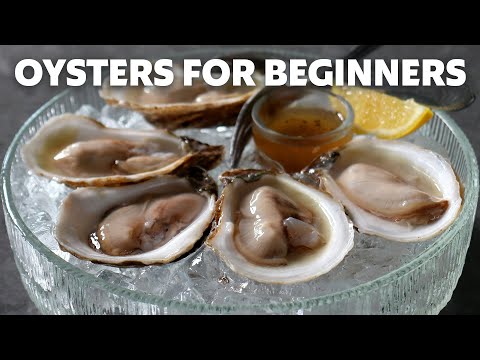
The platter of oysters on the half-shell looked beautiful.
— A famous dish of oysters topped with greens and breadcrumbs and baked.
Oyster Rockefeller is a classic American appetizer.
— A raw oyster served in a small glass with alcohol or spicy sauce.
He tried his first oyster shooter at the party.
— Oysters that have just been opened and are ready to eat.
Nothing beats the taste of a freshly shucked oyster.
— The larval stage of an oyster when it first attaches to a surface.
The scientists are monitoring the growth of the oyster spat.
— The natural juice found inside a fresh oyster shell.
The oyster liquor should be clear and smell like the sea.
— Oysters that grow naturally in the ocean rather than being farmed.
Wild oysters are becoming increasingly rare in this region.
— A type of folded paper container often used for Chinese takeout.
He carried the oyster pail full of noodles back to his office.
— A specific light grey color inspired by the oyster shell.
The car was painted a sleek oyster grey.
よく混同される語
Clams are usually smoother and live in sand; oysters are rough and attach to rocks.
Mussels are dark and oval; oysters are grey and irregular.
Scallops have fan-shaped shells and can swim; oysters are stationary.
慣用句と表現
— You have the ability and opportunity to do anything or go anywhere you want.
Now that you have your degree, the world is your oyster.
Informal/Neutral— Extremely secretive or refusing to speak about something.
When I asked about his plans, he was as close as an oyster.
Literary/Old-fashioned— The original Shakespearean version of 'the world is your oyster,' implying a more active taking of opportunity.
He felt that with his new job, the world's mine oyster.
Literary— To be a person who says very little and keeps secrets well.
You can tell her anything; she's an absolute oyster.
Informal— A very small or insignificant part (rare/archaic).
He played only an oyster-part in the entire production.
Archaic— To be very comfortable, safe, or isolated in one's own environment.
He stayed at home all weekend, like an oyster in its shell.
Descriptive— A creative variation meaning to work hard to get the rewards of life.
He's out there every day, trying to shuck the world and find his pearl.
Creative/Informal— Something very valuable or beautiful found in an unexpected or plain place.
This small cafe is a real pearl in an oyster in this busy city.
Metaphorical— To suddenly stop talking or become very defensive.
As soon as I mentioned the money, he shut up like an oyster.
Informal— A very rare, mildly insulting term for someone who is perceived as slow or simple.
Don't be so oyster-brained; the answer is obvious!
Slang/Rare間違えやすい
Similar vowel sounds in some accents.
Easter is a holiday; an oyster is a shellfish.
We ate oysters on Easter Sunday.
Common misspelling.
Oister is not a word; oyster is the correct spelling.
Always spell oyster with a 'y'.
Rhyming word.
Moister is the comparative of moist (wetter); oyster is an animal.
The ground is moister near the oyster bed.
Rhyming word.
A cloister is a covered walk in a convent or monastery.
The monk walked through the cloister thinking about the world being his oyster.
Rhyming word.
To roister means to enjoy oneself in a noisy, boisterous way.
They began to roister after eating a dozen oysters.
文型パターン
The [noun] is [adjective].
The oyster is grey.
I like to eat [noun].
I like to eat oysters.
The [noun] is used for [verb-ing].
The oyster is used for making pearls.
The [noun] provides [noun] for [noun].
The oyster reef provides a habitat for fish.
Despite its [adjective] exterior, the [noun] contains [noun].
Despite its rough exterior, the oyster contains a pearl.
The [noun]'s role as [noun] is [adjective].
The oyster's role as an ecosystem engineer is indispensable.
The world is [possessive pronoun] oyster.
The world is her oyster.
He used a [noun] to [verb].
He used a knife to open the oyster.
語族
名詞
動詞
形容詞
関連
使い方
Common in coastal areas, culinary circles, and London travel.
-
I ate three oyster.
→
I ate three oysters.
Oyster is a countable noun and needs an 's' in the plural.
-
The world is your pearl.
→
The world is your oyster.
The idiom is fixed; you cannot change the words even if the meaning seems similar.
-
I found an oyster in the sand.
→
I found a clam in the sand. (Usually)
Oysters usually attach to rocks; clams are the ones found buried in the sand.
-
He is as quiet as a clam.
→
He is as quiet as an oyster.
While 'happy as a clam' is an idiom, 'quiet as an oyster' is the more traditional simile for secrecy.
-
I need to recharge my oyster.
→
I need to top up my Oyster card.
In London, 'top up' is the standard phrasal verb used for adding money to a travel card.
ヒント
Check for Freshness
When buying fresh oysters, make sure the shells are tightly closed. If a shell is open, tap it; if it doesn't close immediately, the oyster is dead and should be thrown away.
Use the Right Knife
Never use a regular kitchen knife to shuck an oyster. Use a proper oyster knife with a thick blade and a guard to protect your hand from the sharp shell.
Countable vs. Uncountable
Remember that 'oyster' is countable. You can have 'one oyster' or 'many oysters.' Don't treat it like 'water' or 'rice.'
The World is Your Oyster
Use this phrase to encourage someone who has a lot of potential. It's perfect for graduations, new jobs, or moving to a new city.
London Commuting
If you're in London, always 'tap in' and 'tap out' with your Oyster card to ensure you're charged the correct fare. If you forget, you might be fined.
Support Restoration
Many coastal cities have programs where you can donate used oyster shells. These shells are cleaned and put back into the ocean to help new oysters grow.
Oyster Sauce Storage
Once you open a bottle of oyster sauce, keep it in the refrigerator. It will stay fresh for several months.
The 'OY' Sound
Make sure to round your lips for the 'oy' sound. It's the same sound as in 'oil' or 'point.' Practice saying 'The oyster in the oil' to master it.
Bivalve
Learn the word 'bivalve' alongside 'oyster.' It's a useful scientific term for any shellfish with two shells, like clams and mussels.
Oyster Color
If you're looking for a paint color that is sophisticated and neutral, 'oyster' is a great choice. It's warmer than plain grey but cooler than beige.
暗記しよう
記憶術
Think of a 'Boy' (oy) who found a 'Star' (ster) in the sea. Put them together: OY-STER. The star is the pearl inside!
視覚的連想
Imagine a rough, grey rock that opens up to show a beautiful, shiny white pearl. The contrast between the ugly outside and the beautiful inside is the essence of an oyster.
Word Web
チャレンジ
Try to use the word 'oyster' in three different ways today: once for food, once for the color, and once using the idiom 'the world is your oyster.'
語源
The word 'oyster' entered the English language in the 14th century via the Old French word 'oistre.' This French term was derived from the Latin 'ostrea,' which in turn came from the Ancient Greek 'ostreon.' The Greek root is related to 'osteon,' meaning 'bone,' referring to the hard, bone-like quality of the shell.
元の意味: The original meaning in Greek and Latin referred specifically to the shellfish or its shell.
Indo-European (Hellenic to Italic to Romance to Germanic/English).文化的な背景
Be aware that some people are highly allergic to shellfish, including oysters. Also, some vegetarians and vegans do not eat oysters, although there is a debate ('ostroveganism') because oysters lack a central nervous system.
In the US and UK, oysters are primarily seen as a luxury appetizer. The 'R' month rule is still a common piece of folklore.
実生活で練習する
実際の使用場面
At a Seafood Restaurant
- Are the oysters fresh?
- I'll have a dozen oysters, please.
- Where are these oysters from?
- Can you shuck these for us?
Commuting in London
- I need to top up my Oyster.
- Where can I buy an Oyster card?
- My Oyster card isn't working.
- Does the bus take Oyster?
Environmental Science Class
- Oysters are natural filters.
- The oyster reef prevents erosion.
- Pollution affects oyster growth.
- We are studying oyster restoration.
Graduation or Career Advice
- The world is your oyster.
- You have so many opportunities.
- Go out and find your pearl.
- Don't be afraid to shuck the world.
Interior Design
- I like this oyster grey color.
- The fabric has an oyster luster.
- Let's use oyster for the curtains.
- It's a very sophisticated shade of oyster.
会話のきっかけ
"Have you ever tried eating raw oysters, or do you find the idea a bit strange?"
"If you could travel anywhere in the world right now, where would you go? After all, the world is your oyster!"
"Do you think it's important to restore oyster reefs to help clean our oceans?"
"Have you ever used an Oyster card in London? Did you find the system easy to use?"
"Do you prefer seafood like oysters and clams, or do you prefer fish like salmon?"
日記のテーマ
Describe your first experience (or what you imagine it would be like) eating an oyster. Focus on the texture and taste.
What does the phrase 'the world is your oyster' mean to you personally at this stage of your life?
If you were an 'ecosystem engineer' like an oyster, what one thing would you do to improve your local environment?
Write a short story about a person who finds a pearl in an oyster in a very unexpected place.
Compare the literal oyster (the animal) with the metaphorical oyster (opportunity). How are they similar?
よくある質問
10 問Technically, any mollusk can produce a pearl, but the oysters we eat rarely produce them. The high-quality pearls used in jewelry come from a different family called 'pearl oysters' (Pteriidae). If you find one in your dinner, it will likely be small and not valuable.
Eating raw oysters carries a risk of food poisoning from bacteria like Vibrio. It is important to buy them from reputable sources and ensure they are kept very cold. People with certain health conditions should avoid raw shellfish entirely.
The old rule says you should only eat oysters in months with an 'R' (September to April). This was because oysters spawn in the summer and can be thin and less tasty, and without modern refrigeration, they spoiled quickly in the heat. Today, they are generally safe year-round.
Oysters are filter feeders. They pump water through their gills and trap plankton and other particles to eat. In the process, they remove excess nutrients and pollutants, making the water clearer and healthier for other marine life.
Shucking is the process of opening an oyster's shell. It requires a special, short-bladed knife. You insert the knife into the hinge of the shell and twist to break the muscle that holds the shell closed.
Modern oyster sauce is usually made from oyster extracts, sugar, salt, and water, thickened with cornstarch. It has a savory, umami flavor and is a key ingredient in many Asian stir-fry dishes.
The name was chosen because the oyster is a symbol of security (the hard shell) and value (the pearl). It also relates to the idiom 'the world is your oyster,' suggesting the card gives you the freedom to travel anywhere in the city.
Yes, raw oysters are typically alive until the moment they are shucked. This ensures they are fresh. A dead oyster that has been sitting at room temperature is very dangerous to eat.
Oyster mushrooms are a type of edible fungus (Pleurotus ostreatus). They are named because their broad, fan-shaped caps look like oyster shells. They have a mild, nutty flavor and are popular in cooking.
Adult oysters are 'sessile,' meaning they stay in one place. They attach themselves to a hard surface when they are young and stay there for the rest of their lives. Only the larval stage (spat) can swim.
自分をテスト 180 問
Write a sentence using the word 'oyster' to describe a type of food.
Well written! Good try! Check the sample answer below.
Write a sentence using the idiom 'the world is your oyster'.
Well written! Good try! Check the sample answer below.
Explain why oysters are important for the environment in two sentences.
Well written! Good try! Check the sample answer below.
Describe the physical appearance of an oyster shell.
Well written! Good try! Check the sample answer below.
Write a short dialogue between two people at a London train station using the word 'Oyster'.
Well written! Good try! Check the sample answer below.
Use the word 'oyster' as a color adjective in a sentence about interior design.
Well written! Good try! Check the sample answer below.
Write a sentence about the historical status of oysters as food.
Well written! Good try! Check the sample answer below.
Compare an oyster to a clam in one sentence.
Well written! Good try! Check the sample answer below.
Write a sentence using the term 'oyster reef'.
Well written! Good try! Check the sample answer below.
Write a sentence about 'oyster mushrooms'.
Well written! Good try! Check the sample answer below.
Use the word 'shuck' and 'oyster' in the same sentence.
Well written! Good try! Check the sample answer below.
Write a sentence about the 'Oyster Perpetual' watch.
Well written! Good try! Check the sample answer below.
Explain the 'R' month rule in your own words.
Well written! Good try! Check the sample answer below.
Write a sentence about 'nacre'.
Well written! Good try! Check the sample answer below.
Write a sentence using 'oyster' to describe someone's personality.
Well written! Good try! Check the sample answer below.
Write a sentence about 'oyster sauce'.
Well written! Good try! Check the sample answer below.
Write a sentence about 'oyster spat'.
Well written! Good try! Check the sample answer below.
Write a sentence about 'oyster liquor'.
Well written! Good try! Check the sample answer below.
Write a sentence about 'aquaculture' and 'oysters'.
Well written! Good try! Check the sample answer below.
Write a sentence about the 'oyster' in a chicken.
Well written! Good try! Check the sample answer below.
Pronounce the word 'oyster' clearly three times.
Read this aloud:
あなたの回答:
Speech recognition is not supported in your browser. Try Chrome or Edge.
Explain the idiom 'the world is your oyster' to a friend.
Read this aloud:
あなたの回答:
Speech recognition is not supported in your browser. Try Chrome or Edge.
Describe the taste of an oyster to someone who has never tried one.
Read this aloud:
あなたの回答:
Speech recognition is not supported in your browser. Try Chrome or Edge.
Tell a short story about using an Oyster card in London.
Read this aloud:
あなたの回答:
Speech recognition is not supported in your browser. Try Chrome or Edge.
Discuss the environmental importance of oysters.
Read this aloud:
あなたの回答:
Speech recognition is not supported in your browser. Try Chrome or Edge.
Explain the difference between an oyster and a clam.
Read this aloud:
あなたの回答:
Speech recognition is not supported in your browser. Try Chrome or Edge.
Describe the color 'oyster' and where you might see it.
Read this aloud:
あなたの回答:
Speech recognition is not supported in your browser. Try Chrome or Edge.
Talk about the 'R' month rule and if you think it's still important.
Read this aloud:
あなたの回答:
Speech recognition is not supported in your browser. Try Chrome or Edge.
Explain what 'shucking' is and why it's difficult.
Read this aloud:
あなたの回答:
Speech recognition is not supported in your browser. Try Chrome or Edge.
Discuss why oysters are considered a luxury food.
Read this aloud:
あなたの回答:
Speech recognition is not supported in your browser. Try Chrome or Edge.
Explain the term 'merroir' in relation to oysters.
Read this aloud:
あなたの回答:
Speech recognition is not supported in your browser. Try Chrome or Edge.
Describe the 'oyster' in a chicken and why chefs like it.
Read this aloud:
あなたの回答:
Speech recognition is not supported in your browser. Try Chrome or Edge.
Talk about the history of oysters in New York City.
Read this aloud:
あなたの回答:
Speech recognition is not supported in your browser. Try Chrome or Edge.
Explain the process of how an oyster makes a pearl.
Read this aloud:
あなたの回答:
Speech recognition is not supported in your browser. Try Chrome or Edge.
Discuss the impact of ocean acidification on oysters.
Read this aloud:
あなたの回答:
Speech recognition is not supported in your browser. Try Chrome or Edge.
Give a short speech to a graduate using the 'world is your oyster' idiom.
Read this aloud:
あなたの回答:
Speech recognition is not supported in your browser. Try Chrome or Edge.
Explain what an 'oystercatcher' is.
Read this aloud:
あなたの回答:
Speech recognition is not supported in your browser. Try Chrome or Edge.
Talk about the 'Oyster Perpetual' watch and its history.
Read this aloud:
あなたの回答:
Speech recognition is not supported in your browser. Try Chrome or Edge.
Describe 'oyster mushrooms' and how you would cook them.
Read this aloud:
あなたの回答:
Speech recognition is not supported in your browser. Try Chrome or Edge.
Explain the phrase 'as close as an oyster'.
Read this aloud:
あなたの回答:
Speech recognition is not supported in your browser. Try Chrome or Edge.
Listen to the sentence: 'I need to top up my Oyster card.' What is the person talking about?
Listen to the sentence: 'The world is your oyster.' Is this a literal or metaphorical statement?
Listen to the sentence: 'We found a pearl in the oyster.' What did they find?
Listen to the sentence: 'The oyster reef protects the shore.' What is the reef doing?
Listen to the sentence: 'I'll have the oysters Rockefeller.' Is this an appetizer or a dessert?
Listen to the sentence: 'He's as close as an oyster.' Is he being talkative?
Listen to the sentence: 'The oyster spat settled on the rocks.' What are spat?
Listen to the sentence: 'Add some oyster sauce to the pan.' What is being added?
Listen to the sentence: 'The walls are oyster grey.' What color are the walls?
Listen to the sentence: 'She's shucking oysters in the kitchen.' What is she doing?
Listen to the sentence: 'The oyster is a bivalve.' How many shells does it have?
Listen to the sentence: 'Oyster farming is called ostriculture.' What is the technical term?
Listen to the sentence: 'The oyster filters fifty gallons a day.' Is the oyster cleaning the water?
Listen to the sentence: 'He wore an Oyster Perpetual.' What is he wearing?
Listen to the sentence: 'The oystercatcher has a long beak.' What kind of animal is it?
/ 180 correct
Perfect score!
Summary
The word 'oyster' represents a unique intersection of biology, gastronomy, and metaphor. Whether referring to the animal that purifies our oceans, the delicacy served on ice, or the promise of a bright future, it consistently evokes themes of hidden value and natural resilience. Example: 'With your skills, the world is your oyster.'
- An oyster is a saltwater bivalve mollusk with a rough, stony shell, primarily known as a luxury seafood item and a producer of pearls.
- Ecologically, oysters are vital 'filter feeders' that clean ocean water and build reefs that protect coastlines and provide habitats for other species.
- The word is famously used in the idiom 'the world is your oyster,' which means having unlimited opportunities and the potential for great success.
- In London, 'Oyster' refers to the electronic smartcard used for public transportation, while in fashion, it describes a specific pale greyish-white color.
Check for Freshness
When buying fresh oysters, make sure the shells are tightly closed. If a shell is open, tap it; if it doesn't close immediately, the oyster is dead and should be thrown away.
Use the Right Knife
Never use a regular kitchen knife to shuck an oyster. Use a proper oyster knife with a thick blade and a guard to protect your hand from the sharp shell.
Countable vs. Uncountable
Remember that 'oyster' is countable. You can have 'one oyster' or 'many oysters.' Don't treat it like 'water' or 'rice.'
The World is Your Oyster
Use this phrase to encourage someone who has a lot of potential. It's perfect for graduations, new jobs, or moving to a new city.
例文
The restaurant serves fresh oysters delivered daily from the coast.
関連コンテンツ
Foodの関連語
additive
B2添加物は、品質を向上させるために少量加えられる物質のことです。
additives
B2添加物は、保存性を高めたり見た目を良くしたりするために食品に加えられる物質です。
almond
B2彼女は美しいアーモンド形の目をしている。
annatto
B1アナトーは、ベニノキの種子から作られる天然の赤橙色の食品着色料です。チーズやバターの色付けに使われます。
appetite
C1食欲(アペタイト)とは、食べ物を食べたいという自然な欲求のことです。また、冒険や知識など、他のものに対する強い欲求を意味することもあります。
appetizer
C1アペタイザー(前菜)は、食欲をそそるためにメイン料理の前に出される少量の料理です。
appetizing
B2とても良く見えたり匂ったりして、お腹が空いてくる様子。 / 焼きたてのパンの香りはとても食欲をそそりました。
apple
C1彼はその問題を 'apple' に解決した。清潔感のある、シンプルな方法で。
apples
A1リンゴは丸くて食べられる果物です。
apricot
C1夕焼けの空は、美しいアプリコット色に染まっていました。

