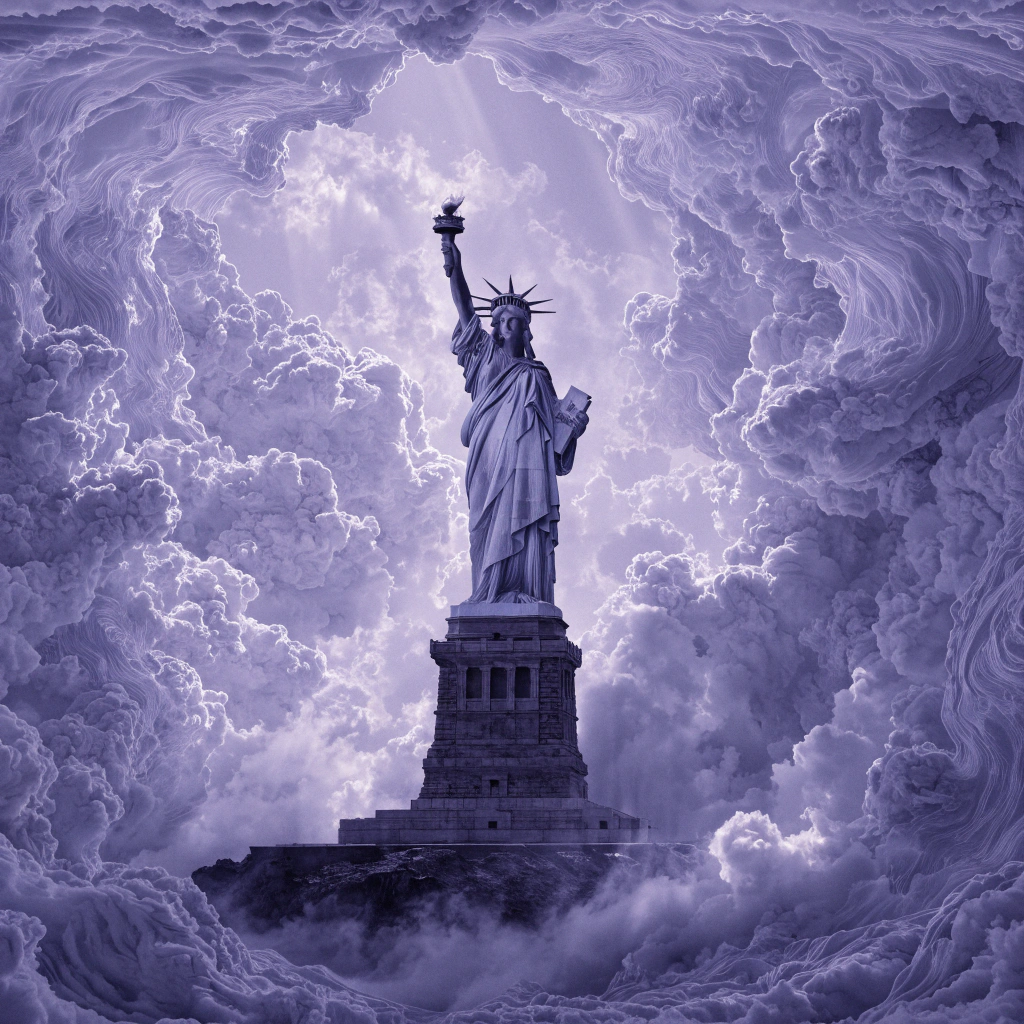
The Statue of Liberty
The Statue of Liberty is a very famous monument. It is in New York Harbor in the United States. The statue is very tall and green. It is a gift from the people of France.
The statue represents freedom. It holds a torch in one hand. It holds a book in the other hand. Many people visit the statue every year. They take a boat to the island. They see the beautiful city from there. It is a very special place for many people.
문법 스포트라이트
패턴: Present Simple (to be)
"The Statue of Liberty is a very famous monument."
We use 'is' with singular subjects to describe facts or states. In this sentence, it tells us what the statue is.
패턴: Present Simple (Action Verbs)
"Many people visit the statue every year."
We use the base form of the verb when the subject is plural (people). This describes a regular or repeated action.
이해도를 테스트하세요
10 질문 · A1 초급 · 무료 미리보기 1회
이 기사에서 배운 내용을 테스트하세요. 모든 질문에 답하여 XP를 획득하세요!
Where is the Statue of Liberty?
문제별 결과
Where is the Statue of Liberty?
내 답변:
정답: In New York
The statue is a gift from France.
내 답변:
정답: 참
What does 'gift' mean?
내 답변:
정답: Something you give to someone
They take a _____ to the island.
내 답변:
정답: boat
The Statue of Liberty: A Famous Gift
The Statue of Liberty is a famous monument in New York Harbor. It is a symbol of freedom and friendship. Many people from all over the world visit it every year. France gave the statue to the United States in 1886. It was a gift because the two countries were friends. A French artist designed the statue, and Gustave Eiffel built the metal frame inside.
The statue is very tall and green. It is green because the copper changed color over time. It is taller than a 22-story building! In her right hand, she holds a bright torch. In her left hand, she holds a tablet with a date on it. This date is July 4, 1776.
Today, the statue is a national monument. Visitors take a boat to Liberty Island to see it. It is an important part of American history and a beautiful place to visit. It represents hope for many people.
문법 스포트라이트
패턴: Past Simple
"France gave the statue to the United States in 1886."
The past simple is used for completed actions in the past. For irregular verbs like 'give', the form changes to 'gave'.
패턴: Comparatives
"It is taller than a 22-story building!"
We use the adjective + 'er' + 'than' to compare two things. Here, the statue's height is compared to a building.
이해도를 테스트하세요
11 질문 · A2 초등급 · 무료 미리보기 1회
이 기사에서 배운 내용을 테스트하세요. 모든 질문에 답하여 XP를 획득하세요!
Where is the Statue of Liberty located?
문제별 결과
Where is the Statue of Liberty located?
내 답변:
정답: In New York Harbor
The statue was a gift from France to the United States.
내 답변:
정답: 참
What does 'torch' mean?
내 답변:
정답: A light with a flame
The statue is green because the _____ changed color.
내 답변:
정답: copper
What is in the statue's left hand?
내 답변:
정답: A tablet
A Symbol of Freedom: The Statue of Liberty
Standing tall in New York Harbor, the Statue of Liberty is one of the most famous monuments in the world. For many years, it has stood as a symbol of hope for people arriving in the United States. The statue, which is formally titled 'Liberty Enlightening the World,' was a gift from the people of France to the United States. It was given to commemorate the centennial of the Declaration of Independence and the shared democratic values of the two nations.
The project was the idea of Édouard de Laboulaye, a French political thinker who wanted to celebrate the end of slavery and the growth of democracy. The statue was designed by the sculptor Frédéric Auguste Bartholdi. To make sure the structure was strong, the internal iron frame was built by Gustave Eiffel, the man who later created the Eiffel Tower in Paris. The outside of the statue is made of thin copper sheets, which have turned green over time because of the salty sea air.
Every part of the monument has a special meaning. The torch in her right hand represents progress, while the tablet in her left hand shows the date of American independence: July 4, 1776. At her feet, there are broken chains that symbolize the end of oppression. Since it was finished in 1886, millions of tourists have visited Liberty Island to see this impressive work of art. Today, it remains a powerful reminder of the pursuit of happiness and the importance of liberty for all people.
문법 스포트라이트
패턴: Passive Voice
"The statue was designed by the sculptor Frédéric Auguste Bartholdi."
The passive voice is used when the action is more important than the person doing it. It is formed using the verb 'to be' and the past participle of the main verb.
패턴: Relative Clauses
"The project was the idea of Édouard de Laboulaye, a French political thinker who wanted to celebrate the end of slavery."
Relative clauses give more information about a person or thing. We use 'who' for people and 'which' or 'that' for things to join two ideas together.
이해도를 테스트하세요
11 질문 · B1 중급 · 무료 미리보기 1회
이 기사에서 배운 내용을 테스트하세요. 모든 질문에 답하여 XP를 획득하세요!
Who gave the Statue of Liberty to the United States?
문제별 결과
Who gave the Statue of Liberty to the United States?
내 답변:
정답: The people of France
The Statue of Liberty is located in New York Harbor.
내 답변:
정답: 참
What does 'independence' mean?
내 답변:
정답: The state of being free
The _____ in the statue's right hand represents progress.
내 답변:
정답: torch
What date is written on the tablet held by the statue?
내 답변:
정답: July 4, 1776
Liberty Enlightening the World: A Monumental Legacy
Standing as a colossal sentinel in New York Harbor, the Statue of Liberty remains one of the most recognizable symbols of freedom globally. Formally titled 'Liberty Enlightening the World,' the statue was conceived by Édouard de Laboulaye as a profound gesture of friendship from the people of France to the United States. It was intended to commemorate the centennial of the American Declaration of Independence while celebrating the shared democratic values that bind the two nations together.
The artistic vision was brought to life by sculptor Frédéric Auguste Bartholdi, who collaborated with the renowned engineer Gustave Eiffel. Eiffel’s contribution was essential, as he designed the internal iron framework that allows the statue to withstand the harsh winds of the harbor. Consequently, the monument is not only an artistic triumph but also a feat of 19th-century engineering. The copper skin, which has since developed its iconic green patina due to oxidation, was hammered by hand in a process known as repoussé.
Although the statue was originally meant to represent the abolition of slavery, its meaning evolved significantly over time. As millions of immigrants arrived at nearby Ellis Island during the late 19th and early 20th centuries, the statue became a beacon of hope. For these individuals, the sight of Lady Liberty signified the end of a long journey and the beginning of a pursuit of happiness in a new land. This shift in perception demonstrates how the significance of a monument can be reshaped by historical circumstances.
In contemporary times, the Statue of Liberty National Monument serves as a reminder of the fragility and strength of democratic ideals. Extensive restoration projects have been undertaken to ensure that the structure remains intact for future generations. Despite the passage of time, the statue continues to inspire discourse regarding civil liberties and international relations. It stands as a testament to the fact that while the physical materials may age, the principles they represent are timeless.
문법 스포트라이트
패턴: Passive Voice
"The artistic vision was brought to life by sculptor Frédéric Auguste Bartholdi..."
The passive voice is used here to focus on the 'artistic vision' rather than the sculptor. It is formed using the verb 'to be' (was) and the past participle (brought).
패턴: Relative Clauses
"...Eiffel’s contribution was essential, as he designed the internal iron framework that allows the statue to withstand the harsh winds..."
The relative clause 'that allows the statue...' provides essential information about the 'framework'. These clauses help connect ideas and add detail without starting new sentences.
패턴: Concessive Clauses with 'Although'
"Although the statue was originally meant to represent the abolition of slavery, its meaning evolved significantly over time."
This structure is used to show a contrast between two ideas. 'Although' introduces a surprising or contrasting fact that does not prevent the main clause from being true.
이해도를 테스트하세요
11 질문 · B2 중상급 · 무료 미리보기 1회
이 기사에서 배운 내용을 테스트하세요. 모든 질문에 답하여 XP를 획득하세요!
What was the primary reason for France gifting the statue to the US?
문제별 결과
What was the primary reason for France gifting the statue to the US?
내 답변:
정답: To commemorate the centennial of the Declaration of Independence
Gustave Eiffel was responsible for the artistic sculpture of the statue's face.
내 답변:
정답: 거짓
What does the word 'colossal' mean in the context of the article?
내 답변:
정답: Extremely large
The statue's green color is the result of a chemical process called _____.
내 답변:
정답: oxidation
How did the statue's meaning change in the late 19th century?
내 답변:
정답: It became a beacon of hope for arriving immigrants
Liberty Enlightening the World: A Monumental Synthesis of Ideology and Engineering
Standing as a silent sentinel in the heart of New York Harbor, the Statue of Liberty remains perhaps the most potent emblem of the American experiment. Formally titled "Liberty Enlightening the World," the monument was conceived not merely as a physical structure, but as a profound ideological statement. Seldom has a gift of such magnitude been bestowed between nations, as it was intended to commemorate the centennial of the Declaration of Independence and celebrate the shared democratic aspirations of France and the United States. The statue's torch, held aloft, serves as a metaphorical guide, illuminating the path toward enlightenment and freedom for all humanity.
The genesis of the project can be traced back to Édouard de Laboulaye, a French political thinker whose admiration for American democracy led him to propose a monumental gift. It was the visionary sculptor Frédéric Auguste Bartholdi who transformed this abstract concept into a tangible reality, drawing inspiration from Libertas, the Roman goddess of freedom. However, the realization of this colossal undertaking required more than just artistic inspiration; it demanded a synthesis of innovative engineering and arduous logistical planning. To address the structural challenges of supporting such a massive copper skin, Bartholdi enlisted the expertise of Gustave Eiffel. Eiffel’s contribution was pivotal; his internal iron framework allowed the statue to remain flexible yet resilient, enabling it to withstand the relentless winds and shifting temperatures of the harbor.
The funding of the monument proved to be a multifaceted challenge that nearly derailed the entire project. While the French public demonstrated remarkable generosity through various fundraisers, the American side struggled significantly to finance the construction of the pedestal. This impasse was eventually overcome through a pioneering crowdfunding campaign led by Joseph Pulitzer through his newspaper, The World. By appealing to the masses rather than the elite, Pulitzer managed to secure the necessary funds from over 120,000 contributors, most of whom gave less than a dollar. This grassroots effort illustrated the collective investment of the citizenry in this national symbol, shifting the narrative from a diplomatic gift to a people's monument.
Over time, the statue’s significance has undergone a nuanced evolution, reflecting the changing socio-political landscape of the United States. While its initial purpose was partially to honor the abolition of slavery and the triumph of the Union, its proximity to Ellis Island eventually transformed it into a beacon of hope for millions of immigrants arriving by sea. For these newcomers, the "Mother of Exiles" represented the promise of a fresh start, far removed from the constraints and persecutions of their homelands. The inclusion of Emma Lazarus’s poem, "The New Colossus," further cemented this association, forever linking the monument to the immigrant experience.
Today, the Statue of Liberty National Monument serves as a reminder of the enduring nature of liberty and the complexities inherent in its pursuit. Its presence is not merely a historical artifact but a living testament to the ongoing struggle for human rights and democratic values. The interplay between its artistic grandeur and its socio-political weight ensures that it remains an object of both admiration and critical analysis. Only by examining its complex history can we truly appreciate the magnitude of what it represents—a beacon of enlightenment in an often turbulent world.
문법 스포트라이트
패턴: Negative Inversion
"Seldom has a gift of such magnitude been bestowed between nations..."
This pattern places a negative or restrictive adverb at the beginning of the sentence for emphasis. When this happens, the auxiliary verb moves before the subject, creating a formal and sophisticated tone.
패턴: Cleft Sentence
"It was the visionary sculptor Frédéric Auguste Bartholdi who transformed this abstract concept into a tangible reality."
Cleft sentences are used to focus on a specific piece of information. By starting with 'It was...', the writer emphasizes that Bartholdi, and no one else, was responsible for the transformation.
패턴: Nominalization
"The realization of this colossal undertaking required more than just artistic inspiration..."
Nominalization involves turning verbs or adjectives into nouns (e.g., 'realize' to 'realization'). This is a hallmark of C1 writing as it allows for more concise, objective, and dense information delivery.
이해도를 테스트하세요
12 질문 · C1 고급 · 무료 미리보기 1회
이 기사에서 배운 내용을 테스트하세요. 모든 질문에 답하여 XP를 획득하세요!
What was the primary purpose of the gift from France to the United States?
문제별 결과
What was the primary purpose of the gift from France to the United States?
내 답변:
정답: To commemorate the centennial of American independence
Gustave Eiffel was responsible for designing the copper exterior of the statue.
내 답변:
정답: 거짓
Which word describes a situation that is 'difficult and tiring'?
내 답변:
정답: Arduous
The funding for the pedestal was secured through a campaign led by Joseph _____.
내 답변:
정답: Pulitzer
How did the statue's meaning change over time according to the text?
내 답변:
정답: It became closely associated with the immigrant experience
The crowdfunding campaign for the pedestal relied primarily on wealthy elite donors.
내 답변:
정답: 거짓
The Colossus of Liberty: An Analytical Inquiry into the Semiotics of American Republicanism
Looming over the aqueous expanse of New York Harbor, the Statue of Liberty—formally titled 'Liberty Enlightening the World'—serves as more than a mere topographical landmark; it is a profound embodiment of the Enlightenment ideals that underpinned the nascent American republic. Were one to scrutinize the genesis of this copper-clad colossus, one would find its origins not in a unilateral American endeavor, but rather in a Gallic intellectual milieu. The brainchild of Édouard de Laboulaye, a prominent political thinker and abolitionist, the monument was conceived as a testament to the shared democratic aspirations of France and the United States, particularly following the preservation of the Union and the eradication of slavery. It is imperative that we recognize the statue not as a static relic, but as a dynamic semiotic construct whose meaning has undergone significant transmutation over the decades.
Had the project lacked the engineering prowess of Gustave Eiffel, the internal armature might never have withstood the corrosive maritime environment. This internal skeleton, a masterpiece of nineteenth-century structural engineering, allows the repoussé skin to fluctuate independently of the frame—a metaphor, perhaps, for the resilience of democratic institutions under external duress. This technical sophistication enabled Frédéric Auguste Bartholdi to realize a vision of unprecedented scale. The iconographic elements—the radiate crown representing the seven continents, the torch of enlightenment, and the tabula ansata inscribed with the date of the Declaration of Independence—converge to articulate a vision of liberty that is both militant and pedagogical. The broken shackles at the statue's feet, often overlooked by the casual observer, serve as a poignant reminder of the recent abolition of chattel slavery, linking the concept of liberty directly to the struggle for human rights.
It is often posited that the statue’s association with immigration was an incidental evolution rather than a primary intent. The addition of Emma Lazarus’s sonnet, 'The New Colossus,' in 1903 effectively recontextualized the monument. No longer was it merely a beacon of Republican fraternity between two nations; it became a welcoming matriarch for the 'huddled masses' fleeing the constraints of the Old World. This shift underscores the fluidity of national symbols and their capacity to absorb new layers of cultural significance. To overlook the statue's role in the socio-political discourse of the late 19th century would be to neglect the nuanced interplay between art and ideology. Whether the statue continues to uphold these lofty ideals in a contemporary landscape of shifting geopolitical alliances remains a subject of vigorous academic debate. Thus, the monument remains a site of perpetual reinterpretation, reflecting the evolving conscience of a nation that continues to grapple with the complexities of its founding promises.
문법 스포트라이트
패턴: Inverted Conditional (Were...)
"Were one to scrutinize the genesis of this copper-clad colossus, one would find its origins not in a unilateral American endeavor..."
This is a formal alternative to the second conditional 'If one were to...'. The inversion of the subject and 'were' creates a more academic and hypothetical tone.
패턴: Subjunctive Mood
"It is imperative that we recognize the statue not as a static relic, but as a dynamic semiotic construct..."
The subjunctive is used after adjectives expressing urgency or importance. Here, the base form 'recognize' follows the 'that' clause regardless of the subject's person.
패턴: Negative Inversion
"No longer was it merely a beacon of Republican fraternity between two nations..."
When a sentence begins with a negative adverbial phrase like 'No longer,' the auxiliary verb 'was' is placed before the subject 'it' for emphasis and formal rhetorical effect.
이해도를 테스트하세요
12 질문 · C2 마스터 · 무료 미리보기 1회
이 기사에서 배운 내용을 테스트하세요. 모든 질문에 답하여 XP를 획득하세요!
What was the primary historical motivation for the creation of the Statue of Liberty according to the text?
문제별 결과
What was the primary historical motivation for the creation of the Statue of Liberty according to the text?
내 답변:
정답: To celebrate the centennial of the Declaration of Independence and shared democratic values
The internal armature of the statue was designed by Frédéric Auguste Bartholdi.
내 답변:
정답: 거짓
Which word describes the metalworking technique used for the statue's skin?
내 답변:
정답: Repoussé
The statue's meaning is described as having undergone significant _____ over the decades.
내 답변:
정답: transmutation
What does the 'radiate crown' on the statue symbolize?
내 답변:
정답: The seven continents
The association between the statue and immigration was a later development rather than the original primary intent.
내 답변:
정답: 참

