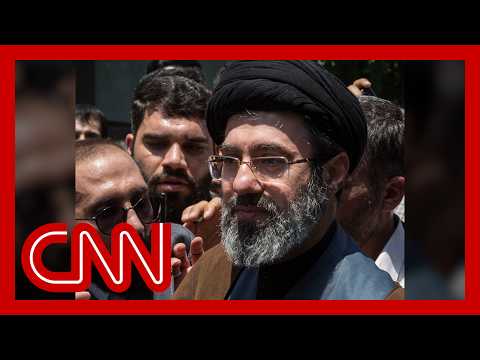
ayatollah 30초 만에
- A high-ranking title for Shia Muslim clerics who are experts in Islamic law and theology.
- Literally translates to 'Sign of God' in Arabic, reflecting scholarly and moral authority.
- Requires decades of study in a seminary to reach the level of independent legal reasoning (Ijtihad).
- Plays a significant role in both religious guidance and, in some cases, political leadership in the Middle East.
The term ayatollah is a high-ranking title given to expert Twelver Shia clerics who are recognized as authorities in Islamic law and theology. To understand the word, one must look at its literal translation from Arabic: Ayat meaning 'sign' and Allah meaning 'God'. Thus, an ayatollah is literally a 'Sign of God'. This is not meant to imply divinity, but rather that the individual's profound knowledge and piety serve as a testament to the wisdom of the Creator. In the hierarchy of Shia Islam, this title is not easily attained. It requires decades of rigorous study in the Hawza (Islamic seminary), specifically in cities like Qom in Iran or Najaf in Iraq. A student must master complex subjects including Fiqh (jurisprudence), Usul al-fiqh (principles of jurisprudence), Tafsir (Quranic interpretation), and Hadith (traditions of the Prophet). Only after reaching the level of Ijtihad—the ability to independently derive legal rulings from primary sources—can a cleric be recognized by his peers as an ayatollah.
- Theological Standing
- An ayatollah is a mujtahid, meaning they have the authority to interpret religious law for the community, a role that became increasingly formalized in the 19th and 20th centuries.
People use the word primarily in political, historical, and religious contexts. While the term has existed for centuries, it entered the global English lexicon most prominently during the 1979 Iranian Revolution. Since then, it has often been associated in Western media with political power and theocratic governance. However, in a strictly religious sense, many ayatollahs remain apolitical, focusing entirely on scholarship and the spiritual guidance of their followers. When an ayatollah reaches the absolute pinnacle of this hierarchy and gains a massive following, they may be referred to as a Grand Ayatollah or a Marja' al-Taqlid (a source of emulation). This means that ordinary Shia Muslims may choose to follow that specific cleric's legal rulings on everything from prayer rituals to modern bioethics.
The scholar was recently elevated to the rank of ayatollah after publishing his extensive treatise on Islamic jurisprudence.
In daily conversation, the word is rarely used outside of discussing Middle Eastern politics or Islamic theology. It is a formal title, much like 'Bishop' or 'Cardinal' in Christianity, but with a distinct emphasis on legal scholarship. It is important to note that the title is specific to Shia Islam; you will not find an 'ayatollah' in the Sunni tradition, where leadership structures are more decentralized. The use of the word requires a degree of cultural sensitivity, as it carries immense weight for millions of believers. Using it flippantly or as a generic term for any Muslim leader is a common mistake that betrays a lack of understanding of the specific clerical hierarchy it represents.
The evolution of the term is also fascinating. Historically, it was used more sparingly. It was only in the early 20th century that it became a standard rank in the clerical hierarchy. Before that, titles like Hujjat al-Islam (Proof of Islam) were more common for high-ranking scholars. The proliferation of the title in modern times reflects the growing complexity and institutionalization of the Shia religious establishment. Today, there are hundreds of ayatollahs, but only a handful of Grand Ayatollahs who command international influence. Understanding this distinction is key for anyone studying international relations or religious history.
During the conference, the ayatollah emphasized the importance of interfaith dialogue and social justice.
- Linguistic Root
- Derived from the Arabic 'āyatu-llāh', where 'āya' means sign or miracle, and 'Allāh' is the name of God.
Finally, the word sometimes appears in metaphorical or hyperbolic contexts in English, though this is often considered informal or even slightly pejorative. For instance, someone might call a very dogmatic or authoritarian boss an 'ayatollah' of the office. However, this usage is decreasing as people become more aware of the specific religious meaning. In professional writing, the word should always refer to the specific religious office. The gravitas of the title is such that it defines the identity of the person holding it, influencing their dress (typically a black or white turban and a cloak), their social standing, and their political influence within their community.
The ayatollah's fatwa was debated by legal scholars across the globe.
In summary, 'ayatollah' is a term that bridges the gap between ancient religious tradition and modern political reality. It represents a lifetime of scholarly achievement and a position of significant moral and legal authority. Whether discussed in the context of the history of the Middle East or the nuances of Islamic law, the word carries a weight that demands precision and respect in its application.
Using the word ayatollah correctly requires an understanding of its grammatical function as a title and a common noun. When used as a specific title preceding a name, it should be capitalized. For example, 'Ayatollah Ali al-Sistani is a highly respected figure.' However, when used as a general noun referring to the office or an unspecified individual, it is typically written in lowercase: 'He hopes to one day become an ayatollah.' This follows the same rule as titles like 'President' or 'King'.
- Capitalization Rule
- Capitalize when it is part of a proper name (Ayatollah Khamenei); use lowercase when referring to the position generally (the local ayatollah).
In academic and journalistic writing, the word often appears in the context of political influence. You might write, 'The influence of the senior ayatollahs in Qom cannot be overstated when analyzing Iranian domestic policy.' Here, the plural form 'ayatollahs' is used correctly to refer to a group of these clerics. It is also common to see the word associated with verbs like 'issue', 'decree', 'study', or 'lead'. For instance, 'The ayatollah issued a statement regarding the upcoming elections,' or 'After years of study, he was finally recognized as an ayatollah by his mentors.'
Many students travel to Najaf with the dream of studying under a world-renowned ayatollah.
The word can also be used in the possessive form: 'The ayatollah's residence became a site of pilgrimage for his followers.' Note the apostrophe before the 's'. When discussing the collective body of these leaders, one might use the term 'ayatollahs' as a collective noun, though 'clergy' or 'religious leadership' are often used as synonyms in broader contexts. Another important aspect is the distinction between 'an ayatollah' and 'the ayatollah'. Using 'the' usually implies a specific, well-known figure previously mentioned in the text, whereas 'an' refers to any individual holding the rank.
In more complex sentence structures, 'ayatollah' can serve as the subject of a relative clause. For example: 'The ayatollah, who had spent fifty years in the seminary, was known for his moderate views.' This structure allows for the addition of descriptive detail about the person's history or character. It is also frequently found in prepositional phrases: 'The delegation met with the ayatollah to discuss the humanitarian crisis.' In this case, the word is the object of the preposition 'with'.
The news report focused on the ayatollah's role in mediating the conflict between the two factions.
- Common Verbs
- Commonly paired with: issue (a fatwa), lead (prayers), interpret (law), study (theology), recognize (as a rank).
Furthermore, when writing about the historical context of the term, one might use it in a comparative sense: 'While a mullah is a local religious leader, an ayatollah represents a much higher level of scholarly achievement.' This helps the reader understand the relative weight of the title. In the context of the Iranian political system, the term is often linked to the 'Supreme Leader', who is almost always an ayatollah. A sentence might read: 'The Supreme Leader, himself an ayatollah, holds the final word on all state matters.'
It is a rare honor for a scholar to be addressed as ayatollah by the senior members of the Hawza.
In summary, using 'ayatollah' in a sentence requires attention to its status as a formal title. Whether you are describing a historical event, a religious ceremony, or a political structure, the word functions as a precise marker of a specific type of authority. By following standard capitalization rules and pairing it with appropriate verbs and adjectives, you can ensure your writing is both grammatically correct and culturally accurate.
The ayatollah's influence extends far beyond the borders of his own country, reaching millions of followers worldwide.
- Pluralization
- The plural is 'ayatollahs'. In some academic texts, you may see the Persian plural 'ayatollah-ha', but 'ayatollahs' is the standard in English.
The word ayatollah is most frequently heard in the realm of international news and political commentary. If you tune into networks like the BBC, CNN, or Al Jazeera, you will often hear the term during segments focusing on Iran, Iraq, or the broader Middle East. News anchors use it to identify key political and religious figures. For example, a report might begin with, 'The ayatollah has called for a day of national mourning,' or 'Tensions are rising as the senior ayatollahs in Najaf express concern over the new legislation.' In these contexts, the word is used to signal a person of immense social and political gravity whose words can move millions.
- News Media
- Frequently used in reports about Iranian domestic policy, nuclear negotiations, and regional Shia-Sunni dynamics.
Beyond the news, you will encounter 'ayatollah' in history classrooms and documentaries. It is an indispensable term when discussing the 20th-century history of the Middle East, particularly the 1979 Iranian Revolution. Documentaries will often feature archival footage of Ayatollah Khomeini, explaining how his religious authority allowed him to lead a revolution against the Shah. In this setting, the word is used to explain the unique intersection of faith and governance. Students of history learn that the title is not just a label but a key to understanding the power structures of the Islamic Republic of Iran.
In the documentary, the historian explained how the ayatollah became the face of the resistance movement.
In academic circles, specifically within the fields of Religious Studies, Sociology, and Political Science, the word is used with high precision. Scholars discuss the 'institutionalization of the ayatollah rank' or the 'jurisprudential methodology of a particular ayatollah'. Here, the word is stripped of its often-sensationalist media baggage and treated as a technical term for a specific level of clerical attainment. You might hear a professor say, 'To understand the Marja'iyya, we must first look at how a scholar ascends to the rank of ayatollah through the Dars al-Kharij system.' This academic usage highlights the intellectual rigor required to hold the title.
You may also hear the word in travelogues or cultural programs that explore the cities of Qom and Najaf. Narrators describe the sight of 'ayatollahs in their flowing robes and distinct turbans' walking through the courtyards of the great shrines. In these instances, the word is used to paint a picture of the cultural and religious landscape of the Shia heartlands. It evokes a sense of tradition, scholarship, and ancient authority that continues to thrive in the modern world. For a traveler, hearing the word in the streets of these cities is a reminder of the living history of Islamic scholarship.
The travel guide pointed out the library where the senior ayatollah conducts his daily research.
- Documentaries & History
- Essential for understanding the 1979 Revolution, the Iran-Iraq War, and the development of the 'Velayat-e Faqih' (Guardianship of the Jurist) doctrine.
In literature and film, the word sometimes appears to establish a specific setting or to characterize a figure of authority. A novel set in Tehran might describe a character's fear or reverence when passing an ayatollah's house. In these creative works, the word is used to build atmosphere and provide cultural context. It serves as a shorthand for a specific type of social order. While less common in Hollywood blockbusters, it is a staple of world cinema, particularly in films from Iran that deal with the complexities of life under a clerical government.
The protagonist in the novel sought an audience with the ayatollah to ask for a special dispensation.
Lastly, in very specific political debates in Western countries, you might hear the word used as a metaphor for an uncompromising or dogmatic leader. For example, a political commentator might say, 'He is acting like the ayatollah of his party.' However, this is a figurative and often controversial usage that should be handled with care. In most professional and respectful conversations, the word remains firmly rooted in its original religious and scholarly context, heard most often when the world's eyes are turned toward the spiritual and political centers of the Shia world.
The radio host discussed the ayatollah's latest sermon and its implications for regional peace.
- Podcasts & Radio
- Often heard in podcasts like 'The Daily' or 'BBC World Service' when analyzing geopolitical shifts in the Persian Gulf.
One of the most frequent mistakes people make with the word ayatollah is using it as a generic term for any Muslim religious leader. This is inaccurate. The title is specific to the Shia branch of Islam, and even within that branch, it represents a very high level of scholarly achievement. Using it to describe a Sunni Imam or a local prayer leader is like calling a local priest a 'Pope'. It's important to recognize the specific clerical hierarchy: a Mullah or Sheikh is a lower-level cleric, while an Ayatollah is a master of jurisprudence. Misusing the term can lead to confusion and shows a lack of cultural and religious literacy.
- Confusing Sects
- Never use 'ayatollah' to refer to a Sunni leader. Sunni Islam uses titles like Grand Mufti, Sheikh al-Azhar, or simply Imam.
Another common error is the misapplication of the title in a political sense. While some ayatollahs hold political office, especially in Iran, the title itself is religious and scholarly. Many people mistakenly believe that 'ayatollah' is a political rank within the Iranian government, similar to 'Senator' or 'Minister'. In reality, an ayatollah's authority comes from their religious expertise, and they may or may not choose to engage in politics. Conflating the two can lead to a misunderstanding of how power is structured in Shia societies, where religious authority often exists independently of the state.
Incorrect: 'The Sunni ayatollah led the Friday prayers.' (Sunnis do not use this title.)
Pronunciation and spelling also present challenges. In English, the word is often pronounced 'eye-uh-TOH-luh', but the original Arabic and Persian pronunciation is closer to 'ah-yat-ol-LAH'. A common spelling mistake is omitting the second 'l' or the 'h' at the end. While 'ayatolla' might be seen occasionally, 'ayatollah' is the standard English spelling. Additionally, some writers forget to capitalize the word when it is used as a formal title before a name. Just as you would write 'Pope Francis', you should write 'Ayatollah Sistani'.
A more subtle mistake is failing to distinguish between an 'Ayatollah' and a 'Grand Ayatollah' (Marja'). In the Shia world, this is a massive distinction. A Grand Ayatollah is someone whom millions of people follow and emulate. An Ayatollah, while highly respected, may only be a teacher or a local authority. When writing about major figures like Sistani or Khamenei, using just 'ayatollah' is technically correct but misses the higher status they hold. It's similar to the difference between a 'General' and a 'Five-Star General'.
Incorrect: 'He is the ayatollah of the local mosque.' (Usually, a local mosque is led by an Imam or a Mullah, not an Ayatollah.)
- Scale of Authority
- Mullah (Basic) < Hujjat al-Islam (Intermediate) < Ayatollah (High) < Grand Ayatollah (Supreme).
Finally, avoid using the word as a pejorative or a metaphor for 'dictator' in formal writing. While this usage exists in informal slang, it is considered culturally insensitive and imprecise. It reduces a complex religious and scholarly tradition to a simple political stereotype. If you mean 'authoritarian leader', use that term instead. Using 'ayatollah' as a slur or a joke can alienate readers and undermine the credibility of your work, especially if you are writing for an international or diverse audience.
Correct: 'The ayatollah spent his life studying the complexities of Islamic law.' (Focuses on the scholarly aspect.)
In conclusion, the most common mistakes involve overgeneralization, confusion of religious sects, and a lack of precision regarding the hierarchy of authority. By remembering that 'ayatollah' is a specific Shia title for a high-level scholar and jurist, and by paying attention to capitalization and spelling, you can avoid these pitfalls and use the word with confidence and accuracy.
When discussing religious leadership in Islam, several words are often used interchangeably with ayatollah, but they each have distinct meanings and nuances. Understanding these differences is crucial for precise communication. The most common alternative is cleric. This is a broad, neutral term that can refer to a religious leader in any faith, including all ranks within Islam. While an ayatollah is a cleric, not all clerics are ayatollahs. Using 'cleric' is a safe choice if you are unsure of the specific rank of the person you are describing.
- Ayatollah vs. Cleric
- 'Cleric' is the general category; 'Ayatollah' is a specific, high-ranking level within that category in Shia Islam.
Another term often heard is mullah. In many parts of the Muslim world, 'mullah' is a respectful term for a local religious teacher or leader. However, in the formal hierarchy, a mullah is significantly lower in rank than an ayatollah. A mullah typically has basic religious training and leads a local congregation, whereas an ayatollah has reached the highest levels of academic study. In some contexts, 'mullah' has also taken on a slightly derogatory tone in Western media, whereas 'ayatollah' retains a sense of high-level authority and gravitas.
While the local mullah handles daily prayers, the ayatollah provides guidance on complex legal matters.
In the Sunni tradition, the equivalent of a high-ranking legal authority is often called a Mufti or a Grand Mufti. A Mufti is a scholar capable of issuing a fatwa (legal opinion). While their roles are similar in terms of legal interpretation, the title 'ayatollah' is never used for Sunnis. Similarly, the term Sheikh is a broad title of respect used across the Arab world for religious leaders, tribal elders, or even wealthy individuals. In a religious context, a Sheikh is a scholar, but the title does not imply the specific level of attainment that 'ayatollah' does in the Shia tradition.
For the very highest level of authority, the term Marja' (or Marja-i Taqlid) is used. This is a Grand Ayatollah who has been recognized as a 'source of emulation'. While every Marja' is an ayatollah, only a few ayatollahs become Marjas. If you are writing about someone like Ali al-Sistani, 'Marja' is the most accurate and respectful term to describe his status as a supreme religious authority for millions of followers. Another related term is Mujtahid, which refers to any scholar who has reached the level of being able to perform Ijtihad (independent legal reasoning). All ayatollahs are mujtahids, but the title 'ayatollah' is the public honorific used to recognize that achievement.
The scholar's transition from a mujtahid to a recognized ayatollah took decades of study.
- Sunni Equivalents
- Grand Mufti, Sheikh al-Islam, Imam (in the general sense), Alim (scholar).
In a political context, you might see the word theocrat used to describe an ayatollah who holds state power. However, this is a political descriptor, not a religious title. Similarly, jurist is often used in academic texts to emphasize the legal nature of an ayatollah's work. 'Islamic jurist' is a very accurate way to describe the professional role of an ayatollah without the cultural baggage that sometimes accompanies the word in Western media. If you are writing a formal paper on Islamic law, 'jurist' or 'legal scholar' are excellent alternatives.
As a leading jurist, the ayatollah's opinions are cited in courts across the region.
Finally, the term Imam can be confusing. In Sunni Islam, an Imam is simply someone who leads prayers. In Shia Islam, 'The Imams' (capitalized) refers to the twelve historical successors of the Prophet. However, in modern times, the title 'Imam' was also given to Ayatollah Khomeini as a mark of supreme leadership. Generally, it is safer to use 'ayatollah' unless you are referring to a specific historical figure who was granted the title of Imam by his followers. By choosing the right word from this list, you can ensure your writing is precise, respectful, and contextually appropriate.
How Formal Is It?
재미있는 사실
Before the 20th century, the title was used very rarely as a high honorific. It only became a standard rank in the hierarchy quite recently in historical terms.
발음 가이드
- Pronouncing it as 'a-ya-to-LA' (stressing the last syllable).
- Omitting the 'h' sound at the end (though it is often silent in English).
- Saying 'a-ya-TO-la' with a very short 'o'.
- Confusing the first syllable with 'ah' instead of 'eye'.
- Adding an extra 'n' like 'ay-an-tollah'.
난이도
The word is common in news but requires context to understand fully.
Spelling and capitalization rules can be tricky for learners.
Pronunciation is often anglicized, which can be confusing.
Easily recognized in news broadcasts due to its distinct sound.
다음에 무엇을 배울까
선수 학습
다음에 배울 것
고급
알아야 할 문법
Capitalization of Titles
Use 'Ayatollah Sistani' but 'the local ayatollah'.
Articles with Titles
We say 'the ayatollah' when referring to a specific person already mentioned.
Countable Nouns
There are several 'ayatollahs' in the room.
Possessive Form
The 'ayatollah's' decree was final.
Appositives
Khomeini, the prominent ayatollah, led the revolution.
수준별 예문
The ayatollah is a religious leader.
L'ayatollah est un chef religieux.
Subject + verb + noun.
He is an ayatollah from Iran.
Il est un ayatollah d'Iran.
Using 'an' before a word starting with a vowel sound.
The ayatollah wears a turban.
L'ayatollah porte un turban.
Present simple tense.
Many people listen to the ayatollah.
Beaucoup de gens écoutent l'ayatollah.
Plural subject + verb.
Is he an ayatollah?
Est-il un ayatollah ?
Question form.
The ayatollah is very old.
L'ayatollah est très vieux.
Adjective 'old' describing the noun.
I saw the ayatollah on the news.
J'ai vu l'ayatollah aux informations.
Past simple tense.
The ayatollah lives in a big city.
L'ayatollah vit dans une grande ville.
Third person singular 's'.
An ayatollah is a very high-ranking teacher in Shia Islam.
Un ayatollah est un enseignant de très haut rang dans l'islam chiite.
Compound adjective 'high-ranking'.
The title ayatollah means 'Sign of God'.
Le titre d'ayatollah signifie « Signe de Dieu ».
Defining a term.
Ayatollah Khomeini was a famous leader in history.
L'ayatollah Khomeini était un chef célèbre de l'histoire.
Capitalization of titles.
He studied for many years to become an ayatollah.
Il a étudié pendant de nombreuses années pour devenir ayatollah.
Infinitive of purpose 'to become'.
There are many ayatollahs in the city of Qom.
Il y a beaucoup d'ayatollahs dans la ville de Qom.
Plural form 'ayatollahs'.
The ayatollah gives advice to his followers.
L'ayatollah donne des conseils à ses fidèles.
Present simple for regular actions.
We learned about the role of the ayatollah in class.
Nous avons appris le rôle de l'ayatollah en classe.
Prepositional phrase 'about the role'.
The ayatollah's words are important to many people.
Les paroles de l'ayatollah sont importantes pour beaucoup de gens.
Possessive 's'.
The ayatollah issued a fatwa concerning the new environmental laws.
L'ayatollah a émis une fatwa concernant les nouvelles lois environnementales.
Using specific terminology like 'fatwa'.
In Shia Islam, an ayatollah is an expert in religious law.
Dans l'islam chiite, un ayatollah est un expert en droit religieux.
Defining a role within a specific context.
The senior ayatollahs met to discuss the political situation.
Les hauts ayatollahs se sont réunis pour discuter de la situation politique.
Adjective 'senior' to denote rank.
Becoming an ayatollah requires a deep knowledge of the Quran.
Devenir ayatollah nécessite une connaissance approfondie du Coran.
Gerund 'Becoming' as a subject.
The ayatollah's influence extends across several countries.
L'influence de l'ayatollah s'étend sur plusieurs pays.
Present simple for a general truth.
He is respected not just as a leader, but as a scholar and ayatollah.
Il est respecté non seulement en tant que chef, mais aussi en tant qu'érudit et ayatollah.
Correlative conjunction 'not just... but as'.
The news report focused on the latest speech by the ayatollah.
Le reportage portait sur le dernier discours de l'ayatollah.
Phrasal verb 'focused on'.
Many students travel to Iraq to study under a famous ayatollah.
De nombreux étudiants se rendent en Irak pour étudier auprès d'un célèbre ayatollah.
Infinitive phrase 'to study under'.
The ayatollah's interpretation of the text was considered groundbreaking.
L'interprétation du texte par l'ayatollah a été considérée comme révolutionnaire.
Passive voice 'was considered'.
To be recognized as an ayatollah, one must achieve the level of ijtihad.
Pour être reconnu comme ayatollah, il faut atteindre le niveau d'ijtihad.
Modal verb 'must' for necessity.
The political power of the ayatollah is a central theme in Iranian history.
Le pouvoir politique de l'ayatollah est un thème central de l'histoire iranienne.
Noun phrase as a subject.
While some ayatollahs are politically active, others remain quietist.
Alors que certains ayatollahs sont politiquement actifs, d'autres restent quiétistes.
Contrast using 'While'.
The ayatollah's decree had a significant impact on social norms.
Le décret de l'ayatollah a eu un impact significatif sur les normes sociales.
Past simple with a direct object.
He was elevated to the rank of ayatollah by his peers in the seminary.
Il a été élevé au rang d'ayatollah par ses pairs au séminaire.
Passive voice with agent 'by his peers'.
The term 'ayatollah' is often misunderstood in Western media.
Le terme « ayatollah » est souvent mal compris dans les médias occidentaux.
Adverb 'often' modifying a passive verb.
The Grand Ayatollah is the highest authority for his followers.
Le Grand Ayatollah est la plus haute autorité pour ses fidèles.
Superlative adjective 'highest'.
The ayatollah's jurisprudential authority is derived from his mastery of classical texts.
L'autorité jurisprudentielle de l'ayatollah découle de sa maîtrise des textes classiques.
Complex noun phrase 'jurisprudential authority'.
Critics argue that the role of the ayatollah has become overly politicized.
Les critiques soutiennent que le rôle de l'ayatollah est devenu excessivement politisé.
Reporting verb 'argue' followed by a 'that' clause.
The ayatollah maintained a delicate balance between religious tradition and modern needs.
L'ayatollah a maintenu un équilibre délicat entre la tradition religieuse et les besoins modernes.
Metaphorical use of 'delicate balance'.
As a Marja, the ayatollah's rulings are binding for those who emulate him.
En tant que Marja, les décisions de l'ayatollah sont contraignantes pour ceux qui l'émulent.
Appositive phrase 'As a Marja'.
The ascension to the rank of ayatollah is an organic process of communal recognition.
L'ascension au rang d'ayatollah est un processus organique de reconnaissance communautaire.
Abstract noun 'ascension'.
The ayatollah's discourse often blends theological rigor with social commentary.
Le discours de l'ayatollah mêle souvent la rigueur théologique au commentaire social.
Verb 'blends' used with 'with'.
The historical evolution of the ayatollah title reflects shifts in Shia clerical power.
L'évolution historique du titre d'ayatollah reflète les changements dans le pouvoir clérical chiite.
Subject-verb agreement with a complex subject.
The ayatollah's quietist stance was a direct challenge to the ruling elite.
La position quiétiste de l'ayatollah était un défi direct à l'élite au pouvoir.
Adjective 'quietist' describing 'stance'.
The ayatollah's hermeneutical approach to the Quran emphasizes the context of revelation.
L'approche herméneutique de l'ayatollah vis-à-vis du Coran met l'accent sur le contexte de la révélation.
Use of specialized term 'hermeneutical'.
His elevation to the status of ayatollah was the culmination of a lifelong commitment to ijtihad.
Son élévation au statut d'ayatollah a été l'aboutissement d'un engagement de toute une vie envers l'ijtihad.
Noun 'culmination' used with 'of'.
The ayatollah's fatwa serves as a quintessential example of theocratic legalism.
La fatwa de l'ayatollah sert d'exemple quintessentiel du légalisme théocratique.
Adjective 'quintessential'.
The tension between the ayatollah's spiritual mandate and his political influence is palpable.
La tension entre le mandat spirituel de l'ayatollah et son influence politique est palpable.
Subject 'tension' with singular verb 'is'.
Scholars debate the extent to which an ayatollah can deviate from established consensus.
Les érudits débattent de la mesure dans laquelle un ayatollah peut s'écarter du consensus établi.
Relative clause 'to which'.
The ayatollah's charisma was instrumental in mobilizing the masses during the uprising.
Le charisme de l'ayatollah a joué un rôle déterminant dans la mobilisation des masses pendant le soulèvement.
Adjective 'instrumental' meaning essential.
The institutionalization of the ayatollah rank has led to a more rigid clerical hierarchy.
L'institutionnalisation du rang d'ayatollah a conduit à une hiérarchie cléricale plus rigide.
Present perfect tense 'has led to'.
The ayatollah's treatise on ethics is considered a masterpiece of contemporary Shia thought.
Le traité de l'ayatollah sur l'éthique est considéré comme un chef-d'œuvre de la pensée chiite contemporaine.
Passive voice 'is considered'.
자주 쓰는 조합
자주 쓰는 구문
— Refers to the influential group of high-ranking clerics in the Iranian city of Qom.
The ayatollahs of Qom are currently debating the new economic reforms.
— Following the religious or political instructions of a specific leader.
The movement grew under the guidance of the ayatollah.
— Formally acknowledged by peers as having reached the required level of scholarship.
After thirty years of study, he was finally recognized as an ayatollah.
— A formal and authoritative order issued by the religious leader.
The ayatollah's decree was broadcast on national television.
— The person with the longest tenure or highest respect among the group.
The senior-most ayatollah was chosen to lead the funeral procession.
— A formal meeting or interview with the high-ranking cleric.
The prime minister requested an audience with the ayatollah.
— The home or office of the cleric, often a place of pilgrimage or political activity.
Protesters gathered outside the ayatollah's residence.
— A formal or informal group of these leaders who meet to make decisions.
The council of ayatollahs issued a joint statement.
— The people who look to the cleric for religious and moral direction.
The ayatollah's followers are spread across the globe.
— To be a student in the advanced classes taught by a high-ranking cleric.
He spent five years in Najaf to study with a renowned ayatollah.
자주 혼동되는 단어
In Sunni Islam, an Imam leads prayers. In Shia Islam, 'The Imams' are holy historical figures, but the title is also sometimes used for supreme leaders like Khomeini.
A mullah is a general term for a cleric, but it is a lower rank than an ayatollah.
A Mufti is a Sunni legal expert. An ayatollah is a Shia legal expert. They are never the same thing.
관용어 및 표현
— Used metaphorically to describe someone who is very dogmatic, authoritative, or controlling in a specific field.
He's the ayatollah of the accounting department; nothing happens without his approval.
informal/slang— To be more extreme or dedicated to a cause than the leaders of that cause.
In his zeal for the new rules, he became more an ayatollah than the ayatollah himself.
informal— While not using the word directly, this reflects the literal meaning (Sign of God) and is used when waiting for an authoritative decision.
The committee is doing nothing; they seem to be waiting for a sign from God.
neutral— Something that is considered final, unchangeable, or extremely authoritative.
In this office, the boss's opinion is treated like the word of an ayatollah.
informal— To hold a position of great religious or moral authority.
He now sits in the seat of an ayatollah, carrying the weight of his predecessor's legacy.
literary— The pervasive influence of a powerful religious leader over a society or organization.
The country still lives in the shadow of the late ayatollah.
journalistic— To challenge or offend a powerful and respected authority figure.
You don't want to cross the ayatollah if you want to keep your job in this town.
informal— Metaphorically, to be under severe criticism or a 'death sentence' for one's career or reputation.
After that scandal, there's practically a fatwa on his head in the industry.
informal— Refers to the authority and status associated with the office of an ayatollah.
He hid his political ambitions behind his clerical robes.
neutral— To use one's religious authority to influence public opinion.
The ayatollah spoke from the pulpit about the need for social reform.
neutral혼동하기 쉬운
Both are titles for religious leaders.
Sheikh is a broad title used by many, while ayatollah is a specific, high-ranking Shia rank earned through advanced study.
The sheikh led the prayer, but the ayatollah issued the legal ruling.
Both are high-ranking Islamic titles.
A Caliph is a historical political leader of the entire Muslim community (mostly Sunni context). An ayatollah is a religious scholar in Shia Islam.
The history of the Caliphs is very different from the history of the ayatollahs.
Both are high-ranking religious officials.
A Cardinal is a leader in the Catholic Church. An ayatollah is a leader in Shia Islam. They belong to entirely different religions.
The Cardinal and the ayatollah met to discuss interfaith peace.
Both are scholars of religious law.
A Rabbi is a Jewish teacher and leader. An ayatollah is a Muslim (Shia) scholar and leader.
The Rabbi and the ayatollah both emphasize the importance of sacred texts.
Both are spiritual teachers.
Guru is a term from Indian religions like Hinduism and Sikhism. Ayatollah is strictly Islamic (Shia).
While the guru teaches meditation, the ayatollah teaches jurisprudence.
문장 패턴
The [noun] is [adjective].
The ayatollah is wise.
He is an [noun] from [place].
He is an ayatollah from Iraq.
The [noun] issued a [noun].
The ayatollah issued a statement.
To become an [noun], you must [verb].
To become an ayatollah, you must study for years.
The [noun]'s [noun] is based on [noun].
The ayatollah's authority is based on his scholarship.
The [noun] represents a [adjective] [noun].
The ayatollah represents a quintessential religious authority.
Despite his [noun], the [noun] remained [adjective].
Despite his influence, the ayatollah remained quietist.
The [noun] serves as a [noun] for [noun].
The ayatollah serves as a marja for his followers.
어휘 가족
명사
형용사
관련
사용법
Common in news and history; rare in daily casual conversation.
-
Using 'ayatollah' for a Sunni leader.
→
Use 'Sheikh' or 'Mufti'.
The title 'ayatollah' is specific to the Shia branch of Islam. Sunnis do not use this title.
-
Thinking 'ayatollah' is a political office.
→
Recognize it as a religious/scholarly rank.
While some ayatollahs are in government, the title itself is a religious degree, not a political position.
-
Spelling it 'Ayatolla'.
→
Ayatollah.
The 'h' at the end is standard in English transliteration and reflects the original Arabic/Persian spelling.
-
Lowercasing the title before a name.
→
Ayatollah Khomeini.
Like 'President' or 'Doctor', it should be capitalized when used as a formal title for a specific person.
-
Using 'ayatollah' as a synonym for 'terrorist'.
→
Use 'extremist' or 'militant' if that is what you mean.
An ayatollah is a religious scholar. Using it as a slur is inaccurate and culturally insensitive.
팁
Capitalize Correctly
Always capitalize 'Ayatollah' when it's used as a title before a name, like 'Ayatollah Sistani'. Use lowercase when referring to the position in general.
Know the Branch
Remember that 'ayatollah' is strictly a Shia term. Using it for a Sunni leader is a major factual error in writing.
Use 'Cleric' for Variety
If you are writing a long piece, use 'cleric', 'scholar', or 'religious leader' to avoid overusing the word 'ayatollah'.
Stress the Middle
In English, make sure to put the stress on the 'TOL' syllable: ay-a-TOL-lah.
Be Respectful
Treat the word with the same respect you would give to any high-ranking religious title to maintain a professional tone.
Check the Rank
Determine if the person is a 'Grand Ayatollah'. This distinction is very important in the Shia religious hierarchy.
Revolutionary Context
When reading about the 1979 Iranian Revolution, understand that the title was a key source of the movement's legitimacy.
Countable Noun
Treat 'ayatollah' as a regular countable noun. You can say 'many ayatollahs' or 'the three ayatollahs'.
Remember the Meaning
Knowing it means 'Sign of God' helps you remember that it's a title of high honor and religious significance.
Associate with Cities
Link the word to cities like Qom (Iran) and Najaf (Iraq), as these are the centers where ayatollahs study and live.
암기하기
기억법
Think of 'EYE-a-TALL-ah'. An ayatollah is someone who has an 'EYE' for the 'TALL' (high) laws of 'Allah'.
시각적 연상
Imagine a very tall ladder reaching toward the sky (God), and a wise scholar standing at the top holding a book of signs.
Word Web
챌린지
Try to use the word 'ayatollah' in a sentence that also includes the words 'jurisprudence' and 'authority'.
어원
The word originates from the Arabic phrase 'āyatu-llāh', which was adopted into Persian and then into English. It became a formal title in the Shia clerical hierarchy in the early 20th century.
원래 의미: Literally 'Sign of God'. 'Ayat' means sign, miracle, or verse of the Quran, and 'Allah' is God.
Semitic (Arabic) / Indo-European (Persian influence).문화적 맥락
The term is a sacred religious title. Avoid using it as a joke or a synonym for 'dictator' in professional settings.
In English-speaking countries, the word is almost exclusively used in the context of Middle Eastern news and history.
실생활에서 연습하기
실제 사용 상황
International News
- The ayatollah's statement
- Senior clerical leadership
- Religious decree
- Political influence
History Class
- The 1979 Revolution
- The rise of the ayatollah
- Clerical authority
- Theocratic government
Religious Studies
- Shia hierarchy
- Islamic jurisprudence
- Scholarly rank
- Interpretation of the Quran
Political Science
- Guardianship of the Jurist
- Clerical state
- Religious legitimacy
- Sectarian dynamics
Travel and Culture
- Holy city of Qom
- Religious seminary
- Traditional robes
- Spiritual center
대화 시작하기
"What do you think is the most significant role of an ayatollah in modern society?"
"How does the title of ayatollah differ from religious titles in your culture?"
"Have you ever seen a documentary about the history of the ayatollahs in Iran?"
"Why do you think the title 'Sign of God' is used for these scholars?"
"In what ways can an ayatollah influence the politics of a country?"
일기 주제
Reflect on the concept of 'religious authority'. What makes someone a leader in a faith?
Write about the impact of the 1979 Iranian Revolution on the global perception of the word 'ayatollah'.
Compare and contrast the role of an ayatollah with a high-ranking leader in another religion.
Imagine you are a journalist interviewing a senior ayatollah. What three questions would you ask?
Discuss the importance of scholarship and long-term study in achieving a position of leadership.
자주 묻는 질문
10 질문In traditional Shia clerical structures, the title of ayatollah is held by men. While there have been highly learned women scholars (Mujtahida), they are generally not given the public title of 'ayatollah' or recognized as 'Marjas' whom the community emulates.
There is no exact count, but there are several hundred ayatollahs worldwide, mostly in Iran and Iraq. However, there are only a few dozen 'Grand Ayatollahs' who have reached the highest level of authority.
No. An ayatollah's authority is religious and scholarly. In Iran, the Supreme Leader (an ayatollah) has political power, but in other countries like Iraq, they may have no formal government role at all.
They typically wear a long robe (aba), a tunic (qaba), and a turban. A black turban signifies that the cleric is a 'Sayyid' (a descendant of the Prophet Muhammad), while a white turban is for other scholars.
No, the title is unique to Shia Islam. Sunnis use different titles for their high-ranking scholars, such as Grand Mufti or Sheikh.
No, it is a title. People are not named 'Ayatollah' at birth; they earn the title through religious study, much like 'Professor' or 'General'.
A fatwa is a legal opinion or decree issued by a qualified scholar like an ayatollah. It is based on their interpretation of Islamic law.
It usually takes 20 to 40 years of intensive study in a religious seminary (Hawza) to reach the level of knowledge required for the title.
The title is based on scholarly recognition by peers. While an ayatollah can lose their social or political influence, the title itself is a reflection of their education and is not a job that one is 'hired' for.
Because millions of people follow the religious guidance of an ayatollah, their opinions on political matters can mobilize large numbers of people, making them powerful figures even without formal office.
셀프 테스트 180 질문
Write a sentence using the word 'ayatollah' as a formal title.
Well written! Good try! Check the sample answer below.
Describe the literal meaning of the word 'ayatollah'.
Well written! Good try! Check the sample answer below.
Explain the difference between an ayatollah and a mullah.
Well written! Good try! Check the sample answer below.
Write a short paragraph about the role of an ayatollah in the Iranian Revolution.
Well written! Good try! Check the sample answer below.
Use the word 'ayatollah' in a sentence about academic study.
Well written! Good try! Check the sample answer below.
Explain why the word 'ayatollah' is specific to Shia Islam.
Well written! Good try! Check the sample answer below.
Write a sentence using the plural form 'ayatollahs'.
Well written! Good try! Check the sample answer below.
Use the word 'ayatollah' in a sentence about a fatwa.
Well written! Good try! Check the sample answer below.
Describe the appearance of an ayatollah.
Well written! Good try! Check the sample answer below.
Explain the concept of 'Ijtihad' in relation to an ayatollah.
Well written! Good try! Check the sample answer below.
Write a sentence about an ayatollah in Iraq.
Well written! Good try! Check the sample answer below.
Use the word 'ayatollah' in a metaphorical sense.
Well written! Good try! Check the sample answer below.
Explain the importance of the city of Qom for ayatollahs.
Well written! Good try! Check the sample answer below.
Write a sentence using 'Grand Ayatollah'.
Well written! Good try! Check the sample answer below.
Use the word 'ayatollah' in a sentence about a historical documentary.
Well written! Good try! Check the sample answer below.
Describe the relationship between an ayatollah and his followers.
Well written! Good try! Check the sample answer below.
Explain the term 'Marja-i Taqlid'.
Well written! Good try! Check the sample answer below.
Write a sentence about the clerical hierarchy.
Well written! Good try! Check the sample answer below.
Use 'ayatollah' in a sentence about international relations.
Well written! Good try! Check the sample answer below.
Write a sentence about the etymology of 'ayatollah'.
Well written! Good try! Check the sample answer below.
Pronounce the word 'ayatollah' clearly.
Read this aloud:
당신의 답변:
Speech recognition is not supported in your browser. Try Chrome or Edge.
Explain what an ayatollah is in one simple sentence.
Read this aloud:
당신의 답변:
Speech recognition is not supported in your browser. Try Chrome or Edge.
Describe the literal meaning of 'ayatollah' to a friend.
Read this aloud:
당신의 답변:
Speech recognition is not supported in your browser. Try Chrome or Edge.
Discuss the difference between an ayatollah and a regular cleric.
Read this aloud:
당신의 답변:
Speech recognition is not supported in your browser. Try Chrome or Edge.
Talk about the historical importance of Ayatollah Khomeini.
Read this aloud:
당신의 답변:
Speech recognition is not supported in your browser. Try Chrome or Edge.
Explain the significance of the city of Qom for Shia Muslims.
Read this aloud:
당신의 답변:
Speech recognition is not supported in your browser. Try Chrome or Edge.
Describe what an ayatollah might wear.
Read this aloud:
당신의 답변:
Speech recognition is not supported in your browser. Try Chrome or Edge.
Explain the concept of a 'fatwa' in your own words.
Read this aloud:
당신의 답변:
Speech recognition is not supported in your browser. Try Chrome or Edge.
Discuss why the title 'ayatollah' is respected in Shia communities.
Read this aloud:
당신의 답변:
Speech recognition is not supported in your browser. Try Chrome or Edge.
Talk about the role of an ayatollah in modern politics.
Read this aloud:
당신의 답변:
Speech recognition is not supported in your browser. Try Chrome or Edge.
Explain the difference between a white and a black turban.
Read this aloud:
당신의 답변:
Speech recognition is not supported in your browser. Try Chrome or Edge.
Discuss the term 'Grand Ayatollah'.
Read this aloud:
당신의 답변:
Speech recognition is not supported in your browser. Try Chrome or Edge.
Explain the meaning of 'ijtihad'.
Read this aloud:
당신의 답변:
Speech recognition is not supported in your browser. Try Chrome or Edge.
Talk about how the word 'ayatollah' is used in the news.
Read this aloud:
당신의 답변:
Speech recognition is not supported in your browser. Try Chrome or Edge.
Describe the life of a student studying to be an ayatollah.
Read this aloud:
당신의 답변:
Speech recognition is not supported in your browser. Try Chrome or Edge.
Discuss the 'quietist' tradition in Shia Islam.
Read this aloud:
당신의 답변:
Speech recognition is not supported in your browser. Try Chrome or Edge.
Explain why 'ayatollah' is not used for Sunni leaders.
Read this aloud:
당신의 답변:
Speech recognition is not supported in your browser. Try Chrome or Edge.
Talk about the influence of Ayatollah Sistani in Iraq.
Read this aloud:
당신의 답변:
Speech recognition is not supported in your browser. Try Chrome or Edge.
Describe a metaphorical use of the word 'ayatollah'.
Read this aloud:
당신의 답변:
Speech recognition is not supported in your browser. Try Chrome or Edge.
Summarize the importance of the title 'ayatollah'.
Read this aloud:
당신의 답변:
Speech recognition is not supported in your browser. Try Chrome or Edge.
Listen to the sentence: 'The ayatollah issued a fatwa.' and write it down.
Listen for the word 'ayatollah' in this news clip (simulated).
Identify the title mentioned: 'Ayatollah Sistani is in Najaf.'
Listen to the description and name the rank: 'He is a high-ranking Shia cleric who can interpret law.'
Listen to the sentence: 'Many ayatollahs live in Qom.' and identify the city.
Transcribe: 'The Grand Ayatollah's influence is global.'
Identify the meaning: 'Ayatollah means Sign of God.'
Listen to the sentence: 'He was recognized as an ayatollah after years of study.' and identify the duration.
Transcribe: 'The ayatollah's decree was final.'
Identify the branch of Islam mentioned: 'The ayatollah is a leader in Shia Islam.'
/ 180 correct
Perfect score!
Summary
An ayatollah is a preeminent scholar-leader in Shia Islam, recognized for their ability to interpret religious law. For example, 'The ayatollah's fatwa on modern ethics guided millions of believers.'
- A high-ranking title for Shia Muslim clerics who are experts in Islamic law and theology.
- Literally translates to 'Sign of God' in Arabic, reflecting scholarly and moral authority.
- Requires decades of study in a seminary to reach the level of independent legal reasoning (Ijtihad).
- Plays a significant role in both religious guidance and, in some cases, political leadership in the Middle East.
Capitalize Correctly
Always capitalize 'Ayatollah' when it's used as a title before a name, like 'Ayatollah Sistani'. Use lowercase when referring to the position in general.
Know the Branch
Remember that 'ayatollah' is strictly a Shia term. Using it for a Sunni leader is a major factual error in writing.
Use 'Cleric' for Variety
If you are writing a long piece, use 'cleric', 'scholar', or 'religious leader' to avoid overusing the word 'ayatollah'.
Stress the Middle
In English, make sure to put the stress on the 'TOL' syllable: ay-a-TOL-lah.