twitter 30초 만에
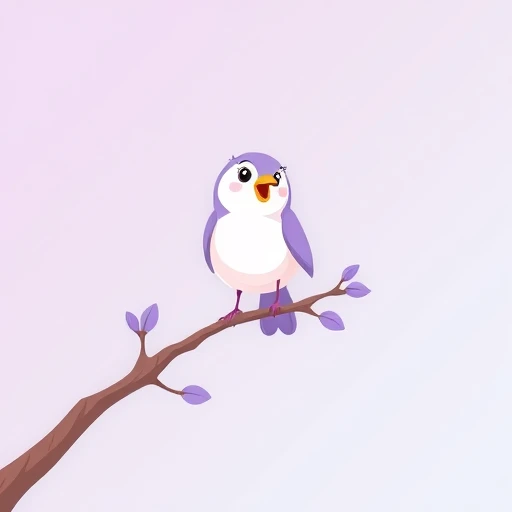
- Twitter primarily describes the rapid, high-pitched sounds made by small birds, often heard in the morning or during nesting.
- When applied to people, it means talking in a fast, light, and often nervous or excited way about trivial matters.
- It is an onomatopoeic word, meaning its sound mimics the high-pitched 'tw-tt' noises of birds or rapid chatter.
- Commonly used in literature and nature descriptions to create a busy, energetic, or slightly anxious atmosphere.
The verb twitter is a fascinating example of onomatopoeia in the English language—a word that sounds like the action it describes. At its most literal level, to twitter refers to the rhythmic, high-pitched, and rapid series of sounds made by small birds, such as sparrows, swallows, or finches. Imagine standing in a lush garden at the break of dawn; the collective melody of these birds creates a 'twittering' chorus. This usage is deeply rooted in naturalistic observation and has been a staple of English literature for centuries to evoke a sense of peace, morning energy, or the bustling activity of the natural world. However, the word extends far beyond the avian kingdom. When applied to human beings, twittering describes a specific style of communication: speaking in a light, rapid, and often nervous or excited manner. It suggests a lack of gravity or seriousness in the conversation, focusing instead on trivialities or breathless excitement. For instance, a group of teenagers might twitter with anticipation before a concert, or a nervous host might twitter about the appetizers at a high-stakes dinner party. The essence of the word lies in its lightness and speed. It is never used for deep, booming voices or slow, deliberate speech. Instead, it captures the fluttery, staccato nature of small birds and translates that energy into human interaction. In modern contexts, while the social media platform 'Twitter' (now X) took its name from this very concept—implying short, rapid bursts of information—the verb itself remains a vital part of descriptive prose. Understanding when to use 'twitter' involves recognizing the 'smallness' and 'frequency' of the sounds or words being produced. It is a word of movement and vibration, whether that movement is the physical vibration of a bird's throat or the metaphorical vibration of a person's nervous energy.
- Literal Application
- The birds in the hedgerow began to twitter as soon as the first rays of sunlight hit the leaves.
The morning air was filled with the sound of birds that twitter incessantly in the old oak tree.
When you use 'twitter' to describe a person, you are often making a subtle comment on their state of mind. It frequently implies a degree of agitation or shallow excitement. If someone is 'twittering on' about something, they are talking at length about things that might not be very important, often because they are anxious to fill a silence or are genuinely overwhelmed by a minor event. It is a very visual verb; it almost makes the listener see the speaker's hands fluttering or their eyes darting around. It is distinct from 'whispering' (which is quiet) or 'shouting' (which is loud). Twittering is about the pitch and the pace. In literature, authors use it to characterize someone as flighty, nervous, or perhaps a bit silly. A character who twitters is rarely the hero of a dark, brooding tragedy; they are more likely to be found in a comedy of manners or a lighthearted domestic scene. The word carries a certain charm but also a hint of dismissiveness, depending on the context. If a teacher says the students are twittering in the back of the room, she is likely annoyed by their distracting, low-level chatter. Conversely, if a grandmother describes her grandchildren twittering with joy over their gifts, the word takes on a warm, affectionate tone.
- Figurative Application
- The secretaries would often twitter about the latest office gossip during their short afternoon tea break.
Stop your twittering and focus on the task at hand, the supervisor demanded sternly.
Historically, the word has been used to describe the sound of many things that are small and fast. While birds are the primary subject, one might occasionally see it used for the sound of insects or even the mechanical clicking of old machinery, though these are rarer. The core of the word is the repetition of 't' and 'w' sounds, which mimics the actual noise. This phonetic quality makes it very effective in poetry and descriptive writing. When you read the word, your tongue almost has to perform the action it describes, flicking against the roof of your mouth. This is why it feels so 'busy' as a word. It is a busy verb for busy, small things. In a social context, if you find yourself in a room where everyone is talking at once in high voices—perhaps at a wedding reception or a busy cafe—you could say the room is 'alive with the sound of twittering voices.' This paints a much more vivid picture than simply saying 'people were talking.' It suggests a specific atmosphere: one of lightheartedness, perhaps a bit of chaos, and a lot of energy.
- Atmospheric Use
- The lobby was filled with guests who would twitter excitedly as they waited for the celebrity to arrive.
I could hear the swallows twitter under the eaves of the barn all through the summer night.
She began to twitter nervously when the interviewer asked her a difficult question about her past.
Finally, it is worth noting the emotional range of the verb. While often light, it can describe the 'twitter' of fear—the way a person's voice trembles when they are terrified. This is similar to the way a bird might twitter a warning to its flock. However, in 90% of modern usage, 'twitter' remains a word associated with the pleasant sounds of nature or the harmless, albeit sometimes annoying, chatter of people. It is a B1 level word because it is specific but widely applicable across different types of storytelling and everyday observation. By mastering 'twitter,' you move beyond general verbs like 'talk' or 'sound' and start using language that captures the texture and rhythm of life.
Using 'twitter' correctly in a sentence requires an understanding of its grammatical role as an intransitive verb—meaning it doesn't usually take a direct object. You don't 'twitter a message' (unless you are specifically referring to the old social media platform's terminology); rather, you simply 'twitter.' For example, 'The birds twittered.' If you want to describe what someone is talking about, you use the preposition 'about' or 'on about.' For instance, 'She twittered about her new shoes for an hour.' This structure emphasizes the manner of speaking rather than the content itself. The word is often paired with adverbs that reinforce its light, rapid nature, such as 'excitedly,' 'nervously,' 'incessantly,' or 'shrilly.' These pairings help the reader understand the emotional state behind the twittering. When describing birds, 'twitter' is often used in the present continuous tense ('The birds are twittering') to describe an ongoing background noise, or in the simple past ('The birds twittered') to set a scene in a story. It is a versatile verb that can fit into formal nature writing or informal character descriptions.
- Basic Intransitive Use
- As the sun rose over the horizon, the small birds in the garden began to twitter in a cheerful chorus.
Don't just stand there and twitter; tell me exactly what happened at the meeting!
In more descriptive or literary sentences, 'twitter' can be used to create a sense of atmosphere. Consider the sentence: 'The room twittered with the sound of a hundred private conversations.' Here, 'twittered' acts as a collective verb, suggesting that the individual voices are indistinguishable and blend into a single, bird-like hum. This is a powerful way to describe a social gathering without focusing on any one person. Another common pattern is using 'twitter' to describe a physical sensation of nervousness, often in the phrase 'all a-twitter.' While 'a-twitter' is technically an adjective/adverbial form, it stems directly from the verb. For example, 'She was all a-twitter before her first date.' This implies her whole being was vibrating with the same nervous energy as a twittering bird. When writing, try to use 'twitter' to replace more generic words like 'chatter' or 'gossip' when you want to emphasize a high-pitched or nervous quality. It adds a layer of sensory detail that 'talk' simply cannot provide.
- Describing Nervousness
- The young performers were twittering with nerves behind the heavy velvet curtains of the stage.
Every time the phone rang, she would twitter with anxiety, fearing it was bad news.
Furthermore, 'twitter' can be used in a derogatory way to describe someone who talks too much about unimportant things. 'He spent the whole evening twittering on about his stamp collection.' In this case, the verb suggests that the listener finds the speaker's voice annoying or the subject matter trivial. It is similar to 'babbling' but with a higher pitch. If you are writing a story and want to show that a character is unimportant or flighty, having them 'twitter' is a great 'show, don't tell' technique. Conversely, in nature writing, 'twitter' is almost always positive or neutral, evoking the beauty of the outdoors. 'The swallows twittered as they built their nests' sounds industrious and peaceful. The key is to match the verb with the right subject and setting. You wouldn't say a lion twittered (unless you were being very ironic), but you would definitely say a group of schoolgirls twittered as they shared a secret. The size of the subject should match the 'size' of the sound.
- Derogatory/Annoyed Use
- I couldn't concentrate on my book while the two women behind me twittered about their neighbors.
The audience began to twitter impatiently when the play failed to start on time.
In the quiet of the library, even the smallest twitter of a whisper felt like a loud disturbance.
To summarize, 'twitter' is most effective when used to describe high-pitched, rapid sounds or speech. It works well with adverbs of manner and is usually intransitive. Whether you are describing a morning in the woods or a nervous social interaction, 'twitter' provides a specific auditory texture that enriches your writing. Remember to consider the 'weight' of your subject; 'twitter' is for the light, the small, and the fast. By practicing these sentence patterns, you will be able to use 'twitter' with the same ease as a native speaker, adding nuance and color to your English vocabulary.
In the modern world, the word 'twitter' is inextricably linked to the social media platform, but if you look beyond your smartphone screen, you will find the verb alive and well in many other contexts. One of the most common places to hear 'twitter' is in nature documentaries or while birdwatching. Narrators like David Attenborough might describe the 'twittering of the forest canopy' to set a scene. In this context, it is a technical but evocative term for bird vocalization. If you enjoy gardening or spending time in parks, you might hear fellow nature enthusiasts use the word to describe the activity of local wildlife. It is a word that belongs to the outdoors, to the spring, and to the morning. Beyond nature, you will frequently encounter 'twitter' in classic and contemporary literature. Authors use it to describe the atmosphere of a busy room or the specific vocal habits of a character. In a Jane Austen novel, for example, a group of minor characters might 'twitter' about a new arrival in town. This literary usage persists today in novels that focus on social dynamics or domestic life.
- In Nature Media
- The documentary soundtrack was layered with the sound of tropical birds that twitter in the heat of the midday sun.
Listen to the way the finches twitter when they find fresh seeds in the feeder.
You might also hear 'twitter' in social commentary or gossip columns. While 'tweet' is the specific action on social media, 'twittering' is often used metaphorically to describe the collective, often shallow, noise of public discourse. A journalist might write about the 'twittering classes,' referring to people who spend their time discussing trivial matters with great intensity. This usage bridges the gap between the bird-like sound and the modern digital platform. In British English, 'twitter' is perhaps slightly more common in everyday speech than in American English, often used to describe someone who is being a bit silly or overly talkative. If someone is 'in a twitter,' they are in a state of nervous excitement. You might hear this in a British sitcom or a period drama. It’s a word that carries a certain 'old-fashioned' charm, making it popular in stories set in the early 20th century or in rural settings.
- In Social Commentary
- The pundits continued to twitter about the minor scandal, ignoring the much larger economic crisis unfolding.
The children would twitter with delight every time the clown performed a new trick.
Another place you might hear 'twitter' is in the context of classical music or sound design. A music critic might describe a flute passage as 'twittering,' referring to rapid, high-pitched notes that mimic bird calls. Composers like Vivaldi or Beethoven often used instruments to 'twitter' in their nature-themed works (like 'The Four Seasons' or the 'Pastoral Symphony'). In film and theater, sound designers use 'twittering' ambient tracks to signal to the audience that a scene is taking place in a peaceful, rural, or early-morning setting. It is a universal auditory shorthand for 'nature' and 'tranquility.' Even in technical fields, 'twitter' can sometimes refer to high-frequency noise or interference in audio equipment, though this is quite specialized. In essence, whenever there is a sound that is fast, high, and repetitive, 'twitter' is the word that likely comes to mind for a native speaker.
- In Music and Arts
- The piccolo began to twitter, perfectly imitating the sound of a lark ascending into the clear blue sky.
The background score featured a twittering motif that represented the character's rising anxiety.
In the spring, the whole forest seems to twitter with the energy of new life.
Finally, you will hear 'twitter' used in everyday conversation when someone wants to describe a specific type of social energy. 'The office was twittering with the news of the merger.' This implies a lot of low-level, excited talking. It’s a very useful word for describing the 'vibe' of a place. Whether it's the literal sound of a bird, the nervous chatter of a person, or the metaphorical noise of a crowd, 'twitter' is a word that captures a very specific slice of the auditory world. By paying attention to these different contexts, you will start to see how 'twitter' is much more than just a defunct name for a social media app; it is a living, breathing part of the English language that connects us to the natural world and the nuances of human behavior.
One of the most frequent mistakes learners make with the verb 'twitter' is confusing it with 'tweet.' While they are related, 'tweet' is almost exclusively used for the specific short cry of a bird or the act of posting on the social media platform formerly known as Twitter. 'Twitter,' as a verb, refers to a *series* of sounds or a continuous state of chatter. You wouldn't say 'The bird twittered once'; you would say 'The bird tweeted once.' 'Twitter' implies duration and repetition. Another common error is using 'twitter' to describe any kind of talking. Remember, 'twitter' has a very specific 'texture.' It must be high-pitched and fast. You cannot 'twitter' in a deep, slow, or serious voice. If a character is delivering a grave warning, they are not twittering. Using the word in the wrong emotional context can make your writing feel unintentionally funny or confusing. For example, 'He twittered about the tragic accident' sounds very strange because 'twitter' implies a certain lightness or triviality that clashes with the word 'tragic.'
- Mistake: Wrong Tone
- Incorrect: The general twittered the orders to his troops before the battle. (Generals usually command or bark; they don't twitter.)
Don't confuse twitter with 'shout' or 'bellow'; it is always a light, high sound.
Learners also sometimes struggle with the prepositional use of 'twitter.' As mentioned before, it is an intransitive verb. A common mistake is trying to use it like 'say' or 'tell.' You cannot 'twitter a secret to someone.' Instead, you would say 'She twittered excitedly as she told him the secret.' The twittering is the *way* she is speaking, not the act of conveying the information itself. Another subtle mistake is using 'twitter' for sounds that are too loud or harsh. 'Twitter' is delicate. If a parrot is screaming, it is not twittering. If a crow is cawing, it is not twittering. The word is reserved for the smaller, more melodic (or at least less abrasive) sounds of smaller birds. Similarly, for humans, 'twittering' is usually a 'busy' sound but not necessarily a 'loud' one. It’s the difference between the hum of a party and the roar of a stadium.
- Mistake: Transitive Use
- Incorrect: She twittered the news to everyone. Correct: She twittered with excitement while sharing the news.
The birds began to twitter (not 'to tweet') all at once when the cat appeared.
Finally, be careful with the phrase 'all a-twitter.' While it’s a great idiom, it’s a bit informal and slightly old-fashioned. Using it in a very formal academic essay might feel out of place. Also, ensure you don't confuse 'twitter' with 'titter.' To 'titter' is to give a short, nervous laugh. While both involve nervousness and high-pitched sounds, 'twitter' is about speaking or bird sounds, while 'titter' is specifically about laughing. They are often found in similar contexts (like a nervous social event), which makes them easy to mix up. 'She tittered at his joke' vs 'She twittered about her day.' One is a laugh, the other is a manner of talking. By keeping these distinctions in mind—duration, pitch, transitivity, and the difference from similar-sounding words—you can avoid the most common pitfalls and use 'twitter' with precision.
- Confusing Twitter and Titter
- He tittered (laughed) nervously, while she twittered (talked) on about the weather.
Make sure you don't twitter when you should be speaking clearly and slowly during your presentation.
The old radio began to twitter with static, but it wasn't the bird-like sound I expected.
In conclusion, the most important thing is to remember the 'bird-like' quality of the word. If you can't imagine a small bird making the sound, 'twitter' is probably not the right verb. Whether you're describing a person or an animal, keep it light, keep it fast, and keep it repetitive. Avoiding these common mistakes will significantly improve the naturalness of your English.
English is rich with verbs that describe sounds and speaking styles, and 'twitter' sits in a cluster of words that share similar meanings but have distinct nuances. Understanding these alternatives will help you choose the exact right word for your context. The most direct synonym for the bird-related meaning of 'twitter' is chirp. However, a 'chirp' is usually a single, short, sharp sound, whereas 'twitter' is a continuous series of sounds. If a bird makes one quick noise, it chirps; if it sings a busy, complex little song, it twitters. Another close relative is chirrup, which is essentially a more rhythmic version of a chirp, often used for birds or grasshoppers. For a more musical or liquid sound, you might use warble or trill. A 'warble' is a soft, melodic succession of notes, often associated with songbirds like nightingales. A 'trill' is a rapid alternation between two notes. 'Twitter' is less melodic than 'warble' and more 'busy' than 'trill.'
- Twitter vs. Chirp
- A chirp is a single 'beep,' while twittering is a whole 'conversation' of beeps.
While the cricket would chirp rhythmically, the birds would twitter in a more chaotic and joyful way.
When it comes to human speech, 'twitter' has several interesting alternatives. Chatter is the most common. 'Chatter' also implies rapid, trivial talk, but it doesn't necessarily have the high pitch of 'twitter.' You can chatter in a low voice, but you can't really twitter in one. Babble suggests speech that is incoherent or meaningless, like a baby or a very confused person. 'Twittering' is usually coherent, just trivial or nervous. Prattle is another great alternative; it means to talk at length in a foolish or inconsequential way, often used for children or people who are being overly talkative about nothing. 'Prattle' feels a bit more 'heavy' than 'twitter.' If someone is 'prattling on,' they might be boring you, whereas if they are 'twittering on,' they are more likely to be annoying you with their nervous energy. Jabber is faster and more excited than chatter, often used when someone is talking so fast they are hard to understand.
- Twitter vs. Chatter
- Chatter is about the amount of talk; twitter is about the pitch and nervous energy of the talk.
The brook would babble over the stones, and the birds would twitter in the branches above.
For the 'nervous excitement' meaning of 'twitter,' you might use flutter. 'Her heart fluttered' or 'She was in a flutter' are very similar to being 'all a-twitter.' 'Flutter' emphasizes the physical sensation of a beating heart or moving wings, while 'twitter' emphasizes the sound and the speech. If you want to describe someone who is talking quietly and rapidly, mutter or murmur are better, but they lack the high-pitched, 'birdy' quality. Finally, gossip is a specific type of twittering that focuses on the private lives of others. While you can twitter about anything (the weather, a new hat, a bird), you gossip specifically about people. In summary, 'twitter' is your go-to word when you want to combine the ideas of high pitch, rapid speed, and either a bird-like nature or a nervous human energy. By comparing it to these other words, you can see its unique place in the English vocabulary.
- Twitter vs. Prattle
- Prattle sounds more childish and repetitive; twitter sounds more high-strung and avian.
Instead of a deep conversation, they spent the afternoon twittering about the latest fashion trends.
The crowd began to twitter with anticipation as the lights in the theater began to dim.
Choosing the right word is about painting a picture for your listener or reader. 'Twitter' is a delicate brushstroke that adds a specific kind of light and energy to a scene. Whether you are describing a forest at dawn or a nervous bride before her wedding, 'twitter' and its synonyms give you the tools to be precise and evocative. Keep exploring these 'sound words' to truly master the descriptive power of English.
How Formal Is It?
재미있는 사실
The word has been used in English since the 14th century, long before it became associated with social media.
발음 가이드
- Pronouncing the 'i' like 'ee' (tweet-er).
- Putting the stress on the second syllable.
- Making the 'tt' too long.
- Confusing it with 'titter'.
- Forgetting the 'w' sound.
난이도
Common in literature and nature writing.
Requires understanding of tone and transitivity.
Easy to pronounce but specific in use.
Distinctive sound, easy to recognize.
다음에 무엇을 배울까
선수 학습
다음에 배울 것
고급
알아야 할 문법
Onomatopoeia
Words like 'twitter', 'buzz', and 'hiss' sound like their meaning.
Intransitive Verbs
'The birds twitter' (no direct object needed).
Participial Adjectives
The 'twittering' birds woke me up.
Phrasal Verbs
She 'twittered on' for hours.
Idiomatic Adjectives
She was 'all a-twitter'.
수준별 예문
The birds twitter in the tree.
Birds make small, fast sounds.
Present simple tense.
I hear the birds twitter every morning.
Every day, I hear the bird sounds.
Verb after 'hear'.
Do the birds twitter at night?
Question about bird sounds.
Question form.
A little bird can twitter.
The bird has the ability.
Modal verb 'can'.
The birds are twittering now.
They are doing it at this moment.
Present continuous.
I like to listen to birds twitter.
It is a nice sound.
Infinitive without 'to' after 'listen to'.
The bird did not twitter today.
It was quiet.
Negative past simple.
Look! The birds twitter when they see food.
They make noise for food.
Zero conditional structure.
The children twittered with excitement about the trip.
They talked fast and happily.
Past simple.
Stop twittering and listen to the teacher.
Stop talking fast and pay attention.
Imperative form.
She twitters when she is nervous.
She talks fast when she is worried.
Third person singular.
The whole room was twittering with gossip.
Everyone was talking about secrets.
Past continuous.
The birds twittered loudly in the garden.
The sounds were easy to hear.
Adverb 'loudly' modifying the verb.
He began to twitter about his new car.
He started talking excitedly.
Infinitive after 'began'.
Why are you twittering so much?
Question about the fast talking.
Present continuous question.
The sparrows twittered under the roof.
Small birds made noise under the house top.
Prepositional phrase 'under the roof'.
The audience twittered impatiently as the show was delayed.
The crowd made nervous, quiet noises.
Adverb 'impatiently'.
She was all a-twitter before her first date.
She was very nervous and excited.
Idiomatic use of 'a-twitter'.
The swallows twittered as they flew over the lake.
Birds made sounds while flying.
Past simple with 'as' clause.
He spent the afternoon twittering on about his collection.
He talked a lot about something trivial.
Phrasal verb 'twitter on'.
The office was twittering with the news of the bonus.
Everyone was talking excitedly about money.
Metaphorical use.
I could hear the constant twitter of birds in the background.
The sound was always there.
Used as a noun here (the sound).
She would often twitter nervously during interviews.
It was her habit when stressed.
Modal 'would' for past habit.
The nervous bridesmaids twittered around the bride.
They moved and talked quickly.
Descriptive verb of movement and sound.
The delegates twittered amongst themselves during the break.
The officials talked quietly and rapidly.
Reflexive 'amongst themselves'.
Her voice had a twittering quality that some found annoying.
Her voice sounded like a bird.
Participial adjective 'twittering'.
The hedge was alive with the sound of twittering finches.
Many birds were making noise in the bushes.
Adjective modifying 'finches'.
He dismissed her concerns as mere twittering.
He thought her talk was unimportant.
Gerund used as a noun.
The machine began to twitter and click before it broke down.
The machine made high-pitched noises.
Mechanical metaphor.
She twittered a greeting and hurried past him.
She said hello very quickly and nervously.
Transitive-like use (rare).
The morning air was thick with the twittering of a thousand birds.
There was a lot of bird noise.
Noun form 'twittering'.
They twittered with delight at the sight of the puppies.
They made happy, high sounds.
Prepositional phrase 'with delight'.
The debutantes twittered with an air of superficial anxiety.
The young women talked nervously and shallowly.
Sophisticated vocabulary pairing.
The poem describes how the leaves twitter in the autumn breeze.
The leaves make a sound like birds.
Metaphorical use for inanimate objects.
The critics twittered about the director's latest failure.
The experts talked rapidly and dismissively.
Used to show social critique.
A twittering flute melody danced through the concert hall.
The music sounded like birds.
Musical description.
The old man found the twittering of the youth exhausting.
He found their fast talk tiring.
Abstract noun usage.
The signal began to twitter with high-frequency interference.
The radio signal made bird-like noises.
Technical context.
She had a tendency to twitter when confronted with authority.
She talked nervously to important people.
Infinitive phrase.
The eaves were heavy with the twittering of nesting martins.
Birds were making noise under the roof.
Specific bird species 'martins'.
The salon was a cacophony of twittering voices and clinking glass.
The room was full of high-pitched talk and noise.
Complex sentence structure.
He sat in silence, unmoved by the twittering of the political pundits.
He didn't care about the shallow talk of experts.
Rhetorical use to show disdain.
The prose captures the way the heart can twitter in moments of terror.
The writing describes a fast, nervous heartbeat.
Metaphorical use for internal states.
In the twilight of his life, the world seemed but a distant twittering.
The world's noise felt small and far away.
Philosophical/Literary use.
The staccato notes of the harpsichord seemed to twitter in the small room.
The music sounded like rapid bird calls.
Aesthetic description.
She observed the twittering crowd with the detached eye of a scientist.
She watched the busy people without emotion.
Contrasting 'twittering' with 'detached'.
The script required the actress to twitter her lines with breathless speed.
She had to say her words very fast and nervously.
Direct object 'lines' (rare transitive).
The ancient forest seemed to twitter with the ghosts of forgotten species.
The forest made mysterious, bird-like sounds.
Evocative, haunting use.
자주 쓰는 조합
자주 쓰는 구문
— To cause a group of people to start talking excitedly.
The news set the whole village twittering.
— A command to stop talking trivialities.
Stop your twittering and get to work!
— To make small, nervous sounds because of fright.
The small animal twittered with fear.
— To talk about very unimportant things.
She can twitter about nothing for hours.
— A simile for someone with a high, fast voice.
She twitters like a bird when she's happy.
— A derogatory term for people who talk a lot but do little.
The twittering classes are obsessed with this minor issue.
— To continue talking in a light, rapid way.
She just kept on twittering despite my silence.
자주 혼동되는 단어
Tweet is a single sound; twitter is a series of sounds.
Titter is a nervous laugh; twitter is nervous talk.
Chatter is general fast talk; twitter is high-pitched and bird-like.
관용어 및 표현
— In a state of nervous excitement or agitation.
She was all a-twitter about the wedding.
Informal— To talk incessantly and often about gossip.
She twitters like a magpie whenever we meet.
Informal— In a state of constant, nervous activity.
The office was in a regular twitter today.
Informal— To cause a stir or start a rumor.
His arrival set the birds twittering in the village.
Literary— Being very close to a state of nervous collapse (rare).
She was twittering on the edge of a breakdown.
Literary— Lots of talk but no real meaning.
His speech was more twitter than substance.
Informal— To be able to gossip or talk as much as anyone else.
She can twitter with the best of them at the club.
Informal— A general feeling of excitement or gossip.
There was a twitter in the air after the announcement.
Literary— Talking in a silly, excited, high-pitched way.
He was twittering like a schoolgirl over the new gadget.
Informal— An order to end the gossip or trivial talk.
Let's stop the twitter and focus on the facts.
Neutral혼동하기 쉬운
Both are bird sounds.
Chirp is short and sharp; twitter is long and tremulous.
The bird gave a chirp, then began to twitter.
Both are bird sounds.
Warble is melodic and low; twitter is high and busy.
The thrush warbles, but the sparrow twitters.
Both mean talking about nothing.
Prattle is more childish; twitter is more nervous/excited.
The child prattled, but the nervous bride twittered.
Both mean fast talking.
Jabber is often incoherent; twitter is just high-pitched and trivial.
He jabbered in fear, while she twittered in excitement.
Both involve rapid sounds.
Trill is a musical technique; twitter is a natural sound.
The singer trilled a note that sounded like a bird twittering.
문장 패턴
The [bird] twitters.
The sparrow twitters.
They twittered about [topic].
They twittered about the party.
She was all a-twitter with [emotion].
She was all a-twitter with joy.
The [place] was twittering with [sound/news].
The room was twittering with gossip.
A [sound] twittered through the [place].
A flute melody twittered through the hall.
Unmoved by the [noun] of [group].
Unmoved by the twittering of the critics.
Stop [verb-ing] and [verb]!
Stop twittering and focus!
[Subject] twittered [adverb].
The swallows twittered shrilly.
어휘 가족
명사
동사
형용사
관련
사용법
Common in nature contexts and specific social descriptions.
-
The birds tweeted all morning.
→
The birds twittered all morning.
Twittered implies a continuous sound; tweeted is better for a single sound.
-
She twittered the news to me.
→
She twittered excitedly while telling me the news.
Twitter is usually intransitive and describes the manner of speaking.
-
The lion twittered at the hunter.
→
The lion roared at the hunter.
Twitter is only for small, high-pitched sounds.
-
He was all a-titter about the game.
→
He was all a-twitter about the game.
A-titter means laughing; a-twitter means excited/nervous.
-
The birds began to twittering.
→
The birds began to twitter.
Use the infinitive after 'began to'.
팁
Think of Birds
Always associate 'twitter' with small birds. If the sound doesn't fit a small bird, use a different word.
Intransitive Only
Remember you don't usually twitter *something*; you just twitter *about* something.
Atmosphere
Use 'twitter' to describe the background noise of a busy, happy party.
Avoid 'Tweet'
In formal writing about nature, use 'twitter' for the continuous sound, not 'tweet'.
Nervous Energy
Use 'twitter' to describe a character's speech if you want them to seem flighty or anxious.
High Pitch
If you hear a high-pitched, fast sound in a movie, 'twitter' is the word to describe it.
Onomatopoeia
The word sounds like the action. Say it fast: twitter-twitter-twitter!
Be Careful
Don't call your boss's speech 'twittering' unless you want to be rude!
Springtime
Twitter is the perfect word for describing a forest in the spring.
All A-Twitter
Use this phrase to show you are excited about a big event like a concert or trip.
암기하기
기억법
Think of 'TWo ITty-bitty birds' making a sound. TW-IT-ter.
시각적 연상
Imagine a tiny sparrow vibrating with energy on a branch, its beak moving at 100 miles per hour.
Word Web
챌린지
Try to use 'twitter' in a sentence about a bird and a sentence about a person today.
어원
Middle English 'twiteren', of Germanic origin. It is an onomatopoeic word, meaning it was created to imitate the sound it describes.
원래 의미: To chirp or chatter like a bird.
Germanic (related to Dutch 'kwetteren' and German 'zwitschern').문화적 맥락
Be careful using it for people; it can imply they are being trivial or silly.
Commonly used in British literature to describe village life and social gossip.
실생활에서 연습하기
실제 사용 상황
Nature
- birds twittering
- morning chorus
- nesting sounds
- hedgerow noise
Social Gatherings
- twittering crowd
- excited chatter
- room alive with sound
- nervous talk
Personal Feelings
- all a-twitter
- twittering with nerves
- feeling fluttery
- excited speech
Literature
- twittering of leaves
- character twittered
- trivial gossip
- atmospheric sound
Music
- twittering flute
- high-pitched notes
- bird-like melody
- rapid trills
대화 시작하기
"Do you like the sound of birds that twitter in the morning?"
"Have you ever been all a-twitter before a big event?"
"Why do you think some people twitter when they are nervous?"
"Can you hear the birds twittering from your window?"
"Do you find it annoying when people twitter about trivial things?"
일기 주제
Describe a time you were all a-twitter with excitement. What happened?
Write about a peaceful morning in nature. Mention the birds that twitter.
Do you think the word 'twitter' is a good name for a social media app? Why?
Describe a character who twitters incessantly. What are they like?
How does the sound of twittering birds make you feel?
자주 묻는 질문
10 질문Yes, if their voice is high-pitched and they are talking rapidly, usually due to excitement or nerves. It's very descriptive.
The app was named after this verb because 'tweets' are short and rapid like bird sounds, but the verb existed for centuries before the app.
It is 'twittered' (TWIT-erd). 'Twitted' is the past tense of 'twit,' which means to tease someone.
Usually no. Dogs bark, whine, or growl. Twittering is reserved for small, high-pitched things like birds or nervous humans.
It means to be very excited or nervous, like a bird fluttering its wings and making noise.
Yes, it can be a gerund (noun) meaning the sound or act of twittering. 'The twittering of the birds was loud.'
For birds, it's neutral or positive. For people, it can be slightly negative, implying they are being silly or trivial.
It's better to say 'He twittered excitedly as he told the secret.' Twitter is usually intransitive.
Twitter is a continuous series of sounds; chirp is a single, short sound.
Yes, though 'tweet' is more common for the app, 'twitter' is still used for birds and nervous people.
셀프 테스트 200 질문
Write a sentence about birds in the morning using 'twitter'.
Well written! Good try! Check the sample answer below.
Describe a nervous person using the word 'twitter'.
Well written! Good try! Check the sample answer below.
Use the idiom 'all a-twitter' in a sentence.
Well written! Good try! Check the sample answer below.
Write a sentence using 'twittering' as a noun.
Well written! Good try! Check the sample answer below.
Describe a busy room using 'twitter'.
Well written! Good try! Check the sample answer below.
Use 'twitter' to describe a musical instrument.
Well written! Good try! Check the sample answer below.
Write a sentence about someone talking about trivial things.
Well written! Good try! Check the sample answer below.
Use 'twitter' in a nature description.
Well written! Good try! Check the sample answer below.
Write a sentence about excitement using 'twitter'.
Well written! Good try! Check the sample answer below.
Describe a machine sound using 'twitter'.
Well written! Good try! Check the sample answer below.
Use 'twitter' to show a character's flightiness.
Well written! Good try! Check the sample answer below.
Write a sentence about gossip using 'twitter'.
Well written! Good try! Check the sample answer below.
Use 'twitter' in a sentence about a forest.
Well written! Good try! Check the sample answer below.
Write a sentence about a nervous host.
Well written! Good try! Check the sample answer below.
Use 'twitter' to describe a high-pitched voice.
Well written! Good try! Check the sample answer below.
Write a sentence about a school playground.
Well written! Good try! Check the sample answer below.
Use 'twitter' in a sentence about a bird feeder.
Well written! Good try! Check the sample answer below.
Write a sentence about a delay.
Well written! Good try! Check the sample answer below.
Use 'twitter' in a sentence about a secret.
Well written! Good try! Check the sample answer below.
Write a sentence about a spring day.
Well written! Good try! Check the sample answer below.
Describe the sound of birds in your neighborhood using 'twitter'.
Read this aloud:
당신의 답변:
Speech recognition is not supported in your browser. Try Chrome or Edge.
Tell a story about a time you were 'all a-twitter'.
Read this aloud:
당신의 답변:
Speech recognition is not supported in your browser. Try Chrome or Edge.
Explain why a person might 'twitter' when they are nervous.
Read this aloud:
당신의 답변:
Speech recognition is not supported in your browser. Try Chrome or Edge.
How would you describe a busy party using the word 'twitter'?
Read this aloud:
당신의 답변:
Speech recognition is not supported in your browser. Try Chrome or Edge.
Give an example of someone 'twittering on' about something.
Read this aloud:
당신의 답변:
Speech recognition is not supported in your browser. Try Chrome or Edge.
Use 'twitter' to describe a musical performance you liked.
Read this aloud:
당신의 답변:
Speech recognition is not supported in your browser. Try Chrome or Edge.
What is the difference between 'twitter' and 'shout'?
Read this aloud:
당신의 답변:
Speech recognition is not supported in your browser. Try Chrome or Edge.
Describe a spring morning using 'twitter'.
Read this aloud:
당신의 답변:
Speech recognition is not supported in your browser. Try Chrome or Edge.
Why might a teacher tell students to 'stop twittering'?
Read this aloud:
당신의 답변:
Speech recognition is not supported in your browser. Try Chrome or Edge.
Use 'twitter' to describe a nervous host.
Read this aloud:
당신의 답변:
Speech recognition is not supported in your browser. Try Chrome or Edge.
How does 'twitter' sound compared to 'drone'?
Read this aloud:
당신의 답변:
Speech recognition is not supported in your browser. Try Chrome or Edge.
Describe a character in a book who twitters.
Read this aloud:
당신의 답변:
Speech recognition is not supported in your browser. Try Chrome or Edge.
Use 'twitter' in a sentence about a surprise.
Read this aloud:
당신의 답변:
Speech recognition is not supported in your browser. Try Chrome or Edge.
Describe the sound of a forest using 'twitter'.
Read this aloud:
당신의 답변:
Speech recognition is not supported in your browser. Try Chrome or Edge.
Why is 'twitter' an onomatopoeic word?
Read this aloud:
당신의 답변:
Speech recognition is not supported in your browser. Try Chrome or Edge.
Use 'twitter' to describe a high-pitched radio sound.
Read this aloud:
당신의 답변:
Speech recognition is not supported in your browser. Try Chrome or Edge.
Describe a group of children using 'twitter'.
Read this aloud:
당신의 답변:
Speech recognition is not supported in your browser. Try Chrome or Edge.
Use 'twitter' in a sentence about a secret.
Read this aloud:
당신의 답변:
Speech recognition is not supported in your browser. Try Chrome or Edge.
How would you use 'twitter' in a formal scientific context?
Read this aloud:
당신의 답변:
Speech recognition is not supported in your browser. Try Chrome or Edge.
What does 'twittering classes' mean?
Read this aloud:
당신의 답변:
Speech recognition is not supported in your browser. Try Chrome or Edge.
Listen for the word 'twitter'. In which sentence is it used correctly? A) The lion twittered. B) The sparrow twittered.
Listen for the tone. If someone says 'She's always twittering,' do they sound: A) Impressed B) Annoyed?
Listen for the sound. Does 'twitter' sound like: A) A drum B) A whistle?
In the phrase 'all a-twitter', what is the main emotion? A) Fear B) Excitement
Listen to the sentence: 'The birds twittered in the morning.' Is this: A) Past tense B) Present tense?
Does 'twittering' describe: A) A single sound B) A series of sounds?
If a room is 'twittering with gossip', is it: A) Quiet B) Busy?
Listen to the word 'twitter'. Where is the stress? A) First syllable B) Second syllable?
If a flute is 'twittering', is the music: A) High and fast B) Low and slow?
Listen to the sentence: 'Stop your twittering!' Is the speaker: A) Happy B) Stern?
Does 'twitter' rhyme with: A) Bitter B) Better?
In 'The swallows twittered', what is the subject? A) The swallows B) The twittering?
Is 'twitter' used for: A) Small things B) Large things?
Listen to the sentence: 'She twittered a greeting.' Is this: A) Common B) Rare?
Does 'twitter' sound like the noise it describes? A) Yes B) No
/ 200 correct
Perfect score!
Summary
The verb 'twitter' captures the essence of light, rapid, high-pitched sound. Whether you are describing a sparrow in a hedge or a nervous friend talking about their day, use 'twitter' to emphasize speed and pitch over volume and depth.
- Twitter primarily describes the rapid, high-pitched sounds made by small birds, often heard in the morning or during nesting.
- When applied to people, it means talking in a fast, light, and often nervous or excited way about trivial matters.
- It is an onomatopoeic word, meaning its sound mimics the high-pitched 'tw-tt' noises of birds or rapid chatter.
- Commonly used in literature and nature descriptions to create a busy, energetic, or slightly anxious atmosphere.
Think of Birds
Always associate 'twitter' with small birds. If the sound doesn't fit a small bird, use a different word.
Intransitive Only
Remember you don't usually twitter *something*; you just twitter *about* something.
Atmosphere
Use 'twitter' to describe the background noise of a busy, happy party.
Avoid 'Tweet'
In formal writing about nature, use 'twitter' for the continuous sound, not 'tweet'.