wingardium 30초 만에
- Wingardium is a fictional noun and incantation from the Harry Potter series, specifically used as the first part of a spell to make objects levitate or float.
- The word is a creative blend of the English 'wing' and the Latin-inspired '-ardium', designed to sound like a powerful, ancient magical command for flight.
- It has become a major cultural reference, often used in memes, comedy, and casual conversation to refer to magic or the act of lifting heavy things.
- Proper pronunciation and word stress are key features of the word's fame, making it a popular example in discussions about phonetics and fictional languages.
The term wingardium is a quintessential example of a modern fictional incantation that has achieved significant cultural penetration. Primarily recognized as the first component of the levitation charm 'Wingardium Leviosa' from the Harry Potter universe, it serves as a linguistic bridge between the mundane and the magical. Linguistically, the word is a clever portmanteau or a pseudo-Latin construction. The prefix 'wing' is derived directly from the English word for the appendage used by birds and insects for flight, immediately signaling the concept of ascension and aerial movement to the reader or listener. The suffix '-ardium' is likely inspired by the Latin 'arduus,' which translates to high, steep, or lofty, or perhaps 'arduus' in the sense of something that is difficult to reach or requires effort to elevate. When these elements are synthesized, wingardium functions as a specialized noun representing the vocalized intent to make an object defy the laws of gravity. In a broader sense, people use this word today not just to quote a specific book, but as a shorthand for any situation involving unexpected lifting, the desire for something to float, or when discussing the mechanics of fantasy world-building. It is a word that carries with it the weight of nostalgia for a generation of readers, symbolizing the moment a student of magic first masters the ability to manipulate the physical world through speech alone. The word is used in academic discussions about 'conlangs' (constructed languages) to illustrate how authors create a sense of authenticity by blending recognizable roots with invented suffixes. It is also frequently used in play, performance, and creative writing to evoke a specific atmosphere of wonder and whimsy.
- Etymological Root
- The combination of 'wing' (English) and 'arduus' (Latin) to signify 'high flight'.
- Functional Category
- A fictional noun acting as a magical trigger or incantation.
- Cultural Register
- Highly informal in general conversation, but specific to the 'Wizarding World' lexicon.
The professor insisted that the proper pronunciation of wingardium was essential for the feather to lift.
Beyond its literal fictional application, the word is often used metaphorically. For instance, a scientist might jokingly use it when a complex experiment finally shows signs of 'lifting off' or succeeding against the odds. It represents the 'magic' of discovery. In the realm of linguistics, it is studied as a 'nonce word' that became a 'permanent loanword' from fiction into the collective consciousness. The word's structure—starting with a soft 'w' and ending with a resonant 'm'—is designed to sound pleasing and authoritative. This phonetic quality is why it is so memorable. When people use it, they are often tapping into a shared cultural language that spans across different countries and languages, as the word remains largely untranslated in many international editions of the books. This makes it a rare example of a truly global fictional noun. It is used in fan conventions, in digital memes, and even in serious discussions about the influence of literature on modern English. The word encapsulates the idea that language has the power to change our perception of reality, even if only in our imaginations. It is a testament to the power of a well-constructed word to capture the human desire for flight and the transcendence of physical limitations.
He muttered the wingardium component under his breath, hoping the heavy trunk would lighten.
The stage magician used a fake wingardium command to delight the children in the audience.
In the fan-written script, the protagonist discovers a more powerful version of the wingardium incantation.
The word wingardium has become a symbol of the levitation charm itself.
Using wingardium correctly requires an understanding of its role as a specific noun within a larger phrase. While it is technically a fictional word, its usage follows standard English grammatical rules when integrated into sentences. It is most commonly used as a proper noun referring to the first part of a spell, or as a common noun describing the incantation itself. For example, one might say, 'The student struggled with the wingardium portion of the lesson.' Here, it acts as an attributive noun modifying 'portion.' Because it is so closely tied to a specific cultural touchstone, using it outside of that context usually implies a humorous or metaphorical intent. If you were to say, 'I wish I could use a bit of wingardium on this heavy suitcase,' you are using the word to represent the concept of magical levitation. This type of usage is common in informal speech among fans of fantasy literature. It is also important to note that the word is rarely used in isolation; it is almost always paired with 'Leviosa' to complete the charm. However, in technical discussions about the spell's mechanics, authors might isolate the word to discuss its phonetic properties or its role in the magical process. In creative writing, you might see it used to describe the sound of the spell: 'A faint wingardium echoed through the stone corridor.' This treats the word as a sound-noun, similar to how one might use 'whisper' or 'shout.'
- As a Direct Object
- 'She practiced her wingardium for hours until the feather finally moved.'
- In a Prepositional Phrase
- 'The secret to the spell lies in the wingardium.'
- As a Subject
- 'The wingardium is the most difficult part of the levitation charm to master.'
Every young wizard knows that wingardium is the key to lifting heavy objects.
When constructing sentences with wingardium, consider the tone you wish to convey. In a formal literary analysis, you would treat it as a significant linguistic artifact: 'The author's choice of wingardium reflects a desire to ground the magical world in recognizable linguistic roots.' In a casual conversation, the tone is much lighter: 'I tried to wingardium my keys off the table, but I guess I'm still a muggle.' Note that in the latter example, the noun is being used as a verb—a common linguistic phenomenon known as 'verbing' or 'functional shift.' While not technically correct in a formal sense, it is a hallmark of how fans interact with the language of their favorite series. Another common usage pattern involves discussing the pronunciation of the word, which is a famous plot point in the original story. Sentences like 'It's wingardium, not wingardium!' (with emphasis on different syllables) highlight the importance of phonetic precision. This makes the word a great tool for teaching students about word stress and its impact on meaning and effect. Ultimately, the word is a versatile tool for anyone looking to add a touch of magic or literary flair to their writing or speech. Whether you are writing a fan fiction story, a blog post about fantasy tropes, or just joking with friends, wingardium provides a rich, recognizable way to talk about the impossible.
The teacher used wingardium as an example of how Latin roots are used in modern fiction.
Without the correct wingardium intonation, the spell will simply fail.
She wrote the word wingardium in her notebook with a series of phonetic marks.
The wingardium charm is often the first one taught to beginners.
The word wingardium is most frequently encountered in environments associated with the Harry Potter franchise. This includes the original book series by J.K. Rowling, the blockbuster film adaptations, and the various spin-off media such as video games, stage plays like 'The Cursed Child,' and the 'Fantastic Beasts' series. In these contexts, it is heard as a spoken command, usually accompanied by a 'swish and flick' motion of a wand. However, its reach extends far beyond the primary source material. You will hear it in theme parks, specifically at the Wizarding World of Harry Potter in Universal Studios, where staff and visitors alike use the term during interactive wand experiences. It is also a staple of fan conventions (like Comic-Con), where cosplayers and enthusiasts engage in role-playing or trivia contests. In the digital realm, wingardium is a common keyword in memes, TikTok challenges, and YouTube video essays that analyze the linguistics of fantasy. It is often used as a punchline in comedy sketches that parody the tropes of magic schools. Furthermore, the word has found its way into educational settings. Teachers of English as a Second Language (ESL) or creative writing often use it to explain how new words are formed or to engage students in discussions about popular culture. You might even hear it in a scientific or engineering context, used playfully by researchers who are working on real-world levitation technologies, such as magnetic levitation (maglev) trains or acoustic levitation devices. In these cases, the word serves as a cultural shorthand for the 'magic' of science.
- Media & Entertainment
- Movies, audiobooks, and video games featuring the Wizarding World.
- Social Media
- Memes, hashtags, and viral videos related to magic or nostalgia.
- Educational Contexts
- Linguistics lectures and creative writing workshops.
At the theme park, the guide shouted wingardium to trigger the hidden mechanism in the window display.
In addition to these specific locations, the word is often heard in casual conversation among friends who share an interest in fantasy. It has become a part of the 'geek culture' lexicon, used to express a desire for something to be easier or more magical. For instance, someone struggling to lift a heavy box might jokingly say, 'If only I knew the wingardium spell right now.' This demonstrates how the word has transitioned from a specific literary term to a general-purpose cultural reference. In the world of technology, you might see the word used in the names of software libraries or coding projects that involve 'lifting' or 'elevating' data, showing its influence on the naming conventions of developers. It is also a popular choice for pet names, especially for birds or high-jumping dogs, further cementing its place in everyday life. The word's unique sound makes it easily recognizable even in noisy environments, which is why it is so effective as a brand identifier for the franchise. Whether it's whispered in a library by a child reading the books for the first time or shouted by a crowd at a movie marathon, wingardium is a word that immediately evokes a specific world of imagination and possibility. Its presence in our language is a reminder of how deeply fiction can weave itself into the fabric of our daily lives, providing us with new ways to describe the world around us and the wonders we wish were real.
The audiobook narrator gave the word wingardium a distinct, melodic quality.
During the trivia night, the question about the spelling of wingardium stumped several teams.
The programmer named his new file-upload tool wingardium because it 'lifted' files to the cloud.
The child's face lit up when he finally pronounced wingardium correctly in his play-acting.
When it comes to the word wingardium, the most common mistakes are related to pronunciation, spelling, and contextual usage. Because the word is a fictional construction, there is no 'natural' way to say it outside of the established lore. The most famous mistake, immortalized in the books and films, is the misplacement of the word stress. Many people mistakenly emphasize the 'o' in the second part of the spell ('Leviosa'), but the error often starts with the wingardium itself. Some might pronounce it as 'win-GAR-dee-um' instead of the more flowing 'win-GAR-dee-um' with a soft 'g'. Another common phonetic error is adding an extra 'r' or 'n', turning it into 'wingardium' or 'wingardium'. In terms of spelling, the most frequent error is replacing the 'i' with an 'e' ('wingardeum') or forgetting the 'u' ('wingardim'). These mistakes are common because the word sounds like it could be real Latin, leading people to apply standard Latin spelling rules that might not apply to this specific invention. Furthermore, people often confuse the word with other similar-sounding spells from the same universe, such as 'Engorgio' or 'Ascendio,' which also involve movement or size changes. This is a conceptual mistake rather than a linguistic one, but it is nonetheless common among casual fans.
- Pronunciation Error
- Saying 'wing-GAR-dee-AR' instead of 'wing-GAR-dee-um'.
- Spelling Error
- Writing 'wingardium' as 'wingardium' (adding an unnecessary 'n').
- Usage Error
- Using 'wingardium' to mean 'to fly' instead of 'to levitate'.
Incorrect: 'I'm going to wingardeum this book.' (Misspelling)
Another frequent mistake is using wingardium as a verb in formal writing. While 'verbing' is acceptable in casual conversation (e.g., 'I'll wingardium that for you'), it is grammatically incorrect to treat a fictional incantation as a standard English verb in a professional or academic context. Instead, one should use phrases like 'perform the wingardium charm' or 'use the wingardium incantation.' Additionally, some users fail to capitalize the word when referring to it as a proper name of a spell, which can lead to confusion in literary analysis. Another mistake is assuming that the word has a direct translation in Latin. While it is 'Latin-esque,' it is not a real Latin word, and trying to translate it as such in a serious linguistic paper would be an error. Finally, there is the mistake of overusing the word in situations where it doesn't fit. Because it is so iconic, it can become a cliché. Using it as a generic word for 'magic' can sometimes come across as unoriginal or lazy in creative writing. To avoid these pitfalls, it is best to use the word sparingly and with a clear understanding of its fictional origins and the specific rules that govern its use within its original context. By being mindful of these common errors, you can use wingardium more effectively and demonstrate a deeper appreciation for the nuances of fictional language.
Incorrect: 'The spell wingardiumed the chair.' (Improper verbing)
Incorrect: 'He said wingardium levios-AAAH.' (Wrong emphasis)
Incorrect: 'The wingardium is a type of potion.' (Wrong category of magic)
Incorrect: 'I need a wingardium to fix my car.' (Misunderstanding the spell's effect)
While wingardium is a unique fictional term, there are many real-world and other fictional words that share similar meanings or functions. In the realm of real English, the most direct synonym is 'levitation,' which refers to the act of rising or floating in the air. Other related terms include 'ascension,' 'elevation,' and 'suspension.' Each of these words carries a slightly different nuance. 'Ascension' often implies a more spiritual or formal rising, while 'elevation' is frequently used in technical or geographical contexts. 'Suspension' refers to being held up in the air by some force, which is exactly what the wingardium charm achieves. In the world of physics, terms like 'buoyancy' or 'updraft' might be used to describe similar physical phenomena. When looking at other fictional universes, you might find alternatives like 'levioso' (from the same series but a different spell), 'float,' or 'hover.' In the 'Star Wars' universe, the use of 'The Force' to lift objects is a functional equivalent, though it lacks a specific incantation like wingardium. In superhero comics, characters might use 'telekinesis' to achieve the same result. Understanding these alternatives helps to place wingardium within a broader linguistic and conceptual framework of 'defying gravity.'
- Levitation vs. Wingardium
- 'Levitation' is the general noun for the act; 'Wingardium' is the specific magical trigger for it.
- Hover vs. Wingardium
- 'Hover' implies staying in one place in the air; 'Wingardium' usually implies the initial act of lifting.
- Telekinesis vs. Wingardium
- 'Telekinesis' is a mental power; 'Wingardium' is a vocalized spell requiring a wand.
The author used the word wingardium to avoid the more clinical term 'acoustic levitation'.
For those looking to expand their vocabulary beyond fictional terms, exploring the Latin roots of wingardium can be very rewarding. The word 'arduous' (from 'arduus') is a great real-world word to know, meaning something that is difficult and requires much effort. Similarly, 'volatile' (from the Latin 'volare,' to fly) describes something that can easily change or evaporate, or something that is capable of flight. In creative writing, instead of using wingardium, you might use more descriptive verbs like 'waft,' 'glide,' 'soar,' or 'drift' to create a more grounded atmosphere. If you are writing a sci-fi story, you might use 'anti-gravity' or 'null-G' to describe the same effect. The choice of word significantly impacts the 'flavor' of your writing. Wingardium is perfect for a whimsical, magical setting, while 'levitation' is better for a stage magic or psychological context, and 'anti-gravity' is best for hard science fiction. By comparing these words, we can see how authors choose specific sounds and roots to evoke specific feelings in their readers. Wingardium succeeds because it feels both familiar (due to the 'wing' root) and exotic (due to the '-ardium' suffix). It is a masterclass in fictional naming that continues to inspire writers and linguists today.
While 'levitate' is a verb, wingardium acts as the name of the command that causes the action.
The synonym 'ascend' suggests a more purposeful and controlled upward movement than wingardium.
In some translations, the word wingardium is replaced by a local word for 'feather-light'.
The term 'loft' can be used as a verb to describe the same action as the wingardium charm.
How Formal Is It?
재미있는 사실
The word 'Wingardium' is often used in linguistics classes to demonstrate how authors use 'semantic transparency'—the word 'wing' makes the meaning of the spell immediately obvious to English speakers even though the whole word is made up.
발음 가이드
- Putting the stress on the first syllable: WIN-gar-dee-um.
- Pronouncing the 'g' as a 'j' sound: win-JAR-dee-um.
- Missing the 'i' sound: win-GAR-dum.
- Replacing the 'm' with an 'n': win-GAR-dee-un.
- Shortening the 'ah' sound to a short 'a': win-GAR-dee-um.
난이도
Easy to read but requires knowledge of the fictional context.
Spelling can be tricky due to the pseudo-Latin ending.
Pronunciation and stress are specific and often corrected by fans.
Very distinct sound makes it easy to hear in movies.
다음에 무엇을 배울까
선수 학습
다음에 배울 것
고급
알아야 할 문법
Proper Noun Capitalization
Always capitalize Wingardium when referring to the specific spell name.
Attributive Nouns
In 'the Wingardium charm', Wingardium acts as an adjective.
Uncountable Noun Usage
Use 'some' or 'much' with Wingardium, not 'many'.
Verbing Nouns
In casual speech, you can say 'to Wingardium something'.
Phonetic Stress Patterns
The stress on 'GAR' in Wingardium changes the word's impact.
수준별 예문
The wizard said Wingardium to make the feather fly.
El mago dijo Wingardium para hacer que la pluma volara.
Wingardium is used here as a noun, the name of the word spoken.
Can you say Wingardium like Harry Potter?
¿Puedes decir Wingardium como Harry Potter?
Used as a proper noun in this question.
Wingardium is a magic word for lifting things.
Wingardium es una palabra mágica para levantar cosas.
Subject of the sentence.
I like the Wingardium spell in the movie.
Me gusta el hechizo Wingardium en la película.
Attributive noun modifying 'spell'.
She wrote Wingardium on the blackboard.
Ella escribió Wingardium en la pizarra.
Direct object of the verb 'wrote'.
The teacher taught us the word Wingardium.
El profesor nos enseñó la palabra Wingardium.
Indirect object structure.
Is Wingardium a real word?
¿Es Wingardium una palabra real?
Subject in a question.
He shouted Wingardium and the chair moved.
Él gritó Wingardium y la silla se movió.
Direct object of 'shouted'.
In the story, Wingardium is the first part of a levitation charm.
En la historia, Wingardium es la primera parte de un encantamiento de levitación.
Used as a specific term.
You must pronounce Wingardium correctly to make it work.
Debes pronunciar Wingardium correctamente para que funcione.
Direct object with an adverb.
The students practiced Wingardium all afternoon.
Los estudiantes practicaron Wingardium toda la tarde.
Uncountable noun usage.
Wingardium sounds like a Latin word, but it is fictional.
Wingardium suena como una palabra en latín, pero es ficticia.
Subject with a linking verb.
I used a Wingardium sticker on my laptop.
Usé una calcomanía de Wingardium en mi computadora portátil.
Attributive noun.
The book explains how to use Wingardium.
El libro explica cómo usar Wingardium.
Object of the infinitive 'to use'.
My friend knows everything about the Wingardium charm.
Mi amigo sabe todo sobre el encantamiento Wingardium.
Modifying the noun 'charm'.
The cat jumped as if I had said Wingardium.
El gato saltó como si yo hubiera dicho Wingardium.
Used in a conditional clause.
The word Wingardium is a clever blend of English and Latin roots.
La palabra Wingardium es una mezcla ingeniosa de raíces inglesas y latinas.
Subject of a descriptive sentence.
Many fans enjoy debating the exact origin of Wingardium.
A muchos fans les gusta debatir el origen exacto de Wingardium.
Object of the preposition 'of'.
The Wingardium incantation is famous for its specific pronunciation.
La incantación Wingardium es famosa por su pronunciación específica.
Proper noun acting as an adjective.
If you say Wingardium with the wrong stress, nothing happens.
Si dices Wingardium con el acento incorrecto, no pasa nada.
Used in a first conditional sentence.
The author created Wingardium to sound ancient and powerful.
El autor creó Wingardium para que sonara antiguo y poderoso.
Direct object of 'created'.
We saw a demonstration of the Wingardium effect at the museum.
Vimos una demostración del efecto Wingardium en el museo.
Compound noun structure.
Wingardium has become a symbol of the entire fantasy genre.
Wingardium se ha convertido en un símbolo de todo el género de fantasía.
Present perfect tense.
She whispered Wingardium, hoping for a miracle.
Ella susurró Wingardium, esperando un milagro.
Direct object of 'whispered'.
The linguistic construction of Wingardium reflects a deep understanding of word roots.
La construcción lingüística de Wingardium refleja un profundo conocimiento de las raíces de las palabras.
Noun in a complex subject phrase.
Critics often cite Wingardium as an example of effective world-building through language.
Los críticos suelen citar a Wingardium como un ejemplo de creación de mundos eficaz a través del lenguaje.
Direct object in a 'cite as' construction.
The cultural impact of Wingardium cannot be overstated in the context of modern literature.
El impacto cultural de Wingardium no puede ser exagerado en el contexto de la literatura moderna.
Possessive-like relationship with 'impact'.
By analyzing Wingardium, we can see how fictional terms enter the common lexicon.
Al analizar Wingardium, podemos ver cómo los términos ficticios entran en el léxico común.
Gerund phrase object.
The Wingardium charm is frequently parodied in popular television shows.
El encantamiento Wingardium es parodiado con frecuencia en programas de televisión populares.
Passive voice construction.
He spent years perfecting his Wingardium technique for the stage show.
Pasó años perfeccionando su técnica de Wingardium para el espectáculo teatral.
Attributive noun usage.
Wingardium serves as a focal point for the characters' early magical education.
Wingardium sirve como un punto focal para la educación mágica temprana de los personajes.
Subject of the verb 'serves'.
The word Wingardium is instantly recognizable to millions of people worldwide.
La palabra Wingardium es instantáneamente reconocible para millones de personas en todo el mundo.
Predicate adjective complement.
The phonetic resonance of Wingardium contributes to its memorability and authoritative tone.
La resonancia fonética de Wingardium contribuye a su capacidad de ser recordada y a su tono autoritario.
Subject in a formal academic sentence.
In his essay, the scholar explored the mythopoeic qualities of Wingardium and its pseudo-Latin origins.
En su ensayo, el erudito exploró las cualidades mitopoyéticas de Wingardium y sus orígenes pseudo-latinos.
Direct object of 'explored'.
The transition of Wingardium from a specific incantation to a general cultural meme is a fascinating sociolinguistic phenomenon.
La transición de Wingardium de una incantación específica a un meme cultural general es un fenómeno sociolingüístico fascinante.
Noun in a complex prepositional phrase.
Authors often use words like Wingardium to establish a sense of 'otherness' in their fictional worlds.
Los autores suelen utilizar palabras como Wingardium para establecer una sensación de 'otredad' en sus mundos ficticios.
Comparative structure with 'like'.
The specific stress pattern required for Wingardium highlights the role of ritual in magical practice.
El patrón de acentuación específico requerido para Wingardium resalta el papel del ritual en la práctica mágica.
Object of the preposition 'for'.
Wingardium functions as a linguistic signifier for the suspension of disbelief.
Wingardium funciona como un significante lingüístico para la suspensión de la incredulidad.
Subject with a functional verb.
The ubiquity of Wingardium in modern discourse speaks to the pervasive influence of popular media.
La ubicuidad de Wingardium en el discurso moderno habla de la influencia generalizada de los medios populares.
Possessive relationship with 'ubiquity'.
One might argue that Wingardium is the most iconic fictional word of the 21st century.
Se podría argumentar que Wingardium es la palabra ficticia más icónica del siglo XXI.
Subject in a subordinate clause.
The morphological synthesis inherent in Wingardium exemplifies the author's meticulous approach to nomenclature.
La síntesis morfológica inherente a Wingardium ejemplifica el enfoque meticuloso del autor hacia la nomenclatura.
Noun within a complex subject phrase.
Wingardium serves as a paradigmatic instance of how constructed terminology can achieve lexicalization within the broader language community.
Wingardium sirve como una instancia paradigmática de cómo la terminología construida puede lograr la lexicalización dentro de la comunidad lingüística en general.
Subject of a complex predicate.
The deliberate phonetic architecture of Wingardium evokes a sense of gravitas that belies its fictional nature.
La arquitectura fonética deliberada de Wingardium evoca una sensación de gravitas que contradice su naturaleza ficticia.
Possessive relationship with 'architecture'.
Scholars of speculative fiction analyze Wingardium as a semiotic tool for reinforcing the internal logic of the narrative.
Los estudiosos de la ficción especulativa analizan Wingardium como una herramienta semiótica para reforzar la lógica interna de la narrativa.
Direct object in a semiotic analysis context.
The enduring salience of Wingardium in the collective consciousness is a testament to the evocative power of well-crafted neologisms.
La saliencia duradera de Wingardium en la conciencia colectiva es un testimonio del poder evocador de los neologismos bien elaborados.
Noun in a complex prepositional structure.
By deconstructing Wingardium, one uncovers the intricate layers of linguistic borrowing and creative invention.
Al deconstruir Wingardium, uno descubre las intrincadas capas de préstamo lingüístico e invención creativa.
Gerund phrase object in a formal observation.
Wingardium is often invoked in discussions regarding the 'democratization' of magic through accessible language.
Wingardium se invoca a menudo en discusiones sobre la 'democratización' de la magia a través de un lenguaje accesible.
Passive voice with a formal register.
The aesthetic appeal of Wingardium lies in its ability to sound both familiar and otherworldly simultaneously.
El atractivo estético de Wingardium reside en su capacidad de sonar familiar y de otro mundo simultáneamente.
Possessive relationship with 'appeal'.
동의어
반의어
자주 쓰는 조합
자주 쓰는 구문
— A phrase used to correct someone's pronunciation or to show off knowledge.
When he said it wrong, she snapped, 'It's Wingardium Leviosa!'
— Using a bit of magic or effort to lift something up.
This heavy box needs a touch of Wingardium to get it up the stairs.
— The result of something suddenly becoming light or floating.
The new lightweight material has a real Wingardium effect on the car's speed.
— A moment where something magical or unexpected happens.
Seeing the sunset from the mountain top was a true Wingardium moment.
— Someone who is very good at a specific, often magical-seeming task.
He's a master of Wingardium when it comes to organizing these files.
— Something that is even more magical or complex than a basic spell.
The technology in this new phone is truly beyond Wingardium.
— Doing something in a way that mimics magic or fantasy.
They decorated the party in full Wingardium style.
— The key to making something work or succeed.
The secret of Wingardium is all in the wrist movement.
— A feeling of magic, wonder, or nostalgia.
This old library gives off major Wingardium vibes.
— A humorous way to suggest a magical solution to a problem.
If you can't find your keys, just say Wingardium and maybe they'll appear!
자주 혼동되는 단어
A similar spell from the same universe that also causes levitation but is a different word.
A spell used to make things larger, often confused because both involve changing an object's state.
A spell that lifts the caster into the air, whereas Wingardium lifts an object.
관용어 및 표현
— To make a problem or object disappear as if by magic.
I wish I could just Wingardium these bills away.
Informal/Slang— The most important or 'magical' part of a plan.
The Wingardium of the situation is that we have the CEO's support.
Informal— Lacking the necessary spark or magic to succeed.
The presentation was okay, but it had not enough Wingardium.
Informal— Going all out with a magical or fantasy theme.
They went full Wingardium for the Halloween party.
Informal— Being obsessed with fantasy or magic.
He's got Wingardium on the brain after that movie marathon.
Informal— A special ability to make things work out perfectly.
She has the Wingardium touch when it comes to difficult clients.
Informal— Being stuck in a fantasy or a dream-like state.
I was caught in a Wingardium and forgot to do my chores.
Informal— Relying on luck and a bit of hope to succeed.
We finished the project with a Wingardium and a prayer.
Informal— The element of surprise or wonder in a project.
We need to add the Wingardium factor to this marketing campaign.
Informal— Something that is absolutely perfect or magical.
That performance was pure Wingardium from start to finish.
Informal혼동하기 쉬운
Both refer to floating.
Levitation is a real English noun; Wingardium is a fictional incantation.
The levitation of the feather was caused by the Wingardium spell.
Both relate to being in the air.
Aloft is an adverb meaning 'up in the air'; Wingardium is a noun/spell.
The bird stayed aloft without any Wingardium.
Both involve floating.
Buoyancy is a physical property of fluids; Wingardium is a magical command.
The boat has buoyancy, but the rock needs Wingardium to float.
Both describe staying in the air.
Hover is a verb; Wingardium is a noun/spell name.
I watched the drone hover after I said Wingardium.
Both involve being held up.
Suspension is a general state; Wingardium is a specific magical cause.
The suspension of the bridge is real, not Wingardium.
문장 패턴
I say [Noun].
I say Wingardium.
The [Noun] makes it [Verb].
The Wingardium makes it float.
He practiced the [Noun] for [Time].
He practiced the Wingardium for hours.
The [Noun] is known for [Feature].
The Wingardium is known for its difficulty.
By utilizing [Noun], the author [Verb].
By utilizing Wingardium, the author creates wonder.
The [Noun] serves as a [Metaphor].
The Wingardium serves as a symbol of hope.
If I knew [Noun], I would [Verb].
If I knew Wingardium, I would lift this car.
This is the [Noun] spell.
This is the Wingardium spell.
어휘 가족
명사
동사
형용사
관련
사용법
High in fantasy-related contexts; low in general daily life.
-
win-gar-DEE-um
→
win-GAR-dee-um
The stress should be on the second syllable, not the third. This is the most famous pronunciation rule for this word.
-
wingardium leviosar
→
wingardium leviosa
People often add an 'r' to the end of the second word. The first word is Wingardium, and the second is Leviosa.
-
wingardeum
→
wingardium
The ending is '-ium', like many chemical elements, not '-eum'.
-
Using it as a formal verb
→
Using 'perform the spell'
In formal writing, 'wingardium' is a noun. You shouldn't say 'He wingardiumed the book' in an essay.
-
Confusing it with 'Engorgio'
→
Wingardium
Wingardium is for lifting; Engorgio is for making things bigger. Don't mix up your magic!
팁
Master the Stress
Always remember to put the emphasis on the 'GAR' syllable. It's win-GAR-dee-um, not WIN-gar-dee-um. This is the most common mistake people make!
Capitalize for Clarity
When you write about the spell, use a capital 'W'. This shows the reader that you are referring to the specific fictional incantation.
Use it for Humor
The best time to use Wingardium in real life is when you are joking with friends about lifting something heavy. It adds a touch of fun to the conversation.
Analyze the Roots
Think about the word 'wing' and the Latin 'arduus'. This helps you understand how the word was built and why it means what it does.
Roleplay Practice
If you are practicing English with a friend, try a roleplay where one person is a teacher and the other is a student learning Wingardium. It's a great way to practice pronunciation.
Movie Night
Watch the first Harry Potter movie and listen specifically for how the different characters say Wingardium. You'll notice the differences in their tones!
Expand Your Spells
Once you know Wingardium, look up other spells like 'Alohomora' or 'Expelliarmus'. It's a fun way to learn more fictional vocabulary.
Noun or Verb?
Remember that while it's a noun, you can 'verb' it in slang. Just be careful not to do this in your English exams!
Global Recognition
Know that Wingardium is recognized in many languages. It's a great 'icebreaker' word when meeting people from other countries who like fantasy.
Visual Aid
Draw a picture of a feather with wings and the word Wingardium written on it. This visual link will make the word impossible to forget.
암기하기
기억법
Think of a 'Wing' in a 'Garden' (Gard) in a 'Museum' (ium). A wing in a garden museum would surely float!
시각적 연상
Imagine a giant white feather with the word WINGARDIUM written on it in gold letters, floating slowly toward the ceiling.
Word Web
챌린지
Try to say 'Wingardium' five times fast while imagining a different object floating each time. This will help cement the sound and the meaning in your mind.
어원
The word was invented by J.K. Rowling for the first Harry Potter book, 'Harry Potter and the Philosopher's Stone', published in 1997. It is a classic example of 'fantasy Latin' or pseudo-Latin, where English roots are combined with Latin-sounding suffixes to create a sense of antiquity and power.
원래 의미: The word was designed to mean 'to lift high' or 'to fly upward'.
Constructed Language (English/Latin hybrid).문화적 맥락
The word is entirely fictional and safe to use in all general contexts, though it might be seen as immature in very formal business settings.
It is a staple of 21st-century English pop culture, recognized by almost everyone under the age of 50.
실생활에서 연습하기
실제 사용 상황
Book Club
- The use of Wingardium here is...
- I love how Wingardium sounds...
- The etymology of Wingardium...
- Wingardium represents...
Magic Show
- And now, Wingardium!
- Observe the Wingardium effect...
- A little Wingardium for you...
- The power of Wingardium...
Casual Joke
- Can you Wingardium this for me?
- Total Wingardium moment!
- I need some Wingardium today.
- Just say Wingardium and pray.
Linguistics Class
- Analyze the root of Wingardium...
- Wingardium as a nonce word...
- The suffix -ardium in Wingardium...
- Phonetic stress in Wingardium...
Theme Park
- Ready for Wingardium?
- Did you see that Wingardium?
- The Wingardium wand motion...
- Where is the Wingardium spot?
대화 시작하기
"Do you remember the first time you heard the word Wingardium in the movies?"
"If you could Wingardium any object in this room right now, what would it be?"
"Why do you think Wingardium became so much more famous than other magic words?"
"How would you explain the meaning of Wingardium to someone who has never read fantasy?"
"Do you think the word Wingardium sounds more like English or more like Latin?"
일기 주제
Write about a day where you suddenly had the power of Wingardium. What would you lift first?
Describe the sound of the word Wingardium using only metaphors and sensory details.
Reflect on how fictional words like Wingardium change the way we think about the real world.
Create your own magic word by combining an English root with a Latin suffix, similar to Wingardium.
Why is the correct pronunciation of Wingardium so important to the fans of the series?
자주 묻는 질문
10 질문No, Wingardium is not a real Latin word. It is a fictional word created by J.K. Rowling. It uses Latin-sounding parts like '-ardium' to make it sound like an ancient spell, but you won't find it in a Latin dictionary. It is a great example of creative writing.
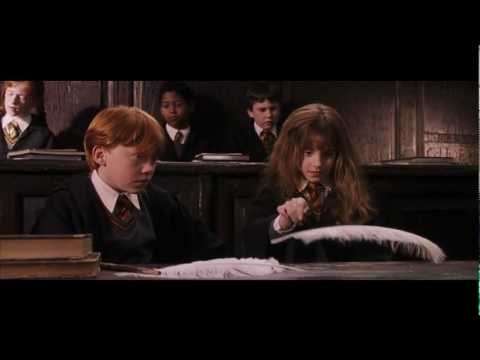
The correct pronunciation is win-GAR-dee-um. The stress is on the second syllable, 'GAR'. This is a famous point in the Harry Potter books where Hermione corrects Ron's pronunciation. Practice saying it slowly: win... GAR... dee... um.
The 'wing' part of the word is taken directly from the English word for a bird's wing. It is meant to suggest the idea of flying or being light enough to lift into the air. This makes the spell's purpose easy for English speakers to understand.
In casual conversation, yes! People often say things like 'Can you Wingardium that box for me?' This is called 'verbing' a noun. However, in formal writing, you should treat it as a noun or the name of a spell.
It is famous because it is part of one of the most iconic scenes in the Harry Potter series. It represents the first time the main characters successfully perform magic. Its unique sound and the humor of the scene made it very memorable for millions of people.
Generally, no. Because it is a trademarked part of the Harry Potter universe, other authors avoid using it. However, you might see it in fan fiction or as a parody in other media like TV shows or movies.
The full spell is 'Wingardium Leviosa'. 'Wingardium' is the first part, and 'Leviosa' is the second part. Together, they form the complete incantation for the levitation charm used in the stories.
In the original stories, the Wingardium Leviosa charm is typically used on inanimate objects like feathers or clubs. There are other spells, like 'Ascendio' or 'Levicorpus', that are specifically used for lifting or moving people.
Technically, it is a noun because it is the name of an incantation. However, in the context of the story, it is spoken as a command. In modern slang, it is sometimes used as a verb.
Since it is a specific name, it doesn't usually have a plural. You wouldn't say 'I said three Wingardiums'. Instead, you would say 'I said the Wingardium spell three times'. In very rare cases, you might hear 'Wingardiums' to refer to different versions of the spell.
셀프 테스트 30 질문
Write a short sentence using Wingardium to describe a magic trick.
Well written! Good try! Check the sample answer below.
Explain why the word Wingardium sounds like a magic spell.
Well written! Good try! Check the sample answer below.
Say the word Wingardium aloud three times, focusing on the stress on the second syllable.
Read this aloud:
당신의 답변:
Speech recognition is not supported in your browser. Try Chrome or Edge.
Listen to the word: [Audio: Wingardium]. Was the stress on the first or second syllable?
Discuss the cultural significance of fictional incantations like Wingardium in modern English.
Well written! Good try! Check the sample answer below.
/ 30 correct
Perfect score!
Summary
Wingardium is the iconic first half of a levitation spell that has moved from the pages of fantasy fiction into the global English lexicon as a symbol of magic and ascension. Example: 'He jokingly muttered Wingardium when his drone finally took off.'
- Wingardium is a fictional noun and incantation from the Harry Potter series, specifically used as the first part of a spell to make objects levitate or float.
- The word is a creative blend of the English 'wing' and the Latin-inspired '-ardium', designed to sound like a powerful, ancient magical command for flight.
- It has become a major cultural reference, often used in memes, comedy, and casual conversation to refer to magic or the act of lifting heavy things.
- Proper pronunciation and word stress are key features of the word's fame, making it a popular example in discussions about phonetics and fictional languages.
Master the Stress
Always remember to put the emphasis on the 'GAR' syllable. It's win-GAR-dee-um, not WIN-gar-dee-um. This is the most common mistake people make!
Capitalize for Clarity
When you write about the spell, use a capital 'W'. This shows the reader that you are referring to the specific fictional incantation.
Use it for Humor
The best time to use Wingardium in real life is when you are joking with friends about lifting something heavy. It adds a touch of fun to the conversation.
Analyze the Roots
Think about the word 'wing' and the Latin 'arduus'. This helps you understand how the word was built and why it means what it does.