gandalf in 30 Seconds
- Gandalf is the iconic wizard from Tolkien's Middle-earth, serving as a wise mentor and a powerful force for good against darkness.
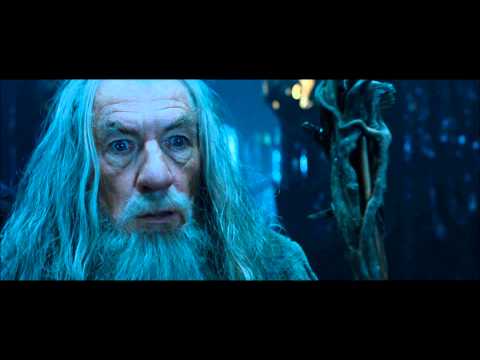
- Known for his long beard and grey cloak, he is a symbol of ancient wisdom and the archetypal guide in hero stories.
- His name is often used metaphorically to describe a wise, experienced person who provides guidance in difficult or complex situations.
- He famously transforms from Gandalf the Grey to Gandalf the White, representing personal growth and the renewal of authority and power.
The term Gandalf refers to one of the most iconic characters in modern literature, specifically the high fantasy works of J.R.R. Tolkien. Within the context of 'The Hobbit' and 'The Lord of the Rings', Gandalf is an Istari, or wizard, sent to Middle-earth to assist the free peoples in their struggle against the dark lord Sauron. However, beyond the literal literary definition, the name has entered the English lexicon as a powerful archetype. When people use the name 'Gandalf' today, they are often invoking the image of a wise, elderly mentor who possesses hidden power and profound foresight. He represents the 'Wise Old Man' trope in Jungian psychology—a figure who provides guidance, magical or intellectual assistance, and moral clarity to a hero who is often younger or less experienced. In modern conversation, calling someone a 'Gandalf' suggests they are a fountain of wisdom, perhaps a bit mysterious, and capable of solving complex problems with a mix of experience and seemingly magical intuition. The character is defined by his humility; despite being a powerful angelic being (a Maia), he wanders the world in grey rags, appearing as a simple old man with a staff and a tall pointed hat. This juxtaposition of immense power and humble appearance is a key part of the 'Gandalf' identity. People use this reference in academic discussions about literature, in casual pop-culture banter, and as a metaphor in professional settings to describe a senior expert who guides a team through 'epic' challenges.
- Archetypal Role
- Gandalf serves as the catalyst for the journey, the 'supernatural aid' in Joseph Campbell's Hero's Journey framework.
The professor acted like a Gandalf to his students, guiding them through the complexities of quantum physics with patience and a touch of mystery.
Furthermore, the name is synonymous with the concept of 'the unexpected guest.' In Tolkien's lore, Gandalf's arrival often signals the beginning of an adventure that the protagonist might not feel ready for. Thus, in a metaphorical sense, a 'Gandalf figure' is someone who pushes others out of their comfort zones for their own growth. The linguistic use of 'Gandalf' also extends to his famous quotes, which have become idiomatic in English. Phrases like 'You shall not pass' or 'A wizard is never late' are used even by people who have never read the books, cementing the character's name as a linguistic pillar of authority and boundary-setting. When you hear the name, think of grey cloaks, long white beards, fireworks, and the heavy weight of ancient wisdom. It is a name that commands respect and implies a depth of knowledge that spans ages. Whether discussed in a film studies class or used as a nickname for a tech lead who solves impossible bugs, 'Gandalf' remains a vibrant, living part of the English language's descriptive toolkit.
- Cultural Impact
- The name has become a shorthand for 'ultimate wisdom' in Western media, often compared to Merlin or Dumbledore.
In the world of investing, Charlie Munger was often seen as a Gandalf figure, providing timeless advice to younger traders.
The name also carries a sense of transformation. In the narrative, Gandalf dies and is reborn as Gandalf the White, representing a transition from a wandering seeker to a focused leader of the light. This 'Grey to White' transition is sometimes used metaphorically to describe a person who has undergone a significant personal or professional evolution, returning with greater clarity and authority. In digital culture, 'Gandalf' is frequently referenced in memes, particularly regarding his refusal to let the Balrog pass, which is used to describe strict gatekeeping or firm boundaries. The name is also associated with the 'magic' of technology; a programmer who understands the 'deep magic' of a legacy codebase is often affectionately called the Gandalf of the office. This usage highlights the character's dual nature: he is both a man of action and a man of profound, almost incomprehensible intellect. To use the name 'Gandalf' is to tap into a rich vein of mythological and literary history that resonates with themes of sacrifice, guidance, and the eternal struggle between light and shadow.
- Symbolism
- He symbolizes the fire of the spirit (Narya, the Ring of Fire) and the light of hope in dark times.
Whenever the project hit a dead end, we looked to Sarah, our Gandalf, to light the way forward.
Using the word Gandalf in a sentence requires an understanding of whether you are referring to the literal character or using the name as a metaphor. When referring to the character, it is a proper noun and should always be capitalized. For example, 'Gandalf led the Fellowship through the Mines of Moria.' In this context, the name functions like any other person's name. However, when used metaphorically, it often takes an article (a/the) or is used in a comparative structure. For instance, 'He is the Gandalf of our group' implies that he holds the position of the wise leader. You can also use the name as an adjective in the form 'Gandalf-like' or 'Gandalfian' to describe someone's appearance or demeanor. 'His Gandalf-like beard flowed down to his chest' or 'She gave a Gandalfian response, full of riddles and wisdom.' These variations allow for a wide range of descriptive power, especially in creative writing or informal storytelling.
- Metaphorical Usage
- Using the name to describe a person's role or personality traits, specifically wisdom and guidance.
Even in the middle of the crisis, he remained calm, a true Gandalf among frightened hobbits.
In dialogue, 'Gandalf' can be used as a nickname. 'Alright, Gandalf, tell us what we should do next.' This often carries a slightly playful or respectful tone, depending on the relationship between the speakers. It is also common to see the name used in 'if/then' scenarios or hypothetical comparisons. 'If Gandalf were here, he would know how to open this door.' This type of sentence highlights the character's reputation for solving the unsolvable. When writing about the character's actions, use strong verbs that reflect his nature: 'Gandalf counseled,' 'Gandalf confronted,' 'Gandalf illuminated.' Because he is a wizard, sentences involving him often involve themes of light, shadow, ancient history, and moral choices. Avoid using the name in a way that diminishes his stature unless you are intentionally being ironic or humorous. For example, 'The cat sat there like a little Gandalf, watching the mice with ancient eyes' uses the name to add a layer of humorous dignity to a common animal.
- Adjectival Forms
- Using 'Gandalfian' to describe something that possesses the qualities of the wizard.
The old library had a Gandalfian atmosphere, filled with dusty scrolls and the scent of ancient magic.
Another way to use the name is in the context of his famous 'You shall not pass!' line. This has become a standard way to describe a situation where someone is being blocked or where a firm boundary is being set. 'The security guard stood there like Gandalf at the bridge of Khazad-dûm, telling the rowdy fans they shall not pass.' This usage is very common in sports commentary and political journalism. Furthermore, the name can be used to discuss the 'Gandalf effect'—the phenomenon where a character or person arrives just in time to save a situation. 'The CEO's arrival had a Gandalf effect on the failing project, instantly restoring morale and direction.' By understanding these various sentence patterns, you can use 'Gandalf' not just as a name, but as a versatile tool for describing wisdom, authority, and timely intervention. Whether you are writing a literary analysis or a casual email, the name carries a specific weight that immediately communicates a complex set of characteristics to the reader.
- Comparative Structures
- Using 'more like Gandalf' or 'as wise as Gandalf' to draw direct parallels.
He’s less like a manager and more like a Gandalf, appearing only when the situation is truly dire.
You will encounter the word Gandalf in a surprising variety of contexts, ranging from high-brow literary criticism to the depths of internet meme culture. Naturally, the most common place is within the fandom of J.R.R. Tolkien's 'The Lord of the Rings' and 'The Hobbit'. In these circles, the name is spoken with reverence and is the subject of endless debate regarding his origins, his powers, and his motivations. You'll hear it in bookstores, at fantasy conventions, and in university classrooms where 'Inklings' literature is studied. However, the word has moved far beyond the pages of books. In the film industry, especially after the massive success of Peter Jackson's film trilogies, 'Gandalf' became a household name. Sir Ian McKellen's portrayal of the character is so definitive that many people visualize him whenever the name is mentioned. You will hear the name in documentaries about filmmaking, discussions on special effects, and interviews with actors who describe the influence of the character on their own work.
- Internet Culture
- The 'You Shall Not Pass' meme is ubiquitous on social media platforms like Reddit, Twitter, and TikTok.
'I tried to log into my account, but the firewall was like Gandalf—it just wouldn't let me through!'
In the tech world, 'Gandalf' is a frequent reference. Because of the character's association with 'deep magic' and ancient knowledge, programmers often use the name to describe complex, old, or 'magical' code. You might hear a developer say, 'We need to talk to the Gandalf of the server room,' referring to a veteran engineer who knows the history of the entire system. Similarly, in the gaming community, 'Gandalf' is often used as a shorthand for any powerful wizard character or a player who plays a support role with great wisdom. In political discourse, the name is sometimes used to describe an elder statesman who provides moral guidance to their party. For example, a journalist might describe a retiring senator as the 'Gandalf of the Senate,' implying they were the wise, stabilizing force in a chaotic environment. Even in music, you'll find references; classic rock bands like Led Zeppelin were heavily influenced by Tolkien, and the name appears in various song lyrics and album art discussions.
- Professional Environments
- Used to describe mentors or consultants who arrive to solve a specific, difficult problem.
The consultant arrived like Gandalf at Helm's Deep, saving the company just as the first light of the new quarter broke.
You will also hear the name in the context of 'The Hero's Journey' workshops or creative writing seminars. It is the gold standard for the 'Mentor' archetype. Educators use Gandalf to explain how a mentor should challenge a student without doing the work for them. In casual social settings, 'Gandalf' is a common comparison for anyone with a long beard or a penchant for speaking in riddles. If you go to a Halloween party, you are almost guaranteed to see at least one Gandalf costume. The name has even entered the realm of science; there are species of insects and even a genus of crabs named after the wizard. This wide distribution of the name across different fields—from biology to software engineering to politics—demonstrates how deeply the character has permeated the global consciousness. Whether it's a quote on a coffee mug or a serious discussion about mythology, 'Gandalf' is a word that resonates with a sense of wonder, wisdom, and the enduring power of story.
- Educational Context
- Used to teach the concept of the 'Mentor' in literature and film studies.
To understand the role of Obi-Wan Kenobi, one must first look at the blueprint provided by Gandalf.
One of the most frequent mistakes people make with the word Gandalf is spelling. Because the 'f' sound at the end can sometimes be associated with 'ph' in English (like in 'Ralph' or 'graph'), people occasionally write 'Gandalph.' This is incorrect; Tolkien specifically used the 'f' ending, which is consistent with the Old Norse origins of the name. Another common error is failing to capitalize the name. As a proper noun referring to a specific individual, it must always start with an uppercase 'G'. Even when used as a metaphor ('He is a Gandalf'), the capitalization is usually maintained to honor the source, though in very informal contexts, some might lowercase it—but this is not recommended for standard writing. A more conceptual mistake is confusing Gandalf with other famous wizards, most notably Albus Dumbledore from the 'Harry Potter' series. While they share many traits (long beards, wisdom, mentorship), they are distinct characters with different origins and powers. Calling Dumbledore 'Gandalf' or vice versa is a common 'faux pas' in fan communities.
- Spelling Error
- Writing 'Gandalph' instead of the correct 'Gandalf'.
Incorrect: I am reading about Gandalph the Grey. Correct: I am reading about Gandalf the Grey.
Another mistake involves the misinterpretation of his power. Some people assume Gandalf is just a human who learned magic, like a typical 'Dungeons & Dragons' wizard. In reality, he is a Maia—a divine, angelic being. Misunderstanding this can lead to confusion about why he doesn't just use his magic to solve every problem instantly. He is a guide, not a weapon. Using the name to describe someone who is simply 'good at magic tricks' is a bit of a 'category error'; Gandalf represents deep, cosmic wisdom, not just sleight of hand. Furthermore, people often misquote his most famous lines. The line 'Run, you fools!' is frequently misquoted as 'Fly, you fools!'—wait, actually, 'Fly, you fools!' is the correct quote, but people often think he said 'Run.' Conversely, 'You shall not pass!' is often misquoted as 'You cannot pass!' in the books (though the movie used 'shall'). Being precise with these quotes is important if you are speaking with Tolkien enthusiasts.
- Character Confusion
- Mistaking Gandalf for Merlin or Dumbledore in literary discussions.
It's a mistake to say Gandalf taught at Hogwarts; that was Dumbledore.
In terms of grammar, a common mistake is using 'Gandalf' as a verb. While English is flexible, saying 'He Gandalfed his way through the problem' is very informal and might not be understood by everyone. It's better to use 'acted like Gandalf' or 'provided Gandalfian guidance.' Also, be careful with the plural. If you are talking about multiple people who act like him, the plural is 'Gandalfs,' not 'Gandalves' (though 'elves' follows that pattern, 'Gandalf' is a name). Finally, some people forget that Gandalf has other names within the story, such as Mithrandir, Olórin, and Tharkûn. While 'Gandalf' is the most common name, using it exclusively in a deep literary analysis without acknowledging his other titles might be seen as a lack of thoroughness. Avoiding these common pitfalls will ensure that your use of the word is accurate, respectful of the source material, and clear to your audience.
- Grammatical Number
- The plural of the name is 'Gandalfs', not 'Gandalves'.
At the costume party, there were three Gandalfs and only one Frodo.
When you want to describe someone with the qualities of Gandalf but want to avoid using a specific fictional name, there are several excellent alternatives. The most direct synonym is 'wizard,' but this can sometimes feel too literal or childish. 'Mage' or 'magus' are more formal and carry a sense of ancient, scholarly power. If you are focusing on his role as a teacher, 'mentor' is the most appropriate professional term. A 'mentor' is someone who provides guidance and support to a less experienced person, much like Gandalf does for Frodo. If the person's wisdom is the key trait, 'sage' is a perfect alternative. A 'sage' is a profoundly wise person, often one who has gained their knowledge through long experience. For someone who provides spiritual or moral guidance, 'guru' or 'guide' might be used, though 'guru' often has a more Eastern philosophical connotation.
- Wizard vs. Sage
- A wizard implies the use of magic; a sage implies the possession of deep wisdom.
While he wasn't a Gandalf with a staff, he was certainly a sage in the boardroom.
In a more mystical or historical context, you might use 'oracle'—someone who provides wise and often cryptic counsel or predictions. If the person is a stabilizing, protective force, 'sentinel' or 'guardian' could work. In terms of literary comparisons, 'Merlin' is the closest historical and mythological equivalent. Merlin, the advisor to King Arthur, is the primary inspiration for Gandalf. Using 'Merlin' evokes a more Arthurian, British-mythology feel. 'Dumbledore' is the modern alternative, often used when speaking to younger audiences or those more familiar with 'Harry Potter'. However, Dumbledore is often seen as more of an institutional leader (a headmaster), whereas Gandalf is a wanderer. 'Obi-Wan Kenobi' is the sci-fi equivalent, representing the 'old master' who sacrifices himself for the hero's growth. Each of these alternatives carries a slightly different 'flavor,' so choosing the right one depends on the specific aspect of Gandalf you wish to emphasize.
- Mentor vs. Guru
- A mentor is a practical guide; a guru is often a spiritual or intellectual leader.
She was the Gandalf of the tech department, always ready with a cryptic but helpful tip.
For more informal or slang-heavy contexts, you might use 'OG' (Original Gangster) to describe a veteran who has seen it all, though this is quite a leap from the fantasy origins. 'Elder' is a respectful term that emphasizes age and status within a community. In a religious or philosophical context, 'patriarch' might be used for a male figure of great authority and age. If you are looking for an adjective, 'venerable' describes someone who is accorded a great deal of respect, especially because of age, wisdom, or character. 'August' (not the month, but the adjective) also describes someone who is respected and impressive. By exploring these alternatives, you can tailor your language to your specific audience and context, whether you want to remain in the realm of fantasy or bring the concept of the 'wise guide' into a more grounded, everyday setting. Each word offers a different nuance of the 'Gandalf' archetype.
- Venerable vs. August
- Venerable emphasizes respect due to age; August emphasizes dignity and grandeur.
The Gandalfian figure stood at the podium, his presence commanding silence from the crowd.
How Formal Is It?
Fun Fact
In Tolkien's early drafts of 'The Hobbit', the name 'Gandalf' was originally given to the leader of the dwarves (who later became Thorin Oakenshield), and the wizard was named 'Bladorthin'.
Pronunciation Guide
- Pronouncing it as 'Gandalph' with a soft 'ph' sound (though it sounds similar, the 'f' is distinct).
- Adding an extra syllable like 'Gandal-fuh'.
- Misplacing the stress on the second syllable: gan-DALF.
- Pronouncing the 'G' as a 'J' (Jandalf).
- Using a long 'a' sound like in 'game' (Gain-dalf).
Difficulty Rating
The name itself is easy to read, but the context requires some cultural knowledge.
Spelling 'Gandalf' correctly is important, as is knowing when to capitalize it.
Pronunciation is straightforward for English speakers.
Easily recognizable in movies and audiobooks.
What to Learn Next
Prerequisites
Learn Next
Advanced
Grammar to Know
Proper Nouns as Common Nouns
He is a real Gandalf. (Using a specific name to represent a type of person.)
Adjective Formation from Names
His Gandalfian beard was impressive. (Adding -ian to a name to create an adjective.)
Appositives with Titles
Gandalf, the Grey Pilgrim, arrived at dawn. (Using a title to describe the noun.)
Capitalization of Proper Nouns
I saw Gandalf. (Always capitalize the names of specific characters.)
Comparative Adjectives with Names
She is wiser than Gandalf. (Using a name as a benchmark for comparison.)
Examples by Level
Gandalf is a good wizard.
Gandalf est un bon magicien.
Proper noun used as a subject.
He has a long beard.
Il a une longue barbe.
Simple present tense.
Gandalf helps the Hobbits.
Gandalf aide les Hobbits.
Subject-verb-object structure.
Is Gandalf very old?
Est-ce que Gandalf est très vieux ?
Interrogative sentence.
Gandalf wears a grey hat.
Gandalf porte un chapeau gris.
Present simple for description.
He can do magic.
Il peut faire de la magie.
Modal verb 'can'.
Gandalf is very smart.
Gandalf est très intelligent.
Adjective following the verb 'to be'.
I like Gandalf.
J'aime Gandalf.
First-person singular.
Gandalf arrived at the party with fireworks.
Gandalf est arrivé à la fête avec des feux d'artifice.
Past simple tense.
He told Frodo to keep the ring safe.
Il a dit à Frodo de garder l'anneau en sécurité.
Infinitive phrase 'to keep'.
Gandalf is more powerful than he looks.
Gandalf est plus puissant qu'il n'en a l'air.
Comparative structure.
They followed Gandalf into the dark cave.
Ils ont suivi Gandalf dans la grotte sombre.
Prepositional phrase 'into the dark cave'.
Gandalf gave the hero a special sword.
Gandalf a donné au héros une épée spéciale.
Indirect object 'the hero'.
He is a very famous character in books.
C'est un personnage très célèbre dans les livres.
Adverb 'very' modifying an adjective.
Gandalf often travels on a white horse.
Gandalf voyage souvent sur un cheval blanc.
Adverb of frequency 'often'.
Do you know who Gandalf is?
Sais-tu qui est Gandalf ?
Indirect question.
Gandalf acted as a mentor to the entire Fellowship.
Gandalf a agi comme un mentor pour toute la Communauté.
Phrasal verb 'acted as'.
The old man was actually Gandalf in disguise.
Le vieil homme était en fait Gandalf déguisé.
Prepositional phrase 'in disguise'.
Gandalf’s wisdom helped them avoid many dangers.
La sagesse de Gandalf les a aidés à éviter de nombreux dangers.
Possessive noun 'Gandalf's'.
He sacrificed himself to save his friends from the Balrog.
Il s'est sacrifié pour sauver ses amis du Balrog.
Reflexive pronoun 'himself'.
Gandalf returned as 'The White' to lead the final battle.
Gandalf est revenu en tant que 'Le Blanc' pour mener la bataille finale.
Used as a title.
Many people consider Gandalf the greatest wizard of all time.
Beaucoup de gens considèrent Gandalf comme le plus grand magicien de tous les temps.
Superlative 'the greatest'.
If Gandalf hadn't arrived, the battle would have been lost.
Si Gandalf n'était pas arrivé, la bataille aurait été perdue.
Third conditional.
He is known for his mysterious and cryptic way of speaking.
Il est connu pour sa façon mystérieuse et cryptique de parler.
Passive voice 'is known for'.
Gandalf's presence was a source of immense hope for the people of Gondor.
La présence de Gandalf était une source d'espoir immense pour le peuple du Gondor.
Abstract noun 'presence' as subject.
He was not merely a magician but a divine messenger sent to guide Middle-earth.
Il n'était pas seulement un magicien mais un messager divin envoyé pour guider la Terre du Milieu.
Correlative conjunction 'not merely... but'.
The character of Gandalf embodies the archetype of the wise old man.
Le personnage de Gandalf incarne l'archétype du vieil homme sage.
Present simple for literary fact.
Gandalf skillfully manipulated events to ensure the Ring's destruction.
Gandalf a habilement manipulé les événements pour assurer la destruction de l'Anneau.
Adverb 'skillfully' modifying a verb.
Despite his power, Gandalf refused to take the One Ring for himself.
Malgré son pouvoir, Gandalf a refusé de prendre l'Anneau Unique pour lui-même.
Concessive preposition 'Despite'.
His transformation into Gandalf the White symbolized his increased authority.
Sa transformation en Gandalf le Blanc symbolisait son autorité accrue.
Gerund phrase as subject.
Gandalf's counsel was sought by kings and commoners alike.
Le conseil de Gandalf était recherché par les rois comme par les roturiers.
Passive voice with 'alike'.
The name Gandalf has become synonymous with wisdom in popular culture.
Le nom Gandalf est devenu synonyme de sagesse dans la culture populaire.
Present perfect tense.
Gandalf's role as a catalyst for change is evident from the very first chapter of the novel.
Le rôle de Gandalf en tant que catalyseur de changement est évident dès le tout premier chapitre du roman.
Complex noun phrase as subject.
Tolkien drew inspiration from the Norse god Odin when creating the persona of Gandalf.
Tolkien s'est inspiré du dieu nordique Odin lors de la création du personnage de Gandalf.
Participial phrase 'when creating'.
The Gandalfian philosophy emphasizes the importance of small, everyday deeds of kindness.
La philosophie gandalfienne souligne l'importance des petits actes de bonté quotidiens.
Proper adjective 'Gandalfian'.
Gandalf's refusal of the Ring highlights the corruptive nature of absolute power.
Le refus de l'Anneau par Gandalf souligne la nature corruptrice du pouvoir absolu.
Subject-verb agreement with abstract nouns.
His resurrection serves as a profound narrative pivot, altering the stakes of the conflict.
Sa résurrection sert de pivot narratif profond, modifiant les enjeux du conflit.
Present participle clause 'altering the stakes'.
Gandalf operates within a framework of divine providence, though he rarely admits it.
Gandalf opère dans un cadre de providence divine, bien qu'il l'admette rarement.
Concessive clause with 'though'.
The linguistic roots of 'Gandalf' trace back to the Völuspá, an ancient Icelandic poem.
Les racines linguistiques de 'Gandalf' remontent à la Völuspá, un ancien poème islandais.
Phrasal verb 'trace back to'.
Gandalf's character arc is a masterclass in the 'Mentor' archetype within epic fantasy.
L'arc narratif de Gandalf est une leçon magistrale sur l'archétype du 'Mentor' dans la fantasy épique.
Metaphorical use of 'masterclass'.
Gandalf's ontological status as a Maia provides a metaphysical layer to his interventions in Middle-earth.
Le statut ontologique de Gandalf en tant que Maia apporte une couche métaphysique à ses interventions en Terre du Milieu.
Use of specialized academic vocabulary.
The tension between Gandalf's immense latent power and his self-imposed restraint is a central theme.
La tension entre le pouvoir latent immense de Gandalf et sa retenue auto-imposée est un thème central.
Compound adjective 'self-imposed'.
By eschewing direct dominion, Gandalf fosters the moral agency of the individuals he guides.
En évitant une domination directe, Gandalf favorise l'autonomie morale des individus qu'il guide.
Gerund phrase 'By eschewing'.
Gandalf's rhetoric often employs a blend of archaic syntax and profound existential insight.
La rhétorique de Gandalf emploie souvent un mélange de syntaxe archaïque et d'un aperçu existentiel profond.
Sophisticated subject-verb-object structure.
The Gandalfian 'deus ex machina' at Helm's Deep is balanced by his earlier strategic foresight.
Le 'deus ex machina' gandalfien au Gouffre de Helm est équilibré par sa clairvoyance stratégique antérieure.
Latin phrase 'deus ex machina' as a noun.
Tolkien's Gandalf transcends the typical wizard trope, becoming a conduit for the numinous.
Le Gandalf de Tolkien transcende le trope typique du magicien, devenant un conduit pour le numineux.
Present participle phrase 'becoming a conduit'.
His stewardship of Middle-earth is characterized by a profound empathy for the 'lowly' hobbits.
Sa gérance de la Terre du Milieu est caractérisée par une empathie profonde pour les 'humbles' hobbits.
Passive construction with 'is characterized by'.
Gandalf's narrative function is to illuminate the path, not to walk it for the protagonists.
La fonction narrative de Gandalf est d'éclairer le chemin, pas de le parcourir pour les protagonistes.
Parallel structure 'to illuminate... not to walk'.
Synonyms
Antonyms
Common Collocations
Common Phrases
— A phrase used to indicate that someone is strictly forbidden from entering or proceeding. It implies a firm, immovable boundary.
The firewall stood firm, telling the hackers, 'You shall not pass!'
— An urgent command to flee or escape a dangerous situation immediately. It is often used jokingly among friends.
The meeting is going to be three hours long—fly, you fools, while you still can!
— A humorous way to justify being tardy, implying that one arrived exactly when they intended to. It suggests a sense of control over time.
I'm not late for the party; a wizard is never late, he arrives precisely when he means to.
— A philosophical reminder to focus on the present and make the best of one's circumstances. It is used to provide comfort in difficult times.
When the project failed, she reminded the team that all we have to decide is what to do with the time given us.
— An instruction to protect a valuable or dangerous piece of information or an object with extreme care. It emphasizes security and caution.
I'm giving you the password to the vault; keep it secret, keep it safe.
— A plea for mercy and humility, suggesting that humans (or beings) do not have the foresight to know who deserves to die. It's a call for ethical restraint.
In the courtroom, the lawyer quoted Gandalf, saying 'Do not be too eager to deal out death in judgment.'
— A phrase used to announce a triumphant return or a significant change in fortune. It signals a shift from losing to winning.
The former CEO walked into the boardroom and said, 'I come back to you now at the turn of the tide.'
— A poetic name for a wanderer who possesses great wisdom but lives a humble, traveling life. It describes a person who is constantly moving and learning.
He spent his retirement as a grey pilgrim, traveling from village to village and sharing his stories.
— The Elvish name for Gandalf, meaning 'Grey Pilgrim.' It is used to show a deeper knowledge of the lore or to sound more formal/poetic.
The elves of Rivendell always referred to him as Mithrandir.
— A playful or frustrated insult directed at someone who has made a clumsy or thoughtless mistake. It's often used affectionately among friends.
You dropped your keys in the sewer? Fool of a Took!
Often Confused With
Both are wise, bearded wizards who mentor young heroes, but they belong to different fictional universes (Harry Potter vs. Lord of the Rings).
Merlin is a figure from Arthurian legend. While Gandalf was inspired by Merlin, they are distinct characters with different stories.
Saruman is another wizard in Tolkien's world, but he becomes a villain, whereas Gandalf remains a hero.
Idioms & Expressions
— To disappear for a long time and then reappear suddenly at the most critical moment to save the day.
Our lead developer pulled a Gandalf and showed up with the fix five minutes before the deadline.
Informal— An exclamation of surprise or shock, similar to 'Good heavens!' or 'My goodness!'
Gandalf's beard! I didn't expect to see you here so early.
Informal/Playful— To give advice or information that is difficult to understand or has multiple meanings.
Stop speaking in riddles like Gandalf and just tell me if I got the job!
Neutral— To be the person everyone looks to for wisdom, guidance, and the final decision in a group setting.
In our hiking club, Mark is the Gandalf of the group; he knows every trail and every danger.
Neutral— An arrival that is perfectly timed, often dramatic, and changes the course of an event.
The rain stopped just as the bride arrived—a truly Gandalfian arrival.
Literary— To possess extraordinary insight and the ability to see the 'big picture' in complex situations.
She handled the merger with the wisdom of Gandalf, keeping both sides happy.
Neutral— To undergo a significant transformation that results in greater power, clarity, or a higher status.
After his sabbatical, he went from Grey to White and took over the entire department.
Metaphorical— To confront a terrifying and seemingly insurmountable personal challenge or fear.
Public speaking was his Balrog, but he finally faced it at the conference.
Metaphorical— To live a life of wandering and seeking knowledge without being tied down by possessions or a single location.
He spent his twenties as a grey pilgrim, backpacking across Asia.
Poetic— Used to describe someone who arrives at the last possible second to provide decisive help in a losing battle.
The extra funding arrived like Gandalf at Helm's Deep, saving the museum from closing.
InformalEasily Confused
Spelling error based on phonetics.
Gandalf is the correct spelling used by the author; Gandalph is a common misspelling.
You should write Gandalf, not Gandalph.
Both refer to magic users.
Mage is a general category; Gandalf is a specific individual with a unique history and divine origin.
Gandalf is a powerful mage, but not every mage is a Gandalf.
Both imply wisdom.
A sage is wise but doesn't necessarily have magic; Gandalf is both wise and magical.
The village had a sage, but they needed a Gandalf to fight the dragon.
Both are magic users.
Warlock often implies dark or malevolent magic; Gandalf is a force for good and light.
Gandalf is a wizard, not a dark warlock.
Both are magic users.
In many fantasy settings, sorcerers have innate magic, while wizards study it. Gandalf's magic is part of his divine nature.
Gandalf is often called a wizard, though his powers are more like those of a sorcerer.
Sentence Patterns
[Name] is a [Adjective] [Noun].
Gandalf is a wise wizard.
[Name] helps [People] with [Something].
Gandalf helps the hobbits with their quest.
[Name] is known for [Gerund/Noun].
Gandalf is known for giving wise advice.
Acting as a [Noun], [Name] [Verb].
Acting as a mentor, Gandalf guided the Fellowship.
The [Adjective] nature of [Name] is [Adjective].
The Gandalfian nature of his leadership is inspiring.
By [Gerund], [Name] [Verb] the [Noun].
By refusing the ring, Gandalf demonstrated the danger of power.
If [Name] [Past Perfect], [Would Have + Past Participle].
If Gandalf had not helped, they would have failed.
[Name] is less of a [Noun] and more of a [Noun].
Gandalf is less of a warrior and more of a guide.
Word Family
Nouns
Verbs
Adjectives
Related
How to Use It
Common in literature, film, and pop culture discussions.
-
Spelling it 'Gandalph'.
→
Gandalf
The name is derived from Old Norse where 'f' is the standard spelling. Using 'ph' is a common phonetic error in English.
-
Confusing him with Dumbledore.
→
Gandalf (for Lord of the Rings) / Dumbledore (for Harry Potter)
While they look similar, they are from completely different books and have different personalities and powers.
-
Not capitalizing the 'G'.
→
Gandalf
As a proper noun and a name of a specific character, it must always be capitalized in all contexts.
-
Saying 'Gandalf the Gray' (US) vs 'Gandalf the Grey' (UK).
→
Gandalf the Grey
While 'gray' is the US spelling, Tolkien was British and used 'Grey'. In the context of his name, 'Grey' is the official spelling.
-
Thinking he is just a human wizard.
→
Gandalf is an Istari/Maia.
In the lore, he is a divine being. Treating him as a simple human who learned magic misses the depth of his character's origin.
Tips
Capitalize the Name
Always capitalize 'Gandalf' because it is a proper noun. Even if you are using it metaphorically to describe a friend, the 'G' should be uppercase to show it refers to the famous character.
Use 'Gandalfian'
To describe something that feels like it belongs to Gandalf, use the adjective 'Gandalfian'. For example, 'The old man had a Gandalfian sense of mystery.' This sounds more professional than 'Gandalf-like'.
Know Your Audience
Before using Gandalf as a metaphor, make sure your audience knows who he is. While very famous, some people might not be familiar with fantasy literature, so a quick explanation like 'the wise wizard' can help.
Quote Correctly
If you quote him, try to be accurate. 'Fly, you fools!' is often more recognized by fans than 'Run, you fools!'. Using the correct quote shows you have a good grasp of the source material.
Avoid Verbing
Try not to use Gandalf as a verb (e.g., 'He Gandalfed the situation'). It is better to say 'He acted like Gandalf' or 'He provided a Gandalf-like solution' for better clarity and grammar.
Understand the Archetype
Think of Gandalf as the 'Mentor'. This helps you use the name correctly in literary or professional discussions about roles and responsibilities within a team or story.
The 'f' is Final
Remember that Gandalf ends with an 'f', not 'ph'. This is a common mistake because many English names use 'ph' for that sound. Think of 'Elf' to remember the 'f' in Gandalf.
Timing is Everything
Use the Gandalf metaphor specifically for someone who arrives at the right time with the right answer. It's not just about being smart; it's about being helpful when it matters most.
Playful Insults
Use 'Fool of a Took!' playfully when a friend makes a silly mistake. It’s a lighthearted way to use your vocabulary enrichment in a social setting.
Explore the Roots
If you want to sound very knowledgeable, mention that the name comes from Old Norse. This adds a layer of historical and linguistic depth to your conversation.
Memorize It
Mnemonic
Think of a 'Grand Elf' who carries a 'Wand'. G-and-alf. He is 'Grand' (great) and acts like an 'Elf' (mystical).
Visual Association
Imagine a tall, grey, pointed hat sitting on top of a giant letter 'G'. The 'G' has a long white beard flowing from it.
Word Web
Challenge
Try to describe a teacher or boss you respect using only 'Gandalfian' terms for one minute. Focus on their wisdom and guidance.
Word Origin
J.R.R. Tolkien took the name 'Gandalf' from the 'Dvergatal', a list of dwarf names in the Old Norse poem 'Völuspá'. In the poem, Gandalf is actually the name of a dwarf. Tolkien, a philologist, adapted it for his wizard character.
Original meaning: The name is composed of the Old Norse words 'gandr' (wand, staff, or magic) and 'alfr' (elf). Thus, it literally means 'Wand-elf' or 'Staff-elf'.
Old Norse / GermanicCultural Context
The character is widely loved, but some may find the 'Wise Old Man' trope overused. In academic settings, ensure you distinguish between the character and the Norse mythological roots.
Gandalf is often used as a benchmark for wisdom. If someone is called 'a Gandalf,' it is a high compliment regarding their intellect and character.
Practice in Real Life
Real-World Contexts
Literary Discussion
- The role of the mentor
- Archetypal figures
- Tolkien's influence
- Character arc
Workplace Mentorship
- Providing guidance
- Expert knowledge
- A steady hand
- Strategic foresight
Pop Culture/Memes
- You shall not pass
- Fly you fools
- Epic arrival
- Wizard vibes
Fantasy Gaming
- Casting spells
- Magic staff
- High-level mage
- Quest giver
Philosophy/Ethics
- The burden of power
- Moral authority
- Sacrifice for the greater good
- Wisdom through experience
Conversation Starters
"Who do you think is a better mentor, Gandalf or Dumbledore?"
"If you could have Gandalf's advice on one thing in your life, what would it be?"
"Do you remember the first time you saw Gandalf in the movies or read about him?"
"Why do you think the 'wise old wizard' character is so popular in stories?"
"If Gandalf were a modern professional, what job do you think he would have?"
Journal Prompts
Describe a person in your life who has been a 'Gandalf' to you. What wisdom did they share?
Write a short story about Gandalf arriving in a modern-day city. How would people react?
Reflect on Gandalf's quote: 'All we have to decide is what to do with the time that is given us.' How does this apply to your life?
Compare and contrast Gandalf the Grey and Gandalf the White. Which version do you prefer and why?
Imagine you are a mentor like Gandalf. What three pieces of advice would you give to a young hero?
Frequently Asked Questions
10 questionsNo, Gandalf is not a human. In Tolkien's world, he is a Maia, a divine spirit sent from the West to help Middle-earth. He only takes the form of an old human man to better relate to the people he guides. This is why he lives for thousands of years without aging significantly.
Gandalf the Grey was his initial form, representing his role as a wanderer and counselor. After he died fighting the Balrog, he was sent back as Gandalf the White. This new form was more powerful and authoritative, as he replaced Saruman as the head of the Order of Wizards.
No, Gandalf does not have a last name in the traditional sense. He has many names in different languages, such as Mithrandir (Elvish), Olórin (his original name in the West), and Tharkûn (Dwarvish). 'Gandalf' is the name given to him by the men of the North.
This is a famous question! The eagles are independent, proud beings, not Gandalf's servants. Also, the quest required secrecy; flying on giant eagles would have immediately alerted Sauron's flying Nazgûl and his armies, making the mission impossible.
Gandalf's magic is often subtle. He uses light, fire, and influence. He carries Narya, the Ring of Fire, which helps him kindle hope in the hearts of others. He can also create light with his staff and command the elements to some degree, but he prefers to use his wisdom.
While not based on a specific real person, Tolkien was inspired by the Norse god Odin in his 'wanderer' guise—an old man with one eye (Gandalf has two), a tall hat, and a staff. He was also influenced by the Swiss postcard 'Der Berggeist' (The Mountain Spirit).
In his human form, he walked Middle-earth for about 2,000 years. However, as a divine spirit (Olórin), he existed before the world was created, making him tens of thousands of years old in essence.
He is called 'the Grey Pilgrim' because he has no permanent home and spent centuries wandering across Middle-earth in grey robes, visiting different peoples and learning their languages and customs to better help them.
After the One Ring was destroyed and Sauron was defeated, Gandalf's mission was complete. He traveled to the Grey Havens and sailed across the sea to the Undying Lands (Valinor) with Frodo, Bilbo, and the Elves.
Yes, many people name their pets (especially cats or dogs with grey fur or long hair) Gandalf. It is a very popular name for pets that seem wise or mysterious.
Test Yourself 200 questions
Describe Gandalf's appearance in three sentences.
Well written! Good try! Check the sample answer below.
Why is Gandalf considered a 'mentor' in the story?
Well written! Good try! Check the sample answer below.
Explain the significance of Gandalf's transformation from Grey to White.
Well written! Good try! Check the sample answer below.
How can the name 'Gandalf' be used as a metaphor in a professional setting?
Well written! Good try! Check the sample answer below.
Discuss the linguistic origins of the name 'Gandalf'.
Well written! Good try! Check the sample answer below.
Write a short dialogue where one person uses a Gandalf quote.
Well written! Good try! Check the sample answer below.
What does Gandalf symbolize in 'The Lord of the Rings'?
Well written! Good try! Check the sample answer below.
Compare Gandalf to another famous fictional mentor.
Well written! Good try! Check the sample answer below.
Imagine Gandalf in a modern office. What would his role be?
Well written! Good try! Check the sample answer below.
Write a paragraph about Gandalf's relationship with the Hobbits.
Well written! Good try! Check the sample answer below.
What is the 'Wise Old Man' archetype, and how does Gandalf fit it?
Well written! Good try! Check the sample answer below.
Describe the scene where Gandalf says 'You shall not pass'.
Well written! Good try! Check the sample answer below.
How does Gandalf's use of magic differ from other fantasy wizards?
Well written! Good try! Check the sample answer below.
Write a short poem about Gandalf.
Well written! Good try! Check the sample answer below.
What can we learn from Gandalf's leadership style?
Well written! Good try! Check the sample answer below.
Explain the term 'Gandalfian' with an example.
Well written! Good try! Check the sample answer below.
Why did Tolkien choose the name 'Mithrandir' for Gandalf?
Well written! Good try! Check the sample answer below.
How does Gandalf's presence change the tone of a scene?
Well written! Good try! Check the sample answer below.
What is the significance of Gandalf's staff?
Well written! Good try! Check the sample answer below.
Write a brief summary of Gandalf's journey in 'The Hobbit'.
Well written! Good try! Check the sample answer below.
Pronounce the name 'Gandalf' clearly, emphasizing the first syllable.
Read this aloud:
You said:
Speech recognition is not supported in your browser. Try Chrome or Edge.
Quote Gandalf's famous line 'You shall not pass!' with an authoritative tone.
Read this aloud:
You said:
Speech recognition is not supported in your browser. Try Chrome or Edge.
Explain in your own words who Gandalf is to someone who has never heard of him.
Read this aloud:
You said:
Speech recognition is not supported in your browser. Try Chrome or Edge.
Describe a situation where you might use the phrase 'Fly, you fools!' jokingly.
Read this aloud:
You said:
Speech recognition is not supported in your browser. Try Chrome or Edge.
How would you describe a 'Gandalf figure' in a business meeting?
Read this aloud:
You said:
Speech recognition is not supported in your browser. Try Chrome or Edge.
Discuss why Gandalf's wisdom is more important than his magic.
Read this aloud:
You said:
Speech recognition is not supported in your browser. Try Chrome or Edge.
Summarize the difference between Gandalf the Grey and Gandalf the White in one minute.
Read this aloud:
You said:
Speech recognition is not supported in your browser. Try Chrome or Edge.
Roleplay: You are Gandalf giving advice to a student who is afraid of an exam.
Read this aloud:
You said:
Speech recognition is not supported in your browser. Try Chrome or Edge.
Explain the significance of Gandalf's staff as a symbol.
Read this aloud:
You said:
Speech recognition is not supported in your browser. Try Chrome or Edge.
What does the quote 'All we have to decide is what to do with the time that is given us' mean to you?
Read this aloud:
You said:
Speech recognition is not supported in your browser. Try Chrome or Edge.
How does Gandalf's character influence modern fantasy movies?
Read this aloud:
You said:
Speech recognition is not supported in your browser. Try Chrome or Edge.
Describe Gandalf's relationship with Bilbo Baggins.
Read this aloud:
You said:
Speech recognition is not supported in your browser. Try Chrome or Edge.
Why is Gandalf's refusal of the One Ring so important?
Read this aloud:
You said:
Speech recognition is not supported in your browser. Try Chrome or Edge.
What are some common mistakes people make when talking about Gandalf?
Read this aloud:
You said:
Speech recognition is not supported in your browser. Try Chrome or Edge.
If you could ask Gandalf one question, what would it be and why?
Read this aloud:
You said:
Speech recognition is not supported in your browser. Try Chrome or Edge.
How does Gandalf's role change from 'The Hobbit' to 'The Lord of the Rings'?
Read this aloud:
You said:
Speech recognition is not supported in your browser. Try Chrome or Edge.
Describe the 'Gandalfian' style of giving advice.
Read this aloud:
You said:
Speech recognition is not supported in your browser. Try Chrome or Edge.
Why do you think Gandalf is such a beloved character after all these years?
Read this aloud:
You said:
Speech recognition is not supported in your browser. Try Chrome or Edge.
Explain the meaning of the name 'Mithrandir'.
Read this aloud:
You said:
Speech recognition is not supported in your browser. Try Chrome or Edge.
What is Gandalf's connection to fire?
Read this aloud:
You said:
Speech recognition is not supported in your browser. Try Chrome or Edge.
Listen to a description of Gandalf's staff. What two materials are mentioned?
In a movie clip, Gandalf says 'Fly, you fools!'. What is the tone of his voice?
Listen to an interview with Ian McKellen. How does he describe the challenge of playing Gandalf?
Listen to a discussion about Tolkien's influences. Which Norse god is mentioned as an inspiration for Gandalf?
In an audiobook, Gandalf's voice is described as 'deep and resonant'. What does 'resonant' mean?
Listen to a fan theory about Gandalf. What is the main point of the theory?
Listen to the pronunciation of 'Mithrandir'. Which syllable is stressed?
Listen to a description of Gandalf's fireworks. What shapes do they take?
In a podcast, the speaker calls someone a 'Gandalf'. What context are they using it in?
Listen to Gandalf's speech about death. What does he compare it to?
Listen to the sound of Gandalf's staff hitting the stone. What does it signify in the scene?
Listen to a summary of 'The Hobbit'. How many times is Gandalf mentioned?
Listen to a comparison between Gandalf and Saruman. What is the main difference in their voices?
Listen to a child describing Gandalf. What is the first thing they mention?
Listen to a lecture on archetypes. How is Gandalf used as an example?
/ 200 correct
Perfect score!
Summary
Gandalf is more than just a fictional wizard; he is a universal symbol of wisdom, mentorship, and moral guidance. For example, calling a senior colleague 'the Gandalf of the office' recognizes their deep expertise and helpful nature.
- Gandalf is the iconic wizard from Tolkien's Middle-earth, serving as a wise mentor and a powerful force for good against darkness.
- Known for his long beard and grey cloak, he is a symbol of ancient wisdom and the archetypal guide in hero stories.
- His name is often used metaphorically to describe a wise, experienced person who provides guidance in difficult or complex situations.
- He famously transforms from Gandalf the Grey to Gandalf the White, representing personal growth and the renewal of authority and power.
Capitalize the Name
Always capitalize 'Gandalf' because it is a proper noun. Even if you are using it metaphorically to describe a friend, the 'G' should be uppercase to show it refers to the famous character.
Use 'Gandalfian'
To describe something that feels like it belongs to Gandalf, use the adjective 'Gandalfian'. For example, 'The old man had a Gandalfian sense of mystery.' This sounds more professional than 'Gandalf-like'.
Know Your Audience
Before using Gandalf as a metaphor, make sure your audience knows who he is. While very famous, some people might not be familiar with fantasy literature, so a quick explanation like 'the wise wizard' can help.
Quote Correctly
If you quote him, try to be accurate. 'Fly, you fools!' is often more recognized by fans than 'Run, you fools!'. Using the correct quote shows you have a good grasp of the source material.