infinity in 30 Seconds
- Infinity is the concept of endlessness or boundlessness, used in math to represent quantities larger than any number.
- It is a noun, symbolized by ∞, and describes things like the universe or never-ending sequences.
- In everyday language, it's often used hyperbolically to mean 'a very large amount' or 'forever'.
- It is distinct from 'infinite' (adjective) and 'eternity' (specifically referring to time).
The concept of infinity is one of the most profound and challenging ideas in human thought, bridging the gap between rigorous mathematics and abstract philosophy. At its core, infinity refers to the quality of being limitless or endless in space, extent, or size. It is not a number in the traditional sense—you cannot add one to it to get a larger number in standard arithmetic—but rather a representation of a quantity that is larger than any finite value. In the physical world, we often use the term to describe things that are so vast they seem to have no boundaries, such as the expanse of the universe or the depths of the ocean. In a mathematical context, infinity is represented by the lemniscate symbol (∞), and it describes sequences that never terminate or sets that contain an uncountable number of elements. When people use the word 'infinity,' they are often trying to convey a sense of awe, impossibility, or the sheer scale of something that defies human measurement.
- Mathematical Context
- In calculus and set theory, infinity describes limits and the size of sets like the set of all natural numbers. It is a fundamental building block for understanding how functions behave as they grow without bound.
Historically, the idea of the infinite has been both a source of inspiration and a source of paradox. Ancient Greek philosophers like Zeno of Elea proposed paradoxes to show that if space is infinitely divisible, motion might be impossible. For example, to walk across a room, you must first walk half the distance, then half of the remaining distance, and so on. Since you can keep dividing the distance an infinite number of times, Zeno argued you could never truly reach the other side. Modern mathematics has resolved these paradoxes using the concept of limits, but the philosophical intrigue remains. In everyday conversation, 'infinity' is frequently used hyperbolically. When a child says they love their parents 'to infinity and beyond,' they are using the concept to express a love that is immeasurable and transcends the physical limits of the world. This usage highlights how the word has moved from the dusty pages of math textbooks into the heart of popular culture and emotional expression.
The astronomer gazed through the telescope, overwhelmed by the sheer infinity of the cosmos.
Beyond the stars, we see infinity in the microscopic world and the digital realm. Fractals, which are complex geometric shapes that look the same at every level of magnification, are a visual representation of infinity. You can zoom into a fractal forever, and you will always find more detail. This 'self-similarity' is a hallmark of infinite structures. In computer science, an 'infinite loop' is a sequence of instructions that repeats endlessly because the terminating condition is never met. While usually a bug, it demonstrates the practical (and sometimes frustrating) reality of infinite processes in technology. Whether we are discussing the theological concept of an infinite God, the scientific theory of an infinite multiverse, or the simple mathematical truth that there are infinite numbers between zero and one, the word 'infinity' serves as a bridge to the unimaginable.
- Philosophical Context
- Philosophers often distinguish between 'potential infinity' (a process that could go on forever) and 'actual infinity' (a completed set that is already infinite). This distinction is crucial in debates about the nature of time and the beginning of the universe.
In literature and art, infinity represents the sublime—that which is so great it overwhelms the human mind. Romantic poets often wrote about the infinity of nature to evoke a sense of smallness in the observer. This contrast between the finite human life and the infinite world is a recurring theme in existentialist thought. When you use this word, you are tapping into a legacy of human inquiry that spans thousands of years, from the Vedic texts of ancient India to the most advanced quantum physics papers of today. It is a word that demands respect and invites curiosity, pushing us to look past what we can see and touch toward the boundless possibilities of the unknown.
In his poetry, Blake spoke of seeing a world in a grain of sand and heaven in a wild flower, holding infinity in the palm of your hand.
- Symbolic Usage
- The infinity symbol is popular in jewelry and tattoos, often representing eternal love, friendship, or the interconnectedness of all things in the universe.
The concept of infinity allows mathematicians to solve equations that would otherwise be impossible to calculate.
Many religions view the divine as possessing an infinity of wisdom and compassion.
The mirror reflected the mirror, creating an infinity of images that stretched down the hallway.
Using the word infinity correctly requires an understanding of its role as a noun and its various shades of meaning, from the literal to the metaphorical. Because it represents a concept rather than a physical object, it often appears in prepositional phrases or as the subject of abstract discussions. One of the most common ways to use it is with the preposition 'to,' as in 'to infinity.' This suggests a direction or a progression that never ends. For example, in mathematics, we might say a sequence 'tends to infinity.' In a more poetic sense, you might say, 'The road seemed to stretch on to infinity,' emphasizing the visual illusion of a never-ending path. It is also frequently used with the definite article 'the,' as in 'the infinity of space,' where it acts as a descriptor for the vastness of a specific domain.
- Common Pattern: 'The infinity of [Noun]'
- This structure is used to emphasize the boundless nature of a quality or thing. Example: 'The infinity of the ocean can be both beautiful and terrifying.'
Another important aspect of using 'infinity' is distinguishing it from its adjective form, 'infinite.' While you might say 'the universe is infinite' (adjective), you would say 'the infinity of the universe' (noun). Using the noun form often adds a layer of formality or philosophical weight to your writing. In technical writing, particularly in mathematics and physics, 'infinity' is treated as a specific entity. You might see sentences like, 'The function approaches infinity as x approaches zero.' Here, infinity is the destination of a mathematical journey. In contrast, in everyday speech, people often use 'infinity' to mean 'a very large number.' While this is common, it is technically a hyperbolic use. If you say, 'There are an infinity of reasons why I love you,' you are using the noun to suggest that the reasons are too many to count, even if they aren't literally infinite in a mathematical sense.
When calculating the area under the curve, we must consider the limit as the number of rectangles reaches infinity.
Context is key when choosing how to deploy 'infinity.' In a formal essay about cosmology, you might write about 'the potential infinity of the multiverse,' whereas in a personal journal, you might write about 'the infinity of possibilities' that a new year brings. The word carries a sense of scale that few other words can match. It is also useful in negative constructions to show limitations. For instance, 'Human knowledge is not an infinity; it has boundaries and gaps.' This helps to define the finite by contrasting it with the infinite. Furthermore, 'infinity' is often paired with 'eternity.' While 'eternity' usually refers to infinite time, 'infinity' can refer to space, quantity, or time. Using them together, like 'an infinity of time and space,' creates a powerful image of total boundlessness.
- Prepositional Usage
- 'Towards infinity', 'Beyond infinity', 'At infinity'. These phrases help locate a point or direction that has no physical end.
When writing creatively, 'infinity' can be used to evoke specific emotions. It can suggest loneliness (the infinity of a desert), hope (the infinity of the future), or complexity (the infinity of the human mind). Avoid using it for mundane things; saying 'there is an infinity of laundry to do' is a common exaggeration, but in formal writing, it might come across as overly dramatic. Instead, save it for moments where you truly want to emphasize a lack of limits. By mastering the nuances of 'infinity,' you can add a dimension of vastness and depth to your communication, allowing you to describe the biggest ideas the human mind can conceive.
The parallel lines were said to meet at infinity, a concept that challenged the students' intuition.
- Verbs commonly used with Infinity
- Stretch, extend, approach, reach, contemplate, represent, symbolize.
Looking into the two mirrors facing each other, she saw an infinity of herself receding into the distance.
The philosopher argued that the infinity of the past implies that every possible event has already occurred.
The software entered a state of infinity because of a recursive function without a base case.
You are likely to encounter the word infinity in a variety of settings, ranging from the highly technical to the purely imaginative. In the classroom, particularly during mathematics and physics lectures, 'infinity' is a standard term. Teachers use it to explain limits, the behavior of graphs, and the nature of number systems. If you've ever heard a teacher say, 'As x gets larger and larger, the value of y approaches infinity,' you've heard the word in its most literal, mathematical sense. Similarly, in physics, discussions about the size of the universe, the density of a singularity inside a black hole, or the potential for infinite energy often center around this concept. It is a word that helps scientists describe the extremes of our reality.
- In Science Fiction and Pop Culture
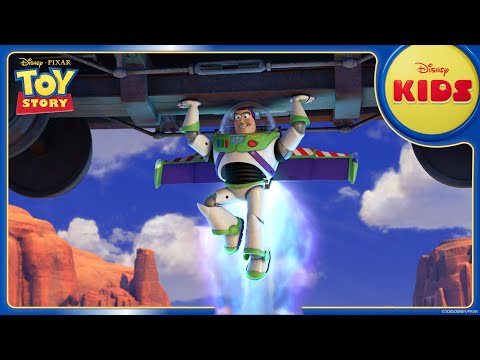
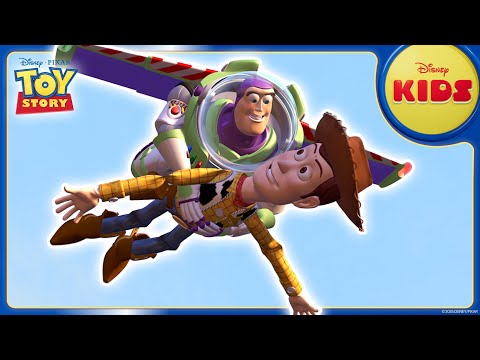
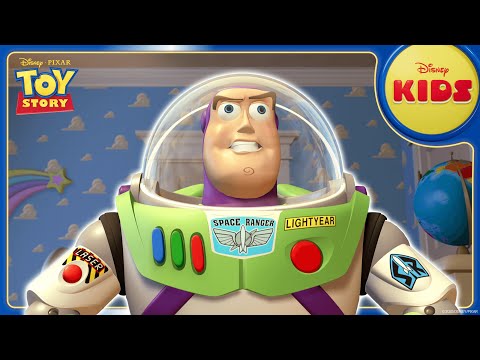
- Movies like 'Avengers: Infinity War' and 'Toy Story' have made the word a household name. In these contexts, it usually symbolizes ultimate power or boundless adventure.
Beyond the sciences, 'infinity' is a favorite of poets, songwriters, and philosophers. You might hear it in a song lyric describing a love that lasts 'for all infinity,' or read it in a novel where a character contemplates the 'infinity of the night sky.' In these cases, the word is used to evoke a feeling of vastness and permanence. It’s also common in spiritual and religious discourses. Many traditions describe the nature of the soul or the divine as being infinite, using 'infinity' to distinguish the sacred from the finite, mortal world. When a speaker uses the word in this way, they are often trying to point toward something that is beyond human comprehension or control.
'The infinity of the human imagination is our greatest resource,' the speaker declared during the commencement ceremony.
In the world of technology and design, 'infinity' has a more practical, though still symbolic, presence. You might hear about 'infinity pools,' which are swimming pools designed so that the water appears to flow into the horizon, or 'infinity displays' on smartphones, where the screen edges are curved to create a borderless look. In these instances, 'infinity' is a marketing term used to suggest luxury, modernity, and a lack of constraints. In computer programming, as mentioned before, you might hear developers talk about 'infinite loops' or 'infinite recursion,' usually in the context of debugging a program that won't stop running. These real-world applications show how the concept of the endless is used to sell products and solve (or create) technical problems.
- In Art and Design
- Artist Yayoi Kusama is famous for her 'Infinity Mirror Rooms,' which use mirrors and lights to create the illusion of an endless, twinkling space.
Finally, you'll hear 'infinity' in everyday idioms and expressions. While 'to infinity and beyond' is the most famous, people also talk about 'an infinity of choices' or 'staring into the infinity.' In these contexts, the word is a powerful tool for emphasis. It takes a situation and magnifies it, making it seem larger than life. Whether you are listening to a podcast about the mysteries of the cosmos, sitting in a math class, or watching a blockbuster movie, 'infinity' is a word that signals you are dealing with something big, something important, and something that stretches the limits of what we know. It is a word that invites us to look further and dream bigger.
The documentary explored the infinity of the ocean's depths, most of which remains unexplored by humans.
- In Mathematics Textbooks
- 'The set of real numbers has a higher cardinality of infinity than the set of integers.'
The architect designed the building with an infinity pool that seemed to merge with the Mediterranean Sea.
In the Marvel Universe, the Infinity Stones represent different aspects of existence, such as time and space.
The mathematician explained that there are actually different sizes of infinity, a concept that boggles the mind.
While infinity is a fascinating word, it is also one that is frequently misused or misunderstood. One of the most common mistakes is treating 'infinity' as if it were a specific, reachable number. In casual conversation, people might say, 'I have infinity dollars,' or 'I've told you infinity times.' While these are clearly hyperbolic, they can lead to confusion in more formal or technical contexts. In mathematics, you cannot 'reach' infinity; it is a limit or a concept of growth. You don't 'count to infinity,' you count *towards* it. Misunderstanding this can lead to errors in logic, especially when dealing with series or sequences. It's better to think of infinity as a direction rather than a destination.
- Mistake: Using 'Infinity' as an Adjective
- Incorrect: 'The universe is infinity.' Correct: 'The universe is infinite.' Remember, 'infinity' is the noun (the concept), and 'infinite' is the adjective (the description).
Another frequent error is confusing 'infinity' with 'eternity.' While they are related, they are not interchangeable. 'Eternity' specifically refers to time—an endless duration. 'Infinity' is a broader term that can refer to time, but also to space, quantity, or abstract concepts. For example, you would talk about the 'eternity of the afterlife,' but the 'infinity of the set of prime numbers.' Using 'infinity' when you specifically mean 'forever' can sometimes sound slightly off in formal writing. Additionally, people often use 'infinity' to describe things that are just very large but actually finite. For instance, describing the number of grains of sand on a beach as 'infinity' is scientifically incorrect; though the number is massive, it is finite. In precise writing, it's better to use words like 'innumerable,' 'vast,' or 'countless' for large but finite quantities.
Incorrect: The infinity stars in the sky were beautiful. Correct: The infinite stars (or the infinity of stars) in the sky were beautiful.
There is also a common grammatical mistake involving the use of articles. Because 'infinity' is an abstract noun, it often doesn't need an article when used in a general sense (e.g., 'the concept of infinity'). however, when referring to the vastness of something specific, 'the' is required (e.g., 'the infinity of his patience'). Some learners also struggle with the plural form 'infinities.' While 'infinity' is usually uncountable, mathematicians do use the plural when discussing different types of infinite sets (like the 'infinities' of Georg Cantor). Unless you are writing a high-level math paper, you should almost always stick to the singular form. Finally, be careful with the phrase 'to infinity.' In math, it's 'approaches infinity,' not 'reaches infinity.' In everyday English, 'to infinity and beyond' is a fun quote, but it shouldn't be used as a serious description of a process.
- Mistake: Over-exaggeration
- Using 'infinity' for small, finite tasks can make your writing seem unprofessional. Use 'endless' or 'constant' instead for daily annoyances.
To avoid these mistakes, always ask yourself if you are describing a quality (use 'infinite') or naming the concept itself (use 'infinity'). Check if you are talking about time specifically (consider 'eternity') or general boundlessness. And most importantly, remember that in the world of logic and science, infinity is a very specific tool, not just a synonym for 'a lot.' By being mindful of these distinctions, you can use 'infinity' to add genuine depth and precision to your language, rather than just using it as a vague superlative.
He said he had infinity homework, but he actually only had three assignments.
- Confusing 'Infinity' with 'Infinite'
- 'Infinity' is a noun. 'Infinite' is an adjective. You cannot say 'an infinity amount'; you must say 'an infinite amount' or 'an infinity of things'.
The student struggled to understand why 1 divided by 0 is not simply infinity in all contexts.
The poet used the word infinity to describe the horizon, which was a beautiful but technically incorrect metaphor.
In common parlance, infinity is often used as a synonym for 'forever,' which can lead to ambiguity.
When the word infinity feels too technical or too grand for your needs, there are several alternatives that can capture a similar sense of vastness or endlessness while fitting different contexts. One of the closest synonyms is boundlessness. This word emphasizes the lack of borders or limits. While 'infinity' feels mathematical, 'boundlessness' feels more physical or emotional. You might talk about the 'boundlessness of the prairie' or the 'boundlessness of a child's curiosity.' It suggests a space that is open and free, rather than a sequence that never ends. Another strong alternative is perpetuity, which is often used in legal or financial contexts to mean 'forever' or 'for an indefinite period.' For example, a 'perpetual' contract is one that lasts indefinitely.
- Infinity vs. Eternity
- Infinity: Focuses on quantity, space, or general lack of limits. Eternity: Focuses specifically on time without end.
If you are describing something that is simply too large to be measured, words like immensity or vastness are often more appropriate than 'infinity.' These words acknowledge that the thing has a size, even if that size is overwhelming. 'The immensity of the task' sounds more realistic than 'the infinity of the task.' Similarly, countlessness or innumerability are excellent choices when you are talking about a large number of individual items, like stars in the sky or grains of sand. These words suggest that while the items could *theoretically* be counted, it is practically impossible to do so. This is often what people actually mean when they use 'infinity' in casual speech.
The infinity of the desert was matched only by the silence that hung over the dunes.
In a more abstract or philosophical sense, you might use limitlessness. This word is very similar to 'infinity' but is often applied to potential or capability. You might say someone has 'limitless potential,' which sounds more natural than saying they have 'an infinity of potential.' For something that continues without interruption, continuity or endlessness are good options. 'Endlessness' is a very direct, simple word that can be used in almost any context, from a long movie to a circular road. Finally, in specialized fields, you might find words like transfinitude (in advanced math) or omnipresence (in theology). Choosing the right synonym depends on whether you want to emphasize the size, the duration, the lack of borders, or the sheer number of the thing you are describing.
- Comparison: Infinity vs. Immensity
- Immensity implies something is very large but still finite. Infinity implies there is no end at all. A mountain has immensity; the universe might have infinity.
By exploring these alternatives, you can avoid overusing 'infinity' and make your descriptions more precise. Each of these words carries its own 'flavor' and set of associations. Whether you want to evoke the cold, hard logic of mathematics or the warm, expansive feeling of a summer horizon, there is a word that fits perfectly. Understanding the subtle differences between 'infinity' and its synonyms will allow you to communicate complex ideas with greater clarity and impact, ensuring that your audience understands exactly what kind of 'endless' you are talking about.
The infinity of the ocean is a common theme in maritime literature, symbolizing both freedom and danger.
- Other Related Terms
- Unboundedness, inexhaustibility, foreverness, world without end, non-termination.
The artist's work was a meditation on the infinity of the soul and its journey through time.
The concept of infinity is essential for understanding the expansion of the universe after the Big Bang.
Looking at the fractal, I felt a sense of infinity that was both dizzying and beautiful.
How Formal Is It?
Fun Fact
The mathematical symbol for infinity (∞) was first used by John Wallis in 1655. He chose it possibly because it was a variation of the Roman numeral for 1,000 (CIƆ), which was sometimes used to represent 'many.'
Pronunciation Guide
- Stressing the first syllable (IN-finity).
- Stressing the third syllable (infi-NI-ty).
- Pronouncing the 'i' sounds too long like 'ee'.
- Dropping the 'n' sound in the first syllable.
- Confusing the pronunciation with 'infinite' (IN-fin-it).
Difficulty Rating
The word itself is common, but the contexts (math/philosophy) can be very complex.
Requires careful distinction between the noun 'infinity' and adjective 'infinite'.
Pronunciation is key, and it's often used in common idioms.
Easily recognized in pop culture and academic settings.
What to Learn Next
Prerequisites
Learn Next
Advanced
Grammar to Know
Noun vs Adjective Usage
Use 'infinity' as a noun (The infinity of space) and 'infinite' as an adjective (Infinite space).
Uncountable Nouns
Infinity is usually uncountable. You don't say 'many infinities' unless in specialized math.
Prepositional Phrases
Commonly follows 'to', 'into', 'at', or 'towards'.
Articles with Abstract Nouns
Use 'the' when referring to a specific instance: 'The infinity of his patience'.
Adverbial Form
Use 'infinitely' to modify adjectives: 'The task is infinitely harder than I thought.'
Examples by Level
The stars go to infinity.
Las estrellas van al infinito.
Infinity is a noun here.
Infinity is a very big concept.
El infinito es un concepto muy grande.
Used as the subject of the sentence.
He said 'to infinity and beyond!'
¡Él dijo 'al infinito y más allá!'
A famous quote from a movie.
Can you count to infinity?
¿Puedes contar hasta el infinito?
Used with the preposition 'to'.
The line goes on to infinity.
La línea sigue hasta el infinito.
Describes a direction.
Infinity has no end.
El infinito no tiene fin.
Simple definition in a sentence.
I love you to infinity.
Te quiero hasta el infinito.
Used to show a very large amount of love.
Look at the infinity of the sky.
Mira la infinitud del cielo.
Used with 'the' and 'of'.
In math, we use a special symbol for infinity.
En matemáticas, usamos un símbolo especial para el infinito.
Refers to the mathematical symbol.
The ocean seems to stretch to infinity.
El océano parece extenderse hasta el infinito.
Uses the verb 'stretch'.
The number of stars is like infinity.
El número de estrellas es como el infinito.
Comparison using 'like'.
Is the universe an infinity of space?
¿Es el universo una infinitud de espacio?
Question form.
She thought about the infinity of time.
Ella pensó en la infinitud del tiempo.
Abstract use of the noun.
The road disappeared into the infinity of the desert.
El camino desapareció en la infinitud del desierto.
Describes a visual effect.
We cannot reach infinity by counting.
No podemos llegar al infinito contando.
Negative statement about a process.
The mirror created an infinity of reflections.
El espejo creó una infinitud de reflejos.
Describes a repeating pattern.
The concept of infinity is difficult for the human mind to grasp.
El concepto de infinito es difícil de comprender para la mente humana.
Subject is 'The concept of infinity'.
Many philosophers have written about the infinity of the soul.
Muchos filósofos han escrito sobre la infinitud del alma.
Used in a prepositional phrase.
The parallel lines are said to meet at infinity.
Se dice que las líneas paralelas se encuentran en el infinito.
A common mathematical phrase.
There is an infinity of possibilities for your future career.
Hay una infinitud de posibilidades para tu futura carrera.
Metaphorical use for 'many'.
The software crashed because it entered an infinity loop.
El software se bloqueó porque entró en un bucle infinito.
Technical use (though 'infinite loop' is more common, 'infinity loop' is sometimes used).
He stared into the infinity of the night, feeling very small.
Miró hacia la infinitud de la noche, sintiéndose muy pequeño.
Evokes an emotional state.
Mathematics allows us to work with infinity as if it were a value.
Las matemáticas nos permiten trabajar con el infinito como si fuera un valor.
Discusses the utility of the concept.
The artist tried to capture the feeling of infinity in her painting.
La artista intentó capturar el sentimiento de infinitud en su pintura.
Refers to an artistic goal.
The limit of the function as x approaches infinity is zero.
El límite de la función cuando x tiende al infinito es cero.
Precise mathematical terminology.
We must distinguish between potential infinity and actual infinity.
Debemos distinguir entre el infinito potencial y el infinito real.
Philosophical/Mathematical distinction.
The infinity of the universe is still a subject of intense debate among cosmologists.
La infinitud del universo sigue siendo un tema de intenso debate entre los cosmólogos.
Formal academic context.
The recursive nature of the algorithm led to an infinity of nested calls.
La naturaleza recursiva del algoritmo llevó a una infinitud de llamadas anidadas.
Technical computing context.
Her patience seemed to be an infinity, never wavering despite the challenges.
Su paciencia parecía ser una infinitud, nunca flaqueando a pesar de los desafíos.
Hyperbolic but sophisticated metaphor.
The concept of infinity allows for the existence of every possible world.
El concepto de infinito permite la existencia de cada mundo posible.
Discusses theoretical implications.
In set theory, some types of infinity are larger than others.
En la teoría de conjuntos, algunos tipos de infinito son más grandes que otros.
Refers to Cantor's theorem.
The poem explores the infinity of human desire and its consequences.
El poema explora la infinitud del deseo humano y sus consecuencias.
Literary analysis context.
Cantor's proof of the existence of different levels of infinity was initially met with skepticism.
La prueba de Cantor sobre la existencia de diferentes niveles de infinito fue recibida inicialmente con escepticismo.
Historical/Scientific context.
The architectural design utilizes mirrors to evoke a sense of spatial infinity.
El diseño arquitectónico utiliza espejos para evocar una sensación de infinitud espacial.
Professional design terminology.
One might argue that the infinity of the past precludes the possibility of a first cause.
Se podría argumentar que la infinitud del pasado excluye la posibilidad de una causa primera.
Sophisticated philosophical argumentation.
The digital landscape offers an infinity of data points for analysis.
El panorama digital ofrece una infinitud de puntos de datos para el análisis.
Modern technical context.
The sheer infinity of the task ahead of us is daunting, but we must persevere.
La pura infinitud de la tarea que tenemos por delante es desalentadora, pero debemos perseverar.
Emphasizes scale and emotional response.
The theological implications of an infinity of divine attributes are profound.
Las implicaciones teológicas de una infinitud de atributos divinos son profundas.
Religious/Academic context.
The fractal's beauty lies in its representation of the infinity contained within a finite space.
La belleza del fractal reside en su representación del infinito contenido dentro de un espacio finito.
Discusses a paradox of geometry.
To contemplate infinity is to confront the limitations of human reason.
Contemplar el infinito es enfrentarse a las limitaciones de la razón humana.
Existential/Philosophical observation.
The mathematical rigor required to define transfinite numbers within the realm of infinity is immense.
El rigor matemático requerido para definir los números transfinitos dentro del reino del infinito es inmenso.
Highly technical academic usage.
The protagonist's existential dread was amplified by the perceived infinity of his own isolation.
El pavor existencial del protagonista se vio amplificado por la infinitud percibida de su propio aislamiento.
Advanced literary description.
In the limit as n approaches infinity, the series converges to a specific transcendental number.
En el límite cuando n tiende al infinito, la serie converge a un número trascendente específico.
Precise scientific/mathematical phrasing.
The discourse surrounding the infinity of the multiverse often blurs the line between science and speculation.
El discurso que rodea la infinitud del multiverso a menudo desdibuja la línea entre la ciencia y la especulación.
Critical academic analysis.
The artist's installation was a visceral exploration of the infinity of the void.
La instalación del artista fue una exploración visceral de la infinitud del vacío.
Sophisticated art criticism.
The philosophical conundrum of an actual infinity has plagued thinkers since antiquity.
El enigma filosófico de un infinito real ha plagado a los pensadores desde la antigüedad.
Historical/Philosophical overview.
The algorithm's efficiency is compromised by the potential for an infinity of recursive iterations.
La eficiencia del algoritmo se ve comprometida por la posibilidad de una infinitud de iteraciones recursivas.
Technical software engineering context.
The sheer infinity of the linguistic variations within a single dialect is staggering.
La pura infinitud de las variaciones lingüísticas dentro de un solo dialecto es asombrosa.
Advanced linguistic observation.
Synonyms
Antonyms
Common Collocations
Common Phrases
— Continuing without end or to an immeasurable degree.
The numbers continue to infinity.
— Used to emphasize the boundless nature of a specific thing.
The infinity of the desert was overwhelming.
— Getting closer and closer to an endless state or value.
The costs are approaching infinity.
— A hyperbolic phrase meaning even further than what is endless.
His ambition goes beyond infinity.
— The feeling of being insignificant compared to the universe.
He felt his smallness against the infinity of the stars.
— The specific concept of infinity used in calculations.
Mathematical infinity is different from poetic infinity.
— A process that can be continued forever.
Counting is a process of potential infinity.
— A completed set that contains an infinite number of elements.
Some philosophers deny the existence of actual infinity.
— The idea that human thinking has no limits.
The infinity of thought allows for constant innovation.
Often Confused With
Eternity is specifically about time; infinity is about space, quantity, or any boundless state.
Infinite is the adjective; infinity is the noun. You have an infinite amount, but you look into infinity.
Immensity means very large but finite; infinity means truly without end.
Idioms & Expressions
— To push past all limits; to aim for the impossible.
We need to take this project to infinity and beyond!
informal— To look blankly into the distance, often while thinking deeply.
He sat on the porch, staring into infinity.
literary— A very large, seemingly uncountable amount of something.
There are an infinity of reasons why this won't work.
informal/hyperbolic— To be overwhelmed by the scale or complexity of something.
Her voice was lost in the infinity of the cathedral.
literary— To strive for the highest possible goals.
The young athlete was always reaching for infinity.
poetic— A feeling that a single moment lasts forever.
In that kiss, they felt the infinity of the moment.
romantic— The idea that the small contains the large; seeing the universal in the particular.
The scientist found infinity in a grain of sand through his microscope.
literary/philosophical— Something that connects the finite human world to the infinite.
Music is often seen as a bridge to infinity.
poetic— The boundary where the known world meets the unknown/endless.
The black hole sits at the edge of infinity.
scientific/poetic— The belief that the human spirit is boundless and eternal.
Many religions teach the infinity of the soul.
spiritualEasily Confused
They are different parts of speech from the same root.
Infinity is the concept (noun). Infinite is the description (adjective). You can't say 'an infinity space'.
The space is infinite (adj). We explored the infinity (n) of space.
Sounds similar but means the opposite.
Infinity is the largest possible concept; infinitesimal is the smallest possible concept (approaching zero).
The difference was infinitesimal, almost zero.
Both imply a lack of a clear end.
Indefinite means not clearly defined or unknown; infinity means truly endless.
The meeting was postponed for an indefinite period.
Both refer to large quantities.
Innumerable means too many to count but still finite; infinity is mathematically endless.
There are innumerable grains of sand on this beach.
Both imply something that doesn't stop.
Perpetual usually refers to a process or motion that continues forever; infinity is the state itself.
They are searching for a perpetual motion machine.
Sentence Patterns
The [Noun] goes to infinity.
The sky goes to infinity.
There is an infinity of [Noun].
There is an infinity of stars.
The concept of infinity is [Adjective].
The concept of infinity is fascinating.
As [Variable] approaches infinity, [Result].
As x approaches infinity, the value decreases.
The [Noun] evokes a sense of infinity.
The mirror evokes a sense of infinity.
The philosophical debate over [Type] infinity...
The philosophical debate over actual infinity continues.
Lost in the infinity of [Noun].
Lost in the infinity of the desert.
Distinguish between [Type] and [Type] infinity.
Distinguish between potential and actual infinity.
Word Family
Nouns
Verbs
Adjectives
Related
How to Use It
Common in academic, scientific, and poetic contexts; moderately common in daily speech.
-
The universe is infinity.
→
The universe is infinite.
You must use the adjective form 'infinite' to describe a noun. 'Infinity' is the noun itself.
-
I have infinity of homework.
→
I have an infinity of homework.
When using 'infinity' to mean a large amount, you usually need the indefinite article 'an'.
-
We reached infinity in our counting.
→
We counted towards infinity.
Infinity is not a destination that can be reached; it is a concept of endlessness.
-
The infinity of the movie was boring.
→
The endlessness of the movie was boring.
'Infinity' is usually too grand a word for a movie. 'Endlessness' or 'length' is more appropriate for mundane things.
-
He promised to love her for infinity.
→
He promised to love her for eternity.
While 'infinity' works, 'eternity' is the standard word for infinite time in romantic or spiritual contexts.
Tips
Noun vs. Adjective
Always remember that 'infinity' is a noun. If you need a word to describe a noun, use 'infinite'. For example, say 'infinite wisdom' not 'infinity wisdom'.
Hyperbole
In casual speech, 'infinity' is often an exaggeration. Use it sparingly in professional writing to maintain your credibility.
Stress the Second
The stress is on the 'FIN'. Practice saying 'in-FIN-i-ty' to ensure you are understood by native speakers.
Space and Time
When talking about time, consider using 'eternity'. When talking about space or quantity, 'infinity' is usually the better choice.
Prepositions
The most common prepositions used with infinity are 'to', 'towards', and 'at'. 'Parallel lines meet at infinity' is a classic phrase.
Word Family
Learn 'infinitely' (adverb) and 'infinite' (adjective) at the same time to expand your ability to describe endless things.
Not a Destination
In math, treat infinity as a direction of growth, not a number you can arrive at. This will help you understand limits better.
Poetic Effect
Use 'the infinity of...' to add a sense of grandeur to your descriptions of nature or abstract concepts.
Pop Culture
Referencing 'to infinity and beyond' is a great way to build rapport in casual English conversations, as almost everyone knows the quote.
Infinite Regress
In philosophy, an 'infinite regress' is a sequence of reasoning that never ends. It's a useful term for describing a circular argument.
Memorize It
Mnemonic
Think of 'IN-FIN-ITY' as 'INside a FINish line that is empTY'—there is no end to find.
Visual Association
Visualize the number 8 falling over because it is too tired to stop walking. It just keeps going around the loops forever.
Word Web
Challenge
Try to use 'infinity' in a sentence about your favorite hobby and another sentence about a scientific fact. For example: 'I could spend an infinity of hours painting' and 'The universe's infinity is still being explored.'
Word Origin
The word 'infinity' comes from the Old French 'infinite' and directly from the Latin 'infinitas,' which means 'boundlessness' or 'unlimitedness.' It is formed by combining the prefix 'in-' (meaning 'not') with 'finitus' (the past participle of 'finire,' meaning 'to finish' or 'to limit'). Thus, the literal meaning is 'not finished' or 'not limited.'
Original meaning: Boundlessness, unlimited extent, or the quality of being without end.
Indo-European (Latin branch)Cultural Context
Generally a neutral term, but in religious contexts, it should be used with respect as it often refers to the nature of God.
Commonly used in both high-level science and everyday hyperbolic speech. 'To infinity and beyond' is a ubiquitous phrase.
Practice in Real Life
Real-World Contexts
Mathematics Class
- tends toward infinity
- limit at infinity
- infinity symbol
- infinite set
Astronomy/Space
- infinity of the cosmos
- infinite universe
- stretching to infinity
- vastness of space
Philosophy/Religion
- infinity of the soul
- divine infinity
- concept of the infinite
- actual vs potential infinity
Creative Writing
- an infinity of stars
- lost in infinity
- sense of infinity
- into the infinity
Technology/Marketing
- infinity display
- infinity pool
- infinite loop
- infinity of data
Conversation Starters
"Do you think the universe has an actual infinity of space, or does it have an end?"
"In your opinion, is the concept of infinity something humans can truly understand?"
"If you had an infinity of time, what is the first thing you would want to learn?"
"Why do you think the 'infinity symbol' is so popular in jewelry and tattoos?"
"Can you think of any movies besides Toy Story that use the idea of infinity?"
Journal Prompts
Describe a time when you looked at the night sky and felt the infinity of the universe. What were your thoughts?
Write about a goal you have that feels like it has an infinity of steps. How do you plan to start?
If you could create an 'infinity room' like Yayoi Kusama, what would you put inside it to represent endlessness?
Reflect on the phrase 'to infinity and beyond.' What does 'beyond infinity' mean to you personally?
How does the idea of infinity change the way you think about your own life and its limits?
Frequently Asked Questions
10 questionsIn standard arithmetic, infinity is not a number that you can add or subtract like 5 or 10. Instead, it is a concept used to describe something that grows without bound. However, in some advanced branches of mathematics, like set theory, mathematicians work with different 'sizes' of infinity as if they were numbers (called transfinite numbers).
The symbol for infinity is ∞, which is called a lemniscate. It looks like the number 8 turned on its side. It was first introduced in the 17th century to represent a value that is larger than any possible number.
No, you cannot reach infinity because by definition, it has no end. If you could reach it, it would be finite. In mathematics, we say a value 'approaches' infinity, meaning it gets larger and larger forever without ever stopping at a final destination.
Infinity is a general term for anything without limits, including space, numbers, and time. Eternity specifically refers to infinite time—a duration that never ends. You would say 'the infinity of the universe' but 'the eternity of the soul.'
Yes! This is a famous discovery by the mathematician Georg Cantor. He proved that the infinity of real numbers (like 0.1, 0.11, 0.111...) is 'larger' than the infinity of whole numbers (1, 2, 3...). This concept is a major part of modern set theory.
Mathematically, there is nothing 'beyond' infinity, so the phrase is a paradox. It was made famous by Buzz Lightyear in Toy Story and is used to mean pushing past all possible limits to achieve something amazing.
You can use it as a noun: 'The infinity of the ocean is beautiful.' Or in a prepositional phrase: 'The road stretches to infinity.' Just remember not to use it as an adjective; use 'infinite' for that.
An infinity pool is a swimming pool where the water flows over one or more edges, creating a visual effect of water with no boundary. It often looks like the pool merges with the ocean or the sky.
Scientists are not 100% sure. Some theories suggest the universe is infinite and goes on forever, while others suggest it is 'finite but unbounded,' meaning it has a limited size but you could travel in one direction forever and eventually come back to where you started (like walking around the Earth).
Infinity allows mathematicians to solve problems involving limits, calculus, and series. Without the concept of infinity, we wouldn't be able to calculate the area of curved shapes or understand how things change at an instant (derivatives).
Test Yourself 200 questions
Write a sentence using 'infinity' to describe the night sky.
Well written! Good try! Check the sample answer below.
Explain the difference between 'infinity' and 'eternity' in your own words.
Well written! Good try! Check the sample answer below.
Write a short paragraph about what you would do if you had an infinity of time.
Well written! Good try! Check the sample answer below.
Describe an 'infinity pool' to someone who has never seen one.
Well written! Good try! Check the sample answer below.
Use 'infinity' in a sentence about a mathematical problem.
Well written! Good try! Check the sample answer below.
Write a poetic sentence using the phrase 'the infinity of the soul'.
Well written! Good try! Check the sample answer below.
Discuss whether you think the universe is infinite or finite.
Well written! Good try! Check the sample answer below.
Write a sentence using 'infinity' as a hyperbole for something boring.
Well written! Good try! Check the sample answer below.
Describe the visual effect of two mirrors facing each other using the word 'infinity'.
Well written! Good try! Check the sample answer below.
Write a sentence about Buzz Lightyear using his famous catchphrase.
Well written! Good try! Check the sample answer below.
How does the concept of infinity make you feel? Write 3-4 sentences.
Well written! Good try! Check the sample answer below.
Use the word 'infinity' in a formal academic context.
Well written! Good try! Check the sample answer below.
Write a dialogue between two people arguing about whether they can count to infinity.
Well written! Good try! Check the sample answer below.
Describe a fractal and how it relates to infinity.
Well written! Good try! Check the sample answer below.
Write a sentence using 'infinity' and 'vastness' in the same sentence.
Well written! Good try! Check the sample answer below.
Explain why 'infinity' is a noun and not an adjective.
Well written! Good try! Check the sample answer below.
Write a sentence about the 'infinity of choices' on the internet.
Well written! Good try! Check the sample answer below.
Use 'infinity' to describe a very long road trip.
Well written! Good try! Check the sample answer below.
Write a short story (50 words) that includes the word 'infinity' three times.
Well written! Good try! Check the sample answer below.
Describe the infinity symbol and what it represents to you.
Well written! Good try! Check the sample answer below.
Explain the concept of infinity to a 5-year-old.
Read this aloud:
You said:
Speech recognition is not supported in your browser. Try Chrome or Edge.
Talk about a movie or book that uses the idea of infinity.
Read this aloud:
You said:
Speech recognition is not supported in your browser. Try Chrome or Edge.
Discuss whether you think the human mind can truly understand infinity.
Read this aloud:
You said:
Speech recognition is not supported in your browser. Try Chrome or Edge.
Describe a beautiful place you've seen that felt like it went to infinity.
Read this aloud:
You said:
Speech recognition is not supported in your browser. Try Chrome or Edge.
Debate with a partner: Is infinity a number or a concept?
Read this aloud:
You said:
Speech recognition is not supported in your browser. Try Chrome or Edge.
How would you use 'infinity' in a sentence about your future?
Read this aloud:
You said:
Speech recognition is not supported in your browser. Try Chrome or Edge.
Pronounce the word 'infinity' clearly five times, focusing on the stress.
Read this aloud:
You said:
Speech recognition is not supported in your browser. Try Chrome or Edge.
Tell a story about someone who tried to count to infinity.
Read this aloud:
You said:
Speech recognition is not supported in your browser. Try Chrome or Edge.
Discuss the popularity of the infinity symbol in fashion.
Read this aloud:
You said:
Speech recognition is not supported in your browser. Try Chrome or Edge.
Explain what an 'infinity pool' is using only 3 sentences.
Read this aloud:
You said:
Speech recognition is not supported in your browser. Try Chrome or Edge.
Talk about how infinity is used in your favorite subject (math, science, art).
Read this aloud:
You said:
Speech recognition is not supported in your browser. Try Chrome or Edge.
What does 'to infinity and beyond' mean to you?
Read this aloud:
You said:
Speech recognition is not supported in your browser. Try Chrome or Edge.
Discuss the difference between 'infinity' and 'forever'.
Read this aloud:
You said:
Speech recognition is not supported in your browser. Try Chrome or Edge.
Describe the visual effect of a fractal using the word 'infinity'.
Read this aloud:
You said:
Speech recognition is not supported in your browser. Try Chrome or Edge.
How do you feel when you think about the infinity of space?
Read this aloud:
You said:
Speech recognition is not supported in your browser. Try Chrome or Edge.
Explain the phrase 'an infinity of choices'.
Read this aloud:
You said:
Speech recognition is not supported in your browser. Try Chrome or Edge.
Talk about a time you felt 'lost in infinity'.
Read this aloud:
You said:
Speech recognition is not supported in your browser. Try Chrome or Edge.
What are some things in the real world that seem like infinity?
Read this aloud:
You said:
Speech recognition is not supported in your browser. Try Chrome or Edge.
Explain the mathematical symbol for infinity to a friend.
Read this aloud:
You said:
Speech recognition is not supported in your browser. Try Chrome or Edge.
Discuss the philosophical idea of 'actual infinity'.
Read this aloud:
You said:
Speech recognition is not supported in your browser. Try Chrome or Edge.
Listen to a description of the universe and identify when the word 'infinity' is used.
Listen to a math teacher explain limits and summarize their use of 'infinity'.
Listen to a movie clip from Toy Story and repeat the famous line.
Listen to a poem about the ocean and identify the metaphors for infinity.
Listen to a podcast about black holes and note how they describe 'infinite density'.
Listen to a conversation about a hotel and identify the description of the 'infinity pool'.
Listen to a lecture on set theory and explain the 'different sizes of infinity'.
Listen to a song lyric and explain what 'loving someone for all infinity' means.
Listen to a news report about a computer bug and identify the 'infinite loop'.
Listen to a philosopher talk about time and summarize their view on the 'infinity of the past'.
Listen to a child counting and stop them when they mention 'infinity'.
Listen to an architect describe a building and note the use of 'spatial infinity'.
Listen to a meditation guide and follow the instructions to 'visualize infinity'.
Listen to a debate about the multiverse and note the arguments for an 'infinite number of worlds'.
Listen to a description of a fractal and identify the word 'infinity'.
The universe is infinity and beautiful.
Use 'infinite' as an adjective.
I have infinity homework to do tonight.
Use 'an infinity of' for a large amount.
The stress is on the first syllable: IN-finity.
Correct pronunciation stress.
We reached to infinity after counting for hours.
You cannot reach infinity.
The infinity of the ocean are vast.
Infinity is a singular noun.
She has an infinity amount of money.
Use 'infinite' before 'amount'.
The lines meet on infinity.
The correct preposition is 'at'.
Infinity is a largest number.
Infinity is a concept, not a number.
I love you for infinity.
'Eternity' is better for time-based love.
The computer is in a infinity loop.
Use 'an' and 'infinite' (adjective).
/ 200 correct
Perfect score!
Summary
Infinity is not a destination or a number, but a direction of growth without limits. For example, in the sentence 'The sequence tends toward infinity,' it describes a process that never stops increasing.
- Infinity is the concept of endlessness or boundlessness, used in math to represent quantities larger than any number.
- It is a noun, symbolized by ∞, and describes things like the universe or never-ending sequences.
- In everyday language, it's often used hyperbolically to mean 'a very large amount' or 'forever'.
- It is distinct from 'infinite' (adjective) and 'eternity' (specifically referring to time).
Noun vs. Adjective
Always remember that 'infinity' is a noun. If you need a word to describe a noun, use 'infinite'. For example, say 'infinite wisdom' not 'infinity wisdom'.
Hyperbole
In casual speech, 'infinity' is often an exaggeration. Use it sparingly in professional writing to maintain your credibility.
Stress the Second
The stress is on the 'FIN'. Practice saying 'in-FIN-i-ty' to ensure you are understood by native speakers.
Space and Time
When talking about time, consider using 'eternity'. When talking about space or quantity, 'infinity' is usually the better choice.