









magical in 30 Seconds
- Magical describes things that are extraordinary, beautiful, or seem to involve supernatural powers.
- It is commonly used to describe atmospheres, experiences, and nature in a very positive way.
- In literature, it refers to the genre of fantasy and elements that defy the laws of physics.
- It is an adjective; the noun form is 'magic' and the adverb is 'magically'.
The word magical is a versatile adjective that bridges the gap between the supernatural and the deeply emotional. At its core, it describes something that possesses the qualities of magic—the mysterious power that allows people to do impossible things in stories. However, in everyday English, we rarely use it to talk about actual wizards. Instead, we use it to describe experiences that are so beautiful, surprising, or perfect that they feel like they couldn't possibly belong to the ordinary world. When you describe a sunset as magical, you aren't saying a sorcerer created it; you are saying that the beauty of the colors and the feeling of peace it gave you were so intense that they felt beyond the reach of normal human explanation.
- Literal Application
- Used when referring to objects or beings in fantasy, such as a magical wand or a magical creature like a unicorn.
- Figurative Application
- Used to describe moments of high emotional impact, like a first kiss, a beautiful wedding, or a perfect holiday.
- Atmospheric Application
- Used to describe places that have a special 'vibe' or feeling, such as an old forest or a quiet, snowy street at night.
"The children believed the old wardrobe led to a magical kingdom hidden behind the coats."
"Watching the Northern Lights was a truly magical experience that I will never forget."
"The city looks magical at night with all the Christmas lights twinkling."
In the context of SubLearn, understanding 'magical' helps you grasp how English speakers express wonder. It is a 'positive' word that carries a lot of weight. If you call a movie 'good,' it's a simple compliment. If you call it 'magical,' you are suggesting it touched your soul or sparked your imagination in a way that ordinary movies do not. It implies a sense of awe and wonderment.
"The chemistry between the two actors made the performance feel magical."
"There is something magical about the first snowfall of the year."
Using 'magical' correctly involves understanding the intensity of the word. It is not a word for mundane, everyday tasks. You wouldn't usually say 'I had a magical breakfast' unless that breakfast was truly extraordinary—perhaps on a balcony overlooking the Mediterranean Sea. It is reserved for the exceptional.
- With Natural Phenomena
- Use it for sunrises, sunsets, stars, storms, or landscapes that take your breath away.
- With Life Events
- Use it for weddings, births, first dates, or reunions that feel perfect.
- With Art and Performance
- Use it for music, theater, or films that transport you to another world.
Syntactically, 'magical' functions like most adjectives. You can use intensifiers like 'truly,' 'absolutely,' or 'utterly' to add more power to it. For example, 'The atmosphere was absolutely magical.' This is a common way to emphasize that the feeling of wonder was very strong.
You will encounter 'magical' in a variety of settings, ranging from children's stories to high-end marketing. In literature, especially in the fantasy genre, it is a foundational word. Authors like J.K. Rowling or C.S. Lewis use it to establish the rules of their worlds.
In the travel industry, 'magical' is a favorite buzzword. Travel brochures and websites use it to sell destinations. 'Experience the magical streets of Prague' or 'A magical stay in the heart of the rainforest.' Here, it is used to suggest that the destination offers an escape from the boring reality of daily life.
In social settings, people use it to describe positive experiences. After a concert, a fan might say, 'That was a magical night.' It conveys a sense of shared wonder among the audience. You will also hear it in romantic contexts, describing the 'spark' or 'chemistry' between people.
The most frequent mistake learners make is confusing 'magic' and 'magical.' While they are related, they are used differently. 'Magic' is primarily a noun (the art of magic) or an adjective used for specific, functional things (a magic trick, a magic wand). 'Magical' is almost always used to describe the *feeling* or *quality* of something.
- Incorrect: It was a magic moment. (Though sometimes used in informal speech, 'magical' is better).
- Correct: It was a magical moment.
- Incorrect: He has magical powers. (Actually, both work here, but 'magic powers' is more common for innate ability).
Another mistake is spelling. Learners often forget the 'al' at the end or try to spell it 'magicall.' Remember: M-A-G-I-C-A-L.
If you find yourself using 'magical' too often, there are several synonyms you can use to add variety to your English. Each has a slightly different nuance.
- Enchanting
- Suggests that something has 'cast a spell' on you; it is charming and delightful.
- Spellbinding
- Used when something holds your attention so completely that you cannot look away.
- Mystical
- Carries a more spiritual or religious connotation, suggesting a connection to the divine.
- Ethereal
- Describes something so light and delicate that it doesn't seem to be of this world.
How Formal Is It?
Difficulty Rating
Grammar to Know
Adjective order (opinion before fact)
Linking verbs with adjectives
Adverbs of degree (truly, very)
Suffix '-al' to form adjectives
Abstract vs. Concrete nouns
Examples by Level
The circus was magical.
Le cirque était magique.
Simple Subject + Verb + Adjective.
I like magical stories.
J'aime les histoires magiques.
Adjective before noun.
It was a magical day.
C'était une journée magique.
Article + Adjective + Noun.
The stars look magical.
Les étoiles ont l'air magiques.
Linking verb 'look'.
She has a magical wand.
Elle a une baguette magique.
Literal use.
The castle is magical.
Le château est magique.
Predicate adjective.
He saw a magical bird.
Il a vu un oiseau magique.
Past tense.
Christmas is magical.
Noël est magique.
Abstract noun as subject.
The garden felt magical in the morning.
Le jardin semblait magique le matin.
Verb 'felt' + adjective.
We had a magical time at the beach.
Nous avons passé un moment magique à la plage.
Collocation: 'magical time'.
The movie has a magical ending.
Le film a une fin magique.
Describing a plot element.
It was a truly magical experience.
C'était une expérience vraiment magique.
Adverb 'truly' modifying 'magical'.
The lights made the street look magical.
Les lumières rendaient la rue magique.
Causative structure.
She told us a magical tale.
Elle nous a raconté un conte magique.
Synonym for 'fairy tale'.
The snow made everything look magical.
La neige rendait tout magique.
Environmental description.
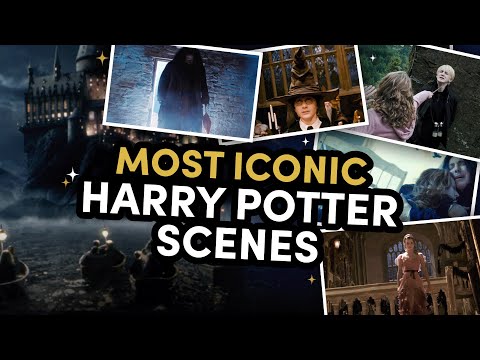
I love the magical world of Harry Potter.
J'adore le monde magique de Harry Potter.
Proper noun context.
The atmosphere at the wedding was absolutely magical.
L'ambiance au mariage était absolument magique.
Intensifier 'absolutely'.
There is a magical quality to her voice.
Il y a une qualité magique dans sa voix.
Abstract usage.
The forest is home to many magical creatures.
La forêt abrite de nombreuses créatures magiques.
Fantasy context.
It was a magical moment that we will always treasure.
C'était un moment magique que nous chérirons toujours.
Relative clause.
The book transports you to a magical realm.
Le livre vous transporte dans un royaume magique.
Metaphorical movement.
The sunset created a magical glow over the mountains.
Le coucher de soleil a créé une lueur magique sur les montagnes.
Descriptive imagery.
He described his childhood as a magical time.
Il a décrit son enfance comme une période magique.
Nostalgic usage.
The performance was nothing short of magical.
La performance n'était rien de moins que magique.
Idiomatic expression 'nothing short of'.
The director captured the magical realism of the novel perfectly.
Le réalisateur a parfaitement capturé le réalisme magique du roman.
Literary term.
Despite the cold, the winter festival felt magical.
Malgré le froid, le festival d'hiver semblait magique.
Concessive clause.
The island is famous for its magical landscapes.
L'île est célèbre pour ses paysages magiques.
Marketing/Travel context.
There was a magical connection between the two musicians.
Il y avait une connexion magique entre les deux musiciens.
Describing interpersonal chemistry.
The software update added some magical new features.
La mise à jour du logiciel a ajouté de nouvelles fonctionnalités magiques.
Informal tech marketing.
The city's history is filled with magical legends.
L'histoire de la ville est remplie de légendes magiques.
Historical context.
The play uses lighting to create a magical effect.
La pièce utilise l'éclairage pour créer un effet magique.
Technical description.
The experience was so magical it felt surreal.
L'expérience était si magique qu'elle semblait surréaliste.
Result clause 'so... that'.
The prose possesses a magical quality that evokes deep nostalgia.
La prose possède une qualité magique qui évoque une profonde nostalgie.
Sophisticated literary analysis.
The film explores the magical thinking of early childhood.
Le film explore la pensée magique de la petite enfance.
Psychological term.
The architect aimed to create a magical interplay between light and shadow.
L'architecte visait à créer un jeu magique entre l'ombre et la lumière.
Artistic intent.
The valley, shrouded in mist, had a truly magical aura.
La vallée, enveloppée de brume, avait une aura vraiment magique.
Participial phrase.
Her performance was a magical blend of technical skill and raw emotion.
Sa performance était un mélange magique de compétence technique et d'émotion brute.
Abstract combination.
The ancient ruins retained a magical, haunting beauty.
Les ruines antiques conservaient une beauté magique et obsédante.
Coordinated adjectives.
The startup promised a magical solution to urban traffic.
La startup a promis une solution magique au trafic urbain.
Skeptical/Hyperbolic context.
The evening concluded with a magical display of fireworks.
La soirée s'est terminée par un spectacle magique de feux d'artifice.
Formal conclusion.
The author deftly weaves magical elements into a gritty, realistic narrative.
L'auteur tisse habilement des éléments magiques dans un récit réaliste et cru.
Complex literary critique.
There is an almost magical synchronicity in the way the ecosystem functions.
Il y a une synchronicité presque magique dans la façon dont l'écosystème fonctionne.
Scientific metaphor.
The composer's use of dissonance creates a magical, unsettling tension.
L'utilisation de la dissonance par le compositeur crée une tension magique et troublante.
Musicology context.
The philosopher argued that the 'magical' is merely the 'unexplained' of the present.
Le philosophe a soutenu que le 'magique' n'est que l' 'inexpliqué' du présent.
Philosophical discourse.
The painting's magical allure lies in its masterful use of chiaroscuro.
L'allure magique du tableau réside dans son utilisation magistrale du clair-obscur.
Art history terminology.
To the uninitiated, the process of quantum computing appears magical.
Pour les non-initiés, le processus de l'informatique quantique semble magique.
Analogy for complexity.
The poet captures the magical transience of a summer afternoon.
Le poète capture le caractère éphémère et magique d'un après-midi d'été.
Poetic abstraction.
The restoration of the cathedral was nothing short of a magical transformation.
La restauration de la cathédrale n'était rien de moins qu'une transformation magique.
Hyperbolic praise.
Synonyms
Common Collocations
Common Phrases
Often Confused With
Magic is the power; magical is the quality.
Mystical is more spiritual/religious.
Imaginary means not real; magical can describe real things that feel special.
Idioms & Expressions
Easily Confused
Sentence Patterns
How to Use It
Magical is more emotional than 'magic'.
Very common in positive descriptions.
- Saying 'a magic day' instead of 'a magical day'.
- Spelling it 'magicall'.
- Using it to describe something that is just 'okay'.
- Confusing it with 'mysterious' (which can be scary).
- Forgetting the 'i' in the middle: 'magcal'.
Tips
Use with Nature
Magical is perfect for describing natural beauty like forests and stars.
Adjective Position
Remember it can go before the noun or after 'be/feel/look'.
Don't Overuse
Save it for truly special moments to keep its impact.
Stress the First
The stress is on 'MAG'. Practice saying it with a breathy voice for effect.
Pair with 'Truly'
'Truly magical' is a very common and effective collocation.
Context Clues
If you hear 'magical' in an ad, they are trying to sell you a dream.
Romantic Context
It's a very safe and sweet word to use on a date.
Disney Association
Think of the Disney castle to remember the meaning.
Fairy Tales
Link it to your favorite childhood stories.
Magical vs Magic
Use 'magic' for tricks, 'magical' for feelings.
Memorize It
Word Origin
From Middle English 'magique', from Old French, from Latin 'magicus', from Greek 'magikos'.
Cultural Context
Used to create brand allure.
Refers to the belief that thoughts can influence events.
Foundational to the genre.
Practice in Real Life
Real-World Contexts
Conversation Starters
"What is the most magical place you have ever visited?"
"Do you believe in magical things?"
"Tell me about a magical moment from your childhood."
"Which magical power would you like to have?"
"What makes a movie feel magical to you?"
Journal Prompts
Describe a magical sunset you once saw.
If you could live in a magical world, what would it look like?
Write about a person who has a magical influence on your life.
Describe the most magical holiday you've ever had.
How can we find magical moments in our daily routines?
Frequently Asked Questions
10 questionsNo, adults use it to describe beautiful or special experiences like weddings or travel.
It's better to say 'a magical sunset'. 'Magic' as an adjective is usually for functional things like 'magic tricks'.
It is a style of writing where magical things happen in a normal, realistic world.
Yes, it is stronger than 'nice' or 'pretty'. It implies something very special.
Rarely. It is almost always a positive word.
The adverb is 'magically'.
Adjectives in English do not have plural forms. It is always 'magical'.
Only when discussing literature, art, or psychology.
Yes, if they have a very special or charming personality.
Words like 'ordinary', 'mundane', or 'prosaic'.
Test Yourself 180 questions
/ 180 correct
Perfect score!
Summary
Use 'magical' to describe experiences or places that evoke a sense of wonder, beauty, and perfection, moving beyond the ordinary into the extraordinary.
- Magical describes things that are extraordinary, beautiful, or seem to involve supernatural powers.
- It is commonly used to describe atmospheres, experiences, and nature in a very positive way.
- In literature, it refers to the genre of fantasy and elements that defy the laws of physics.
- It is an adjective; the noun form is 'magic' and the adverb is 'magically'.
Use with Nature
Magical is perfect for describing natural beauty like forests and stars.
Adjective Position
Remember it can go before the noun or after 'be/feel/look'.
Don't Overuse
Save it for truly special moments to keep its impact.
Stress the First
The stress is on 'MAG'. Practice saying it with a breathy voice for effect.
Example
It was a magical experience.
Related Content

More Other words
case
A2A case can refer to a physical container like a suitcase or box used for carrying and protecting items. It can also mean a specific example, situation, or instance of something happening, especially in legal or medical contexts.
ultimate
B2To reach a final result, conclusion, or peak state. It describes the process of something coming to its finished or most developed form.
demon’s
B1The singular possessive form of the noun 'demon', used to indicate that something belongs to or is associated with an evil spirit or a very wicked person. It is also frequently used metaphorically to describe intense, relentless, or supernatural qualities in a person or object.
range
A2A range refers to the limits between which something varies, or a set of different things of the same general type. It is commonly used to describe a variety of choices, a scale of numbers, or a physical distance.
lot
B1A large number or amount of people or things. It can also refer to a specific group of people or things, or a piece of land used for a particular purpose, like a parking lot.
kink
B2A sharp twist or bend in a flexible object like a rope, wire, or hose that prevents it from functioning properly. It is also used figuratively to describe a minor problem, flaw, or complication in a plan, system, or process.
beauty
B1The quality or aggregate of qualities in a person or thing that gives pleasure to the senses or pleasurably exalts the mind or spirit. It often refers to a combination of qualities, such as shape, color, or form, that pleases the aesthetic senses, especially the sight.
round
B1Shaped like a circle or a sphere. It can also refer to a complete series of events or a stage in a competition.
height
B1Height refers to the measurement of someone or something from head to foot or from base to top. It also describes the distance of an object above a certain level, such as sea level, or the most intense part of a period or activity.
loaded
B2The word 'loaded' describes something that is full, carrying a heavy weight, or charged with ammunition (like a gun). In informal contexts, it can also describe someone who is very wealthy or under the influence of alcohol.

