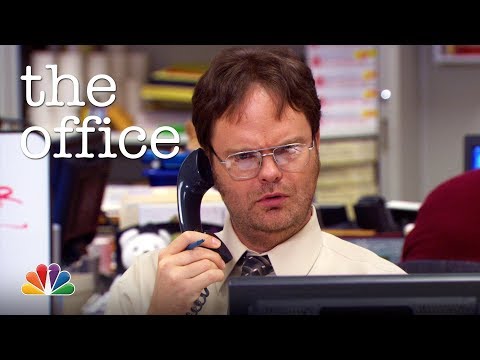
prank in 30 Seconds
- A prank is a mischievous practical joke played on someone, typically intended to be funny and harmless, often involving a surprise or minor deception.
- Commonly performed among friends, pranks rely on the element of surprise and the victim's eventual realization that they have been fooled for amusement.
- The term is frequently associated with April Fools' Day and modern social media content, where 'pranksters' film their tricks for a wide audience.
- While usually lighthearted, the word can carry negative connotations if the trick is mean-spirited, dangerous, or results in genuine distress for the target.
At its core, a prank is a mischievous act designed to trick someone for the purpose of amusement. Unlike a scam or a malicious lie, a prank is traditionally rooted in the spirit of fun, though the boundary between a 'harmless prank' and 'harassment' can sometimes be thin. The word evokes images of school hallways, office cubicles, and family gatherings where someone has set a lighthearted trap. When you think of a prank, think of the classic 'whoopee cushion' or the 'fake spider'—actions that provoke a sudden startle followed by, hopefully, shared laughter. In the modern digital era, the concept has expanded significantly, fueled by social media platforms like YouTube and TikTok, where 'prank culture' has become a genre of its own, sometimes pushing the limits of social acceptability.
- Social Context
- Pranks are most common among friends, siblings, or colleagues who share a level of comfort that allows for temporary deception without causing genuine offense.
The students decided to pull a harmless prank on their teacher by swapping all the chairs in the classroom for exercise balls.
The psychological appeal of a prank lies in the 'reveal.' There is a tension built up during the execution of the trick, followed by a release of that tension when the victim realizes they have been fooled. This release often manifests as laughter. However, the success of a prank depends heavily on the 'victim's' reaction. If the person feels humiliated or unsafe, the act ceases to be a prank and becomes a form of bullying. This is why the adjective 'harmless' is so frequently paired with the noun. People use this word to describe everything from a simple phone call (a 'crank call') to elaborate, multi-day setups involving dozens of participants.
- April Fools' Day
- This is the global 'high holiday' for pranks, where even major corporations and news outlets participate in spreading fake stories or announcing ridiculous products.
I thought the news about the flying cars was real until I remembered it was April 1st and realized it was just a giant prank.
Historically, the word has evolved from describing a 'malicious deed' to its current, lighter connotation. In the 16th century, a prank was often a wicked act. Today, it is almost exclusively used for practical jokes. It is a noun that carries a sense of youthful energy and playfulness. When someone says, 'It was just a prank, bro,' they are attempting to minimize the consequences of their actions by framing them as entertainment. This phrase has actually become a meme in itself, often used ironically to criticize people who do mean things and then try to hide behind the label of humor.
- The Practical Joke
- This is the most common synonym. It emphasizes that the 'joke' is physical or 'practical' rather than just a verbal story or pun.
Putting salt in the sugar bowl is a classic kitchen prank that has been around for generations.
In summary, a prank is a social tool. It can be used to bond people together through shared laughter, or it can be misused to alienate and embarrass. Its meaning is defined as much by the intention of the prankster as it is by the reaction of the person being pranked. Whether it is a simple 'jump scare' or a complex 'hoax,' the prank remains a staple of human interaction and humor across the globe.
Using the word prank correctly involves understanding its grammatical collocations. Most commonly, we use the verbs 'play' or 'pull' when describing the action of performing a prank. You don't 'do' a prank; you 'play a prank on someone' or 'pull a prank.' The preposition 'on' is essential here. It indicates the target of the trick. For example, 'I played a prank on my brother' is the standard construction. If the prank is particularly large or complex, we might use the verb 'orchestrate' or 'stage.' For instance, 'The seniors orchestrated an elaborate prank for their final day of school.'
- Verb Pairings
- Use 'play' for general use, 'pull' for a more active or sudden trick, and 'fall for' when you are the victim who was successfully tricked.
He fell for the prank hook, line, and sinker, believing that he had actually won the lottery.
Adjectives play a huge role in describing the nature of the prank. 'Harmless,' 'innocent,' and 'good-natured' are used to defend the act. On the other hand, 'cruel,' 'mean-spirited,' or 'tasteless' are used when the prank goes too far. If a prank is very detailed, it is 'elaborate' or 'sophisticated.' If it is simple and common, it is a 'classic prank.' You might also hear 'practical' used as an adjective, as in 'practical prank,' though 'practical joke' is the more standard compound noun. In sentence structure, 'prank' can also function as a verb ('He pranked me!'), though this is more informal and common in modern slang than in formal writing.
- Compound Words
- Common compounds include 'prankster' (the person doing it) and 'prank call' (a trick phone call).
The notorious prankster was finally caught after his latest stunt caused a minor traffic jam.
When discussing the aftermath of a prank, you might say the victim was 'the butt of the joke' or that the prank 'backfired' if it ended up hurting the person who planned it. For example, 'The prank backfired when the bucket of water fell on the prankster instead of the target.' Understanding these nuances allows you to describe not just the act itself, but the social dynamics and consequences surrounding it. In academic or formal contexts, you might replace 'prank' with 'hoax' or 'deception' if the tone needs to be more serious, but for everyday English, 'prank' is the most versatile and widely understood term.
- Negative Connotations
- Be careful using the word to describe serious crimes; calling a bomb threat a 'prank' is often seen as downplaying a very dangerous situation.
What he called a prank, the police classified as a serious public disturbance.
Ultimately, mastering the use of 'prank' involves balancing the lighthearted nature of the word with the reality of the situation. It is a word that thrives in the active voice and is best used when describing specific, time-bound events of trickery.
In the 21st century, you are perhaps most likely to encounter the word prank in the digital sphere. Platforms like YouTube are saturated with 'prank channels' where creators film themselves tricking strangers or friends. These videos often have titles like 'EXTREME PRANK GONE WRONG' or 'BEST PRANKS OF 2023.' In this context, the word has become a brand and a genre of entertainment. You'll hear influencers talk about 'setting up the prank' or 'getting a reaction.' This digital usage has made the word incredibly common among younger generations, often losing some of its 'innocent' nuance as the pranks become more extreme for the sake of views.
- Pop Culture
- TV shows like 'Punk'd' or 'Impractical Jokers' are entirely built around the concept of the prank, bringing the word into the mainstream media lexicon.
The reality show features celebrities being the victims of an elaborate hidden-camera prank.
Another common setting is the educational environment. Schools and universities have long traditions of 'senior pranks,' where the graduating class performs a large-scale, usually harmless, trick on the school. You might hear a principal say, 'We encourage school spirit, but please keep your pranks respectful.' In these settings, the word is used to describe a rite of passage. Similarly, in the workplace, 'office pranks'—like wrapping a coworker's entire desk in aluminum foil—are often discussed in the context of office culture and morale. You'll hear it in casual conversations: 'Did you hear about the prank Jim played on Pam?'
- News and Law
- Journalists use the word when reporting on 'swatting' (a dangerous prank involving police) or viral internet challenges that go too far.
The news anchor reported that the 'ghost sighting' was actually a clever prank involving a drone and a bedsheet.
You will also hear the word in family settings. Parents might talk about their children's 'little pranks,' or siblings might recount 'the best prank we ever pulled on Dad.' In literature and film, the 'prankster' is a common character archetype—think of Fred and George Weasley from Harry Potter. Their 'pranks' are a core part of their identity. In these fictional worlds, the word is used to signal a character's rebellious or fun-loving nature. Whether in a movie script, a news headline, or a casual text message, 'prank' is the go-to word for any situation involving a trick played for a laugh.
- Everyday Conversation
- 'It's just a prank!' is a common defensive phrase you'll hear when someone is caught doing something they shouldn't have.
I can't believe you fell for that old prank; it's the oldest trick in the book!
From the lighthearted atmosphere of a birthday party to the high-stakes world of viral content, 'prank' is a word that describes a fundamental human desire to surprise, deceive, and laugh together. Its frequency in modern English is a testament to how much we value—and sometimes fear—the power of a well-executed practical joke.
One of the most frequent mistakes learners make is confusing prank with 'joke.' While they are related, a 'joke' is usually verbal—a story with a punchline. A 'prank' is an action or a physical setup. You *tell* a joke, but you *play* a prank. If you say, 'I played a joke on him,' it's grammatically correct but often implies a verbal trick, whereas 'I played a prank on him' clearly indicates a physical or situational trick. Another common error is using the wrong verb. As mentioned before, 'doing a prank' is a common non-native error. Native speakers almost exclusively 'play' or 'pull' pranks.
- Prank vs. Bullying
- A mistake in social application is calling a harmful act a 'prank.' If the target is hurt, humiliated, or distressed, the word 'prank' is often seen as an inappropriate euphemism.
Incorrect: He did a prank to me.
Correct: He played a prank on me.
Another confusion arises between 'prank' and 'hoax.' A 'hoax' is usually a large-scale deception intended to fool the public or a large group of people (like a fake news story about aliens). A 'prank' is typically more personal and smaller in scale. If you trick your friend into thinking there's a spider on their shoulder, that's a prank. If you convince the whole town that a UFO landed in the park, that's a hoax. Using 'prank' for a large-scale deception can make the act sound less serious than it actually is. Additionally, learners sometimes confuse 'prank' with 'scam.' A 'scam' is a trick designed to steal money or personal information. Calling a financial fraud a 'prank' is a major misuse of the word.
- Preposition Errors
- Avoid saying 'prank to someone.' The correct preposition is always 'on.'
The prank was played on the unsuspecting intern during his first week.
Finally, there is the issue of the word 'prank' as a verb. While 'to prank' is widely used in informal speech ('I'm going to prank him'), it is still considered informal. In formal writing or professional reports, it is better to use the noun form: 'He played a prank.' Also, be careful with the word 'prankish.' It's an adjective meaning 'fond of playing pranks,' but it's somewhat dated and not very common in modern daily speech. Most people would just say 'He's a prankster' or 'He's mischievous.' Avoiding these common pitfalls will make your English sound more natural and ensure your intentions are clearly understood.
- Overuse
- Don't use 'prank' for every mistake. If someone accidentally trips you, it's an accident, not a prank.
Calling a serious crime a prank is a common mistake that can lead to legal misunderstandings.
By paying attention to these distinctions—verb choice, prepositions, and social context—you can use 'prank' with the same nuance as a native speaker, avoiding the awkwardness that comes with mislabeling a situation.
When you want to vary your vocabulary, there are several alternatives to prank, each with its own specific flavor. The most direct synonym is 'practical joke.' This term is slightly more formal and descriptive. It emphasizes that the joke is physical. Another close relative is 'trick.' While 'trick' is more general (it can be a magic trick or a deceptive trick), in the context of humor, it often overlaps with 'prank.' For example, on Halloween, children say 'trick or treat,' where 'trick' refers to a minor prank played if no candy is given.
- Prank vs. Practical Joke
- A 'prank' sounds a bit more mischievous and modern, while 'practical joke' sounds a bit more traditional and deliberate.
His favorite practical joke was hiding an alarm clock in his roommate's room set for 3 AM.
For something more large-scale or public, 'hoax' is the better choice. A hoax is a sophisticated prank intended to deceive a large audience. If you're talking about playful, high-energy behavior that might include pranks, you could use 'shenanigans' or 'antics.' These words describe a general state of being mischievous rather than a single specific act. 'Antics' often refers to silly or funny behavior, while 'shenanigans' often implies a bit of secret or dishonest activity that is still relatively harmless. 'Caper' is another fun word, often used for a playful or slightly illegal adventure or prank, like a 'heist' that is actually just a joke.
- Nuance Comparison
- 'Gag' is often used in the entertainment industry to describe a visual prank or a recurring joke in a movie or show.
The comedian's latest gag involved pretending to be a statue in the middle of a busy square.
If the prank is meant to be mean or is a way of cheating someone, you might use 'stunt.' A 'stunt' can be a prank, but it can also be a dangerous physical feat or a 'publicity stunt' designed to get attention. 'Put-on' is an older term for a deception or a prank where you pretend something is true to see if someone believes you. For example, 'The whole story about him moving to Mars was just a big put-on.' Understanding these alternatives allows you to choose the word that perfectly fits the scale, intention, and tone of the trick you are describing.
- Formal Alternatives
- In a legal or psychological context, you might use 'deception' or 'fabrication,' though these lack the 'humorous' element of a prank.
The 'ghost' in the attic turned out to be a hoax created by the local teenagers.
By choosing the right word—whether it's the simple 'trick,' the descriptive 'practical joke,' the grand 'hoax,' or the whimsical 'shenanigans'—you can communicate the exact nature of the mischief and the reaction it was intended to provoke.
How Formal Is It?
Fun Fact
In the 1500s, if you 'pranked' someone, you might have been considered a villain. Today, you're just a comedian!
Pronunciation Guide
- Pronouncing it like 'pronk' with an 'o' sound.
- Failing to pronounce the 'k' at the end clearly.
- Confusing the 'pr' blend with 'p' or 'r' alone.
- Over-emphasizing the 'n' sound.
- Pronouncing it like 'prank' but with a long 'a' as in 'pray'.
Difficulty Rating
The word is short and common in many types of texts.
Requires knowledge of correct verb collocations like 'play' or 'pull'.
Easy to pronounce but requires correct preposition 'on'.
Distinct sound, easy to recognize in casual speech.
What to Learn Next
Prerequisites
Learn Next
Advanced
Grammar to Know
Collocations with 'Play' and 'Pull'
You play a prank ON someone, not TO someone.
Countable Nouns
I have three pranks planned for today.
Zero Article in Generalizations
Pranks are common on April Fools' Day.
Adjective Placement
An elaborate, well-planned prank (Opinion + Fact).
Passive Voice for Impact
The prank was played by the students.
Examples by Level
I played a prank on my mom.
J'ai fait une farce à ma mère.
Subject + verb (played) + object (a prank) + preposition (on).
Is this a prank?
Est-ce une farce ?
Question form using 'to be'.
The prank was very funny.
La farce était très drôle.
Simple adjective description.
He likes to play pranks.
Il aime faire des farces.
Present simple with 'likes to'.
It was a small prank.
C'était une petite farce.
Using 'small' as an adjective.
Don't play a prank on me!
Ne me fais pas de farce !
Imperative negative form.
We had a prank at school.
On a fait une farce à l'école.
Using 'had' to describe an event.
The prank is over.
La farce est finie.
Simple state of being.
My brother pulled a prank on me yesterday.
Mon frère m'a fait une farce hier.
Using 'pulled' as a synonym for 'played'.
It was just a harmless prank.
C'était juste une farce inoffensive.
'Harmless' is a common adjective for pranks.
He is a famous prankster on YouTube.
C'est un farceur célèbre sur YouTube.
'Prankster' is the person who does the prank.
I fell for his prank.
Je suis tombé dans son piège.
'Fall for' means to be tricked.
April Fools' Day is for pranks.
Le poisson d'avril est pour les farces.
Prepositional phrase 'for pranks'.
They are planning a prank for the party.
Ils préparent une farce pour la fête.
Present continuous 'are planning'.
That prank was not very nice.
Cette farce n'était pas très gentille.
Negative evaluation.
She laughed when she realized it was a prank.
Elle a ri quand elle a réalisé que c'était une farce.
Complex sentence with 'when' and 'realized'.
The students orchestrated an elaborate prank for their graduation.
Les étudiants ont orchestré une farce élaborée pour leur remise de diplôme.
'Orchestrated' implies planning and complexity.
I didn't mean to upset you; it was only a prank.
Je ne voulais pas te vexer ; ce n'était qu'une farce.
Using 'only' to minimize the act.
He’s known for his mischievous pranks around the office.
Il est connu pour ses farces malicieuses au bureau.
'Mischievous' describes the playful nature.
The prank backfired and he ended up getting in trouble.
La farce s'est retournée contre lui et il a fini par avoir des ennuis.
'Backfired' means the result was the opposite of what was intended.
It’s hard to tell if he’s being serious or just playing a prank.
C'est difficile de dire s'il est sérieux ou s'il fait juste une farce.
Using 'whether... or' structure.
A well-timed prank can really lighten the mood.
Une farce bien placée peut vraiment détendre l'atmosphère.
'Well-timed' is a compound adjective.
The prank involved a fake lottery ticket.
La farce impliquait un faux ticket de loto.
Using 'involved' to describe the components.
They spent weeks preparing the prank.
Ils ont passé des semaines à préparer la farce.
Spend + time + -ing form.
The boundary between a harmless prank and bullying is often blurred.
La frontière entre une farce inoffensive et le harcèlement est souvent floue.
Abstract discussion of concepts.
Many viral videos are staged pranks designed to get clicks.
Beaucoup de vidéos virales sont des farces mises en scène conçues pour obtenir des clics.
'Staged' means it was not spontaneous.
He pulled a prank on his coworkers by filling the office with balloons.
Il a fait une farce à ses collègues en remplissant le bureau de ballons.
Using 'by + -ing' to explain the method.
The prank was so convincing that even the local news reported it.
La farce était si convaincante que même les informations locales en ont parlé.
So + adjective + that structure.
I suspect this whole situation is just an elaborate prank.
Je soupçonne que toute cette situation n'est qu'une farce élaborée.
Using 'suspect' to express doubt.
The prankster's identity remained a secret for years.
L'identité du farceur est restée secrète pendant des années.
Possessive form 'prankster's'.
She was the victim of a cruel prank that left her feeling humiliated.
Elle a été la victime d'une farce cruelle qui l'a laissée humiliée.
Using 'victim' and 'cruel' for negative impact.
Despite the prank, they remained close friends.
Malgré la farce, ils sont restés des amis proches.
Using 'despite' to show contrast.
The prank served as a satirical commentary on modern consumerism.
La farce a servi de commentaire satirique sur le consumérisme moderne.
Using 'served as' for functional description.
He has a penchant for orchestrating sophisticated pranks that border on performance art.
Il a un penchant pour l'orchestration de farces sophistiquées qui frôlent l'art de la performance.
'Penchant for' and 'border on' are advanced collocations.
The public's reaction to the prank highlighted deep-seated social anxieties.
La réaction du public à la farce a mis en évidence des angoisses sociales profondes.
Abstract subject and verb 'highlighted'.
What began as a juvenile prank escalated into a legal nightmare.
Ce qui a commencé comme une farce juvénile a dégénéré en un cauchemar juridique.
'Escalated into' describes the worsening situation.
The prank was executed with such precision that no one suspected a thing.
La farce a été exécutée avec une telle précision que personne n'a rien soupçonné.
Passive voice 'was executed'.
Critics argue that 'prank culture' devalues genuine human connection.
Les critiques soutiennent que la « culture de la farce » dévalorise les véritables relations humaines.
Reporting verb 'argue' with a 'that' clause.
The elaborate prank was designed to expose the gullibility of the media.
La farce élaborée était conçue pour exposer la crédulité des médias.
Infinitive of purpose 'to expose'.
He dismissed the allegations as a mere prank, but the authorities took them seriously.
Il a rejeté les allégations comme une simple farce, mais les autorités les ont prises au sérieux.
Using 'mere' to downplay the noun.
The prank was a masterclass in psychological manipulation and subversion.
La farce était une leçon magistrale de manipulation psychologique et de subversion.
Metaphorical use of 'masterclass'.
One must discern between a benign prank and a malicious act of deception.
Il faut savoir discerner entre une farce bénigne et un acte de tromperie malveillant.
Using 'one' as a formal generic pronoun.
The sheer audacity of the prank left the audience in a state of stunned silence.
L'audace pure de la farce a laissé le public dans un état de silence stupéfait.
'Sheer audacity' is a high-level collocation.
The prankster navigated the ethical minefield of public deception with surprising grace.
Le farceur a navigué dans le champ de mines éthique de la tromperie publique avec une grâce surprenante.
Metaphorical 'ethical minefield'.
Her penchant for pranks was often interpreted as a defense mechanism against intimacy.
Son penchant pour les farces était souvent interprété comme un mécanisme de défense contre l'intimité.
Passive voice with psychological terminology.
The prank's fallout was felt across the entire organization, leading to a complete overhaul of security protocols.
Les retombées de la farce se sont fait sentir dans toute l'organisation, entraînant une refonte complète des protocoles de sécurité.
Using 'fallout' for consequences.
In the annals of corporate history, this particular prank remains unparalleled in its complexity.
Dans les annales de l'histoire des entreprises, cette farce particulière reste sans précédent par sa complexité.
Formal introductory phrase 'In the annals of...'.
The prank was so ingeniously crafted that it bypassed all logical scrutiny.
La farce était si ingénieusement conçue qu'elle a contourné tout examen logique.
Adverb-adjective combination 'ingeniously crafted'.
Common Collocations
Common Phrases
— A common defense used when a trick is taken poorly or goes wrong.
He shouted 'It's just a prank!' as the security guard approached.
— A situation where a trick results in unintended negative consequences.
The video was titled 'Prank Gone Wrong' because someone actually got hurt.
— A related idiom meaning to tease or trick someone in a playful way.
Don't worry, I'm just pulling your leg about the meeting being cancelled.
— A very common and well-known prank or deception.
Hiding behind the door is the oldest trick in the book.
— The phrase shouted after successfully playing a prank on April 1st.
I told him his car was towed, and when he looked, I yelled 'April Fools!'
— To be completely fooled by a prank or deception.
He fell for the prank hook, line, and sinker.
— To be the person that everyone is laughing at because of a prank.
He didn't like being the butt of the joke every time his friends hung out.
— To successfully play a very effective or funny prank on someone.
Wow, you really got me good with that fake spider!
— When a prankster is pranked in return.
He finally got a taste of his own medicine when his friends pranked him back.
Often Confused With
A joke is usually verbal; a prank is a physical or situational trick.
A hoax is a large-scale deception for the public; a prank is personal.
A scam is a criminal trick to steal money; a prank is for humor.
Idioms & Expressions
— To deceive someone, often in a playful or elaborate way.
They led him up the garden path by making him think he was being promoted.
informal— To deceive or cheat someone, sometimes used for pranks.
I think he's taking us for a ride with this 'haunted house' story.
informal— To trick or outsmart someone quickly.
He tried to play a fast one on us by swapping the labels.
informal— To deceive someone so they don't know what is happening.
You can't pull the wool over my eyes; I know this is a prank.
neutral— A prank where someone is sent on a pointless search.
Sending the intern to find 'left-handed tape' was a classic wild goose chase.
neutral— To plan something, often a prank or a trick.
They cooked up a scheme to surprise their teacher.
informal— To tease or trick someone into believing something that isn't true.
Are you having me on, or did you really see a ghost?
informal (UK)— To make someone look silly, often through a prank.
The prank was intended to make a fool of the arrogant captain.
neutral— To do something surprising or unexpected, like a prank reveal.
He pulled a rabbit out of a hat by revealing the 'stolen' car was in the garage.
neutral— Said when a prankster's trick backfires or they are the ones who look silly.
You thought you hid my keys, but I have yours! The joke is on you!
neutralEasily Confused
Both involve deception.
A trick can be for magic, deceit, or fun. A prank is specifically a trick for humor.
The magician did a trick, but the boy played a prank.
Both mean a joke.
A gag is often a visual or recurring joke in a show; a prank is a one-time trick on a person.
The movie had a funny gag with a ladder.
Both are planned actions.
A stunt is often for attention or a physical feat; a prank is to fool someone.
The jump was a publicity stunt, not a prank.
Both involve mischief.
Antics refers to a person's general silly behavior; a prank is one specific act.
His antics in class were annoying, but his prank was funny.
Both involve tricks.
Shenanigans often implies a series of secret or slightly dishonest acts.
The kids were up to their usual shenanigans.
Sentence Patterns
I played a prank.
I played a prank.
He played a prank on [person].
He played a prank on his dad.
It was just a [adjective] prank.
It was just a harmless prank.
[Person] fell for the prank [idiom].
She fell for the prank hook, line, and sinker.
The prank was designed to [verb].
The prank was designed to expose the truth.
The [adjective] of the prank was [adjective].
The sheer audacity of the prank was breathtaking.
The prank backfired when [clause].
The prank backfired when the teacher saw them.
They orchestrated a [adjective] prank.
They orchestrated a sophisticated prank.
Word Family
Nouns
Verbs
Adjectives
Related
How to Use It
Common in daily speech and very high in digital media.
-
I did a prank to him.
→
I played a prank on him.
The verb 'play' and the preposition 'on' are the standard collocations for this noun.
-
He told a funny prank.
→
He told a funny joke. / He played a funny prank.
You 'tell' jokes (verbal) but you 'play' pranks (actions).
-
The prank was very harm.
→
The prank was very harmful. / The prank was harmless.
Use the adjective form 'harmful' or 'harmless' to describe the noun.
-
It was a big hoax on my friend.
→
It was a big prank on my friend.
A 'hoax' is for the public; a 'prank' is for individuals.
-
I pranked to her.
→
I pranked her.
When using 'prank' as a verb, it is transitive and does not need a preposition before the object.
Tips
Use 'on'
Always remember the preposition 'on'. You play a prank *on* someone. Using 'to' is a common mistake.
Adjective Power
Use adjectives like 'harmless', 'innocent', or 'elaborate' to give more detail about the prank's nature.
Know Your Audience
Only play pranks on people you know well. A prank on a stranger can easily be seen as aggressive or scary.
Verb Choice
Stick to 'play' or 'pull'. Avoid 'do a prank' or 'make a prank', as these sound unnatural to native speakers.
April 1st
If you hear about something crazy on April 1st, check the date! It's likely a prank.
Digital Context
On social media, 'prank' is often used as a category or genre of video content.
The Limit
If a prank involves fear or danger, it's probably not a prank anymore. Use words like 'harassment' or 'threat' instead.
Leg Pulling
If you are just telling a small lie for fun, you can say 'I'm just pulling your leg' instead of 'playing a prank'.
Orchestration
For a very big or complex prank, use the verb 'orchestrate' to sound more advanced in your writing.
The Reveal
In stories, listen for the phrase 'it turned out to be...' which often signals the end of a prank.
Memorize It
Mnemonic
Think of a **P**layful **R**eally **A**nnoying **N**ice **K**id. (PRANK).
Visual Association
Imagine a classic 'Whoopee Cushion' on a chair. The bright red color and the funny sound are perfect visual and auditory cues for a prank.
Word Web
Challenge
Try to use 'prank' in three different sentences today: one about a friend, one about a movie, and one about a holiday.
Word Origin
The word 'prank' emerged in the mid-16th century. Its exact origins are somewhat obscure, but it is believed to be related to Middle Dutch 'pronken' meaning 'to show off' or 'to strut'.
Original meaning: Originally, it referred to a wicked or malicious deed, but over time, the meaning softened to describe a mischievous but usually harmless trick.
GermanicCultural Context
Be careful not to prank people in professional settings or those you don't know well, as it can be interpreted as harassment.
Pranks are often seen as a sign of friendship and 'having a laugh.'
Practice in Real Life
Real-World Contexts
School
- senior prank
- play a trick on the teacher
- harmless fun
- get in trouble
Office
- office prank
- coworker bonding
- unprofessional behavior
- lighten the mood
Social Media
- prank video
- viral prank
- staged
- reaction
Family
- sibling rivalry
- April Fools
- surprise
- laugh together
Legal/News
- public disturbance
- dangerous prank
- alleged
- consequences
Conversation Starters
"Have you ever played a prank on someone that went really well?"
"What is the funniest prank you have ever seen on the internet?"
"Do you think pranks are a good way to make friends, or are they mean?"
"What is the most common prank people play in your country?"
"If someone played a prank on you, would you laugh or get angry?"
Journal Prompts
Describe a time you were the victim of a prank. How did you feel when you realized it was a trick?
Write about an elaborate prank you would like to pull if you had unlimited resources.
Do you think 'prank culture' on YouTube is harmful or just entertainment? Explain your view.
Reflect on the difference between a 'harmless prank' and 'bullying.' Where do you draw the line?
Imagine a world where pranks are illegal. How would social interactions change?
Frequently Asked Questions
10 questionsIt is primarily a noun (a prank), but it is very commonly used as a verb in informal English (to prank someone). For example, 'He played a prank' (noun) and 'He pranked me' (verb).
A senior prank is a tradition in many US and UK high schools where the graduating class performs a large-scale, usually harmless, trick on the school before they leave. Examples include filling a hallway with balloons.
Yes, if a prank involves breaking the law, causing public panic (like a fake bomb threat), or damaging property, it is illegal. In these cases, it is no longer considered a 'harmless prank' by the authorities.
This is a phrase people use to defend themselves when their trick causes trouble or someone gets upset. It is often criticized because it tries to avoid responsibility for the harm caused.
A prank is usually small and personal (tricking a friend). A hoax is a large-scale deception designed to fool many people, often involving the media or the general public.
It is generally neutral but leans towards positive (fun) or negative (mean) depending on the context and the adjectives used (e.g., 'harmless' vs. 'cruel').
The most common way is 'to play a prank on someone.' For example: 'I played a prank on my brother by hiding his phone.'
A prankster is a person who enjoys playing pranks on others. It can be used as a compliment for someone funny or a criticism for someone annoying.
Yes, they are almost identical in meaning. 'Practical joke' is slightly more formal and emphasizes that the joke is a physical action.
A prank call is a telephone call made to trick or annoy the person who answers. It was very common before caller ID became widespread.
Test Yourself 200 questions
Describe a harmless prank you could play on a friend.
Well written! Good try! Check the sample answer below.
Write a short story about a prank that backfired.
Well written! Good try! Check the sample answer below.
Compare and contrast a 'prank' and a 'hoax'.
Well written! Good try! Check the sample answer below.
Discuss the ethical implications of 'prank culture' on social media.
Well written! Good try! Check the sample answer below.
Write a formal apology for a prank that went too far.
Well written! Good try! Check the sample answer below.
Describe a famous prank from history or literature.
Well written! Good try! Check the sample answer below.
How would you define the 'perfect prank'?
Well written! Good try! Check the sample answer below.
Write a dialogue between two people planning a senior prank.
Well written! Good try! Check the sample answer below.
Explain why April Fools' Day is popular in many cultures.
Well written! Good try! Check the sample answer below.
Describe the reaction of someone who has just been pranked.
Well written! Good try! Check the sample answer below.
Write a news headline for an elaborate city-wide prank.
Well written! Good try! Check the sample answer below.
What are the risks of playing a prank on a stranger?
Well written! Good try! Check the sample answer below.
How do pranks help or hurt office morale?
Well written! Good try! Check the sample answer below.
Describe a prank involving a fake spider.
Well written! Good try! Check the sample answer below.
Write a list of rules for 'safe and fun pranking'.
Well written! Good try! Check the sample answer below.
Analyze the role of the 'prankster' in a group of friends.
Well written! Good try! Check the sample answer below.
Describe a prank that uses technology.
Well written! Good try! Check the sample answer below.
Write about a time you fell for a prank.
Well written! Good try! Check the sample answer below.
What is the difference between a prank and bullying? Give examples.
Well written! Good try! Check the sample answer below.
Create a script for a 30-second prank video.
Well written! Good try! Check the sample answer below.
Tell a story about a prank you saw online.
Read this aloud:
You said:
Speech recognition is not supported in your browser. Try Chrome or Edge.
Explain the rules of a prank you would play on April Fools' Day.
Read this aloud:
You said:
Speech recognition is not supported in your browser. Try Chrome or Edge.
Argue for or against the statement: 'Pranks are a form of bullying.'
Read this aloud:
You said:
Speech recognition is not supported in your browser. Try Chrome or Edge.
Describe the most elaborate prank you can imagine.
Read this aloud:
You said:
Speech recognition is not supported in your browser. Try Chrome or Edge.
Roleplay: Apologize to a friend after a prank goes wrong.
Read this aloud:
You said:
Speech recognition is not supported in your browser. Try Chrome or Edge.
Discuss the popularity of prank channels on YouTube.
Read this aloud:
You said:
Speech recognition is not supported in your browser. Try Chrome or Edge.
Explain the difference between a prank and a regular joke.
Read this aloud:
You said:
Speech recognition is not supported in your browser. Try Chrome or Edge.
Describe a 'senior prank' tradition you know about.
Read this aloud:
You said:
Speech recognition is not supported in your browser. Try Chrome or Edge.
What would you do if someone played a mean prank on you?
Read this aloud:
You said:
Speech recognition is not supported in your browser. Try Chrome or Edge.
Talk about a time you were 'the butt of the joke'.
Read this aloud:
You said:
Speech recognition is not supported in your browser. Try Chrome or Edge.
How do you feel about hidden camera prank shows?
Read this aloud:
You said:
Speech recognition is not supported in your browser. Try Chrome or Edge.
Describe a prank that involves a fake phone call.
Read this aloud:
You said:
Speech recognition is not supported in your browser. Try Chrome or Edge.
What makes a prank 'harmless' in your opinion?
Read this aloud:
You said:
Speech recognition is not supported in your browser. Try Chrome or Edge.
Discuss a prank that had a positive social impact.
Read this aloud:
You said:
Speech recognition is not supported in your browser. Try Chrome or Edge.
If you were a famous prankster, what would your 'signature' prank be?
Read this aloud:
You said:
Speech recognition is not supported in your browser. Try Chrome or Edge.
Explain the idiom 'pulling someone's leg'.
Read this aloud:
You said:
Speech recognition is not supported in your browser. Try Chrome or Edge.
Describe a prank you played on a family member.
Read this aloud:
You said:
Speech recognition is not supported in your browser. Try Chrome or Edge.
How do pranks change as people get older?
Read this aloud:
You said:
Speech recognition is not supported in your browser. Try Chrome or Edge.
Discuss the legal consequences of dangerous pranks.
Read this aloud:
You said:
Speech recognition is not supported in your browser. Try Chrome or Edge.
What is the funniest prank you've ever heard of?
Read this aloud:
You said:
Speech recognition is not supported in your browser. Try Chrome or Edge.
Listen for the word 'prank' in a conversation about April Fools' Day.
Identify the tone of the speaker when they say 'It was just a prank!'
Listen to a story about a prank and identify the 'victim'.
Listen for the verb used with prank (play, pull, orchestrate).
Listen to a news report about a 'hoax' and explain why it wasn't called a 'prank'.
Identify the adjectives used to describe the prank in the audio.
Listen for the idiom 'hook, line, and sinker' in a story about a trick.
Listen to a dialogue planning a prank and list the steps involved.
Listen for the reaction of the person being pranked.
Identify if the prank in the story was 'harmless' or 'cruel'.
Listen for the word 'prankster' and describe the person it refers to.
Listen to a discussion about 'prank culture' and summarize the main points.
Listen for the phrase 'backfired' and explain what happened.
Identify the setting of the prank (school, office, home).
Listen for the difference between 'prank' and 'scam' in a warning message.
/ 200 correct
Perfect score!
Summary
A prank is essentially a physical or situational joke that requires a 'victim' to be momentarily deceived. For example, 'The classic prank of placing a bucket of water over a door is meant to surprise the person walking through.'
- A prank is a mischievous practical joke played on someone, typically intended to be funny and harmless, often involving a surprise or minor deception.
- Commonly performed among friends, pranks rely on the element of surprise and the victim's eventual realization that they have been fooled for amusement.
- The term is frequently associated with April Fools' Day and modern social media content, where 'pranksters' film their tricks for a wide audience.
- While usually lighthearted, the word can carry negative connotations if the trick is mean-spirited, dangerous, or results in genuine distress for the target.
Use 'on'
Always remember the preposition 'on'. You play a prank *on* someone. Using 'to' is a common mistake.
Adjective Power
Use adjectives like 'harmless', 'innocent', or 'elaborate' to give more detail about the prank's nature.
Know Your Audience
Only play pranks on people you know well. A prank on a stranger can easily be seen as aggressive or scary.
Verb Choice
Stick to 'play' or 'pull'. Avoid 'do a prank' or 'make a prank', as these sound unnatural to native speakers.