Irregular Descriptions and Habitual Trips
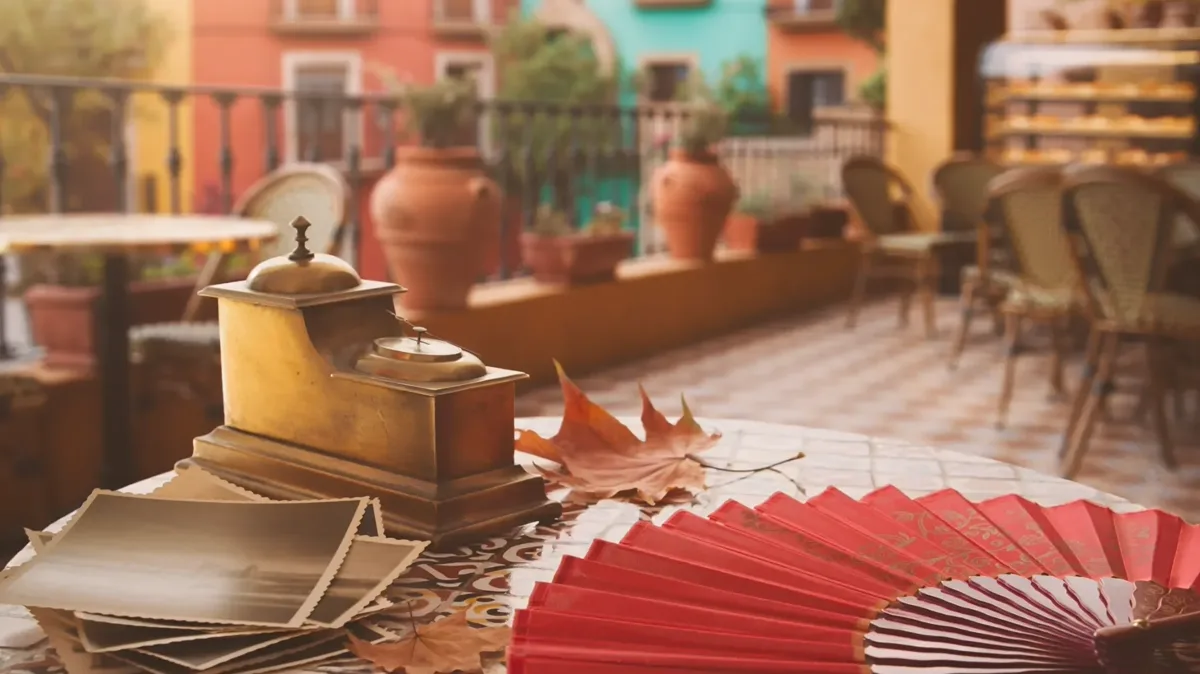
Chapter in 30 Seconds
Master the three essential irregular verbs to narrate your past memories with ease and confidence.
- Identify irregular past forms of ser, ir, and ver.
- Describe past states and habitual activities.
- Recount childhood scenes and shared memories.
What You'll Learn
Hey friend! You’ve already got a solid grasp of Spanish basics, building up your confidence. Now, it’s time to take a big step forward and dive into the past – but not just any past! In this exciting chapter, you’re going to meet three of Spanish’s 'tricky' verbs in the Imperfect tense: 'ser' (to be), 'ir' (to go), and 'ver' (to see). These are the only irregular verbs in this tense, and mastering them will significantly boost your ability to talk about the past. You’ll learn how to use 'ser' to describe people, places, and general vibes in the past without needing to specify exact start or end points. Imagine telling someone what a person used to be like, or how a place looked years ago. Then, we’ll move to 'ir,' which lets you talk about habitual past trips or set the scene for past events. It’s even useful for explaining intentions that didn’t quite pan out! For instance, you could say 'I always used to go to school by bike' or 'I intended to go to Spain back then.' Finally, with 'ver' (to see), which has a unique conjugation in the Imperfect (veía), you’ll learn how to recount what you used to see. These skills are super handy when you want to share memories, reminisce about old times, or even chat with a friend about your childhood in a Spanish café! With these three verbs, the past won't feel intimidating anymore. By the end of this chapter, you’ll be able to discuss the past, tell stories, and describe atmospheres much more smoothly and vividly. Your Spanish skills will jump to the next level, allowing you to bring your memories to life just like a native speaker. Ready? Let’s go!
-
The 'Used to Be' Verb: Ser in the Imperfect (era, eras, era...)Use the imperfect of
serto describe people, places, and general vibes in the past without specific endpoints. -
Spanish Imperfect: Using 'ir' (iba, ibas, iba...)Use the 'iba' family for habitual past trips, setting scenes, or explaining intentions that didn't happen.
-
Watching the Past: The Verb 'Ver' (veía)The verb
verkeeps its 'e' in the imperfect, making itveíainstead of the regularvía.
Learning Objectives
By the end of this chapter, you will be able to:
-
1
By the end you will be able to: Describe your childhood personality and environment using 'ser'.
-
2
By the end you will be able to: Narrate habitual past trips and routines using 'ir'.
-
3
By the end you will be able to: Recall what you used to see in specific settings using 'ver'.
Chapter Guide

Overview
How This Grammar Works

Common Mistakes
- 1✗ Wrong: "Cuando fui niño, fui muy tímido."
- 1✗ Wrong: "Siempre fui al parque después de la escuela."
- 1✗ Wrong: "De niño, yo vía muchos dibujos animados."

Real Conversations
A
B
A
B
A
B
Quick FAQ
What are the only irregular verbs in the Spanish Imperfect tense?
The only irregular verbs in the Spanish Imperfect tense are ser (to be), ir (to go), and ver (to see).
How do I describe past habits in A2 Spanish?
You use the Imperfect tense, especially with verbs like ir (e.g., iba for "I used to go") or other regular verbs with Imperfect endings.
When should I use era versus fue in Spanish grammar?
Use era (Imperfect of ser) for descriptions, ongoing states, or habitual actions in the past. Use fue (Preterite of ser) for completed, single actions or events in the past.
Is ver the only -er verb with an irregular imperfect conjugation in Spanish?
Yes, ver is the only -er verb that is irregular in the Imperfect tense, taking the unique stem ve- before the regular -ía endings.

Cultural Context
Key Examples (6)
Cuando `era` niño, me gustaba jugar con Legos.
When I was a child, I liked playing with Legos.
The 'Used to Be' Verb: Ser in the Imperfect (era, eras, era...)Mi primer móvil `era` muy pequeño y no tenía cámara.
My first phone was very small and didn't have a camera.
The 'Used to Be' Verb: Ser in the Imperfect (era, eras, era...)Yo iba a mandarte un WhatsApp, pero me quedé dormido.
I was going to send you a WhatsApp, but I fell asleep.
Spanish Imperfect: Using 'ir' (iba, ibas, iba...)De pequeños, íbamos a la playa cada verano.
When we were little, we used to go to the beach every summer.
Spanish Imperfect: Using 'ir' (iba, ibas, iba...)Cuando era niño, yo veía dibujos animados cada mañana.
When I was a kid, I used to watch cartoons every morning.
Watching the Past: The Verb 'Ver' (veía)Mi abuela siempre veía las telenovelas después de comer.
My grandmother always watched soap operas after eating.
Watching the Past: The Verb 'Ver' (veía)Tips & Tricks (3)
The 'Used To' Test
The Accent Rule
Accent Rule
Key Vocabulary (6)
Real-World Preview
Nostalgic Café Chat
Review Summary
- era/eras/era/éramos/erais/eran
- iba/ibas/iba/íbamos/ibais/iban
- veía/veías/veía/veíamos/veíais/veían
Common Mistakes
Students often confuse the English 'I used to be' with the verb 'go'. Use 'ser' for states of being, not 'ir'.
Learners often try to add the -aba ending to 'ver', but it follows the -ía pattern.
Don't forget the accent on the 'i' in íbamos!
Rules in This Chapter (3)
Next Steps
You've successfully conquered the most common irregular verbs in the imperfect. Keep practicing, and you'll be telling stories like a native speaker in no time!
Write 5 sentences about your last vacation using these three verbs.
Quick Practice (9)
Which sentence is correct?
frontend.learn_grammar.from_rule: The 'Used to Be' Verb: Ser in the Imperfect (era, eras, era...)
Find and fix the mistake:
Ellos veia la película.
frontend.learn_grammar.from_rule: Watching the Past: The Verb 'Ver' (veía)
Yo ___ al parque.
frontend.learn_grammar.from_rule: Spanish Imperfect: Using 'ir' (iba, ibas, iba...)
Find and fix the mistake:
Nosotros eramos amigos.
frontend.learn_grammar.from_rule: The 'Used to Be' Verb: Ser in the Imperfect (era, eras, era...)
Find and fix the mistake:
Yo irba a casa.
frontend.learn_grammar.from_rule: Spanish Imperfect: Using 'ir' (iba, ibas, iba...)
Which is correct?
frontend.learn_grammar.from_rule: Watching the Past: The Verb 'Ver' (veía)
Yo ___ (ver) la tele.
frontend.learn_grammar.from_rule: Watching the Past: The Verb 'Ver' (veía)
Nosotros ___ a la escuela.
frontend.learn_grammar.from_rule: Spanish Imperfect: Using 'ir' (iba, ibas, iba...)
Cuando yo ___ niño, vivía en Madrid.
frontend.learn_grammar.from_rule: The 'Used to Be' Verb: Ser in the Imperfect (era, eras, era...)
Score: /9

