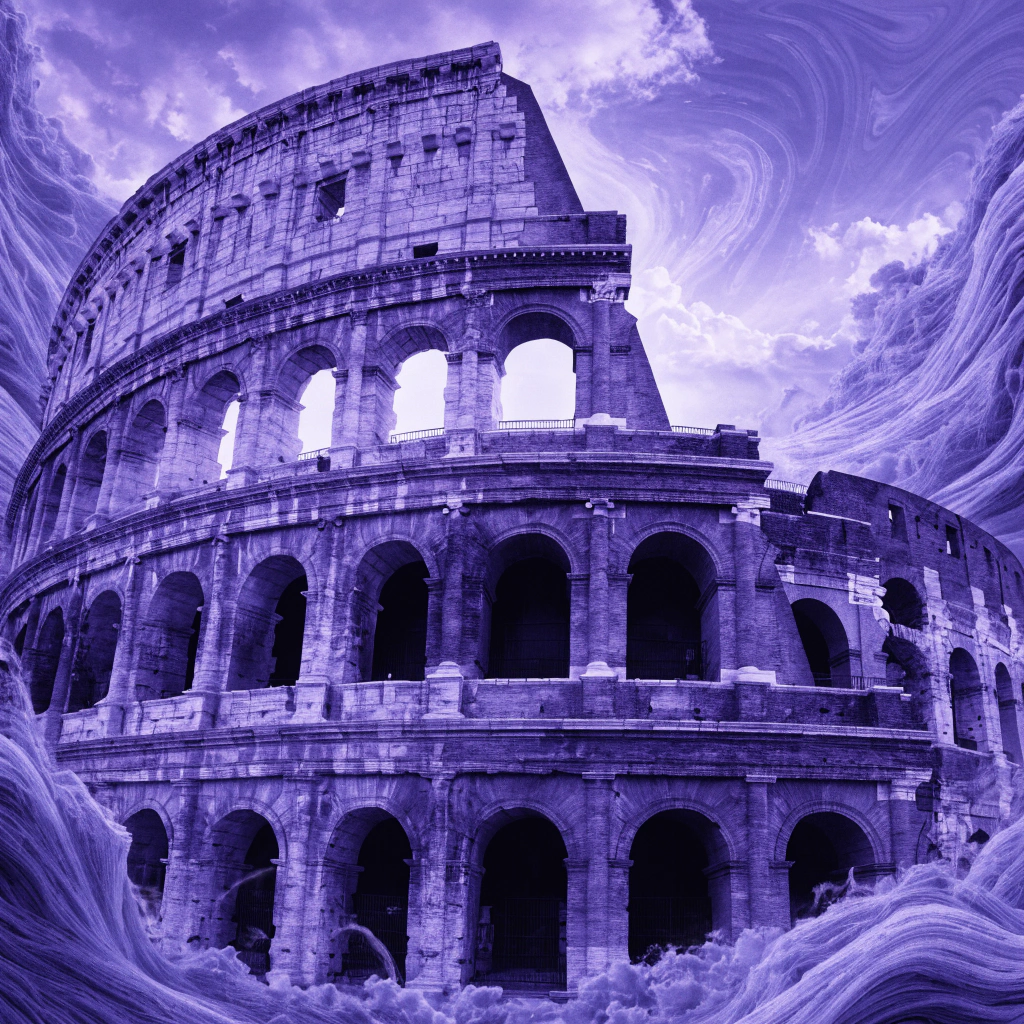
The Big Colosseum in Rome
The Colosseum is a very big building in Rome, Italy. It is very old. It is an amphitheater. People built it a long time ago. Many people visit it today. They like to see the history of Rome.
Inside, the Colosseum is round. It has many seats. In the past, people watched games here. Gladiators fought in the center. Today, the building is a famous museum. It is a symbol of Italy. Tourists take photos of the big walls. It is a beautiful place.
Gramática em destaque
Padrão: Present Simple (Be verb)
"The Colosseum is a very big building in Rome."
We use 'is' with singular subjects like 'The Colosseum' to describe facts and characteristics. It tells us what something is like.
Padrão: Present Simple (Action verbs)
"Many people visit it today."
We use the base form of the verb (visit) with plural subjects (people) to talk about regular actions or habits in the present.
Teste sua compreensão
10 perguntas · A1 Iniciante · 1 pré-visualização grátis
Teste o que aprendeu neste artigo. Responda todas as perguntas para ganhar XP!
Where is the Colosseum located?
Quer finalizar o quiz?
9 perguntas a mais estão esperando por você. Cadastre-se grátis para desbloquear o quiz completo e ganhar XP!
Cadastrar grátisJá tem conta? Entrar
Detalhamento das perguntas
Where is the Colosseum located?
Sua resposta:
Resposta correta: Rome
The Colosseum is a new building.
Sua resposta:
Resposta correta: Falso
What does 'famous' mean?
Sua resposta:
Resposta correta: Many people know it
The Colosseum is a very _____ building.
Sua resposta:
Resposta correta: big
The Great Colosseum of Rome
The Colosseum is a very famous building in the center of Rome, Italy. It is more than 1,900 years old. Emperor Vespasian started the work around 70 AD, and his son, Titus, finished it. It is the largest amphitheater in the world, and it was bigger than other theaters at that time.
In the past, thousands of people went there to watch shows. The most famous shows were the gladiator fights. These men were very brave and strong. They fought in front of big crowds. Sometimes there were also shows with animals from different countries.
Today, the Colosseum is a very popular place for tourists. Millions of people visit it every year because it is beautiful and interesting. It is a symbol of the great Roman Empire. Visitors can walk inside and see where the people sat. Even though it is very old, it still stands tall today. It is one of the most important monuments in history.
Gramática em destaque
Padrão: Past Simple
"Emperor Vespasian started the work around 70 AD"
We use the past simple to talk about actions that finished in the past. For regular verbs, we usually add '-ed' to the base form of the verb.
Padrão: Comparatives
"it was bigger than other theaters at that time."
We use comparatives to compare two people or things. For short adjectives like 'big', we add '-er' and use the word 'than'.
Teste sua compreensão
11 perguntas · A2 Elementar · 1 pré-visualização grátis
Teste o que aprendeu neste artigo. Responda todas as perguntas para ganhar XP!
Where is the Colosseum located?
Quer finalizar o quiz?
10 perguntas a mais estão esperando por você. Cadastre-se grátis para desbloquear o quiz completo e ganhar XP!
Cadastrar grátisJá tem conta? Entrar
Detalhamento das perguntas
Where is the Colosseum located?
Sua resposta:
Resposta correta: Rome
The emperor's son, Titus, finished the building.
Sua resposta:
Resposta correta: Verdadeiro
What does 'brave' mean?
Sua resposta:
Resposta correta: Not afraid of danger
Millions of people _____ the Colosseum every year.
Sua resposta:
Resposta correta: visit
Who fought in the shows at the Colosseum?
Sua resposta:
Resposta correta: Gladiators
The Colosseum: A Symbol of Ancient Rome
The Colosseum, which is also known as the Flavian Amphitheatre, is one of the most famous landmarks in the world. It stands in the center of Rome, Italy, and has attracted millions of tourists over the years. This massive stone structure was built nearly 2,000 years ago to show the power of the Roman Empire.
Construction was started by Emperor Vespasian around 70 AD and was finished by his son Titus in 80 AD. It was built on land that had previously belonged to Emperor Nero. By building this amphitheatre, the emperors gave the city back to the people of Rome. It could hold about 50,000 spectators, who came to watch various events and celebrations.
For centuries, the Colosseum was used for gladiatorial contests and public spectacles. These events were often violent, but they were very popular at the time. Gladiators, who were usually slaves or prisoners, fought against each other or against wild animals. Today, many parts of the building have been damaged by earthquakes and stone robbers, but it still looks magnificent.
In recent years, the Italian government has spent a lot of money to preserve the site. It has become a symbol of the city’s long history. Visitors can now walk through the tunnels where gladiators once waited. If you visit Rome, you must see this incredible monument because it tells a fascinating story about the past.
Gramática em destaque
Padrão: Passive Voice
"This massive stone structure was built nearly 2,000 years ago."
The passive voice is used here because the action (building) is more important than who did it. It is formed using the verb 'to be' and the past participle of the main verb.
Padrão: Relative Clauses
"The Colosseum, which is also known as the Flavian Amphitheatre, is famous."
Relative clauses provide extra information about a noun. In this sentence, 'which' introduces non-essential information about the Colosseum's name.
Teste sua compreensão
11 perguntas · B1 Intermediário · 1 pré-visualização grátis
Teste o que aprendeu neste artigo. Responda todas as perguntas para ganhar XP!
Who finished the construction of the Colosseum?
Quer finalizar o quiz?
10 perguntas a mais estão esperando por você. Cadastre-se grátis para desbloquear o quiz completo e ganhar XP!
Cadastrar grátisJá tem conta? Entrar
Detalhamento das perguntas
Who finished the construction of the Colosseum?
Sua resposta:
Resposta correta: Emperor Titus
The Colosseum could hold about 50,000 spectators.
Sua resposta:
Resposta correta: Verdadeiro
What does 'magnificent' mean?
Sua resposta:
Resposta correta: Very impressive and beautiful
The Italian government has spent money to _____ the site.
Sua resposta:
Resposta correta: preserve
What caused damage to the Colosseum over time?
Sua resposta:
Resposta correta: Earthquakes and stone robbers
The Architectural Legacy of the Flavian Amphitheatre
The Colosseum, originally known as the Flavian Amphitheatre, stands as a testament to the sheer ingenuity and ambition of the Roman Empire. Commissioned by Emperor Vespasian around 70-72 AD, the structure was strategically erected on the former site of Emperor Nero’s extravagant Golden House. This decision was largely symbolic, representing a deliberate transition from the self-indulgence of a tyrant to the provision of public entertainment for the Roman citizenry. Completed by his son Titus in 80 AD, the monument quickly became the undisputed epicentre of Roman social life and civic pride.
Architecturally speaking, the Colosseum was a marvel of its time, capable of accommodating an estimated 50,000 to 80,000 spectators. To facilitate the movement of such vast crowds, Roman engineers implemented a sophisticated system of vaulted arches and concrete, which ensured both structural stability and logistical efficiency. Furthermore, the seating arrangement was meticulously organized according to social status, reflecting the rigid hierarchy of Roman society. While the elite occupied the lower tiers closest to the action, the common people were relegated to the upper sections, illustrating how architecture can reinforce social structures. The construction involved massive quantities of travertine limestone and volcanic rock, materials that have allowed the structure to withstand the passage of time and the elements.
The spectacles hosted within these walls were often brutal, yet they served a profound political purpose. Gladiatorial contests and animal hunts were not merely for entertainment; they were demonstrations of the Emperor's power and generosity. Moreover, the arena featured an intricate underground system called the hypogeum, consisting of tunnels and cages where gladiators and animals were kept before their dramatic entrance. An enormous retractable awning, known as the velarium, was also used to protect spectators from the scorching Mediterranean sun, further highlighting the Romans' advanced engineering capabilities and their attention to detail.
Despite enduring centuries of natural disasters, stone-robbing, and urban neglect, the Colosseum remains an iconic landmark. Although much of its original marble facade has been stripped away over the years, the skeleton of the building continues to dominate the Roman skyline. Today, it serves as a powerful reminder of both the brilliance and the cruelty of the ancient world. Consequently, preservation efforts have intensified in recent decades to ensure that future generations can witness this monumental piece of history. In conclusion, the Colosseum is more than just a ruin; it is a complex narrative of power, engineering, and cultural identity that continues to captivate millions of visitors annually.
Gramática em destaque
Padrão: Passive Voice with Past Participle
"Commissioned by Emperor Vespasian around 70-72 AD..."
The passive voice is used here to focus on the object (the Colosseum) rather than the subject. It is formed using the past participle of the verb 'commission' to indicate that the action was performed by someone else.
Padrão: Concessive Clauses with 'Although'
"Although much of its original marble facade has been stripped away over the years..."
Concessive clauses are used to show contrast between two ideas. 'Although' introduces a subordinate clause that makes the main clause seem surprising or unexpected.
Padrão: Participle Phrases for Description
"...consisting of tunnels and cages where gladiators and animals were kept..."
A present participle phrase ('consisting of...') is used to provide additional information about a noun (the hypogeum) without starting a new sentence. It helps create a more sophisticated and fluid writing style.
Teste sua compreensão
11 perguntas · B2 Intermediário superior · 1 pré-visualização grátis
Teste o que aprendeu neste artigo. Responda todas as perguntas para ganhar XP!
Why was the Colosseum built on the site of Nero's Golden House?
Quer finalizar o quiz?
10 perguntas a mais estão esperando por você. Cadastre-se grátis para desbloquear o quiz completo e ganhar XP!
Cadastrar grátisJá tem conta? Entrar
Detalhamento das perguntas
Why was the Colosseum built on the site of Nero's Golden House?
Sua resposta:
Resposta correta: To symbolize a return of the city to the public
The Colosseum was capable of holding more than 100,000 spectators.
Sua resposta:
Resposta correta: Falso
What does 'relegated' mean in the context of the article?
Sua resposta:
Resposta correta: Assigned to a lower or less important place
The seating arrangement was meticulously organized according to social _____.
Sua resposta:
Resposta correta: hierarchy
What was the function of the 'hypogeum'?
Sua resposta:
Resposta correta: An underground system for gladiators and animals
Coliseu: A Grandiosidade Pétrea e o Espetáculo da Antiguidade Romana
No coração da Roma Antiga, ergue-se o Coliseu, ou Anfiteatro Flaviano, uma proeza arquitetônica que até hoje reverbera a magnificência e o poderio do Império Romano. Não é por acaso que sua imagem se tornou o símbolo mais reconhecível da cidade eterna; é, de fato, a materialização da engenhosidade e da capacidade organizativa de uma civilização que moldou indelevelmente o Ocidente. Sua construção, iniciada por Vespasiano por volta de 70-72 d.C. e concluída por seu filho Tito em 80 d.C., não foi meramente um projeto de engenharia, mas um ato político carregado de simbolismo.
O local escolhido para a edificação do Coliseu é digno de nota: onde antes se estendia o opulento Domus Aurea de Nero, um palácio que, por sua desmedida ostentação, havia alienado o povo romano. A decisão de construir um anfiteatro público naquele exato ponto, acessível a todos os cidadãos, representava um gesto de devolução da cidade ao seu povo, marcando um contraste flagrante com a tirania percebida do imperador anterior. Essa ação estratégica visava restaurar a confiança e solidificar a legitimidade da dinastia Flávio.
Concebido para abrigar espetáculos de proporções épicas, o Coliseu era o palco principal para as famosas lutas de gladiadores, encenações de batalhas navais (naumaquias), caçadas de animais selvagens (venationes) e execuções públicas. A grandiosidade do projeto permitia que mais de 50 mil espectadores fossem acomodados, distribuídos por diferentes níveis que refletiam a hierarquia social romana, desde o imperador e senadores nas bancadas mais privilegiadas até os plebeus nas galerias superiores. A complexa rede de corredores, escadarias e passagens subterrâneas assegurava um fluxo eficiente e seguro de pessoas, além de abrigar as feras e os gladiadores antes de suas aparições na arena.
É na engenharia do Coliseu que reside grande parte de seu fascínio. A utilização de concreto, uma inovação romana, combinada com blocos de travertino e tijolos, conferiu à estrutura uma robustez e durabilidade admiráveis. Os arcos e abóbadas, elementos fundamentais da arquitetura romana, não só garantiam a estabilidade da construção, mas também permitiam a criação de um espaço interno vasto e aberto. A fachada, adornada com ordens dórica, jônica e coríntia em seus três primeiros andares, demonstrava a sofisticação estética da época.
Após séculos de uso para entretenimento, o Coliseu sofreu com terremotos, pilhagens e o abandono. Durante a Idade Média, chegou a ser utilizado como pedreira para outros edifícios em Roma, o que, não obstante, não diminuiu sua imponência. Aquilo que resta de sua estrutura hoje é um testemunho eloquente da resiliência e do gênio humano, convidando à reflexão sobre a complexidade da sociedade romana, seus valores e suas contradições. É um monumento que, para além da sua função original, serve como um poderoso lembrete da passagem do tempo e da persistência da memória histórica, porquanto suas ruínas continuam a inspirar admiração e estudo em todo o mundo.
Gramática em destaque
Padrão: Inversão Sintática
"No coração da Roma Antiga, ergue-se o Coliseu, ou Anfiteatro Flaviano..."
A inversão sintática ocorre quando a ordem natural dos elementos na frase (sujeito-verbo-complemento) é alterada para dar ênfase, criar um efeito estilístico ou manter a coesão textual. Neste caso, o adjunto adverbial 'No coração da Roma Antiga' precede o verbo 'ergue-se' e o sujeito 'o Coliseu', destacando o local.
Padrão: Orações Clivadas (Cleft Sentences)
"É na engenharia do Coliseu que reside grande parte de seu fascínio."
As orações clivadas, introduzidas por 'É/Foi... que', são usadas para enfatizar um elemento específico da frase. Elas separam a informação em duas partes, tornando o elemento enfatizado o foco principal. Aqui, o foco é 'na engenharia do Coliseu'.
Padrão: Nominalização
"Sua construção, iniciada por Vespasiano... não foi meramente um projeto de engenharia, mas um ato político carregado de simbolismo."
A nominalização é o processo de transformar um verbo ou adjetivo em um substantivo, muitas vezes para conferir maior formalidade ou abstração ao texto. Em vez de dizer 'Quando construíram o Coliseu...', usa-se 'Sua construção', o que condensa a ideia e a torna mais concisa e formal.
Teste sua compreensão
12 perguntas · C1 Avançado · 1 pré-visualização grátis
Teste o que aprendeu neste artigo. Responda todas as perguntas para ganhar XP!
Qual dos seguintes não foi um tipo de espetáculo realizado no Coliseu?
Quer finalizar o quiz?
11 perguntas a mais estão esperando por você. Cadastre-se grátis para desbloquear o quiz completo e ganhar XP!
Cadastrar grátisJá tem conta? Entrar
Detalhamento das perguntas
Qual dos seguintes não foi um tipo de espetáculo realizado no Coliseu?
Sua resposta:
Resposta correta: Corridas de bigas
O Coliseu foi construído no local onde antes se situava o Domus Aurea de Nero como um gesto político.
Sua resposta:
Resposta correta: Verdadeiro
O que significa a palavra 'proeza' no contexto do artigo?
Sua resposta:
Resposta correta: Um feito notável ou difícil
A complexa rede de corredores e passagens subterrâneas assegurava um fluxo ______ e seguro de pessoas.
Sua resposta:
Resposta correta: eficiente
Qual imperador iniciou a construção do Coliseu?
Sua resposta:
Resposta correta: Vespasiano
Durante a Idade Média, o Coliseu chegou a ser utilizado como ______ para outros edifícios em Roma.
Sua resposta:
Resposta correta: pedreira
The Flavian Amphitheatre: An Architectural Manifestation of Imperial Hegemony
Seldom has a structure so effectively encapsulated the dichotomous nature of an empire as the Flavian Amphitheatre, known colloquially as the Colosseum. Erected upon the site of Nero’s Domus Aurea, the edifice was not merely an architectural marvel but a calculated political maneuver by Emperor Vespasian. By reclaiming land once sequestered for private indulgence and dedicating it to public spectacle, the Flavian dynasty sought to consolidate its legitimacy. It is widely conjectured that the sheer scale of the edifice served as a physical manifestation of Roman hegemony, reminding both the citizenry and the subjugated of the state’s absolute prowess. To walk through its arches today is to witness the vestige of a civilization that balanced unprecedented engineering ingenuity with a penchant for visceral, state-sanctioned violence.
The structural integrity of the Colosseum is a testament to the sophistication of Roman concrete and the innovative use of the arch. Were one to disregard the sheer brutality of the events held within, the engineering ingenuity would remain unparalleled in the ancient world. The hypogeum, a subterranean network of tunnels and cages, allowed for the seamless transition of gladiators and beasts into the arena, creating an ephemeral yet terrifying spectacle. Furthermore, the velarium—a massive, retractable awning—provided respite from the Mediterranean sun, demonstrating a meticulous attention to the comfort of the spectators. This panoply of features suggests that the amphitheater was designed to be a self-contained ecosystem of entertainment and control.
However, the Colosseum was also a rigid map of Roman social stratification. Seating was strictly partitioned according to rank, with the emperor and senators occupying the lower tiers, while the plebeian proletariat and women were relegated to the upper reaches. This spatial arrangement reinforced the ideological underpinnings of the Roman state, making the hierarchy of power visible and tangible to every attendee. The spectacles themselves, ranging from gladiatorial combat to venationes (animal hunts), functioned as a form of panem et circenses—bread and circuses—designed to pacify a potentially volatile urban population. Ostensibly, these games were a gift to the people, yet they simultaneously underscored the state's power over life and death.
The decline of the Colosseum mirrored the fragmentation of the empire itself. Over centuries, earthquakes and stone-thieves have left their indelible marks upon the stone, stripping away the marble façade that once shimmered under the Roman sun. Yet, even in its ruinous state, the amphitheater exerts a profound influence on the modern architectural zeitgeist. It remains a somber reminder of how public space can be utilized to project authority and maintain social order. While the ephemeral nature of the spectacles has long since faded into history, the Colosseum stands as an enduring monument to both human brilliance and the darker impulses of imperial ambition. It continues to challenge our contemporary understanding of heritage, forcing us to reconcile the beauty of the structure with the atrocities it once hosted.
Gramática em destaque
Padrão: Inversion after negative or restrictive adverbs
"Seldom has a structure so effectively encapsulated the dichotomous nature of an empire as the Flavian Amphitheatre."
When using restrictive adverbs like 'seldom' at the beginning of a sentence, the auxiliary verb and subject are inverted for rhetorical emphasis. This is common in formal C2-level academic prose to create a dramatic tone.
Padrão: Second Conditional with 'Were' (Subjunctive)
"Were one to disregard the sheer brutality of the events held within, the engineering ingenuity would remain unparalleled in the ancient world."
This uses 'were' instead of 'if' to express a hypothetical situation in a highly formal manner. It suggests a theoretical perspective used often in scholarly critique.
Padrão: Complex Passive with Hedging
"It is widely conjectured that the sheer scale of the edifice served as a physical manifestation of Roman hegemony."
This structure uses an impersonal passive voice ('It is... conjectured') to introduce a theory or claim without attributing it to a specific person. This is a key feature of academic hedging to avoid sounding overly dogmatic.
Teste sua compreensão
12 perguntas · C2 Domínio · 1 pré-visualização grátis
Teste o que aprendeu neste artigo. Responda todas as perguntas para ganhar XP!
What was the primary political motivation for building the Colosseum on the site of Nero’s Golden House?
Quer finalizar o quiz?
11 perguntas a mais estão esperando por você. Cadastre-se grátis para desbloquear o quiz completo e ganhar XP!
Cadastrar grátisJá tem conta? Entrar
Detalhamento das perguntas
What was the primary political motivation for building the Colosseum on the site of Nero’s Golden House?
Sua resposta:
Resposta correta: To return land to the public and establish the Flavian dynasty's legitimacy.
The spatial arrangement of seating in the Colosseum was designed to challenge the social hierarchy of Rome.
Sua resposta:
Resposta correta: Falso
Which word best describes the quality of being clever and inventive?
Sua resposta:
Resposta correta: Ingenuity
The amphitheater served as a physical manifestation of Roman _____, reminding the world of the state's dominance.
Sua resposta:
Resposta correta: hegemony
What was the function of the 'hypogeum' mentioned in the text?
Sua resposta:
Resposta correta: A subterranean system for moving gladiators and animals.
The term 'panem et circenses' refers to the strategy of using food and entertainment to pacify the public.
Sua resposta:
Resposta correta: Verdadeiro

