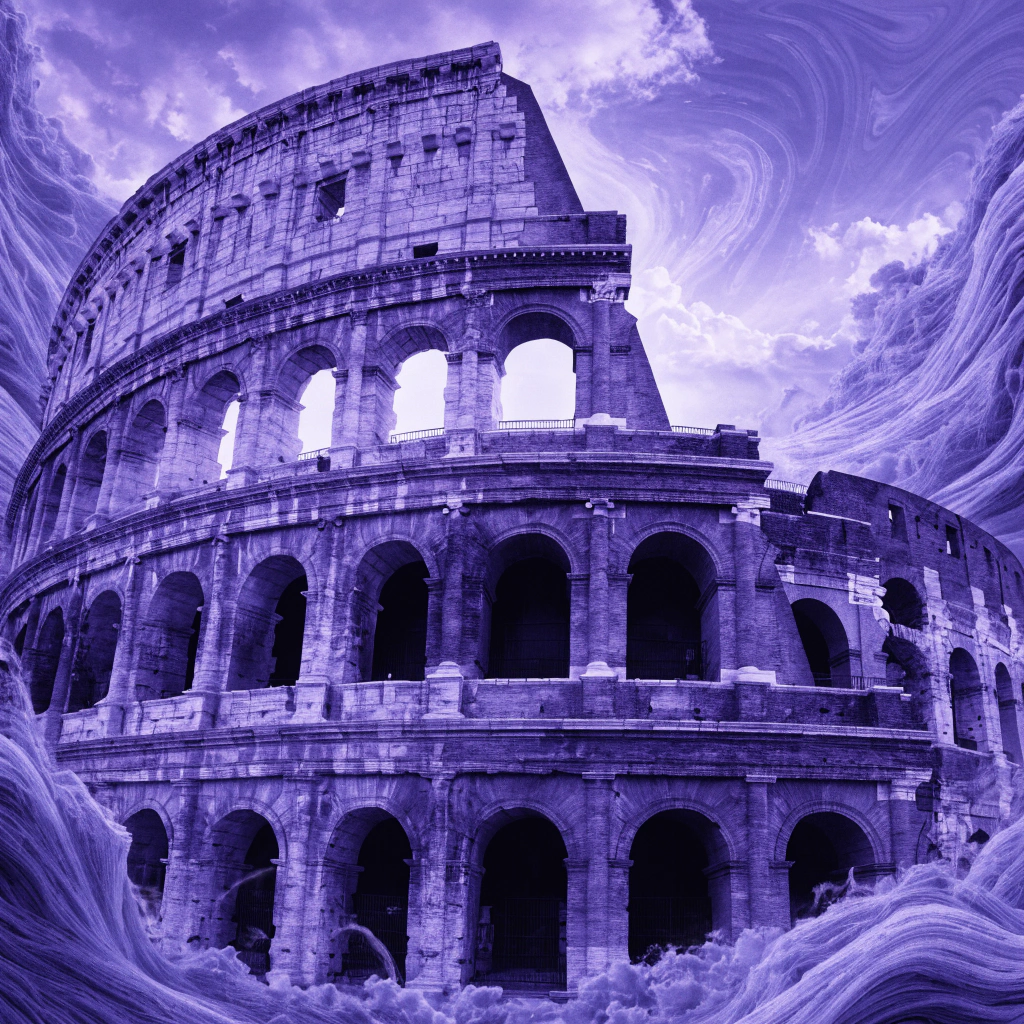
The Big Colosseum in Rome
The Colosseum is a very big building in Rome, Italy. It is very old. It is an amphitheater. People built it a long time ago. Many people visit it today. They like to see the history of Rome.
Inside, the Colosseum is round. It has many seats. In the past, people watched games here. Gladiators fought in the center. Today, the building is a famous museum. It is a symbol of Italy. Tourists take photos of the big walls. It is a beautiful place.
Gramática destacada
Patrón: Present Simple (Be verb)
"The Colosseum is a very big building in Rome."
We use 'is' with singular subjects like 'The Colosseum' to describe facts and characteristics. It tells us what something is like.
Patrón: Present Simple (Action verbs)
"Many people visit it today."
We use the base form of the verb (visit) with plural subjects (people) to talk about regular actions or habits in the present.
Pon a prueba tu comprensión
10 preguntas · A1 Principiante · 1 vista previa gratis
Pon a prueba lo que aprendiste en este artículo. ¡Responde todas las preguntas para ganar XP!
Where is the Colosseum located?
¿Quieres terminar el quiz?
9 preguntas más te esperan. ¡Regístrate gratis para desbloquear el quiz completo y ganar XP!
Regístrate gratis¿Ya tienes cuenta? Acceder
Desglose de preguntas
Where is the Colosseum located?
Tu respuesta:
Respuesta correcta: Rome
The Colosseum is a new building.
Tu respuesta:
Respuesta correcta: Falso
What does 'famous' mean?
Tu respuesta:
Respuesta correcta: Many people know it
The Colosseum is a very _____ building.
Tu respuesta:
Respuesta correcta: big
The Great Colosseum of Rome
The Colosseum is a very famous building in the center of Rome, Italy. It is more than 1,900 years old. Emperor Vespasian started the work around 70 AD, and his son, Titus, finished it. It is the largest amphitheater in the world, and it was bigger than other theaters at that time.
In the past, thousands of people went there to watch shows. The most famous shows were the gladiator fights. These men were very brave and strong. They fought in front of big crowds. Sometimes there were also shows with animals from different countries.
Today, the Colosseum is a very popular place for tourists. Millions of people visit it every year because it is beautiful and interesting. It is a symbol of the great Roman Empire. Visitors can walk inside and see where the people sat. Even though it is very old, it still stands tall today. It is one of the most important monuments in history.
Gramática destacada
Patrón: Past Simple
"Emperor Vespasian started the work around 70 AD"
We use the past simple to talk about actions that finished in the past. For regular verbs, we usually add '-ed' to the base form of the verb.
Patrón: Comparatives
"it was bigger than other theaters at that time."
We use comparatives to compare two people or things. For short adjectives like 'big', we add '-er' and use the word 'than'.
Pon a prueba tu comprensión
11 preguntas · A2 Básico · 1 vista previa gratis
Pon a prueba lo que aprendiste en este artículo. ¡Responde todas las preguntas para ganar XP!
Where is the Colosseum located?
¿Quieres terminar el quiz?
10 preguntas más te esperan. ¡Regístrate gratis para desbloquear el quiz completo y ganar XP!
Regístrate gratis¿Ya tienes cuenta? Acceder
Desglose de preguntas
Where is the Colosseum located?
Tu respuesta:
Respuesta correcta: Rome
The emperor's son, Titus, finished the building.
Tu respuesta:
Respuesta correcta: Verdadero
What does 'brave' mean?
Tu respuesta:
Respuesta correcta: Not afraid of danger
Millions of people _____ the Colosseum every year.
Tu respuesta:
Respuesta correcta: visit
Who fought in the shows at the Colosseum?
Tu respuesta:
Respuesta correcta: Gladiators
El Coliseo: Un Símbolo Eterno de Roma
En el corazón de Roma se alza un monumento que ha desafiado el paso del tiempo: el Coliseo, también conocido como el Anfiteatro Flavio. Este impresionante edificio es, sin duda, el símbolo más reconocible del poder del Imperio Romano y de su increíble habilidad arquitectónica.
La construcción del Coliseo fue encargada por el emperador Vespasiano alrededor del año 70-72 d.C. y fue completada por su hijo Tito en el año 80 d.C. Se construyó sobre el terreno de la antigua Domus Aurea de Nerón, un gesto simbólico que devolvía un espacio importante de la ciudad a su gente. Este anfiteatro masivo, hecho de piedra y hormigón, fue diseñado para albergar espectáculos grandiosos que demostraban la fuerza y la riqueza de Roma.
Durante siglos, el Coliseo fue el escenario de famosos combates de gladiadores, batallas navales simuladas y dramas públicos que entretenían a miles de espectadores. Se estima que podía acoger a entre 50.000 y 80.000 personas, quienes acudían para ver estos eventos. La complejidad de su diseño permitía un control eficiente de las multitudes y la preparación de los espectáculos más elaborados. Hoy en día, aunque parcialmente en ruinas debido a terremotos y el saqueo de materiales, el Coliseo ha sido cuidadosamente conservado y restaurado. Ha sido testigo de la historia y sigue siendo un lugar de asombro para millones de visitantes de todo el mundo. Es un recordatorio palpable de la ingeniería y la cultura de una civilización que marcó profundamente el mundo occidental.
Gramática destacada
Patrón: La Voz Pasiva (Ser + Participio Pasado)
"La construcción del Coliseo fue encargada por el emperador Vespasiano."
Usamos la voz pasiva para decir quién o qué recibe la acción del verbo, no quién la realiza. Se forma con el verbo "ser" conjugado y el participio pasado del verbo principal, que concuerda en género y número con el sujeto.
Patrón: El Pretérito Perfecto (Haber + Participio Pasado)
"Este impresionante edificio es, sin duda, el símbolo más reconocible del poder del Imperio Romano y de su increíble habilidad arquitectónica."
El pretérito perfecto se usa para acciones pasadas que tienen una conexión con el presente o que ocurrieron en un período de tiempo no terminado. Se forma con el verbo "haber" en presente y el participio pasado del verbo principal.
Pon a prueba tu comprensión
10 preguntas · B1 Intermedio · 1 vista previa gratis
Pon a prueba lo que aprendiste en este artículo. ¡Responde todas las preguntas para ganar XP!
¿Quién completó la construcción del Coliseo?
¿Quieres terminar el quiz?
9 preguntas más te esperan. ¡Regístrate gratis para desbloquear el quiz completo y ganar XP!
Regístrate gratis¿Ya tienes cuenta? Acceder
Desglose de preguntas
¿Quién completó la construcción del Coliseo?
Tu respuesta:
Respuesta correcta: Tito
El Coliseo fue construido en el mismo lugar donde antes estaba la Domus Aurea de Nerón.
Tu respuesta:
Respuesta correcta: Verdadero
¿Qué significa la palabra "albergar" en el contexto del artículo?
Tu respuesta:
Respuesta correcta: Alojamiento o lugar para eventos
Se estima que el Coliseo podía _____ a entre 50.000 y 80.000 personas.
Tu respuesta:
Respuesta correcta: acoger
The Architectural Legacy of the Flavian Amphitheatre
The Colosseum, originally known as the Flavian Amphitheatre, stands as a testament to the sheer ingenuity and ambition of the Roman Empire. Commissioned by Emperor Vespasian around 70-72 AD, the structure was strategically erected on the former site of Emperor Nero’s extravagant Golden House. This decision was largely symbolic, representing a deliberate transition from the self-indulgence of a tyrant to the provision of public entertainment for the Roman citizenry. Completed by his son Titus in 80 AD, the monument quickly became the undisputed epicentre of Roman social life and civic pride.
Architecturally speaking, the Colosseum was a marvel of its time, capable of accommodating an estimated 50,000 to 80,000 spectators. To facilitate the movement of such vast crowds, Roman engineers implemented a sophisticated system of vaulted arches and concrete, which ensured both structural stability and logistical efficiency. Furthermore, the seating arrangement was meticulously organized according to social status, reflecting the rigid hierarchy of Roman society. While the elite occupied the lower tiers closest to the action, the common people were relegated to the upper sections, illustrating how architecture can reinforce social structures. The construction involved massive quantities of travertine limestone and volcanic rock, materials that have allowed the structure to withstand the passage of time and the elements.
The spectacles hosted within these walls were often brutal, yet they served a profound political purpose. Gladiatorial contests and animal hunts were not merely for entertainment; they were demonstrations of the Emperor's power and generosity. Moreover, the arena featured an intricate underground system called the hypogeum, consisting of tunnels and cages where gladiators and animals were kept before their dramatic entrance. An enormous retractable awning, known as the velarium, was also used to protect spectators from the scorching Mediterranean sun, further highlighting the Romans' advanced engineering capabilities and their attention to detail.
Despite enduring centuries of natural disasters, stone-robbing, and urban neglect, the Colosseum remains an iconic landmark. Although much of its original marble facade has been stripped away over the years, the skeleton of the building continues to dominate the Roman skyline. Today, it serves as a powerful reminder of both the brilliance and the cruelty of the ancient world. Consequently, preservation efforts have intensified in recent decades to ensure that future generations can witness this monumental piece of history. In conclusion, the Colosseum is more than just a ruin; it is a complex narrative of power, engineering, and cultural identity that continues to captivate millions of visitors annually.
Gramática destacada
Patrón: Passive Voice with Past Participle
"Commissioned by Emperor Vespasian around 70-72 AD..."
The passive voice is used here to focus on the object (the Colosseum) rather than the subject. It is formed using the past participle of the verb 'commission' to indicate that the action was performed by someone else.
Patrón: Concessive Clauses with 'Although'
"Although much of its original marble facade has been stripped away over the years..."
Concessive clauses are used to show contrast between two ideas. 'Although' introduces a subordinate clause that makes the main clause seem surprising or unexpected.
Patrón: Participle Phrases for Description
"...consisting of tunnels and cages where gladiators and animals were kept..."
A present participle phrase ('consisting of...') is used to provide additional information about a noun (the hypogeum) without starting a new sentence. It helps create a more sophisticated and fluid writing style.
Pon a prueba tu comprensión
11 preguntas · B2 Intermedio alto · 1 vista previa gratis
Pon a prueba lo que aprendiste en este artículo. ¡Responde todas las preguntas para ganar XP!
Why was the Colosseum built on the site of Nero's Golden House?
¿Quieres terminar el quiz?
10 preguntas más te esperan. ¡Regístrate gratis para desbloquear el quiz completo y ganar XP!
Regístrate gratis¿Ya tienes cuenta? Acceder
Desglose de preguntas
Why was the Colosseum built on the site of Nero's Golden House?
Tu respuesta:
Respuesta correcta: To symbolize a return of the city to the public
The Colosseum was capable of holding more than 100,000 spectators.
Tu respuesta:
Respuesta correcta: Falso
What does 'relegated' mean in the context of the article?
Tu respuesta:
Respuesta correcta: Assigned to a lower or less important place
The seating arrangement was meticulously organized according to social _____.
Tu respuesta:
Respuesta correcta: hierarchy
What was the function of the 'hypogeum'?
Tu respuesta:
Respuesta correcta: An underground system for gladiators and animals
The Flavian Legacy: Architectural Grandeur and the Sociology of Spectacle
Not only does the Colosseum represent the zenith of Roman engineering, but it also serves as a poignant reminder of the complex interplay between civic benevolence and state-sponsored violence. Commissioned by Vespasian as a restorative gesture following the megalomania of Nero, the Flavian Amphitheatre was constructed upon the site of the former Domus Aurea’s artificial lake. It was this strategic reclamation of land that signaled a shift in the imperial narrative, returning the heart of Rome to the populace. By replacing a tyrant’s private pleasure garden with a public arena, the Flavian dynasty sought to legitimize their rule through the provision of shared experience.
The sheer scale of the edifice is staggering, yet its most profound achievement lies in its sophisticated logistical design. The implementation of the 'vomitoria'—passageways that facilitated the rapid ingress and egress of fifty thousand spectators—demonstrates an unparalleled understanding of crowd control. Such architectural foresight ensured that the stratification of Roman society was meticulously maintained; the higher one’s social standing, the closer one sat to the arena floor. The meticulous organization of the space reflected the rigid hierarchies of the Empire, ensuring that even in leisure, the social order was visible and reinforced.
Never before had a structure so effectively mirrored the rigid hierarchies of its creators. At the summit sat the plebeians and women, while the senatorial class occupied the lower tiers, protected from the Mediterranean sun by the velarium, a massive retractable awning operated by skilled sailors. The spectacle itself, often dismissed as mere bloodlust, was in fact a nuanced instrument of political pacification. By providing 'bread and circuses,' the emperors managed to sublimate the potential for civil unrest into a collective experience of imperial dominance. This sublimation of dissent through entertainment allowed for the maintenance of stability in an often volatile urban environment.
However, the preservation of the Colosseum today invites a more critical interrogation of its legacy. While we marvel at the ingenious subterranean hypogeum, with its intricate system of elevators and trapdoors designed to release wild beasts with theatrical precision, we must also reconcile this with the systemic cruelty it housed. The commodification of death for public entertainment remains a dark stain on the Roman achievement. The games were not merely sports; they were a manifestation of the state's power over life and death, both of its subjects and its enemies.
Ultimately, the Colosseum stands as a testament to the duality of human nature: our capacity for sublime architectural creation and our simultaneous penchant for destruction. It serves as a monumental chronicle of a civilization that reached the heights of sophistication while remaining anchored in primal brutality. Today, as tourists flock to its weathered arches, the structure continues to challenge our understanding of what it means to be civilized, forcing a confrontation between our admiration for the past and our moral distance from its practices.
Gramática destacada
Patrón: Inversion with Negative Adverbials
"Not only does the Colosseum represent the zenith of Roman engineering, but it also serves as a poignant reminder..."
When we start a sentence with a negative or restrictive adverbial like 'Not only', the auxiliary verb comes before the subject. This is used in formal writing to add emphasis and rhetorical flair.
Patrón: Cleft Sentences
"It was this strategic reclamation of land that signaled a shift in the imperial narrative..."
A cleft sentence is used to focus on a specific piece of information. It follows the structure 'It + be + focus + relative clause', highlighting the 'reclamation of land' as the key cause.
Patrón: Inversion with 'Never before'
"Never before had a structure so effectively mirrored the rigid hierarchies of its creators."
This structure uses the negative frequency adverb 'Never' at the start of the sentence for dramatic effect. The auxiliary verb 'had' is moved before the subject 'a structure'.
Pon a prueba tu comprensión
12 preguntas · C1 Avanzado · 1 vista previa gratis
Pon a prueba lo que aprendiste en este artículo. ¡Responde todas las preguntas para ganar XP!
What was the primary symbolic purpose of building the Colosseum on the site of Nero's lake?
¿Quieres terminar el quiz?
11 preguntas más te esperan. ¡Regístrate gratis para desbloquear el quiz completo y ganar XP!
Regístrate gratis¿Ya tienes cuenta? Acceder
Desglose de preguntas
What was the primary symbolic purpose of building the Colosseum on the site of Nero's lake?
Tu respuesta:
Respuesta correcta: To return private land to public use and legitimize the new dynasty
The 'vomitoria' were designed solely for the disposal of waste during the games.
Tu respuesta:
Respuesta correcta: Falso
What does 'stratification' refer to in the context of the article?
Tu respuesta:
Respuesta correcta: The social division of spectators based on class
The article describes the Colosseum as a _____ of the duality of human nature.
Tu respuesta:
Respuesta correcta: testament
Who sat in the highest tiers of the amphitheater?
Tu respuesta:
Respuesta correcta: The plebeians and women
The 'velarium' was a retractable awning used to protect elite spectators from the sun.
Tu respuesta:
Respuesta correcta: Verdadero
The Flavian Amphitheatre: An Architectural Manifestation of Imperial Hegemony
Seldom has a structure so effectively encapsulated the dichotomous nature of an empire as the Flavian Amphitheatre, known colloquially as the Colosseum. Erected upon the site of Nero’s Domus Aurea, the edifice was not merely an architectural marvel but a calculated political maneuver by Emperor Vespasian. By reclaiming land once sequestered for private indulgence and dedicating it to public spectacle, the Flavian dynasty sought to consolidate its legitimacy. It is widely conjectured that the sheer scale of the edifice served as a physical manifestation of Roman hegemony, reminding both the citizenry and the subjugated of the state’s absolute prowess. To walk through its arches today is to witness the vestige of a civilization that balanced unprecedented engineering ingenuity with a penchant for visceral, state-sanctioned violence.
The structural integrity of the Colosseum is a testament to the sophistication of Roman concrete and the innovative use of the arch. Were one to disregard the sheer brutality of the events held within, the engineering ingenuity would remain unparalleled in the ancient world. The hypogeum, a subterranean network of tunnels and cages, allowed for the seamless transition of gladiators and beasts into the arena, creating an ephemeral yet terrifying spectacle. Furthermore, the velarium—a massive, retractable awning—provided respite from the Mediterranean sun, demonstrating a meticulous attention to the comfort of the spectators. This panoply of features suggests that the amphitheater was designed to be a self-contained ecosystem of entertainment and control.
However, the Colosseum was also a rigid map of Roman social stratification. Seating was strictly partitioned according to rank, with the emperor and senators occupying the lower tiers, while the plebeian proletariat and women were relegated to the upper reaches. This spatial arrangement reinforced the ideological underpinnings of the Roman state, making the hierarchy of power visible and tangible to every attendee. The spectacles themselves, ranging from gladiatorial combat to venationes (animal hunts), functioned as a form of panem et circenses—bread and circuses—designed to pacify a potentially volatile urban population. Ostensibly, these games were a gift to the people, yet they simultaneously underscored the state's power over life and death.
The decline of the Colosseum mirrored the fragmentation of the empire itself. Over centuries, earthquakes and stone-thieves have left their indelible marks upon the stone, stripping away the marble façade that once shimmered under the Roman sun. Yet, even in its ruinous state, the amphitheater exerts a profound influence on the modern architectural zeitgeist. It remains a somber reminder of how public space can be utilized to project authority and maintain social order. While the ephemeral nature of the spectacles has long since faded into history, the Colosseum stands as an enduring monument to both human brilliance and the darker impulses of imperial ambition. It continues to challenge our contemporary understanding of heritage, forcing us to reconcile the beauty of the structure with the atrocities it once hosted.
Gramática destacada
Patrón: Inversion after negative or restrictive adverbs
"Seldom has a structure so effectively encapsulated the dichotomous nature of an empire as the Flavian Amphitheatre."
When using restrictive adverbs like 'seldom' at the beginning of a sentence, the auxiliary verb and subject are inverted for rhetorical emphasis. This is common in formal C2-level academic prose to create a dramatic tone.
Patrón: Second Conditional with 'Were' (Subjunctive)
"Were one to disregard the sheer brutality of the events held within, the engineering ingenuity would remain unparalleled in the ancient world."
This uses 'were' instead of 'if' to express a hypothetical situation in a highly formal manner. It suggests a theoretical perspective used often in scholarly critique.
Patrón: Complex Passive with Hedging
"It is widely conjectured that the sheer scale of the edifice served as a physical manifestation of Roman hegemony."
This structure uses an impersonal passive voice ('It is... conjectured') to introduce a theory or claim without attributing it to a specific person. This is a key feature of academic hedging to avoid sounding overly dogmatic.
Pon a prueba tu comprensión
12 preguntas · C2 Dominio · 1 vista previa gratis
Pon a prueba lo que aprendiste en este artículo. ¡Responde todas las preguntas para ganar XP!
What was the primary political motivation for building the Colosseum on the site of Nero’s Golden House?
¿Quieres terminar el quiz?
11 preguntas más te esperan. ¡Regístrate gratis para desbloquear el quiz completo y ganar XP!
Regístrate gratis¿Ya tienes cuenta? Acceder
Desglose de preguntas
What was the primary political motivation for building the Colosseum on the site of Nero’s Golden House?
Tu respuesta:
Respuesta correcta: To return land to the public and establish the Flavian dynasty's legitimacy.
The spatial arrangement of seating in the Colosseum was designed to challenge the social hierarchy of Rome.
Tu respuesta:
Respuesta correcta: Falso
Which word best describes the quality of being clever and inventive?
Tu respuesta:
Respuesta correcta: Ingenuity
The amphitheater served as a physical manifestation of Roman _____, reminding the world of the state's dominance.
Tu respuesta:
Respuesta correcta: hegemony
What was the function of the 'hypogeum' mentioned in the text?
Tu respuesta:
Respuesta correcta: A subterranean system for moving gladiators and animals.
The term 'panem et circenses' refers to the strategy of using food and entertainment to pacify the public.
Tu respuesta:
Respuesta correcta: Verdadero

