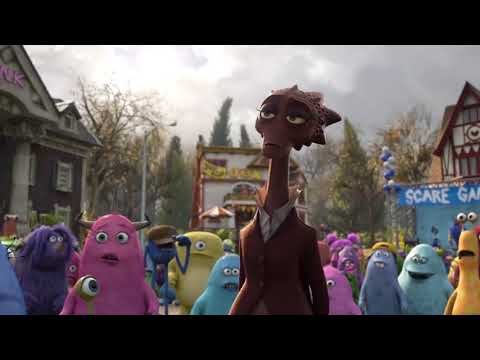
scare em 30 segundos
- Scare is a common word used as a verb (to frighten) and a noun (a fright).
- It is less formal than 'frighten' and very common in daily conversation.
- Commonly used in phrases like 'scare off' or 'health scare'.
- Learners must distinguish between 'scared' (feeling) and 'scary' (causing fear).
The word scare is a versatile and essential term in the English language, functioning as both a verb and a noun. At its core, it describes the act of causing fear or the state of being frightened. When you scare someone, you are triggering their biological 'fight or flight' response, often through a sudden or unexpected action. This can range from a playful 'jump scare' among friends to a serious situation that causes genuine alarm or anxiety. Understanding the nuance of this word requires looking at how it differs from similar terms like 'frighten' or 'terrify.' While 'frighten' is often more formal, 'scare' is the go-to word for everyday conversation. It captures the immediate, visceral reaction to a perceived threat, whether that threat is a ghost in a movie, a loud noise in the dark, or a sudden realization about a health issue.
- The Verb Form
- To scare is to fill someone with fear. It is often used transitively, meaning it takes an object: 'The thunder scared the dog.' It can also be used with phrasal verbs like 'scare off' or 'scare away,' which means to make someone or something leave because they are afraid.
Don't sneak up on me like that; you really scared me!
In a noun capacity, a scare refers to the experience itself or a period of widespread alarm. For instance, a 'health scare' is a period where people are worried about a particular disease or medical condition. This usage often implies a temporary state of fear that may or may not be followed by actual danger. It is also used to describe a sudden fright, as in 'That loud bang gave me a real scare.' The noun form highlights the event-driven nature of fear, focusing on the moment the emotion was triggered rather than the ongoing state of being afraid.
- Social Contexts
- We use 'scare' in social settings to describe pranks, horror movies, or even intimidating news stories. It is a word that connects our internal emotions to external stimuli.
The recent economic scare led many investors to sell their stocks prematurely.
Furthermore, the word is deeply embedded in cultural expressions. Think of 'scare tactics,' which are strategies used to influence people by playing on their fears. This is common in political campaigning or public health announcements (like showing the effects of smoking). In these contexts, 'scare' isn't just about a physical jump; it's about psychological manipulation. The breadth of the word allows it to cover everything from a toddler hiding behind a door to a global financial crisis that leaves nations trembling. Its simplicity is its strength, making it one of the first words learners acquire to express negative emotional states related to safety and security.
I didn't mean to scare you away from the project; I just wanted to be honest about the risks.
- The Intensity of Scare
- While 'scare' is a strong word, it is often seen as less intense than 'terrify' or 'petrify.' It is the baseline for fear in English, making it highly frequent in both spoken and written registers.
The spider didn't scare her as much as the thought of being trapped in the elevator.
In conclusion, 'scare' is a foundational word for expressing the human experience of fear. Whether you are talking about a horror film, a sudden noise, or a complex social phenomenon, 'scare' provides the linguistic tools to describe the impact of alarm on the human psyche. Its dual nature as a verb and noun makes it indispensable for fluid communication in English.
Using scare correctly involves understanding its grammatical patterns and the common collocations that accompany it. As a verb, 'scare' is primarily transitive, meaning it acts upon someone or something. You 'scare someone.' For example, 'The loud thunder scared the children.' However, it is also frequently used in the passive voice or as a participial adjective: 'The children were scared by the thunder.' This distinction is crucial for learners, as the passive form 'to be scared' is often used to describe a state of mind rather than a specific action performed by an agent.
- Transitive Usage
- Subject + Scare + Object. This is the most direct way to use the word. 'The horror movie scared me.' Here, the movie is the cause, and 'me' is the person affected.
You scared the living daylights out of me when you jumped out from behind the curtain!
Another common pattern is 'scare someone into doing something.' This indicates that fear is being used as a motivator to force a specific behavior. For instance, 'The warning on the cigarette pack is designed to scare people into quitting.' This construction is powerful in persuasive writing and discussions about influence. Similarly, 'scare someone out of doing something' means to prevent an action through fear: 'The high prices scared them out of buying the house.' These patterns show how 'scare' functions not just as an emotion, but as a tool for behavioral change.
- Phrasal Verbs
- 'Scare away' and 'scare off' are used when the fear causes the subject to leave. 'The dog barked and scared off the intruder.' This is very common when talking about animals or unwanted guests.
The bright lights were enough to scare away the deer from the garden.
In the noun form, 'scare' often appears in compound nouns or specific contexts like 'bomb scare,' 'health scare,' or 'food scare.' These refer to periods of public anxiety. For example, 'The city was on high alert after a bomb scare at the train station.' In these cases, 'scare' implies that while there was significant fear, the actual threat might not have materialized or was managed before it could cause harm. This nuance is important for understanding news reports and formal announcements. It differentiates a 'scare' (the alarm) from an 'attack' or 'disaster' (the event itself).
After the recent E. coli scare, many people are avoiding leafy greens.
- Adverbial Modification
- You can modify 'scare' with adverbs to show intensity: 'easily scared,' 'badly scared,' or 'half-scared to death.' These add color and depth to your descriptions.
She doesn't scare easily, so it takes a lot to make her nervous.
Finally, consider the idiomatic use of 'scare' in expressions like 'scare the pants off someone' or 'scare someone stiff.' These are informal ways to emphasize extreme fear. By mastering these various patterns—from simple transitive verbs to complex idioms and compound nouns—you can use 'scare' with the precision and variety of a native speaker. Whether you are describing a personal fright or a global event, the right structure will make your meaning clear and impactful.
The word scare is ubiquitous in English-speaking environments, appearing in everything from casual playground chatter to high-stakes political commentary. One of the most common places you will encounter it is in the world of entertainment, specifically in the horror and thriller genres. Fans of these genres often talk about 'jump scares'—those moments where a sudden image or sound is used to startle the audience. In this context, 'scare' is both the goal of the filmmaker and the experience of the viewer. You might hear a friend say, 'That movie had so many good scares!'
- In the News
- Journalists frequently use 'scare' to describe public alarms. Phrases like 'inflation scare,' 'security scare,' or 'health scare' are headlines staples. It signals to the reader that there is a reason for concern, even if the full extent of the danger is not yet known.
The airport was evacuated today following a security scare involving an unattended bag.
In everyday conversation, 'scare' is the standard word for expressing fright. Parents might tell their children, 'Don't scare your little sister,' or a colleague might say, 'You scared me! I didn't hear you come in.' It is less dramatic than 'terrify' and more common than 'frighten.' It fits perfectly into the informal register of daily life. You'll also hear it in the context of 'scare stories'—narratives, often exaggerated, intended to frighten people into a certain viewpoint or behavior. This is often discussed in the context of urban legends or biased reporting.
- Politics and Rhetoric
- Politicians often accuse their opponents of 'scaremongering'—the act of spreading frightening rumors to influence public opinion. This is a common term in political debates and editorials.
The opposition was accused of scaremongering regarding the new tax laws.
In the workplace, 'scare' might come up in discussions about market trends or competition. A 'market scare' can cause stock prices to dip. Managers might talk about 'scaring up' some business, which is a slightly different, idiomatic use meaning to find or gather something with effort. For example, 'We need to scare up some new clients by the end of the quarter.' This shows the word's flexibility even in professional environments. Whether it's the literal fear of a ghost or the metaphorical fear of a falling stock market, 'scare' is the linguistic thread that connects these experiences.
The sudden drop in tech stocks gave the entire industry a scare.
- Pop Culture and Slang
- In gaming, 'scare' is often used to describe the difficulty or the atmosphere of a game. 'This game is so scary, I can only play it with the lights on!'
I'm not trying to scare you, but you should really check your brake pads.
Ultimately, 'scare' is a word that bridges the gap between our most primal instincts and our most complex social structures. It is heard in the screams of a haunted house, the hushed tones of a hospital waiting room, and the aggressive rhetoric of a campaign trail. Its frequency in English reflects the central role that fear—both real and imagined—plays in our lives. By paying attention to these different contexts, you can better understand not just the word itself, but the emotions and intentions of the people using it.
For many learners of English, the word scare presents several common pitfalls, particularly regarding its adjective forms and prepositional usage. The most frequent error is confusing 'scared' and 'scary.' This is a classic example of the -ed/-ing (or in this case, -y) adjective confusion. 'Scared' describes a feeling that a person or animal has, while 'scary' describes the thing that causes that feeling. If you say 'I am scary,' you are telling people that you are a frightening person who makes others feel afraid. If you mean that you feel fear, you must say 'I am scared.'
- The 'Scared' vs. 'Scary' Trap
- Mistake: 'The movie was very scared.' (Incorrect)
Correction: 'The movie was very scary.' (Correct)
Mistake: 'I am very scary of spiders.' (Incorrect)
Correction: 'I am very scared of spiders.' (Correct)
She felt scared when she saw the scary mask.
Another common mistake involves prepositions. In English, we are 'scared of' something. Learners often try to use 'with,' 'about,' or 'at,' which are incorrect in this context. For example, 'I am scared of the dark' is correct, while 'I am scared about the dark' is not. While you can be 'worried about' something, 'scared' almost always takes 'of.' The only exception is when using the passive voice with an agent: 'I was scared by the noise.' Here, 'by' indicates the source of the fear, but 'of' is still the standard for describing a general fear or phobia.
- Verb Tense Confusion
- Learners sometimes confuse the past tense 'scared' with the present tense 'scare.' Remember: 'He scares me' (present) vs. 'He scared me' (past). Also, 'scare' is a regular verb, so it always ends in -ed for past forms.
It scares me to think what could have happened if we hadn't left early.
A more subtle mistake is the over-reliance on 'scare' when a more specific word would be better. While 'scare' is correct in many situations, using it for everything can make your English sound basic. For extreme fear, 'terrify' or 'horrify' are better. For a small, sudden fear, 'startle' is more precise. For a long-term feeling of worry, 'intimidate' or 'daunt' might be more appropriate. Expanding your vocabulary beyond 'scare' will help you express the exact intensity and nature of the fear you are describing.
The prospect of public speaking intimidates (rather than just 'scares') many people.
- Noun Usage Errors
- When using 'scare' as a noun, avoid saying 'I had a scare of spiders.' Instead, say 'I had a scare when I saw the spider.' The noun 'scare' refers to the event, not the object of the fear.
That car nearly hitting us gave me a real scare.
By keeping these common errors in mind—especially the scared/scary distinction and the correct use of prepositions—you can avoid the most frequent mistakes made by English learners. Practice using 'scare' in different tenses and forms, and always double-check whether you are describing a feeling or the thing that causes it. With time, these patterns will become second nature, and you'll be able to use 'scare' and its related words with confidence and accuracy.
While scare is a fantastic all-purpose word, English offers a rich palette of synonyms that can provide more specific meaning depending on the context. Understanding these alternatives allows you to describe fear with greater precision. For instance, if you want to describe a sudden, minor shock, the word startle is often better. 'The loud pop of the balloon startled me.' This implies a quick jump rather than a deep sense of fear. On the other hand, if the fear is overwhelming and paralyzing, terrify or petrify are much stronger choices.
- Scare vs. Frighten
- These two are very similar, but 'frighten' is slightly more formal. You might see 'frighten' in a novel or a formal report, while 'scare' is more common in speech. 'The noise frightened the horses' sounds a bit more literary than 'The noise scared the horses.'
The ghost story was enough to frighten even the bravest children.
Another useful alternative is alarm. This word suggests a sense of danger or urgency. If you are 'alarmed' by something, you are not just afraid; you are also worried that something bad is about to happen. This is often used in professional or serious contexts: 'We were alarmed by the sudden drop in sales.' Similarly, intimidate is used when someone's fear is caused by another person's power, size, or confidence. 'The large dog intimidated the mail carrier.' This isn't just a jump scare; it's a feeling of being smaller or weaker than the source of the fear.
- Intensity Comparisons
- 1. Startle (Low)
2. Scare/Frighten (Medium)
3. Terrify/Horrify (High)
4. Petrify (Extreme/Paralyzing)
She was petrified with fear when she saw the bear on the trail.
For a more literary or old-fashioned feel, you might encounter daunt or dismay. To be 'daunted' is to feel intimidated by a difficult task: 'The long climb did not daunt the hikers.' 'Dismay' is a mix of fear and disappointment: 'To our dismay, the bridge was washed out.' These words add a layer of sophistication to your descriptions. Additionally, the word unnerve is perfect for when something makes you lose your confidence or feel shaky. 'The strange silence in the house unnerved him.' This is a very specific type of 'scare' that affects your composure.
The constant criticism began to unnerve the young athlete.
- Formal Alternatives for 'Scare' (Noun)
- Instead of 'health scare,' you might use 'health alert' or 'public health concern.' Instead of 'bomb scare,' you might use 'security threat' or 'false alarm.'
The alarm raised by the whistle-blower led to a full investigation.
In summary, while 'scare' is a vital word, knowing its synonyms allows you to tailor your language to the situation. Whether you need the intensity of 'terrify,' the suddenness of 'startle,' the formality of 'frighten,' or the psychological nuance of 'unnerve,' having these alternatives at your disposal will make your English more expressive and precise. Practice substituting 'scare' with these words in your writing to see how they change the tone and meaning of your sentences.
How Formal Is It?
Curiosidade
The word 'scarecrow' was first recorded in the 16th century. Before that, people used 'jack-a-lent' or 'shail' to describe figures used to frighten birds away from crops.
Guia de pronúncia
- Pronouncing it like 'scar' (skɑːr).
- Adding an extra syllable (ske-er).
- Confusing the 'air' sound with 'are'.
- Missing the final 'r' sound in American English.
- Over-emphasizing the 's' at the beginning.
Nível de dificuldade
The word is very common and usually easy to understand in context.
Learners often confuse 'scared' and 'scary', which requires practice.
Easy to pronounce and very useful for daily communication.
Clear pronunciation, though it can be confused with 'scar' in fast speech.
O que aprender depois
Pré-requisitos
Aprenda a seguir
Avançado
Gramática essencial
Participial Adjectives (-ed vs -y)
I am scared (feeling) vs The movie is scary (cause).
Prepositions with Emotions
We use 'of' with scared: 'scared of heights'.
Transitive Verbs
Scare requires an object: 'The noise scared me'.
Phrasal Verbs with 'Off/Away'
Scare off/away implies causing something to leave.
Passive Voice for Reactions
I was scared by the news (focus on the reaction).
Exemplos por nível
I am scared of the dark.
J'ai peur du noir.
Subject + be + scared + of.
The big dog scares me.
Le gros chien me fait peur.
Transitive verb: Subject + scare + object.
Is the movie scary?
Est-ce que le film fait peur ?
Adjective 'scary' describes the thing.
Don't scare me!
Ne me fais pas peur !
Imperative form.
She is scared of spiders.
Elle a peur des araignées.
Common preposition 'of'.
The loud noise scared the baby.
Le bruit fort a fait peur au bébé.
Past tense 'scared'.
I am not scared.
Je n'ai pas peur.
Negative form.
That is a scary mask.
C'est un masque qui fait peur.
Adjective 'scary' before a noun.
He scared his sister on purpose.
Il a fait peur à sa sœur exprès.
Past tense with an adverbial phrase.
We were scared by the thunder.
Nous avons été effrayés par le tonnerre.
Passive voice 'were scared by'.
Are you scared of flying?
As-tu peur de prendre l'avion ?
Question with 'scared of' + gerund.
The cat was scared and ran away.
Le chat a eu peur et s'est enfui.
Compound sentence.
It was a very scary experience.
C'était une expérience très effrayante.
Adjective 'scary' modifying a noun.
I don't like scary stories.
Je n'aime pas les histoires qui font peur.
Plural noun with adjective.
Did the ghost scare you?
Est-ce que le fantôme t'a fait peur ?
Interrogative past tense.
She scares easily.
Elle a facilement peur.
Intransitive use with an adverb.
The loud bang gave me a real scare.
Le grand boum m'a fait une de ces peurs.
Noun 'scare' with the verb 'give'.
The dog barked to scare off the intruder.
Le chien a aboyé pour faire fuir l'intrus.
Phrasal verb 'scare off'.
There was a health scare related to the water supply.
Il y a eu une alerte sanitaire liée à l'approvisionnement en eau.
Compound noun 'health scare'.
He was scared to death of failing the exam.
Il était mort de peur à l'idée d'échouer à l'examen.
Idiom 'scared to death'.
Don't let the difficulty of the task scare you.
Ne laisse pas la difficulté de la tâche t'effrayer.
Imperative with 'let'.
The sudden drop in prices scared away investors.
La chute soudaine des prix a fait fuir les investisseurs.
Phrasal verb 'scare away'.
I had a bit of a scare at the doctor's today.
J'ai eu une petite frayeur chez le médecin aujourd'hui.
Noun 'scare' with 'have'.
The movie was so scary that I couldn't sleep.
Le film était si effrayant que je n'ai pas pu dormir.
So + adjective + that clause.
The government was accused of using scare tactics.
Le gouvernement a été accusé d'utiliser des tactiques de peur.
Compound noun 'scare tactics'.
The recent bomb scare turned out to be a hoax.
La récente alerte à la bombe s'est avérée être un canular.
Compound noun 'bomb scare'.
She scared the living daylights out of me!
Elle m'a flanqué une de ces trouilles !
Idiom 'scare the living daylights out of'.
The news of the merger scared some employees into resigning.
La nouvelle de la fusion a poussé certains employés à démissionner par peur.
Structure: scare + someone + into + gerund.
The prospect of another war is scaring everyone.
La perspective d'une autre guerre effraie tout le monde.
Present continuous for an ongoing state.
He's not easily scared by threats.
Il ne se laisse pas facilement effrayer par les menaces.
Passive voice with an adverb.
The food scare led to a massive recall of spinach.
L'alerte alimentaire a entraîné un rappel massif d'épinards.
Compound noun 'food scare'.
I'm scared that we might be late for the flight.
J'ai peur que nous soyons en retard pour le vol.
Scared + that clause.
We managed to scare up enough money for the trip.
Nous avons réussi à dégoter assez d'argent pour le voyage.
Idiomatic phrasal verb 'scare up'.
The critic's harsh words were intended to scare off competitors.
Les mots durs du critique étaient destinés à décourager les concurrents.
Infinitive of purpose with 'scare off'.
There is a lot of scaremongering in the media these days.
Il y a beaucoup de catastrophisme dans les médias ces jours-ci.
Uncountable noun 'scaremongering'.
The sheer audacity of the plan scared the board members.
L'audace pure du plan a effrayé les membres du conseil.
Abstract subject with 'scared'.
He was scared stiff when he saw the cliff edge.
Il était pétrifié quand il a vu le bord de la falaise.
Idiom 'scared stiff'.
The environmental scare prompted a change in policy.
L'alerte environnementale a incité à un changement de politique.
Noun 'scare' as a catalyst.
Don't be scared to ask for help if you need it.
N'aie pas peur de demander de l'aide si tu en as besoin.
Scared + to-infinitive.
The silence of the forest was more scaring than the noise.
Le silence de la forêt était plus effrayant que le bruit.
Using 'scaring' as a present participle adjective (less common than 'scary').
The economist warned against the dangers of scaremongering.
L'économiste a mis en garde contre les dangers de l'alarmisme.
Gerund 'scaremongering' as the object of a preposition.
The use of scare quotes suggested her lack of belief in the theory.
L'utilisation de guillemets ironiques suggérait son manque de foi dans la théorie.
Technical term 'scare quotes'.
The suddenness of the market crash gave the nation a collective scare.
La soudaineté du krach boursier a flanqué une peur collective à la nation.
Noun 'scare' with an adjective 'collective'.
He tried to scare up some support for his unpopular proposal.
Il a essayé de glaner un peu de soutien pour sa proposition impopulaire.
Metaphorical use of 'scare up'.
The haunting melody had a scaringly beautiful quality.
La mélodie envoûtante avait une qualité d'une beauté effrayante.
Adverb 'scaringly' (rare/poetic).
The film's jump scares were expertly timed for maximum impact.
Les jump scares du film étaient parfaitement synchronisés pour un impact maximal.
Compound noun 'jump scares'.
The threat of litigation was enough to scare the company into a settlement.
La menace d'un litige a suffi à effrayer l'entreprise et à la pousser à un accord.
Scare + object + into + noun.
The report was dismissed as nothing more than a scare story.
Le rapport a été rejeté comme n'étant rien de plus qu'une histoire à dormir debout.
Compound noun 'scare story'.
Sinônimos
Antônimos
Colocações comuns
Frases Comuns
— To frighten someone very much. It is used for intense, sudden fear.
You scared the life out of me when you screamed!
— To frighten someone so much that they cannot think clearly. Similar to 'scare to death'.
The horror movie scared the wits out of the teenagers.
— To find or gather something with difficulty. Often used for money or support.
I'll see if I can scare up some extra chairs for the guests.
— To frighten someone so much that they are unable to move. A very common informal idiom.
The thought of public speaking scares him stiff.
— To experience a sudden moment of fear. Often used for minor incidents.
I got a bit of a scare when the lights went out.
— A story intended to cause public alarm, often exaggerated. Used in journalism.
Don't believe every scare story you read on the internet.
— To make someone leave because they are afraid. Can be used literally or figuratively.
The high prices might scare away potential buyers.
— To be extremely nervous or easily frightened. Describes a personality trait.
After the accident, he was scared of his own shadow.
— A very informal way to say you frightened someone a lot.
That ghost story scared the pants off the kids.
— The act of deliberately spreading frightening rumors. Often used in politics.
The politician was accused of scaremongering about the new law.
Frequentemente confundido com
A 'scar' is a mark on the skin; 'scare' is about fear. The extra 'e' is vital.
A 'score' is a result in a game; 'scare' is about fear. Pronunciation is different.
'Scarce' means rare or in short supply; 'scare' is about fear.
Expressões idiomáticas
— To frighten someone extremely. One of the most common 'scare' idioms.
That car crash scared the living daylights out of me.
Informal— Extremely frightened. Used figuratively.
I was scared to death when the plane hit turbulence.
Neutral— So frightened that you cannot move.
She was scared stiff when she saw the snake.
Informal— To frighten someone very much. Stronger and more informal.
You scared the hell out of me!
Slang/Informal— To frighten someone so much they lose their composure.
The thunder scared the children out of their wits.
Neutral— To find or generate new customers or work through effort.
We need to go out and scare up some business this week.
Informal/Business— Quotation marks used to show that a word is being used in a special or ironic way.
He used scare quotes whenever he mentioned the 'experts'.
Academic/Journalistic— A humorous, very informal way to say someone was very frightened.
That spider scared the bejesus out of her.
Informal— A slightly shorter version of 'living daylights'.
The sudden scream scared the daylights out of everyone.
Informal— A person, especially a child, who is easily frightened.
Don't be such a scaredy-cat; it's just a little bug!
Child-friendly/InformalFácil de confundir
Learners use it to describe the cause of fear.
'Scared' is the feeling (adjective). 'Scary' is the cause (adjective). You feel scared because of something scary.
I am scared of the scary movie.
They have the same meaning.
'Frighten' is more formal and more common in written English. 'Scare' is more common in spoken English.
The noise frightened the horse.
Both involve a reaction to something unexpected.
'Startle' is for a sudden, short-lived shock. 'Scare' can be a deeper, longer-lasting fear.
The loud pop startled me for a second.
Both involve fear.
'Intimidate' is about feeling small or weak because of someone else's power. 'Scare' is more general.
The boss's angry voice intimidated the staff.
They are synonyms.
'Afraid' is an adjective and cannot be used before a noun. 'Scared' can be used before a noun. You can't say 'an afraid person', but you can say 'a scared person'.
He is afraid. / He is a scared man.
Padrões de frases
I am scared of [noun].
I am scared of dogs.
[Noun] scared me.
The thunder scared me.
I had a [adjective] scare.
I had a big scare last night.
Scare [object] away/off.
Scare the birds away.
Scare [object] into [gerund].
Scare them into staying.
Scare up [noun].
Scare up some support.
Scared stiff/to death.
I was scared stiff.
Scaremongering / Scare quotes.
The article was full of scaremongering.
Família de palavras
Substantivos
Verbos
Adjetivos
Relacionado
Como usar
Very high in both spoken and written English.
-
I am very scary of snakes.
→
I am very scared of snakes.
You use 'scared' to describe your feelings. 'Scary' describes the snake.
-
The movie was so scared.
→
The movie was so scary.
The movie is the cause of the fear, so it needs the adjective 'scary'.
-
He was scared with the noise.
→
He was scared by the noise.
We use 'by' to indicate the cause of a sudden fright in the passive voice.
-
I had a scare of spiders.
→
I am scared of spiders.
The noun 'scare' refers to a specific event, not a general phobia.
-
Don't scare me away from the truth.
→
Don't scare me off the truth. (Or simply: Don't scare me.)
While 'scare away' is a phrasal verb, it usually applies to physical movement or potential actions, not abstract concepts like 'the truth'.
Dicas
Ed vs Y
Always remember: -ed is for how you feel (scared), -y is for the thing that causes it (scary).
Phrasal Verbs
Learn 'scare off' and 'scare away'. They are very common when talking about animals or unwanted people.
Natural Phrases
Use 'You gave me a scare!' instead of 'You made me afraid!' to sound more like a native speaker.
Public Alarms
Use 'scare' as a noun when writing about news events like 'health scares' or 'security scares'.
Intensifiers
Use 'scared to death' or 'scared stiff' to add emphasis to your stories.
Context Clues
If you hear 'scare up', look for a noun like 'money' or 'business' to follow it.
Rhyme Time
Practice rhyming 'scare' with 'care' and 'air' to get the vowel sound right.
Halloween
The word 'scare' is everywhere in October. Use it to talk about costumes and decorations.
Prepositions
Stick with 'of' after 'scared'. 'Scared of heights', 'scared of spiders', etc.
Scaremongering
Use this word to describe when someone is trying to manipulate others through fear.
Memorize
Mnemônico
Think of a 'S-CARE'. When you are scared, you need someone to CARE for you. The 'S' stands for 'Sudden'.
Associação visual
Imagine a person jumping out of a box (a jump scare) or a large 'S' shaped snake frightening a kitten.
Word Web
Desafio
Try to use 'scare' as a verb, a noun, and an adjective in three separate sentences today.
Origem da palavra
Derived from the Middle English word 'skeren', which comes from the Old Norse word 'skirra', meaning to frighten or to avert.
Significado original: To drive away or to make someone shun something.
GermanicContexto cultural
Be careful when using 'scare' regarding serious mental health issues; 'anxiety' or 'panic' might be more respectful terms.
Halloween is the peak time for the word 'scare'. 'Scaremongering' is a common political term in the UK.
Pratique na vida real
Contextos reais
Horror Movies
- jump scare
- scary movie
- scared to watch
- gave me a scare
Health/News
- health scare
- security scare
- scare stories
- scaremongering
Daily Life
- You scared me!
- scared of spiders
- don't scare the baby
- easily scared
Business/Finance
- market scare
- scare off investors
- scare up some business
- economic scare
Childhood
- scaredy-cat
- scared of the dark
- scary monster
- scare each other
Iniciadores de conversa
"What is the scariest movie you have ever seen?"
"Do you scare easily, or are you quite brave?"
"Have you ever had a big health scare that turned out to be nothing?"
"What kind of things used to scare you when you were a child?"
"Do you think the news uses scare tactics to get more viewers?"
Temas para diário
Describe a time when someone gave you a real scare. What happened and how did you react?
Write about a 'scare story' you heard recently. Do you think it was exaggerated?
Reflect on your biggest fear. Why does it scare you so much?
How do you feel about horror movies? Do you enjoy the feeling of being scared?
Discuss the concept of 'scaremongering' in modern politics. Is it effective?
Perguntas frequentes
10 perguntasIt is a regular verb. The past tense and past participle are both 'scared'. For example, 'He scared me yesterday' and 'I have been scared many times'.
'Scared of' is used for general fears or phobias (e.g., 'scared of spiders'). 'Scared by' is used for a specific event that caused fear (e.g., 'I was scared by the loud noise').
Yes, it can. It refers to a sudden fright ('You gave me a scare') or a period of public alarm ('a health scare').
It is an idiom meaning to find or gather something, like money, support, or food, often with some effort. For example, 'Can you scare up some lunch for us?'
No, 'scary' is an adjective. The adverb form is 'scarily'. For example, 'The house was scarily quiet'.
These are strategies used to influence people's opinions or behavior by making them afraid of the consequences of not following a certain path.
Only if you are currently in the act of making someone else afraid. If you mean you feel fear, you must say 'I am scared'.
A scarecrow is an object, usually made to look like a person, that farmers put in fields to scare birds away from their crops.
Yes, in everyday spoken English, 'scare' is much more common. 'Frighten' is often reserved for more formal or literary contexts.
It means to be so frightened that you are unable to move, like a statue. It's a common way to express extreme fear.
Teste-se 200 perguntas
Write a sentence using 'scared of'.
Well written! Good try! Check the sample answer below.
Write a sentence using 'scary'.
Well written! Good try! Check the sample answer below.
Describe a time you were scared.
Well written! Good try! Check the sample answer below.
Use 'scare off' in a sentence about an animal.
Well written! Good try! Check the sample answer below.
Write a sentence about a 'health scare'.
Well written! Good try! Check the sample answer below.
Use the idiom 'scared to death' in a story.
Well written! Good try! Check the sample answer below.
Explain what 'scare tactics' are in your own words.
Well written! Good try! Check the sample answer below.
Write a sentence using 'scare someone into doing something'.
Well written! Good try! Check the sample answer below.
Use 'scare up' in a business context.
Well written! Good try! Check the sample answer below.
Discuss the impact of 'scaremongering' in the media.
Well written! Good try! Check the sample answer below.
Write a short dialogue where someone gets a scare.
Well written! Good try! Check the sample answer below.
Compare 'scare' and 'frighten' in two sentences.
Well written! Good try! Check the sample answer below.
Write a sentence using 'scared stiff'.
Well written! Good try! Check the sample answer below.
Describe a 'jump scare' in a movie you saw.
Well written! Good try! Check the sample answer below.
Use 'scare quotes' in a sentence about a fake expert.
Well written! Good try! Check the sample answer below.
Write a sentence using 'scaringly'.
Well written! Good try! Check the sample answer below.
How do you scare away a bad habit?
Well written! Good try! Check the sample answer below.
Write a sentence about a 'security scare' at an airport.
Well written! Good try! Check the sample answer below.
Use 'scaredy-cat' in a sentence about a friend.
Well written! Good try! Check the sample answer below.
Describe the etymology of 'scare' in one sentence.
Well written! Good try! Check the sample answer below.
Say: 'I am scared of spiders.'
Read this aloud:
Você disse:
Speech recognition is not supported in your browser. Try Chrome or Edge.
Say: 'That movie was really scary!'
Read this aloud:
Você disse:
Speech recognition is not supported in your browser. Try Chrome or Edge.
Tell a short story about a time you were scared.
Read this aloud:
Você disse:
Speech recognition is not supported in your browser. Try Chrome or Edge.
Explain the difference between 'scared' and 'scary'.
Read this aloud:
Você disse:
Speech recognition is not supported in your browser. Try Chrome or Edge.
Describe a 'health scare' you heard about in the news.
Read this aloud:
Você disse:
Speech recognition is not supported in your browser. Try Chrome or Edge.
Use the phrase 'scare off' in a sentence.
Read this aloud:
Você disse:
Speech recognition is not supported in your browser. Try Chrome or Edge.
What kind of 'scare tactics' do advertisers use?
Read this aloud:
Você disse:
Speech recognition is not supported in your browser. Try Chrome or Edge.
Say: 'You scared the living daylights out of me!'
Read this aloud:
Você disse:
Speech recognition is not supported in your browser. Try Chrome or Edge.
How would you 'scare up' some volunteers for a project?
Read this aloud:
Você disse:
Speech recognition is not supported in your browser. Try Chrome or Edge.
Discuss the pros and cons of horror movies.
Read this aloud:
Você disse:
Speech recognition is not supported in your browser. Try Chrome or Edge.
Say: 'Don't be such a scaredy-cat!'
Read this aloud:
Você disse:
Speech recognition is not supported in your browser. Try Chrome or Edge.
Describe a 'jump scare' from a movie.
Read this aloud:
Você disse:
Speech recognition is not supported in your browser. Try Chrome or Edge.
Use 'scared stiff' in a sentence.
Read this aloud:
Você disse:
Speech recognition is not supported in your browser. Try Chrome or Edge.
What does 'scaremongering' mean to you?
Read this aloud:
Você disse:
Speech recognition is not supported in your browser. Try Chrome or Edge.
Say: 'The thunder scared the baby.'
Read this aloud:
Você disse:
Speech recognition is not supported in your browser. Try Chrome or Edge.
How do you feel about 'scare quotes'?
Read this aloud:
Você disse:
Speech recognition is not supported in your browser. Try Chrome or Edge.
Describe a 'security scare' at an airport.
Read this aloud:
Você disse:
Speech recognition is not supported in your browser. Try Chrome or Edge.
Say: 'I had a bit of a scare earlier.'
Read this aloud:
Você disse:
Speech recognition is not supported in your browser. Try Chrome or Edge.
What scares you the most about the future?
Read this aloud:
Você disse:
Speech recognition is not supported in your browser. Try Chrome or Edge.
Say: 'The cat scared away the birds.'
Read this aloud:
Você disse:
Speech recognition is not supported in your browser. Try Chrome or Edge.
Listen and identify the word: 'scare'.
Listen to the sentence: 'I am scared of dogs.' What is the person afraid of?
Listen to the sentence: 'The movie was scary.' Is the person describing a feeling or the movie?
Listen to the sentence: 'He scared off the cat.' What did the cat do?
Listen to the sentence: 'It was a health scare.' What kind of event was it?
Listen to the sentence: 'She was scared to death.' How afraid was she?
Listen to the sentence: 'They used scare tactics.' What were they trying to do?
Listen to the sentence: 'I'll scare up some food.' What is the person going to do?
Listen to the sentence: 'Don't be a scaredy-cat.' Who is the person talking to?
Listen to the sentence: 'The bomb scare was a hoax.' Was it dangerous?
Listen to the sentence: 'The market scare ended quickly.' What was affected?
Listen to the sentence: 'He scares easily.' Is he brave?
Listen to the sentence: 'The noise scared me.' What caused the fear?
Listen to the sentence: 'Stop scaremongering!' What is the person doing?
Listen to the sentence: 'I was scared stiff.' Could the person move?
/ 200 correct
Perfect score!
Summary
The word 'scare' is the most frequent way to describe causing or feeling fear in English. Example: 'The sudden noise scared the cat, giving us all a bit of a scare.'
- Scare is a common word used as a verb (to frighten) and a noun (a fright).
- It is less formal than 'frighten' and very common in daily conversation.
- Commonly used in phrases like 'scare off' or 'health scare'.
- Learners must distinguish between 'scared' (feeling) and 'scary' (causing fear).
Ed vs Y
Always remember: -ed is for how you feel (scared), -y is for the thing that causes it (scary).
Phrasal Verbs
Learn 'scare off' and 'scare away'. They are very common when talking about animals or unwanted people.
Natural Phrases
Use 'You gave me a scare!' instead of 'You made me afraid!' to sound more like a native speaker.
Public Alarms
Use 'scare' as a noun when writing about news events like 'health scares' or 'security scares'.