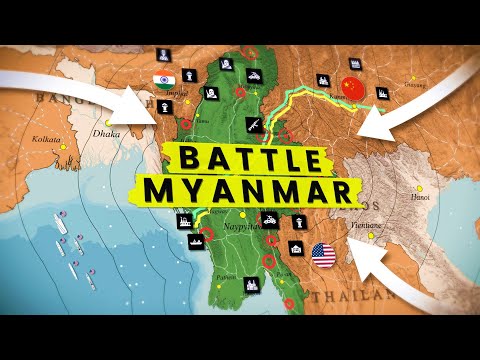
separatist em 30 segundos
- A separatist is someone who wants to break away from a larger group or country to become independent.
- The term is often used in politics to describe movements for regional independence or sovereignty.
- Separatism can be based on cultural, linguistic, religious, or economic differences between groups.
- It is used as both a noun (the person) and an adjective (describing the movement or goal).
The term separatist refers to an individual or a collective entity that actively seeks to break away from a larger political, religious, or social body. In most modern contexts, it is used to describe political movements where a specific region or ethnic group desires to establish its own independent state or achieve a high degree of autonomy. This desire often stems from a belief that the group's unique identity—be it cultural, linguistic, or historical—is not being adequately represented or protected by the current governing authority. Understanding the word requires recognizing the tension between national unity and the right to self-determination. People use this word in news reports, history books, and political discussions to categorize groups that challenge the existing borders of a country. It is a term that carries significant weight, as the actions of separatists can lead to peaceful democratic referendums or, in more extreme cases, prolonged civil conflict and social unrest.
- Political Context
- In politics, a separatist is someone who advocates for secession. This means they want their specific region to stop being part of the current country and instead become a new, sovereign nation with its own laws, government, and borders.
The international community watched closely as the separatist leaders called for a peaceful vote on independence.
- Cultural Identity
- Separatism is frequently rooted in a deep sense of cultural pride. When a minority group feels their language or traditions are being suppressed by the majority, they may become separatists to preserve their heritage through self-governance.
History is filled with stories of separatist movements that eventually became the founding fathers of new nations.
- Religious Separatism
- Beyond politics, the word can apply to religious groups that choose to withdraw from a larger church or religious organization to form a new, independent sect based on differing interpretations of faith.
The separatist group decided to build their own place of worship far from the influence of the established church hierarchy.
Economic factors, such as the distribution of natural resources, often fuel separatist sentiments in resource-rich regions.
The government entered into negotiations with the separatist faction to prevent the outbreak of violence.
In summary, a separatist is defined by their desire for distance and independence. Whether the motivation is political, cultural, or religious, the core of the identity is the belief that 'we are better off on our own.' This word is essential for discussing modern geopolitics, as it describes the force behind many of the world's changing borders and internal conflicts. When you see this word, think of a group trying to draw a new line on the map to define their own space and destiny.
Using the word separatist correctly involves understanding its role as both a noun and an adjective. When used as a noun, it refers to the person holding the belief. When used as an adjective, it describes things related to the act of separating. It is most commonly found in formal writing, journalism, and academic discussions regarding history and government. To use it effectively, you should pair it with verbs that describe action, such as 'advocate,' 'demand,' 'negotiate,' or 'suppress.' The word often appears in the subject position of a sentence when discussing political movements, or as a modifier for nouns like 'group,' 'movement,' 'leader,' or 'agenda.'
- As a Noun
- When referring to a person: 'The separatist refused to sign the peace treaty until independence was guaranteed.'
Many separatists argue that their region contributes more to the national budget than it receives in return.
- As an Adjective
- When describing a group or idea: 'The separatist movement gained momentum after the new tax laws were announced.'
The government's hardline stance only served to radicalize the separatist factions within the province.
- Common Verb Pairings
- Separatists often 'clash' with police, 'proclaim' independence, or 'organize' protests. Governments may 'crack down on' or 'dialogue with' separatists.
The separatist rebels seized control of the local radio station to broadcast their manifesto.
The tension between separatist aspirations and national integrity is a recurring theme in modern political science.
He was accused of being a separatist sympathizer because of his articles supporting regional autonomy.
When writing about separatists, it is important to maintain a neutral tone unless you are writing an opinion piece. Because the term is often politically charged, using it alongside objective verbs and clear descriptors helps provide a balanced view of the situation. Whether you are describing a peaceful political party or an armed group, the word 'separatist' accurately identifies their primary goal: the creation of a separate entity.
The word separatist is a staple of international news coverage. You will hear it most frequently when journalists report on regions experiencing political instability or movements for independence. For example, when discussing the situation in Catalonia (Spain), Quebec (Canada), or Scotland (UK), news anchors often use the term to describe the political parties or individuals advocating for a break from the central government. It is also a common term in documentaries about the history of the Soviet Union's dissolution or the decolonization of Africa and Asia. In these contexts, the word helps the audience understand that the conflict is not just about policy changes, but about the very existence of the state's current borders.
- Global News
- CNN, BBC, and Al Jazeera frequently use 'separatist' to describe groups in Eastern Europe, the Middle East, and Southeast Asia who are fighting for or voting for independence.
'The separatist forces have declared a ceasefire to allow for humanitarian aid,' the reporter announced from the front lines.
- Academic Lectures
- In university courses on Political Science or International Relations, professors use 'separatist' to analyze the causes of civil wars and the formation of new states.
The professor explained how separatist movements often arise in regions with distinct linguistic identities.
- Legal and Diplomatic Forums
- At the United Nations, diplomats may debate the legitimacy of a 'separatist' claim to statehood versus the principle of territorial integrity.
The UN resolution condemned the separatist violence but urged the government to address the underlying grievances.
The novel depicts a separatist colony living in the mountains, hidden from the watchful eyes of the Capital.
Social media discussions often become heated when users debate whether a group should be called 'freedom fighters' or 'separatists'.
Essentially, anywhere there is a discussion about borders, national identity, or the breaking of ties, the word 'separatist' is likely to appear. It is a key vocabulary word for anyone following world events or studying the social sciences. Its presence usually indicates a situation where the status quo is being challenged by a group that no longer wishes to be part of the whole.
One of the most common mistakes when using the word separatist is confusing it with related but distinct terms like 'rebel,' 'terrorist,' or 'activist.' While a separatist can be any of these things, the word specifically describes their *goal* (separation), not their *methods*. For example, a person can be a peaceful separatist who only uses legal voting and political speeches to achieve their ends. Calling such a person a 'rebel' might imply they are using illegal or violent means, which may not be true. Conversely, calling a violent insurgent merely an 'activist' might downplay the severity of their actions. Precision is key when navigating these politically sensitive labels.
- Confusing with 'Secessionist'
- While very similar, 'secessionist' is often used specifically for the formal act of a state leaving a union (like in the US Civil War), whereas 'separatist' is a broader term for the desire to separate.
Incorrect: He is a separatist because he wants lower taxes. (Mistake: Wanting policy change is not the same as wanting a new country.)
- Misusing as a Verb
- 'Separatist' is a noun or adjective. You cannot 'separatist' a country. The verb form is 'to separate' or 'to secede.'
Correct: The separatist movement organized a rally. (Describing the group's goal.)
- Over-generalization
- Not everyone who wants more local power is a separatist. Some are 'autonomists' who want to stay in the country but have more control over local laws.
The media often labels any critic of the central government as a separatist, which can be misleading.
The separatist leaders were careful to distance themselves from the violent riots in the capital.
Using the term separatist requires an understanding of the specific political goals of the group in question.
To avoid mistakes, always ask: 'Does this person/group want to create a new, independent country or organization?' If the answer is yes, 'separatist' is the correct term. If they just want to change the current system from within, you should look for a different word, such as 'reformer,' 'dissident,' or 'protester.'
While separatist is a very specific term, there are several other words that describe similar concepts. Choosing the right one depends on the intensity of the movement and the specific goals of the people involved. Understanding these nuances will help you write more precisely and understand complex political news more clearly. Below is a comparison of 'separatist' with its closest relatives in the English language.
- Separatist vs. Secessionist
- A 'secessionist' is someone who wants to formally withdraw from a federation or body. It is often used in a legal or historical context (e.g., the Southern states in the US Civil War). 'Separatist' is more common in modern global politics.
- Separatist vs. Autonomist
- An 'autonomist' wants more self-rule or 'autonomy' but usually within the framework of the existing country. A 'separatist' wants to leave the country entirely. Autonomy is like having your own room in a house; separatism is moving into your own house.
- Separatist vs. Nationalist
- A 'nationalist' has strong pride in their nation. While many separatists are nationalists (they love their specific region/ethnic group), not all nationalists are separatists. A nationalist might just want their existing country to be stronger.
The separatist goal of full independence was much more radical than the autonomist's request for local tax control.
- Separatist vs. Dissident
- A 'dissident' is someone who publicly disagrees with the government's policies. A dissident might want to change the government, but a separatist wants to leave the government's jurisdiction entirely.
While some viewed them as separatists, others hailed them as freedom fighters struggling for self-determination.
The distinction between a separatist and a federalist is the core of many constitutional debates.
By comparing these terms, we see that 'separatist' sits at a specific point on the spectrum of political change. It is more extreme than 'autonomist' but more focused than 'nationalist.' Using these alternatives correctly will demonstrate a high level of English proficiency and a sophisticated understanding of global affairs.
How Formal Is It?
Curiosidade
The 'Pilgrims' who traveled on the Mayflower were technically called 'Separatists' because they wanted to separate from the state church, not just reform it.
Guia de pronúncia
- Pronouncing it as 'se-PARE-a-tist' (incorrect stress).
- Spelling it as 'seperatist' (using an 'e' instead of an 'a').
- Confusing the noun with the verb 'separate' (SEP-a-rayt).
- Mumbling the 'tist' ending.
- Over-emphasizing the middle 'a'.
Nível de dificuldade
Common in news and history books; requires some political context.
Requires correct spelling (the 'a') and understanding of noun/adjective roles.
Pronunciation is straightforward if the stress is on the first syllable.
Easily recognized in news broadcasts due to frequent use.
O que aprender depois
Pré-requisitos
Aprenda a seguir
Avançado
Gramática essencial
Noun to Adjective conversion
He is a separatist (Noun). It is a separatist movement (Adjective).
Suffix '-ist'
Artist, Scientist, Separatist - all refer to a person who does or believes in something.
Suffix '-ism'
Separatism refers to the belief or the movement itself.
Prepositional usage
Separation *from* a country; Separatist *in* a region.
Pluralization of '-ist' nouns
One separatist, two separatists.
Exemplos por nível
The separatist wants a new country.
Le séparatiste veut un nouveau pays.
Subject + Verb + Object.
They are a separatist group.
Ils sont un groupe séparatiste.
Adjective usage.
Is he a separatist?
Est-il un séparatiste ?
Question form.
The separatist is not happy with the rules.
Le séparatiste n'est pas content des règles.
Negative sentiment.
Many separatists live in that city.
Beaucoup de séparatistes vivent dans cette ville.
Plural noun.
He joined the separatist party.
Il a rejoint le parti séparatiste.
Past tense verb.
The separatist spoke on TV.
Le séparatiste a parlé à la télévision.
Simple past.
I read about a separatist today.
J'ai lu sur un séparatiste aujourd'hui.
First person singular.
The separatist leader asked for a meeting.
Le chef séparatiste a demandé une réunion.
Compound noun phrase.
Separatist ideas are popular in the north.
Les idées séparatistes sont populaires dans le nord.
Adjective modifying a plural noun.
She does not want to be a separatist.
Elle ne veut pas être séparatiste.
Infinitive after 'want'.
The government talked to the separatists.
Le gouvernement a parlé aux séparatistes.
Definite article with plural noun.
Why are they separatists?
Pourquoi sont-ils séparatistes ?
Interrogative sentence.
The separatist movement is very old.
Le mouvement séparatiste est très vieux.
Adjective describing a movement.
They wrote a separatist manifesto.
Ils ont écrit un manifeste séparatiste.
Direct object with adjective.
He is a famous separatist from the past.
C'est un séparatiste célèbre du passé.
Adjective order.
The separatist group organized a peaceful protest in the capital.
Le groupe séparatiste a organisé une manifestation pacifique dans la capitale.
Complex sentence with prepositional phrases.
Many people in the region identify as separatists because of their history.
Beaucoup de gens dans la région s'identifient comme séparatistes à cause de leur histoire.
Verb 'identify as'.
The separatist party won several seats in the local election.
Le parti séparatiste a remporté plusieurs sièges aux élections locales.
Adjective modifying 'party'.
Negotiating with separatists can be a very difficult process for any government.
Négocier avec les séparatistes peut être un processus très difficile pour tout gouvernement.
Gerund as a subject.
The separatist flag was seen flying from many balconies in the city.
Le drapeau séparatiste a été vu flottant sur de nombreux balcons de la ville.
Passive voice.
He argued that he was a patriot, not a separatist.
Il a soutenu qu'il était un patriote, pas un séparatiste.
Contrast using 'not'.
The separatist movement gained international attention last year.
Le mouvement séparatiste a attiré l'attention internationale l'année dernière.
Past tense with time marker.
Separatists often believe their culture is being threatened by the majority.
Les séparatistes croient souvent que leur culture est menacée par la majorité.
Present continuous passive.
The separatist faction split from the main party due to ideological differences.
La faction séparatiste s'est séparée du parti principal en raison de différences idéologiques.
Usage of 'due to'.
Economic disparity is often a primary driver for separatist sentiments in the south.
L' disparité économique est souvent un moteur principal des sentiments séparatistes dans le sud.
Abstract noun subject.
The government implemented new laws to discourage separatist activities.
Le gouvernement a mis en œuvre de nouvelles lois pour décourager les activités séparatistes.
Infinitive of purpose.
International observers were sent to monitor the separatist referendum.
Des observateurs internationaux ont été envoyés pour surveiller le référendum séparatiste.
Passive voice with infinitive.
The separatist leader was exiled after the failed uprising.
Le leader séparatiste a été exilé après l'insurrection ratée.
Past participle as adjective.
Tensions rose as the separatist group declared their intention to secede.
Les tensions ont augmenté lorsque le groupe séparatiste a déclaré son intention de faire sécession.
Subordinate clause with 'as'.
The separatist agenda was criticized for being unrealistic and divisive.
Le programme séparatiste a été critiqué pour être irréaliste et diviseur.
Gerund after preposition 'for'.
She wrote a thesis on the historical roots of the separatist movement.
Elle a écrit une thèse sur les racines historiques du mouvement séparatiste.
Prepositional phrase 'on the...'.
The separatist rhetoric intensified following the collapse of the peace talks.
La rhétorique séparatiste s'est intensifiée après l'échec des pourparlers de paix.
Advanced vocabulary 'rhetoric', 'intensified'.
The state's refusal to grant autonomy only served to bolster the separatist cause.
Le refus de l'État d'accorder l'autonomie n'a servi qu'à renforcer la cause séparatiste.
Subject is a complex noun phrase.
Scholars debate whether the group should be classified as a separatist movement or a terrorist organization.
Les chercheurs débattent de la question de savoir si le groupe doit être classé comme un mouvement séparatiste ou une organisation terroriste.
Indirect question with 'whether'.
The separatist enclave remained largely isolated from the rest of the country.
L'enclave séparatiste est restée largement isolée du reste du pays.
Adverb 'largely' modifying 'isolated'.
The conflict was fueled by long-standing grievances and separatist aspirations.
Le conflit a été alimenté par des griefs de longue date et des aspirations séparatistes.
Passive voice with compound adjectives.
The separatist leaders were accused of inciting violence against the state.
Les dirigeants séparatistes ont été accusés d'inciter à la violence contre l'État.
Verb 'accuse of' + gerund.
The geopolitical implications of a successful separatist bid are profound.
Les implications géopolitiques d'une tentative séparatiste réussie sont profondes.
Complex subject-verb agreement.
The separatist movement's reliance on external support complicated the diplomatic situation.
La dépendance du mouvement séparatiste à l'égard d'un soutien extérieur a compliqué la situation diplomatique.
Possessive noun phrase as subject.
The separatist movement is a quintessential example of the friction between sovereignty and self-determination.
Le mouvement séparatiste est un exemple quintessenciel de la friction entre souveraineté et autodétermination.
Use of 'quintessential' and abstract concepts.
The government's heavy-handed response inadvertently catalyzed the separatist insurgency.
La réponse musclée du gouvernement a par inadvertance catalysé l'insurrection séparatiste.
Adverb 'inadvertently' and verb 'catalyzed'.
Separatist ideologies often coalesce around a shared narrative of historical victimhood.
Les idéologies séparatistes se coalisent souvent autour d'un récit commun de victimisation historique.
Intransitive verb 'coalesce'.
The fragmentation of the empire led to a proliferation of separatist micro-states.
La fragmentation de l'empire a conduit à une prolifération de micro-États séparatistes.
Noun 'proliferation' and 'fragmentation'.
The separatist discourse is often permeated by xenophobic undertones.
Le discours séparatiste est souvent imprégné de sous-entendus xénophobes.
Passive voice with 'permeated by'.
The legitimacy of the separatist claim is contingent upon international recognition.
La légitimité de la revendication séparatiste dépend de la reconnaissance internationale.
Adjective phrase 'contingent upon'.
The separatist movement sought to dismantle the existing constitutional framework.
Le mouvement séparatiste a cherché à démanteler le cadre constitutionnel existant.
Infinitive 'to dismantle'.
The separatist uprising was eventually quelled, but the underlying resentment remained.
L'insurrection séparatiste a finalement été étouffée, mais le ressentiment sous-jacent est resté.
Compound sentence with 'but'.
Colocações comuns
Frases Comuns
— A separatist who uses weapons to achieve their goals.
The report focused on the rise of armed separatists in the region.
— A person who wants independence but only through non-violent means.
She is a peaceful separatist who believes in the power of the vote.
— A separatist who refuses to compromise on their demand for independence.
Hardline separatists rejected the offer of partial autonomy.
— A small group within a larger organization that wants to separate.
A separatist faction broke away from the main labor union.
— The hopes and goals of a group wanting to be independent.
The government failed to address the separatist aspirations of the minority.
— A fight or war between a government and a separatist group.
The separatist conflict has displaced thousands of people.
— A leaning or trend toward wanting to be separate.
The province has always shown separatist tendencies.
— A separatist with extreme views or methods.
Radical separatists were blamed for the bombing.
— The set of beliefs that justify the need for separation.
He spent years studying separatist ideology in post-colonial states.
— An attempt to achieve independence.
The separatist bid for independence failed at the ballot box.
Frequentemente confundido com
This is a past participle meaning 'not together'. A separatist is a person with a goal.
This is a tool or machine that divides things, like a cream separator.
This can be a verb or an adjective, but it doesn't refer to a person's political belief.
Expressões idiomáticas
— To stop being part of a group or country.
The region decided to break away and form its own nation.
neutral— To do something or exist without the help of others.
The separatist party believes the region is rich enough to go it alone.
informal— To end a connection or relationship of dependency.
Many separatists want to cut the cord with the central government.
informal— To set a limit that must not be crossed.
The separatists drew a line in the sand regarding their language rights.
neutral— To end a relationship or association.
It is time for our two cultures to part ways peacefully.
neutral— To be independent and not connected to anything else.
The new state hopes to stand alone as a sovereign entity.
neutral— To start doing something independently.
The separatist movement encouraged the people to strike out on their own.
neutral— A group or country that is split by internal disagreement.
The rise of separatism has left the nation a house divided.
literary— To cause great division or destruction within a group.
Separatist violence is tearing the country apart.
informal— To leave a situation or relationship.
The separatists are ready to walk away from the union.
informalFácil de confundir
Both want to leave a country.
Secessionist is more about the legal act of leaving; separatist is the general desire or identity.
The separatist movement led to a secessionist vote.
Both want more power for their region.
An autonomist wants to stay in the country; a separatist wants to leave.
He moved from being an autonomist to a full separatist.
Both involve pride in a group.
Nationalists love their nation; separatists want that nation to be independent.
Not every nationalist is a separatist.
Both disagree with the government.
A dissident wants to change the current government; a separatist wants a new one.
The dissident wrote books, but the separatist built a new flag.
Both may fight the government.
Insurgent describes the fighting; separatist describes the reason for fighting.
The separatist insurgents attacked the base.
Padrões de frases
The [Noun] is a separatist.
The man is a separatist.
They are a [Adjective] separatist group.
They are a small separatist group.
The separatist wants to [Verb] from the [Noun].
The separatist wants to break away from the country.
Due to [Noun], the separatist movement [Verb].
Due to taxes, the separatist movement grew.
The [Noun] of the separatist [Noun] is [Adjective].
The rhetoric of the separatist leader is inflammatory.
The [Noun] is contingent upon the [Noun] of the separatist [Noun].
The peace is contingent upon the cooperation of the separatist faction.
Many people consider [Name] a separatist.
Many people consider him a separatist.
The government is negotiating with [Adjective] separatists.
The government is negotiating with moderate separatists.
Família de palavras
Substantivos
Verbos
Adjetivos
Relacionado
Como usar
Common in news, academic writing, and history.
-
He is a seperatist.
→
He is a separatist.
The word is spelled with an 'a' in the middle, not an 'e'.
-
The region wants to separatist from the country.
→
The region wants to separate from the country.
'Separatist' is a noun or adjective. Use the verb 'separate' for the action.
-
He is a separatist because he lives alone.
→
He is a loner because he lives alone.
'Separatist' refers to political or group separation, not personal isolation.
-
The separatist group wants to change the president.
→
The dissident group wants to change the president.
If they only want to change the leader but stay in the country, they are not separatists.
-
All separatists are terrorists.
→
Some separatists use violent methods, but many are peaceful.
Avoid over-generalizing; 'separatist' describes a goal, not a method of fighting.
Dicas
Be Objective
When writing about politics, use 'separatist' to describe a group's goal without judging whether that goal is good or bad.
The 'A' Rule
Always remember there is 'a rat' in sep-a-rat-ist. This helps you remember the 'a' in the middle.
Check the Region
Before using the word, check if the group calls themselves separatists or something else, like 'sovereigntists'.
Noun vs Adjective
Remember that 'separatist' works as both. 'He is a separatist' (Noun) and 'They have a separatist plan' (Adjective).
Related Terms
Learn 'secession' and 'autonomy' alongside 'separatist' to better understand political news.
Stress the Start
Focus on the 'SEP' sound at the beginning of the word to sound natural.
News Keywords
When you hear 'separatist' on the news, look for a map to see which region they are talking about.
Historical Context
In older books, 'separatist' might refer to religious groups rather than political ones.
Avoid Synonyms
Don't use 'separatist' as a synonym for 'loner' or 'introvert'; it is almost always about groups and politics.
Professionalism
Using 'separatist' instead of 'rebel' makes your English sound more academic and professional.
Memorize
Mnemônico
Think of the word 'separate' and add 'ist' (a person). A separat-ist is a person who wants to be separate.
Associação visual
Imagine a large puzzle where one piece is trying to jump out and become its own small puzzle.
Word Web
Desafio
Write a short paragraph about a fictional separatist group. Use the word 'separatist' as both a noun and an adjective.
Origem da palavra
Derived from the Latin 'separatus', the past participle of 'separare', meaning 'to pull apart'. It entered English in the early 17th century.
Significado original: Originally used in a religious context to describe those who withdrew from the Church of England.
Indo-European (Latinate)Contexto cultural
Be careful using this word in conflict zones, as it can be seen as a label of delegitimization by those who prefer to be called 'independence fighters'.
In the UK, 'separatist' is often used for Scottish or Welsh independence movements. In the US, it's more historical or used for foreign news.
Pratique na vida real
Contextos reais
International News
- separatist rebels
- declared independence
- territorial integrity
- peace negotiations
History Class
- religious separatists
- colonial independence
- dissolution of empires
- founding fathers
Political Science
- separatist ideology
- ethnic conflict
- regionalism
- secessionist movements
Legal Debates
- right to secede
- constitutional crisis
- separatist claims
- sovereign rights
Social Discussions
- cultural identity
- minority rights
- separatist feelings
- breaking away
Iniciadores de conversa
"Do you think separatist movements usually help or hurt a region's economy?"
"Have you ever heard of a separatist group in your own country?"
"Why do you think some people become separatists instead of just voting for change?"
"In your opinion, should a region always have the right to be separatist if they want to?"
"What is the difference between a patriot and a separatist in your view?"
Temas para diário
Imagine you live in a region that wants to be independent. Would you be a separatist? Why or why not?
Describe a historical event where a separatist movement successfully created a new country.
Write about the challenges a new country might face after a separatist group wins independence.
How does the internet change how separatist groups organize and share their ideas?
Compare and contrast a peaceful separatist movement with a violent one.
Perguntas frequentes
10 perguntasNot necessarily. It is a descriptive term. However, governments often use it to make a group sound like a threat, while the group might prefer to be called 'freedom fighters' or 'independence advocates'.
Yes. Many separatists use only legal and peaceful methods, such as political parties, speeches, and voting in referendums, to achieve their goals.
A separatist is defined by their goal (independence), while a rebel is defined by their action (fighting authority). A separatist can be a rebel, but they don't have to be.
It is spelled S-E-P-A-R-A-T-I-S-T. Remember the 'a' in the middle, just like in the word 'separate'.
No. While some separatist groups have used terrorism, the word 'separatist' itself only describes the goal of independence, not the use of violence against civilians.
Usually because they feel their cultural, linguistic, or economic needs are not being met by the larger country they are part of.
The movement for Scottish independence in the UK or the Quebec sovereignty movement in Canada are two very well-known examples.
Yes. You can use it to describe things, like a 'separatist flag' or a 'separatist movement'.
A 'unionist' or a 'loyalist'—someone who wants to keep the country or group together.
It comes from the Latin word 'separare', which means 'to pull apart'.
Teste-se 200 perguntas
Write a sentence using 'separatist' as a noun.
Well written! Good try! Check the sample answer below.
Write a sentence using 'separatist' as an adjective.
Well written! Good try! Check the sample answer below.
Describe why a group might want to be separatist.
Well written! Good try! Check the sample answer below.
Compare a separatist and an autonomist in three sentences.
Well written! Good try! Check the sample answer below.
Write a short news headline using the word 'separatist'.
Well written! Good try! Check the sample answer below.
Explain the difference between a separatist and a rebel.
Well written! Good try! Check the sample answer below.
Write a paragraph about a fictional separatist leader.
Well written! Good try! Check the sample answer below.
What are the risks of a separatist movement?
Well written! Good try! Check the sample answer below.
How can a government respond to separatist demands?
Well written! Good try! Check the sample answer below.
Write a dialogue between a separatist and a unionist.
Well written! Good try! Check the sample answer below.
Summarize the history of the religious Separatists (Pilgrims).
Well written! Good try! Check the sample answer below.
Is separatism good for cultural preservation? Argue your point.
Well written! Good try! Check the sample answer below.
Describe a separatist flag you might imagine.
Well written! Good try! Check the sample answer below.
Write a formal letter from a separatist group to the UN.
Well written! Good try! Check the sample answer below.
What role does language play in separatist movements?
Well written! Good try! Check the sample answer below.
Write five collocations for the word 'separatist'.
Well written! Good try! Check the sample answer below.
Create a mnemonic to remember the spelling of 'separatist'.
Well written! Good try! Check the sample answer below.
How does the word 'separatist' make you feel? Is it positive or negative?
Well written! Good try! Check the sample answer below.
Write a sentence using 'separatist' and 'sovereignty'.
Well written! Good try! Check the sample answer below.
Describe a separatist protest in a city square.
Well written! Good try! Check the sample answer below.
Pronounce 'separatist' five times correctly.
Read this aloud:
Você disse:
Speech recognition is not supported in your browser. Try Chrome or Edge.
Explain what a separatist is to a friend in one minute.
Read this aloud:
Você disse:
Speech recognition is not supported in your browser. Try Chrome or Edge.
Debate the pros and cons of separatism with a partner.
Read this aloud:
Você disse:
Speech recognition is not supported in your browser. Try Chrome or Edge.
Give a short speech as if you were a separatist leader.
Read this aloud:
Você disse:
Speech recognition is not supported in your browser. Try Chrome or Edge.
Describe a separatist movement you know about.
Read this aloud:
Você disse:
Speech recognition is not supported in your browser. Try Chrome or Edge.
How would you negotiate with a separatist group? Talk for two minutes.
Read this aloud:
Você disse:
Speech recognition is not supported in your browser. Try Chrome or Edge.
Discuss the difference between a separatist and a nationalist.
Read this aloud:
Você disse:
Speech recognition is not supported in your browser. Try Chrome or Edge.
Tell a story about a fictional country that splits in two.
Read this aloud:
Você disse:
Speech recognition is not supported in your browser. Try Chrome or Edge.
Explain why the word 'separatist' can be controversial.
Read this aloud:
Você disse:
Speech recognition is not supported in your browser. Try Chrome or Edge.
Talk about the role of a separatist flag in a movement.
Read this aloud:
Você disse:
Speech recognition is not supported in your browser. Try Chrome or Edge.
Describe the visual of a 'separatist enclave'.
Read this aloud:
Você disse:
Speech recognition is not supported in your browser. Try Chrome or Edge.
Discuss the economic impact of a separatist bid.
Read this aloud:
Você disse:
Speech recognition is not supported in your browser. Try Chrome or Edge.
Roleplay a news interview with a separatist.
Read this aloud:
Você disse:
Speech recognition is not supported in your browser. Try Chrome or Edge.
Explain the etymology of 'separatist'.
Read this aloud:
Você disse:
Speech recognition is not supported in your browser. Try Chrome or Edge.
Talk about a movie or book that features separatists.
Read this aloud:
Você disse:
Speech recognition is not supported in your browser. Try Chrome or Edge.
Discuss the importance of language in separatist identity.
Read this aloud:
Você disse:
Speech recognition is not supported in your browser. Try Chrome or Edge.
How do you think the world map will look in 50 years? Use the word 'separatist'.
Read this aloud:
Você disse:
Speech recognition is not supported in your browser. Try Chrome or Edge.
Explain the difference between 'separatist' and 'secessionist'.
Read this aloud:
Você disse:
Speech recognition is not supported in your browser. Try Chrome or Edge.
What would you do if your region became separatist?
Read this aloud:
Você disse:
Speech recognition is not supported in your browser. Try Chrome or Edge.
Summarize the key takeaway of the word 'separatist'.
Read this aloud:
Você disse:
Speech recognition is not supported in your browser. Try Chrome or Edge.
Listen to a news report and count how many times 'separatist' is used.
Identify the tone of the speaker when they say 'separatist'.
Listen to a podcast about history and note the context of 'separatist'.
Dictation: Write down the sentence 'The separatist movement is growing.'
Listen to a political debate and identify the separatist's main point.
Listen to a lecture on the Pilgrims and the word 'separatist'.
Listen for the stress in the word 'separatist' in a recording.
Identify synonyms used for 'separatist' in a radio interview.
Listen to a song about freedom and see if 'separatist' themes are present.
Listen to a documentary clip and summarize the separatist grievances.
Listen to a child explaining what a separatist is and correct any errors.
Listen to a list of words and pick out 'separatist'.
Listen to a speech and identify if the speaker is a separatist or unionist.
Listen to an audiobook and note the description of a separatist character.
Listen to a news flash about a separatist referendum.
/ 200 correct
Perfect score!
Summary
A separatist advocates for the independence of a specific group or region. For example, 'The separatist group campaigned for a referendum to leave the country and form a new sovereign state.'
- A separatist is someone who wants to break away from a larger group or country to become independent.
- The term is often used in politics to describe movements for regional independence or sovereignty.
- Separatism can be based on cultural, linguistic, religious, or economic differences between groups.
- It is used as both a noun (the person) and an adjective (describing the movement or goal).
Be Objective
When writing about politics, use 'separatist' to describe a group's goal without judging whether that goal is good or bad.
The 'A' Rule
Always remember there is 'a rat' in sep-a-rat-ist. This helps you remember the 'a' in the middle.
Check the Region
Before using the word, check if the group calls themselves separatists or something else, like 'sovereigntists'.
Noun vs Adjective
Remember that 'separatist' works as both. 'He is a separatist' (Noun) and 'They have a separatist plan' (Adjective).