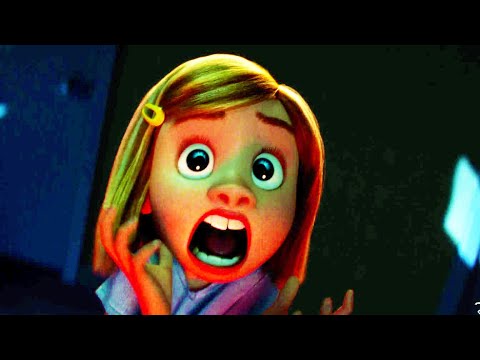
forgotten في 30 ثانية
- Forgotten is the past participle of 'forget,' used to indicate that something has slipped from memory or been left behind.
- It commonly functions as an adjective to describe people, places, or things that are no longer remembered or are neglected by others.
- In grammar, it is used with auxiliary verbs like 'have' or 'had' to form the present perfect and past perfect tenses.
- The word carries emotional weight, often suggesting a sense of loss, nostalgia, or social injustice when referring to 'forgotten' groups.
The word forgotten is a multifaceted term in the English language, serving primarily as the past participle of the verb 'forget' and frequently as a descriptive adjective. At its core, it signifies the state of being lost to one's memory or consciousness. However, its usage extends far beyond simple cognitive lapses. When we describe something as forgotten, we are often pointing to a lack of attention, a state of neglect, or a historical omission. It evokes a sense of absence—something that was once present, known, or valued has now slipped away from the forefront of the mind or the collective awareness of a group. This word is essential for expressing everything from the mundane annoyance of a misplaced set of keys to the profound tragedy of a marginalized community that society has ceased to support. In daily conversation, it is the bridge between what we intended to do and what we failed to execute. In literature and formal discourse, it carries a weight of melancholy, often used to describe 'forgotten' eras, 'forgotten' heroes, or 'forgotten' dreams that have been buried under the passage of time.
- Cognitive State
- The psychological condition where information previously stored in long-term memory is no longer accessible for retrieval.
The ancient ruins stood as a silent testament to a forgotten civilization that once thrived in the valley.
The versatility of 'forgotten' allows it to function in various grammatical structures. As a past participle, it pairs with auxiliary verbs like 'have' or 'had' to form perfect tenses (e.g., 'I have forgotten'). As an adjective, it modifies nouns to indicate a quality of being unremembered or neglected (e.g., 'a forgotten umbrella'). This dual role makes it one of the most frequently used words in the B1 level of the CEFR, as it is indispensable for describing past experiences and current states of disarray. People use it to apologize for social gaffes, to explain why a task wasn't completed, or to describe the feeling of being overlooked in a professional or personal setting. The emotional resonance of the word can range from a lighthearted 'I've forgotten my lunch!' to a deeply philosophical 'Will I be forgotten after I am gone?'
- Social Neglect
- Describing groups of people or social issues that are no longer receiving the necessary attention or resources from the public or government.
Many elderly citizens feel like the forgotten members of our fast-paced modern society.
Furthermore, the word 'forgotten' often implies a sense of finality or permanence that the simple past 'forgot' does not always convey. While 'I forgot' might refer to a temporary lapse, 'it is forgotten' often suggests that the matter is closed or that the memory has been completely erased. In legal contexts, the 'right to be forgotten' refers to the ability of individuals to have private information about them deleted from internet searches and other records. This modern usage highlights how the word has adapted to the digital age, where memory is no longer just a biological function but a data-driven one. Whether it is a forgotten password, a forgotten anniversary, or a forgotten language, the word captures the essence of what it means to lose a connection to the past.
- Historical Omission
- Refers to events or figures that have been left out of history books or public commemoration.
The historian spent decades researching the forgotten contributions of women in early science.
I had forgotten how beautiful the sunrise could be when viewed from the mountain top.
The attic was filled with forgotten treasures from my childhood.
Using 'forgotten' correctly requires an understanding of its grammatical roles as both a verb form and an adjective. When used as a verb, it is the past participle of 'forget' (forget - forgot - forgotten). This means it is used in perfect tenses to describe an action that happened at an unspecified time in the past or an action that has a result in the present. For example, 'I have forgotten my keys' implies that because I forgot them in the past, I do not have them now. In the past perfect, 'I had forgotten his name until he spoke,' it shows an action that was completed before another action in the past. The passive voice also frequently employs 'forgotten,' such as in 'The incident was soon forgotten by the public,' where the focus is on the incident itself rather than the people who did the forgetting.
- Present Perfect
- Used with 'have/has' to indicate a recent or relevant memory loss.
She has forgotten all about our meeting, so we should probably call her.
As an adjective, 'forgotten' typically appears before a noun (attributive position) or after a linking verb (predicative position). In the phrase 'a forgotten masterpiece,' it describes a work of art that is no longer recognized or appreciated. In the sentence 'The promise was forgotten,' it describes the state of the promise. It is important to distinguish between 'forgotten' and 'forgetful.' While 'forgotten' describes the object or the state of the memory, 'forgetful' describes a person who often forgets things. You would say 'He is a forgetful person,' but 'The book is forgotten.' Using these correctly prevents confusion about whether you are describing a character trait or a specific instance of memory loss.
- Attributive Adjective
- Placed directly before a noun to describe its status as unremembered.
We found a forgotten letter tucked inside the old book.
In more advanced usage, 'forgotten' can be used in participial phrases to provide additional information about a subject. For instance, 'Forgotten by his friends, he spent the evening alone.' Here, 'forgotten' starts a phrase that functions like an adjective, explaining the reason for his loneliness. This structure is common in narrative writing to create a more sophisticated flow. Additionally, 'forgotten' is often modified by adverbs to show degree or manner, such as 'long forgotten,' 'half-forgotten,' or 'easily forgotten.' These modifiers help to specify how long something has been out of mind or how likely it is to be remembered. 'Long forgotten' is particularly common when discussing history or old habits, suggesting a deep passage of time.
- Modified Adjective
- Using adverbs like 'long' or 'nearly' to provide more detail about the state of being forgotten.
The town was a long-forgotten outpost on the edge of the desert.
Have you forgotten that today is a public holiday?
The forgotten password caused him a lot of frustration.
The word 'forgotten' is ubiquitous, appearing in contexts ranging from high-stakes political speeches to casual household banter. In the realm of news and social commentary, you will frequently hear the phrase 'the forgotten man' or 'the forgotten people.' This usage is often political, referring to segments of the population that politicians or the media have supposedly ignored. It is a powerful rhetorical tool used to evoke sympathy and a sense of injustice. In a similar vein, documentary filmmakers often title their works using the word, such as 'Forgotten Soldiers' or 'Forgotten Cities,' to signal that they are bringing to light stories that have been overlooked by mainstream history. This 'unearthing' aspect of the word makes it a favorite for journalists and historians alike.
- Political Rhetoric
- Used to describe marginalized groups who feel their needs are not being met by the government.
The candidate promised to be a voice for the forgotten families of the industrial heartland.
In the world of technology and the internet, 'forgotten' is most commonly seen on login screens. The 'Forgotten your password?' link is perhaps one of the most clicked buttons on the web. Here, the word is used in its most literal sense—a failure to recall a specific piece of information. Additionally, the legal concept of the 'Right to be Forgotten' (GDPR) has brought the word into the sphere of digital ethics and privacy. This refers to the right of individuals to have their personal data removed from search engines under certain circumstances. In this context, 'forgotten' isn't about human memory but about the deletion of digital footprints, showing how the word's meaning has expanded to include artificial memory systems.
- Digital Context
- Relating to the recovery of lost credentials or the legal removal of personal data from the internet.
If you have forgotten your login details, please click the link below to reset them.
Pop culture, especially music and movies, is another place where 'forgotten' is a staple. Song lyrics often use it to describe lost love or a sense of isolation. Titles like 'Forgotten' by Linkin Park or 'Forgotten' by Avril Lavigne explore themes of being ignored or wanting to erase painful memories. In movies, the 'forgotten' trope often involves a character who has lost their memory (amnesia) or a hidden world that the rest of society has moved past. This cultural usage reinforces the word's emotional depth, linking it to feelings of nostalgia, regret, and the fear of being insignificant. Whether it's a 'forgotten' classic film or a 'forgotten' pop star, the word serves as a marker for things that have fallen out of the spotlight but still hold some intrinsic value or interest.
- Entertainment & Arts
- Used to describe works of art, performers, or themes that are no longer popular or remembered by the general public.
The museum is hosting an exhibition dedicated to the forgotten painters of the 19th century.
I feel like I've been forgotten by my old school friends.
The recipe was a forgotten family tradition that we recently revived.
One of the most frequent errors learners make with 'forgotten' is confusing it with the simple past form 'forgot.' While 'forgot' is used for the simple past tense ('I forgot my keys yesterday'), 'forgotten' must be used with an auxiliary verb to form perfect tenses or as an adjective. Saying 'I have forgot my keys' is a common mistake; the correct form is 'I have forgotten my keys.' In American English, you might occasionally hear 'forgot' used as a past participle in very informal speech, but in any formal or standard context, 'forgotten' is the required form. Another common error is using 'forgotten' when the speaker actually means 'left.' For example, 'I have forgotten my umbrella at home' is technically correct if you mean you didn't remember to bring it, but 'I left my umbrella at home' is often more natural if the focus is on the location of the object.
- Verb Form Confusion
- Mistakenly using the simple past 'forgot' instead of the past participle 'forgotten' in perfect tenses.
Incorrect: He has forgot the password. Correct: He has forgotten the password.
Another area of confusion is the distinction between 'forgotten' and 'forgetful.' As mentioned earlier, 'forgetful' is an adjective that describes a person's character or habit ('My grandmother is getting very forgetful'). In contrast, 'forgotten' describes the thing that is no longer in memory ('The name of the street is forgotten'). Learners sometimes say 'I am forgotten' when they mean 'I am forgetful.' Unless you mean that people have stopped remembering you, you should use 'forgetful' to describe your own tendency to lose track of things. Additionally, be careful with the word 'forgetting.' 'Forgetting' is the present participle and describes the process as it happens, while 'forgotten' describes the completed state.
- Adjective Misuse
- Confusing 'forgotten' (the state of the object) with 'forgetful' (the trait of the person).
She is so forgetful that she has forgotten her own phone number twice this week.
Spelling can also be a minor hurdle. Some learners forget to double the 't' in 'forgotten.' The base verb is 'forget,' and when adding the suffix '-en' to form the past participle, the final consonant is doubled because the last syllable is stressed and ends in a single vowel followed by a single consonant. This is a standard rule in English spelling (like 'sit' becoming 'sitting'), but it is easy to overlook. Finally, ensure you don't confuse 'forgotten' with 'forgiven.' While they sound somewhat similar and both involve 'letting go' of something in the mind, 'forgiven' relates to pardoning a mistake or an offense, whereas 'forgotten' relates solely to memory or neglect. You might 'forgive' a debt, but you 'forget' a name.
- Spelling & Phonetics
- Double the 't' when writing 'forgotten' to maintain the short 'o' sound in the second syllable.
I have forgotten (not forgoten) the details of the story.
Don't worry, the small error is already forgotten.
Is it forgotten or just misplaced?
While 'forgotten' is a very common word, there are several alternatives that can provide more precision or a different emotional tone depending on the context. 'Overlooked' is a great alternative when you want to suggest that something was missed not because of a memory lapse, but because it wasn't given enough attention or was considered unimportant. For example, 'The small detail was overlooked by the inspectors.' 'Neglected' carries a stronger sense of responsibility and often implies a failure to care for something, such as 'a neglected garden' or 'a neglected child.' While a forgotten garden is simply one no one remembers, a neglected garden is one that has been allowed to deteriorate through lack of effort. These nuances are vital for moving from B1 to higher levels of English proficiency.
- Overlooked vs. Forgotten
- 'Overlooked' implies a failure to notice, while 'forgotten' implies a loss of existing memory.
His contribution was overlooked during the awards ceremony, which was quite unfair.
In more formal or literary contexts, you might use 'unremembered' or 'obscure.' 'Unremembered' is very close to 'forgotten' but often feels more poetic or passive. 'Obscure' describes something that is not well-known or has been hidden by time, such as 'an obscure 17th-century poet.' If you are talking about something that has been intentionally left out, 'omitted' is the best choice. For instance, 'His name was omitted from the list.' This suggests a deliberate action rather than a simple accident of memory. On the other hand, 'abandoned' is used when something has been left behind permanently, often in a state of ruin, like 'an abandoned house.' While the house might also be forgotten, 'abandoned' emphasizes the act of leaving it.
- Neglected vs. Forgotten
- 'Neglected' implies a lack of care or maintenance; 'forgotten' implies a lack of memory.
The neglected building was finally scheduled for renovation after years of being forgotten.
For a more informal or idiomatic approach, you might say something has 'slipped your mind.' This is a very common way to describe a minor instance of forgetting. For example, 'I'm sorry, your birthday completely slipped my mind.' This sounds less heavy than saying 'I have forgotten your birthday.' Another phrase is 'to draw a blank,' which describes the sudden inability to remember something you usually know. 'I knew the answer a minute ago, but now I'm drawing a blank.' These alternatives allow you to match your language to the social situation, making your English sound more natural and nuanced. By choosing between 'forgotten,' 'overlooked,' 'neglected,' or 'slipped my mind,' you can convey exactly how and why something is no longer being remembered.
- Omitted vs. Forgotten
- 'Omitted' is often used for things left out of a document or list, usually intentionally.
The author omitted several key details from the final chapter, leaving them forgotten by the reader.
It's a half-forgotten memory from my early childhood.
The forsaken ship lay on the shore, a forgotten relic of the sea.
How Formal Is It?
حقيقة ممتعة
The prefix 'for-' in 'forgotten' is the same one found in 'forbid' and 'forgive.' It often adds a sense of 'away' or 'completely' to the base verb, showing how the action is being directed outward or finished.
دليل النطق
- Stressing the first syllable (FOR-gotten).
- Pronouncing the 't' too strongly in American English.
- Using a long 'o' sound in the second syllable.
- Forgetting the schwa sound in the final syllable.
- Confusing the pronunciation with 'forgot.'
مستوى الصعوبة
Easy to recognize in context, though passive forms can be slightly more complex.
Requires correct use of auxiliary verbs and doubling the 't' in spelling.
Common in daily speech; pronunciation is straightforward if stress is correct.
Clear pronunciation, though the 't' can be soft in some accents.
ماذا تتعلّم بعد ذلك
المتطلبات الأساسية
تعلّم لاحقاً
متقدم
قواعد يجب معرفتها
Present Perfect Tense
I have forgotten my lunch.
Past Perfect Tense
I had forgotten his name until he spoke.
Passive Voice
The incident was forgotten.
Participial Adjectives
The forgotten city was beautiful.
Spelling: Doubling Consonants
forget -> forgotten (double 't')
أمثلة حسب المستوى
I have forgotten my pen.
J'ai oublié mon stylo.
Present perfect with 'have'.
She has forgotten her bag.
Elle a oublié son sac.
Present perfect with 'has'.
Have you forgotten your keys?
As-tu oublié tes clés ?
Question form of present perfect.
I have forgotten the name of the street.
J'ai oublié le nom de la rue.
Using 'forgotten' for information.
The password is forgotten.
Le mot de passe est oublié.
Passive voice with 'is'.
He has forgotten to buy milk.
Il a oublié d'acheter du lait.
Present perfect followed by an infinitive.
We have forgotten our umbrellas.
Nous avons oublié nos parapluies.
Plural subject with 'have'.
It is a forgotten book.
C'est un livre oublié.
Used as an adjective before a noun.
I've forgotten where I parked my car.
J'ai oublié où j'ai garé ma voiture.
Contraction 'I've' with a 'where' clause.
They have forgotten all about the party.
Ils ont tout oublié de la fête.
Using 'all about' for emphasis.
Has she forgotten to call her mother?
A-t-elle oublié d'appeler sa mère ?
Third person singular question.
This is a forgotten place in the city.
C'est un endroit oublié de la ville.
Adjective describing a location.
I had forgotten how tall you are!
J'avais oublié à quel point tu es grand !
Past perfect 'had forgotten'.
The old toys were forgotten in the attic.
Les vieux jouets étaient oubliés dans le grenier.
Passive voice in the past tense.
Don't worry, it will be forgotten soon.
Ne t'inquiète pas, ce sera bientôt oublié.
Future passive with 'will be'.
He's forgotten his homework again.
Il a encore oublié ses devoirs.
Contraction 'He's' (He has) with 'again'.
The promise was forgotten as soon as the election ended.
La promesse a été oubliée dès que l'élection s'est terminée.
Passive voice used for abstract concepts.
I have completely forgotten what we were talking about.
J'ai complètement oublié de quoi nous parlions.
Using 'completely' as an adverbial modifier.
She felt like a forgotten member of the team.
Elle se sentait comme un membre oublié de l'équipe.
Adjective describing a person's social status.
We found a forgotten suitcase in the hotel lobby.
Nous avons trouvé une valise oubliée dans le hall de l'hôtel.
Adjective in a simple past sentence.
Have you forgotten that we have a test tomorrow?
As-tu oublié que nous avons un test demain ?
Question using a 'that' clause.
The incident was quickly forgotten by everyone involved.
L'incident a été rapidement oublié par toutes les personnes impliquées.
Passive voice with 'by' agent.
I had forgotten how much I enjoyed painting.
J'avais oublié à quel point j'aimais peindre.
Past perfect to show a rediscovered passion.
It was a long-forgotten tradition in our village.
C'était une tradition oubliée depuis longtemps dans notre village.
Compound adjective 'long-forgotten'.
Forgotten by his family, the old man lived a lonely life.
Oublié par sa famille, le vieil homme menait une vie solitaire.
Participial phrase at the beginning of the sentence.
The ruins are a reminder of a long-forgotten era of prosperity.
Les ruines sont un rappel d'une époque de prospérité oubliée depuis longtemps.
Adjective phrase modifying 'era'.
Many feel that the needs of the poor have been forgotten by the government.
Beaucoup estiment que les besoins des pauvres ont été oubliés par le gouvernement.
Present perfect passive.
I had almost forgotten the sound of her voice until she called.
J'avais presque oublié le son de sa voix jusqu'à ce qu'elle appelle.
Past perfect with 'almost'.
The details of the contract were forgotten in the heat of the argument.
Les détails du contrat ont été oubliés dans le feu de la discussion.
Passive voice in a prepositional phrase context.
Is the 'right to be forgotten' a fundamental human right in the digital age?
Le « droit à l'oubli » est-il un droit humain fondamental à l'ère numérique ?
Using the term as a specific legal concept.
She has a way of making you feel like your mistakes are already forgotten.
Elle a une façon de vous faire sentir que vos erreurs sont déjà oubliées.
Object complement structure.
The book explores the lives of forgotten women in science.
Le livre explore la vie de femmes oubliées de la science.
Adjective used for historical recovery.
The melody, though half-forgotten, still haunted his dreams.
La mélodie, bien qu'à moitié oubliée, hantait encore ses rêves.
Parenthetical adjective phrase.
The treaty was a forgotten relic of a time when peace seemed possible.
Le traité était une relique oubliée d'une époque où la paix semblait possible.
Metaphorical use of 'forgotten'.
It is a common misconception that these ancient languages are entirely forgotten.
C'est une idée reçue courante que ces langues anciennes sont entièrement oubliées.
Passive construction within a 'that' clause.
Having forgotten his prepared speech, he had to improvise for twenty minutes.
Ayant oublié son discours préparé, il a dû improviser pendant vingt minutes.
Perfect participle phrase.
The town's history is rich with forgotten stories of courage and sacrifice.
L'histoire de la ville est riche d'histoires oubliées de courage et de sacrifice.
Adjective modifying 'stories' in a formal context.
The nuances of the debate were largely forgotten in the media's quest for a soundbite.
Les nuances du débat ont été largement oubliées dans la quête d'une petite phrase par les médias.
Passive voice with adverbial modification.
She felt a pang of regret for the forgotten friendships of her youth.
Elle ressentit un pincement de regret pour les amitiés oubliées de sa jeunesse.
Adjective used to evoke emotion.
The architect sought to revive forgotten techniques of stone masonry.
L'architecte a cherché à raviver des techniques oubliées de maçonnerie en pierre.
Adjective used in a professional/technical context.
The sheer scale of the tragedy is often forgotten in the dry recitation of statistics.
L'ampleur même de la tragédie est souvent oubliée dans la récitation sèche des statistiques.
Passive voice used for philosophical contrast.
His name has been consigned to the forgotten annals of history.
Son nom a été consigné dans les annales oubliées de l'histoire.
Idiomatic/formal expression 'consigned to...'
The forgotten whispers of the past seemed to echo through the empty halls.
Les chuchotements oubliés du passé semblaient résonner dans les couloirs vides.
Poetic use of 'forgotten' as a personification modifier.
Lest it be forgotten, the primary goal of the project was always sustainability.
De peur que cela ne soit oublié, l'objectif principal du projet a toujours été la durabilité.
Subjunctive mood with 'lest'.
The artist captured the beauty of forgotten objects—rusted gears and broken glass.
L'artiste a capturé la beauté des objets oubliés : engrenages rouillés et verre brisé.
Adjective used in an aesthetic context.
The cultural significance of the ritual had been forgotten by all but a few elders.
La signification culturelle du rituel avait été oubliée par tous, sauf par quelques anciens.
Past perfect passive with restrictive 'but'.
She possessed a forgotten kind of grace that seemed out of place in the modern world.
Elle possédait une sorte de grâce oubliée qui semblait déplacée dans le monde moderne.
Adjective modifying an abstract noun 'kind of grace'.
The debate over the 'right to be forgotten' highlights the tension between privacy and the public record.
Le débat sur le « droit à l'oubli » souligne la tension entre la vie privée et les archives publiques.
Using the term as a complex legal/ethical subject.
المرادفات
الأضداد
تلازمات شائعة
العبارات الشائعة
— A person who is neglected or ignored by society or the government. It is often used in political speeches.
The politician claimed to represent the forgotten man.
— The legal right to have private information removed from internet searches. This is a major topic in digital privacy.
He exercised his right to be forgotten to remove old news articles.
— To have completely and totally forgotten something. It is an informal way to emphasize the total loss of memory.
I'm so sorry, I clean forgotten to call you!
— Something that is no longer remembered but still exists or has an effect. Often used for old laws or habits.
The old regulation is forgotten but not gone from the books.
— A social or political movement that no longer receives public attention. It suggests a loss of momentum.
The charity struggled to raise funds for what many saw as a forgotten cause.
— A place or thing that seems to belong to the past and hasn't changed. It evokes a sense of nostalgia.
The village seemed forgotten by time, with no modern cars in sight.
— To be overlooked because there is too much else going on. Common in busy environments.
My request was forgotten in the shuffle of the office move.
— A formal way to say 'so that we do not forget.' Often used in memorials.
Lest it be forgotten, many people sacrificed their lives for this freedom.
— Knowledge or stories from the past that are no longer known by most people. Often used in fantasy literature.
The wizard spent his life studying forgotten lore.
— A skill or craft that few people practice anymore. It suggests a loss of traditional knowledge.
Hand-lettering is becoming a forgotten art in the age of computers.
يُخلط عادةً مع
'Forgot' is the simple past; 'forgotten' is the past participle used with 'have/has/had' or as an adjective.
'Forgetful' describes a person who often forgets; 'forgotten' describes the thing that is not remembered.
'Forgiven' means to be pardoned for a mistake; 'forgotten' means to be out of memory.
تعبيرات اصطلاحية
— Completely out of mind and no longer relevant. Often used for old scandals or secrets.
The old family feud was buried and forgotten years ago.
Informal— To stop being angry with someone and to stop thinking about the bad thing they did.
It's time to forgive and forget so we can move on.
Neutral— Used to say that although someone has died or something has ended, they are still remembered.
Our dear friend is gone but not forgotten.
Formal/Poetic— A related idiom meaning if you don't see something, you will soon forget it.
He forgot about his old car as soon as he got the new one—out of sight, out of mind.
Informal— To be unable to remember something, even though you should know it.
I asked for his name, but I just drew a blank.
Informal— To be forgotten by someone, usually a small task or detail.
I meant to buy milk, but it completely slipped my mind.
Neutral— Used to describe something that happened so long ago that it is now forgotten.
The origins of the festival are lost in the mists of time.
Literary— To have a very poor memory and forget things easily.
Don't ask me for the date; I have a memory like a sieve.
Informal— To sound familiar, even if you can't remember the details.
The name doesn't ring a bell, but I might have met him.
Informal— To be a law or rule that is still officially there but is forgotten and not followed.
That old parking regulation has become a dead letter.
Formalسهل الخلط
Both involve leaving something behind.
'Forgotten' implies a memory lapse; 'left' implies a physical location. You 'forgot' to bring it, so you 'left' it at home.
I left my phone on the table because I had forgotten to put it in my bag.
Both mean something is missing.
'Omitted' is usually intentional or formal; 'forgotten' is usually accidental.
He omitted the last chapter, but the reader had already forgotten the first one.
Both mean a lack of attention.
'Neglected' implies a failure of care; 'forgotten' implies a failure of memory.
The forgotten toy was neglected in the rain.
Both mean something was missed.
'Overlooked' means you didn't see it; 'forgotten' means you didn't remember it.
I overlooked the typo because I had forgotten the spelling rule.
Both mean something is left alone.
'Abandoned' is a permanent leaving; 'forgotten' can be temporary or mental.
The abandoned house was forgotten by the townspeople.
أنماط الجُمل
I have forgotten [noun].
I have forgotten my bag.
Have you forgotten [noun/to verb]?
Have you forgotten to lock the door?
It was a [adjective] forgotten [noun].
It was a long forgotten story.
[Noun] was forgotten by [someone].
The book was forgotten by the student.
I had forgotten [clause] until [event].
I had forgotten how much I liked tea until I tried this one.
Forgotten by [someone], [subject] [verb].
Forgotten by his peers, he worked alone.
The [noun], though [adverb] forgotten, [verb].
The song, though half forgotten, still made her smile.
Lest it be forgotten, [clause].
Lest it be forgotten, the hero saved the town.
عائلة الكلمة
الأسماء
الأفعال
الصفات
مرتبط
كيفية الاستخدام
Very common in both spoken and written English.
-
I have forgot my homework.
→
I have forgotten my homework.
You must use the past participle 'forgotten' with the auxiliary verb 'have.'
-
I am forgotten today.
→
I am forgetful today.
Use 'forgetful' to describe your own habit of forgetting. 'Forgotten' means people don't remember you.
-
The story was forgoten by the kids.
→
The story was forgotten by the kids.
Always double the 't' in 'forgotten.'
-
I have forgotten my keys at home.
→
I left my keys at home.
While 'forgotten' is okay, 'left' is more natural when you specify the location.
-
He is a forgotten person because he forgets things.
→
He is a forgetful person.
'Forgotten' describes someone others don't remember; 'forgetful' describes someone who can't remember.
نصائح
Use with Auxiliary Verbs
Always use 'forgotten' with 'have,' 'has,' or 'had' when forming perfect tenses. Never say 'I have forgot.'
Double the T
Remember to double the 't' in 'forgotten.' This is a common spelling mistake for learners.
Forgotten vs. Forgetful
Use 'forgetful' for the person and 'forgotten' for the thing. 'The forgetful boy has forgotten his lunch.'
Adverbial Modifiers
Use adverbs like 'long,' 'half,' or 'completely' to give more detail to 'forgotten.' It makes your writing more descriptive.
Digital Memory
In tech, 'forgotten' is the standard word for lost passwords. Look for it on login screens.
Forgotten People
Use 'forgotten' to talk about social neglect. It's a powerful word for discussing justice and history.
Best Forgotten
Use 'best forgotten' to politely suggest moving on from an awkward situation.
Listen for the Schwa
The last syllable '-ten' is very short and weak. Don't expect to hear a strong 'e' sound.
Participial Phrases
Start a sentence with 'Forgotten by...' to create a more sophisticated and literary tone.
Forgotten vs. Left
If you know where the object is, 'left' is often better. 'I left my keys on the table' vs 'I have forgotten my keys (somewhere).'
احفظها
وسيلة تذكّر
Think of 'FOR-GET-TEN'. You 'FOR' (forfeited) what you 'GET' (got) and now you have 'TEN' (nothing) left in your head.
ربط بصري
Imagine a dusty, closed box in a dark attic with the word 'FORGOTTEN' written on it in the dust.
Word Web
تحدٍّ
Try to write three sentences using 'forgotten' as an adjective, a verb in the present perfect, and a verb in the passive voice.
أصل الكلمة
Derived from the Old English word 'forgietan,' which is a combination of 'for-' (meaning away or completely) and 'gietan' (meaning to get). This suggests that to forget is to 'un-get' or to lose what you once had in your mind. It has cognates in other Germanic languages, such as the German 'vergessen.'
المعنى الأصلي: To lose from the mind; to fail to remember.
Germanicالسياق الثقافي
Be careful when using 'forgotten' to describe people; it can imply they are unimportant, which might be offensive if not used carefully in a social justice context.
Commonly used in political rhetoric to appeal to the working class (the 'forgotten man').
تدرّب في الحياة الواقعية
سياقات واقعية
Technology
- forgotten password
- reset forgotten credentials
- forgotten login
- right to be forgotten
Daily Life
- forgotten keys
- forgotten umbrella
- forgotten appointment
- forgotten name
History
- forgotten era
- forgotten heroes
- forgotten civilization
- forgotten battles
Social Issues
- forgotten people
- forgotten communities
- forgotten victims
- forgotten generation
Emotions
- feel forgotten
- forgotten dreams
- forgotten love
- forgotten promises
بدايات محادثة
"Have you ever forgotten something really important at the worst possible time?"
"What is a 'forgotten' skill that you think more people should learn today?"
"Do you think it's better to be forgotten or to be remembered for something bad?"
"Have you ever found a forgotten item that brought back a lot of memories?"
"What is a movie or book that you think has been unfairly forgotten by the public?"
مواضيع للكتابة اليومية
Write about a time you felt forgotten by your friends or family. How did you handle it?
Describe a forgotten place you have visited, like an old building or a quiet park.
If you could have one 'forgotten' memory returned to you, what would it be and why?
Discuss the 'right to be forgotten' on the internet. Is it a good idea?
Write a story about a forgotten hero who finally gets the recognition they deserve.
الأسئلة الشائعة
10 أسئلةThe correct form is 'I have forgotten.' 'Forgotten' is the past participle, which is required after 'have' or 'has' in standard English. 'Forgot' is the simple past tense (e.g., 'I forgot my keys yesterday').
Yes, it can. When you describe a person as 'forgotten,' it usually means they are being ignored or neglected by society, or that people no longer remember who they are. For example, 'the forgotten victims of the war.'
'Forgetful' is an adjective that describes a person's character (e.g., 'He is a forgetful man'). 'Forgotten' is an adjective that describes the state of an object or idea (e.g., 'It is a forgotten book').
It is neutral and can be used in any context. However, phrases like 'clean forgotten' are informal, while 'consigned to the forgotten annals of history' is very formal.
It is spelled with a double 't': F-O-R-G-O-T-T-E-N. This is because the stress is on the second syllable, which ends in a single vowel and a single consonant.
It means that it is better not to think about or talk about something, usually because it is unpleasant, embarrassing, or no longer relevant. For example, 'That argument is best forgotten.'
Yes, very often. For example, 'The password was forgotten' or 'The rules have been forgotten.' This focuses on the thing that was forgotten rather than the person who forgot it.
Synonyms like 'obscure,' 'unremembered,' or 'neglected' are often used. For example, 'an obscure historical figure' or 'a neglected chapter of history.'
Usually, yes. However, in phrases like 'the forgotten man,' it implies a systematic or social neglect that might not be purely accidental but is a result of a lack of care.
It is a legal concept, particularly in the EU, that allows individuals to request that search engines remove links to personal information that is inaccurate, inadequate, irrelevant, or excessive.
اختبر نفسك 200 أسئلة
Write a sentence about a forgotten umbrella.
Well written! Good try! Check the sample answer below.
Write an apology for forgetting a friend's birthday.
Well written! Good try! Check the sample answer below.
Describe a forgotten place in your hometown.
Well written! Good try! Check the sample answer below.
Explain the difference between 'forgotten' and 'forgetful'.
Well written! Good try! Check the sample answer below.
Write a short paragraph about a forgotten hero.
Well written! Good try! Check the sample answer below.
Discuss the 'right to be forgotten' on the internet.
Well written! Good try! Check the sample answer below.
Use 'forgotten' in a participial phrase.
Well written! Good try! Check the sample answer below.
Write a poetic sentence about forgotten memories.
Well written! Good try! Check the sample answer below.
Argue for or against the importance of remembering forgotten history.
Well written! Good try! Check the sample answer below.
Use 'lest it be forgotten' in a formal context.
Well written! Good try! Check the sample answer below.
Write a dialogue where someone 'draws a blank'.
Well written! Good try! Check the sample answer below.
Describe a forgotten family tradition.
Well written! Good try! Check the sample answer below.
Use 'long-forgotten' to describe an object.
Well written! Good try! Check the sample answer below.
Write a sentence using 'forgotten' in the passive voice.
Well written! Good try! Check the sample answer below.
Create a mnemonic for the spelling of 'forgotten'.
Well written! Good try! Check the sample answer below.
Write a sentence using 'half-forgotten'.
Well written! Good try! Check the sample answer below.
Describe the feeling of being forgotten.
Well written! Good try! Check the sample answer below.
Write a sentence about a forgotten password.
Well written! Good try! Check the sample answer below.
Use 'forgotten' to describe a social group.
Well written! Good try! Check the sample answer below.
Write a sentence using 'soon forgotten'.
Well written! Good try! Check the sample answer below.
Say: 'I have forgotten my password.'
Read this aloud:
قلت:
Speech recognition is not supported in your browser. Try Chrome or Edge.
Ask: 'Have you forgotten your keys?'
Read this aloud:
قلت:
Speech recognition is not supported in your browser. Try Chrome or Edge.
Say: 'I've forgotten where I parked.'
Read this aloud:
قلت:
Speech recognition is not supported in your browser. Try Chrome or Edge.
Describe a time you forgot something important.
Read this aloud:
قلت:
Speech recognition is not supported in your browser. Try Chrome or Edge.
Explain what 'the forgotten man' means.
Read this aloud:
قلت:
Speech recognition is not supported in your browser. Try Chrome or Edge.
Discuss a 'forgotten' movie you like.
Read this aloud:
قلت:
Speech recognition is not supported in your browser. Try Chrome or Edge.
Talk about the 'right to be forgotten'.
Read this aloud:
قلت:
Speech recognition is not supported in your browser. Try Chrome or Edge.
Use 'long-forgotten' in a sentence about history.
Read this aloud:
قلت:
Speech recognition is not supported in your browser. Try Chrome or Edge.
Pronounce 'forgotten' with the correct stress.
Read this aloud:
قلت:
Speech recognition is not supported in your browser. Try Chrome or Edge.
Tell a short story about a forgotten treasure.
Read this aloud:
قلت:
Speech recognition is not supported in your browser. Try Chrome or Edge.
Explain the difference between 'forgot' and 'forgotten'.
Read this aloud:
قلت:
Speech recognition is not supported in your browser. Try Chrome or Edge.
Use 'half-forgotten' to describe a memory.
Read this aloud:
قلت:
Speech recognition is not supported in your browser. Try Chrome or Edge.
Say: 'Lest it be forgotten, we are here to help.'
Read this aloud:
قلت:
Speech recognition is not supported in your browser. Try Chrome or Edge.
Discuss 'forgotten' traditions in your country.
Read this aloud:
قلت:
Speech recognition is not supported in your browser. Try Chrome or Edge.
Roleplay an apology for a forgotten meeting.
Read this aloud:
قلت:
Speech recognition is not supported in your browser. Try Chrome or Edge.
Talk about a 'forgotten' skill you want to learn.
Read this aloud:
قلت:
Speech recognition is not supported in your browser. Try Chrome or Edge.
Say: 'The details were forgotten in the argument.'
Read this aloud:
قلت:
Speech recognition is not supported in your browser. Try Chrome or Edge.
Describe a 'forgotten' corner of your house.
Read this aloud:
قلت:
Speech recognition is not supported in your browser. Try Chrome or Edge.
Explain 'best forgotten' to a friend.
Read this aloud:
قلت:
Speech recognition is not supported in your browser. Try Chrome or Edge.
Use 'forgotten' in a poetic way.
Read this aloud:
قلت:
Speech recognition is not supported in your browser. Try Chrome or Edge.
Listen and write: 'I have forgotten my book.'
Listen and write: 'She's forgotten her bag.'
Listen and write: 'Have you forgotten the time?'
Listen and write: 'It was a long-forgotten story.'
Listen and write: 'The password was forgotten.'
Listen and write: 'I had forgotten how tall he was.'
Listen and write: 'The forgotten hero returned.'
Listen and write: 'The right to be forgotten.'
Listen and write: 'Lest it be forgotten.'
Listen and write: 'Consigned to the forgotten annals.'
Listen for the 't' sound in 'forgotten'.
Listen and identify the stress in 'forgotten'.
Listen and write: 'A half-forgotten memory.'
Listen and write: 'The incident was soon forgotten.'
Listen and write: 'Forgotten by the world.'
/ 200 correct
Perfect score!
Summary
The word 'forgotten' is essential for describing both the simple act of losing a memory and the deeper state of being neglected. For example, 'I have forgotten my password' shows a personal lapse, while 'the forgotten children' highlights a social failure.
- Forgotten is the past participle of 'forget,' used to indicate that something has slipped from memory or been left behind.
- It commonly functions as an adjective to describe people, places, or things that are no longer remembered or are neglected by others.
- In grammar, it is used with auxiliary verbs like 'have' or 'had' to form the present perfect and past perfect tenses.
- The word carries emotional weight, often suggesting a sense of loss, nostalgia, or social injustice when referring to 'forgotten' groups.
Use with Auxiliary Verbs
Always use 'forgotten' with 'have,' 'has,' or 'had' when forming perfect tenses. Never say 'I have forgot.'
Double the T
Remember to double the 't' in 'forgotten.' This is a common spelling mistake for learners.
Forgotten vs. Forgetful
Use 'forgetful' for the person and 'forgotten' for the thing. 'The forgetful boy has forgotten his lunch.'
Adverbial Modifiers
Use adverbs like 'long,' 'half,' or 'completely' to give more detail to 'forgotten.' It makes your writing more descriptive.