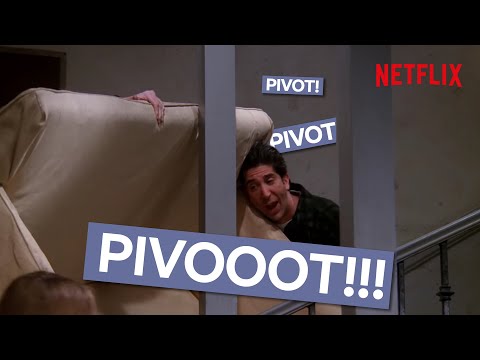
pivot في 30 ثانية
- Pivot means to turn on a point, like a hinge or a basketball player's foot.
- In business, it refers to a strategic change in direction when the current plan fails.
- It is often used with 'to' (pivot to a new idea) or 'on' (pivots on a fact).
- The word implies agility, intelligence, and the ability to adapt to new circumstances.
The word pivot is a dynamic verb that captures the essence of movement and transformation. At its most basic, physical level, to pivot means to turn or rotate on a single point, much like a door hinges on a frame or a basketball player keeps one foot planted while rotating their body to find a passing lane. This physical action is precise, controlled, and foundational. However, in modern English, especially within professional, technological, and social contexts, 'pivot' has evolved into a powerful metaphor for strategic adaptation. When a person or an organization pivots, they are not simply changing direction randomly; they are keeping one foot in their existing knowledge or strengths while shifting their focus to a new opportunity or a more viable path. This nuance is critical: a pivot is a grounded change, not a total abandonment of the past.
- Physical Context
- In mechanics and sports, pivoting refers to the literal rotation around a fixed axis. It implies stability and agility. For example, a dancer must pivot perfectly on their toes to complete a pirouette without losing balance.
The athlete had to pivot quickly on his left foot to avoid the defender and make the shot.
- Business and Tech Context
- In the world of startups, a pivot occurs when a company realizes its current product or strategy isn't meeting market needs. They use their existing technology or team to 'pivot' toward a different business model. This term was popularized by Eric Ries in 'The Lean Startup'.
Beyond business, we use 'pivot' in conversation and politics. When a politician is asked a difficult question, they might 'pivot' to a topic they are more comfortable discussing. In daily life, you might pivot your career path after realizing your true passion lies elsewhere. The word suggests a level of intelligence and responsiveness to one's environment. It is about being flexible enough to survive and thrive when the original plan is no longer working. Whether it is a mechanical part rotating in a machine or a multi-billion dollar corporation changing its entire product line, the core idea remains the same: a central point of stability allows for a significant change in orientation.
After the initial failure of the app, the developers decided to pivot and focus on enterprise security instead of social gaming.
- Social and Conversational Context
- To pivot in a conversation means to skillfully steer the discussion toward a new subject. It is often used to avoid conflict or to bring the focus back to the main point of a meeting.
She managed to pivot the conversation away from the controversial budget cuts toward the team's recent successes.
The dancer's ability to pivot on one leg showed her incredible core strength and balance.
When the pandemic hit, many restaurants had to pivot to a delivery-only model to stay in business.
Using the verb pivot correctly requires understanding its grammatical flexibility. It can be used as an intransitive verb (without a direct object) or, less commonly, as a transitive verb (with an object). Most frequently, it is followed by the preposition 'to' or 'away from'. When you pivot 'to' something, you are moving toward a new focus. When you pivot 'away from' something, you are distancing yourself from a previous topic or strategy. The word can also be used with 'on', describing the point of rotation. For example, 'The entire argument pivots on a single piece of evidence.' This means the evidence is the central point that everything else depends on.
- Intransitive Usage (Most Common)
- The company decided to pivot after the first quarter. (No object needed, the action of changing direction is the focus.)
In the middle of the debate, the candidate had to pivot to address the concerns of the younger voters.
- Using Prepositions: Pivot To/Away From
- We need to pivot away from fossil fuels and pivot to renewable energy sources as soon as possible.
In academic and formal writing, 'pivot' is often used to describe the central point of a system or an argument. When you say a system 'pivots on' a certain factor, you are highlighting that factor's importance. In a more literal sense, engineers use 'pivot' to describe how parts of a machine interact. For instance, 'The arm of the crane pivots on a heavy steel base.' In business English, 'pivot' is frequently used in the past tense ('pivoted') to describe successful transformations. It conveys a sense of agility and smart decision-making. Instead of saying 'we changed our plan because it was failing,' saying 'we pivoted to a more sustainable model' sounds more strategic and positive.
The success of the peace talks will pivot on whether both sides can agree on the border issues.
- Transitive Usage (Less Common)
- The technician pivoted the satellite dish to face the new signal source. (Here, the dish is the object being moved.)
He pivoted his chair to face the window, lost in thought about the future of the project.
The plot of the movie pivots on a sudden revelation about the protagonist's past.
As the market shifted, the company had to pivot its marketing strategy to target a younger demographic.
You will encounter the word pivot in a variety of high-stakes environments. One of the most common places is in business news and startup culture. If you listen to podcasts like 'How I Built This' or read 'TechCrunch', you will hear founders talking about the moment they had to pivot. This usually refers to a 'make or break' moment where the original idea wasn't working, and they had to change their entire approach to survive. It's a word that carries the weight of risk and the hope of a new beginning. In this context, 'pivot' is almost a badge of honor, signifying that a leader is observant and brave enough to change course.
- News and Politics
- Journalists often use 'pivot' to describe a change in a politician's campaign strategy. For example, 'The candidate is pivoting to the center to attract moderate voters.' It describes a calculated, strategic move.
The news anchor noted how the president pivoted from foreign policy to domestic issues during the press conference.
- Sports Commentary
- In basketball, netball, or football, commentators use 'pivot' to describe a player's physical movement. 'Look at how she pivots on her heel to find the open player!' It highlights technical skill and agility.
In the world of data science and Excel, 'pivot' is part of a very common tool: the 'Pivot Table'. This tool allows users to rotate and reorganize data to see it from different perspectives. This usage perfectly mirrors the literal meaning of the word—turning something around a central point to gain a new view. You will also hear 'pivot' in medical contexts, specifically regarding anatomy. The 'pivot joint' in your neck allows you to turn your head from side to side. Whether you are in a boardroom, a basketball court, or a doctor's office, 'pivot' is a word that describes the essential mechanics of change and movement.
To analyze the sales data more effectively, I used a pivot table to group the results by region and month.
- Pop Culture
- In the famous 'Friends' scene, Ross Geller screams 'Pivot!' repeatedly while trying to move a sofa. This has become a meme used whenever someone is struggling with a physical or metaphorical change.
Every time we try to move heavy furniture, my brother can't help but yell 'pivot!' just like in the TV show.
The company's pivot to digital-first services saved them from bankruptcy during the economic downturn.
The neck contains a pivot joint that allows for the rotation of the head.
One of the most common mistakes when using pivot is confusing it with a simple 'turn' or 'change'. While they are related, 'pivot' implies a specific kind of change—one that is anchored by something that remains constant. If you change everything about your life, you haven't really pivoted; you've started over. A pivot requires a 'pivot point'. Another mistake is using the word too vaguely in business. People often say 'we need to pivot' when they actually mean 'we are lost'. A true pivot is a strategic, data-driven decision, not a desperate scramble. Using it correctly shows that you understand the logic behind the change.
- Confusing Pivot with Spin
- To 'spin' often implies a loss of control or a repetitive motion. To 'pivot' is a single, intentional movement. Don't say 'The car pivoted out of control'; say 'The car spun out of control'.
Correct: The dancer pivoted gracefully. Incorrect: The dancer spun on a single point (though technically true, 'pivoted' is more precise for a controlled turn).
- Misusing Prepositions
- Learners often forget to use 'to' when describing the new direction. You don't 'pivot a new strategy'; you 'pivot to a new strategy'.
Another subtle mistake is using 'pivot' when the change is too small. If you just change the color of a button on a website, that's a 'tweak' or an 'adjustment', not a pivot. A pivot should feel significant. Conversely, don't use it for a complete 180-degree turn if there is no connection to the previous state. If a company that makes shoes suddenly starts making spaceships, that's a 'total transformation', not a pivot. The 'pivot' implies that the shoe-making expertise is somehow being used in the new venture. Finally, be careful with the pronunciation. The stress is on the first syllable: PIV-ot. Stressing the second syllable (pi-VOT) is a common error for non-native speakers.
We didn't just change the logo; we had to pivot our entire business model to focus on sustainability.
- Overusing Business Jargon
- In casual settings, 'pivot' can sound overly formal or like 'corporate speak'. If you're just changing your mind about what to eat for dinner, just say 'I changed my mind'.
The project pivots on the approval of the board, so we must be prepared for their questions.
It is a mistake to pivot too early before you have enough data to justify the change.
The hinge allows the door to pivot smoothly without making any noise.
While pivot is a unique and powerful word, there are several synonyms and alternatives that can be used depending on the context. Understanding the subtle differences between these words will help you choose the most precise term for your writing or speech. Common alternatives include 'rotate', 'swivel', 'shift', 'veer', and 'adapt'. Each of these carries a slightly different connotation. 'Rotate' is very mechanical; 'swivel' implies a smooth, easy turn; 'shift' suggests a change in position or focus; 'veer' often implies a sudden or uncontrolled change in direction; and 'adapt' is a broad term for changing to fit new conditions.
- Pivot vs. Rotate
- 'Rotate' usually means to turn in a full circle or around an axis continuously. 'Pivot' often implies a single movement to a new position. You rotate a wheel, but you pivot a telescope.
While the Earth rotates on its axis, the satellite had to pivot to stay pointed at the ground station.
- Pivot vs. Swivel
- 'Swivel' is often used for furniture or small movements. You swivel in your office chair. 'Pivot' sounds more formal and is used for larger strategic changes or specific athletic moves.
In a business context, 'reorient' or 'reposition' are excellent alternatives to 'pivot'. 'Reorient' suggests finding a new direction based on your surroundings, while 'reposition' is often used in marketing to describe changing how a product is perceived by customers. If you are talking about a conversation, 'segue' is a great word for a smooth transition, whereas 'pivot' might imply a more abrupt or intentional change of topic. If you are describing a physical turn that is very sharp, 'u-turn' might be more appropriate, though it lacks the 'anchored' feeling of a pivot. Choosing the right word depends on whether you want to emphasize the smoothness, the speed, or the strategic nature of the change.
The car veered sharply to avoid the deer, but the driver managed to pivot back into the lane.
- Pivot vs. Adapt
- 'Adapt' is a slow process of changing over time. 'Pivot' is a specific moment of decision and change. Animals adapt to their environment; a CEO pivots the company strategy.
We need to adapt to the new regulations, which might require us to pivot our production methods.
The politician's pivot was so seamless that many voters didn't even notice the change in policy.
The telescope pivots on a motorized mount to track stars across the night sky.
How Formal Is It?
حقيقة ممتعة
The French word 'pivot' might come from 'pive', meaning a pinecone, because of the similar shape of early wooden pivots.
دليل النطق
- Pronouncing it as pi-VOT (stressing the second syllable).
- Pronouncing the 'i' as a long 'eye' sound (PIE-vot).
- Pronouncing the 'o' too clearly like 'hot'; it should be a neutral schwa sound.
- Confusing it with 'divot' (a piece of grass).
- Making the 'v' sound like a 'b' (pibot).
مستوى الصعوبة
Common in news and business articles.
Requires understanding of prepositions like 'to' and 'on'.
Very useful in professional and sports contexts.
Easy to recognize once you know the 'Friends' reference.
ماذا تتعلّم بعد ذلك
المتطلبات الأساسية
تعلّم لاحقاً
متقدم
قواعد يجب معرفتها
Intransitive vs Transitive
Intransitive: 'We pivoted.' Transitive: 'We pivoted the camera.'
Prepositional Collocation
Always use 'to' for the new direction: 'Pivot to video'.
Gerund as Noun
'Pivoting is essential for startups.'
Past Participle as Adjective
'The pivoted arm of the machine...'
Infinitive of Purpose
'He turned to pivot the discussion.'
أمثلة حسب المستوى
The door pivots on its hinges.
La porte tourne sur ses charnières.
Present simple tense.
Pivot your body to the left.
Tourne ton corps vers la gauche.
Imperative mood.
The toy can pivot 360 degrees.
Le jouet peut pivoter à 360 degrés.
Modal verb 'can'.
He likes to pivot on one foot.
Il aime pivoter sur un pied.
Infinitive after 'likes to'.
The chair pivots easily.
La chaise pivote facilement.
Adverb 'easily' modifying the verb.
Do not pivot too fast.
Ne pivote pas trop vite.
Negative imperative.
The wheel pivots on the axle.
La roue pivote sur l'essieu.
Preposition 'on'.
She can pivot like a dancer.
Elle peut pivoter comme une danseuse.
Comparison using 'like'.
The player had to pivot to pass the ball.
Le joueur a dû pivoter pour passer le ballon.
Past tense 'had to'.
The camera pivots to follow the action.
La caméra pivote pour suivre l'action.
Infinitive of purpose 'to follow'.
You need to pivot the screen to see better.
Tu dois pivoter l'écran pour mieux voir.
Transitive use with an object.
The robot's arm pivots at the elbow.
Le bras du robot pivote au niveau du coude.
Prepositional phrase 'at the elbow'.
The dancers pivot in perfect time.
Les danseurs pivotent en parfaite mesure.
Plural subject.
He pivoted and ran the other way.
Il a pivoté et a couru dans l'autre sens.
Compound predicate in past tense.
The sign pivots when the wind blows.
L'enseigne pivote quand le vent souffle.
Conditional 'when' clause.
Can you pivot the light toward me?
Peux-tu pivoter la lumière vers moi ?
Interrogative with 'can'.
The startup had to pivot to a new business model.
La startup a dû pivoter vers un nouveau modèle économique.
Business context.
We decided to pivot away from social media marketing.
Nous avons décidé de nous détourner du marketing sur les réseaux sociaux.
Phrasal verb 'pivot away from'.
The conversation pivoted to the upcoming holidays.
La conversation a dévié sur les vacances prochaines.
Metaphorical use in conversation.
She pivoted her career from teaching to coding.
Elle a réorienté sa carrière de l'enseignement à la programmation.
Career context.
The success of the project pivots on your help.
Le succès du projet dépend de ton aide.
Meaning 'depends on'.
He pivoted quickly to answer the customer's question.
Il a réagi rapidement pour répondre à la question du client.
Adverb 'quickly' before the verb.
The company is pivoting to focus on mobile users.
L'entreprise pivote pour se concentrer sur les utilisateurs mobiles.
Present continuous for current change.
They pivoted their strategy after the market crash.
Ils ont changé de stratégie après le krach boursier.
Past tense with a time clause.
The candidate pivoted to address the economic crisis.
Le candidat a changé de sujet pour aborder la crise économique.
Political context.
The entire legal case pivots on this one witness.
Toute l'affaire judiciaire repose sur ce seul témoin.
Idiomatic use for 'central importance'.
We must pivot our resources toward renewable energy.
Nous devons orienter nos ressources vers les énergies renouvelables.
Formal 'must' for necessity.
The story pivots at the end of the second act.
L'histoire bascule à la fin du deuxième acte.
Literary context.
He skillfully pivoted the discussion back to the budget.
Il a habilement ramené la discussion sur le budget.
Adverb 'skillfully' showing competence.
The company pivoted from hardware to software services.
L'entreprise est passée du matériel aux services logiciels.
Prepositions 'from... to...'.
The machine's arm pivots on a heavy steel base.
Le bras de la machine pivote sur une lourde base en acier.
Technical description.
The team pivoted their approach after the first experiment failed.
L'équipe a changé d'approche après l'échec de la première expérience.
Strategic change.
The narrative pivots on the protagonist's moral dilemma.
Le récit s'articule autour du dilemme moral du protagoniste.
Sophisticated literary analysis.
The central bank pivoted its policy in response to inflation.
La banque centrale a réorienté sa politique en réponse à l'inflation.
Economic context.
She pivoted away from the controversial topic with grace.
Elle s'est détournée du sujet controversé avec grâce.
Describing social finesse.
The success of the treaty pivots on the border agreement.
Le succès du traité repose sur l'accord frontalier.
Geopolitical context.
He pivoted the argument to highlight the ethical implications.
Il a orienté l'argumentation pour souligner les implications éthiques.
Abstract transitive use.
The company's ability to pivot saved it from obsolescence.
La capacité de l'entreprise à pivoter l'a sauvée de l'obsolescence.
Noun phrase 'ability to pivot'.
The mechanism pivots smoothly, minimizing friction and wear.
Le mécanisme pivote en douceur, minimisant la friction et l'usure.
Technical precision.
The film pivots from a comedy to a dark psychological thriller.
Le film passe d'une comédie à un thriller psychologique sombre.
Genre-shifting description.
The entire geopolitical landscape pivots on this alliance.
Tout le paysage géopolitique repose sur cette alliance.
High-level strategic analysis.
The author pivots masterfully between multiple perspectives.
L'auteur passe magistralement d'une perspective à l'autre.
Describing advanced literary technique.
The economy pivoted toward a service-based model decades ago.
L'économie s'est orientée vers un modèle basé sur les services il y a des décennies.
Historical economic shift.
The success of the mission pivots on the precision of the landing.
Le succès de la mission dépend de la précision de l'atterrissage.
Critical dependency.
He pivoted his stance on the issue after seeing the new data.
Il a changé de position sur la question après avoir vu les nouvelles données.
Intellectual flexibility.
The project's viability pivots on securing long-term funding.
La viabilité du projet repose sur l'obtention d'un financement à long terme.
Business sustainability.
The sculpture pivots on its base, creating a dynamic experience.
La sculpture pivote sur sa base, créant une expérience dynamique.
Artistic description.
The debate pivoted from technical details to philosophical ideals.
Le débat est passé des détails techniques aux idéaux philosophiques.
Abstract shift in focus.
المرادفات
الأضداد
تلازمات شائعة
العبارات الشائعة
— A specific media industry trend of focusing on video content.
Many publishers made a pivot to video in 2017.
— To change your professional path or industry.
It's never too late to pivot your career.
— To change the subject of a talk.
He tried to pivot the conversation to a safer topic.
— To change direction very quickly and precisely.
The startup was able to pivot on a dime.
— The foot that stays on the ground in sports like basketball.
Keep your pivot foot planted.
— The main point around which something turns.
The central pivot of the machine was broken.
— In politics, moving toward moderate views.
The candidate pivoted to the center for the general election.
يُخلط عادةً مع
A divot is a piece of turf cut out by a golf club; a pivot is a turn.
A pilot flies a plane; a pivot is a rotation.
A pirouette is a specific ballet turn; a pivot is a general turn on a point.
تعبيرات اصطلاحية
— To change direction or strategy extremely quickly.
In the tech world, you need to be able to pivot on a dime.
informal— Used to say that something is the most important factor.
The world pivots on small decisions.
literary— To stop looking at the past and focus on what's next.
It's time for us to pivot to the future.
motivational— A moment that is so important it changes everything.
Winning the award was a pivotal moment in her life.
neutral— To ignore distractions and focus on what matters.
We need to pivot away from the noise of social media.
modern— When a company stops focusing on growth and starts focusing on making money.
The investors are demanding a pivot to profit.
business— To exit a situation or market by changing direction.
They pivoted out of the retail market.
business— To remain grounded while being flexible.
You have to stay on your pivot during a crisis.
metaphorical— The most important part of a problem.
That is the pivot of the whole matter.
formalسهل الخلط
Both mean to turn.
Rotate usually means a full circle; pivot is a turn to a new direction.
The fan rotates; the camera pivots.
Both describe turning on a point.
Swivel is often for small, easy movements (like a chair); pivot is for larger or strategic changes.
Swivel your chair; pivot the company.
Both mean changing direction.
Veer is often sudden and uncontrolled; pivot is intentional and anchored.
The car veered; the politician pivoted.
Both mean change.
Shift is a general change in position; pivot is a change in orientation around a central point.
Shift the boxes; pivot the strategy.
Both involve turning.
Spin is fast and often continuous; pivot is a controlled movement to a specific point.
The top spins; the player pivots.
أنماط الجُمل
Subject + pivot + prepositional phrase
The door pivots on a hinge.
Subject + decide to + pivot
We decided to pivot our strategy.
Subject + pivot + to + [Noun]
The company pivoted to software.
Subject + pivot + away from + [Noun]
They pivoted away from retail.
The [Noun] + pivots on + [Noun]
The case pivots on his testimony.
Adverb + pivot + [Noun]
She skillfully pivoted the conversation.
Noun phrase + ability to pivot
Their ability to pivot was impressive.
Metaphorical Subject + pivot + [Context]
The narrative pivots on a moral choice.
عائلة الكلمة
الأسماء
الأفعال
الصفات
مرتبط
كيفية الاستخدام
Common in business, sports, and technology; moderately common in daily speech.
-
Using 'pivot' for a random walk.
→
Using 'pivot' for a turn on a fixed point.
A pivot must involve a rotation around an axis, not just moving from A to B.
-
Saying 'pivot a strategy'.
→
Saying 'pivot to a strategy'.
When changing direction, you need the preposition 'to'.
-
Pronouncing it pi-VOT.
→
Pronouncing it PIV-ot.
The stress is always on the first syllable in English.
-
Using 'pivot' for tiny changes.
→
Using 'pivot' for significant strategic shifts.
A pivot should feel like a meaningful change in orientation.
-
Confusing 'pivot' with 'divot'.
→
Using 'pivot' for a turn.
A divot is a hole in the ground; a pivot is a movement.
نصائح
Use it for Strategy
When your plan isn't working, don't just say you're changing it. Say you're 'pivoting' to sound more strategic and in control.
Remember the Preposition
Always use 'to' when moving toward a new goal (e.g., 'pivot to mobile') and 'on' for the central point (e.g., 'pivots on this fact').
Polite Transitions
Use 'Let's pivot' in meetings to change the subject without being rude. It acknowledges the current topic while moving forward.
Pivotal vs Pivot
Remember that 'pivotal' is the adjective form. Use it to describe something very important, like a 'pivotal moment'.
Athletic Precision
In sports writing, use 'pivot' to describe agility. It sounds more technical and descriptive than 'turned'.
Lean Startup
If you work in tech, read about 'The Lean Startup' to understand the deep business meaning of this word.
First Syllable Stress
Always stress the 'PIV'. If you stress the 'ot', people might not understand you.
Avoid Overuse
Don't use 'pivot' for every small change. Save it for significant shifts to keep its impact.
Think of a Hinge
Visualize a door hinge. The hinge is the pivot. The door moves, but the hinge stays. This is the core of the word.
The 'Friends' Joke
Knowing the 'Friends' reference will help you understand jokes in English-speaking social circles.
احفظها
وسيلة تذكّر
Think of a basketball player. One foot is stuck (the pivot), but the rest of the body turns to find a new way to score.
ربط بصري
Imagine a compass used in math. The sharp point is the pivot, and the pencil moves around it to draw a circle.
Word Web
تحدٍّ
Try to use 'pivot' in three different ways today: once for a physical movement, once for a change in your plans, and once in a work email.
أصل الكلمة
The word comes from the Old French word 'pivot', which refers to a hinge-pin or a short shaft on which something turns. It entered the English language in the late 14th century.
المعنى الأصلي: A pin or shaft on which a mechanical part turns.
Indo-European > Italic > Romance > French > English.السياق الثقافي
No specific sensitivities, but avoid using it too much in business as it can sound like a cliché.
Very common in tech hubs like Silicon Valley and in sports commentary.
تدرّب في الحياة الواقعية
سياقات واقعية
Business
- strategic pivot
- pivot to profit
- market pivot
- pivot the model
Sports
- pivot foot
- pivot and pass
- low post pivot
- quick pivot
Technology
- pivot table
- pivot the data
- product pivot
- tech pivot
Conversation
- pivot the topic
- pivot back to
- skillful pivot
- pivot away
Mechanics
- pivot joint
- pivot point
- pivot hinge
- pivot arm
بدايات محادثة
"Have you ever had to pivot your career or studies to something completely different?"
"In your opinion, what is the most successful business pivot in history?"
"When a conversation gets awkward, how do you usually pivot to a new topic?"
"Do you think it's better to persist with a plan or to pivot quickly when things go wrong?"
"Have you ever tried to move furniture and ended up yelling 'Pivot!' like Ross from Friends?"
مواضيع للكتابة اليومية
Describe a time in your life when you had to pivot your plans. What happened and was it successful?
If you could pivot your career right now without any risk, what would you choose to do?
Think of a problem you are currently facing. How could a strategic pivot help you solve it?
Write about a person you admire who successfully pivoted their life or business.
How does the concept of 'pivoting' relate to the idea of being a flexible and resilient person?
الأسئلة الشائعة
10 أسئلةIn business, a pivot is a strategic change in direction. It happens when a company realizes its current product or strategy isn't working and decides to use its existing resources to try a new approach. For example, a company might pivot from selling to individuals to selling to other businesses.
It is both! As a verb, it means to turn (e.g., 'He pivoted on his heel'). As a noun, it refers to the central point or pin on which something turns (e.g., 'The hinge is the pivot of the door').
You can use it to describe a player's movement. For example: 'The basketball player kept his pivot foot on the ground while looking for a teammate to pass to.' It describes the action of turning while staying in one spot.
A pivot table is a data processing tool found in spreadsheet programs like Excel. It allows you to 'pivot' or rotate data to see it from different perspectives, helping you summarize and analyze large amounts of information easily.
In the TV show 'Friends', Ross, Rachel, and Chandler are trying to carry a large sofa up a narrow, winding staircase. Ross yells 'Pivot!' repeatedly to tell the others to turn the sofa so it can fit around the corner. It has since become a famous comedy meme.
Yes, you can 'pivot away from' a topic, a strategy, or a habit. This means you are turning your focus in a different direction. For example: 'The company decided to pivot away from fossil fuels.'
A pivot joint is a type of synovial joint in the human body where one bone rotates around another. The best example is the joint between the first and second vertebrae in your neck, which allows you to turn your head side to side.
It is neutral to formal. It is very common in professional business settings, but it is also used in everyday speech and sports. It sounds more professional than 'change' or 'turn'.
A 'turn' is a general movement in a new direction. A 'pivot' specifically implies turning while staying anchored to a central point. In business, it implies changing strategy while keeping the same core team or technology.
It is pronounced PIV-ot. The first syllable rhymes with 'give' and the second syllable is a short, neutral 'ut' sound. The stress is on the first syllable.
اختبر نفسك 180 أسئلة
Write a sentence using 'pivot' to describe a change in your career plans.
Well written! Good try! Check the sample answer below.
Describe a physical action using the word 'pivot'.
Well written! Good try! Check the sample answer below.
Use 'pivot on' in a sentence about a difficult decision.
Well written! Good try! Check the sample answer below.
Write a short email to a colleague suggesting a 'pivot' in a project strategy.
Well written! Good try! Check the sample answer below.
Explain the difference between 'pivot' and 'rotate' in your own words.
Well written! Good try! Check the sample answer below.
Write a sentence using 'pivotal' as an adjective.
Well written! Good try! Check the sample answer below.
How would you use 'pivot' to change the subject in a conversation?
Well written! Good try! Check the sample answer below.
Describe a 'pivot table' to someone who has never used Excel.
Well written! Good try! Check the sample answer below.
Write a sentence about a politician 'pivoting'.
Well written! Good try! Check the sample answer below.
Use 'pivot away from' in a sentence about environmental change.
Well written! Good try! Check the sample answer below.
Write a sentence about a dancer using the word 'pivot'.
Well written! Good try! Check the sample answer below.
Describe a 'pivot joint' in the human body.
Well written! Good try! Check the sample answer below.
Write a sentence about a startup that had to pivot.
Well written! Good try! Check the sample answer below.
Use 'pivot' in a sentence about a machine or tool.
Well written! Good try! Check the sample answer below.
Write a sentence using 'pivot' in the past tense.
Well written! Good try! Check the sample answer below.
Write a sentence using 'pivoting' as a gerund.
Well written! Good try! Check the sample answer below.
Use 'pivot' to describe a change in a movie's plot.
Well written! Good try! Check the sample answer below.
Write a sentence about a 'pivot point' in a physical structure.
Well written! Good try! Check the sample answer below.
Use 'pivot' in a sentence about a sports game.
Well written! Good try! Check the sample answer below.
Write a sentence about 'pivoting to the center' in politics.
Well written! Good try! Check the sample answer below.
Pronounce the word 'pivot' clearly. Where is the stress?
Read this aloud:
قلت:
Speech recognition is not supported in your browser. Try Chrome or Edge.
Explain what a 'pivot' is in basketball to a friend.
Read this aloud:
قلت:
Speech recognition is not supported in your browser. Try Chrome or Edge.
Use 'pivot' in a sentence to change the subject of a conversation.
Read this aloud:
قلت:
Speech recognition is not supported in your browser. Try Chrome or Edge.
Tell a short story about a company that had to pivot.
Read this aloud:
قلت:
Speech recognition is not supported in your browser. Try Chrome or Edge.
Describe a 'pivotal moment' in your life.
Read this aloud:
قلت:
Speech recognition is not supported in your browser. Try Chrome or Edge.
How do you pronounce the 'o' in 'pivot'?
Read this aloud:
قلت:
Speech recognition is not supported in your browser. Try Chrome or Edge.
Give an example of 'pivoting away' from something.
Read this aloud:
قلت:
Speech recognition is not supported in your browser. Try Chrome or Edge.
Explain the phrase 'pivot on a dime'.
Read this aloud:
قلت:
Speech recognition is not supported in your browser. Try Chrome or Edge.
What is a pivot joint and where is one in your body?
Read this aloud:
قلت:
Speech recognition is not supported in your browser. Try Chrome or Edge.
Why is 'pivot' a common word in startups?
Read this aloud:
قلت:
Speech recognition is not supported in your browser. Try Chrome or Edge.
Describe how a door pivots.
Read this aloud:
قلت:
Speech recognition is not supported in your browser. Try Chrome or Edge.
Use 'pivot' to describe a politician's strategy.
Read this aloud:
قلت:
Speech recognition is not supported in your browser. Try Chrome or Edge.
Compare 'pivot' and 'turn'.
Read this aloud:
قلت:
Speech recognition is not supported in your browser. Try Chrome or Edge.
What does 'the plan pivots on your help' mean?
Read this aloud:
قلت:
Speech recognition is not supported in your browser. Try Chrome or Edge.
How do you use 'pivot' in a professional meeting?
Read this aloud:
قلت:
Speech recognition is not supported in your browser. Try Chrome or Edge.
Describe a dancer pivoting.
Read this aloud:
قلت:
Speech recognition is not supported in your browser. Try Chrome or Edge.
What is a pivot table in simple terms?
Read this aloud:
قلت:
Speech recognition is not supported in your browser. Try Chrome or Edge.
Is 'pivot' a positive or negative word in business?
Read this aloud:
قلت:
Speech recognition is not supported in your browser. Try Chrome or Edge.
Use 'pivot' in the past tense in a sentence.
Read this aloud:
قلت:
Speech recognition is not supported in your browser. Try Chrome or Edge.
What is the origin of the word 'pivot'?
Read this aloud:
قلت:
Speech recognition is not supported in your browser. Try Chrome or Edge.
Listen to this: 'The company's pivot was a huge success.' Was the change good or bad?
Listen to this: 'He pivoted on his heel.' Did he move his whole body or just turn?
Listen to this: 'The project pivots on the board's approval.' Is the board's approval important?
Listen to this: 'We need to pivot to a new strategy.' Are they keeping the old strategy?
Listen to this: 'The dancer performed a perfect pivot.' What did the dancer do?
Listen to this: 'Ross yelled 'Pivot!' repeatedly.' Was Ross happy or stressed?
Listen to this: 'The candidate pivoted away from the question.' Did the candidate answer the question?
Listen to this: 'The pivot joint allows for rotation.' What does the joint do?
Listen to this: 'The startup pivoted to focus on mobile.' What is their new focus?
Listen to this: 'The whole argument pivots on a single fact.' How many facts are important here?
Listen to this: 'She pivoted her career to nursing.' What is her new job?
Listen to this: 'The camera pivoted to follow the car.' What was the camera doing?
Listen to this: 'A strategic pivot saved the company.' What saved the company?
Listen to this: 'The hinge is the pivot of the door.' What is the hinge?
Listen to this: 'They pivoted away from the old model.' Are they still using the old model?
/ 180 correct
Perfect score!
Summary
The word 'pivot' describes a controlled, strategic turn. Whether it's a physical rotation or a business shift, it involves keeping one foot in the past while moving toward a better future. Example: 'The company had to pivot to survive.'
- Pivot means to turn on a point, like a hinge or a basketball player's foot.
- In business, it refers to a strategic change in direction when the current plan fails.
- It is often used with 'to' (pivot to a new idea) or 'on' (pivots on a fact).
- The word implies agility, intelligence, and the ability to adapt to new circumstances.
Use it for Strategy
When your plan isn't working, don't just say you're changing it. Say you're 'pivoting' to sound more strategic and in control.
Remember the Preposition
Always use 'to' when moving toward a new goal (e.g., 'pivot to mobile') and 'on' for the central point (e.g., 'pivots on this fact').
Polite Transitions
Use 'Let's pivot' in meetings to change the subject without being rude. It acknowledges the current topic while moving forward.
Pivotal vs Pivot
Remember that 'pivotal' is the adjective form. Use it to describe something very important, like a 'pivotal moment'.