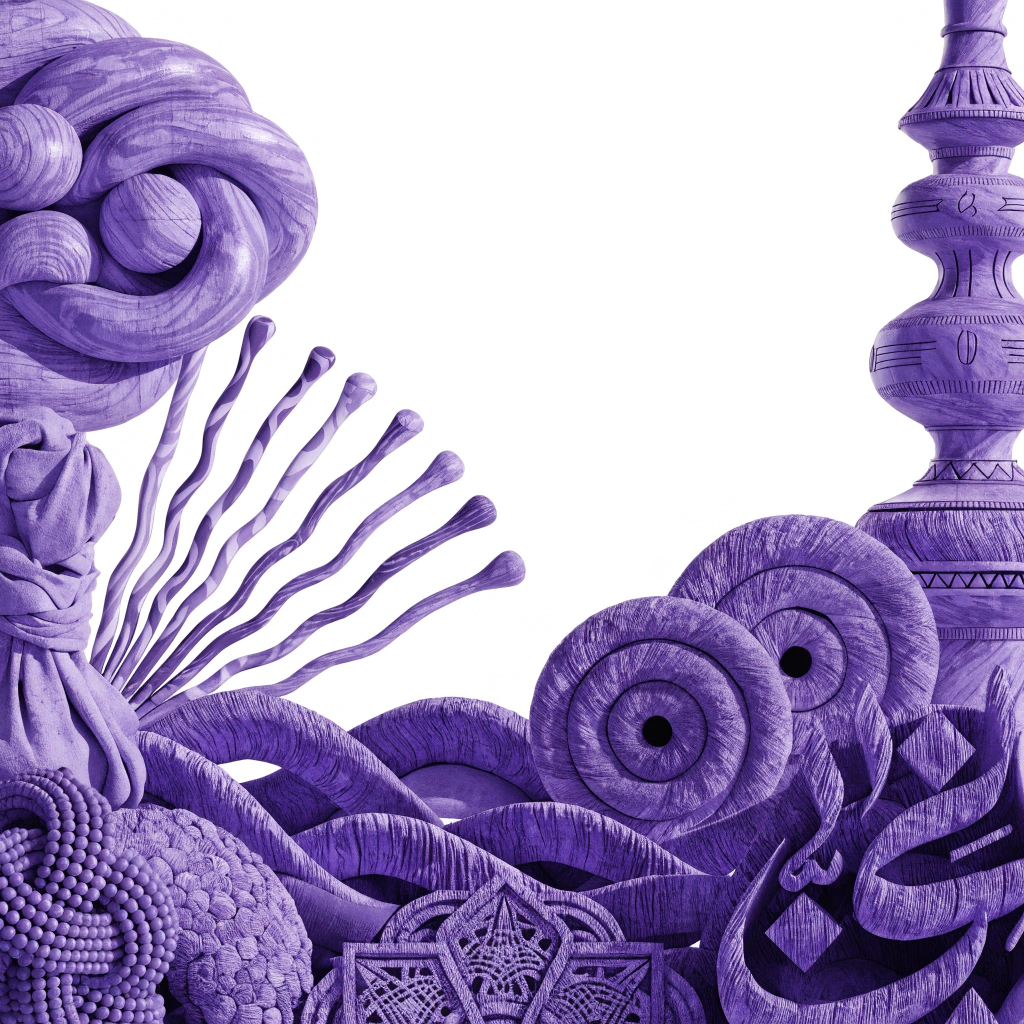
Beautiful Writing in Egypt
Cairo is a big city in Egypt. It has many old buildings. In these buildings, people see beautiful art. This art is Arabic calligraphy. It is a special way to write.
The writing is on walls and doors. It is on the domes of mosques too. Many artists live in Cairo. They use pens and ink to write. They write slowly and carefully.
Calligraphy is very old in Egypt. It is not just writing. It is a beautiful decoration. Many students study this art today. They love the lines and the shapes.
Grammar Spotlight
Pattern: Present Simple with 'to be'
"Cairo is a big city in Egypt."
We use 'is' for singular subjects to state facts. It connects the subject to a description.
Pattern: Present Simple for habits
"They use pens and ink to write."
We use the base form of the verb for plural subjects like 'they'. This describes a regular action or truth.
Test Your Understanding
10 questions · A1 Beginner · 1 free preview
Test what you learned from this article. Answer all questions to earn XP!
Where is Cairo?
Want to finish the quiz?
9 more questions are waiting for you. Sign up free to unlock the full quiz and earn XP!
Sign Up FreeAlready have an account? Sign In
Question Breakdown
Where is Cairo?
Your answer:
Correct answer: In Egypt
Artists in Cairo write very fast.
Your answer:
Correct answer: False
What is an 'artist'?
Your answer:
Correct answer: A person who makes art
Many artists live in _____.
Your answer:
Correct answer: Cairo
The Beautiful Art of Arabic Calligraphy in Egypt
Egypt is famous for its long history and beautiful art. One of the most special arts is Arabic calligraphy. This is a way of writing that looks like a painting. For many years, Egypt was a very important place for this art.
In Cairo, you can see calligraphy on the walls of old mosques. Artists decorated the domes and the tall minarets with beautiful words. They used different styles of writing. Some styles, like Kufic, are very ancient and use straight lines. Other styles, like Thuluth, are more difficult because they have many curves.
Calligraphy is more than just writing. It is a sacred art because it shows important religious messages. In the past, it was a very slow process, but the artists were very patient. Today, many young people in Egypt still learn how to draw these beautiful letters. They use special pens and ink. Calligraphy is more beautiful than normal writing because every letter is a piece of art.
Grammar Spotlight
Pattern: Comparative Adjectives
"Calligraphy is more beautiful than normal writing because every letter is a piece of art."
To compare two things with long adjectives, we use 'more' + adjective + 'than'. It shows that one thing has more of a quality than the other.
Pattern: Past Simple (Regular Verbs)
"Artists decorated the domes and the tall minarets with beautiful words."
We use the past simple to talk about finished actions in the past. For regular verbs, we add '-ed' to the end of the base verb.
Test Your Understanding
11 questions · A2 Elementary · 1 free preview
Test what you learned from this article. Answer all questions to earn XP!
Where can you see calligraphy in Cairo today?
Want to finish the quiz?
10 more questions are waiting for you. Sign up free to unlock the full quiz and earn XP!
Sign Up FreeAlready have an account? Sign In
Question Breakdown
Where can you see calligraphy in Cairo today?
Your answer:
Correct answer: On the walls of old mosques
Kufic is a style of writing that uses many curves.
Your answer:
Correct answer: False
What is the definition of a 'mosque'?
Your answer:
Correct answer: A religious building for prayer
In the past, the process was slow but the artists were very _____.
Your answer:
Correct answer: patient
Why is calligraphy considered a 'sacred' art?
Your answer:
Correct answer: Because it shows important religious messages
The Living Art of Arabic Calligraphy in Egypt
Cairo has often been called the heart of the Arab world, especially when it comes to the beautiful art of Arabic calligraphy. For centuries, Egyptian artists have practiced this skill, turning simple letters into complex masterpieces. This art form is more than just writing; it is a way to express spirituality and beauty through geometric shapes.
In the streets of Old Cairo, you can see calligraphy everywhere. It is used to decorate the walls of ancient mosques and historic buildings. Two of the most famous styles that are found in Egypt are Kufic and Thuluth. Kufic is a very old style which has straight lines and square shapes. It was often used for the earliest copies of the Quran. On the other hand, Thuluth is a more elegant, curved style that is often used on the domes of mosques.
Since the Fatimid and Mamluk eras, Egypt has been a major center for innovation. Many buildings have been decorated with verses that look like flowers or stars. These patterns are created by master calligraphers who have spent many years learning the craft. Even today, students still travel to Egypt to study with famous teachers.
Although technology has changed how we write, traditional calligraphy has not been forgotten. It remains a vital part of Egyptian culture that connects the past with the present. By visiting the local markets, you can still find artists who are dedicated to keeping this ancient tradition alive. This art continues to inspire people around the world.
Grammar Spotlight
Pattern: Present Perfect Tense
"Egyptian artists have practiced this skill, turning simple letters into complex masterpieces."
The present perfect (have/has + past participle) is used here to describe an action that started in the past and continues to be relevant or true in the present.
Pattern: Passive Voice
"It is used to decorate the walls of ancient mosques and historic buildings."
The passive voice (be + past participle) is used when the focus is on the action or the object receiving the action, rather than who is performing it.
Test Your Understanding
11 questions · B1 Intermediate · 1 free preview
Test what you learned from this article. Answer all questions to earn XP!
Which style of calligraphy is known for its straight lines and square shapes?
Want to finish the quiz?
10 more questions are waiting for you. Sign up free to unlock the full quiz and earn XP!
Sign Up FreeAlready have an account? Sign In
Question Breakdown
Which style of calligraphy is known for its straight lines and square shapes?
Your answer:
Correct answer: Kufic
Calligraphy is only used for writing and has no connection to spirituality.
Your answer:
Correct answer: False
What is the meaning of 'innovation'?
Your answer:
Correct answer: A new method or idea
Thuluth is an elegant style often used on the _____ of mosques.
Your answer:
Correct answer: domes
Why do students still travel to Egypt today?
Your answer:
Correct answer: To study with famous calligraphy teachers
The Art of the Written Word: The Legacy of Arabic Calligraphy in Egypt
Throughout the centuries, Arabic calligraphy in Egypt has evolved from a simple method of communication into a sophisticated art form that embodies the soul of Islamic culture. While many view writing as a utilitarian tool, in the Egyptian context, it represents a harmonious blend of spiritual devotion and geometric precision. This tradition, which reached its peak during the Fatimid and Mamluk eras, continues to define the visual landscape of Cairo today. Historically, Egypt served as a vital center for calligraphic innovation. During the Fatimid period, the script began to be used extensively for decorative purposes, moving beyond the pages of manuscripts onto the very walls of the city. Consequently, walking through Old Cairo feels like navigating a living museum. One can observe how calligraphy adorns the domes and minarets of historic mosques, transforming structural elements into poetic expressions of faith. The intricate patterns found in the Mosque of Ibn Tulun or the Al-Azhar Mosque demonstrate that the written word was intended to be felt as much as it was to be read. Two styles remain particularly prominent in the Egyptian tradition: Kufic and Thuluth. Kufic, known for its angular and bold lines, was often used in architectural inscriptions due to its stability and strength. It provides a sense of permanence that complements the heavy stone structures of the early Islamic period. In contrast, Thuluth is characterized by its fluid, cursive elegance and is frequently regarded as one of the most difficult styles to master. Calligraphers have spent lifetimes perfecting the proportions of these letters, ensuring that every stroke adheres to strict mathematical rules while maintaining an organic flow. This level of precision requires an intimate understanding of the tools involved, particularly the reed pen. Despite the rise of digital typography, the preservation of traditional calligraphy remains a priority for Egyptian artisans. Many scholars argue that the soul of the script is lost when it is generated by a machine, as the human hand provides a unique spiritual connection to the text. Consequently, contemporary schools in Cairo still teach students how to cut their own reed pens and mix traditional inks from natural pigments. By maintaining these ancient techniques, Egypt ensures that this sacred art form does not become a relic of the past, but rather a continuing dialogue between history and modernity. These efforts reflect a broader commitment to safeguarding Egypt’s cultural identity in a rapidly changing world. In conclusion, Arabic calligraphy in Egypt is not merely a decorative element; it is a profound testament to the country's enduring cultural and spiritual identity.
Grammar Spotlight
Pattern: Present Perfect Simple
"Arabic calligraphy in Egypt has evolved from a simple method of communication into a sophisticated art form..."
Used here to describe a process that started in the past and has continuing relevance or results in the present. It connects the history of the script to its current status.
Pattern: Non-defining Relative Clause
"This tradition, which reached its peak during the Fatimid and Mamluk eras, continues to define the visual landscape of Cairo today."
This pattern provides extra information about the 'tradition' without being essential to the meaning of the sentence. It is separated by commas.
Pattern: Passive Voice
"Kufic... was often used in architectural inscriptions due to its stability and strength."
The passive voice is used here to focus on the script (the object) rather than the people using it. This is common in formal and academic writing.
Test Your Understanding
11 questions · B2 Upper Intermediate · 1 free preview
Test what you learned from this article. Answer all questions to earn XP!
Which historical periods are cited as the peak of calligraphic tradition in Egypt?
Want to finish the quiz?
10 more questions are waiting for you. Sign up free to unlock the full quiz and earn XP!
Sign Up FreeAlready have an account? Sign In
Question Breakdown
Which historical periods are cited as the peak of calligraphic tradition in Egypt?
Your answer:
Correct answer: The Fatimid and Mamluk eras
The article suggests that digital typography has made traditional calligraphy more soulful.
Your answer:
Correct answer: False
What does 'preservation' mean in the context of the article?
Your answer:
Correct answer: The act of keeping ancient techniques alive
The written word was intended to be _____ as much as it was to be read.
Your answer:
Correct answer: felt
Which style is described as having angular and bold lines?
Your answer:
Correct answer: Kufic
The Architectural Script: The Metaphysical and Aesthetic Legacy of Egyptian Calligraphy
Rarely has the intersection of spirituality and geometry been as harmoniously realized as in the centuries-old tradition of Arabic calligraphy in Egypt. While often perceived by the uninitiated as mere ornamentation, this ancient craft represents a profound philosophical endeavor. In the heart of Cairo, the historical weight of the Fatimid and Mamluk eras remains palpable, etched into the very stones of the city’s minarets. It is through the meticulous application of scripts like Kufic and Thuluth that the written word transcends its functional utility, evolving into a visual manifestation of the divine.
Not only does the script convey linguistic meaning, but it also functions as a structural anchor for Islamic architecture. During the Fatimid period, the development of 'foliate Kufic' saw letters sprout leaf-like ornaments, a testament to the era’s artistic innovation. This was not merely a stylistic choice; it was an attempt to mirror the organic complexity of creation. The subsequent Mamluk period shifted the focus toward the Thuluth script, characterized by its towering verticality and sweeping curves. It is the geometric precision of the Thuluth script that allows it to dominate the massive portals of Cairo’s mosques, commanding the attention of the faithful and the casual observer alike.
The preservation of these intricate scripts has faced significant challenges in the modern era. The advent of digital typography threatened to render the traditional reed pen—the qalam—obsolete. However, a recent revitalization of traditional methods has emerged among contemporary Egyptian artists. These practitioners argue that the digital medium lacks the 'soul' inherent in the physical act of writing, where the rhythm of the calligrapher’s breath dictates the flow of the ink. The nuance of the script lies in the subtle variations of pressure and angle, a level of detail that machines struggle to replicate.
Furthermore, the socio-political implications of calligraphy in Egypt cannot be overlooked. Throughout history, the patronage of calligraphers was a means for rulers to assert their legitimacy and piety. By commissioning grand inscriptions on public buildings, sultans and caliphs ensured that their names were inextricably linked to the sacred text. Today, this legacy persists as a symbol of national identity. The ongoing efforts to document and restore calligraphic murals in Historic Cairo reflect a broader desire to safeguard Egypt’s intangible heritage against the encroaching tide of globalization.
Ultimately, Arabic calligraphy in Egypt remains a living art form, bridging the gap between the ephemeral present and the eternal past. The continued study of its geometric ratios and historical contexts provides more than just aesthetic pleasure; it offers a window into the intellectual rigor of a civilization that viewed beauty and truth as inseparable. As long as the qalam continues to grace the parchment, the spirit of Egyptian calligraphy will endure, proving that the written word is indeed a formidable vessel for the human spirit.
Grammar Spotlight
Pattern: Negative Inversion
"Rarely has the intersection of spirituality and geometry been as harmoniously realized as in the tradition of Arabic calligraphy in Egypt."
When a sentence starts with a negative or restrictive adverb like 'rarely', the subject and auxiliary verb are inverted to add emphasis and formal weight.
Pattern: It-Cleft Sentence
"It is through the meticulous application of scripts like Kufic and Thuluth that the written word transcends its functional utility."
Cleft sentences use 'It + is/was + [focus] + that/who' to emphasize a specific part of the sentence, in this case, the method by which transcendence is achieved.
Pattern: Nominalization
"The preservation of these intricate scripts has faced significant challenges in the modern era."
Using the noun 'preservation' instead of the verb 'preserving' makes the writing more formal and allows for more complex sentence structures typical of C1 academic prose.
Test Your Understanding
12 questions · C1 Advanced · 1 free preview
Test what you learned from this article. Answer all questions to earn XP!
What is the primary argument regarding the difference between digital and manual calligraphy?
Want to finish the quiz?
11 more questions are waiting for you. Sign up free to unlock the full quiz and earn XP!
Sign Up FreeAlready have an account? Sign In
Question Breakdown
What is the primary argument regarding the difference between digital and manual calligraphy?
Your answer:
Correct answer: Manual calligraphy contains a 'soul' linked to the artist's physical rhythm.
The Fatimid period was characterized by a move toward verticality and sweeping curves in calligraphy.
Your answer:
Correct answer: False
Which word describes something that lasts for a very short time?
Your answer:
Correct answer: Ephemeral
The geometric _____ of the Thuluth script allows it to dominate large architectural spaces.
Your answer:
Correct answer: precision
How did historical rulers in Egypt use calligraphy for political ends?
Your answer:
Correct answer: Through patronage to link their names with sacred texts and piety.
The article suggests that calligraphy in Egypt is a dead art form only found in museums.
Your answer:
Correct answer: False
The Calligraphic Palimpsest: A Scholarly Inquiry into Egypt’s Scriptorial Legacy
To traverse the historical topography of Cairo is to engage with a calligraphic palimpsest, where layers of meaning are etched into the very fabric of the urban landscape. It is not merely a matter of linguistic utility; rather, Arabic calligraphy in Egypt represents a profound epistemological endeavor, one that seeks to bridge the chasm between the terrestrial and the divine. Seldom has a civilization so thoroughly intertwined the aesthetic with the theological as did Egypt during the Mamluk sultanate, where the written word transcended its phonetic function to become a cornerstone of architectural ornamentation. This transformation was not incidental but rather a calculated effort to manifest the sacred within the material realm.
At the heart of this scriptorial evolution lies a burgeoning tension between rigor and fluidity. The Kufic style, characterized by its angularity and geometric precision, reflects the early Islamic desire for stability and permanence. In Cairo, the Fatimid dynasty elevated this form to new heights, introducing foliated and braided variations that adorned the facades of monumental mosques. Had the Fatimid caliphs not prioritized the visual sanctity of the Qur'anic text, the development of these distinct canons might have taken a significantly different trajectory. It is imperative that the contemporary observer recognize the reed pen—the qalam—not merely as a tool, but as a conduit for artistic transcendence. The qalam is the instrument through which the calligrapher negotiates the space between the finite hand and the infinite word.
Furthermore, the nexus between calligraphy and architecture in Cairo is inextricably linked to the concept of 'Barakah' or spiritual blessing. The meticulously carved inscriptions on the domes of Al-Azhar or the Sultan Hassan Mosque are not intended for casual perusal; they are designed to envelop the believer in a visual manifestation of the sacred. This integration of text and space suggests an ontological shift, where the act of reading becomes an act of worship. One might posit that the evanescence of the spoken word is countered by the enduring solidity of the stone-carved script, providing a permanent anchor for the faithful in a transient world. The Thuluth script, which reached its zenith under Mamluk patronage, offers a more curvilinear and majestic aesthetic, often utilized for monumental inscriptions where its verticality mimics the reaching minarets.
However, the modern era presents a formidable challenge to this ancient craft. As digital homogenization threatens to dilute the unique flourishes of the Egyptian hand, institutions like the Al-Qalam school are working tirelessly to preserve the traditional techniques. The preservation of the calligraphic canon is not merely a nostalgic exercise; it is an essential defense of cultural identity against the encroaching tide of globalized aesthetic standards. Should these efforts falter, we risk losing a vital link to our cultural past. Be it as it may, the resurgence of interest among the Egyptian youth suggests that the calligraphic tradition is far from obsolete. By reclaiming the qalam, a new generation is ensuring that the scriptorial legacy of Egypt continues to flourish, bridging the gap between historical reverence and contemporary innovation. Ultimately, the study of Egyptian calligraphy reveals that the written word, when treated with sufficient reverence, becomes a portal to a deeper understanding of the human condition.
Grammar Spotlight
Pattern: Negative Adverbial Inversion
"Seldom has a civilization so thoroughly intertwined the aesthetic with the theological as did Egypt during the Mamluk sultanate."
When 'seldom' or other negative adverbs begin a sentence for emphasis, the auxiliary verb is placed before the subject. This is a common feature of formal, academic English.
Pattern: The Subjunctive Mood
"It is imperative that the contemporary observer recognize the reed pen—the qalam—not merely as a tool, but as a conduit for artistic transcendence."
The subjunctive is used here after an adjective of necessity ('imperative'). The base form of the verb ('recognize') is used regardless of the subject's person or number.
Pattern: Inverted Conditional (Type 3)
"Had the Fatimid caliphs not prioritized the visual sanctity of the Qur'anic text, the development of these distinct canons might have taken a significantly different trajectory."
In formal writing, 'if' can be omitted in a third conditional sentence by inverting 'had' and the subject. This structure discusses hypothetical past events and their outcomes.
Test Your Understanding
12 questions · C2 Mastery · 1 free preview
Test what you learned from this article. Answer all questions to earn XP!
According to the article, what is the primary function of calligraphy in Egyptian architecture?
Want to finish the quiz?
11 more questions are waiting for you. Sign up free to unlock the full quiz and earn XP!
Sign Up FreeAlready have an account? Sign In
Question Breakdown
According to the article, what is the primary function of calligraphy in Egyptian architecture?
Your answer:
Correct answer: To manifest the sacred and bridge the terrestrial and divine.
The Thuluth script is described as being more angular and geometric than the Kufic script.
Your answer:
Correct answer: False
What does 'nexus' mean in the context of the text?
Your answer:
Correct answer: A central connection linking different elements.
The author suggests that the act of reading sacred inscriptions in a mosque can be viewed as an _____ shift.
Your answer:
Correct answer: ontological
What does the author identify as a modern threat to traditional Egyptian calligraphy?
Your answer:
Correct answer: Digital homogenization and globalized aesthetic standards.
The author argues that the preservation of the calligraphic canon is an essential defense of cultural identity.
Your answer:
Correct answer: True
