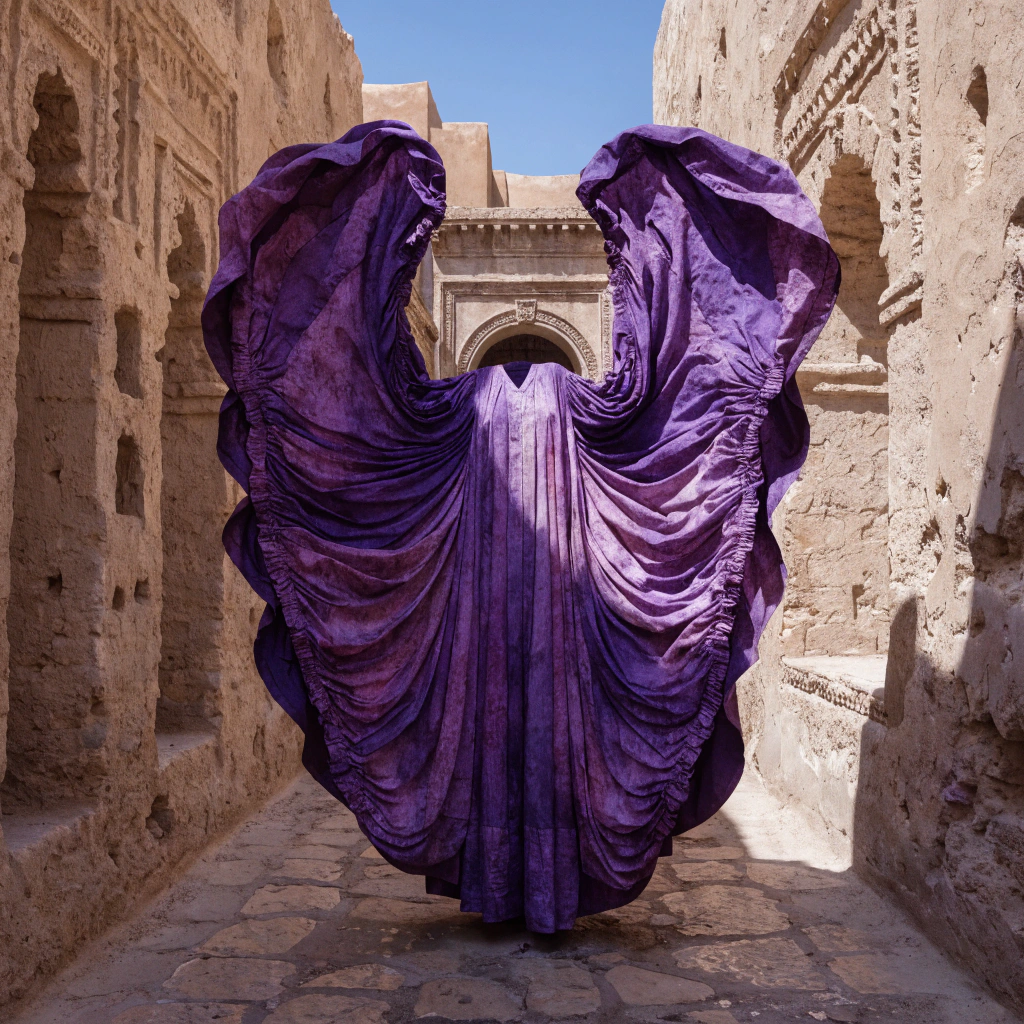
The Egyptian Galabeya
The Galabeya is a traditional dress in Egypt. It is a long robe. Many people in Egypt wear this clothes. It is very old but popular today.
The Galabeya is loose and comfortable. This is good because Egypt is very hot. The fabric is light. It helps people stay cool in the sun.
Men and women wear the Galabeya. Men usually wear white, grey, or blue robes. Women wear beautiful Galabeyas with many colors. Farmers and people in cities like this traditional style. It is a part of Egyptian life.
Grammar Spotlight
Pattern: Present Simple (to be)
"The Galabeya is a traditional dress in Egypt."
We use 'is' for singular subjects to describe facts. It tells us what the Galabeya is.
Pattern: Present Simple (Regular Verbs)
"Many people in Egypt wear this clothes."
We use the base verb 'wear' for plural subjects like 'people'. This describes a general habit.
Test Your Understanding
10 questions · A1 Beginner · 1 free preview
Test what you learned from this article. Answer all questions to earn XP!
What is a Galabeya?
Want to finish the quiz?
9 more questions are waiting for you. Sign up free to unlock the full quiz and earn XP!
Sign Up FreeAlready have an account? Sign In
Question Breakdown
What is a Galabeya?
Your answer:
Correct answer: A long robe
Egypt is a very hot country.
Your answer:
Correct answer: True
What does 'comfortable' mean?
Your answer:
Correct answer: It feels good
The _____ is light to help people stay cool.
Your answer:
Correct answer: fabric
The Traditional Egyptian Galabeya
The Galabeya is a traditional Egyptian dress. It is a long, loose robe with long sleeves. Men and women in Egypt wore this garment for thousands of years. It started in Ancient Egypt, but it changed over time.
The design of the Galabeya is perfect for the weather. Egypt is very hot and dry, so people need clothes that stay cool. The Galabeya is better than jeans because air can move easily inside it. Most Galabeyas are made of cotton. This material is light and soft.
In big cities like Cairo, some people wear suits or shirts. However, in the countryside, the Galabeya is still very popular. Farmers like it because it is comfortable for work. Some Galabeyas are simple, but others have beautiful decorations around the neck.
Today, the Galabeya is an important part of Egyptian culture. Visitors often buy them because they are unique. It is a classic style that never disappears.
Grammar Spotlight
Pattern: Past Simple
"Men and women in Egypt wore this garment for thousands of years."
The past simple is used for finished actions in the past. Here, the verb 'wore' is the past form of 'wear'.
Pattern: Comparatives
"The Galabeya is better than jeans because air can move easily inside it."
We use 'better than' to compare two things. It is the irregular comparative form of the adjective 'good'.
Test Your Understanding
11 questions · A2 Elementary · 1 free preview
Test what you learned from this article. Answer all questions to earn XP!
What is a Galabeya?
Want to finish the quiz?
10 more questions are waiting for you. Sign up free to unlock the full quiz and earn XP!
Sign Up FreeAlready have an account? Sign In
Question Breakdown
What is a Galabeya?
Your answer:
Correct answer: A long robe
The Galabeya is only worn by women.
Your answer:
Correct answer: False
What does 'loose' mean?
Your answer:
Correct answer: Not tight
Most Galabeyas are made of _____, which is light and soft.
Your answer:
Correct answer: cotton
Why do people wear the Galabeya in the sun?
Your answer:
Correct answer: Because air can move easily inside it
The Egyptian Galabeya: A Timeless Tradition
The Egyptian Galabeya is a traditional garment that has been worn by people in the Nile Valley for thousands of years. It is a long, loose-fitting robe with wide sleeves, and it is still popular today in both rural areas and busy cities. Although many people in Cairo now wear Western clothes, the Galabeya remains a symbol of Egyptian culture.
The design of the Galabeya is very practical because it has been adapted to the hot, dry climate of Egypt. Because it is loose, the air can move freely around the body, which keeps the wearer cool during the summer. In the past, these robes were usually made of linen, but today, cotton and synthetic fabrics are more common. These materials are chosen because they are light and comfortable for daily work.
The Galabeya is often decorated with beautiful patterns around the neck and sleeves. These details are usually sewn by hand in small workshops across the country. In Upper Egypt, men often wear heavier, darker robes during the colder winter months. In contrast, women’s Galabeyas are frequently colorful and feature intricate embroidery, which makes them look very elegant.
Historically, the style of the Galabeya has been influenced by many different cultures. It has changed over time as Roman, Byzantine, and Islamic styles were introduced to the region. Today, this garment is celebrated during festivals and weddings, showing that tradition is still very important to the Egyptian people. Even though modern fashion changes quickly, the Galabeya is a classic piece of clothing that will always be part of Egypt’s national identity. Visitors to Egypt often buy them as souvenirs because they represent the history of this ancient land.
Grammar Spotlight
Pattern: Present Perfect Passive
"The Egyptian Galabeya is a traditional garment that has been worn by people in the Nile Valley for thousands of years."
This pattern is used to describe an action that began in the past and continues to the present, focusing on the object rather than the person doing the action. It is formed using 'has/have + been + past participle'.
Pattern: Relative Clauses with 'Which'
"In contrast, women’s Galabeyas are frequently colorful and feature intricate embroidery, which makes them look very elegant."
A relative clause provides more information about the whole previous clause. Here, 'which' refers to the fact that the robes are colorful and embroidered, explaining the result of those features.
Test Your Understanding
11 questions · B1 Intermediate · 1 free preview
Test what you learned from this article. Answer all questions to earn XP!
Why is the Galabeya's design considered practical for Egypt?
Want to finish the quiz?
10 more questions are waiting for you. Sign up free to unlock the full quiz and earn XP!
Sign Up FreeAlready have an account? Sign In
Question Breakdown
Why is the Galabeya's design considered practical for Egypt?
Your answer:
Correct answer: It allows air to move freely to keep the wearer cool.
The Galabeya is only worn in rural areas of Egypt.
Your answer:
Correct answer: False
What does 'intricate' mean in the context of the article?
Your answer:
Correct answer: Having many complex details
The Galabeya remains a symbol of Egyptian _____, even though many people wear Western clothes.
Your answer:
Correct answer: culture
What material was most common for these robes in the past?
Your answer:
Correct answer: Linen
The Egyptian Galabeya: A Masterpiece of Functional Heritage
The Galabeya stands as a quintessential symbol of Egyptian identity, representing a seamless blend of historical legacy and practical necessity. While Western attire has become the norm in metropolitan hubs like Cairo, this traditional garment persists as a staple of daily life for millions. Its origins can be traced back to the tunics of Ancient Egypt, which have evolved over millennia under the influence of Roman, Byzantine, and Islamic cultures. This historical continuity provides a unique window into the persistence of Egyptian tradition amidst global change.
One cannot overlook the functional brilliance of the Galabeya's design. Crafted primarily from high-quality Egyptian cotton, the robe is engineered to withstand the harsh, arid climate of the Nile Valley. Its loose-fitting nature facilitates air circulation, providing much-needed breathability in temperatures that often soar above forty degrees Celsius. Furthermore, the garment offers protection against the intense sun and abrasive desert sands, proving that traditional attire often outshines modern alternatives in specific environmental contexts. The simplicity of its cut is balanced by the complexity of its utility.
Despite its humble appearance, the Galabeya possesses subtle nuances that indicate social and regional distinctions. In Upper Egypt, the 'Saidi' style is characterized by wide sleeves and heavier fabrics, whereas the urban versions tend to be more streamlined. Although the urban elite might reserve the Galabeya for religious occasions or domestic comfort, it remains the primary attire for agricultural workers and craftsmen. This distinction highlights the socio-economic layers within Egyptian society, where the garment serves as a marker of heritage and class. In many rural communities, the transition from childhood clothing to a Galabeya marks a significant rite of passage.
In recent years, the Galabeya has undergone a contemporary transformation. Designers are increasingly incorporating traditional embroidery and silhouettes into high-fashion collections, bridging the gap between ancient heritage and modern aesthetics. This resurgence suggests that the Galabeya is not merely a relic of the past but a dynamic element of Egypt’s cultural evolution. As long as the Nile continues to flow, this iconic robe will likely remain an enduring fixture of the Egyptian landscape, adapting to the needs of each new generation while staying rooted in its storied history. This evolution ensures the garment's relevance in a rapidly modernizing world.
Grammar Spotlight
Pattern: Passive Voice with Modal Verbs
"Its origins can be traced back to the tunics of Ancient Egypt..."
This is used to describe possibilities or historical facts where the agent is unknown or unimportant. It is formed using a modal verb, followed by 'be' and the past participle.
Pattern: Present Perfect Simple
"The Galabeya has undergone a contemporary transformation."
This tense is used for an action that happened at an unspecified time in the past and has relevance to the present. It is formed with 'have/has' and the past participle.
Pattern: Concessive Clauses with 'Despite'
"Despite its humble appearance, the Galabeya possesses subtle nuances..."
This structure is used to introduce a contrast. 'Despite' must be followed by a noun phrase or an -ing form, rather than a full subject-verb clause.
Test Your Understanding
11 questions · B2 Upper Intermediate · 1 free preview
Test what you learned from this article. Answer all questions to earn XP!
What is the primary reason the Galabeya is considered a 'masterpiece of functional fashion'?
Want to finish the quiz?
10 more questions are waiting for you. Sign up free to unlock the full quiz and earn XP!
Sign Up FreeAlready have an account? Sign In
Question Breakdown
What is the primary reason the Galabeya is considered a 'masterpiece of functional fashion'?
Your answer:
Correct answer: It is perfectly adapted to the hot, arid climate of the Nile Valley.
The Galabeya is only worn by agricultural workers in modern Egypt.
Your answer:
Correct answer: False
What does 'quintessential' mean in the context of the article?
Your answer:
Correct answer: Representing the most perfect or typical example.
The loose-fitting nature of the garment facilitates air _____ to keep the wearer cool.
Your answer:
Correct answer: circulation
How are modern designers interacting with the Galabeya today?
Your answer:
Correct answer: They are incorporating its silhouettes into high-fashion collections.
Threads of the Nile: The Sociocultural Resilience of the Egyptian Galabeya
Seldom has a garment embodied the symbiotic relationship between human necessity and environmental exigency as profoundly as the Egyptian galabeya. This floor-length, flowing robe, characterized by its loose silhouette and breathable fabric, represents far more than a mere vestige of antiquity; it is a sophisticated architectural response to the unforgiving heat of the Nile Valley. While the globalized world often perceives traditional dress through a lens of static folklore, the galabeya remains a dynamic, evolving paradigm of functional fashion. The inherent simplicity of its design belies a complex history of cultural synthesis, where the linen shifts of the pharaonic era met the aesthetic influences of Roman, Byzantine, and Islamic civilizations.
It is the inherent versatility of the galabeya that allows it to transcend social strata, serving as both the utilitarian uniform of the rural fellah and the dignified attire of the urban merchant. From a technical perspective, the garment facilitates an ingenious method of thermal regulation. The voluminous nature of the robe creates a chimney effect, encouraging the circulation of air around the body and accelerating the evaporation of moisture—a crucial mechanism in Egypt's arid climate. The choice of material, typically high-quality Egyptian cotton or linen, further enhances this cooling process, making it a quintessential example of sustainable, climate-appropriate clothing.
However, the contemporary status of the galabeya is fraught with sociological nuance. In metropolitan centers like Cairo and Alexandria, the garment has faced a degree of marginalization, often relegated to the private sphere or associated primarily with the working class. This dichotomy arose during the mid-20th century when Western-style suits became the preferred sartorial choice for the professional elite, symbolizing modernization and secular progress. Consequently, the galabeya became a site of cultural negotiation, where wearing the garment could be interpreted as either a proud assertion of heritage or a lack of cosmopolitan sophistication, depending on the observer's perspective.
Despite the ubiquitous presence of global fashion brands, the resilience of the galabeya is undeniable. In recent years, there has been a resurgence of interest in traditional attire, driven by a desire to reclaim a distinct Egyptian identity in the face of cultural homogenization. Contemporary designers are increasingly experimenting with the galabeya, blending traditional embroidery with modern cuts to appeal to a younger, more affluent demographic. This revitalization suggests that the garment is not a relic of the past but a living component of Egypt’s cultural fabric.
The preservation of this sartorial tradition serves as a bulwark against the homogenizing forces of globalized fashion. To wear a galabeya is to acknowledge a lineage that stretches back millennia, honoring a design that has remained fundamentally unchanged because its efficacy remains unsurpassed. Whether seen in the bustling markets of Luxor or the quiet rural stretches of the Delta, the galabeya stands as a testament to the enduring power of local wisdom and the profound beauty of functional simplicity. The continued relevance of the galabeya highlights a critical analysis of how traditional objects can adapt to modern pressures without losing their core identity.
Grammar Spotlight
Pattern: Negative Inversion
"Seldom has a garment embodied the symbiotic relationship between human necessity and environmental exigency as profoundly as the Egyptian galabeya."
When using negative or restrictive adverbs like 'seldom' at the beginning of a sentence, the subject and auxiliary verb are inverted. This is used in formal writing to add emphasis and rhetorical weight.
Pattern: Cleft Sentences
"It is the inherent versatility of the galabeya that allows it to transcend social strata."
A cleft sentence (It + is/was + [emphasized part] + that/who...) focuses the reader's attention on a specific piece of information. Here, it emphasizes 'versatility' as the key reason for the garment's success.
Pattern: Nominalization
"The preservation of this sartorial tradition serves as a bulwark against the homogenizing forces of globalized fashion."
Nominalization involves turning verbs or adjectives into nouns (e.g., 'preserve' to 'preservation'). This creates a more formal, academic tone and allows for denser information packaging in C1-level writing.
Test Your Understanding
12 questions · C1 Advanced · 1 free preview
Test what you learned from this article. Answer all questions to earn XP!
According to the article, why is the galabeya's design considered 'ingenious'?
Want to finish the quiz?
11 more questions are waiting for you. Sign up free to unlock the full quiz and earn XP!
Sign Up FreeAlready have an account? Sign In
Question Breakdown
According to the article, why is the galabeya's design considered 'ingenious'?
Your answer:
Correct answer: It creates a chimney effect that aids in thermal regulation.
The galabeya has remained completely unchanged since the pharaonic era without any outside influence.
Your answer:
Correct answer: False
What does 'sartorial' refer to?
Your answer:
Correct answer: Clothing or style of dress
The galabeya serves as a _____ against the homogenizing forces of globalized fashion.
Your answer:
Correct answer: bulwark
What caused the marginalization of the galabeya in metropolitan centers during the mid-20th century?
Your answer:
Correct answer: The rise of Western-style suits as a symbol of modernization.
Contemporary Egyptian designers are currently trying to modernize the galabeya for younger generations.
Your answer:
Correct answer: True
The Semiotics of the Galabeya: An Analytical Inquiry into Egypt’s Sartorial Heritage
The Galabeya, an ankle-length, flowing robe, is ostensibly a simple garment; however, a more nuanced investigation reveals it to be a sophisticated nexus of history, climate science, and socio-cultural identity. To perceive it merely as a vestige of a bygone era would be to overlook its continued relevance in the contemporary Egyptian landscape. Be it in the labyrinthine alleys of Khan el-Khalili or the verdant expanses of the Nile Delta, the Galabeya remains a constant—a sartorial anchor in a sea of shifting globalized trends. Its ubiquity across the Nile Valley is not merely a matter of tradition, but a testament to an egalitarian spirit that transcends the rigid stratifications of modern urban life.
Historically, the Galabeya represents a profound confluence of diverse cultural influences. Its lineage can be traced back to the diaphanous tunics of the Pharaonic era, yet it has undergone significant morphological shifts through the Roman, Byzantine, and Islamic periods. Each epoch has left an indelible mark on its design, resulting in idiosyncratic variations that distinguish the 'Sa’idi' style of Upper Egypt from the more streamlined versions found in the north. Had the Galabeya not been so meticulously adapted to the unforgiving Saharan climate, its survival might have been jeopardized by the influx of Western attire during the colonial era. Instead, it persisted, serving as a visceral symbol of 'Baladi' authenticity—a term that encapsulates a sense of local pride and unpretentious heritage.
From a functionalist perspective, the Galabeya is a masterpiece of thermal regulation. The physics of the garment rely on the principle of convection; the loose fit allows air to circulate freely around the body, facilitating the rapid evaporation of perspiration and providing a buffer against the incandescent heat of the Egyptian sun. This juxtaposition of utility and elegance is further refined by the choice of fabric—ranging from lightweight cotton for the sweltering summer months to heavy wool for the surprisingly frigid desert nights. It is within the intricate embroidery of the collar that one finds the most profound expressions of regional identity, where subtle patterns denote the wearer’s geographic origins or social standing.
In the contemporary era, the Galabeya exists in a state of complex tension with Western-style clothing. While the metropolitan elite in Cairo and Alexandria may reserve the garment for religious festivities or domestic leisure, the rural populace maintains it as their primary mode of dress. This dichotomy creates a fascinating sociological landscape where the Galabeya acts as a signifier of class, tradition, and resistance to cultural homogenization. Notwithstanding the encroachment of global fast-fashion, the garment undergoes its own modern evolution, with high-end designers now incorporating its silhouette into haute couture. This revitalization suggests that the Galabeya is not a static relic, but a living artifact that continues to negotiate its place within the broader discourse of Egyptian national identity. Ultimately, the Galabeya serves as a reminder that true functional fashion is that which harmonizes the requirements of the environment with the ontological need for cultural continuity.
Grammar Spotlight
Pattern: Subjunctive Mood for Universality
"Be it in the labyrinthine alleys of Khan el-Khalili or the verdant expanses of the Nile Delta, the Galabeya remains a constant."
This construction uses the base form of the verb 'to be' at the start of the clause to express 'no matter whether it is'. It is a formal, rhetorical way to encompass all possibilities.
Pattern: Inverted Third Conditional
"Had the Galabeya not been so meticulously adapted to the unforgiving Saharan climate, its survival might have been jeopardized."
By inverting 'Had' and the subject, the sentence becomes more formal and academic. It describes a hypothetical past situation and its likely consequence.
Pattern: Cleft Sentence for Emphasis
"It is within the intricate embroidery of the collar that one finds the most profound expressions of regional identity."
The 'It is... that...' structure is used to focus on a specific prepositional phrase or subject, highlighting its importance over other elements in the sentence.
Test Your Understanding
12 questions · C2 Mastery · 1 free preview
Test what you learned from this article. Answer all questions to earn XP!
What is the primary argument regarding the Galabeya's survival in the modern era?
Want to finish the quiz?
11 more questions are waiting for you. Sign up free to unlock the full quiz and earn XP!
Sign Up FreeAlready have an account? Sign In
Question Breakdown
What is the primary argument regarding the Galabeya's survival in the modern era?
Your answer:
Correct answer: Its survival is due to its perfect functional adaptation to the climate and its role as a cultural anchor.
The article suggests that the Galabeya has remained completely unchanged since the Pharaonic era.
Your answer:
Correct answer: False
Which word describes something that is 'apparently' true, but might hide a deeper reality?
Your answer:
Correct answer: Ostensibly
The historical development of the Galabeya is described as a _____ of various cultural influences, including Roman and Islamic.
Your answer:
Correct answer: confluence
How does the garment's design interact with the Egyptian climate?
Your answer:
Correct answer: It relies on the principle of convection to facilitate cooling and perspiration evaporation.
The term 'Baladi' is associated with a sense of local pride and authenticity.
Your answer:
Correct answer: True
