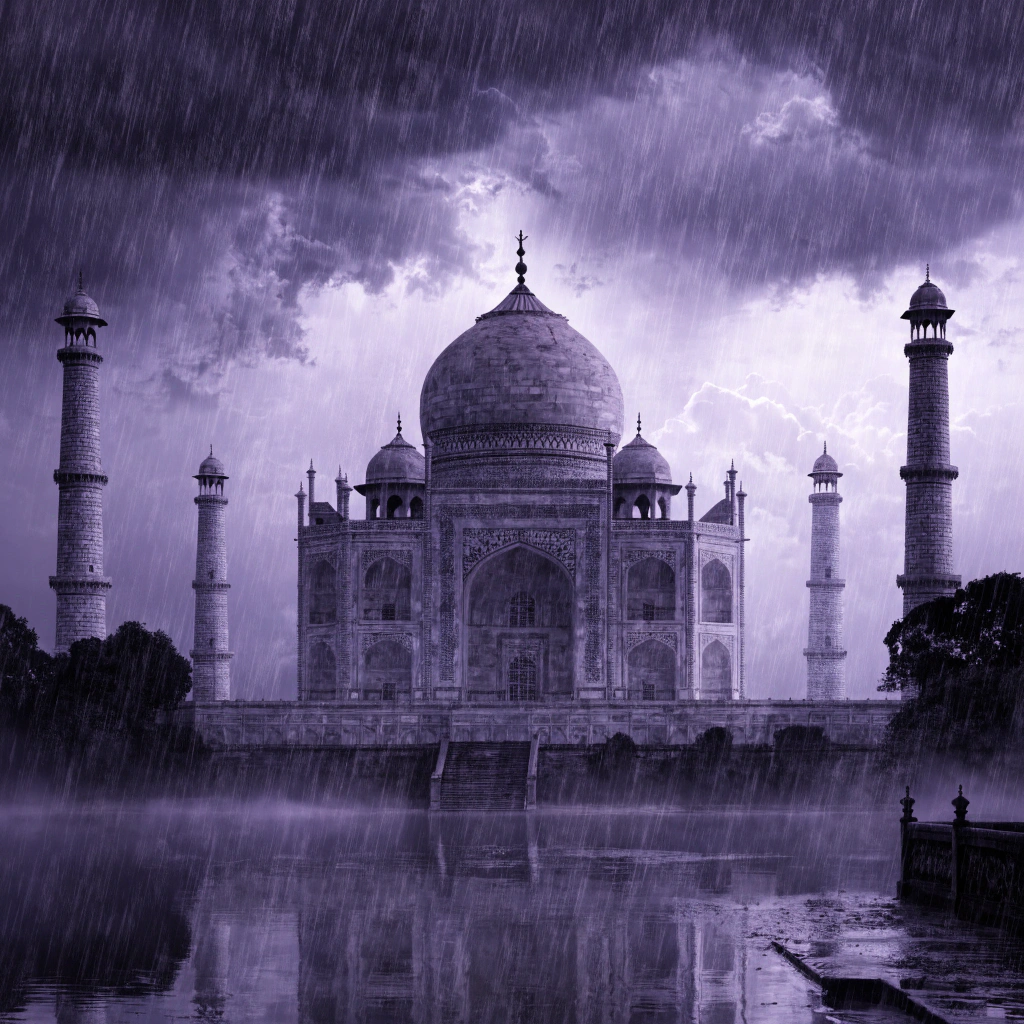
The Beautiful Taj Mahal
The Taj Mahal is in India. It is a very big and beautiful building. It is in the city of Agra. The building is a gift from a king to his wife. Her name is Mumtaz Mahal. She is very special to him.
The building is white. It is made of marble. There are big gardens and water around it. Many people visit the Taj Mahal every day. They take photos of the white walls. It is a famous place in the world. People love this place because it is very pretty.
Grammar Spotlight
Pattern: Present Simple (to be)
"The Taj Mahal is in India."
We use 'is' for one person or thing. It tells us a fact or where something is located.
Pattern: Adjectives before Nouns
"It is a very big and beautiful building."
In English, describing words like 'big' or 'beautiful' come before the thing they describe. For example, we say 'white walls'.
Test Your Understanding
10 questions · A1 Beginner · 1 free preview
Test what you learned from this article. Answer all questions to earn XP!
Where is the Taj Mahal?
Want to finish the quiz?
9 more questions are waiting for you. Sign up free to unlock the full quiz and earn XP!
Sign Up FreeAlready have an account? Sign In
Question Breakdown
Where is the Taj Mahal?
Your answer:
Correct answer: India
The Taj Mahal is a black building.
Your answer:
Correct answer: False
What does 'famous' mean?
Your answer:
Correct answer: Many people know it
The building is made of _____.
Your answer:
Correct answer: marble
The Taj Mahal: A Symbol of Love
The Taj Mahal is a very famous building in India. It is in the city of Agra, near the Yamuna River. Many people think it is the most beautiful building in the world. It is made of white marble and it looks different at different times of the day.
The Mughal Emperor Shah Jahan built the Taj Mahal many years ago. He started the building in 1632 and finished it in 1653. He wanted to build a special place for his wife, Mumtaz Mahal, because she died. He loved her very much, so the Taj Mahal is a symbol of love.
More than 20,000 workers helped to build it. They used many expensive stones from different countries. Today, millions of tourists visit the Taj Mahal every year. It is more famous than many other monuments because of its history and beauty. When you visit India, you should see this amazing place.
Grammar Spotlight
Pattern: Past Simple
"He started the building in 1632 and finished it in 1653."
We use the past simple to talk about actions that happened and finished in the past. For regular verbs, we add '-ed' to the base verb.
Pattern: Comparatives with 'more'
"It is more famous than many other monuments."
We use 'more + adjective + than' to compare two things when the adjective is long (two or more syllables). It shows which thing has more of a quality.
Test Your Understanding
11 questions · A2 Elementary · 1 free preview
Test what you learned from this article. Answer all questions to earn XP!
Where is the Taj Mahal located?
Want to finish the quiz?
10 more questions are waiting for you. Sign up free to unlock the full quiz and earn XP!
Sign Up FreeAlready have an account? Sign In
Question Breakdown
Where is the Taj Mahal located?
Your answer:
Correct answer: In Agra
Shah Jahan built the Taj Mahal for his wife.
Your answer:
Correct answer: True
What does 'marble' mean?
Your answer:
Correct answer: A hard white stone
The Taj Mahal is a ______ of love.
Your answer:
Correct answer: symbol
How many workers helped to build the monument?
Your answer:
Correct answer: 20,000
The Taj Mahal: India's Famous Symbol of Love
The Taj Mahal is one of the most famous buildings in the world. It is located in Agra, India, on the banks of the Yamuna River. This beautiful monument has been admired by millions of people for centuries. It was built by the Mughal Emperor Shah Jahan between 1632 and 1653. He commissioned the building as a tomb for his wife, Mumtaz Mahal, who died while giving birth to their fourteenth child.
The structure is often described as a 'symbol of love' because of the story behind its construction. The Taj Mahal, which is made of white marble, shows a perfect balance of Persian, Islamic, and Indian styles. Thousands of workers were employed to finish this project. The white marble was brought from different parts of Asia, and it was decorated with precious stones that shine in the sunlight.
The building is famous for its symmetry. Everything on the left side is exactly the same as the right side, except for the tombs inside. The gardens around the monument are also designed to be perfectly balanced. Visitors have traveled from all over the world to see how the color of the marble changes during the day. It looks pink in the morning, white at noon, and golden under the moon.
In 1983, the Taj Mahal was named a UNESCO World Heritage site. Today, it is visited by millions of tourists every year. Although it has faced problems like pollution, many efforts have been made to protect its white walls. It remains a masterpiece of human history that everyone should see at least once.
Grammar Spotlight
Pattern: Passive Voice
"Thousands of workers were employed to finish this project."
The passive voice is used when the action (employing workers) is more important than who did it. It is formed using the verb 'to be' and the past participle.
Pattern: Relative Clauses
"He commissioned the building as a tomb for his wife, Mumtaz Mahal, who died while giving birth."
Relative clauses provide extra information about a noun. We use 'who' for people and 'which' or 'that' for things and animals.
Test Your Understanding
11 questions · B1 Intermediate · 1 free preview
Test what you learned from this article. Answer all questions to earn XP!
Who ordered the construction of the Taj Mahal?
Want to finish the quiz?
10 more questions are waiting for you. Sign up free to unlock the full quiz and earn XP!
Sign Up FreeAlready have an account? Sign In
Question Breakdown
Who ordered the construction of the Taj Mahal?
Your answer:
Correct answer: Shah Jahan
The Taj Mahal is made of red brick and gold.
Your answer:
Correct answer: False
What does 'masterpiece' mean?
Your answer:
Correct answer: An extremely skillful work of art
Everything on the left side is exactly the same as the _____ side.
Your answer:
Correct answer: right
Why is the building called a 'symbol of love'?
Your answer:
Correct answer: Because it was built for a beloved wife
The Taj Mahal: A Monumental Elegy in White Marble
Standing majestically on the southern bank of the Yamuna River in Agra, the Taj Mahal is often regarded as the most profound expression of architectural prowess in human history. This ivory-white marble mausoleum was commissioned in 1632 by the Mughal Emperor Shah Jahan to house the tomb of his favorite wife, Mumtaz Mahal, who had tragically passed away during the birth of their fourteenth child. While it serves primarily as a resting place, the structure is widely analyzed as a physical manifestation of eternal love and imperial power. Having been constructed over a period of twenty years, the complex represents the pinnacle of Mughal architecture, characterized by its meticulous attention to detail and harmonious proportions.
The architectural style of the Taj Mahal is not purely Indian; rather, it is a sophisticated blend of Persian, Islamic, and Indian influences. The central dome, which is surrounded by four smaller domes and four slender minarets, creates a sense of perfect symmetry that is central to the monument's aesthetic appeal. Furthermore, the walls are adorned with intricate carvings and semi-precious stone inlays, known as pietra dura. It is estimated that over 20,000 artisans were employed to achieve such a high standard of craftsmanship. This collective effort resulted in a structure that seems to change color depending on the time of day, transitioning from a soft pink in the morning to a brilliant white under the midday sun.
However, despite its historical and cultural significance, the Taj Mahal faces contemporary challenges that threaten its preservation. In recent decades, environmental degradation caused by air pollution and the receding water levels of the Yamuna River has led to the discoloration of the marble. Consequently, conservation efforts have been intensified to ensure that the monument remains in pristine condition for future generations. The Indian government has implemented strict regulations regarding industrial activity in the surrounding area, demonstrating a commitment to protecting this UNESCO World Heritage site.
In conclusion, the Taj Mahal remains an enduring symbol of India's rich heritage. It is not merely a tomb but a masterpiece that invites visitors to reflect on the intersections of art, history, and emotion. As one of the New Seven Wonders of the World, its global importance cannot be overstated, continuing to captivate millions of tourists and scholars alike with its timeless beauty.
Grammar Spotlight
Pattern: Past Perfect Passive
"This ivory-white marble mausoleum was commissioned in 1632 by the Mughal Emperor Shah Jahan to house the tomb of his favorite wife, Mumtaz Mahal, who had tragically passed away during the birth of their fourteenth child."
The past perfect 'had passed away' is used to show an action completed before another past action (the commissioning). The passive voice 'was commissioned' focuses on the monument rather than the person who ordered it.
Pattern: Perfect Participle Clause
"Having been constructed over a period of twenty years, the complex represents the pinnacle of Mughal architecture."
This clause (Having been + past participle) is used to indicate that the action in the participle clause was completed before the action in the main clause. It provides background information or a reason for the current state.
Pattern: Present Perfect Passive
"Consequently, conservation efforts have been intensified to ensure that the monument remains in pristine condition for future generations."
The present perfect passive (have been + past participle) is used here to describe an action that started in the past and continues to be relevant or is still happening in the present, emphasizing the ongoing nature of the conservation.
Test Your Understanding
11 questions · B2 Upper Intermediate · 1 free preview
Test what you learned from this article. Answer all questions to earn XP!
What was the primary purpose for building the Taj Mahal?
Want to finish the quiz?
10 more questions are waiting for you. Sign up free to unlock the full quiz and earn XP!
Sign Up FreeAlready have an account? Sign In
Question Breakdown
What was the primary purpose for building the Taj Mahal?
Your answer:
Correct answer: To serve as a tomb for Mumtaz Mahal
The Taj Mahal's architectural style is exclusively based on ancient Indian designs.
Your answer:
Correct answer: False
Which word describes something that is in its original, unspoiled condition?
Your answer:
Correct answer: Pristine
The Taj Mahal is located on the southern bank of the _____ River.
Your answer:
Correct answer: Yamuna
What modern issue is currently threatening the appearance of the marble?
Your answer:
Correct answer: Environmental degradation and pollution
The Taj Mahal: An Architectural Elegy in Marble
Seldom in the annals of human history has a single structure so poignantly encapsulated the intersection of imperial grandeur and intimate bereavement as the Taj Mahal. Situated on the banks of the Yamuna River in Agra, this ivory-white marble mausoleum remains the preeminent paradigm of Mughal architecture, a style that seamlessly synthesizes Persian, Islamic, and Indian influences. Commissioned in 1632 by the Mughal Emperor Shah Jahan to house the tomb of his favorite wife, Mumtaz Mahal, the edifice represents more than a mere funerary monument; it is a sophisticated manifestation of absolute symmetry and aesthetic perfection. Not only does the monument serve as a tomb, but it also functions as a symbolic representation of the Islamic garden of paradise, known as Jannah.
What makes the Taj Mahal truly transcendent is not merely its scale, but the meticulous orchestration of its design. It was through the utilization of 'pietra dura'—the intricate technique of inlaying polished, colored stones into white marble—that the artisans achieved such floral exuberance. The optical illusions integrated into the site’s layout further demonstrate architectural prowess. For instance, as one approaches the main gate, the Taj appears to shrink, a phenomenon that challenges the viewer’s perception of spatial diminution. This deliberate manipulation of perspective ensures that the monument remains the focal point of the viewer's experience, asserting its dominance over the landscape.
Only by examining the historical context can one appreciate the logistical feat involved in its creation. Over 20,000 artisans were mobilized from across the empire, and materials were transported from across Asia via a fleet of a thousand elephants. The result is a structure that appears ethereal, its character shifting with the diurnal cycle of light. At dawn, it assumes a soft pinkish hue, while under the moonlight, it radiates a ghostly silver. This ephemeral quality reinforces the notion that the building is a bridge between the earthly and the divine.
However, the preservation of this UNESCO World Heritage site is currently fraught with challenges. The encroachment of industrial pollution and the receding water levels of the Yamuna River threaten the structural integrity of its foundation. Efforts to mitigate the yellowing of the marble through 'mud pack' treatments reflect the ongoing struggle between modernization and heritage conservation. Furthermore, the sheer volume of tourism presents a double-edged sword: providing necessary revenue while simultaneously accelerating the wear and tear of the site. Ultimately, the Taj Mahal stands as a testament to the fact that while the physical body is evanescent, the legacy of love and power can be immortalized through the medium of stone. The continued survival of this masterpiece requires a nuanced balance between celebrating its historical significance and implementing rigorous environmental safeguards.
Grammar Spotlight
Pattern: Inversion with Negative Adverbials
"Seldom in the annals of human history has a single structure so poignantly encapsulated..."
When a negative or restrictive adverbial (like 'seldom', 'never', or 'rarely') starts a sentence for emphasis, the auxiliary verb and subject are inverted. This creates a formal and dramatic tone typical of C1-level writing.
Pattern: Cleft Sentences
"It was through the utilization of 'pietra dura'... that the artisans achieved such floral exuberance."
Cleft sentences (using 'It is/was... that...') are used to focus on a specific piece of information. Here, it emphasizes the specific technique (pietra dura) responsible for the artistic result.
Pattern: Nominalization
"The meticulous orchestration of its design..."
Nominalization involves turning verbs or adjectives into nouns (e.g., 'orchestrate' to 'orchestration'). This allows for more complex sentence structures and a more objective, academic tone.
Test Your Understanding
12 questions · C1 Advanced · 1 free preview
Test what you learned from this article. Answer all questions to earn XP!
What is the primary architectural purpose of the Taj Mahal according to the text?
Want to finish the quiz?
11 more questions are waiting for you. Sign up free to unlock the full quiz and earn XP!
Sign Up FreeAlready have an account? Sign In
Question Breakdown
What is the primary architectural purpose of the Taj Mahal according to the text?
Your answer:
Correct answer: A mausoleum for the Emperor's wife
The Taj Mahal appears to grow larger as a viewer approaches the main gate.
Your answer:
Correct answer: False
What does the word 'evanescent' imply about the human body in the context of the article?
Your answer:
Correct answer: It is temporary and fading.
The Taj Mahal is described as the preeminent _____ of Mughal architecture.
Your answer:
Correct answer: paradigm
Which of the following environmental threats is NOT mentioned in the text?
Your answer:
Correct answer: Seismic activity and earthquakes
The construction of the Taj Mahal involved materials transported by elephants from various parts of Asia.
Your answer:
Correct answer: True
The Ontological Sublime: Deconstructing the Semiotics of the Taj Mahal
The Taj Mahal, an architectural paragon situated upon the banks of the Yamuna River, transcends the mere functionality of a funerary monument to occupy a liminal space between the terrestrial and the divine. Commissioned in 1632 by the Mughal Emperor Shah Jahan to house the remains of his consort, Mumtaz Mahal, the structure is frequently lauded as the definitive manifestation of Mughal syncretism. This aesthetic synthesis—a harmonious amalgamation of Persian, Islamic, and Indian stylistic idioms—represents a zenith in the history of global architecture. Were one to contemplate the sheer scale of the undertaking, the logistical magnitude becomes staggering. The construction, spanning over two decades, necessitated the labor of twenty thousand artisans and the utilization of materials sourced from across the Asian continent. The primary medium, a translucent white marble, serves as a metamorphic canvas that captures the ephemeral qualities of light. As the sun traverses the sky, the monument undergoes a chromatic transformation, ranging from a soft diurnal glow to an ethereal luminescence under the penumbra of the moon. Not only does the marble reflect the shifting hues of the sun, but it also serves as a canvas for the interplay of light and shadow.
Central to the Taj Mahal’s allure is the meticulous application of lapidary techniques, most notably the pietra dura. This involves the inlaying of semi-precious stones into the marble interstices to create intricate floral arabesques. Such ornamentation is not merely decorative; it is deeply symbolic, evocative of the lush gardens of Paradise promised in Islamic eschatology. The juxtaposition of these delicate motifs against the monolithic grandeur of the dome creates a tension that is both intellectually stimulating and visually arresting. Furthermore, the symmetry of the complex provides a profound ontological statement on the nature of order and balance. It could be posited that the symmetry serves as a visual metaphor for cosmic order. The charbagh, or four-fold garden, is bisected by water channels that function as mirrors, doubling the monument’s presence and blurring the boundary between the physical and the reflected. Within the inner sanctum, the cenotaphs of Mumtaz Mahal and Shah Jahan lie in quiet repose, though the actual burials are located in a lower crypt. It is here that the interplay of silence and acoustics becomes most pronounced; a single note struck within the chamber reverberates with a haunting persistence.
The four minarets, slightly tilted outward to ensure that they would fall away from the central dome in an emergency, demonstrate advanced engineering. Moreover, the calligraphic inscriptions were executed with such precision that they appear perfectly uniform from the ground—a triumph of optical correction. The choice of white marble signifies a departure from the red sandstone typical of previous Mughal structures, suggesting a deliberate attempt to elevate the status of the deceased to a state of saintly veneration. Despite the myriad threats posed by environmental degradation, the monument remains a testament to human ingenuity. Its preservation is not merely a matter of cultural heritage but a philosophical imperative to maintain a link to a past where the pursuit of beauty was considered a sacred endeavor. In the final analysis, the Taj Mahal stands as an enduring monument to the possibility of achieving the sublime through the rigorous application of art and intellect.
Grammar Spotlight
Pattern: Inverted Conditional (Subjunctive)
"Were one to contemplate the sheer scale of the undertaking, the logistical magnitude becomes staggering."
This structure replaces 'If one were to' with an inverted word order for a more formal, academic tone. It is used to discuss hypothetical or rhetorical scenarios in high-level prose.
Pattern: Correlative Inversion
"Not only does the marble reflect the shifting hues of the sun, but it also serves as a canvas for the interplay of light and shadow."
When a sentence begins with 'Not only', the subject and auxiliary verb must be inverted. This pattern emphasizes the addition of a second, often more significant, point.
Pattern: Academic Hedging with Modals
"It could be posited that the symmetry serves as a visual metaphor for cosmic order."
Using 'It could be posited' rather than 'It is' allows the author to suggest a theoretical interpretation without claiming it as an absolute fact. This is a hallmark of scholarly writing.
Test Your Understanding
12 questions · C2 Mastery · 1 free preview
Test what you learned from this article. Answer all questions to earn XP!
What does the author suggest about the symmetry of the Taj Mahal complex?
Want to finish the quiz?
11 more questions are waiting for you. Sign up free to unlock the full quiz and earn XP!
Sign Up FreeAlready have an account? Sign In
Question Breakdown
What does the author suggest about the symmetry of the Taj Mahal complex?
Your answer:
Correct answer: It serves as a visual metaphor for cosmic order and balance.
The minarets are perfectly vertical to emphasize the height of the central dome.
Your answer:
Correct answer: False
What does 'syncretism' mean in the context of the article?
Your answer:
Correct answer: A harmonious blending of different cultural and stylistic idioms.
The primary medium, a translucent white marble, serves as a metamorphic _____ that captures light.
Your answer:
Correct answer: canvas
Why were the calligraphic inscriptions executed in varying sizes?
Your answer:
Correct answer: To achieve a triumph of optical correction so they appear uniform from below.
The actual remains of Mumtaz Mahal are located in a lower crypt rather than the visible cenotaphs.
Your answer:
Correct answer: True
