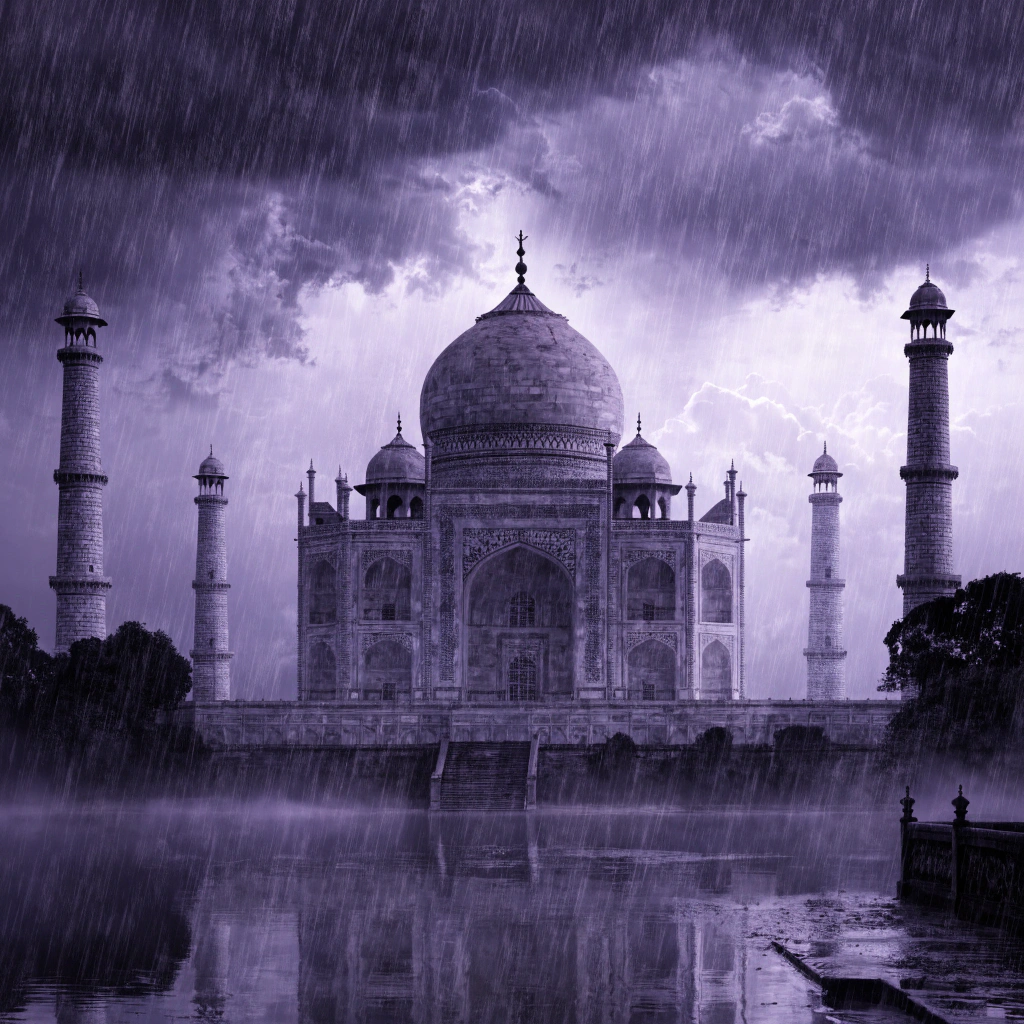
The Beautiful Taj Mahal
The Taj Mahal is in India. It is a very big and beautiful building. It is in the city of Agra. The building is a gift from a king to his wife. Her name is Mumtaz Mahal. She is very special to him.
The building is white. It is made of marble. There are big gardens and water around it. Many people visit the Taj Mahal every day. They take photos of the white walls. It is a famous place in the world. People love this place because it is very pretty.
语法聚焦
句型: Present Simple (to be)
"The Taj Mahal is in India."
We use 'is' for one person or thing. It tells us a fact or where something is located.
句型: Adjectives before Nouns
"It is a very big and beautiful building."
In English, describing words like 'big' or 'beautiful' come before the thing they describe. For example, we say 'white walls'.
测试你的理解
10 个问题 · A1 初学 · 1 次免费预览
测试你从这篇文章中学到的知识。回答所有问题即可获得经验值!
题目详情
Where is the Taj Mahal?
你的回答:
正确答案: India
The Taj Mahal is a black building.
你的回答:
正确答案: 错误
What does 'famous' mean?
你的回答:
正确答案: Many people know it
The building is made of _____.
你的回答:
正确答案: marble
The Taj Mahal: A Symbol of Love
The Taj Mahal is a very famous building in India. It is in the city of Agra, near the Yamuna River. Many people think it is the most beautiful building in the world. It is made of white marble and it looks different at different times of the day.
The Mughal Emperor Shah Jahan built the Taj Mahal many years ago. He started the building in 1632 and finished it in 1653. He wanted to build a special place for his wife, Mumtaz Mahal, because she died. He loved her very much, so the Taj Mahal is a symbol of love.
More than 20,000 workers helped to build it. They used many expensive stones from different countries. Today, millions of tourists visit the Taj Mahal every year. It is more famous than many other monuments because of its history and beauty. When you visit India, you should see this amazing place.
语法聚焦
句型: Past Simple
"He started the building in 1632 and finished it in 1653."
We use the past simple to talk about actions that happened and finished in the past. For regular verbs, we add '-ed' to the base verb.
句型: Comparatives with 'more'
"It is more famous than many other monuments."
We use 'more + adjective + than' to compare two things when the adjective is long (two or more syllables). It shows which thing has more of a quality.
测试你的理解
11 个问题 · A2 基础 · 1 次免费预览
测试你从这篇文章中学到的知识。回答所有问题即可获得经验值!
题目详情
Where is the Taj Mahal located?
你的回答:
正确答案: In Agra
Shah Jahan built the Taj Mahal for his wife.
你的回答:
正确答案: 正确
What does 'marble' mean?
你的回答:
正确答案: A hard white stone
The Taj Mahal is a ______ of love.
你的回答:
正确答案: symbol
How many workers helped to build the monument?
你的回答:
正确答案: 20,000
The Taj Mahal: India's Famous Symbol of Love
The Taj Mahal is one of the most famous buildings in the world. It is located in Agra, India, on the banks of the Yamuna River. This beautiful monument has been admired by millions of people for centuries. It was built by the Mughal Emperor Shah Jahan between 1632 and 1653. He commissioned the building as a tomb for his wife, Mumtaz Mahal, who died while giving birth to their fourteenth child.
The structure is often described as a 'symbol of love' because of the story behind its construction. The Taj Mahal, which is made of white marble, shows a perfect balance of Persian, Islamic, and Indian styles. Thousands of workers were employed to finish this project. The white marble was brought from different parts of Asia, and it was decorated with precious stones that shine in the sunlight.
The building is famous for its symmetry. Everything on the left side is exactly the same as the right side, except for the tombs inside. The gardens around the monument are also designed to be perfectly balanced. Visitors have traveled from all over the world to see how the color of the marble changes during the day. It looks pink in the morning, white at noon, and golden under the moon.
In 1983, the Taj Mahal was named a UNESCO World Heritage site. Today, it is visited by millions of tourists every year. Although it has faced problems like pollution, many efforts have been made to protect its white walls. It remains a masterpiece of human history that everyone should see at least once.
语法聚焦
句型: Passive Voice
"Thousands of workers were employed to finish this project."
The passive voice is used when the action (employing workers) is more important than who did it. It is formed using the verb 'to be' and the past participle.
句型: Relative Clauses
"He commissioned the building as a tomb for his wife, Mumtaz Mahal, who died while giving birth."
Relative clauses provide extra information about a noun. We use 'who' for people and 'which' or 'that' for things and animals.
测试你的理解
11 个问题 · B1 中级 · 1 次免费预览
测试你从这篇文章中学到的知识。回答所有问题即可获得经验值!
Who ordered the construction of the Taj Mahal?
题目详情
Who ordered the construction of the Taj Mahal?
你的回答:
正确答案: Shah Jahan
The Taj Mahal is made of red brick and gold.
你的回答:
正确答案: 错误
What does 'masterpiece' mean?
你的回答:
正确答案: An extremely skillful work of art
Everything on the left side is exactly the same as the _____ side.
你的回答:
正确答案: right
Why is the building called a 'symbol of love'?
你的回答:
正确答案: Because it was built for a beloved wife
The Taj Mahal: A Monumental Elegy in White Marble
Standing majestically on the southern bank of the Yamuna River in Agra, the Taj Mahal is often regarded as the most profound expression of architectural prowess in human history. This ivory-white marble mausoleum was commissioned in 1632 by the Mughal Emperor Shah Jahan to house the tomb of his favorite wife, Mumtaz Mahal, who had tragically passed away during the birth of their fourteenth child. While it serves primarily as a resting place, the structure is widely analyzed as a physical manifestation of eternal love and imperial power. Having been constructed over a period of twenty years, the complex represents the pinnacle of Mughal architecture, characterized by its meticulous attention to detail and harmonious proportions.
The architectural style of the Taj Mahal is not purely Indian; rather, it is a sophisticated blend of Persian, Islamic, and Indian influences. The central dome, which is surrounded by four smaller domes and four slender minarets, creates a sense of perfect symmetry that is central to the monument's aesthetic appeal. Furthermore, the walls are adorned with intricate carvings and semi-precious stone inlays, known as pietra dura. It is estimated that over 20,000 artisans were employed to achieve such a high standard of craftsmanship. This collective effort resulted in a structure that seems to change color depending on the time of day, transitioning from a soft pink in the morning to a brilliant white under the midday sun.
However, despite its historical and cultural significance, the Taj Mahal faces contemporary challenges that threaten its preservation. In recent decades, environmental degradation caused by air pollution and the receding water levels of the Yamuna River has led to the discoloration of the marble. Consequently, conservation efforts have been intensified to ensure that the monument remains in pristine condition for future generations. The Indian government has implemented strict regulations regarding industrial activity in the surrounding area, demonstrating a commitment to protecting this UNESCO World Heritage site.
In conclusion, the Taj Mahal remains an enduring symbol of India's rich heritage. It is not merely a tomb but a masterpiece that invites visitors to reflect on the intersections of art, history, and emotion. As one of the New Seven Wonders of the World, its global importance cannot be overstated, continuing to captivate millions of tourists and scholars alike with its timeless beauty.
语法聚焦
句型: Past Perfect Passive
"This ivory-white marble mausoleum was commissioned in 1632 by the Mughal Emperor Shah Jahan to house the tomb of his favorite wife, Mumtaz Mahal, who had tragically passed away during the birth of their fourteenth child."
The past perfect 'had passed away' is used to show an action completed before another past action (the commissioning). The passive voice 'was commissioned' focuses on the monument rather than the person who ordered it.
句型: Perfect Participle Clause
"Having been constructed over a period of twenty years, the complex represents the pinnacle of Mughal architecture."
This clause (Having been + past participle) is used to indicate that the action in the participle clause was completed before the action in the main clause. It provides background information or a reason for the current state.
句型: Present Perfect Passive
"Consequently, conservation efforts have been intensified to ensure that the monument remains in pristine condition for future generations."
The present perfect passive (have been + past participle) is used here to describe an action that started in the past and continues to be relevant or is still happening in the present, emphasizing the ongoing nature of the conservation.
测试你的理解
11 个问题 · B2 中高级 · 1 次免费预览
测试你从这篇文章中学到的知识。回答所有问题即可获得经验值!
What was the primary purpose for building the Taj Mahal?
题目详情
What was the primary purpose for building the Taj Mahal?
你的回答:
正确答案: To serve as a tomb for Mumtaz Mahal
The Taj Mahal's architectural style is exclusively based on ancient Indian designs.
你的回答:
正确答案: 错误
Which word describes something that is in its original, unspoiled condition?
你的回答:
正确答案: Pristine
The Taj Mahal is located on the southern bank of the _____ River.
你的回答:
正确答案: Yamuna
What modern issue is currently threatening the appearance of the marble?
你的回答:
正确答案: Environmental degradation and pollution
The Taj Mahal: An Architectural Elegy in Marble
Seldom in the annals of human history has a single structure so poignantly encapsulated the intersection of imperial grandeur and intimate bereavement as the Taj Mahal. Situated on the banks of the Yamuna River in Agra, this ivory-white marble mausoleum remains the preeminent paradigm of Mughal architecture, a style that seamlessly synthesizes Persian, Islamic, and Indian influences. Commissioned in 1632 by the Mughal Emperor Shah Jahan to house the tomb of his favorite wife, Mumtaz Mahal, the edifice represents more than a mere funerary monument; it is a sophisticated manifestation of absolute symmetry and aesthetic perfection. Not only does the monument serve as a tomb, but it also functions as a symbolic representation of the Islamic garden of paradise, known as Jannah.
What makes the Taj Mahal truly transcendent is not merely its scale, but the meticulous orchestration of its design. It was through the utilization of 'pietra dura'—the intricate technique of inlaying polished, colored stones into white marble—that the artisans achieved such floral exuberance. The optical illusions integrated into the site’s layout further demonstrate architectural prowess. For instance, as one approaches the main gate, the Taj appears to shrink, a phenomenon that challenges the viewer’s perception of spatial diminution. This deliberate manipulation of perspective ensures that the monument remains the focal point of the viewer's experience, asserting its dominance over the landscape.
Only by examining the historical context can one appreciate the logistical feat involved in its creation. Over 20,000 artisans were mobilized from across the empire, and materials were transported from across Asia via a fleet of a thousand elephants. The result is a structure that appears ethereal, its character shifting with the diurnal cycle of light. At dawn, it assumes a soft pinkish hue, while under the moonlight, it radiates a ghostly silver. This ephemeral quality reinforces the notion that the building is a bridge between the earthly and the divine.
However, the preservation of this UNESCO World Heritage site is currently fraught with challenges. The encroachment of industrial pollution and the receding water levels of the Yamuna River threaten the structural integrity of its foundation. Efforts to mitigate the yellowing of the marble through 'mud pack' treatments reflect the ongoing struggle between modernization and heritage conservation. Furthermore, the sheer volume of tourism presents a double-edged sword: providing necessary revenue while simultaneously accelerating the wear and tear of the site. Ultimately, the Taj Mahal stands as a testament to the fact that while the physical body is evanescent, the legacy of love and power can be immortalized through the medium of stone. The continued survival of this masterpiece requires a nuanced balance between celebrating its historical significance and implementing rigorous environmental safeguards.
语法聚焦
句型: Inversion with Negative Adverbials
"Seldom in the annals of human history has a single structure so poignantly encapsulated..."
When a negative or restrictive adverbial (like 'seldom', 'never', or 'rarely') starts a sentence for emphasis, the auxiliary verb and subject are inverted. This creates a formal and dramatic tone typical of C1-level writing.
句型: Cleft Sentences
"It was through the utilization of 'pietra dura'... that the artisans achieved such floral exuberance."
Cleft sentences (using 'It is/was... that...') are used to focus on a specific piece of information. Here, it emphasizes the specific technique (pietra dura) responsible for the artistic result.
句型: Nominalization
"The meticulous orchestration of its design..."
Nominalization involves turning verbs or adjectives into nouns (e.g., 'orchestrate' to 'orchestration'). This allows for more complex sentence structures and a more objective, academic tone.
测试你的理解
12 个问题 · C1 高级 · 1 次免费预览
测试你从这篇文章中学到的知识。回答所有问题即可获得经验值!
What is the primary architectural purpose of the Taj Mahal according to the text?
题目详情
What is the primary architectural purpose of the Taj Mahal according to the text?
你的回答:
正确答案: A mausoleum for the Emperor's wife
The Taj Mahal appears to grow larger as a viewer approaches the main gate.
你的回答:
正确答案: 错误
What does the word 'evanescent' imply about the human body in the context of the article?
你的回答:
正确答案: It is temporary and fading.
The Taj Mahal is described as the preeminent _____ of Mughal architecture.
你的回答:
正确答案: paradigm
Which of the following environmental threats is NOT mentioned in the text?
你的回答:
正确答案: Seismic activity and earthquakes
The construction of the Taj Mahal involved materials transported by elephants from various parts of Asia.
你的回答:
正确答案: 正确
泰姬陵:大理石上的不朽挽歌与莫卧儿艺术的巅峰
泰姬陵,这座矗立于印度北方邦阿格拉城亚穆纳河畔的恢弘建筑,毋庸置疑是印度乃至全球建筑史上的一个璀璨里程碑。其不仅是莫卧儿王朝建筑艺术的集大成者,更被世人誉为“大理石上的挽歌”,象征着一位帝王对逝去爱妻的旷世深情。这座于17世纪中叶,即1632年至1653年间,由莫卧儿皇帝沙贾汗倾尽国力为纪念其挚爱皇后穆姆塔兹·玛哈尔而修建的陵墓,其背后所蕴含的,远非单纯的丧葬建筑学意义,而是对爱情、美学与权力交织的复杂叙事。
从建筑风格而言,泰姬陵堪称是波斯、伊斯兰与印度本土建筑元素臻于完美融合的典范。其主体结构以纯白大理石砌筑而成,在不同光线下呈现出变幻莫测的色彩,极富视觉冲击力。陵墓中央那庄严宏伟的穹顶,辅以四角对称的宣礼塔,共同构筑了一个和谐且富有韵律感的整体。设计者匠心独运地运用了大量的几何图案、花卉纹饰以及镌刻于墙体的《古兰经》经文,这些繁复而精美的镶嵌工艺,使得冰冷的大理石焕发出生命的光泽,无一不彰显着莫卧儿王朝鼎盛时期的艺术品味与工艺水准。
与其说泰姬陵仅仅是一座陵墓,不如说它更是一部凝固的史诗,一部以建筑语言书写的爱情宣言。穆姆塔兹·玛哈尔因难产而逝,沙贾汗皇帝痛彻心扉,誓言为她建造一座举世无双的纪念碑。这种极致的个人情感,通过泰姬陵的宏伟尺度和精雕细琢得以具象化,超越了时间与空间的藩篱,至今仍能触动观者的内心。这种将个人悲恸升华为永恒艺术的尝试,在人类文明史上亦属罕见,无疑为泰姬陵增添了无与伦比的文化与情感价值。
泰姬陵的建造动用了数万名工匠、艺术家和劳工,耗费了巨额财富。据史料记载,其所用大理石远自拉贾斯坦邦,而各色宝石则从世界各地汇集而来,包括来自中国的玉石、斯里兰卡的蓝宝石、阿拉伯的玛瑙等,这些珍稀材料通过精湛的“皮埃特拉杜拉”镶嵌技术,被巧妙地融入到建筑的每一个细节之中。这种不惜工本、追求极致的建造理念,不仅昭示了莫卧儿帝国的强大国力,也深刻体现了当时社会对艺术与美的崇高敬意。
时至今日,泰姬陵已超越其最初作为陵墓的单一功能,成为印度文化遗产的象征,更是联合国教科文组织认定的世界文化遗产。它每年吸引着数百万游客慕名而来,探寻其历史的印记,感受其艺术的魅力,并为那份跨越生死的爱情所动容。然而,在全球气候变化和环境污染日益严峻的语境下,这座白色奇迹的维护与保护亦面临着前所未有的挑战。其大理石表面因空气污染而逐渐泛黄,地基也可能因亚穆纳河水位变化而受损。这不禁引发我们深思:如何在发展与保护之间取得平衡,以期将这份人类共同的瑰宝完好无损地传承给后代,这或许是泰姬陵在当代语境下所承载的另一重深远意义。它不仅回顾过去,更警示未来。
语法聚焦
句型: 毋庸置疑,...
"泰姬陵,这座矗立于印度北方邦阿格拉城亚穆纳河畔的恢弘建筑,毋庸置疑是印度乃至全球建筑史上的一个璀璨里程碑。"
此句式用于强调某事是确定无疑的,表示没有疑问或争议。它常置于句首,后接逗号,引出确凿的论断,提升语气的肯定性与正式感。
句型: 与其说...不如说...
"与其说泰姬陵仅仅是一座陵墓,不如说它更是一部凝固的史诗,一部以建筑语言书写的爱情宣言。"
这个句式表示一种比较和选择,强调后者比前者更准确或更恰当。它常用于纠正或深化对某一事物的理解,展现更为深刻的洞察。
句型: 并非仅仅是...而是...
"其背后所蕴含的,远非单纯的丧葬建筑学意义,而是对爱情、美学与权力交织的复杂叙事。"
此结构用于强调某事物不仅仅是表面所见,更深层次的本质或意义在于后者。这种句式常用于进行深入分析或纠正片面理解,突出事物的核心价值。
测试你的理解
12 个问题 · C2 精通 · 1 次免费预览
测试你从这篇文章中学到的知识。回答所有问题即可获得经验值!
题目详情
泰姬陵修建的最初目的是什么?
你的回答:
正确答案: 作为沙贾汗皇帝对其爱妻的陵墓
文章指出泰姬陵的建筑风格仅仅是纯粹的伊斯兰风格。
你的回答:
正确答案: 错误
在文中,“旷世”一词最贴切的含义是什么?
你的回答:
正确答案: 空前的,独一无二的
泰姬陵的建造动用了数万名工匠、艺术家和劳工,耗费了巨额______。
你的回答:
正确答案: 财富
根据文章,泰姬陵在当代面临的挑战主要有哪些?
你的回答:
正确答案: 全球气候变化和环境污染对其建筑的损害
文章提到泰姬陵的建造理念是不惜工本,追求极致。
你的回答:
正确答案: 正确

