Sham El-Nessim: A Spring Festival
Sham El-Nessim is a very old festival in Egypt. It is more than 4,500 years old. People celebrate the start of spring. It is a happy day for all Egyptians.
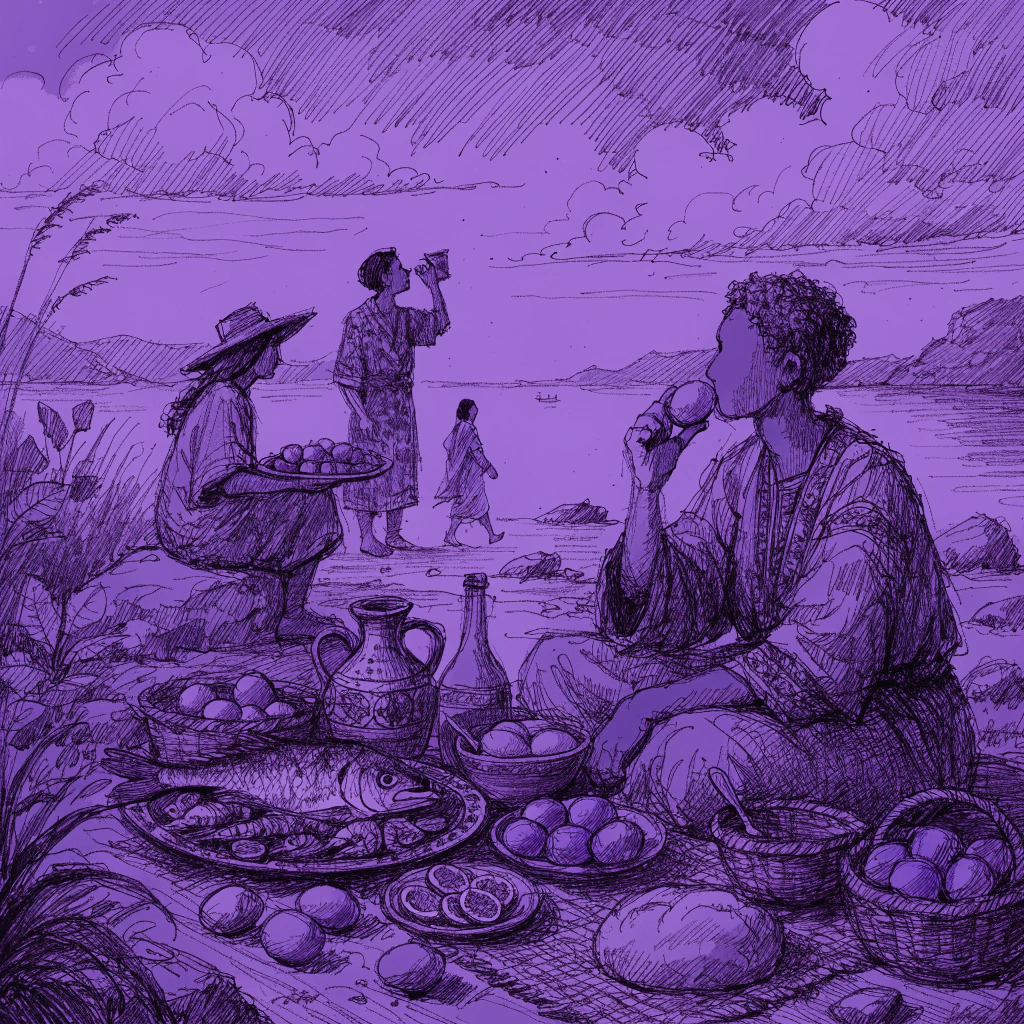
In the morning, families go to parks or gardens. They sit near the Nile River. The weather is warm and sunny. Children play games and run.
Food is very important. People eat salted fish and green onions. They also paint eggs with many colors. The eggs look beautiful. It is a special time for family and friends.
Grammatik-Spotlight
Muster: Present Simple (to be)
"Sham El-Nessim is a very old festival in Egypt."
We use 'is' with singular subjects to describe a fact. It tells us what something is or how it looks.
Muster: Present Simple (Action Verbs)
"Families go to parks or gardens."
We use the base form of the verb for plural subjects like 'families'. This describes a regular activity.
Teste dein Verständnis
10 Fragen · A1 Anfänger · 1 kostenlose Vorschau
Teste, was du aus diesem Artikel gelernt hast. Beantworte alle Fragen und sammle XP!
Where do families go in the morning?
Möchtest du das Quiz beenden?
9 weitere Fragen warten auf dich. Registriere dich kostenlos, um das vollständige Quiz freizuschalten und XP zu sammeln!
Kostenlos registrierenHast du schon ein Konto? Anmelden
Gut gemacht!
Weiter üben!
Bereits abgeschlossen — keine zusätzlichen XP
Registriere dich, um XP zu verdienenFragenübersicht
Where do families go in the morning?
Deine Antwort:
Richtige Antwort: parks
Sham El-Nessim is a new festival.
Deine Antwort:
Richtige Antwort: Falsch
What is 'spring'?
Deine Antwort:
Richtige Antwort: The season after winter
They paint _____ with many colors.
Deine Antwort:
Richtige Antwort: eggs
Sham El-Nessim: A Spring Festival in Egypt
Sham El-Nessim is a very old festival in Egypt. It started more than 4,500 years ago in the time of the Ancient Egyptians. In the past, they called it 'Shemu' because they wanted to celebrate the harvest season. Today, it is a national holiday for all Egyptians. It happens every year on the Monday after Coptic Easter.
Families usually go to parks or sit near the Nile River because the weather is warmer than in winter. They enjoy the fresh air and 'smell the breeze.' This is a traditional way to welcome the spring. People eat special foods on this day. The most famous food is a salted fish called 'Fesikh.' They also eat green onions and boiled eggs.
Children love this holiday because they paint eggs with bright colors. It is more colorful and fun than a normal day. Sham El-Nessim is a happy time because it brings friends and families together to enjoy nature.
Grammatik-Spotlight
Muster: Past Simple
"Ancient Egyptians called it Shemu."
We use the past simple to talk about finished actions in the past. For regular verbs, we usually add '-ed' to the base verb.
Muster: Comparatives
"The weather is warmer than in winter."
We use comparatives to compare two things. For short adjectives like 'warm', we add '-er' and use the word 'than'.
Teste dein Verständnis
11 Fragen · A2 Grundkenntnisse · 1 kostenlose Vorschau
Teste, was du aus diesem Artikel gelernt hast. Beantworte alle Fragen und sammle XP!
How old is the Sham El-Nessim festival?
Möchtest du das Quiz beenden?
10 weitere Fragen warten auf dich. Registriere dich kostenlos, um das vollständige Quiz freizuschalten und XP zu sammeln!
Kostenlos registrierenHast du schon ein Konto? Anmelden
Gut gemacht!
Weiter üben!
Bereits abgeschlossen — keine zusätzlichen XP
Registriere dich, um XP zu verdienenFragenübersicht
How old is the Sham El-Nessim festival?
Deine Antwort:
Richtige Antwort: More than 4,500 years old
Sham El-Nessim is only for children.
Deine Antwort:
Richtige Antwort: Falsch
What does 'breeze' mean?
Deine Antwort:
Richtige Antwort: A light and pleasant wind
The most famous food during the festival is a salted fish called _____.
Deine Antwort:
Richtige Antwort: Fesikh
Where do families usually go to celebrate?
Deine Antwort:
Richtige Antwort: To parks or near the Nile
Sham El-Nessim: Egypt's Ancient Celebration of Spring
Sham El-Nessim is a unique festival that has been celebrated by Egyptians for thousands of years. It marks the beginning of spring and is a national holiday that brings people of all backgrounds together. The name literally means "smelling the breeze," which describes how people spend their day outdoors enjoying the fresh air.
The history of this festival can be traced back to the Pharaonic era, specifically the Old Kingdom. It was originally called "Shemu," which represented the season of harvest and renewal. Today, it is celebrated on the Monday after Coptic Orthodox Easter. Although it has ancient roots, it is a secular holiday that is enjoyed by both Muslims and Christians alike.
Several traditional foods are prepared for this special day. The most famous dish is "Feseekh," which is salted fish that has been dried in the sun. This traditional meal is usually served with green onions and fresh lemons. Families also enjoy coloring boiled eggs, a custom that symbolizes new life and the arrival of spring. These colorful eggs are often placed in baskets and taken to local parks.
Early in the morning, many families go to public gardens or take boat trips on the Nile. These activities have been practiced for generations to enjoy the fresh air. Because the festival is about renewal, people feel a sense of joy and hope for the future. It is a time when the beauty of nature is appreciated by everyone across the country.
Grammatik-Spotlight
Muster: Present Perfect Passive
"Sham El-Nessim is a unique festival that has been celebrated by Egyptians for thousands of years."
This pattern is used to talk about an action that started in the past and continues to the present, where the focus is on the festival rather than the people. It is formed using 'has/have been' + past participle.
Muster: Relative Clauses
"The most famous dish is 'Feseekh,' which is salted fish that has been dried in the sun."
Relative clauses provide extra information about a noun. 'Which' is used for things (Feseekh) and 'that' can be used for things or people (salted fish).
Teste dein Verständnis
11 Fragen · B1 Mittelstufe · 1 kostenlose Vorschau
Teste, was du aus diesem Artikel gelernt hast. Beantworte alle Fragen und sammle XP!
When did the history of Sham El-Nessim begin?
Möchtest du das Quiz beenden?
10 weitere Fragen warten auf dich. Registriere dich kostenlos, um das vollständige Quiz freizuschalten und XP zu sammeln!
Kostenlos registrierenHast du schon ein Konto? Anmelden
Gut gemacht!
Weiter üben!
Bereits abgeschlossen — keine zusätzlichen XP
Registriere dich, um XP zu verdienenFragenübersicht
When did the history of Sham El-Nessim begin?
Deine Antwort:
Richtige Antwort: During the Pharaonic era
Sham El-Nessim is a religious holiday celebrated only by Christians.
Deine Antwort:
Richtige Antwort: Falsch
What does the word 'symbolize' mean in the text?
Deine Antwort:
Richtige Antwort: To represent something else
The name of the festival literally means smelling the _____.
Deine Antwort:
Richtige Antwort: breeze
What is 'Feseekh'?
Deine Antwort:
Richtige Antwort: Salted fish dried in the sun
Sham El-Nessim: Ein jahrtausendealtes Frühlingsfest am Nil
Sham El-Nessim ist weit mehr als nur ein gesetzlicher Feiertag in Ägypten; es ist ein lebendiges Zeugnis einer jahrtausendealten Kulturgeschichte. Während viele moderne Feste religiöse Ursprünge haben, zeichnet sich Sham El-Nessim durch seinen säkularen Charakter aus, der Menschen unterschiedlicher Glaubensrichtungen vereint. Der Ursprung des Festes lässt sich bis in die Zeit des Alten Reiches vor etwa 4.500 Jahren zurückverfolgen. Damals feierten die alten Ägypter den Beginn der Erntezeit, die sie 'Shemu' nannten. Aus diesem Begriff entwickelte sich über die Jahrhunderte der koptische Name 'Shom en Nisim', was heute im modernen Arabisch als 'Sham El-Nessim' bekannt ist und metaphorisch das 'Einatmen der Brise' bedeutet.
Traditionell wird das Fest am Montag unmittelbar nach dem koptisch-orthodoxen Osterfest begangen. Trotz dieser zeitlichen Kopplung an den christlichen Kalender bleibt es ein nationales Ereignis, das die gesamte ägyptische Gesellschaft anspricht. Infolgedessen stellt Sham El-Nessim ein verbindendes Element dar, das die pharaonische Vergangenheit mit der modernen Identität des Landes verknüpft. Die Feierlichkeiten sind geprägt von spezifischen kulinarischen Traditionen, die symbolisch für Fruchtbarkeit und Erneuerung stehen. So ist der Verzehr von 'Fesikh', einem speziell gesalzenen und fermentierten Fisch, ebenso obligatorisch wie das Bemalen von Eiern und das Essen von Frühlingszwiebeln.
In der heutigen Zeit nutzen Familien den freien Tag, um gemeinsam in Parks oder am Ufer des Nils zu picknicken. Dabei wird die herannahende warme Jahreszeit begrüßt und die Natur in ihrer vollen Pracht bewundert. Es ist faszinierend zu beobachten, wie sich diese Bräuche über Jahrtausende hinweg erhalten haben, obgleich sich die politischen und religiösen Rahmenbedingungen des Landes massiv gewandelt haben. Sham El-Nessim bleibt somit ein unverzichtbarer Bestandteil des ägyptischen Kulturerbes, der die Beständigkeit menschlicher Traditionen eindrucksvoll unter Beweis stellt. Wer Ägypten zu dieser Zeit besucht, wird Zeuge einer kollektiven Freude, die tief in der Geschichte verwurzelt ist.
Grammatik-Spotlight
Muster: Passiv Präsens
"Traditionell wird das Fest am Montag unmittelbar nach dem koptisch-orthodoxen Osterfest begangen."
Das Passiv wird verwendet, um die Handlung oder das Ereignis in den Vordergrund zu stellen, anstatt die handelnde Person. Es wird mit 'werden' und dem Partizip II gebildet.
Muster: Relativsätze mit Präpositionen
"...ein nationales Ereignis, das die gesamte ägyptische Gesellschaft anspricht."
Relativsätze geben zusätzliche Informationen über ein Nomen. Wenn ein Verb eine Präposition verlangt, steht diese vor dem Relativpronomen.
Muster: Partizip I als Adjektiv
"Dabei wird die herannahende warme Jahreszeit begrüßt..."
Das Partizip I (Infinitiv + d) beschreibt eine laufende Handlung oder einen Zustand und wird wie ein Adjektiv dekliniert.
Teste dein Verständnis
11 Fragen · B2 Obere Mittelstufe · 1 kostenlose Vorschau
Teste, was du aus diesem Artikel gelernt hast. Beantworte alle Fragen und sammle XP!
Aus welcher Epoche stammt der Ursprung von Sham El-Nessim?
Möchtest du das Quiz beenden?
10 weitere Fragen warten auf dich. Registriere dich kostenlos, um das vollständige Quiz freizuschalten und XP zu sammeln!
Kostenlos registrierenHast du schon ein Konto? Anmelden
Gut gemacht!
Weiter üben!
Bereits abgeschlossen — keine zusätzlichen XP
Registriere dich, um XP zu verdienenFragenübersicht
Aus welcher Epoche stammt der Ursprung von Sham El-Nessim?
Deine Antwort:
Richtige Antwort: Aus dem Alten Reich der Pharaonen
Sham El-Nessim ist ein rein religiöses Fest, das nur von Christen gefeiert wird.
Deine Antwort:
Richtige Antwort: Falsch
Was bedeutet das Wort 'säkular' in diesem Kontext?
Deine Antwort:
Richtige Antwort: Weltlich und nicht religiös
Sham El-Nessim bleibt ein unverzichtbarer Bestandteil des ägyptischen _____.
Deine Antwort:
Richtige Antwort: Kulturerbes
Welches Lebensmittel ist traditionell obligatorisch für das Fest?
Deine Antwort:
Richtige Antwort: Fermentierter Fisch (Fesikh)
The Perpetuation of Shemu: Analyzing the Cultural Resilience of Sham El-Nessim
The perpetuation of Sham El-Nessim serves as a compelling testament to the enduring cultural resilience of the Egyptian identity, transcending millennia of socio-political shifts. Rooted in the Pharaonic Old Kingdom over 4,500 years ago, this festival represents a secular tapestry that binds the nation’s diverse demographic. It was the ancient Egyptians who first observed 'Shemu', a season of renewal and harvest, marking the precise moment when day and night were of equal length. This astronomical precision underscores the sophisticated understanding of cosmic cycles possessed by the ancients, a vestige of which remains central to modern Egyptian life. Today, the festival is celebrated on the Monday following Coptic Orthodox Easter, yet its essence remains profoundly non-religious, facilitating a rare moment of communal cohesion across all faiths.
Nominalisation of historical events often obscures the lived experience of the past, but in the case of Sham El-Nessim, the etymological evolution from the Pharaonic 'Shemu' to the Coptic 'Shom en Nisim' provides a linguistic bridge to antiquity. The literal translation—'smelling the breeze'—captures the ephemeral beauty of spring’s arrival. Central to the festivities is the consumption of specific symbolic foods, most notably 'Fesikh', a fermented and salted grey mullet. Not only does the olfactory hallmark of Fesikh define the day, but it also evokes a collective nostalgia that resonates through every Egyptian household. The preparation of this fish is a delicate process of fermentation that requires mastery; a failure in technique can lead to toxicity, yet the tradition persists as a venerable rite of passage.
Furthermore, the inclusion of scallions and colored eggs highlights the symbolic rejuvenation inherent in the festival. Scallions were historically believed to ward off the 'evil eye,' while eggs represented the potentiality of new life. In contemporary Cairo, the sight of families flocking to verdant public parks or embarking on Nile cruises reflects a societal desire to reconnect with the natural world. This mass exodus to green spaces illustrates the psychological importance of the 'smelling of the breeze' as a therapeutic escape from urban density.
Ultimately, Sham El-Nessim is more than a mere holiday; it is a profound assertion of continuity. While other traditions may succumb to the pressures of globalization, the preservation of these customs ensures that the spirit of the Nile remains an integral component of the modern Egyptian psyche. The festival stands as a linguistic and cultural palimpsest, where ancient rituals are rewritten but never fully erased by the passing of time.
Grammatik-Spotlight
Muster: Cleft Sentences
"It was the ancient Egyptians who first observed 'Shemu', a season of renewal and harvest."
Cleft sentences are used to focus on a specific part of the sentence (the ancient Egyptians) by starting with 'It is/was'. This adds emphasis to the subject or agent of the action.
Muster: Inversion with Negative/Restrictive Adverbials
"Not only does the olfactory hallmark of Fesikh define the day, but it also evokes a collective nostalgia."
When a sentence starts with 'Not only', the auxiliary verb (does) comes before the subject (the olfactory hallmark). This structure is common in formal writing to provide rhetorical emphasis.
Muster: Nominalisation
"The perpetuation of Sham El-Nessim serves as a compelling testament..."
Nominalisation involves turning verbs (perpetuate) into nouns (perpetuation). This makes the writing more abstract, formal, and concise, which is a hallmark of C1-level academic English.
Teste dein Verständnis
12 Fragen · C1 Fortgeschritten · 1 kostenlose Vorschau
Teste, was du aus diesem Artikel gelernt hast. Beantworte alle Fragen und sammle XP!
What does the author suggest about the relationship between Sham El-Nessim and religion?
Möchtest du das Quiz beenden?
11 weitere Fragen warten auf dich. Registriere dich kostenlos, um das vollständige Quiz freizuschalten und XP zu sammeln!
Kostenlos registrierenHast du schon ein Konto? Anmelden
Gut gemacht!
Weiter üben!
Bereits abgeschlossen — keine zusätzlichen XP
Registriere dich, um XP zu verdienenFragenübersicht
What does the author suggest about the relationship between Sham El-Nessim and religion?
Deine Antwort:
Richtige Antwort: It is a secular event that promotes national unity across different faiths.
The name 'Sham El-Nessim' has no linguistic connection to the ancient Pharaonic language.
Deine Antwort:
Richtige Antwort: Falsch
Which word describes something that lasts for a very short duration?
Deine Antwort:
Richtige Antwort: Ephemeral
The process of preparing Fesikh involves a delicate ______ that must be mastered to avoid toxicity.
Deine Antwort:
Richtige Antwort: fermentation
What is the primary reason the author mentions 'astronomical precision'?
Deine Antwort:
Richtige Antwort: To highlight the advanced knowledge of the ancient Egyptians.
The author views the preservation of Sham El-Nessim as a defense against globalization.
Deine Antwort:
Richtige Antwort: Richtig
The Perennial Resurgence: An Analytical Inquiry into the Cultural Palimpsest of Sham El-Nessim
To contemplate Sham El-Nessim is to engage with an intricate cultural palimpsest, one that has been meticulously layered over four and a half millennia of Egyptian history. Lest the historical significance of this festival be overlooked, one must consider its etymological trajectory, which originates in the Pharaonic 'Shemu.' This term, signifying the season of harvest and cosmic renewal, underscores the festival's foundational alignment with the vernal equinox. It is conjectured that the ancient Egyptians, as early as the Old Kingdom, conceptualized this period as the primordial moment of creation. Thus, the modern iteration of the holiday serves not merely as a respite from the quotidian, but as a profound link to a civilization that viewed the cyclical nature of time with ontological reverence.
Seldom has a festival managed to navigate the tumultuous waters of socio-political and religious shifts with such grace. While its roots are undeniably pagan, the celebration underwent a linguistic and temporal metamorphosis during the Coptic era, emerging as 'Shom en Nisim.' Despite the subsequent Islamic integration of Egypt, the festival maintained its secular integrity, eventually becoming a national holiday that transcends sectarian divides. This syncretism is a testament to the tenacity of Egyptian identity, where a shared heritage provides a cohesive social fabric. Had the ancient Egyptians not conceptualized the season of Shemu as a period of cosmic rebirth, the modern celebration might lack its profound symbolic resonance.
Central to the hermeneutical understanding of Sham El-Nessim is the semiotics of its culinary traditions. The consumption of 'fesikh'—a fermented, salted gray mullet—is perhaps the most visceral of these practices. While the olfactory profile of fesikh may be challenging to the uninitiated, its consumption is a ritualistic act connecting the contemporary Egyptian to the Nilotic bounty of antiquity. Salted fish was traditionally offered to the gods to ensure fertility and protection, a practice that persists today, albeit in a secularized form. Furthermore, the inclusion of scallions and colored eggs serves as a botanical and biological metaphor for the burgeoning life associated with spring. The egg, a universal symbol of potentiality, was often inscribed with prayers and hung in temples, a precursor to the modern tradition of decorative dyeing.
Sociologically, the act of 'smelling the breeze' (the literal translation of the modern name) represents a communal exodus to public gardens and the banks of the Nile. This collective movement functions as a re-appropriation of the natural landscape, where the urban populace seeks a temporary reunification with the pastoral. In this context, the festival acts as a leveling mechanism; the distinction between various social strata becomes blurred under the shared canopy of the spring sky. The palatable delights of the feast and the shared olfactory experience of the breeze create a sensory-driven solidarity.
In conclusion, Sham El-Nessim remains an enduring phenomenon that defies the ephemeral nature of modern trends. It is a celebration that requires an appreciation for the subtle interplay between the ancient and the contemporary. By honoring the arrival of spring through these age-old rituals, Egyptians do not merely observe a holiday; they participate in a continuous historical narrative. As the sun reaches its zenith during the equinox, the festival serves as a reminder that renewal is not only a biological necessity but a cultural imperative.
Grammatik-Spotlight
Muster: Subjunctive with 'Lest'
"Lest the historical significance of this festival be overlooked, one must consider its etymological trajectory."
The word 'lest' is used to express fear that something undesirable might happen. It is followed by the base form of the verb (the present subjunctive), regardless of the subject.
Muster: Inversion with Negative Adverbials
"Seldom has a festival managed to navigate the tumultuous waters of socio-political and religious shifts with such grace."
When a negative or restrictive adverbial like 'seldom' starts a sentence, the auxiliary verb and the subject are inverted for rhetorical emphasis.
Muster: Mixed Conditional (Hypothetical Past and Present)
"Had the ancient Egyptians not conceptualized the season of Shemu as a period of cosmic rebirth, the modern celebration might lack its profound symbolic resonance."
This structure uses a past perfect condition ('Had... not conceptualized') to discuss a hypothetical past action and its resulting state in the present ('might lack').
Teste dein Verständnis
12 Fragen · C2 Meisterschaft · 1 kostenlose Vorschau
Teste, was du aus diesem Artikel gelernt hast. Beantworte alle Fragen und sammle XP!
What does the author suggest by calling Sham El-Nessim a 'cultural palimpsest'?
Möchtest du das Quiz beenden?
11 weitere Fragen warten auf dich. Registriere dich kostenlos, um das vollständige Quiz freizuschalten und XP zu sammeln!
Kostenlos registrierenHast du schon ein Konto? Anmelden
Gut gemacht!
Weiter üben!
Bereits abgeschlossen — keine zusätzlichen XP
Registriere dich, um XP zu verdienenFragenübersicht
What does the author suggest by calling Sham El-Nessim a 'cultural palimpsest'?
Deine Antwort:
Richtige Antwort: It is a celebration that has retained traces of its long history despite many changes.
The term 'Shemu' originally referred to the season of harvest in ancient Egypt.
Deine Antwort:
Richtige Antwort: Richtig
What is the meaning of 'tenacity' as used in the text?
Deine Antwort:
Richtige Antwort: The quality of being persistent and enduring.
The author notes that the _____ profile of fesikh can be challenging for those who are not used to it.
Deine Antwort:
Richtige Antwort: olfactory
How does the author characterize the role of the festival in modern Egyptian society?
Deine Antwort:
Richtige Antwort: As a cohesive social fabric that transcends religious divides.
The author argues that Sham El-Nessim is an ephemeral trend in modern Egypt.
Deine Antwort:
Richtige Antwort: Falsch

