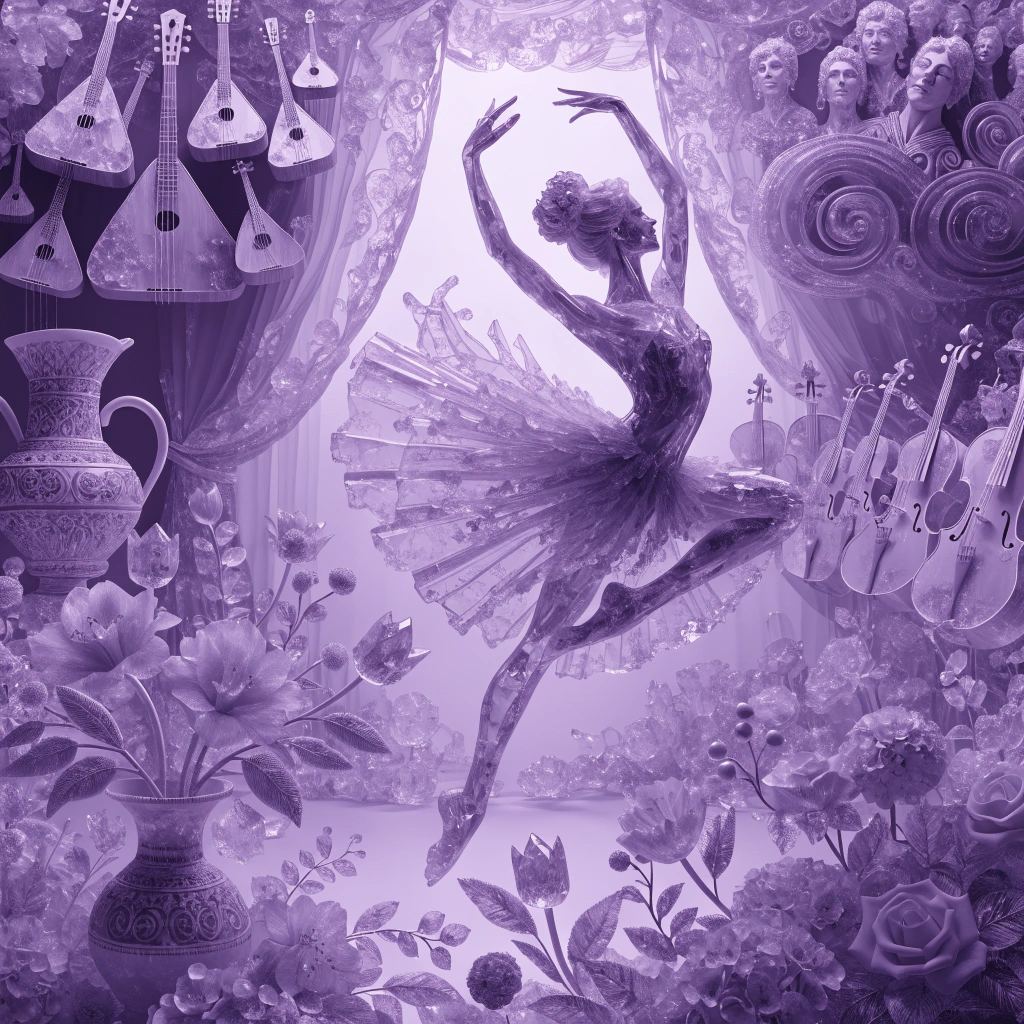
Beautiful Russian Ballet
Russian ballet is very famous. It is an old and beautiful dance. Many people in Russia like ballet. They go to big theaters to see the dancers.
The dancers wear beautiful clothes. They move very fast and jump high. They tell stories with their bodies. Some stories are about kings and queens.
Young children start ballet school early. They practice every day. They want to be great dancers. Russian ballet is special because it is very strong and elegant. People from all over the world come to watch it.
Grammatik-Spotlight
Muster: Present Simple (to be)
"Russian ballet is very famous."
We use 'is' with singular subjects like 'ballet'. This pattern is used to describe facts or characteristics.
Muster: Present Simple (Regular Verbs)
"They practice every day."
For the subject 'they', we use the base form of the verb. This shows a regular habit or routine.
Teste dein Verständnis
10 Fragen · A1 Anfänger · 1 kostenlose Vorschau
Teste, was du aus diesem Artikel gelernt hast. Beantworte alle Fragen und sammle XP!
Where do people go to see ballet?
Möchtest du das Quiz beenden?
9 weitere Fragen warten auf dich. Registriere dich kostenlos, um das vollständige Quiz freizuschalten und XP zu sammeln!
Kostenlos registrierenHast du schon ein Konto? Anmelden
Gut gemacht!
Weiter üben!
Bereits abgeschlossen — keine zusätzlichen XP
Registriere dich, um XP zu verdienenFragenübersicht
Where do people go to see ballet?
Deine Antwort:
Richtige Antwort: To big theaters
The dancers wear beautiful clothes.
Deine Antwort:
Richtige Antwort: Richtig
What is a theater?
Deine Antwort:
Richtige Antwort: A place to watch shows
Russian ballet is very _____.
Deine Antwort:
Richtige Antwort: famous
The Magic of Russian Ballet
Russian ballet is very famous around the world. It started many years ago. Peter the Great brought ballet to Russia from Europe because he wanted to change his country. At first, ballet was only for rich people, but later it became popular for everyone.
In the 19th century, Russian ballet became better than ballet in other countries. A man named Marius Petipa was a great teacher and choreographer. He created many famous dances. The composer Peter Tchaikovsky wrote beautiful music for 'Swan Lake' and 'The Nutcracker.' This music is more famous than many other songs today.
Today, people visit the Bolshoi Theater in Moscow and the Mariinsky Theater in St. Petersburg. These buildings are very big and beautiful. Many people travel to Russia to see the dancers because they are the best in the world. The dancers are very strong and they practice for many hours every day. Russian ballet is a special part of history.
Grammatik-Spotlight
Muster: Past Simple
"Peter the Great brought ballet to Russia from Europe because he wanted to change his country."
We use the past simple to talk about finished actions in the past. Regular verbs like 'wanted' end in -ed, while irregular verbs like 'brought' change their form.
Muster: Comparatives
"Russian ballet became better than ballet in other countries."
We use comparatives to compare two different things. For the word 'good', the comparative form is 'better', and we usually use the word 'than' after it.
Teste dein Verständnis
11 Fragen · A2 Grundkenntnisse · 1 kostenlose Vorschau
Teste, was du aus diesem Artikel gelernt hast. Beantworte alle Fragen und sammle XP!
Who originally brought ballet to Russia?
Möchtest du das Quiz beenden?
10 weitere Fragen warten auf dich. Registriere dich kostenlos, um das vollständige Quiz freizuschalten und XP zu sammeln!
Kostenlos registrierenHast du schon ein Konto? Anmelden
Gut gemacht!
Weiter üben!
Bereits abgeschlossen — keine zusätzlichen XP
Registriere dich, um XP zu verdienenFragenübersicht
Who originally brought ballet to Russia?
Deine Antwort:
Richtige Antwort: Peter the Great
Ballet was only for rich people at the very beginning in Russia.
Deine Antwort:
Richtige Antwort: Richtig
What does the word 'practice' mean?
Deine Antwort:
Richtige Antwort: To do something many times to improve
Many people travel to Russia to see the dancers because they are the _____ in the world.
Deine Antwort:
Richtige Antwort: best
In which city is the Mariinsky Theater located?
Deine Antwort:
Richtige Antwort: St. Petersburg
The Magic of Russian Ballet
Russian ballet is often called the pinnacle of classical dance. It is a beautiful art form that has been part of Russian culture for centuries. Although it was first brought from Western Europe, it has grown into something unique. Many people believe that Russian dancers show a level of technical precision that is difficult to find anywhere else.
In the 18th century, ballet was introduced by Peter the Great because he wanted to modernize the country. However, it was during the 19th century that Russian ballet reached its zenith. This was the time when famous pieces like "Swan Lake" and "The Nutcracker" were created. These ballets were written by Peter Tchaikovsky, who is a composer known for his emotional music. The stories are told through movement rather than words, which makes them easy for international audiences to understand.
Today, the training that Russian dancers receive is very strict. This discipline is what makes their movements so perfect. The Bolshoi Theatre in Moscow and the Mariinsky Theatre in St. Petersburg are places where this legacy is kept alive. These theaters have been visited by millions of people who love the arts. Many famous dancers have trained in these schools for years before they were allowed to perform on the big stage.
Russian ballet is not just about the past. New choreographers are still creating modern shows that combine tradition with new ideas. This mix of technical skill and storytelling ensures that the stage will always be full of magic. If you have ever seen a performance, you will understand why Russian ballet remains so famous worldwide. It continues to inspire artists and students from every corner of the globe.
Grammatik-Spotlight
Muster: Present Perfect Passive
"These theaters have been visited by millions of people who love the arts."
This pattern is used to talk about an action that happened at an unspecified time in the past and is still relevant. It is formed using 'have/has + been + past participle'.
Muster: Relative Clauses
"These ballets were written by Peter Tchaikovsky, who is a composer known for his emotional music."
Relative clauses provide extra information about a noun. Here, 'who' introduces more details about the composer Tchaikovsky.
Teste dein Verständnis
11 Fragen · B1 Mittelstufe · 1 kostenlose Vorschau
Teste, was du aus diesem Artikel gelernt hast. Beantworte alle Fragen und sammle XP!
Who introduced ballet to Russia in the 18th century?
Möchtest du das Quiz beenden?
10 weitere Fragen warten auf dich. Registriere dich kostenlos, um das vollständige Quiz freizuschalten und XP zu sammeln!
Kostenlos registrierenHast du schon ein Konto? Anmelden
Gut gemacht!
Weiter üben!
Bereits abgeschlossen — keine zusätzlichen XP
Registriere dich, um XP zu verdienenFragenübersicht
Who introduced ballet to Russia in the 18th century?
Deine Antwort:
Richtige Antwort: Peter the Great
Russian ballet reached its most successful period during the 19th century.
Deine Antwort:
Richtige Antwort: Richtig
What does 'zenith' mean in the context of the article?
Deine Antwort:
Richtige Antwort: The highest point of success
The stories in Russian ballets are told through _____ rather than words.
Deine Antwort:
Richtige Antwort: movement
Where is the Mariinsky Theatre located?
Deine Antwort:
Richtige Antwort: St. Petersburg
The Grand Legacy of Russian Ballet: A Fusion of Tradition and Precision
Russian ballet is widely considered the pinnacle of classical dance, representing a legacy of technical precision and emotional storytelling that has shaped the world stage for centuries. Although ballet was originally imported from Western Europe during the reign of Peter the Great as part of his modernization efforts, it was in Russia that the art form reached its zenith. During the 19th century, the Imperial Russian Ballet transformed from a royal pastime into a sophisticated discipline that combined athletic prowess with profound artistic expression.
Under the guidance of legendary choreographers like Marius Petipa, who transformed the art form into a structured spectacle, Russian ballet reached its golden age. Petipa’s collaboration with the composer Pyotr Ilyich Tchaikovsky resulted in iconic masterpieces such as "Swan Lake," "The Sleeping Beauty," and "The Nutcracker." These works are characterized by their meticulous choreography and complex narratives, setting a standard for excellence that remains unsurpassed today. The level of detail in these productions required dancers to undergo rigorous training, leading to the development of specific teaching styles.
Central to this excellence is the Vaganova method, a training system established by Agrippina Vaganova in the early 20th century. This method emphasizes the harmonious movement of the entire body, blending the grace of French ballet with the strength of the Italian school. Consequently, Russian dancers became famous for their expressive upper bodies and powerful jumps. This prestigious training continues at institutions like the Bolshoi Ballet Academy in Moscow and the Vaganova Academy in St. Petersburg, where students dedicate their lives to mastering the craft.
Today, Russian ballet remains a vital part of the country’s cultural identity. The Bolshoi and Mariinsky theaters are not merely venues; they are symbols of a national heritage that has survived political upheavals and social changes. While modern styles have emerged, the core principles of discipline and precision continue to define the Russian school. Ultimately, the legacy of Russian ballet is not found only in its history, but in the ongoing dedication of performers who strive for perfection on stage every night.
Grammatik-Spotlight
Muster: Passive Voice
"Ballet was originally imported from Western Europe during the reign of Peter the Great."
The passive voice is used here to focus on the action (ballet being imported) rather than the person who did it. It is formed using the verb 'to be' plus the past participle.
Muster: Present Perfect Simple
"Russian ballet has shaped the world stage for centuries."
The present perfect is used to describe an action that started in the past and continues to have an effect or relevance in the present. It is formed with 'has/have' and the past participle.
Muster: Relative Clauses
"Under the guidance of legendary choreographers like Marius Petipa, who transformed the art form into a structured spectacle..."
The relative pronoun 'who' introduces a non-defining relative clause, providing extra information about Marius Petipa. It adds complexity and detail to the sentence structure.
Teste dein Verständnis
11 Fragen · B2 Obere Mittelstufe · 1 kostenlose Vorschau
Teste, was du aus diesem Artikel gelernt hast. Beantworte alle Fragen und sammle XP!
What was the primary reason ballet was introduced to Russia?
Möchtest du das Quiz beenden?
10 weitere Fragen warten auf dich. Registriere dich kostenlos, um das vollständige Quiz freizuschalten und XP zu sammeln!
Kostenlos registrierenHast du schon ein Konto? Anmelden
Gut gemacht!
Weiter üben!
Bereits abgeschlossen — keine zusätzlichen XP
Registriere dich, um XP zu verdienenFragenübersicht
What was the primary reason ballet was introduced to Russia?
Deine Antwort:
Richtige Antwort: As part of modernization efforts by Peter the Great
The Vaganova method focuses exclusively on leg strength and ignores the upper body.
Deine Antwort:
Richtige Antwort: Falsch
What does 'meticulous' mean in the context of the article?
Deine Antwort:
Richtige Antwort: Extremely careful and precise
Petipa’s _____ with Tchaikovsky resulted in iconic masterpieces like Swan Lake.
Deine Antwort:
Richtige Antwort: collaboration
Which two cities are mentioned as homes to prestigious ballet academies?
Deine Antwort:
Richtige Antwort: Moscow and St. Petersburg
The Imperial Legacy: A Critical Appraisal of Russian Ballet’s Artistic Dominance
It was through the relentless pursuit of aesthetic perfection that the Imperial Russian Ballet carved its indelible name into the annals of global cultural history. While the origins of ballet are undeniably rooted in the courts of Western Europe, particularly France and Italy, its subsequent evolution within the Russian context represents a unique synthesis of imported elegance and indigenous emotional depth. Not until the reign of Peter the Great did the seeds of this art form find fertile soil in Russia, as part of his broader, sweeping project of Westernization. However, what began as an aristocratic imitation soon burgeoned into a national obsession, eventually reaching its zenith during the late 19th century under the meticulous stewardship of Marius Petipa.
Seldom has an imported art form so thoroughly permeated the cultural fabric of a nation as ballet did in Russia. The institutionalization of classical training, most notably through the establishment of the Imperial Ballet School, allowed for a refinement of technique that surpassed its European predecessors. This period saw the creation of what many consider the pinnacle of classical dance: the 'ballet blanc' and the grand spectacles of Swan Lake and The Sleeping Beauty. The collaboration between Petipa’s choreographic genius and Tchaikovsky’s melodic grandeur facilitated a transformation of ballet from mere divertissement into a cohesive, narrative-driven art form. The preservation of these traditions became a matter of national pride, ensuring that the technical rigour of the Russian school remained unchallenged for decades.
Central to the Russian style is the Vaganova method, a pedagogical system that emphasizes the harmonious movement of the entire body. It is this holistic approach that grants Russian dancers their characteristic virtuosity—a blend of athletic prowess and lyrical grace. Yet, to view Russian ballet solely through the lens of technique would be to overlook its profound emotional resonance. The dancers are taught that every gesture must be an embodiment of the character’s internal struggle, a nuance that distinguishes a mere performer from a true artist. This commitment to storytelling remains the bedrock of the Bolshoi and Mariinsky theaters, even as they navigate the complexities of the modern era.
In the contemporary landscape, the challenge lies in balancing the weight of tradition with the necessity for innovation. While some critics argue that the strict adherence to 19th-century canons stifles creativity, others maintain that the preservation of classical integrity is essential in an increasingly fragmented artistic world. The ephemeral nature of dance makes this debate particularly poignant; a performance exists only in the moment, yet the legacy of Russian ballet seeks a form of immortality. Ultimately, the enduring appeal of this art form lies in its ability to transcend linguistic barriers, offering a universal language of movement that continues to captivate audiences worldwide. Whether through the preservation of the classics or the exploration of avant-garde collaborations, the Russian school remains the benchmark against which all other balletic achievements are measured.
Grammatik-Spotlight
Muster: Cleft Sentences
"It was through the relentless pursuit of aesthetic perfection that the Imperial Russian Ballet carved its indelible name into the annals of global cultural history."
Cleft sentences are used to focus on a specific part of the sentence. They start with 'It is/was' followed by the focused element and a relative clause.
Muster: Inversion
"Seldom has an imported art form so thoroughly permeated the cultural fabric of a nation as ballet did in Russia."
Negative or restrictive adverbs like 'seldom' trigger inversion of the subject and auxiliary verb to add emphasis and formality.
Muster: Nominalization
"The institutionalization of classical training allowed for a refinement of technique that surpassed its European predecessors."
Nominalization involves turning verbs or adjectives into nouns (e.g., 'institutionalize' to 'institutionalization'). This is common in C1 academic writing to create a more objective and sophisticated tone.
Teste dein Verständnis
12 Fragen · C1 Fortgeschritten · 1 kostenlose Vorschau
Teste, was du aus diesem Artikel gelernt hast. Beantworte alle Fragen und sammle XP!
What does the author suggest about the origin of Russian ballet?
Möchtest du das Quiz beenden?
11 weitere Fragen warten auf dich. Registriere dich kostenlos, um das vollständige Quiz freizuschalten und XP zu sammeln!
Kostenlos registrierenHast du schon ein Konto? Anmelden
Gut gemacht!
Weiter üben!
Bereits abgeschlossen — keine zusätzlichen XP
Registriere dich, um XP zu verdienenFragenübersicht
What does the author suggest about the origin of Russian ballet?
Deine Antwort:
Richtige Antwort: It was a synthesis of European roots and Russian emotional depth.
The Vaganova method focuses primarily on isolated leg movements rather than the whole body.
Deine Antwort:
Richtige Antwort: Falsch
What does 'ephemeral' mean in the context of the article?
Deine Antwort:
Richtige Antwort: Lasting for a very short time
The collaboration between Petipa and Tchaikovsky transformed ballet into a cohesive, _____-driven art form.
Deine Antwort:
Richtige Antwort: narrative
According to the text, what is a current challenge for Russian ballet?
Deine Antwort:
Richtige Antwort: Balancing historical tradition with modern innovation.
Peter the Great introduced ballet as part of a wider modernization effort.
Deine Antwort:
Richtige Antwort: Richtig
Die russische Ballett-Tradition: Eine Synthese aus Präzision und Pathos
Die russische Ballett-Tradition, wenngleich ursprünglich ein Import aus Westeuropa, hat sich über die Jahrhunderte hinweg zu einer unvergleichlichen Kunstform entwickelt, die weltweit als Inbegriff technischer Perfektion und emotionaler Tiefe gilt. Man könnte argumentieren, dass nirgendwo sonst der klassische Tanz eine derartige Metamorphose durchlaufen und eine solche kulturelle Relevanz erlangt hat wie im Zarenreich und später in der Sowjetunion. Die Geschichte des russischen Balletts ist mithin untrennbar mit der politischen und gesellschaftlichen Entwicklung des Landes verwoben, spiegelt sie doch die beständige Suche nach nationaler Identität und künstlerischem Ausdruck wider.
Die Anfänge des Balletts in Russland reichen zurück bis in die Zeit Peters des Großen, der im Zuge seiner Modernisierungsbestrebungen westliche Künste und Wissenschaften ins Land holte. Zunächst diente es als höfische Unterhaltung, eine luxuriöse Importware, die den europäischen Glanz am russischen Hof widerspiegeln sollte. Im 18. Jahrhundert etablierten sich dann die ersten Ballettschulen, und ausländische Koryphäen wie Jean-Baptiste Landé legten den Grundstein für eine eigenständige Ausbildungstradition. Indessen war es das 19. Jahrhundert, das die goldene Ära des russischen Balletts einläuten sollte. Unter der Ägide von Choreografen-Legenden wie Marius Petipa, dessen unvergängliche Choreografien zu Tschaikowskys Meisterwerken wie „Schwanensee“, „Dornröschen“ und „Der Nussknacker“ das Repertoire bis heute prägen, erreichte die Kunstform ihren Zenit. Petipa, ein Franzose, der den Großteil seines Schaffens in Sankt Petersburg verbrachte, synthetisierte die französische Eleganz mit der italienischen Virtuosität und formte daraus den unverwechselbaren russischen Stil, der durch seine dramatische Erzählweise, seine präzise Fußarbeit und die schier übermenschliche Anmut seiner Ballerinen und Tänzer besticht.
Die Oktoberrevolution von 1917 hätte das Ende dieser aristokratischen Kunstform bedeuten können, doch erstaunlicherweise überlebte das Ballett und wurde zu einem wichtigen Propagandainstrument der Sowjetmacht. Anstatt es zu verwerfen, wurde es ideologisch umgedeutet und der breiten Masse zugänglich gemacht. Die „Rote Ballett“ genannte Ära sah die Entstehung neuer Werke, die sozialistische Ideale verherrlichten, wenngleich klassische Stücke weiterhin im Repertoire blieben. Die Sowjetunion investierte massiv in die Ausbildung von Tänzern, und Schulen wie die Waganowa-Akademie in Leningrad und die Moskauer Choreographische Schule produzierten Generationen von Weltstars. Diese Periode festigte den Ruf des russischen Balletts als Hort der Exzellenz, dessen Disziplin und Ausdruckskraft unerreicht schienen. Die Kunst der Sublimierung von menschlichen Emotionen in Bewegung fand hier ihre wohl vollkommenste Ausprägung.
Nach dem Zerfall der Sowjetunion standen die renommierten Kompanien vor neuen Herausforderungen. Finanzielle Engpässe und die Abwanderung vieler Talente in den Westen bedrohten kurzzeitig die Perpetuierung der Tradition. Gleichwohl haben die großen Häuser wie das Bolschoi-Theater in Moskau und das Mariinski-Theater in Sankt Petersburg ihre Stellung als führende Ballettzentren der Welt behauptet. Sie haben sich modernisiert, ohne ihre Wurzeln zu verleugnen, und pflegen weiterhin ein Repertoire, das sowohl klassische Meisterwerke als auch zeitgenössische Choreografien umfasst. Die russische Ballett-Tradition ist somit weit mehr als nur eine Abfolge von Tänzen; sie ist ein lebendiges Kulturerbe, ein unprätentiöses Zeugnis menschlicher Schaffenskraft und ein Symbol für die Fähigkeit, Schönheit und Dramatik durch die Sprache des Körpers auszudrücken. Ihre globale Anziehungskraft und ihre unveränderliche Bedeutung für die Welt des Tanzes sind unbestreitbar und versprechen eine Fortführung dieser glanzvollen Geschichte in die Zukunft hinein.
Grammatik-Spotlight
Muster: Konjunktiv II für Distanzierung oder Hypothetisches
"Man könnte argumentieren, dass nirgendwo sonst der klassische Tanz eine derartige Metamorphose durchlaufen und eine solche kulturelle Relevanz erlangt hat wie im Zarenreich und später in der Sowjetunion."
Der Konjunktiv II wird hier verwendet, um eine vorsichtige Behauptung oder eine mögliche Schlussfolgerung auszudrücken, die nicht als absolute Wahrheit dargestellt wird. Er schafft eine intellektuelle Distanz und öffnet Raum für andere Perspektiven, typisch für wissenschaftliche oder akademische Diskurse.
Muster: Nominalisierung von Verben und Adjektiven
"Die Kunst der Sublimierung von menschlichen Emotionen in Bewegung fand hier ihre wohl vollkommenste Ausprägung."
Nominalisierung bezeichnet die Umwandlung von Verben (z.B. „sublimieren“ zu „Sublimierung“) oder Adjektiven in Nomen. Dies führt zu einem kompakteren und formelleren Stil, der in akademischen Texten häufig anzutreffen ist und komplexe Sachverhalte prägnant zusammenfasst.
Muster: Erweiterte Partizipialattribute
"Unter der Ägide von Choreografen-Legenden wie Marius Petipa, dessen unvergängliche Choreografien zu Tschaikowskys Meisterwerken wie „Schwanensee“, „Dornröschen“ und „Der Nussknacker“ das Repertoire bis heute prägen, erreichte die Kunstform ihren Zenit."
Erweiterte Partizipialattribute sind Satzteile, die aus einem Partizip (I oder II) und dazugehörigen Ergänzungen bestehen und wie ein Adjektiv ein Nomen näher beschreiben. Sie ermöglichen es, komplexe Informationen kompakt vor dem Bezugswort zu platzieren und somit den Satzbau zu verdichten.
Teste dein Verständnis
12 Fragen · C2 Meisterschaft · 1 kostenlose Vorschau
Teste, was du aus diesem Artikel gelernt hast. Beantworte alle Fragen und sammle XP!
Welche Aussage trifft am besten auf die russische Ballett-Tradition zu?
Möchtest du das Quiz beenden?
11 weitere Fragen warten auf dich. Registriere dich kostenlos, um das vollständige Quiz freizuschalten und XP zu sammeln!
Kostenlos registrierenHast du schon ein Konto? Anmelden
Gut gemacht!
Weiter üben!
Bereits abgeschlossen — keine zusätzlichen XP
Registriere dich, um XP zu verdienenFragenübersicht
Welche Aussage trifft am besten auf die russische Ballett-Tradition zu?
Deine Antwort:
Richtige Antwort: Sie wurde aus Westeuropa importiert und erreichte in Russland ihren Höhepunkt.
Marius Petipa war ein russischer Choreograf, der die französische Eleganz und italienische Virtuosität zu einem neuen Stil synthetisierte.
Deine Antwort:
Richtige Antwort: Richtig
Was bedeutet 'Koryphäe' im Kontext des Artikels?
Deine Antwort:
Richtige Antwort: Eine herausragende Persönlichkeit oder ein führender Experte.
Die Anfänge des Balletts in Russland reichen zurück bis in die Zeit _____ des Großen.
Deine Antwort:
Richtige Antwort: Peters
Welche Rolle spielte das Ballett in der Sowjetunion?
Deine Antwort:
Richtige Antwort: Es wurde als Propagandainstrument genutzt und ideologisch umgedeutet.
Nach dem Zerfall der Sowjetunion standen die russischen Ballettkompanien vor keinen nennenswerten Herausforderungen.
Deine Antwort:
Richtige Antwort: Falsch

