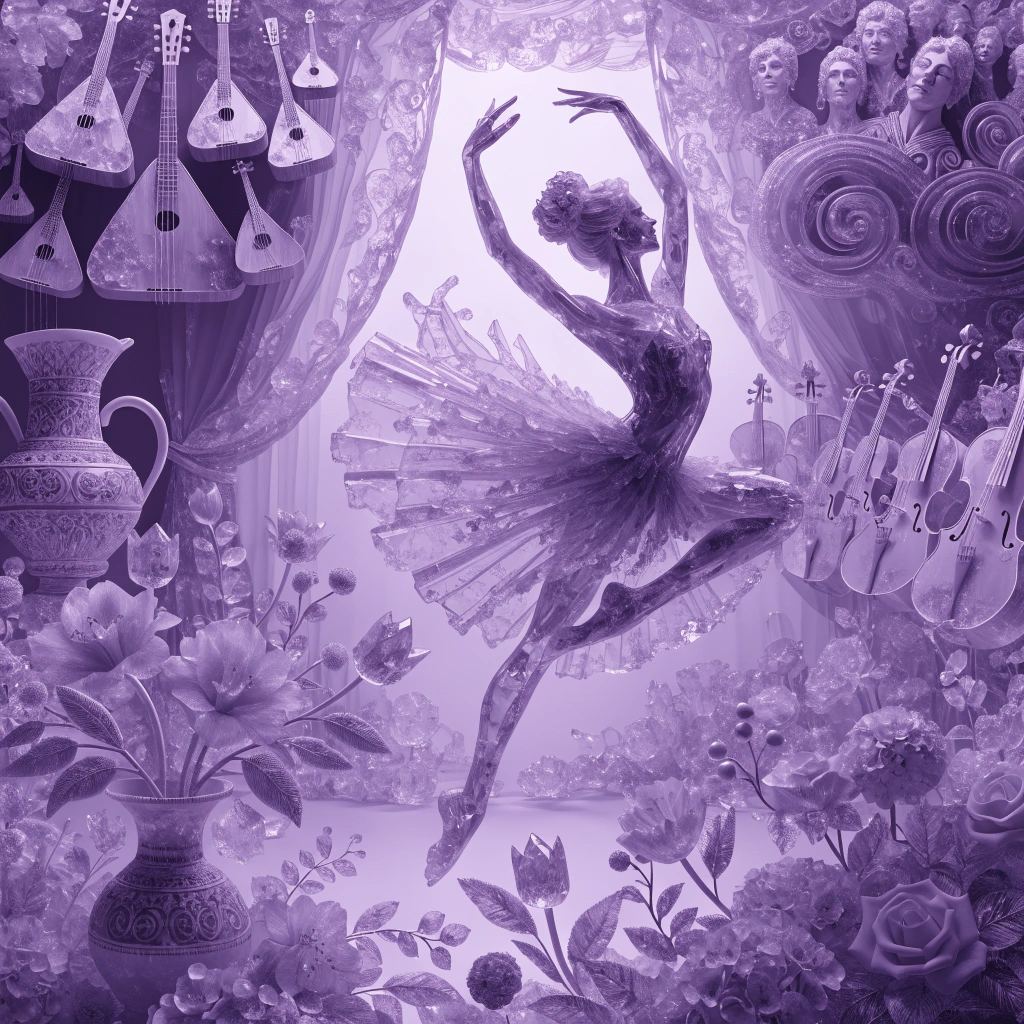
Beautiful Russian Ballet
Russian ballet is very famous. It is an old and beautiful dance. Many people in Russia like ballet. They go to big theaters to see the dancers.
The dancers wear beautiful clothes. They move very fast and jump high. They tell stories with their bodies. Some stories are about kings and queens.
Young children start ballet school early. They practice every day. They want to be great dancers. Russian ballet is special because it is very strong and elegant. People from all over the world come to watch it.
Grammar Spotlight
Pattern: Present Simple (to be)
"Russian ballet is very famous."
We use 'is' with singular subjects like 'ballet'. This pattern is used to describe facts or characteristics.
Pattern: Present Simple (Regular Verbs)
"They practice every day."
For the subject 'they', we use the base form of the verb. This shows a regular habit or routine.
Test Your Understanding
10 questions · A1 Beginner · 1 free preview
Test what you learned from this article. Answer all questions to earn XP!
Where do people go to see ballet?
Want to finish the quiz?
9 more questions are waiting for you. Sign up free to unlock the full quiz and earn XP!
Sign Up FreeAlready have an account? Sign In
Question Breakdown
Where do people go to see ballet?
Your answer:
Correct answer: To big theaters
The dancers wear beautiful clothes.
Your answer:
Correct answer: True
What is a theater?
Your answer:
Correct answer: A place to watch shows
Russian ballet is very _____.
Your answer:
Correct answer: famous
The Magic of Russian Ballet
Russian ballet is very famous around the world. It started many years ago. Peter the Great brought ballet to Russia from Europe because he wanted to change his country. At first, ballet was only for rich people, but later it became popular for everyone.
In the 19th century, Russian ballet became better than ballet in other countries. A man named Marius Petipa was a great teacher and choreographer. He created many famous dances. The composer Peter Tchaikovsky wrote beautiful music for 'Swan Lake' and 'The Nutcracker.' This music is more famous than many other songs today.
Today, people visit the Bolshoi Theater in Moscow and the Mariinsky Theater in St. Petersburg. These buildings are very big and beautiful. Many people travel to Russia to see the dancers because they are the best in the world. The dancers are very strong and they practice for many hours every day. Russian ballet is a special part of history.
Grammar Spotlight
Pattern: Past Simple
"Peter the Great brought ballet to Russia from Europe because he wanted to change his country."
We use the past simple to talk about finished actions in the past. Regular verbs like 'wanted' end in -ed, while irregular verbs like 'brought' change their form.
Pattern: Comparatives
"Russian ballet became better than ballet in other countries."
We use comparatives to compare two different things. For the word 'good', the comparative form is 'better', and we usually use the word 'than' after it.
Test Your Understanding
11 questions · A2 Elementary · 1 free preview
Test what you learned from this article. Answer all questions to earn XP!
Who originally brought ballet to Russia?
Want to finish the quiz?
10 more questions are waiting for you. Sign up free to unlock the full quiz and earn XP!
Sign Up FreeAlready have an account? Sign In
Question Breakdown
Who originally brought ballet to Russia?
Your answer:
Correct answer: Peter the Great
Ballet was only for rich people at the very beginning in Russia.
Your answer:
Correct answer: True
What does the word 'practice' mean?
Your answer:
Correct answer: To do something many times to improve
Many people travel to Russia to see the dancers because they are the _____ in the world.
Your answer:
Correct answer: best
In which city is the Mariinsky Theater located?
Your answer:
Correct answer: St. Petersburg
The Magic of Russian Ballet
Russian ballet is often called the pinnacle of classical dance. It is a beautiful art form that has been part of Russian culture for centuries. Although it was first brought from Western Europe, it has grown into something unique. Many people believe that Russian dancers show a level of technical precision that is difficult to find anywhere else.
In the 18th century, ballet was introduced by Peter the Great because he wanted to modernize the country. However, it was during the 19th century that Russian ballet reached its zenith. This was the time when famous pieces like "Swan Lake" and "The Nutcracker" were created. These ballets were written by Peter Tchaikovsky, who is a composer known for his emotional music. The stories are told through movement rather than words, which makes them easy for international audiences to understand.
Today, the training that Russian dancers receive is very strict. This discipline is what makes their movements so perfect. The Bolshoi Theatre in Moscow and the Mariinsky Theatre in St. Petersburg are places where this legacy is kept alive. These theaters have been visited by millions of people who love the arts. Many famous dancers have trained in these schools for years before they were allowed to perform on the big stage.
Russian ballet is not just about the past. New choreographers are still creating modern shows that combine tradition with new ideas. This mix of technical skill and storytelling ensures that the stage will always be full of magic. If you have ever seen a performance, you will understand why Russian ballet remains so famous worldwide. It continues to inspire artists and students from every corner of the globe.
Grammar Spotlight
Pattern: Present Perfect Passive
"These theaters have been visited by millions of people who love the arts."
This pattern is used to talk about an action that happened at an unspecified time in the past and is still relevant. It is formed using 'have/has + been + past participle'.
Pattern: Relative Clauses
"These ballets were written by Peter Tchaikovsky, who is a composer known for his emotional music."
Relative clauses provide extra information about a noun. Here, 'who' introduces more details about the composer Tchaikovsky.
Test Your Understanding
11 questions · B1 Intermediate · 1 free preview
Test what you learned from this article. Answer all questions to earn XP!
Who introduced ballet to Russia in the 18th century?
Want to finish the quiz?
10 more questions are waiting for you. Sign up free to unlock the full quiz and earn XP!
Sign Up FreeAlready have an account? Sign In
Question Breakdown
Who introduced ballet to Russia in the 18th century?
Your answer:
Correct answer: Peter the Great
Russian ballet reached its most successful period during the 19th century.
Your answer:
Correct answer: True
What does 'zenith' mean in the context of the article?
Your answer:
Correct answer: The highest point of success
The stories in Russian ballets are told through _____ rather than words.
Your answer:
Correct answer: movement
Where is the Mariinsky Theatre located?
Your answer:
Correct answer: St. Petersburg
The Grand Legacy of Russian Ballet: A Fusion of Tradition and Precision
Russian ballet is widely considered the pinnacle of classical dance, representing a legacy of technical precision and emotional storytelling that has shaped the world stage for centuries. Although ballet was originally imported from Western Europe during the reign of Peter the Great as part of his modernization efforts, it was in Russia that the art form reached its zenith. During the 19th century, the Imperial Russian Ballet transformed from a royal pastime into a sophisticated discipline that combined athletic prowess with profound artistic expression.
Under the guidance of legendary choreographers like Marius Petipa, who transformed the art form into a structured spectacle, Russian ballet reached its golden age. Petipa’s collaboration with the composer Pyotr Ilyich Tchaikovsky resulted in iconic masterpieces such as "Swan Lake," "The Sleeping Beauty," and "The Nutcracker." These works are characterized by their meticulous choreography and complex narratives, setting a standard for excellence that remains unsurpassed today. The level of detail in these productions required dancers to undergo rigorous training, leading to the development of specific teaching styles.
Central to this excellence is the Vaganova method, a training system established by Agrippina Vaganova in the early 20th century. This method emphasizes the harmonious movement of the entire body, blending the grace of French ballet with the strength of the Italian school. Consequently, Russian dancers became famous for their expressive upper bodies and powerful jumps. This prestigious training continues at institutions like the Bolshoi Ballet Academy in Moscow and the Vaganova Academy in St. Petersburg, where students dedicate their lives to mastering the craft.
Today, Russian ballet remains a vital part of the country’s cultural identity. The Bolshoi and Mariinsky theaters are not merely venues; they are symbols of a national heritage that has survived political upheavals and social changes. While modern styles have emerged, the core principles of discipline and precision continue to define the Russian school. Ultimately, the legacy of Russian ballet is not found only in its history, but in the ongoing dedication of performers who strive for perfection on stage every night.
Grammar Spotlight
Pattern: Passive Voice
"Ballet was originally imported from Western Europe during the reign of Peter the Great."
The passive voice is used here to focus on the action (ballet being imported) rather than the person who did it. It is formed using the verb 'to be' plus the past participle.
Pattern: Present Perfect Simple
"Russian ballet has shaped the world stage for centuries."
The present perfect is used to describe an action that started in the past and continues to have an effect or relevance in the present. It is formed with 'has/have' and the past participle.
Pattern: Relative Clauses
"Under the guidance of legendary choreographers like Marius Petipa, who transformed the art form into a structured spectacle..."
The relative pronoun 'who' introduces a non-defining relative clause, providing extra information about Marius Petipa. It adds complexity and detail to the sentence structure.
Test Your Understanding
11 questions · B2 Upper Intermediate · 1 free preview
Test what you learned from this article. Answer all questions to earn XP!
What was the primary reason ballet was introduced to Russia?
Want to finish the quiz?
10 more questions are waiting for you. Sign up free to unlock the full quiz and earn XP!
Sign Up FreeAlready have an account? Sign In
Question Breakdown
What was the primary reason ballet was introduced to Russia?
Your answer:
Correct answer: As part of modernization efforts by Peter the Great
The Vaganova method focuses exclusively on leg strength and ignores the upper body.
Your answer:
Correct answer: False
What does 'meticulous' mean in the context of the article?
Your answer:
Correct answer: Extremely careful and precise
Petipa’s _____ with Tchaikovsky resulted in iconic masterpieces like Swan Lake.
Your answer:
Correct answer: collaboration
Which two cities are mentioned as homes to prestigious ballet academies?
Your answer:
Correct answer: Moscow and St. Petersburg
The Imperial Legacy: A Critical Appraisal of Russian Ballet’s Artistic Dominance
It was through the relentless pursuit of aesthetic perfection that the Imperial Russian Ballet carved its indelible name into the annals of global cultural history. While the origins of ballet are undeniably rooted in the courts of Western Europe, particularly France and Italy, its subsequent evolution within the Russian context represents a unique synthesis of imported elegance and indigenous emotional depth. Not until the reign of Peter the Great did the seeds of this art form find fertile soil in Russia, as part of his broader, sweeping project of Westernization. However, what began as an aristocratic imitation soon burgeoned into a national obsession, eventually reaching its zenith during the late 19th century under the meticulous stewardship of Marius Petipa.
Seldom has an imported art form so thoroughly permeated the cultural fabric of a nation as ballet did in Russia. The institutionalization of classical training, most notably through the establishment of the Imperial Ballet School, allowed for a refinement of technique that surpassed its European predecessors. This period saw the creation of what many consider the pinnacle of classical dance: the 'ballet blanc' and the grand spectacles of Swan Lake and The Sleeping Beauty. The collaboration between Petipa’s choreographic genius and Tchaikovsky’s melodic grandeur facilitated a transformation of ballet from mere divertissement into a cohesive, narrative-driven art form. The preservation of these traditions became a matter of national pride, ensuring that the technical rigour of the Russian school remained unchallenged for decades.
Central to the Russian style is the Vaganova method, a pedagogical system that emphasizes the harmonious movement of the entire body. It is this holistic approach that grants Russian dancers their characteristic virtuosity—a blend of athletic prowess and lyrical grace. Yet, to view Russian ballet solely through the lens of technique would be to overlook its profound emotional resonance. The dancers are taught that every gesture must be an embodiment of the character’s internal struggle, a nuance that distinguishes a mere performer from a true artist. This commitment to storytelling remains the bedrock of the Bolshoi and Mariinsky theaters, even as they navigate the complexities of the modern era.
In the contemporary landscape, the challenge lies in balancing the weight of tradition with the necessity for innovation. While some critics argue that the strict adherence to 19th-century canons stifles creativity, others maintain that the preservation of classical integrity is essential in an increasingly fragmented artistic world. The ephemeral nature of dance makes this debate particularly poignant; a performance exists only in the moment, yet the legacy of Russian ballet seeks a form of immortality. Ultimately, the enduring appeal of this art form lies in its ability to transcend linguistic barriers, offering a universal language of movement that continues to captivate audiences worldwide. Whether through the preservation of the classics or the exploration of avant-garde collaborations, the Russian school remains the benchmark against which all other balletic achievements are measured.
Grammar Spotlight
Pattern: Cleft Sentences
"It was through the relentless pursuit of aesthetic perfection that the Imperial Russian Ballet carved its indelible name into the annals of global cultural history."
Cleft sentences are used to focus on a specific part of the sentence. They start with 'It is/was' followed by the focused element and a relative clause.
Pattern: Inversion
"Seldom has an imported art form so thoroughly permeated the cultural fabric of a nation as ballet did in Russia."
Negative or restrictive adverbs like 'seldom' trigger inversion of the subject and auxiliary verb to add emphasis and formality.
Pattern: Nominalization
"The institutionalization of classical training allowed for a refinement of technique that surpassed its European predecessors."
Nominalization involves turning verbs or adjectives into nouns (e.g., 'institutionalize' to 'institutionalization'). This is common in C1 academic writing to create a more objective and sophisticated tone.
Test Your Understanding
12 questions · C1 Advanced · 1 free preview
Test what you learned from this article. Answer all questions to earn XP!
What does the author suggest about the origin of Russian ballet?
Want to finish the quiz?
11 more questions are waiting for you. Sign up free to unlock the full quiz and earn XP!
Sign Up FreeAlready have an account? Sign In
Question Breakdown
What does the author suggest about the origin of Russian ballet?
Your answer:
Correct answer: It was a synthesis of European roots and Russian emotional depth.
The Vaganova method focuses primarily on isolated leg movements rather than the whole body.
Your answer:
Correct answer: False
What does 'ephemeral' mean in the context of the article?
Your answer:
Correct answer: Lasting for a very short time
The collaboration between Petipa and Tchaikovsky transformed ballet into a cohesive, _____-driven art form.
Your answer:
Correct answer: narrative
According to the text, what is a current challenge for Russian ballet?
Your answer:
Correct answer: Balancing historical tradition with modern innovation.
Peter the Great introduced ballet as part of a wider modernization effort.
Your answer:
Correct answer: True
The Apotheosis of the Ethereal: A Scholarly Inquiry into the Hegemony of Russian Ballet
The historical genealogy of Russian ballet is often erroneously characterized as a spontaneous eruption of national genius, yet a more nuanced interrogation reveals a complex tapestry of exogenous influences and indigenous refinement. While the Petrine reforms of the early 18th century initially facilitated the importation of Western European aesthetic paradigms to the Russian court, it was the subsequent century that witnessed the crystallization of a distinctly Russian idiom. Under the aegis of Marius Petipa, the synthesis of French elegance and Italian virtuosity was subsumed into a grander, more emotive narrative structure, effectively establishing a hegemony over the global dance landscape that persists to this day. Should the observer deign to scrutinize the historical trajectory of this art form, they would inevitably encounter a narrative of profound cultural synthesis where the technical rigor of the West met the soulful expansiveness of the East.
Rarely has an imported art form so thoroughly eclipsed its progenitors as ballet did within the Russian imperial milieu. By the mid-19th century, the Imperial Ballet in St. Petersburg had become the crucible for what we now recognize as the 'classical' canon. The collaboration between Petipa and Pyotr Ilyich Tchaikovsky represented the zenith of this era, producing works such as 'The Sleeping Beauty' and 'Swan Lake.' These productions were not merely entertainments but were high-art manifestations of imperial sovereignty, where the precision of the corps de ballet mirrored the idealized order of the state. However, it is imperative that the scholar recognize the Vaganova method not merely as a pedagogical framework, but as a philosophical gestalt. Agrippina Vaganova’s codification of movement in the early Soviet period ensured that the technical excellence of the imperial era survived the ideological shifts of the 20th century, inextricably linking the past with the present.
Furthermore, the advent of the Ballets Russes under Sergei Diaghilev marked a radical departure from traditionalism, introducing an avant-garde sensibility that would revolutionize the Western world's perception of dance. This era prioritized the 'Gesamtkunstwerk'—a total work of art—where music, set design, and choreography were integrated into a singular, cohesive expression. Despite the transience and evanescence of individual performances, the structural impact of the Russian school remains the pinnacle of classical training. One might tentatively assert that the preponderance of Russian-trained dancers in contemporary global companies is a testament to the enduring efficacy of their methods. Even as modernism challenges the conventions of the proscenium arch, the Russian legacy remains the foundational paradigm against which all other classical endeavors are measured. It is through this lens of continuous reinvention and rigorous preservation that the Russian ballet maintains its status as the quintessential expression of human physical capability.
Grammar Spotlight
Pattern: Inverted Conditional
"Should the observer deign to scrutinize the historical trajectory of this art form, they would inevitably encounter a narrative of profound cultural synthesis."
This structure replaces 'If the observer should deign...' with an inverted form for formal, academic emphasis. It is used to present a hypothetical situation with a high degree of literary sophistication.
Pattern: Negative Inversion
"Rarely has an imported art form so thoroughly eclipsed its progenitors as ballet did within the Russian imperial milieu."
When a negative or restrictive adverbial (like 'rarely') starts a sentence, the auxiliary verb and subject are inverted. This is used in C2 level writing to emphasize the exceptional nature of the statement.
Pattern: The Subjunctive Mood
"However, it is imperative that the scholar recognize the Vaganova method not merely as a pedagogical framework, but as a philosophical gestalt."
The base form of the verb 'recognize' (without 's') is used following adjectives of urgency or importance like 'imperative.' It reflects a formal requirement or a necessary state of mind.
Test Your Understanding
12 questions · C2 Mastery · 1 free preview
Test what you learned from this article. Answer all questions to earn XP!
What is the primary thesis regarding the origin of Russian ballet according to the text?
Want to finish the quiz?
11 more questions are waiting for you. Sign up free to unlock the full quiz and earn XP!
Sign Up FreeAlready have an account? Sign In
Question Breakdown
What is the primary thesis regarding the origin of Russian ballet according to the text?
Your answer:
Correct answer: It was a complex synthesis of foreign influences and local refinement.
The text suggests that the Vaganova method was abandoned during the Soviet era.
Your answer:
Correct answer: False
Which word describes the quality of being fleeting or vanishing quickly?
Your answer:
Correct answer: Evanescence
The collaboration between Petipa and Tchaikovsky represented the _____ of the 19th-century era.
Your answer:
Correct answer: zenith
What does the term 'Gesamtkunstwerk' refer to in the context of the Ballets Russes?
Your answer:
Correct answer: An integrated work of art combining music, design, and dance.
The article asserts that Russian ballet methods still influence modern global dance companies.
Your answer:
Correct answer: True
