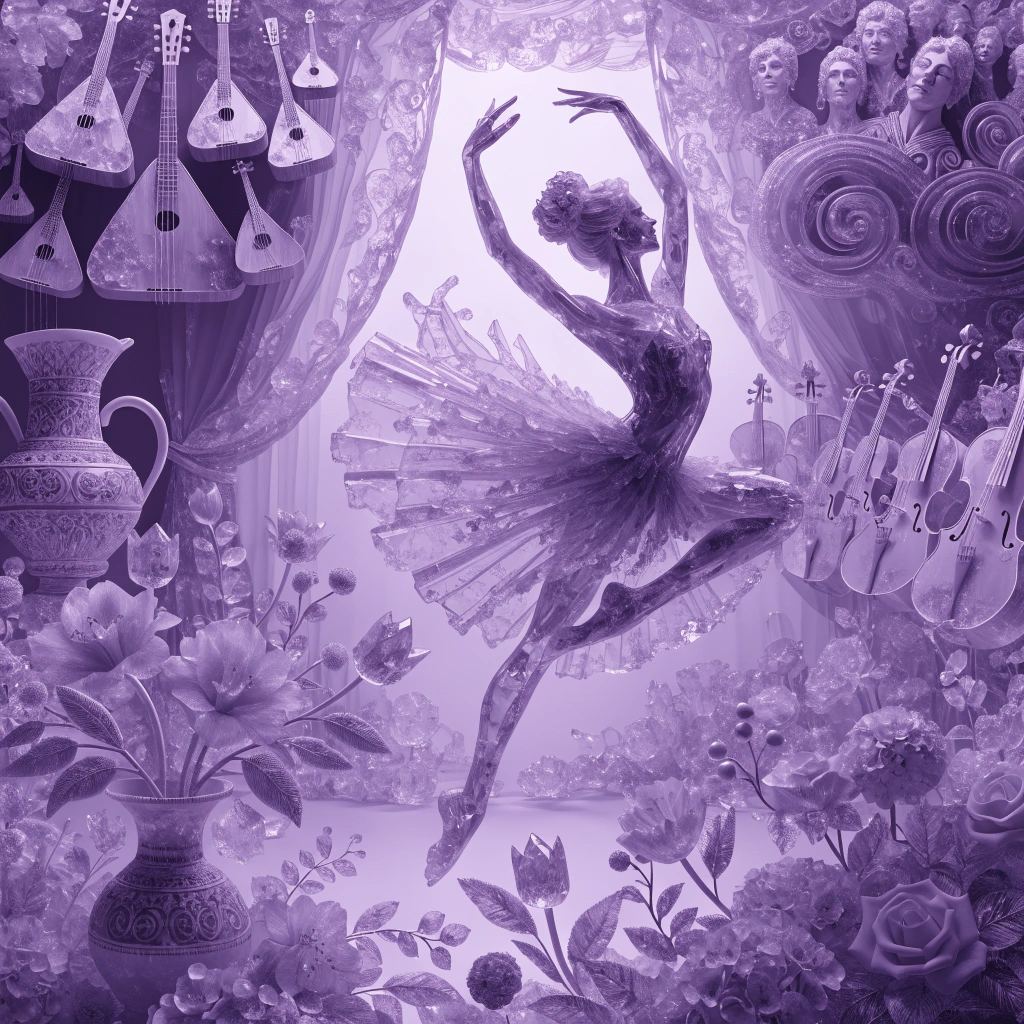
The Balalaika: A Russian Instrument
The balalaika is a famous musical instrument from Russia. It has a triangular body. It has three strings. It is very old. Many people in Russia like this instrument.
In the past, farmers played the balalaika. They played music for folk songs and dances. Today, many people play it in a big orchestra. An orchestra has many musicians. Some balalaikas are small and some are very large.
The music is happy and fast. People listen to the music and dance. The balalaika is a symbol of Russian culture.
Grammar Spotlight
Pattern: Present Simple with 'to be'
"The balalaika is a famous musical instrument from Russia."
We use 'is' for singular subjects to describe facts. It tells us what something is or where it is from.
Pattern: Adjectives before Nouns
"It has a triangular body."
In English, we put the describing word (adjective) before the naming word (noun). 'Triangular' describes the 'body'.
Test Your Understanding
10 questions · A1 Beginner · 1 free preview
Test what you learned from this article. Answer all questions to earn XP!
How many strings does a balalaika have?
Want to finish the quiz?
9 more questions are waiting for you. Sign up free to unlock the full quiz and earn XP!
Sign Up FreeAlready have an account? Sign In
Question Breakdown
How many strings does a balalaika have?
Your answer:
Correct answer: Three
The balalaika comes from Russia.
Your answer:
Correct answer: True
What is an orchestra?
Your answer:
Correct answer: A group of musicians
The balalaika has a _____ body.
Your answer:
Correct answer: triangular
The Balalaika: A Famous Russian Instrument
The balalaika is a very famous musical instrument from Russia. It has a special triangular body and three strings. In the past, Russian peasants played this instrument in small villages. They used it for folk songs and traditional dances. It was a very important part of rural life.
In the 18th century, the balalaika became popular because it was easy to build. Musicians called 'skomorokhi' traveled from town to town. They played music and told stories to people. At first, the instruments were many different sizes. Some were small and some were bigger than a person!
Later, a musician named Vasily Andreev changed the balalaika. He wanted to make it better for big orchestras. Today, many people play the balalaika together in large folk orchestras. These orchestras are louder and more exciting than a single player. People all over the world love the unique sound of this Russian symbol. It is now more popular than it was in the past.
Grammar Spotlight
Pattern: Past Simple
"In the past, Russian peasants played this instrument in small villages."
We use the past simple to talk about finished actions in the past. To form it for regular verbs like 'play', we add '-ed' to the end of the verb.
Pattern: Comparatives
"These orchestras are louder and more exciting than a single player."
We use comparatives to compare two things. For short adjectives like 'loud', we add '-er'. For longer adjectives like 'exciting', we use 'more' before the word.
Test Your Understanding
11 questions · A2 Elementary · 1 free preview
Test what you learned from this article. Answer all questions to earn XP!
What shape is the body of a balalaika?
Want to finish the quiz?
10 more questions are waiting for you. Sign up free to unlock the full quiz and earn XP!
Sign Up FreeAlready have an account? Sign In
Question Breakdown
What shape is the body of a balalaika?
Your answer:
Correct answer: Triangular
The balalaika has five strings.
Your answer:
Correct answer: False
What does 'unique' mean?
Your answer:
Correct answer: The only one of its kind
The balalaika became popular because it was easy to _____.
Your answer:
Correct answer: build
Who changed the balalaika to make it better for orchestras?
Your answer:
Correct answer: Vasily Andreev
The Magic of the Balalaika: Russia’s Heart and Soul
The balalaika is a famous musical instrument that represents the spirit of Russia. It is easily recognized because of its unique triangular body and three strings. For centuries, this instrument has been an important part of rural life. Originally, it was played by peasants and wandering minstrels, known as skomorokhi, who used it to accompany traditional songs and dances.
The history of the balalaika is very interesting. In the 18th century, the instruments were often handmade and varied in size. However, the modern version of the balalaika was developed in the late 19th century by Vasily Andreyev. He was a talented musician who wanted to bring folk music to the grand concert halls. Because of his hard work, the first Russian folk orchestra was formed in St. Petersburg.
Today, the balalaika is produced in five different sizes, from the small prima to the huge contrabass. The largest one is so big that it must rest on the floor. Although the balalaika has only three strings, a skilled musician can create a wide range of beautiful sounds. Many people around the world have discovered the energetic rhythm of Russian folk music through these performances.
The balalaika remains a symbol of national identity. It shows how traditional music, which started in small villages, can become a professional art form that is loved by everyone.
Grammar Spotlight
Pattern: Passive Voice
"the modern version of the balalaika was developed in the late 19th century"
The passive voice is used when the action is more important than the person doing it. It is formed with the verb 'to be' and the past participle.
Pattern: Relative Clauses
"He was a talented musician who wanted to bring folk music to the grand concert halls."
Relative clauses give more information about a person or thing. We use 'who' for people and 'which' or 'that' for objects.
Test Your Understanding
11 questions · B1 Intermediate · 1 free preview
Test what you learned from this article. Answer all questions to earn XP!
What is the most recognizable physical feature of the balalaika?
Want to finish the quiz?
10 more questions are waiting for you. Sign up free to unlock the full quiz and earn XP!
Sign Up FreeAlready have an account? Sign In
Question Breakdown
What is the most recognizable physical feature of the balalaika?
Your answer:
Correct answer: A triangular body
The balalaika was originally played by wealthy aristocrats.
Your answer:
Correct answer: False
What does 'rural' mean?
Your answer:
Correct answer: Related to the countryside
The largest size of balalaika is called the _____.
Your answer:
Correct answer: contrabass
Who is responsible for developing the modern balalaika and the first folk orchestra?
Your answer:
Correct answer: Vasily Andreyev
The Strings of Tradition: The Evolution of the Russian Balalaika
The balalaika, characterized by its unique triangular frame and three-stringed configuration, serves as a quintessential emblem of Russian cultural heritage. Although its exact origins remain somewhat shrouded in historical ambiguity, it is widely acknowledged to have emerged during the 18th century as a modest instrument for rural entertainment. Originally, these instruments were handcrafted by peasants and wandering minstrels known as skomorokhi, who utilized them to accompany traditional dances and folk songs. The triangular shape, which is now iconic, was likely adopted because it was significantly easier to construct using simple wooden planks compared to the curved bodies of other stringed instruments. This pragmatic design allowed the instrument to proliferate across the vast Russian countryside, becoming a staple of communal life.
The balalaika's transformation from a rustic pastime to a sophisticated orchestral instrument was neither rapid nor inevitable. It required the visionary efforts of musicians like Vasily Andreyev, who recognized the latent potential within folk music during the late 19th century. Before Andreyev’s intervention, the balalaika lacked a standardized tuning and size, making it difficult for multiple musicians to perform together harmoniously. Andreyev meticulously refined the instrument’s design, creating a diverse family of balalaikas that ranged from the high-pitched prima to the resonant, deep-toned contrabass. This standardization was a pivotal moment in musical history, as it facilitated the formation of the first Great Russian Orchestra, which successfully integrated traditional folk melodies with the structural complexity of Western classical music.
Consequently, the orchestra began to gain international acclaim, performing in prestigious concert halls across Europe and America. This transition was not without its critics, some of whom argued that the raw, authentic spirit of folk music might be lost through such formalization. Nevertheless, Andreyev’s work ensured that Russian folk music was preserved and elevated to a professional status, rather than being forgotten as modernization swept through the rural districts. In the contemporary era, the balalaika is celebrated not merely as a historical relic but as a versatile tool for modern composition. Contemporary performers frequently demonstrate incredible virtuosity, pushing the boundaries of what was once considered a simple peasant lute. Whether it is used in a traditional folk setting or a modern experimental piece, the balalaika maintains its capacity to evoke profound emotional responses. Its enduring popularity serves as a testament to the resilience of cultural identity in an increasingly globalized world.
Grammar Spotlight
Pattern: Non-defining Relative Clause
"The triangular shape, which is now iconic, was likely adopted because it was significantly easier to construct..."
This pattern adds extra information about a noun (the shape) that is not essential to the sentence's basic meaning. It is separated by commas and uses 'which' for things.
Pattern: Passive Voice (Past Simple)
"Originally, these instruments were handcrafted by peasants and wandering minstrels..."
The passive voice is used here to focus on the action and the object (the instruments) rather than the subjects (peasants). It is formed using 'were' + past participle.
Pattern: Concessive Clause with Although
"Although its exact origins remain somewhat shrouded in historical ambiguity, it is widely acknowledged to have emerged during the 18th century..."
This structure is used to present a contrast or a surprising fact. It connects two ideas where the second part of the sentence happens despite the first part.
Test Your Understanding
11 questions · B2 Upper Intermediate · 1 free preview
Test what you learned from this article. Answer all questions to earn XP!
Why was the triangular shape of the balalaika likely chosen?
Want to finish the quiz?
10 more questions are waiting for you. Sign up free to unlock the full quiz and earn XP!
Sign Up FreeAlready have an account? Sign In
Question Breakdown
Why was the triangular shape of the balalaika likely chosen?
Your answer:
Correct answer: Because it was easier to build with simple planks.
Vasily Andreyev was opposed to the standardization of the balalaika.
Your answer:
Correct answer: False
What does 'virtuosity' mean in the context of the article?
Your answer:
Correct answer: Great skill in a musical pursuit.
The creation of a family of balalaikas was a _____ moment in musical history.
Your answer:
Correct answer: pivotal
What did critics of the Great Russian Orchestra argue?
Your answer:
Correct answer: The authentic spirit of folk music might be lost.
Resonance of the Steppe: The Balalaika’s Metamorphosis into the Russian Folk Orchestra
The balalaika, characterized by its distinctive triangular body and minimalist three-string configuration, stands as the quintessential emblem of Russian musical heritage. While its exact provenance remains shrouded in the mists of the 18th century, it is widely acknowledged that the instrument emerged from the rustic milieu of Slavic lutes. Initially, the balalaika was the domain of the skomorokhi—wandering minstrels whose satirical performances often drew the ire of both the clergy and the Tsarist authorities. For these itinerant performers, the instrument’s shape was likely a matter of pragmatic construction rather than complex acoustic theory, allowing for easy fabrication by rural artisans who lacked specialized tools.
Not until the late 19th century did the balalaika undergo a profound structural and social elevation. This transformation was spearheaded by Vasily Andreyev, a visionary nobleman whose fascination with folk traditions led him to refine the instrument’s design. It was Andreyev who recognized that for the balalaika to achieve legitimacy within the European classical tradition, it required a systematic standardization of its tuning and dimensions. Through his meticulous efforts, a family of balalaikas—ranging from the high-pitched prima to the cavernous contrabass—was developed, providing the harmonic foundation for the modern Russian folk orchestra. By introducing scientific principles to the construction process, Andreyev ensured that the balalaika could hold its own alongside the violin or cello.
The institutionalization of folk music was not without its critics. Some argued that the transition from spontaneous rural improvisation to the rigid structure of the concert hall stripped the music of its raw, emotive power. Nevertheless, the sophistication of Andreyev’s arrangements allowed Russian folk themes to transcend their regional origins and gain international acclaim. The subsequent proliferation of folk orchestras across the Soviet Union further solidified the balalaika's status, embedding it into the state’s cultural hegemony. This state-sponsored promotion of folk art served as a tool for nation-building, though it arguably sanitized the more subversive elements of traditional peasant culture.
The virtuosity required to master the balalaika is often underestimated by those unfamiliar with its technical demands. Despite having only three strings, the instrument possesses a remarkable resonance and a unique palette of percussive techniques. Modern performers continue to push the boundaries of the genre, blending traditional motifs with contemporary avant-garde elements. Ultimately, the balalaika’s journey from a humble peasant vestige to a sophisticated orchestral cornerstone serves as a testament to the enduring power of cultural pedigree and the relentless pursuit of artistic refinement.
Grammar Spotlight
Pattern: Negative Inversion
"Not until the late 19th century did the balalaika undergo a profound structural and social elevation."
When a sentence starts with a negative adverbial like 'Not until', the subject and auxiliary verb are inverted. This is used for emphasis and is common in formal C1-level writing.
Pattern: It-Cleft Sentence
"It was Andreyev who recognized that for the balalaika to achieve legitimacy within the European classical tradition, it required a systematic standardization."
Cleft sentences focus on a specific part of the sentence (the subject Andreyev) to emphasize their importance. It follows the structure: It + be + [emphasized part] + relative clause.
Pattern: Nominalisation
"The institutionalization of folk music was not without its critics."
Nominalisation involves turning verbs (institutionalize) into nouns (institutionalization). This creates a more academic and objective tone by focusing on concepts rather than actions.
Test Your Understanding
12 questions · C1 Advanced · 1 free preview
Test what you learned from this article. Answer all questions to earn XP!
What was the primary reason for Andreyev's standardization of the balalaika?
Want to finish the quiz?
11 more questions are waiting for you. Sign up free to unlock the full quiz and earn XP!
Sign Up FreeAlready have an account? Sign In
Question Breakdown
What was the primary reason for Andreyev's standardization of the balalaika?
Your answer:
Correct answer: To gain legitimacy within the classical music tradition
The skomorokhi were itinerant performers who were highly respected by the Russian church.
Your answer:
Correct answer: False
Which word describes a person's social environment or the setting in which something develops?
Your answer:
Correct answer: Milieu
The _____ of tuning and dimensions allowed for the creation of a full family of instruments.
Your answer:
Correct answer: standardization
How did critics view the transition of folk music to the concert hall?
Your answer:
Correct answer: They argued it stripped the music of its spontaneous emotive power
Modern balalaika performers often combine traditional themes with avant-garde elements.
Your answer:
Correct answer: True
Resonance and Reification: The Balalaika’s Metamorphosis into the Russian Symphonic Ideal
Seldom has a musical instrument been so inextricably linked to the collective psyche of a nation as the balalaika. With its distinctive triangular chassis and tripartite string configuration, it serves as a potent signifier of Russian cultural identity. Yet, to perceive the balalaika merely as a vestigial remnant of a bygone agrarian era is to overlook the sophisticated metamorphosis it underwent during the late 19th century. Originally the province of the skomorokhi—itinerant minstrels whose ribald performances often drew the ire of both church and state—the balalaika was initially a crude, vernacular tool for rhythmic accompaniment. These early iterations were often handmade, with varying dimensions and tunings that reflected the idiosyncratic nature of rural life. One might argue that the instrument’s ubiquity was a result of its structural simplicity, which allowed for ease of construction in the absence of specialized lutherie.
How then did a tool of the ribald skomorokhi ascend to the hallowed halls of the conservatory? The catalyst for this elevation was Vasily Andreyev, a visionary aristocrat whose obsession with the instrument prompted a radical reification of Russian folk music. Andreyev posited that the balalaika, if standardized and refined, could rival the Western violin in its expressive capacity. Were it not for Andreyev’s intervention, the instrument might have remained a peripheral curiosity of the pastoral landscape. Between 1880 and 1890, Andreyev collaborated with master luthiers to develop a family of balalaikas—from the diminutive prima to the gargantuan contrabass—thereby establishing a symphonic hierarchy within the folk idiom. This standardization necessitated the introduction of fixed frets and the use of high-quality resonant woods, shifting the instrument away from its rustic origins toward a new peak of technical virtuosity.
This transformation culminated in the founding of the Great Russian Orchestra, an ensemble that sought to synthesize the raw energy of the vernacular with the formal rigor of the European classical tradition. It is imperative that the researcher acknowledge the degree to which these ensembles were artificial constructs; they were not 'folk' in the sense of being spontaneous or unmediated, but were rather a sophisticated reimagining of national heritage. The orchestra achieved a unique timbre, characterized by the percussive attack of the balalaika and the lyrical sustain of the domra. This aesthetic synthesis allowed Russian musicians to assert a cultural hegemony that was distinctly Slavic, yet technically sophisticated enough to garner international acclaim. Should one examine the scores of this era, one would find a complex interplay of folk motifs and academic orchestration, a testament to the balalaika’s newfound status. Today, the instrument continues to navigate the interstice between tradition and modernity, embodying a national identity that is as much a product of 19th-century intellectualism as it is of ancient rural custom.
Grammar Spotlight
Pattern: Inversion after negative adverbials
"Seldom has a musical instrument been so inextricably linked to the collective psyche of a nation as the balalaika."
This pattern places a negative or limiting adverb at the start of a sentence for rhetorical emphasis, necessitating the inversion of the subject and auxiliary verb.
Pattern: Inverted Conditionals (Subjunctive)
"Were it not for Andreyev’s intervention, the instrument might have remained a peripheral curiosity of the pastoral landscape."
In formal writing, 'if' can be omitted by inverting the subject and the verb 'were'. This creates a more sophisticated, hypothetical tone common in academic analysis.
Pattern: Mandative Subjunctive
"It is imperative that the researcher acknowledge the degree to which these ensembles were artificial constructs."
Used after adjectives of urgency or importance (imperative, essential, crucial), the base form of the verb (acknowledge) is used regardless of the subject.
Test Your Understanding
12 questions · C2 Mastery · 1 free preview
Test what you learned from this article. Answer all questions to earn XP!
What was the primary role of the skomorokhi in the history of the balalaika?
Want to finish the quiz?
11 more questions are waiting for you. Sign up free to unlock the full quiz and earn XP!
Sign Up FreeAlready have an account? Sign In
Question Breakdown
What was the primary role of the skomorokhi in the history of the balalaika?
Your answer:
Correct answer: They were wandering performers who used the instrument for rhythmic accompaniment.
The Great Russian Orchestra was a spontaneous, unmediated expression of rural peasant culture.
Your answer:
Correct answer: False
Which word describes the unique quality or 'color' of a musical sound?
Your answer:
Correct answer: Timbre
Andreyev's work led to a radical _____ of the balalaika from a crude tool to a symphonic instrument.
Your answer:
Correct answer: reification
Why did Andreyev introduce fixed frets and high-quality woods to the balalaika?
Your answer:
Correct answer: To facilitate a higher level of technical virtuosity and orchestral standardization.
The balalaika family created by Andreyev ranged from the prima to the contrabass.
Your answer:
Correct answer: True
