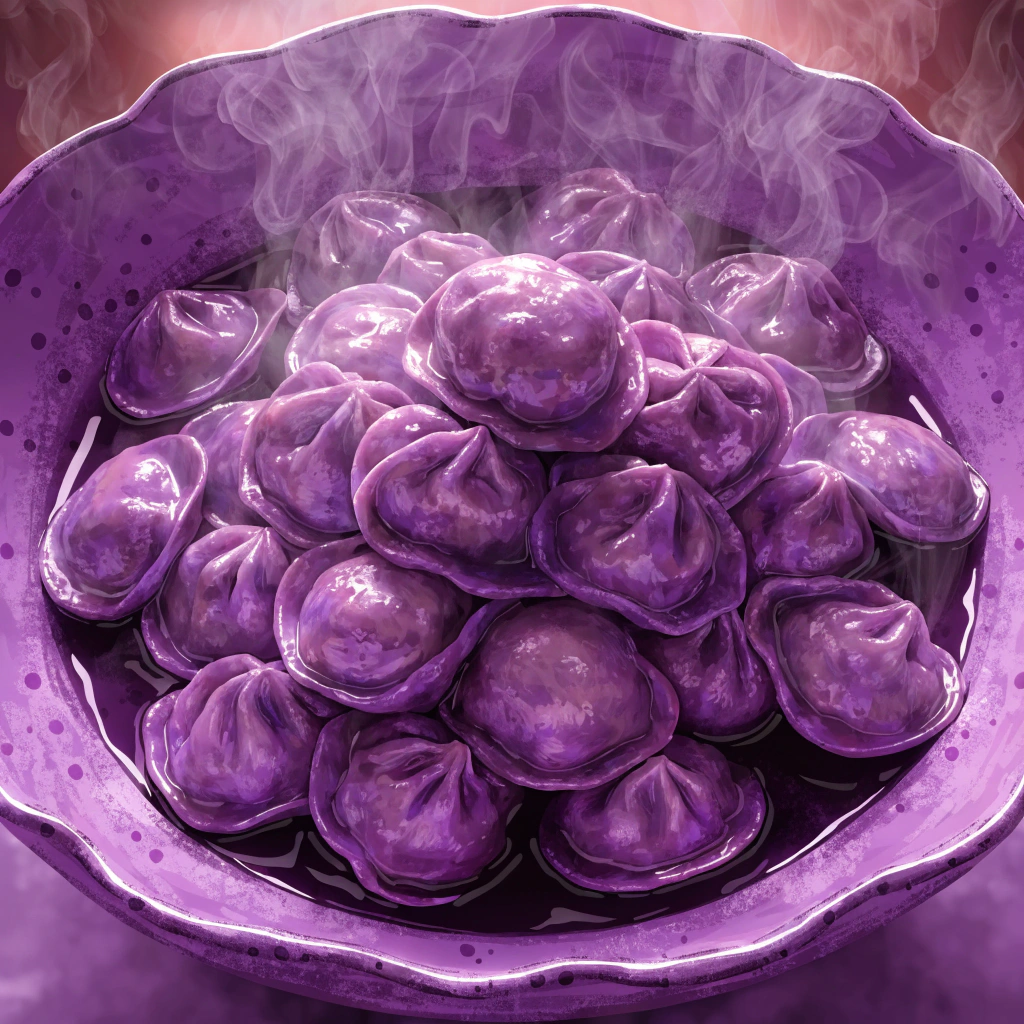
Pelmeni: Ein beliebtes Gericht aus Russland
Pelmeni sind ein sehr beliebtes Gericht aus Russland. Sie sind kleine Teigtaschen mit Fleischfüllung. Viele Familien essen Pelmeni gern, besonders im kalten Winter. Man kann Pelmeni kochen oder braten. Es ist ein einfaches und leckeres Essen für alle. In Russland macht man Pelmeni oft zusammen. Das ist eine schöne Tradition und bringt die Familie an einen Tisch. Pelmeni sind in ganz Russland bekannt und sehr populär. Manchmal gibt es Pelmeni auch mit Pilzen oder Gemüse. Sie sind ein gutes Essen für kalte Tage und geben viel Energie.
Grammatik-Spotlight
Muster: Das Verb 'sein' (Präsens)
"Pelmeni sind ein sehr beliebtes Gericht aus Russland."
Das Verb 'sein' ist sehr wichtig und unregelmäßig. Es bedeutet 'to be' auf Englisch. Wir benutzen es, um zu sagen, was etwas ist oder wer jemand ist. Zum Beispiel: 'Ich bin', 'Du bist', 'Er/Sie/Es ist', 'Wir sind', 'Ihr seid', 'Sie/sie sind'.
Muster: Zusammengesetzte Nomen
"Sie sind kleine Teigtaschen mit Fleischfüllung."
Im Deutschen kann man zwei oder mehr Nomen zu einem neuen Nomen verbinden. Das neue Nomen hat das Genus des letzten Wortes. Zum Beispiel: 'Teig' (der) + 'Tasche' (die) = 'die Teigtasche'.
Teste dein Verständnis
10 Fragen · A1 Anfänger · 1 kostenlose Vorschau
Teste, was du aus diesem Artikel gelernt hast. Beantworte alle Fragen und sammle XP!
Woher kommen Pelmeni?
Möchtest du das Quiz beenden?
9 weitere Fragen warten auf dich. Registriere dich kostenlos, um das vollständige Quiz freizuschalten und XP zu sammeln!
Kostenlos registrierenHast du schon ein Konto? Anmelden
Gut gemacht!
Weiter üben!
Bereits abgeschlossen — keine zusätzlichen XP
Registriere dich, um XP zu verdienenFragenübersicht
Woher kommen Pelmeni?
Deine Antwort:
Richtige Antwort: Aus Russland
Pelmeni sind große Teigtaschen.
Deine Antwort:
Richtige Antwort: Falsch
Was bedeutet 'Fleischfüllung'?
Deine Antwort:
Richtige Antwort: Fleisch in etwas anderem
Man kann Pelmeni kochen oder _____.
Deine Antwort:
Richtige Antwort: braten
Pelmeni: Russia's Favorite Comfort Food
Pelmeni are a very famous food in Russia. They are small dumplings with meat inside. Many people call them the national dish because everyone loves them. They are popular from the west to the east of the country.
Long ago, people in the Ural Mountains and Siberia started making pelmeni. These places are very cold in the winter. Hunters and travelers needed food that they could carry easily. Pelmeni were perfect because they stayed fresh in the snow for a long time. They were better than other foods because they did not go bad in the sub-zero temperatures.
To make them, you need dough and meat. Usually, the meat is beef or pork. You boil them in water and eat them with sour cream or butter. Some people also like to put vinegar on them.
Today, families often cook pelmeni together on the weekend. It is a fun activity because it takes a long time to make many dumplings. Pelmeni are delicious and they make people feel warm and happy.
Grammatik-Spotlight
Muster: Past Simple
"Hunters and travelers needed food that they could carry easily."
The past simple is used for finished actions in the past. To form regular verbs, we usually add '-ed' to the base verb.
Muster: Comparatives
"They were better than other foods because they did not go bad."
We use comparatives to compare two things. 'Better' is the irregular comparative form of the adjective 'good'.
Teste dein Verständnis
11 Fragen · A2 Grundkenntnisse · 1 kostenlose Vorschau
Teste, was du aus diesem Artikel gelernt hast. Beantworte alle Fragen und sammle XP!
Where did pelmeni originally come from?
Möchtest du das Quiz beenden?
10 weitere Fragen warten auf dich. Registriere dich kostenlos, um das vollständige Quiz freizuschalten und XP zu sammeln!
Kostenlos registrierenHast du schon ein Konto? Anmelden
Gut gemacht!
Weiter üben!
Bereits abgeschlossen — keine zusätzlichen XP
Registriere dich, um XP zu verdienenFragenübersicht
Where did pelmeni originally come from?
Deine Antwort:
Richtige Antwort: The Ural Mountains and Siberia
Pelmeni stayed fresh in the snow for a long time.
Deine Antwort:
Richtige Antwort: Richtig
What does 'boil' mean?
Deine Antwort:
Richtige Antwort: To cook in hot water
To make the outside of the dumpling, you need ____.
Deine Antwort:
Richtige Antwort: dough
What do people usually eat pelmeni with?
Deine Antwort:
Richtige Antwort: Sour cream or butter
Pelmeni: The Heart of Russian Comfort Food
Pelmeni have been a part of Russian culture for centuries. This traditional dish, which is often called the national food of Russia, originated in the Ural Mountains and the cold regions of Siberia. In the past, these small dumplings were essential for survival during the long, sub-zero winters.
The preparation of pelmeni is a social activity that brings families together. First, a thin dough is made from flour and water. Then, it is filled with a mixture of minced meat and spices. The dumplings are shaped into small circles, which are then frozen. In Siberia, pelmeni were traditionally kept outside because the natural temperature was cold enough to preserve them for months. This made them the perfect 'fast food' for hunters who needed to carry nutritious meals into the wilderness.
Pelmeni are usually boiled in salted water until they float to the surface. They are served with sour cream, butter, or even vinegar. While many people now buy frozen pelmeni from supermarkets, the best ones have always been handmade at home. In many Russian households, large batches are prepared during the weekend and stored for busy weekdays.
Today, pelmeni have gained popularity all over the world. They represent more than just a meal; they are a symbol of comfort and hospitality. Whether you are in a busy city like Moscow or a small village in the mountains, you will find that pelmeni are loved by everyone.
Grammatik-Spotlight
Muster: Passive Voice
"First, a thin dough is made from flour and water."
The passive voice is used when the action is more important than who is doing it. It is formed using the verb 'to be' and the past participle of the main verb.
Muster: Relative Clauses
"This traditional dish, which is often called the national food of Russia, originated in the Ural Mountains."
Relative clauses give more information about a noun. 'Which' is used for things, and 'who' is used for people.
Teste dein Verständnis
11 Fragen · B1 Mittelstufe · 1 kostenlose Vorschau
Teste, was du aus diesem Artikel gelernt hast. Beantworte alle Fragen und sammle XP!
Where did pelmeni originally come from?
Möchtest du das Quiz beenden?
10 weitere Fragen warten auf dich. Registriere dich kostenlos, um das vollständige Quiz freizuschalten und XP zu sammeln!
Kostenlos registrierenHast du schon ein Konto? Anmelden
Gut gemacht!
Weiter üben!
Bereits abgeschlossen — keine zusätzlichen XP
Registriere dich, um XP zu verdienenFragenübersicht
Where did pelmeni originally come from?
Deine Antwort:
Richtige Antwort: The Ural Mountains and Siberia
Hunters used pelmeni because they were easy to carry and healthy.
Deine Antwort:
Richtige Antwort: Richtig
What does 'nutritious' mean?
Deine Antwort:
Richtige Antwort: Good for your health and growth
Pelmeni are usually served with sour _____ or butter.
Deine Antwort:
Richtige Antwort: cream
How were pelmeni traditionally preserved in Siberia?
Deine Antwort:
Richtige Antwort: By keeping them outside in the cold
Pelmeni: The Siberian Culinary Legacy and its Cultural Resonance
Pelmeni are often hailed as the quintessential Russian comfort food, representing a culinary heritage that spans the vast expanse of the Eurasian continent. While many cultures possess their own variations of dumplings, the Russian pelmen is uniquely distinguished by its historical roots in the Ural Mountains and the harsh landscapes of Siberia. More than just a staple diet, these meat-filled dough pockets serve as a testament to human ingenuity in the face of extreme environmental challenges. They are widely regarded as the national dish that truly unites the country's diverse regions. Historically, the development of pelmeni was driven by sheer necessity. In the sub-zero temperatures of the Siberian wilderness, early inhabitants required a nutrient-dense food source that could be easily transported and preserved. The ingenious solution was to freeze the dumplings rapidly in the natural 'outdoor freezer' provided by the climate. This preservation technique allowed hunters and travelers to carry substantial provisions for months without the risk of spoilage. Consequently, pelmeni became the ultimate 'fast food' of the pre-industrial era, requiring only a pot of boiling water to transform frozen dough into a hearty meal. This efficiency made them indispensable for those traversing the treacherous Siberian terrain. The composition of pelmeni is deceptively simple, yet it demands a specific balance of ingredients and a meticulous preparation process. Traditionally, the filling consists of a blend of minced meats—typically beef, lamb, and pork—seasoned with salt, pepper, and occasionally onions. The dough must be rolled thin enough to be delicate, yet robust enough to withstand boiling without bursting. Despite the rise of mass-produced alternatives in modern supermarkets, the practice of hand-making pelmeni remains a cherished domestic tradition. It is not uncommon for families to gather during the winter months to prepare hundreds of dumplings simultaneously, fostering a sense of communal identity and continuity across generations. Furthermore, pelmeni carry a symbolic weight in Russian folklore that transcends their nutritional value. A popular tradition involves hiding a 'happy pelmen'—a dumpling containing a unique filling like a coin, a piece of dough, or an extra dash of pepper—within a large batch. The individual who discovers this special dumpling is said to be destined for good fortune or a successful year ahead. In contemporary society, while the pace of life has accelerated, the ritual of consuming pelmeni remains a constant. Ultimately, whether served with a dollop of sour cream, a splash of vinegar, or simply butter, pelmeni represent the enduring intersection of geography, history, and social cohesion in Russian life. They remain a profound symbol of hospitality and resilience.
Grammatik-Spotlight
Muster: Passive Voice
"Pelmeni are often hailed as the quintessential Russian comfort food."
The passive voice is used here to focus on the dish (pelmeni) rather than the people who hail it. It is formed using the verb 'to be' followed by the past participle of the main verb.
Muster: Reduced Relative Clause (Participle Clause)
"...the natural 'outdoor freezer' provided by the climate."
This structure uses a past participle ('provided') to act like an adjective, replacing 'which was provided'. It makes the writing more concise and formal, suitable for B2 academic styles.
Muster: Defining Relative Clauses
"The individual who discovers this special dumpling is said to be destined for good fortune."
This clause identifies exactly which person the writer is talking about. It uses the relative pronoun 'who' to provide essential information about the subject.
Teste dein Verständnis
11 Fragen · B2 Obere Mittelstufe · 1 kostenlose Vorschau
Teste, was du aus diesem Artikel gelernt hast. Beantworte alle Fragen und sammle XP!
What was the primary reason for the rapid freezing of pelmeni in Siberia?
Möchtest du das Quiz beenden?
10 weitere Fragen warten auf dich. Registriere dich kostenlos, um das vollständige Quiz freizuschalten und XP zu sammeln!
Kostenlos registrierenHast du schon ein Konto? Anmelden
Gut gemacht!
Weiter üben!
Bereits abgeschlossen — keine zusätzlichen XP
Registriere dich, um XP zu verdienenFragenübersicht
What was the primary reason for the rapid freezing of pelmeni in Siberia?
Deine Antwort:
Richtige Antwort: To allow for long-term preservation during travel
Pelmeni are traditionally made with only one type of meat.
Deine Antwort:
Richtige Antwort: Falsch
What does 'ingenuity' mean in the context of the article?
Deine Antwort:
Richtige Antwort: Cleverness and inventiveness
The composition of pelmeni is _____ simple, but it requires a careful balance of ingredients.
Deine Antwort:
Richtige Antwort: deceptively
What does the 'happy pelmen' tradition signify?
Deine Antwort:
Richtige Antwort: A sign of future good fortune
The Culinary Tapestry of the North: The Enduring Legacy of Russian Pelmeni
Seldom does a single dish encapsulate the vast, multi-faceted identity of a nation as effectively as the pelmen. Often heralded as the quintessential Russian comfort food, these modest-looking dumplings represent far more than a mere staple of the national diet; they are a testament to human ingenuity in the face of environmental adversity. Originating in the Ural Mountains and the frozen expanses of Siberia, pelmeni were born out of a desperate necessity for sustenance that could withstand the brutal sub-zero temperatures. Historically, the preservation of meat within a thin layer of unleavened dough allowed hunters and nomadic tribes to carry nutrient-dense provisions across the taiga, where the natural environment served as a perpetual deep-freeze.
It is the simplicity of the dough that belies the complexity of the cultural rituals surrounding its creation. While the recipe may appear straightforward—flour, water, and occasionally eggs—the meticulous preparation of the filling reflects the historical availability of various livestock. Traditionally, a blend of beef, lamb, and pork was utilized, seasoned sparingly with salt and black pepper to avoid masking the natural flavors. This combination was not arbitrary; rather, it was a deliberate effort to balance fat content and texture, ensuring that the dumplings remained succulent even after months of storage. Not only did these frozen parcels provide essential nourishment, but they also served as a precursor to modern convenience foods, requiring only a pot of boiling water to transform from a frozen stone into a steaming meal.
Furthermore, the communal aspect of pelmeni production cannot be overstated. In rural Russian households, the 'pelmenniy vecher' (pelmeni evening) remains a vital tradition, facilitating the perpetuation of family bonds through shared labor. It is during these long winter evenings that generations gather around the kitchen table, engaged in the rhythmic folding of hundreds, if not thousands, of dumplings. The sheer ubiquity of this practice across such a sprawling territory has fostered a sense of national cohesion, bridging the gap between the European and Asian halves of the country.
In contemporary Russia, the versatility of the pelmen has allowed it to transcend its humble origins. While purists argue that they should only be served with a dollop of smetana (sour cream) or a splash of vinegar, modern culinary reinterpretations have seen them paired with everything from mushroom broths to spicy infusions. However, despite these innovations, the indispensable nature of the traditional recipe remains unchallenged. The enduring popularity of pelmeni lies in their ability to evoke a sense of home and history, proving that even in a rapidly globalizing world, the most resilient cultural markers are often those found on the dinner plate. Ultimately, the story of the pelmen is a narrative of survival, adaptation, and the profound power of communal tradition.
Grammatik-Spotlight
Muster: Negative Inversion
"Seldom does a single dish encapsulate the vast, multi-faceted identity of a nation as effectively as the pelmen."
Used for emphasis at the beginning of a sentence. When a negative or restrictive adverbial (like 'seldom') starts the sentence, the auxiliary verb comes before the subject.
Muster: Cleft Sentences
"It is the simplicity of the dough that belies the complexity of the cultural rituals surrounding its creation."
This structure (It + is/was + noun phrase + that/who) is used to focus on a specific piece of information, highlighting the 'simplicity of the dough' as the subject.
Muster: Nominalisation
"The preservation of meat within a thin layer of unleavened dough allowed hunters and nomadic tribes to carry nutrient-dense provisions."
Converting verbs (preserve) into nouns (preservation) to create a more formal, academic tone. This allows the writer to pack more information into a single clause.
Teste dein Verständnis
12 Fragen · C1 Fortgeschritten · 1 kostenlose Vorschau
Teste, was du aus diesem Artikel gelernt hast. Beantworte alle Fragen und sammle XP!
Where did pelmeni originally originate as a response to environmental challenges?
Möchtest du das Quiz beenden?
11 weitere Fragen warten auf dich. Registriere dich kostenlos, um das vollständige Quiz freizuschalten und XP zu sammeln!
Kostenlos registrierenHast du schon ein Konto? Anmelden
Gut gemacht!
Weiter üben!
Bereits abgeschlossen — keine zusätzlichen XP
Registriere dich, um XP zu verdienenFragenübersicht
Where did pelmeni originally originate as a response to environmental challenges?
Deine Antwort:
Richtige Antwort: The Ural Mountains and Siberia
The traditional filling for pelmeni historically consisted solely of beef.
Deine Antwort:
Richtige Antwort: Falsch
Which word describes something that is absolutely necessary?
Deine Antwort:
Richtige Antwort: Indispensable
The _____ act of folding the dough helps strengthen family bonds.
Deine Antwort:
Richtige Antwort: communal
Why were pelmeni considered an early form of 'convenience food'?
Deine Antwort:
Richtige Antwort: They were quickly prepared by boiling after being naturally frozen.
The natural environment of the taiga acted as a freezer for the dumplings.
Deine Antwort:
Richtige Antwort: Richtig
The Gastronomic Architecture of the Steppe: A Socio-Historical Analysis of the Russian Pelmen
To contemplate the Russian pelmen is to traverse the topography of the Eurasian heartland, where the convergence of necessity and ingenuity has yielded a culinary artifact of profound resilience. Often characterized as the quintessential comfort food of the Russian Federation, the pelmen transcends mere sustenance, embodying a historical narrative forged in the crucible of the Siberian wilderness. Were one to scrutinize the origins of this ubiquitous dumpling, one would find its roots deeply embedded in the Finno-Ugric traditions of the Ural Mountains, where the nomenclature itself—derived from 'pel' (ear) and 'nan' (bread)—betrays its utilitarian morphology. Historically, the pelmen was an indispensable asset for hunters and travelers embarking on arduous journeys across the frozen tundra. Its design allowed for immediate preservation in sub-zero temperatures, effectively transforming the Siberian winter into a natural refrigeration unit. Not only did these dumplings provide nutrient-dense caloric intake, but they also offered a portability that was unparalleled in the pre-industrial era. The confluence of beef, lamb, and pork within a thin, unleavened envelope of dough represents a meticulous balance of flavors, intended to sustain the body through the most unforgiving climates. Beyond its survivalist function, the pelmen serves as a cornerstone of social cohesion. The ritual of 'lepka'—the communal folding of the dough—is a manifestation of familial camaraderie that has persisted through centuries of political and social upheaval. During these gatherings, the labor-intensive nature of the dish necessitates a collective effort, turning a mundane kitchen task into a forum for oral history and intergenerational bonding. It might be posited that the pelmen serves as a culinary microcosm of the Russian soul: rugged and unpretentious on the exterior, yet rich and complex within. In the contemporary era, despite the encroachment of globalized fast food, the pelmen remains a paradigmatic example of cultural endurance. While industrial production has made the dish more accessible, the artisanal 'home-made' variety continues to be held in the highest esteem, representing an ephemeral link to a primordial past. Seldom has a dish so effectively bridged the chasm between the pragmatic requirements of survival and the aesthetic pleasures of the palate. As one navigates the shifting landscape of modern Russian identity, the pelmen stands as a testament to the enduring power of tradition, proving that even the most basic sustenance can be elevated to the status of a national treasure through a confluence of history, geography, and human spirit.
Grammatik-Spotlight
Muster: The Subjunctive Mood
"Were one to scrutinize the origins of this ubiquitous dumpling, one would find its roots deeply embedded in the Finno-Ugric traditions."
Used here for a hypothetical condition in the present or future. It employs 'were' instead of 'was' to emphasize the theoretical nature of the investigation.
Muster: Negative Inversion for Emphasis
"Seldom has a dish so effectively bridged the chasm between the pragmatic requirements of survival and the aesthetic pleasures of the palate."
Placing the negative adverb 'seldom' at the start of the sentence requires the auxiliary verb 'has' to come before the subject 'a dish'. This creates a more formal and dramatic tone.
Muster: Academic Hedging with Passive Structures
"It might be posited that the pelmen serves as a culinary microcosm of the Russian soul."
Using 'it might be' followed by a past participle (posited) allows the author to propose a theory cautiously without making an absolute, unproven claim.
Teste dein Verständnis
12 Fragen · C2 Meisterschaft · 1 kostenlose Vorschau
Teste, was du aus diesem Artikel gelernt hast. Beantworte alle Fragen und sammle XP!
What does the etymology of 'pelmeni' suggest about the dish's shape?
Möchtest du das Quiz beenden?
11 weitere Fragen warten auf dich. Registriere dich kostenlos, um das vollständige Quiz freizuschalten und XP zu sammeln!
Kostenlos registrierenHast du schon ein Konto? Anmelden
Gut gemacht!
Weiter üben!
Bereits abgeschlossen — keine zusätzlichen XP
Registriere dich, um XP zu verdienenFragenübersicht
What does the etymology of 'pelmeni' suggest about the dish's shape?
Deine Antwort:
Richtige Antwort: It is shaped like an ear.
Pelmeni were historically favored because they could be naturally preserved by the Siberian winter.
Deine Antwort:
Richtige Antwort: Richtig
Which word best describes the 'lepka' tradition as a display of social bonding?
Deine Antwort:
Richtige Antwort: Manifestation
The combination of different meats within the dough is described as a _____ of flavors.
Deine Antwort:
Richtige Antwort: confluence
How does the author characterize the role of pelmeni in modern Russia?
Deine Antwort:
Richtige Antwort: As a paradigmatic example of cultural endurance.
The article suggests that pelmeni are simple both on the outside and the inside.
Deine Antwort:
Richtige Antwort: Falsch
Pelmeni: Ein Essen aus Russland
Pelmeni ist ein Essen. Es kommt aus Russland. Pelmeni sind klein und rund. Sie sind sehr gut. Viele Leute in Russland essen Pelmeni. Sie mögen Pelmeni sehr. Pelmeni sind gut für den Winter. Man kann sie kalt essen. Oder warm. Pelmeni ist ein beliebtes Essen. Es ist einfach und lecker.
Grammatik-Spotlight
Muster: Das Verb 'sein'
"Pelmeni ist ein Essen."
'Ist' und 'sind' sind Formen vom Verb 'sein'. Man benutzt 'ist' für ein Ding (Singular), zum Beispiel: 'Es ist'. Man benutzt 'sind' für viele Dinge (Plural), zum Beispiel: 'Sie sind'.
Teste dein Verständnis
9 Fragen · A0 Vor-Anfänger · 1 kostenlose Vorschau
Teste, was du aus diesem Artikel gelernt hast. Beantworte alle Fragen und sammle XP!
Pelmeni kommt aus Deutschland.
Möchtest du das Quiz beenden?
8 weitere Fragen warten auf dich. Registriere dich kostenlos, um das vollständige Quiz freizuschalten und XP zu sammeln!
Kostenlos registrierenHast du schon ein Konto? Anmelden
Gut gemacht!
Weiter üben!
Bereits abgeschlossen — keine zusätzlichen XP
Registriere dich, um XP zu verdienenFragenübersicht
Pelmeni kommt aus Deutschland.
Deine Antwort:
Richtige Antwort: Falsch
Was sind Pelmeni?
Deine Antwort:
Richtige Antwort: Ein Essen
Viele Leute _____ Pelmeni.
Deine Antwort:
Richtige Antwort: essen

