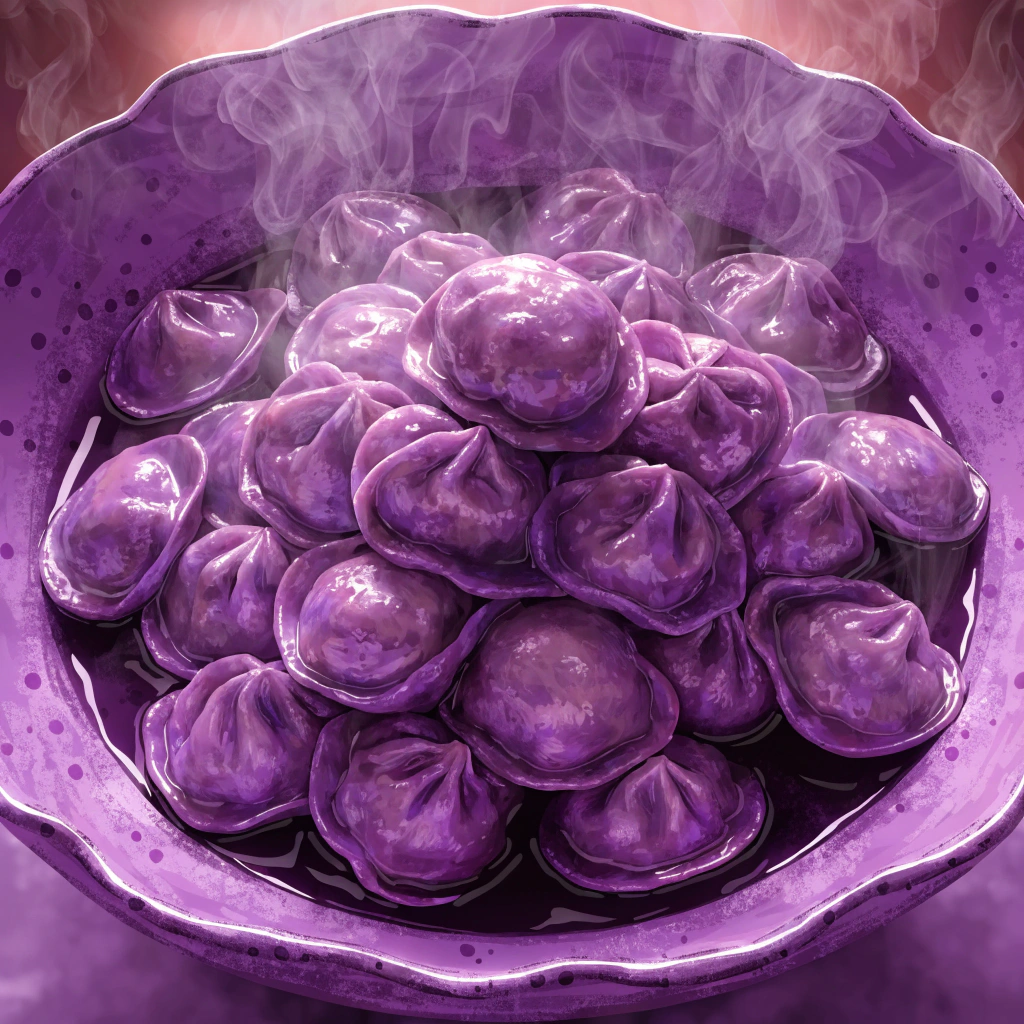
Pelmeni: A Famous Russian Food
Pelmeni is a very famous food in Russia. It is a small ball of dough with meat inside. Many people call it the national dish of Russia.
Pelmeni comes from Siberia and the Ural Mountains. In winter, it is very cold there. People make many pelmeni and put them outside in the snow. The snow keeps the food fresh for a long time.
Today, families make pelmeni together at home. They boil the pelmeni in water. People eat them with butter or sour cream. It is a warm and happy meal for everyone.
语法聚焦
句型: Present Simple (To Be)
"Pelmeni is a very famous food in Russia."
We use 'is' with singular subjects to state facts. This is the most common way to describe things in English.
句型: Present Simple (Plural Verbs)
"Families make pelmeni together at home."
When the subject is plural (Families), we use the base form of the verb (make). We do not add 's' to the verb for plural subjects.
测试你的理解
10 个问题 · A1 初学 · 1 次免费预览
测试你从这篇文章中学到的知识。回答所有问题即可获得经验值!
题目详情
Where does Pelmeni come from?
你的回答:
正确答案: Siberia
People cook pelmeni in hot water.
你的回答:
正确答案: 正确
What does 'fresh' mean?
你的回答:
正确答案: New and good to eat
People eat pelmeni with _____ or sour cream.
你的回答:
正确答案: butter
Pelmeni: Russia's Favorite Comfort Food
Pelmeni are a very famous food in Russia. They are small dumplings with meat inside. Many people call them the national dish because everyone loves them. They are popular from the west to the east of the country.
Long ago, people in the Ural Mountains and Siberia started making pelmeni. These places are very cold in the winter. Hunters and travelers needed food that they could carry easily. Pelmeni were perfect because they stayed fresh in the snow for a long time. They were better than other foods because they did not go bad in the sub-zero temperatures.
To make them, you need dough and meat. Usually, the meat is beef or pork. You boil them in water and eat them with sour cream or butter. Some people also like to put vinegar on them.
Today, families often cook pelmeni together on the weekend. It is a fun activity because it takes a long time to make many dumplings. Pelmeni are delicious and they make people feel warm and happy.
语法聚焦
句型: Past Simple
"Hunters and travelers needed food that they could carry easily."
The past simple is used for finished actions in the past. To form regular verbs, we usually add '-ed' to the base verb.
句型: Comparatives
"They were better than other foods because they did not go bad."
We use comparatives to compare two things. 'Better' is the irregular comparative form of the adjective 'good'.
测试你的理解
11 个问题 · A2 基础 · 1 次免费预览
测试你从这篇文章中学到的知识。回答所有问题即可获得经验值!
Where did pelmeni originally come from?
题目详情
Where did pelmeni originally come from?
你的回答:
正确答案: The Ural Mountains and Siberia
Pelmeni stayed fresh in the snow for a long time.
你的回答:
正确答案: 正确
What does 'boil' mean?
你的回答:
正确答案: To cook in hot water
To make the outside of the dumpling, you need ____.
你的回答:
正确答案: dough
What do people usually eat pelmeni with?
你的回答:
正确答案: Sour cream or butter
Pelmeni: The Heart of Russian Comfort Food
Pelmeni have been a part of Russian culture for centuries. This traditional dish, which is often called the national food of Russia, originated in the Ural Mountains and the cold regions of Siberia. In the past, these small dumplings were essential for survival during the long, sub-zero winters.
The preparation of pelmeni is a social activity that brings families together. First, a thin dough is made from flour and water. Then, it is filled with a mixture of minced meat and spices. The dumplings are shaped into small circles, which are then frozen. In Siberia, pelmeni were traditionally kept outside because the natural temperature was cold enough to preserve them for months. This made them the perfect 'fast food' for hunters who needed to carry nutritious meals into the wilderness.
Pelmeni are usually boiled in salted water until they float to the surface. They are served with sour cream, butter, or even vinegar. While many people now buy frozen pelmeni from supermarkets, the best ones have always been handmade at home. In many Russian households, large batches are prepared during the weekend and stored for busy weekdays.
Today, pelmeni have gained popularity all over the world. They represent more than just a meal; they are a symbol of comfort and hospitality. Whether you are in a busy city like Moscow or a small village in the mountains, you will find that pelmeni are loved by everyone.
语法聚焦
句型: Passive Voice
"First, a thin dough is made from flour and water."
The passive voice is used when the action is more important than who is doing it. It is formed using the verb 'to be' and the past participle of the main verb.
句型: Relative Clauses
"This traditional dish, which is often called the national food of Russia, originated in the Ural Mountains."
Relative clauses give more information about a noun. 'Which' is used for things, and 'who' is used for people.
测试你的理解
11 个问题 · B1 中级 · 1 次免费预览
测试你从这篇文章中学到的知识。回答所有问题即可获得经验值!
Where did pelmeni originally come from?
题目详情
Where did pelmeni originally come from?
你的回答:
正确答案: The Ural Mountains and Siberia
Hunters used pelmeni because they were easy to carry and healthy.
你的回答:
正确答案: 正确
What does 'nutritious' mean?
你的回答:
正确答案: Good for your health and growth
Pelmeni are usually served with sour _____ or butter.
你的回答:
正确答案: cream
How were pelmeni traditionally preserved in Siberia?
你的回答:
正确答案: By keeping them outside in the cold
俄罗斯的味蕾记忆:水饺(Pelmeni)的文化与历史
俄罗斯广袤的土地上,有一种食物被誉为“国民美食”,它不仅是餐桌上的常客,更是连接着这片辽阔国度的深厚情感纽带。这种食物便是我们今天要探讨的——俄罗斯水饺,或称Pelmeni。它不仅仅是一种简单的面食,更承载着丰富的历史、独特的地域特色以及俄罗斯人民的生活智慧。
Pelmeni的起源可以追溯到乌拉尔山脉和西伯利亚地区,那里的严酷气候条件催生了这种耐储存的食物。在零下几十度的漫长冬季里,新鲜的肉类很难保存,而将肉馅包裹在面皮中,制成Pelmeni后迅速冷冻,便能使其在数月内保持风味不失。这对于早期的猎人、旅行者和农牧民来说,无疑是极佳的“快餐”选择。他们可以随身携带这些冷冻水饺,在野外只需简单加热便能获得充足的能量,支撑他们在严寒中继续前行。从某种意义上说,Pelmeni是适应自然环境而生的产物,体现了人类在与自然抗争中的创造力。
Pelmeni的制作过程通常涉及将切碎的肉(传统上是牛肉、猪肉或羊肉,有时也会混合多种肉类)、洋葱、大蒜和香料混合作为馅料,然后用薄面皮包裹起来,形成小巧的半月形或圆形。与中国的饺子相比,Pelmeni通常馅料更为简单纯粹,重在突出肉的原汁原味。其独特的制作方式使得面皮紧实,能够很好地锁住肉汁,烹煮后口感弹牙,内馅鲜美多汁。
在俄罗斯家庭中,制作Pelmeni往往是一项集体活动,尤其是在节假日或亲友聚会时。一家人围坐在一起,或包或煮,其乐融融的场景本身就构成了一幅温馨的家庭画卷。人们通常会搭配酸奶油(smetana)、醋、黄油或者芥末酱食用,这些调味品不仅丰富了Pelmeni的口感层次,也使其风味更加独特。对于许多俄罗斯人而言,Pelmeni不仅仅是一种食物,它更是一种情感的寄托,承载着童年的回忆、家庭的温暖以及民族的认同感。
随着时间的推移,Pelmeni已经从最初的生存必需品演变为如今备受喜爱的美食。无论是在高级餐厅还是街头小摊,Pelmeni都占据着一席之地。它不仅在俄罗斯本土广受欢迎,也随着俄罗斯移民的足迹传播到世界各地,让更多人有机会品尝到这份来自北方的温暖与美味。Pelmeni的故事,无疑是俄罗斯文化多元性与韧性的一个生动缩影。
语法聚焦
句型: 被誉为 (bèi yù wéi)
"俄罗斯广袤的土地上,有一种食物被誉为“国民美食”。"
“被誉为”表示某事物因其特点或重要性,被大众公认为某种称谓或地位。它通常用于正式语境,表达一种普遍的赞誉或认可。结构为:主语 + 被誉为 + 称谓/地位。
句型: 不仅...更... (bùjǐn...gèng...)
"它不仅是一种简单的面食,更承载着丰富的历史、独特的地域特色以及俄罗斯人民的生活智慧。"
“不仅……更……”是一个表示递进关系的关联词组,用来强调第二层意思比第一层意思更深、更重要或更进一步。它表明两者都存在,但后者程度更深。
句型: 从某种意义上说 (cóng mǒu zhǒng yìyì shàng shuō)
"从某种意义上说,Pelmeni是适应自然环境而生的产物。"
这个短语用于从特定的角度或层面来评价或解释某事,表示说话者从某个有限的视角出发,提出自己的看法。它常用于引出一种概括性或总结性的观点。
测试你的理解
11 个问题 · B2 中高级 · 1 次免费预览
测试你从这篇文章中学到的知识。回答所有问题即可获得经验值!
题目详情
根据文章,Pelmeni主要起源于俄罗斯的哪个地区?
你的回答:
正确答案: 乌拉尔山脉和西伯利亚
Pelmeni在俄罗斯被视为一种“国民美食”,因为它连接着俄罗斯人民的深厚情感。
你的回答:
正确答案: 正确
“纽带”在文章中最接近哪个意思?
你的回答:
正确答案: 连接不同事物的力量或关系
Pelmeni能够快速冷冻并长期保存,是适应西伯利亚______气候的产物。
你的回答:
正确答案: 严酷
俄罗斯家庭在制作Pelmeni时,通常会进行什么活动?
你的回答:
正确答案: 作为一项集体活动,亲友围坐一起
The Culinary Tapestry of the North: The Enduring Legacy of Russian Pelmeni
Seldom does a single dish encapsulate the vast, multi-faceted identity of a nation as effectively as the pelmen. Often heralded as the quintessential Russian comfort food, these modest-looking dumplings represent far more than a mere staple of the national diet; they are a testament to human ingenuity in the face of environmental adversity. Originating in the Ural Mountains and the frozen expanses of Siberia, pelmeni were born out of a desperate necessity for sustenance that could withstand the brutal sub-zero temperatures. Historically, the preservation of meat within a thin layer of unleavened dough allowed hunters and nomadic tribes to carry nutrient-dense provisions across the taiga, where the natural environment served as a perpetual deep-freeze.
It is the simplicity of the dough that belies the complexity of the cultural rituals surrounding its creation. While the recipe may appear straightforward—flour, water, and occasionally eggs—the meticulous preparation of the filling reflects the historical availability of various livestock. Traditionally, a blend of beef, lamb, and pork was utilized, seasoned sparingly with salt and black pepper to avoid masking the natural flavors. This combination was not arbitrary; rather, it was a deliberate effort to balance fat content and texture, ensuring that the dumplings remained succulent even after months of storage. Not only did these frozen parcels provide essential nourishment, but they also served as a precursor to modern convenience foods, requiring only a pot of boiling water to transform from a frozen stone into a steaming meal.
Furthermore, the communal aspect of pelmeni production cannot be overstated. In rural Russian households, the 'pelmenniy vecher' (pelmeni evening) remains a vital tradition, facilitating the perpetuation of family bonds through shared labor. It is during these long winter evenings that generations gather around the kitchen table, engaged in the rhythmic folding of hundreds, if not thousands, of dumplings. The sheer ubiquity of this practice across such a sprawling territory has fostered a sense of national cohesion, bridging the gap between the European and Asian halves of the country.
In contemporary Russia, the versatility of the pelmen has allowed it to transcend its humble origins. While purists argue that they should only be served with a dollop of smetana (sour cream) or a splash of vinegar, modern culinary reinterpretations have seen them paired with everything from mushroom broths to spicy infusions. However, despite these innovations, the indispensable nature of the traditional recipe remains unchallenged. The enduring popularity of pelmeni lies in their ability to evoke a sense of home and history, proving that even in a rapidly globalizing world, the most resilient cultural markers are often those found on the dinner plate. Ultimately, the story of the pelmen is a narrative of survival, adaptation, and the profound power of communal tradition.
语法聚焦
句型: Negative Inversion
"Seldom does a single dish encapsulate the vast, multi-faceted identity of a nation as effectively as the pelmen."
Used for emphasis at the beginning of a sentence. When a negative or restrictive adverbial (like 'seldom') starts the sentence, the auxiliary verb comes before the subject.
句型: Cleft Sentences
"It is the simplicity of the dough that belies the complexity of the cultural rituals surrounding its creation."
This structure (It + is/was + noun phrase + that/who) is used to focus on a specific piece of information, highlighting the 'simplicity of the dough' as the subject.
句型: Nominalisation
"The preservation of meat within a thin layer of unleavened dough allowed hunters and nomadic tribes to carry nutrient-dense provisions."
Converting verbs (preserve) into nouns (preservation) to create a more formal, academic tone. This allows the writer to pack more information into a single clause.
测试你的理解
12 个问题 · C1 高级 · 1 次免费预览
测试你从这篇文章中学到的知识。回答所有问题即可获得经验值!
Where did pelmeni originally originate as a response to environmental challenges?
题目详情
Where did pelmeni originally originate as a response to environmental challenges?
你的回答:
正确答案: The Ural Mountains and Siberia
The traditional filling for pelmeni historically consisted solely of beef.
你的回答:
正确答案: 错误
Which word describes something that is absolutely necessary?
你的回答:
正确答案: Indispensable
The _____ act of folding the dough helps strengthen family bonds.
你的回答:
正确答案: communal
Why were pelmeni considered an early form of 'convenience food'?
你的回答:
正确答案: They were quickly prepared by boiling after being naturally frozen.
The natural environment of the taiga acted as a freezer for the dumplings.
你的回答:
正确答案: 正确
The Gastronomic Architecture of the Steppe: A Socio-Historical Analysis of the Russian Pelmen
To contemplate the Russian pelmen is to traverse the topography of the Eurasian heartland, where the convergence of necessity and ingenuity has yielded a culinary artifact of profound resilience. Often characterized as the quintessential comfort food of the Russian Federation, the pelmen transcends mere sustenance, embodying a historical narrative forged in the crucible of the Siberian wilderness. Were one to scrutinize the origins of this ubiquitous dumpling, one would find its roots deeply embedded in the Finno-Ugric traditions of the Ural Mountains, where the nomenclature itself—derived from 'pel' (ear) and 'nan' (bread)—betrays its utilitarian morphology. Historically, the pelmen was an indispensable asset for hunters and travelers embarking on arduous journeys across the frozen tundra. Its design allowed for immediate preservation in sub-zero temperatures, effectively transforming the Siberian winter into a natural refrigeration unit. Not only did these dumplings provide nutrient-dense caloric intake, but they also offered a portability that was unparalleled in the pre-industrial era. The confluence of beef, lamb, and pork within a thin, unleavened envelope of dough represents a meticulous balance of flavors, intended to sustain the body through the most unforgiving climates. Beyond its survivalist function, the pelmen serves as a cornerstone of social cohesion. The ritual of 'lepka'—the communal folding of the dough—is a manifestation of familial camaraderie that has persisted through centuries of political and social upheaval. During these gatherings, the labor-intensive nature of the dish necessitates a collective effort, turning a mundane kitchen task into a forum for oral history and intergenerational bonding. It might be posited that the pelmen serves as a culinary microcosm of the Russian soul: rugged and unpretentious on the exterior, yet rich and complex within. In the contemporary era, despite the encroachment of globalized fast food, the pelmen remains a paradigmatic example of cultural endurance. While industrial production has made the dish more accessible, the artisanal 'home-made' variety continues to be held in the highest esteem, representing an ephemeral link to a primordial past. Seldom has a dish so effectively bridged the chasm between the pragmatic requirements of survival and the aesthetic pleasures of the palate. As one navigates the shifting landscape of modern Russian identity, the pelmen stands as a testament to the enduring power of tradition, proving that even the most basic sustenance can be elevated to the status of a national treasure through a confluence of history, geography, and human spirit.
语法聚焦
句型: The Subjunctive Mood
"Were one to scrutinize the origins of this ubiquitous dumpling, one would find its roots deeply embedded in the Finno-Ugric traditions."
Used here for a hypothetical condition in the present or future. It employs 'were' instead of 'was' to emphasize the theoretical nature of the investigation.
句型: Negative Inversion for Emphasis
"Seldom has a dish so effectively bridged the chasm between the pragmatic requirements of survival and the aesthetic pleasures of the palate."
Placing the negative adverb 'seldom' at the start of the sentence requires the auxiliary verb 'has' to come before the subject 'a dish'. This creates a more formal and dramatic tone.
句型: Academic Hedging with Passive Structures
"It might be posited that the pelmen serves as a culinary microcosm of the Russian soul."
Using 'it might be' followed by a past participle (posited) allows the author to propose a theory cautiously without making an absolute, unproven claim.
测试你的理解
12 个问题 · C2 精通 · 1 次免费预览
测试你从这篇文章中学到的知识。回答所有问题即可获得经验值!
What does the etymology of 'pelmeni' suggest about the dish's shape?
题目详情
What does the etymology of 'pelmeni' suggest about the dish's shape?
你的回答:
正确答案: It is shaped like an ear.
Pelmeni were historically favored because they could be naturally preserved by the Siberian winter.
你的回答:
正确答案: 正确
Which word best describes the 'lepka' tradition as a display of social bonding?
你的回答:
正确答案: Manifestation
The combination of different meats within the dough is described as a _____ of flavors.
你的回答:
正确答案: confluence
How does the author characterize the role of pelmeni in modern Russia?
你的回答:
正确答案: As a paradigmatic example of cultural endurance.
The article suggests that pelmeni are simple both on the outside and the inside.
你的回答:
正确答案: 错误

