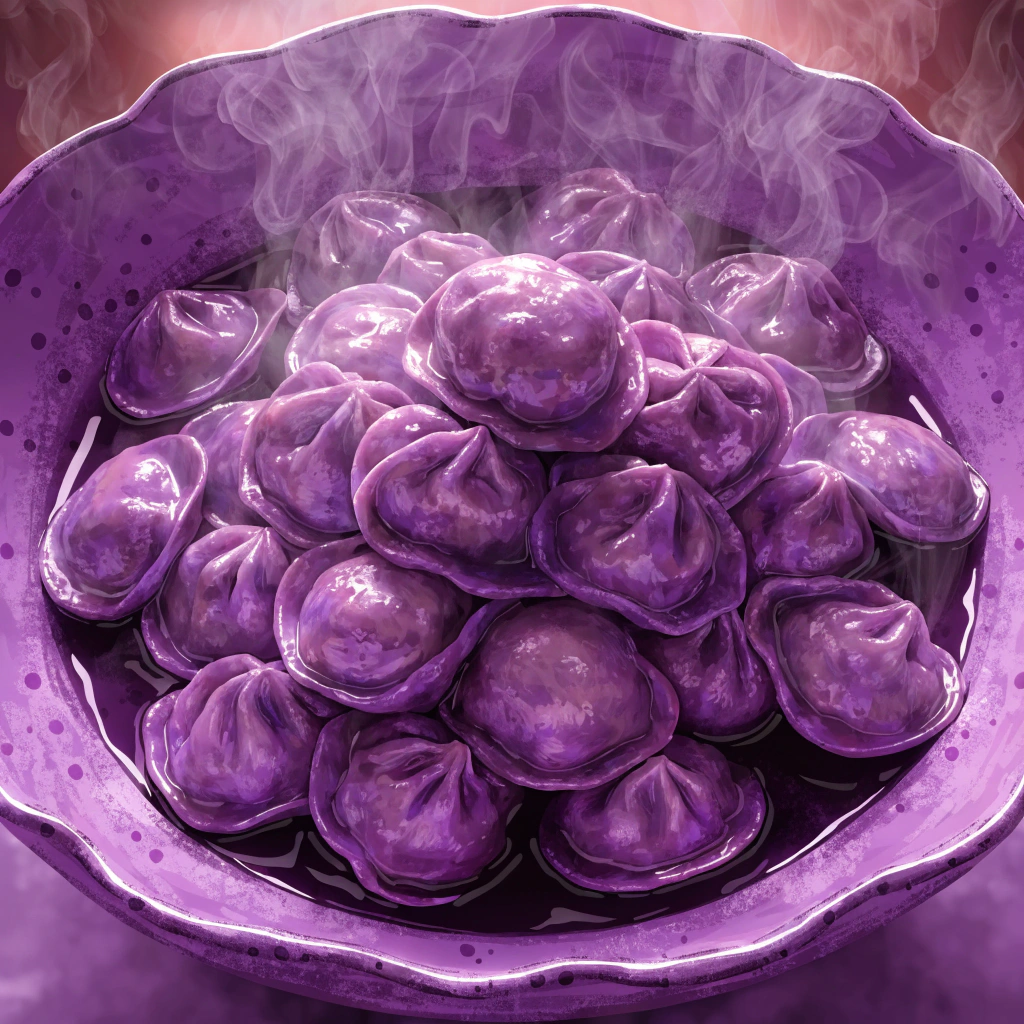
Pelmeni: A Famous Russian Food
Pelmeni is a very famous food in Russia. It is a small ball of dough with meat inside. Many people call it the national dish of Russia.
Pelmeni comes from Siberia and the Ural Mountains. In winter, it is very cold there. People make many pelmeni and put them outside in the snow. The snow keeps the food fresh for a long time.
Today, families make pelmeni together at home. They boil the pelmeni in water. People eat them with butter or sour cream. It is a warm and happy meal for everyone.
Gramática destacada
Patrón: Present Simple (To Be)
"Pelmeni is a very famous food in Russia."
We use 'is' with singular subjects to state facts. This is the most common way to describe things in English.
Patrón: Present Simple (Plural Verbs)
"Families make pelmeni together at home."
When the subject is plural (Families), we use the base form of the verb (make). We do not add 's' to the verb for plural subjects.
Pon a prueba tu comprensión
10 preguntas · A1 Principiante · 1 vista previa gratis
Pon a prueba lo que aprendiste en este artículo. ¡Responde todas las preguntas para ganar XP!
Where does Pelmeni come from?
¿Quieres terminar el quiz?
9 preguntas más te esperan. ¡Regístrate gratis para desbloquear el quiz completo y ganar XP!
Regístrate gratis¿Ya tienes cuenta? Acceder
Desglose de preguntas
Where does Pelmeni come from?
Tu respuesta:
Respuesta correcta: Siberia
People cook pelmeni in hot water.
Tu respuesta:
Respuesta correcta: Verdadero
What does 'fresh' mean?
Tu respuesta:
Respuesta correcta: New and good to eat
People eat pelmeni with _____ or sour cream.
Tu respuesta:
Respuesta correcta: butter
Pelmeni: Russia's Favorite Comfort Food
Pelmeni are a very famous food in Russia. They are small dumplings with meat inside. Many people call them the national dish because everyone loves them. They are popular from the west to the east of the country.
Long ago, people in the Ural Mountains and Siberia started making pelmeni. These places are very cold in the winter. Hunters and travelers needed food that they could carry easily. Pelmeni were perfect because they stayed fresh in the snow for a long time. They were better than other foods because they did not go bad in the sub-zero temperatures.
To make them, you need dough and meat. Usually, the meat is beef or pork. You boil them in water and eat them with sour cream or butter. Some people also like to put vinegar on them.
Today, families often cook pelmeni together on the weekend. It is a fun activity because it takes a long time to make many dumplings. Pelmeni are delicious and they make people feel warm and happy.
Gramática destacada
Patrón: Past Simple
"Hunters and travelers needed food that they could carry easily."
The past simple is used for finished actions in the past. To form regular verbs, we usually add '-ed' to the base verb.
Patrón: Comparatives
"They were better than other foods because they did not go bad."
We use comparatives to compare two things. 'Better' is the irregular comparative form of the adjective 'good'.
Pon a prueba tu comprensión
11 preguntas · A2 Básico · 1 vista previa gratis
Pon a prueba lo que aprendiste en este artículo. ¡Responde todas las preguntas para ganar XP!
Where did pelmeni originally come from?
¿Quieres terminar el quiz?
10 preguntas más te esperan. ¡Regístrate gratis para desbloquear el quiz completo y ganar XP!
Regístrate gratis¿Ya tienes cuenta? Acceder
Desglose de preguntas
Where did pelmeni originally come from?
Tu respuesta:
Respuesta correcta: The Ural Mountains and Siberia
Pelmeni stayed fresh in the snow for a long time.
Tu respuesta:
Respuesta correcta: Verdadero
What does 'boil' mean?
Tu respuesta:
Respuesta correcta: To cook in hot water
To make the outside of the dumpling, you need ____.
Tu respuesta:
Respuesta correcta: dough
What do people usually eat pelmeni with?
Tu respuesta:
Respuesta correcta: Sour cream or butter
Pelmeni: El Corazón Congelado de la Cocina Rusa
Los pelmeni son, sin duda, uno de los platos más emblemáticos y queridos de Rusia. Se han convertido en la comida reconfortante por excelencia, uniendo a la gente a través de su sabor y tradición. Este plato, que a menudo se describe como el “dumpling” ruso, tiene una historia fascinante que se ha desarrollado en las vastas y frías tierras del país.
Su origen se remonta a las regiones de los Montes Urales y Siberia, donde las duras condiciones climáticas hicieron que la necesidad agudizara el ingenio. Los pelmeni fueron creados como una solución práctica para la conservación de alimentos. Su capacidad para congelarse rápidamente en los inviernos siberianos, que alcanzan temperaturas bajo cero, y preservarse durante meses sin perder su sabor, los convirtió en el “alimento rápido” perfecto para cazadores y viajeros. Históricamente, han sido una forma eficiente de llevar carne nutritiva a la intemperie, facilitando la supervivencia en entornos hostiles.
Tradicionalmente, el relleno de los pelmeni es una mezcla de carne picada, que puede ser de cerdo, ternera, cordero o una combinación de estas, sazonada con cebolla, ajo, sal y pimienta. Esta mezcla se envuelve en una fina masa de harina, agua y huevo. Aunque la receta básica es sencilla, la preparación suele ser un evento familiar, donde varias generaciones se reúnen para hacer grandes cantidades que luego se congelan.
Hoy en día, los pelmeni se disfrutan de muchas maneras. A menudo se hierven y se sirven con smetana (crema agria), mantequilla, vinagre o hierbas frescas. Se pueden encontrar en cualquier hogar ruso, desde las ciudades más grandes hasta los pueblos más remotos, y su popularidad se ha extendido por todo el mundo. Este humilde dumpling sigue siendo un símbolo de la cultura y la hospitalidad rusa, una deliciosa herencia que continúa calentando corazones.
Gramática destacada
Patrón: La Voz Pasiva con 'Se'
"Este plato, que a menudo se describe como el “dumpling” ruso, tiene una historia fascinante."
La voz pasiva con 'se' se usa para hablar de acciones donde el agente (quién realiza la acción) no es importante o no se menciona. Se forma con 'se' + un verbo en tercera persona del singular o plural, concordando con el sujeto de la oración.
Patrón: El Pretérito Perfecto Compuesto
"Se han convertido en la comida reconfortante por excelencia, uniendo a la gente a través de su sabor y tradición."
El pretérito perfecto compuesto se utiliza para acciones que ocurrieron en el pasado pero que tienen una conexión o relevancia con el presente. Se forma con el verbo 'haber' en presente (he, has, ha, hemos, habéis, han) y el participio pasado del verbo principal (terminaciones -ado, -ido).
Pon a prueba tu comprensión
11 preguntas · B1 Intermedio · 1 vista previa gratis
Pon a prueba lo que aprendiste en este artículo. ¡Responde todas las preguntas para ganar XP!
¿Cuál es una característica principal de los pelmeni que los hizo útiles en Siberia?
¿Quieres terminar el quiz?
10 preguntas más te esperan. ¡Regístrate gratis para desbloquear el quiz completo y ganar XP!
Regístrate gratis¿Ya tienes cuenta? Acceder
Desglose de preguntas
¿Cuál es una característica principal de los pelmeni que los hizo útiles en Siberia?
Tu respuesta:
Respuesta correcta: Su capacidad para congelarse y preservarse.
El origen de los pelmeni se encuentra en las regiones cálidas del sur de Rusia.
Tu respuesta:
Respuesta correcta: Falso
¿Qué significa la palabra 'reconfortante'?
Tu respuesta:
Respuesta correcta: Que produce bienestar y alivio.
Los pelmeni son considerados la comida ______ por excelencia en Rusia.
Tu respuesta:
Respuesta correcta: reconfortante
¿Qué tipo de carne se usa tradicionalmente en el relleno de los pelmeni?
Tu respuesta:
Respuesta correcta: Una mezcla de cerdo, ternera o cordero.
Pelmeni: The Siberian Culinary Legacy and its Cultural Resonance
Pelmeni are often hailed as the quintessential Russian comfort food, representing a culinary heritage that spans the vast expanse of the Eurasian continent. While many cultures possess their own variations of dumplings, the Russian pelmen is uniquely distinguished by its historical roots in the Ural Mountains and the harsh landscapes of Siberia. More than just a staple diet, these meat-filled dough pockets serve as a testament to human ingenuity in the face of extreme environmental challenges. They are widely regarded as the national dish that truly unites the country's diverse regions. Historically, the development of pelmeni was driven by sheer necessity. In the sub-zero temperatures of the Siberian wilderness, early inhabitants required a nutrient-dense food source that could be easily transported and preserved. The ingenious solution was to freeze the dumplings rapidly in the natural 'outdoor freezer' provided by the climate. This preservation technique allowed hunters and travelers to carry substantial provisions for months without the risk of spoilage. Consequently, pelmeni became the ultimate 'fast food' of the pre-industrial era, requiring only a pot of boiling water to transform frozen dough into a hearty meal. This efficiency made them indispensable for those traversing the treacherous Siberian terrain. The composition of pelmeni is deceptively simple, yet it demands a specific balance of ingredients and a meticulous preparation process. Traditionally, the filling consists of a blend of minced meats—typically beef, lamb, and pork—seasoned with salt, pepper, and occasionally onions. The dough must be rolled thin enough to be delicate, yet robust enough to withstand boiling without bursting. Despite the rise of mass-produced alternatives in modern supermarkets, the practice of hand-making pelmeni remains a cherished domestic tradition. It is not uncommon for families to gather during the winter months to prepare hundreds of dumplings simultaneously, fostering a sense of communal identity and continuity across generations. Furthermore, pelmeni carry a symbolic weight in Russian folklore that transcends their nutritional value. A popular tradition involves hiding a 'happy pelmen'—a dumpling containing a unique filling like a coin, a piece of dough, or an extra dash of pepper—within a large batch. The individual who discovers this special dumpling is said to be destined for good fortune or a successful year ahead. In contemporary society, while the pace of life has accelerated, the ritual of consuming pelmeni remains a constant. Ultimately, whether served with a dollop of sour cream, a splash of vinegar, or simply butter, pelmeni represent the enduring intersection of geography, history, and social cohesion in Russian life. They remain a profound symbol of hospitality and resilience.
Gramática destacada
Patrón: Passive Voice
"Pelmeni are often hailed as the quintessential Russian comfort food."
The passive voice is used here to focus on the dish (pelmeni) rather than the people who hail it. It is formed using the verb 'to be' followed by the past participle of the main verb.
Patrón: Reduced Relative Clause (Participle Clause)
"...the natural 'outdoor freezer' provided by the climate."
This structure uses a past participle ('provided') to act like an adjective, replacing 'which was provided'. It makes the writing more concise and formal, suitable for B2 academic styles.
Patrón: Defining Relative Clauses
"The individual who discovers this special dumpling is said to be destined for good fortune."
This clause identifies exactly which person the writer is talking about. It uses the relative pronoun 'who' to provide essential information about the subject.
Pon a prueba tu comprensión
11 preguntas · B2 Intermedio alto · 1 vista previa gratis
Pon a prueba lo que aprendiste en este artículo. ¡Responde todas las preguntas para ganar XP!
What was the primary reason for the rapid freezing of pelmeni in Siberia?
¿Quieres terminar el quiz?
10 preguntas más te esperan. ¡Regístrate gratis para desbloquear el quiz completo y ganar XP!
Regístrate gratis¿Ya tienes cuenta? Acceder
Desglose de preguntas
What was the primary reason for the rapid freezing of pelmeni in Siberia?
Tu respuesta:
Respuesta correcta: To allow for long-term preservation during travel
Pelmeni are traditionally made with only one type of meat.
Tu respuesta:
Respuesta correcta: Falso
What does 'ingenuity' mean in the context of the article?
Tu respuesta:
Respuesta correcta: Cleverness and inventiveness
The composition of pelmeni is _____ simple, but it requires a careful balance of ingredients.
Tu respuesta:
Respuesta correcta: deceptively
What does the 'happy pelmen' tradition signify?
Tu respuesta:
Respuesta correcta: A sign of future good fortune
Pelmeni: El Corazón Congelado de la Tradición Rusa
Pocos platos encarnan tan vívidamente la idiosincrasia de una nación como los pelmeni en Rusia. Lejos de ser una mera exquisitez culinaria, estos pequeños y deliciosos dumplings de carne representan un baluarte de la identidad rusa, un epítome de la resiliencia y la calidez familiar en medio de inviernos implacables. Es en la vastedad de su territorio, desde los gélidos confines siberianos hasta las vibrantes metrópolis occidentales, donde su ubicuidad se convierte en un testimonio palpable de su arraigo cultural.
La génesis de los pelmeni se halla en una confluencia de necesidad y adaptación. Originarios de las regiones de los Urales y Siberia, su creación fue un imperativo práctico dictado por las condiciones extremas. En aquellos tiempos remotos, cuando la refrigeración era un concepto futurista, la capacidad de los pelmeni para congelarse rápidamente en las temperaturas subcero del invierno y conservarse durante meses sin menoscabo de su sabor o valor nutricional, los convirtió en el alimento ideal. Eran, de hecho, el "comida rápida" original para cazadores, viajeros y pastores que se aventuraban en la inmensidad de la taiga, proporcionando una fuente de energía densa y fácilmente transportable en un entorno hostil. Fue la perennidad de esta práctica lo que selló su destino como pilar de la gastronomía rusa.
Tradicionalmente, la preparación de los pelmeni es un rito comunitario. Familias enteras se congregan alrededor de una mesa, amasando la masa, picando la carne —a menudo una mezcla de cerdo, ternera y cordero— y rellenando meticulosamente cada pequeña porción. Este proceso, que puede llevar horas y resultar en cientos de dumplings, no es solo una labor culinaria; es una sinergia social, un momento de unión y transmisión de saberes entre generaciones. Una vez formados, se hierven brevemente en agua con sal o caldo y se sirven con smetana (crema agria), mantequilla derretida, vinagre o una pizca de pimienta negra. La simplicidad de su presentación desmiente la complejidad de su simbolismo.
Lo que los distingue de otros dumplings del mundo, más allá de su relleno y método de cocción, es su profunda conexión con el alma rusa. No se trata únicamente de un plato; es un consuelo, un recuerdo de hogar, la promesa de sustento en tiempos difíciles. La frase coloquial "pelmeni es la cabeza de todo" (пельмени — всему голова) encapsula su estatus casi sagrado. En tiempos de escasez o durante las largas noches invernales, un plato humeante de pelmeni era y sigue siendo una afirmación de vida, un acto de resistencia contra el frío y la soledad.
Hoy día, aunque se pueden encontrar pelmeni precocinados en cualquier supermercado, la versión casera sigue siendo la más valorada y reverenciada. Constituyen un plato esencial en celebraciones familiares, reuniones con amigos y, por supuesto, como un alimento reconfortante en el día a día. Han trascendido su origen humilde para convertirse en un embajador culinario de Rusia, un bocado que narra historias de supervivencia, de ingenio y de la inquebrantable fuerza del espíritu humano. En suma, los pelmeni son mucho más que comida; son historia, cultura y, sobre todo, corazón.
Gramática destacada
Patrón: Oraciones hendidas (Cleft Sentences)
"Es en la vastedad de su territorio, desde los gélidos confines siberianos hasta las vibrantes metrópolis occidentales, donde su ubicuidad se convierte en un testimonio palpable de su arraigo cultural."
Las oraciones hendidas se utilizan para enfatizar una parte específica de la oración. Se forman con 'Es/Fue + [elemento enfatizado] + donde/cuando/quien/lo que + [resto de la oración]'. Permiten destacar información clave, como en este caso, el lugar donde reside la importancia de los pelmeni.
Patrón: Nominalización (Sustantivación)
"La capacidad de los pelmeni para congelarse rápidamente en las temperaturas subcero del invierno y conservarse durante meses sin menoscabo de su sabor o valor nutricional, los convirtió en el alimento ideal."
La nominalización consiste en transformar verbos, adjetivos o adverbios en sustantivos para expresar ideas de forma más concisa y formal. Aquí, 'la capacidad de congelarse' (en lugar de 'el hecho de que se pudieran congelar') es un ejemplo claro que aporta fluidez y nivel C1 al texto.
Patrón: Uso del Subjuntivo para expresar propósito o resultado no garantizado
"Pocos platos encarnan tan vívidamente la idiosincrasia de una nación como los pelmeni en Rusia. Lejos de ser una mera exquisitez culinaria, estos pequeños y deliciosos dumplings de carne representan un baluarte de la identidad rusa..."
Aunque el ejemplo dado es 'Lejos de ser', el subjuntivo se usa frecuentemente con 'para que', 'a fin de que', 'sin que' para expresar propósito o una condición. 'Lejos de ser' utiliza el infinitivo, pero introduce una matización que podría llevar al subjuntivo en otras construcciones similares de negación o contraste, indicando una realidad que difiere de una expectativa.
Pon a prueba tu comprensión
12 preguntas · C1 Avanzado · 1 vista previa gratis
Pon a prueba lo que aprendiste en este artículo. ¡Responde todas las preguntas para ganar XP!
¿Cuál de las siguientes afirmaciones describe mejor el origen de los pelmeni?
¿Quieres terminar el quiz?
11 preguntas más te esperan. ¡Regístrate gratis para desbloquear el quiz completo y ganar XP!
Regístrate gratis¿Ya tienes cuenta? Acceder
Desglose de preguntas
¿Cuál de las siguientes afirmaciones describe mejor el origen de los pelmeni?
Tu respuesta:
Respuesta correcta: Surgieron de la necesidad de un alimento nutritivo y fácil de conservar en climas fríos.
La preparación tradicional de los pelmeni es a menudo una actividad solitaria.
Tu respuesta:
Respuesta correcta: Falso
¿Qué significa la palabra "arraigo" en el contexto del artículo?
Tu respuesta:
Respuesta correcta: Una conexión profunda y duradera con un lugar o cultura.
Los pelmeni eran el "comida rápida" original para _____ y viajeros en la taiga siberiana.
Tu respuesta:
Respuesta correcta: cazadores
¿Qué ingredientes se mencionan comúnmente en el relleno de los pelmeni?
Tu respuesta:
Respuesta correcta: Una mezcla de cerdo, ternera y cordero.
La frase "pelmeni es la cabeza de todo" sugiere que el plato tiene un estatus importante en la cultura rusa.
Tu respuesta:
Respuesta correcta: Verdadero
The Gastronomic Architecture of the Steppe: A Socio-Historical Analysis of the Russian Pelmen
To contemplate the Russian pelmen is to traverse the topography of the Eurasian heartland, where the convergence of necessity and ingenuity has yielded a culinary artifact of profound resilience. Often characterized as the quintessential comfort food of the Russian Federation, the pelmen transcends mere sustenance, embodying a historical narrative forged in the crucible of the Siberian wilderness. Were one to scrutinize the origins of this ubiquitous dumpling, one would find its roots deeply embedded in the Finno-Ugric traditions of the Ural Mountains, where the nomenclature itself—derived from 'pel' (ear) and 'nan' (bread)—betrays its utilitarian morphology. Historically, the pelmen was an indispensable asset for hunters and travelers embarking on arduous journeys across the frozen tundra. Its design allowed for immediate preservation in sub-zero temperatures, effectively transforming the Siberian winter into a natural refrigeration unit. Not only did these dumplings provide nutrient-dense caloric intake, but they also offered a portability that was unparalleled in the pre-industrial era. The confluence of beef, lamb, and pork within a thin, unleavened envelope of dough represents a meticulous balance of flavors, intended to sustain the body through the most unforgiving climates. Beyond its survivalist function, the pelmen serves as a cornerstone of social cohesion. The ritual of 'lepka'—the communal folding of the dough—is a manifestation of familial camaraderie that has persisted through centuries of political and social upheaval. During these gatherings, the labor-intensive nature of the dish necessitates a collective effort, turning a mundane kitchen task into a forum for oral history and intergenerational bonding. It might be posited that the pelmen serves as a culinary microcosm of the Russian soul: rugged and unpretentious on the exterior, yet rich and complex within. In the contemporary era, despite the encroachment of globalized fast food, the pelmen remains a paradigmatic example of cultural endurance. While industrial production has made the dish more accessible, the artisanal 'home-made' variety continues to be held in the highest esteem, representing an ephemeral link to a primordial past. Seldom has a dish so effectively bridged the chasm between the pragmatic requirements of survival and the aesthetic pleasures of the palate. As one navigates the shifting landscape of modern Russian identity, the pelmen stands as a testament to the enduring power of tradition, proving that even the most basic sustenance can be elevated to the status of a national treasure through a confluence of history, geography, and human spirit.
Gramática destacada
Patrón: The Subjunctive Mood
"Were one to scrutinize the origins of this ubiquitous dumpling, one would find its roots deeply embedded in the Finno-Ugric traditions."
Used here for a hypothetical condition in the present or future. It employs 'were' instead of 'was' to emphasize the theoretical nature of the investigation.
Patrón: Negative Inversion for Emphasis
"Seldom has a dish so effectively bridged the chasm between the pragmatic requirements of survival and the aesthetic pleasures of the palate."
Placing the negative adverb 'seldom' at the start of the sentence requires the auxiliary verb 'has' to come before the subject 'a dish'. This creates a more formal and dramatic tone.
Patrón: Academic Hedging with Passive Structures
"It might be posited that the pelmen serves as a culinary microcosm of the Russian soul."
Using 'it might be' followed by a past participle (posited) allows the author to propose a theory cautiously without making an absolute, unproven claim.
Pon a prueba tu comprensión
12 preguntas · C2 Dominio · 1 vista previa gratis
Pon a prueba lo que aprendiste en este artículo. ¡Responde todas las preguntas para ganar XP!
What does the etymology of 'pelmeni' suggest about the dish's shape?
¿Quieres terminar el quiz?
11 preguntas más te esperan. ¡Regístrate gratis para desbloquear el quiz completo y ganar XP!
Regístrate gratis¿Ya tienes cuenta? Acceder
Desglose de preguntas
What does the etymology of 'pelmeni' suggest about the dish's shape?
Tu respuesta:
Respuesta correcta: It is shaped like an ear.
Pelmeni were historically favored because they could be naturally preserved by the Siberian winter.
Tu respuesta:
Respuesta correcta: Verdadero
Which word best describes the 'lepka' tradition as a display of social bonding?
Tu respuesta:
Respuesta correcta: Manifestation
The combination of different meats within the dough is described as a _____ of flavors.
Tu respuesta:
Respuesta correcta: confluence
How does the author characterize the role of pelmeni in modern Russia?
Tu respuesta:
Respuesta correcta: As a paradigmatic example of cultural endurance.
The article suggests that pelmeni are simple both on the outside and the inside.
Tu respuesta:
Respuesta correcta: Falso

