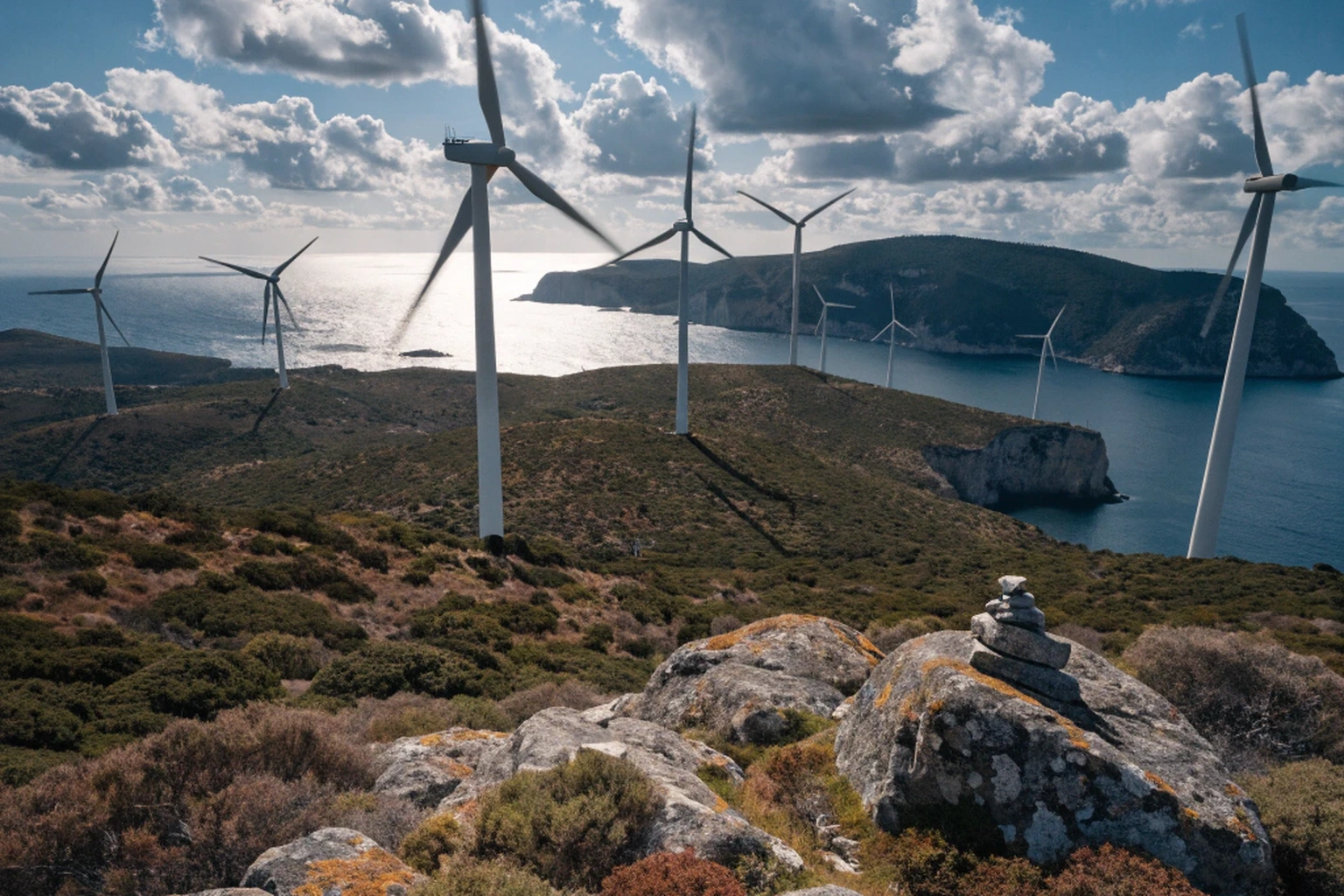
Spain and Green Energy
Spain is a beautiful country. It has a lot of sun and wind. This is very important for energy. Now, Spain uses the sun to make electricity. They use big wind machines too.
Many people work in green energy. They build solar panels and wind farms. This helps the earth. It is a clean way to live. Spain is a leader in this new world.
The government wants a green future. They invest a lot of money. People are happy because the air is clean. Spain is a great example for other countries.
Grammatik-Spotlight
Muster: Present Simple 'Be'
"Spain is a beautiful country."
We use 'is' with singular subjects like 'Spain' or 'It' to describe a fact or state. It connects the subject to an adjective or noun.
Muster: Present Simple (Third Person)
"This helps the earth."
In the present simple, we add an 's' to the end of the verb when the subject is 'he', 'she', or 'it' (including singular things like 'this').
Teste dein Verständnis
10 Fragen · A1 Anfänger · 1 kostenlose Vorschau
Teste, was du aus diesem Artikel gelernt hast. Beantworte alle Fragen und sammle XP!
What does Spain use to make electricity?
Möchtest du das Quiz beenden?
9 weitere Fragen warten auf dich. Registriere dich kostenlos, um das vollständige Quiz freizuschalten und XP zu sammeln!
Kostenlos registrierenHast du schon ein Konto? Anmelden
Gut gemacht!
Weiter üben!
Bereits abgeschlossen — keine zusätzlichen XP
Registriere dich, um XP zu verdienenFragenübersicht
What does Spain use to make electricity?
Deine Antwort:
Richtige Antwort: Sun and wind
Spain uses dirty energy today.
Deine Antwort:
Richtige Antwort: Falsch
What does 'clean' mean?
Deine Antwort:
Richtige Antwort: Not dirty
Spain is a beautiful _____.
Deine Antwort:
Richtige Antwort: country
Spain: A Green Leader in Europe
Spain is a beautiful country with a lot of sun and wind. In the past, Spain bought oil and gas from other countries. Now, the country is changing. It wants to be a leader in green energy. Spain has many large solar farms because the sun shines a lot there. It also has many wind turbines on its hills. These machines make clean electricity for homes and factories.
Green energy is better for the environment than oil because it does not make the air dirty. Today, Spain is faster and better at making renewable energy than many other countries in Europe. The government is investing billions of euros into this new industry. They are also working on green hydrogen. This is a new way to store energy.
The transition is good for the planet and for the Spanish economy. Many people have new jobs in the green sector. Spain is now a very important partner for the rest of the world.
Grammatik-Spotlight
Muster: Comparatives
"Green energy is better for the environment than oil because it does not make the air dirty."
We use 'better than' to compare two things. For short adjectives, we add '-er' (faster), but 'good' becomes 'better'.
Muster: Past Simple
"In the past, Spain bought oil and gas from other countries."
The past simple is used for finished actions. 'Bought' is the irregular past form of the verb 'buy'.
Teste dein Verständnis
11 Fragen · A2 Grundkenntnisse · 1 kostenlose Vorschau
Teste, was du aus diesem Artikel gelernt hast. Beantworte alle Fragen und sammle XP!
Why does Spain have many solar farms?
Möchtest du das Quiz beenden?
10 weitere Fragen warten auf dich. Registriere dich kostenlos, um das vollständige Quiz freizuschalten und XP zu sammeln!
Kostenlos registrierenHast du schon ein Konto? Anmelden
Gut gemacht!
Weiter üben!
Bereits abgeschlossen — keine zusätzlichen XP
Registriere dich, um XP zu verdienenFragenübersicht
Why does Spain have many solar farms?
Deine Antwort:
Richtige Antwort: Because the sun shines a lot
Spain still buys all of its energy from other countries like it did in the past.
Deine Antwort:
Richtige Antwort: Falsch
What does 'environment' mean?
Deine Antwort:
Richtige Antwort: The natural world around us
Spain wants to be a _____ in green energy.
Deine Antwort:
Richtige Antwort: leader
What is green hydrogen?
Deine Antwort:
Richtige Antwort: A new way to store energy
Spain: A New Leader in Clean Energy
Spain is currently undergoing an ambitious economic transformation. For many years, the country has imported fossil fuels like oil and gas from other parts of the world. However, Spain is now becoming a European leader in renewable energy. With its sunny plains and windy mountains, the Iberian Peninsula has a great geographical advantage that the government has used to build a new industry.
The Spanish government has supported this change with a multi-billion euro plan. Today, Spain is a global leader in wind and solar power. Large solar farms have been built in the south, and many wind turbines have been placed on the mountain ranges in the north. This green industry has already created thousands of jobs for local workers and engineers. It is an exciting time for the Spanish economy because it is no longer dependent on other countries for its power.
Furthermore, Spain is now positioning itself as a leader in green hydrogen. This is a special fuel which is created using clean electricity and does not produce any pollution. This technology, which is very modern and expensive, will help Europe to reach its climate goals in the future. Experts believe that Spain could soon export this clean energy to its neighbors.
Many people used to think of Spain only as a holiday destination with beautiful beaches. However, the international community has seen how quickly the country can change. Spain has successfully used its natural resources to protect the environment and grow its economy at the same time. This transition shows that a greener future is possible for everyone.
Grammatik-Spotlight
Muster: Present Perfect Passive
"Large solar farms have been built in the south."
This pattern is used to talk about an action that happened at an unknown time in the past where the focus is on the result. It is formed using 'have/has been' + the past participle.
Muster: Relative Clauses
"This is a special fuel which is created using clean electricity."
Relative clauses give more information about a noun. We use 'which' to provide extra details about objects or ideas.
Teste dein Verständnis
11 Fragen · B1 Mittelstufe · 1 kostenlose Vorschau
Teste, was du aus diesem Artikel gelernt hast. Beantworte alle Fragen und sammle XP!
What is one reason Spain is successful in green energy?
Möchtest du das Quiz beenden?
10 weitere Fragen warten auf dich. Registriere dich kostenlos, um das vollständige Quiz freizuschalten und XP zu sammeln!
Kostenlos registrierenHast du schon ein Konto? Anmelden
Gut gemacht!
Weiter üben!
Bereits abgeschlossen — keine zusätzlichen XP
Registriere dich, um XP zu verdienenFragenübersicht
What is one reason Spain is successful in green energy?
Deine Antwort:
Richtige Antwort: It has a great geographical advantage.
Spain is still completely dependent on other countries for its power.
Deine Antwort:
Richtige Antwort: Falsch
What does 'renewable' mean?
Deine Antwort:
Richtige Antwort: Energy that comes from natural sources and never runs out
Spain is now _____ itself as a leader in green hydrogen.
Deine Antwort:
Richtige Antwort: positioning
Where are many wind turbines located in Spain?
Deine Antwort:
Richtige Antwort: In the mountain ranges
Spain's Green Revolution: From Energy Importer to European Leader
Spain has recently emerged as a formidable frontrunner in the global race towards environmental sustainability. Historically, the country was heavily dependent on imported fossil fuels, which created both economic vulnerability and a significant carbon footprint. However, over the last decade, the nation has successfully pivoted toward a greener future by leveraging its unique geographical features. With its vast, sun-drenched plains in the south and wind-swept mountain ranges in the north, the Iberian Peninsula possesses a natural advantage that has been transformed into a multi-billion euro industry.
The Spanish government has implemented a series of strategic policies, most notably the Integrated National Energy and Climate Plan. This framework is aimed at achieving full decarbonization by 2050, a goal that requires a total overhaul of the existing energy grid. These initiatives have not only fostered environmental protection but have also stimulated robust economic growth. By providing financial incentives for renewable energy companies, the state has encouraged significant investment in infrastructure, leading to the creation of thousands of high-tech jobs. Consequently, Spain now consistently ranks among the top global producers of wind and solar power, often generating more electricity than its domestic market requires.
Furthermore, the country is positioning itself as a pioneer in the production of green hydrogen. This technology, which uses renewable electricity to split water into hydrogen and oxygen, is frequently described as the 'holy grail' of clean energy because it allows for the storage of power. If Spain manages to scale up this production effectively, it could eventually become the 'Green Battery' of Europe, exporting its energy surplus to northern neighbors like France and Germany. Such a shift would fundamentally alter the geopolitical landscape of European energy.
Nevertheless, this transition is not without its critics. Some environmental groups argue that the rapid expansion of massive solar farms may negatively impact local biodiversity and traditional agriculture. There are also concerns regarding the 'just transition' for workers in former coal-mining regions. To address these complex issues, developers are being urged to adopt more inclusive models that benefit rural communities directly. Despite these hurdles, the momentum behind the green revolution remains unstoppable. Spain’s journey illustrates how a nation can redefine its economic identity through innovation and political will, providing a blueprint for others to follow.
Grammatik-Spotlight
Muster: The Passive Voice
"the Iberian Peninsula possesses a natural advantage that has been transformed into a multi-billion euro industry."
The passive voice is used here to focus on the result of the action (the transformation) rather than the specific person who did it. It is formed using 'have/has been' + the past participle.
Muster: First Conditional
"If Spain manages to scale up this production effectively, it could eventually become the 'Green Battery' of Europe."
This pattern is used to talk about possible future events and their likely results. It uses 'if' + present simple, followed by a modal like 'could' or 'will' + base verb.
Muster: Non-defining Relative Clauses
"This technology, which uses renewable electricity to split water into hydrogen and oxygen, is frequently described as the 'holy grail' of clean energy."
These clauses add extra, non-essential information about a noun. They are separated by commas and use relative pronouns like 'which' or 'who'.
Teste dein Verständnis
11 Fragen · B2 Obere Mittelstufe · 1 kostenlose Vorschau
Teste, was du aus diesem Artikel gelernt hast. Beantworte alle Fragen und sammle XP!
What is the primary factor that allows Spain to lead in renewable energy according to the text?
Möchtest du das Quiz beenden?
10 weitere Fragen warten auf dich. Registriere dich kostenlos, um das vollständige Quiz freizuschalten und XP zu sammeln!
Kostenlos registrierenHast du schon ein Konto? Anmelden
Gut gemacht!
Weiter üben!
Bereits abgeschlossen — keine zusätzlichen XP
Registriere dich, um XP zu verdienenFragenübersicht
What is the primary factor that allows Spain to lead in renewable energy according to the text?
Deine Antwort:
Richtige Antwort: Geographical features and strategic policies
Spain aims to achieve full decarbonization by the year 2030.
Deine Antwort:
Richtige Antwort: Falsch
What is the meaning of the word 'surplus' as used in the article?
Deine Antwort:
Richtige Antwort: An amount that is more than what is needed
The country is positioning itself as a _____ in the production of green hydrogen.
Deine Antwort:
Richtige Antwort: pioneer
Which challenge is mentioned regarding the expansion of solar farms?
Deine Antwort:
Richtige Antwort: Potential negative impacts on biodiversity
The Iberian Vanguard: Deciphering Spain’s Green Energy Hegemony
Spain’s metamorphosis from a fossil-fuel-dependent importer to a vanguard of the renewable energy revolution represents a profound paradigm shift in European geopolitics. It is not merely the abundance of sunlight that has propelled this change; rather, it is the strategic exploitation of the Iberian Peninsula's topography through robust policy frameworks and substantial infrastructural investment. What remains most striking is the velocity with which the Spanish state has integrated wind and solar power into its national grid, surpassing many of its northern neighbors in both capacity and innovation. This transition is framed by the National Integrated Energy and Climate Plan (PNIEC), which serves as the roadmap for this ambitious undertaking, targeting a 74% renewable electricity share by 2030. This target is further underpinned by the 'Iberian Exception,' a unique regulatory mechanism that has allowed Spain and Portugal to decouple electricity prices from the volatility of international gas markets.
Central to this transformation is the burgeoning concept of the 'Green Hydrogen Hub.' Rarely does a country possess the confluence of solar intensity and wind consistency necessary to produce hydrogen at scale. By leveraging these geographical endowments, Spain aims to decouple its industrial output from carbon emissions, thereby ensuring long-term economic resilience. Furthermore, the decentralization of energy production offers a potential remedy for the demographic challenges facing rural areas, often referred to as 'Empty Spain.' By situating renewable infrastructure in depopulated regions, the government hopes to stimulate local economies and provide high-tech employment opportunities, creating an environment conducive to regional revitalization.
However, the transition is not without its detractors. Critics point to the ecological impact of sprawling solar farms on local biodiversity and the aesthetic degradation of historical landscapes. To address these concerns, the government has implemented a 'just transition' framework, ensuring that the shift away from coal-mining legacies does not leave vulnerable communities behind. It is through this nuanced approach that Spain seeks to maintain social cohesion while spearheading the continent’s decarbonization efforts. Nevertheless, the path forward requires addressing the intermittency of renewable sources. The expansion of battery storage and the modernization of the high-voltage transmission network are imperative to prevent energy curtailment during peak production hours. By fostering a symbiotic relationship between public policy and private enterprise, Spain is effectively rewriting its economic narrative, transforming a historical energy vulnerability into a competitive advantage that could redefine its role on the global stage. Ultimately, the success of this endeavor hinges on continued technological innovation and cross-border cooperation as Spain solidifies its position as a green energy titan.
Grammatik-Spotlight
Muster: Inversion
"Rarely does a country possess the confluence of solar intensity and wind consistency necessary to produce hydrogen at scale."
Inversion is used after negative or restrictive adverbs like 'rarely' to add emphasis. The auxiliary verb 'does' is placed before the subject 'a country'.
Muster: Cleft Sentences
"What remains most striking is the velocity with which the Spanish state has integrated wind and solar power into its national grid."
A pseudo-cleft sentence starting with 'What' focuses the reader's attention on the specific information that follows the verb 'to be'.
Muster: Nominalisation
"The strategic exploitation of the Iberian Peninsula's topography through robust policy frameworks and substantial infrastructural investment."
Nominalisation involves turning verbs (exploit) into nouns (exploitation) to create a more formal, academic tone and pack more information into a single phrase.
Teste dein Verständnis
12 Fragen · C1 Fortgeschritten · 1 kostenlose Vorschau
Teste, was du aus diesem Artikel gelernt hast. Beantworte alle Fragen und sammle XP!
What is the primary goal of the PNIEC mentioned in the article?
Möchtest du das Quiz beenden?
11 weitere Fragen warten auf dich. Registriere dich kostenlos, um das vollständige Quiz freizuschalten und XP zu sammeln!
Kostenlos registrierenHast du schon ein Konto? Anmelden
Gut gemacht!
Weiter üben!
Bereits abgeschlossen — keine zusätzlichen XP
Registriere dich, um XP zu verdienenFragenübersicht
What is the primary goal of the PNIEC mentioned in the article?
Deine Antwort:
Richtige Antwort: To achieve a 74% renewable electricity share by 2030
The 'Iberian Exception' is a mechanism that links electricity prices directly to international gas market volatility.
Deine Antwort:
Richtige Antwort: Falsch
Which word describes a fundamental change in fundamental assumptions?
Deine Antwort:
Richtige Antwort: Paradigm shift
Spain aims to _____ its industrial output from carbon emissions to ensure resilience.
Deine Antwort:
Richtige Antwort: decouple
What does the term 'Empty Spain' refer to in the context of the article?
Deine Antwort:
Richtige Antwort: Depopulated rural regions facing demographic challenges
The 'just transition' framework aims to support communities previously dependent on coal mining.
Deine Antwort:
Richtige Antwort: Richtig
The Iberian Renaissance: Deciphering Spain’s Hegemony in the Vanguard of Ecological Transition
The Iberian Peninsula, once a peripheral actor in the European energy theater, is currently undergoing a metamorphosis so profound that it borders on an industrial apotheosis. Historically tethered to the caprices of fossil-fuel exporters, Spain is aggressively pivoting toward a paradigm of energy sovereignty. This shift is not merely a fortuitous alignment of geography and climate; rather, it is the result of a meticulously orchestrated strategy designed to leverage the nation’s sun-drenched plateaus and wind-swept cordilleras. As the global community grapples with the existential exigencies of climate change, Spain’s trajectory offers a compelling case study in how a nation might ameliorate its economic prospects through the adoption of green technologies.
Scarcely had the legislative framework for the 'Integrated National Energy and Climate Plan' been ratified when the influx of international capital began to reshape the Castilian landscape. The ubiquity of photovoltaic arrays and wind turbines now serves as a testament to this burgeoning industry. However, the transition is not without its detractors. Critics argue that the rapid proliferation of renewable infrastructure may foment social discord in rural areas, where the aesthetic and ecological impact on local ecosystems is most acute. To address these concerns, it is imperative that the administration ensure the 'just transition' remains more than a mere rhetorical flourish, providing tangible benefits to the agrarian communities that host these behemoth projects.
Central to Spain’s long-term aspirations is the development of green hydrogen—a desideratum for any nation seeking to decarbonize heavy industry. By utilizing surplus renewable energy to power electrolysis, Spain aims to become the primary conduit for hydrogen exports to Northern Europe. Had the geopolitical landscape remained static, the impetus for such a radical shift might have lacked its current urgency. Yet, the recent volatility in global gas markets has accelerated the necessity for a resilient, domestic energy supply. This concomitant drive for security and sustainability has positioned Spain as a de facto leader in the Mediterranean basin.
Notwithstanding the inherent intermittency of solar and wind power, advancements in battery storage and grid management are steadily mitigating these systemic vulnerabilities. The scholarly consensus suggests that while the path to a carbon-neutral economy is fraught with logistical hurdles, the dividends of such a transition—both environmental and fiscal—are incontrovertible. Spain’s leadership, therefore, represents a confluence of political will, geographical endowment, and technological innovation. As the nation navigates this transition, it must remain vigilant lest the momentum falter under the weight of bureaucratic inertia or shifting political tides. Ultimately, the success of the Spanish model will be judged by its ability to harmonize industrial growth with ecological preservation, ensuring that the green transition is as equitable as it is efficacious.
Grammatik-Spotlight
Muster: Negative Adverbial Inversion
"Scarcely had the legislative framework for the 'Integrated National Energy and Climate Plan' been ratified when the influx of international capital began to reshape the Castilian landscape."
When a sentence starts with a negative or restrictive adverb like 'scarcely' or 'hardly', the subject and auxiliary verb are inverted. This structure is used in formal English to emphasize the sequence of events.
Muster: Subjunctive Mood
"It is imperative that the administration ensure the 'just transition' remains more than a mere rhetorical flourish..."
The subjunctive is used after adjectives of urgency or importance (e.g., imperative, essential). In this form, the base verb 'ensure' is used regardless of the subject.
Muster: Inverted Third Conditional
"Had the geopolitical landscape remained static, the impetus for such a radical shift might have lacked its current urgency."
This formal structure replaces 'If the geopolitical landscape had remained...' by omitting 'if' and placing 'had' at the beginning. It discusses hypothetical past situations and their results.
Teste dein Verständnis
12 Fragen · C2 Meisterschaft · 1 kostenlose Vorschau
Teste, was du aus diesem Artikel gelernt hast. Beantworte alle Fragen und sammle XP!
What is the primary factor cited for Spain's transition toward renewable energy?
Möchtest du das Quiz beenden?
11 weitere Fragen warten auf dich. Registriere dich kostenlos, um das vollständige Quiz freizuschalten und XP zu sammeln!
Kostenlos registrierenHast du schon ein Konto? Anmelden
Gut gemacht!
Weiter üben!
Bereits abgeschlossen — keine zusätzlichen XP
Registriere dich, um XP zu verdienenFragenübersicht
What is the primary factor cited for Spain's transition toward renewable energy?
Deine Antwort:
Richtige Antwort: A combination of geographical advantages and strategic planning
The article suggests that the proliferation of renewable infrastructure is universally welcomed in Spain.
Deine Antwort:
Richtige Antwort: Falsch
Which word is synonymous with 'the highest point' in the context of the article?
Deine Antwort:
Richtige Antwort: Apotheosis
The author notes that advancements in battery storage are helpfully _____ the vulnerabilities of wind and solar power.
Deine Antwort:
Richtige Antwort: mitigating
What role does green hydrogen play in Spain's future energy strategy?
Deine Antwort:
Richtige Antwort: It is seen as a essential for decarbonizing heavy industry and for export.
The author argues that the economic dividends of the green transition are debatable and uncertain.
Deine Antwort:
Richtige Antwort: Falsch

