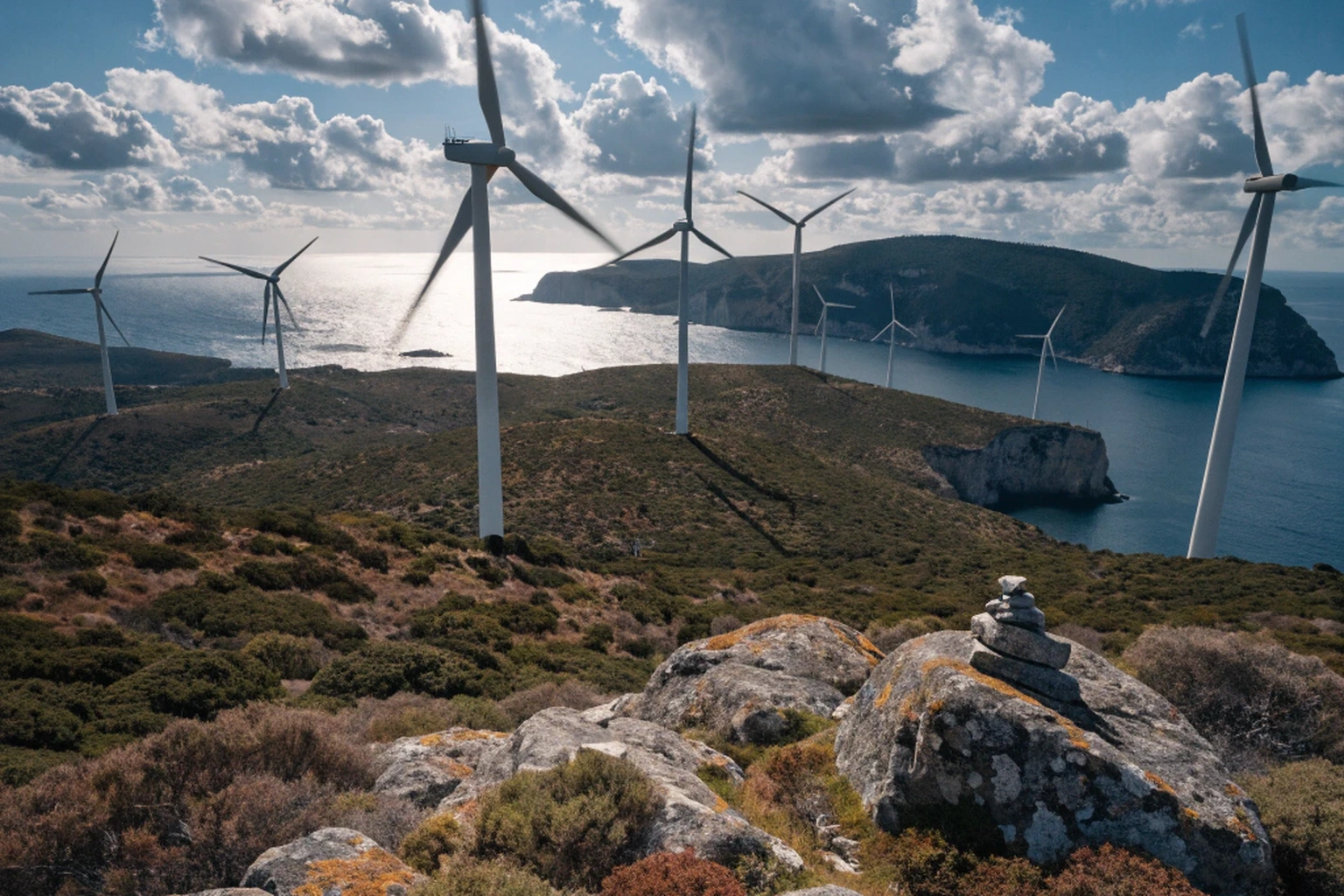
Spain and Green Energy
Spain is a beautiful country. It has a lot of sun and wind. This is very important for energy. Now, Spain uses the sun to make electricity. They use big wind machines too.
Many people work in green energy. They build solar panels and wind farms. This helps the earth. It is a clean way to live. Spain is a leader in this new world.
The government wants a green future. They invest a lot of money. People are happy because the air is clean. Spain is a great example for other countries.
文法スポットライト
パターン: Present Simple 'Be'
"Spain is a beautiful country."
We use 'is' with singular subjects like 'Spain' or 'It' to describe a fact or state. It connects the subject to an adjective or noun.
パターン: Present Simple (Third Person)
"This helps the earth."
In the present simple, we add an 's' to the end of the verb when the subject is 'he', 'she', or 'it' (including singular things like 'this').
理解度をチェック
10 問 · A1 初級 · 無料プレビュー 1回
この記事で学んだことをテストしよう。全問正解してXPを獲得!
What does Spain use to make electricity?
問題の内訳
What does Spain use to make electricity?
あなたの回答:
正解: Sun and wind
Spain uses dirty energy today.
あなたの回答:
正解: 間違い
What does 'clean' mean?
あなたの回答:
正解: Not dirty
Spain is a beautiful _____.
あなたの回答:
正解: country
Spain: A Green Leader in Europe
Spain is a beautiful country with a lot of sun and wind. In the past, Spain bought oil and gas from other countries. Now, the country is changing. It wants to be a leader in green energy. Spain has many large solar farms because the sun shines a lot there. It also has many wind turbines on its hills. These machines make clean electricity for homes and factories.
Green energy is better for the environment than oil because it does not make the air dirty. Today, Spain is faster and better at making renewable energy than many other countries in Europe. The government is investing billions of euros into this new industry. They are also working on green hydrogen. This is a new way to store energy.
The transition is good for the planet and for the Spanish economy. Many people have new jobs in the green sector. Spain is now a very important partner for the rest of the world.
文法スポットライト
パターン: Comparatives
"Green energy is better for the environment than oil because it does not make the air dirty."
We use 'better than' to compare two things. For short adjectives, we add '-er' (faster), but 'good' becomes 'better'.
パターン: Past Simple
"In the past, Spain bought oil and gas from other countries."
The past simple is used for finished actions. 'Bought' is the irregular past form of the verb 'buy'.
理解度をチェック
11 問 · A2 初級 · 無料プレビュー 1回
この記事で学んだことをテストしよう。全問正解してXPを獲得!
Why does Spain have many solar farms?
問題の内訳
Why does Spain have many solar farms?
あなたの回答:
正解: Because the sun shines a lot
Spain still buys all of its energy from other countries like it did in the past.
あなたの回答:
正解: 間違い
What does 'environment' mean?
あなたの回答:
正解: The natural world around us
Spain wants to be a _____ in green energy.
あなたの回答:
正解: leader
What is green hydrogen?
あなたの回答:
正解: A new way to store energy
Spain: A New Leader in Clean Energy
Spain is currently undergoing an ambitious economic transformation. For many years, the country has imported fossil fuels like oil and gas from other parts of the world. However, Spain is now becoming a European leader in renewable energy. With its sunny plains and windy mountains, the Iberian Peninsula has a great geographical advantage that the government has used to build a new industry.
The Spanish government has supported this change with a multi-billion euro plan. Today, Spain is a global leader in wind and solar power. Large solar farms have been built in the south, and many wind turbines have been placed on the mountain ranges in the north. This green industry has already created thousands of jobs for local workers and engineers. It is an exciting time for the Spanish economy because it is no longer dependent on other countries for its power.
Furthermore, Spain is now positioning itself as a leader in green hydrogen. This is a special fuel which is created using clean electricity and does not produce any pollution. This technology, which is very modern and expensive, will help Europe to reach its climate goals in the future. Experts believe that Spain could soon export this clean energy to its neighbors.
Many people used to think of Spain only as a holiday destination with beautiful beaches. However, the international community has seen how quickly the country can change. Spain has successfully used its natural resources to protect the environment and grow its economy at the same time. This transition shows that a greener future is possible for everyone.
文法スポットライト
パターン: Present Perfect Passive
"Large solar farms have been built in the south."
This pattern is used to talk about an action that happened at an unknown time in the past where the focus is on the result. It is formed using 'have/has been' + the past participle.
パターン: Relative Clauses
"This is a special fuel which is created using clean electricity."
Relative clauses give more information about a noun. We use 'which' to provide extra details about objects or ideas.
理解度をチェック
11 問 · B1 中級 · 無料プレビュー 1回
この記事で学んだことをテストしよう。全問正解してXPを獲得!
What is one reason Spain is successful in green energy?
問題の内訳
What is one reason Spain is successful in green energy?
あなたの回答:
正解: It has a great geographical advantage.
Spain is still completely dependent on other countries for its power.
あなたの回答:
正解: 間違い
What does 'renewable' mean?
あなたの回答:
正解: Energy that comes from natural sources and never runs out
Spain is now _____ itself as a leader in green hydrogen.
あなたの回答:
正解: positioning
Where are many wind turbines located in Spain?
あなたの回答:
正解: In the mountain ranges
Spain's Green Revolution: From Energy Importer to European Leader
Spain has recently emerged as a formidable frontrunner in the global race towards environmental sustainability. Historically, the country was heavily dependent on imported fossil fuels, which created both economic vulnerability and a significant carbon footprint. However, over the last decade, the nation has successfully pivoted toward a greener future by leveraging its unique geographical features. With its vast, sun-drenched plains in the south and wind-swept mountain ranges in the north, the Iberian Peninsula possesses a natural advantage that has been transformed into a multi-billion euro industry.
The Spanish government has implemented a series of strategic policies, most notably the Integrated National Energy and Climate Plan. This framework is aimed at achieving full decarbonization by 2050, a goal that requires a total overhaul of the existing energy grid. These initiatives have not only fostered environmental protection but have also stimulated robust economic growth. By providing financial incentives for renewable energy companies, the state has encouraged significant investment in infrastructure, leading to the creation of thousands of high-tech jobs. Consequently, Spain now consistently ranks among the top global producers of wind and solar power, often generating more electricity than its domestic market requires.
Furthermore, the country is positioning itself as a pioneer in the production of green hydrogen. This technology, which uses renewable electricity to split water into hydrogen and oxygen, is frequently described as the 'holy grail' of clean energy because it allows for the storage of power. If Spain manages to scale up this production effectively, it could eventually become the 'Green Battery' of Europe, exporting its energy surplus to northern neighbors like France and Germany. Such a shift would fundamentally alter the geopolitical landscape of European energy.
Nevertheless, this transition is not without its critics. Some environmental groups argue that the rapid expansion of massive solar farms may negatively impact local biodiversity and traditional agriculture. There are also concerns regarding the 'just transition' for workers in former coal-mining regions. To address these complex issues, developers are being urged to adopt more inclusive models that benefit rural communities directly. Despite these hurdles, the momentum behind the green revolution remains unstoppable. Spain’s journey illustrates how a nation can redefine its economic identity through innovation and political will, providing a blueprint for others to follow.
文法スポットライト
パターン: The Passive Voice
"the Iberian Peninsula possesses a natural advantage that has been transformed into a multi-billion euro industry."
The passive voice is used here to focus on the result of the action (the transformation) rather than the specific person who did it. It is formed using 'have/has been' + the past participle.
パターン: First Conditional
"If Spain manages to scale up this production effectively, it could eventually become the 'Green Battery' of Europe."
This pattern is used to talk about possible future events and their likely results. It uses 'if' + present simple, followed by a modal like 'could' or 'will' + base verb.
パターン: Non-defining Relative Clauses
"This technology, which uses renewable electricity to split water into hydrogen and oxygen, is frequently described as the 'holy grail' of clean energy."
These clauses add extra, non-essential information about a noun. They are separated by commas and use relative pronouns like 'which' or 'who'.
理解度をチェック
11 問 · B2 中上級 · 無料プレビュー 1回
この記事で学んだことをテストしよう。全問正解してXPを獲得!
What is the primary factor that allows Spain to lead in renewable energy according to the text?
問題の内訳
What is the primary factor that allows Spain to lead in renewable energy according to the text?
あなたの回答:
正解: Geographical features and strategic policies
Spain aims to achieve full decarbonization by the year 2030.
あなたの回答:
正解: 間違い
What is the meaning of the word 'surplus' as used in the article?
あなたの回答:
正解: An amount that is more than what is needed
The country is positioning itself as a _____ in the production of green hydrogen.
あなたの回答:
正解: pioneer
Which challenge is mentioned regarding the expansion of solar farms?
あなたの回答:
正解: Potential negative impacts on biodiversity
The Iberian Vanguard: Deciphering Spain’s Green Energy Hegemony
Spain’s metamorphosis from a fossil-fuel-dependent importer to a vanguard of the renewable energy revolution represents a profound paradigm shift in European geopolitics. It is not merely the abundance of sunlight that has propelled this change; rather, it is the strategic exploitation of the Iberian Peninsula's topography through robust policy frameworks and substantial infrastructural investment. What remains most striking is the velocity with which the Spanish state has integrated wind and solar power into its national grid, surpassing many of its northern neighbors in both capacity and innovation. This transition is framed by the National Integrated Energy and Climate Plan (PNIEC), which serves as the roadmap for this ambitious undertaking, targeting a 74% renewable electricity share by 2030. This target is further underpinned by the 'Iberian Exception,' a unique regulatory mechanism that has allowed Spain and Portugal to decouple electricity prices from the volatility of international gas markets.
Central to this transformation is the burgeoning concept of the 'Green Hydrogen Hub.' Rarely does a country possess the confluence of solar intensity and wind consistency necessary to produce hydrogen at scale. By leveraging these geographical endowments, Spain aims to decouple its industrial output from carbon emissions, thereby ensuring long-term economic resilience. Furthermore, the decentralization of energy production offers a potential remedy for the demographic challenges facing rural areas, often referred to as 'Empty Spain.' By situating renewable infrastructure in depopulated regions, the government hopes to stimulate local economies and provide high-tech employment opportunities, creating an environment conducive to regional revitalization.
However, the transition is not without its detractors. Critics point to the ecological impact of sprawling solar farms on local biodiversity and the aesthetic degradation of historical landscapes. To address these concerns, the government has implemented a 'just transition' framework, ensuring that the shift away from coal-mining legacies does not leave vulnerable communities behind. It is through this nuanced approach that Spain seeks to maintain social cohesion while spearheading the continent’s decarbonization efforts. Nevertheless, the path forward requires addressing the intermittency of renewable sources. The expansion of battery storage and the modernization of the high-voltage transmission network are imperative to prevent energy curtailment during peak production hours. By fostering a symbiotic relationship between public policy and private enterprise, Spain is effectively rewriting its economic narrative, transforming a historical energy vulnerability into a competitive advantage that could redefine its role on the global stage. Ultimately, the success of this endeavor hinges on continued technological innovation and cross-border cooperation as Spain solidifies its position as a green energy titan.
文法スポットライト
パターン: Inversion
"Rarely does a country possess the confluence of solar intensity and wind consistency necessary to produce hydrogen at scale."
Inversion is used after negative or restrictive adverbs like 'rarely' to add emphasis. The auxiliary verb 'does' is placed before the subject 'a country'.
パターン: Cleft Sentences
"What remains most striking is the velocity with which the Spanish state has integrated wind and solar power into its national grid."
A pseudo-cleft sentence starting with 'What' focuses the reader's attention on the specific information that follows the verb 'to be'.
パターン: Nominalisation
"The strategic exploitation of the Iberian Peninsula's topography through robust policy frameworks and substantial infrastructural investment."
Nominalisation involves turning verbs (exploit) into nouns (exploitation) to create a more formal, academic tone and pack more information into a single phrase.
理解度をチェック
12 問 · C1 上級 · 無料プレビュー 1回
この記事で学んだことをテストしよう。全問正解してXPを獲得!
What is the primary goal of the PNIEC mentioned in the article?
問題の内訳
What is the primary goal of the PNIEC mentioned in the article?
あなたの回答:
正解: To achieve a 74% renewable electricity share by 2030
The 'Iberian Exception' is a mechanism that links electricity prices directly to international gas market volatility.
あなたの回答:
正解: 間違い
Which word describes a fundamental change in fundamental assumptions?
あなたの回答:
正解: Paradigm shift
Spain aims to _____ its industrial output from carbon emissions to ensure resilience.
あなたの回答:
正解: decouple
What does the term 'Empty Spain' refer to in the context of the article?
あなたの回答:
正解: Depopulated rural regions facing demographic challenges
The 'just transition' framework aims to support communities previously dependent on coal mining.
あなたの回答:
正解: 正しい
再生可能エネルギー覇権を巡るスペインの戦略:欧州グリーン移行の牽引役
近年、スペインは歴史上最も野心的な経済変革期の一つ、すなわち化石燃料輸入国から再生可能エネルギーの欧州におけるリーダーへの移行を経験しています。この変革は、単なるエネルギー政策の転換に留まらず、国家の経済構造、産業基盤、そして国際的地位を再定義する戦略的な試みと看做し得るでしょう。イベリア半島が持つ広大な日当たりの良い平野と風が吹き荒れる山岳地帯という、類稀なる地理的優位性は、スペイン政府によって数十億ユーロ規模の産業へと巧みに転換されてきました。
スペインは既に風力発電と太陽光発電において世界的な重鎮であり、急速に「欧州のグリーンハブ」としての地位を確立しつつあります。この地位は、単に豊富な自然エネルギー賦存量に依拠するだけでなく、政府の断固たる政策的コミットメントと、国内外からの潤沢な投資によって盤石なものとなりつつあります。例えば、2021年にはEUからの復興基金「Next Generation EU」の恩恵を受け、再生可能エネルギーインフラへの大規模な投資が加速されました。これにより、グリッドの強化、水素エネルギー研究開発、そしてバッテリー技術革新といった多岐にわたるプロジェクトが推進されています。
しかし、この変革の道のりは平坦ではありません。既存のエネルギー産業からの抵抗、インフラ整備に伴う環境影響への懸念、そして国際市場における技術競争の熾烈化といった課題に直面しています。特に、送電網の老朽化や、再生可能エネルギーの断続性という本質的な問題への対応は、技術革新と政策的調整の両面から継続的な努力を要します。スペイン政府は、これらの課題に対し、スマートグリッド技術の導入や、エネルギー貯蔵システムの開発に積極的に投資することで、安定供給の確保を目指しています。
また、このグリーン移行は、単にクリーンエネルギーへの転換に止まらず、新たな雇用創出と地域経済の活性化をもたらす可能性を秘めています。特に、これまで過疎化が進んでいた農村部において、太陽光発電所の建設や風力タービンの設置が新たな産業機会を生み出し、若者のUターンやIターンを促す起爆剤となり得ると期待されています。これは、スペインが長年抱えてきた地域間格差の是正にも寄与する側面があると言えるでしょう。
国際的な視点から見れば、スペインの取り組みは、他の欧州諸国、ひいては世界全体にとってのモデルケースとなり得ます。再生可能エネルギーの導入拡大だけでなく、そのサプライチェーン全体における自律性と競争力を高めることで、エネルギー安全保障の強化にも貢献しています。特に、ウクライナ情勢に端を発するエネルギー危機は、化石燃料への依存度を低減することの喫緊性を改めて浮き彫りにしました。スペインは、この国際的な潮流の中で、単なる追随者ではなく、明確な方向性を示す先駆者としての役割を担いつつあります。
確かに、再生可能エネルギーへの全面的な移行には、依然として多くの技術的、経済的、そして社会的なハードルが存在します。しかし、スペインが示しているのは、これらの課題を克服し、持続可能な未来を築くための具体的なロードマップです。その経験と知見は、世界が直面する気候変動問題への対処において、看過し得ない貴重な資産となるに違いありません。スペインの事例は、国家規模でのグリーン変革が、経済的繁栄と環境保全を両立させ得ることを雄弁に物語っています。
文法スポットライト
パターン: 〜に他ならない
"この変革は、単なるエネルギー政策の転換に留まらず、国家の経済構造、産業基盤、そして国際的地位を再定義する戦略的な試みと看做し得るでしょう。"
「〜に他ならない」は、「〜であると断言できる」「まさしく〜である」という意味で、ある事柄が、ある特定の性質や状態であることを強く断定する際に用います。名詞や動詞の終止形に接続し、書き言葉や硬い表現で使われることが多いです。
パターン: 〜に留まらず
"この変革は、単なるエネルギー政策の転換に留まらず、国家の経済構造、産業基盤、そして国際的地位を再定義する戦略的な試みと看做し得るでしょう。"
「〜に留まらず」は、「〜だけでなく、さらに広範囲にわたって」という意味を表します。ある事柄が特定の範囲や状態に限定されず、さらにその先へと影響が及ぶことを強調する際に使われます。名詞や動詞の連体形に接続します。
パターン: 〜に端を発する
"特に、ウクライナ情勢に端を発するエネルギー危機は、化石燃料への依存度を低減することの喫緊性を改めて浮き彫りにしました。"
「〜に端を発する」は、「〜が原因となって始まる」「〜がきっかけとなって発生する」という意味で、ある出来事や問題の起源を示す際に使われます。主に書き言葉で用いられ、その後に続く事態の重大性を暗に示すニュアンスがあります。
理解度をチェック
12 問 · C2 マスター · 無料プレビュー 1回
この記事で学んだことをテストしよう。全問正解してXPを獲得!
スペインが「欧州のグリーンハブ」としての地位を確立しつつある要因として、記事中で言及されていないものはどれですか?
問題の内訳
スペインが「欧州のグリーンハブ」としての地位を確立しつつある要因として、記事中で言及されていないものはどれですか?
あなたの回答:
正解: 周辺国からの技術供与
スペインのグリーン移行は、既存のエネルギー産業からの抵抗やインフラ整備に伴う環境影響への懸念といった課題に直面している。
あなたの回答:
正解: 正しい
「賦存量」の最も適切な日本語での定義を選びなさい。
あなたの回答:
正解: 天然資源などが自然の状態で存在する総量
イベリア半島が持つ広大な日当たりの良い平野と風が吹き荒れる山岳地帯という、類稀なる地理的優位性は、スペイン政府によって数十億ユーロ規模の産業へと巧みに_____されてきました。
あなたの回答:
正解: 転換
記事によると、スペインのグリーン移行がもたらす可能性のある副次的な効果として述べられているのはどれですか?
あなたの回答:
正解: 新たな雇用創出と地域経済の活性化
ウクライナ情勢に端を発するエネルギー危機は、化石燃料への依存度を低減することの喫緊性を改めて浮き彫りにしたと記事は述べている。
あなたの回答:
正解: 正しい

