









army in 30 Sekunden
- An army is a large, organized military force primarily for land combat.
- It follows a strict hierarchy and is funded by a government.
- Figuratively, it describes any large, disciplined group of people or animals.
- Commonly used in phrases like 'join the army' or 'army of volunteers'.
The term army primarily refers to a massive, structured organization of soldiers trained to fight on land. It represents the backbone of a nation's defense, characterized by a strict hierarchy, specialized weaponry, and strategic discipline. Beyond the literal military application, 'army' is frequently used metaphorically to describe any large, organized group of people working toward a common goal, whether that be an army of volunteers or an army of ants. The essence of the word lies in its scale and its organization; it is not merely a crowd, but a force.
- Military Definition
- A permanent, organized military force maintained by a state, primarily for land warfare.
- Figurative Definition
- A large number of people or things, typically organized for a specific task or exhibiting collective behavior.
- Verb Usage (Rare)
- To provide with an army or to organize into a military-like structure.
"The army marched across the border at dawn, marking the beginning of the campaign."
Historically, armies have been the instruments of empires and the defenders of sovereignty. From the Roman legions to modern mechanized divisions, the structure of an army reflects the technology and social organization of its time. In modern English, we also see it applied to non-human contexts, such as an army of locusts, emphasizing the overwhelming number and the destructive potential of the group.
"An army of lawyers was hired to handle the complex merger."
- Collective Noun
- Used for soldiers, but also for ants, caterpillars, and frogs.
"He faced an army of critics after his controversial speech."
Using the word army correctly requires understanding its scale. It is rarely used for small groups; it implies hundreds, thousands, or millions. In a military context, it is a specific unit of organization, usually consisting of multiple corps. In daily conversation, it adds a sense of magnitude and seriousness to your description.
- In the Army
- Used when someone is a member of the military branch (e.g., 'He is in the army').
- Join the Army
- The standard phrase for enlisting.
"After graduating, she decided to join the army to serve her country."
When using 'army' as a verb, which is quite rare and often literary, it means to arm or to equip with military force. For example, 'The king sought to army his borders against the northern threat.' However, for B2 learners, focusing on the noun usage is far more practical. Figuratively, 'army' pairs well with 'of' followed by a plural noun.
"The country maintains a standing army of over 200,000 personnel."
You will encounter 'army' in news reports concerning geopolitics, history documentaries, and fictional media like war movies or fantasy novels. In the news, it often appears in discussions about defense budgets, international conflicts, or disaster relief efforts where the military is deployed.
"The army was called in to help with the flood recovery efforts."
In business contexts, you might hear it used to describe a large workforce. A CEO might boast about having an 'army of developers' working on a new app. This highlights the discipline and collective power of the team. In sports, fans are sometimes referred to as an 'army', such as the 'Red Army' of Manchester United fans, signifying their loyalty and overwhelming presence.
A frequent mistake is confusing 'army' with 'military'. While often used interchangeably, 'military' is the broad term encompassing all branches (Army, Navy, Air Force, Marines), while 'army' specifically refers to land forces. Don't say 'The army flew the jets' unless the army specifically has an aviation wing; usually, 'The Air Force' is more accurate.
- Mistake: Army vs. Soldier
- 'Army' is the group; 'soldier' is the individual. Don't say 'I saw an army on the street' if you only saw one person.
"Incorrect: He is an army. Correct: He is a soldier in the army."
Another error is using 'army' for a disorganized group. If a group of people is chaotic and without a leader, 'mob' or 'crowd' is better. 'Army' implies a level of discipline and command structure.
Several words share semantic space with 'army', but each has a distinct nuance. Understanding these differences will elevate your vocabulary from B2 to C1.
- Legion
- Often used for ancient Roman forces or to describe a vast, indefinite number (e.g., 'Their supporters are legion').
- Horde
- Implies a large, often perceived as uncivilized or disorganized, group. Usually has a negative connotation.
- Troops
- Refers to the soldiers themselves, often used when counting or discussing deployment (e.g., '1,000 troops were sent').
"The horde descended upon the village, unlike the disciplined army that followed."
How Formal Is It?
Schwierigkeitsgrad
Wichtige Grammatik
Collective nouns and verb agreement
Prepositions of place (in the army)
Compound nouns (army base)
The definite article with institutions (The Army)
Passive voice in reporting military actions
Beispiele nach Niveau
The army has many soldiers.
L'armée a beaucoup de soldats.
Singular noun 'army' takes a singular verb 'has'.
He is in the army.
Il est dans l'armée.
Preposition 'in' is used for membership.
The army is big.
L'armée est grande.
Simple subject-verb-adjective structure.
I see the army.
Je vois l'armée.
Direct object 'the army'.
The army wears green.
L'armée porte du vert.
Present simple for general truth.
They join the army.
Ils rejoignent l'armée.
Verb 'join' is common with 'army'.
The army helps people.
L'armée aide les gens.
Third person singular -s on 'helps'.
My brother is in the army.
Mon frère est dans l'armée.
Possessive 'my' with 'brother'.
The army protects the country.
L'armée protège le pays.
Present simple for a role/function.
She wants to join the army next year.
Elle veut rejoindre l'armée l'année prochaine.
Infinitive 'to join' after 'wants'.
The army marched through the city.
L'armée a défilé dans la ville.
Past simple 'marched'.
There is a large army near the border.
Il y a une grande armée près de la frontière.
'There is' for existence.
The army uses many trucks.
L'armée utilise beaucoup de camions.
Plural 'trucks' with 'many'.
He left the army after five years.
Il a quitté l'armée après cinq ans.
Past simple 'left'.
The army built a bridge quickly.
L'armée a construit un pont rapidement.
Adverb 'quickly' modifying 'built'.
Is the army very strong?
L'armée est-elle très forte ?
Question form with 'is'.
The army was deployed to help after the earthquake.
L'armée a été déployée pour aider après le séisme.
Passive voice 'was deployed'.
An army of volunteers cleaned the beach.
Une armée de bénévoles a nettoyé la plage.
Figurative use of 'army of'.
He has been in the army for a decade.
Il est dans l'armée depuis une décennie.
Present perfect 'has been' for duration.
The army's main goal is national security.
L'objectif principal de l'armée est la sécurité nationale.
Possessive 'army's'.
They are training the new army recruits.
Ils forment les nouvelles recrues de l'armée.
Present continuous 'are training'.
The army provides food and medical care.
L'armée fournit de la nourriture et des soins médicaux.
Parallel structure 'food and medical care'.
Without an army, the country felt vulnerable.
Sans armée, le pays se sentait vulnérable.
Preposition 'without'.
The army moved silently through the forest.
L'armée s'est déplacée silencieusement dans la forêt.
Adverb 'silently'.
The government decided to increase the army's budget.
Le gouvernement a décidé d'augmenter le budget de l'armée.
Infinitive phrase 'to increase...'.
An army of ants invaded the kitchen overnight.
Une armée de fourmis a envahi la cuisine pendant la nuit.
Collective noun for insects.
The general commanded the army with great skill.
Le général commandait l'armée avec une grande habileté.
Prepositional phrase 'with great skill'.
The rebel army seized control of the capital.
L'armée rebelle a pris le contrôle de la capitale.
Compound noun 'rebel army'.
Joining the army requires a high level of physical fitness.
Rejoindre l'armée nécessite un haut niveau de forme physique.
Gerund 'Joining' as subject.
The army was criticized for its slow response.
L'armée a été critiquée pour sa réponse lente.
Passive voice + preposition 'for'.
An army of lawyers prepared for the trial.
Une armée d'avocats s'est préparée pour le procès.
Figurative use for professionals.
The standing army is always ready for combat.
L'armée de métier est toujours prête au combat.
Adjective 'standing' meaning permanent.
The sheer scale of the invading army was unprecedented.
L'ampleur même de l'armée d'invasion était sans précédent.
Adjective 'unprecedented'.
He commanded an army of bureaucrats from his office.
Il commandait une armée de bureaucrates depuis son bureau.
Metaphorical extension to administration.
The army's logistics were strained by the long winter.
La logistique de l'armée a été mise à rude épreuve par le long hiver.
Plural verb 'were' with 'logistics'.
A professional army is essential for modern deterrence.
Une armée professionnelle est essentielle pour la dissuasion moderne.
Abstract noun 'deterrence'.
The army acted as a stabilizing force in the region.
L'armée a agi comme une force de stabilisation dans la région.
Idiomatic 'acted as'.
The king sought to army his borders against the threat.
Le roi chercha à armer ses frontières contre la menace.
Rare verb usage of 'army'.
An army of protestors gathered outside the parliament.
Une armée de manifestants s'est rassemblée devant le parlement.
Figurative use for political action.
The army's hierarchy is strictly meritocratic.
La hiérarchie de l'armée est strictement méritocratique.
Adverb 'strictly' with adjective 'meritocratic'.
The transition from a conscript to a professional army was fraught with difficulty.
La transition d'une armée de conscription à une armée professionnelle a été semée d'embûches.
Phrase 'fraught with' meaning full of.
The army serves as the ultimate arbiter of state power.
L'armée sert d'arbitre ultime du pouvoir d'État.
Formal 'arbiter'.
The sheer inertia of the massive army made rapid pivots impossible.
L'inertie même de l'armée massive rendait les pivots rapides impossibles.
Metaphorical 'inertia'.
They deployed an army of lobbyists to influence the legislation.
Ils ont déployé une armée de lobbyistes pour influencer la législation.
Verb 'deployed' used figuratively.
The army's doctrine has shifted toward asymmetrical warfare.
La doctrine de l'armée s'est orientée vers la guerre asymétrique.
Technical term 'asymmetrical warfare'.
The historical narrative often glorifies the army's role in nation-building.
Le récit historique glorifie souvent le rôle de l'armée dans la construction de la nation.
Compound noun 'nation-building'.
The army's presence was a tacit reminder of the regime's authority.
La présence de l'armée était un rappel tacite de l'autorité du régime.
Adjective 'tacit'.
To army a nation is to commit its resources to the possibility of destruction.
Armer une nation, c'est engager ses ressources dans la possibilité de la destruction.
Infinitive as subject (verb usage).
Häufige Kollokationen
Häufige Phrasen
Wird oft verwechselt mit
Redewendungen & Ausdrücke
Leicht verwechselbar
An armory is a place where weapons are kept; an army is the group of people.
An armada is a fleet of ships; an army is on land.
A troop is a small unit; an army is the whole organization.
A regiment is a specific subdivision of an army.
A militia is often a non-professional or emergency force, unlike a regular army.
Satzmuster
Wortfamilie
Verwandt
So verwendest du es
Capitalize 'Army' when it refers to a specific national organization (e.g., the US Army).
Usually implies a positive or neutral sense of organization, but can be negative (army of pests).
Military is the whole; army is the land part.
- Saying 'The army flew the planes' (usually the Air Force).
- Using 'army' to describe a single soldier.
- Confusing 'army' with 'armada' (ships).
- Misspelling the plural as 'armys'.
- Using 'army' for a small, unorganized group.
Tipps
Use specific branches
If you are writing an essay, try to use 'infantry' or 'cavalry' for specific parts of the army. This shows a higher level of English proficiency and makes your writing more descriptive.
Collective Noun Agreement
Treat 'army' as a singular noun in most cases. 'The army is moving' sounds more natural than 'The army are moving' in almost all international English contexts.
Figurative Impact
Use 'an army of' to emphasize the power of a group. 'An army of volunteers' sounds much more impressive and organized than 'a lot of volunteers'.
National Variations
Be aware that in some countries, 'The Army' is the only military force, while in others, it is just one of many. Research the country you are talking about to be accurate.
Pluralization
Remember the 'y' to 'ies' rule. One army, two armies. This is a common rule for nouns ending in a consonant plus 'y'.
Enunciation
Don't confuse 'army' with 'armory'. The 'y' at the end of 'army' is a long 'ee' sound, while 'armory' has an extra syllable.
Identify the branch
When listening to news, if they say 'troops', they might mean any branch. If they say 'the army', they specifically mean the land forces.
Marches on its stomach
This famous idiom means that an army (or any group) needs good food and supplies to function effectively. Use it in business contexts too!
Join vs. Enlist
'Join the army' is common, but 'enlist in the army' is more formal and specific to the process of signing up.
Terracotta Army
Mentioning the 'Terracotta Army' is a great way to show cultural knowledge when discussing history or art in English.
Einprägen
Wortherkunft
Middle English, from Old French 'armée'
Kultureller Kontext
The British Army does not have 'Royal' in its title, unlike the Royal Navy, because it historically belonged to Parliament, not just the Monarch.
The Army is the oldest branch of the US military, established in 1775.
The People's Liberation Army (PLA) is the largest standing army in the world.
Im Alltag üben
Kontexte aus dem Alltag
Gesprächseinstiege
"Have you ever considered joining the army?"
"What role do you think the army should play in disaster relief?"
"Why do you think people use the phrase 'army of volunteers'?"
"Is military service mandatory in your country?"
"What is the most famous army in history, in your opinion?"
Tagebuch-Impulse
Describe a time you felt like you were part of an 'army' working toward a goal.
If you had an army of 1,000 people to help you with one task, what would it be?
Write about the pros and cons of a country having a large standing army.
How has the concept of an army changed with the invention of technology?
Imagine a world without any armies. What would it look like?
Häufig gestellte Fragen
10 FragenThe military is an umbrella term for all armed forces, including the navy and air force. The army specifically refers to the branch that operates on land. In some countries, people use 'army' loosely to mean 'military', but in formal contexts, they are distinct.
Yes, 'army' is the collective noun for several animals, most notably ants, caterpillars, and frogs. Using 'an army of ants' is both scientifically correct and common in everyday English to describe a large, moving group of insects.
In American English, it is almost always 'the army is'. In British English, both are acceptable, though 'the army is' is more common when referring to the institution, and 'the army are' might be used when thinking of the individual soldiers.
A standing army is a permanent military force composed of full-time professional soldiers. It is maintained during times of peace as well as war, unlike a reserve force or a militia that is only called up during emergencies.
As a verb, 'to army' means to provide with an army or to organize into an army. It is very rare and mostly found in older literature or very formal writing. You might see it in a sentence like 'The lord sought to army his vassals'.
An 'army brat' is a slang term (often used affectionately) for a child whose parent is a career soldier in the army. These children often move frequently and grow up on military bases, leading to a unique cultural upbringing.
The Salvation Army is a Christian denominational church and international charitable organization. It uses a quasi-military structure (with ranks like 'Captain' and 'General') to organize its humanitarian work and social services.
A 'one-man army' is an idiom used to describe a single person who is extremely effective, powerful, or capable of doing the work of many people. It is often used in the context of action movies or sports.
The word comes from the Latin 'armata', which means 'armed'. Historically, it referred to any group of people who were armed for combat. Over time, it became the specific name for the land-based military force.
An army implies discipline, hierarchy, and official state backing. A 'horde' usually implies a large, disorganized, and often frightening or 'uncivilized' group. 'Horde' often has a negative or derogatory connotation.
Teste dich selbst 180 Fragen
/ 180 correct
Perfect score!
Summary
The word 'army' signifies both a literal military institution for land warfare and a metaphorical concept for any massive, organized force characterized by discipline and a unified purpose.
- An army is a large, organized military force primarily for land combat.
- It follows a strict hierarchy and is funded by a government.
- Figuratively, it describes any large, disciplined group of people or animals.
- Commonly used in phrases like 'join the army' or 'army of volunteers'.
Use specific branches
If you are writing an essay, try to use 'infantry' or 'cavalry' for specific parts of the army. This shows a higher level of English proficiency and makes your writing more descriptive.
Collective Noun Agreement
Treat 'army' as a singular noun in most cases. 'The army is moving' sounds more natural than 'The army are moving' in almost all international English contexts.
Figurative Impact
Use 'an army of' to emphasize the power of a group. 'An army of volunteers' sounds much more impressive and organized than 'a lot of volunteers'.
National Variations
Be aware that in some countries, 'The Army' is the only military force, while in others, it is just one of many. Research the country you are talking about to be accurate.
Beispiel
After finishing college, he spent two years serving in the army.
Verwandte Inhalte
In Videos ansehen
 13:10
13:10
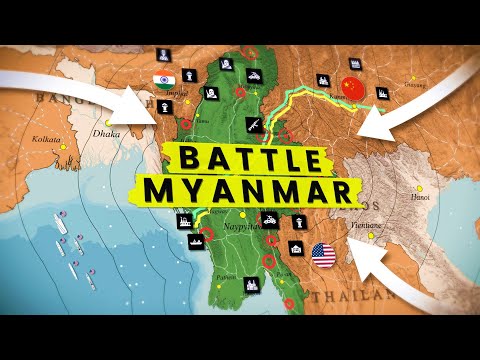
Inside the world’s deadliest proxy conflict
"After finishing college, he spent two years serving in the army."
 18:25
18:25
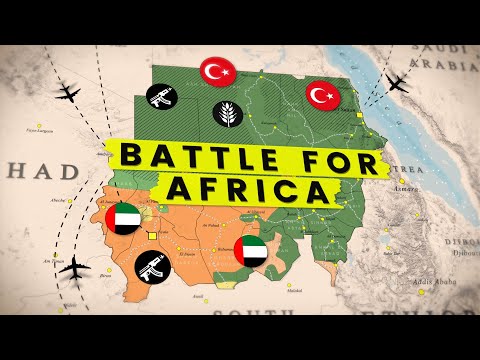
Inside Turkey and the UAE’s secret war
"After finishing college, he spent two years serving in the army."
 1:45
1:45
The Great Escape (1963) & Once Upon a Time... in Hollywood (2019) Side-by-Side Comparison
"After finishing college, he spent two years serving in the army."
Im Kontext lernen
Dieses Wort in anderen Sprachen
Mehr Military Wörter
warheads
B2Der Sprengkopf einer Rakete oder eines Torpedos.
gun
B1Eine Waffe, die Projektile durch ein Metallrohr abfeuert.
warriors
B1Ein Krieger ist ein tapferer oder erfahrener Soldat oder Kämpfer, besonders in der Vergangenheit. Der Begriff impliziert oft ein Gefühl von Ehre, Geschicklichkeit und Mut im Kampf.
battle
B1Eine Schlacht ist ein organisierter Kampf zwischen bewaffneten Kräften.
arsenal
C1Ein Arsenal ist eine Sammlung von Waffen oder im übertragenen Sinne eine große Auswahl an Ressourcen oder Fähigkeiten.
multicentcide
C1Systematische Zerstörung oder Neutralisierung mehrerer Kernzentren innerhalb eines Systems.
marine
B2Ein Marine ist ein Soldat, der für den Kampf zu Lande und zu Wasser ausgebildet ist, oft Teil einer Marineinfanterie. (Ein Marine ist ein Mitglied einer Militärtruppe, die speziell für den Einsatz sowohl auf Schiffen als auch an Land ausgebildet ist und sich oft auf Angriffe vom Meer auf Strände spezialisiert.)
bomber
B2Ein Bomber ist ein Militärflugzeug, das zum Abwerfen von Bomben konstruiert wurde.
missiles
B1Raketen oder Flugkörper sind Objekte, die auf ein Ziel abgefeuert oder geworfen werden.
bombing
B2Der Bombenangriff wurde am frühen Morgen durchgeführt.

