









wildland in 30 Sekunden
- Wildland refers to vast, uncultivated, and undeveloped natural areas like forests and grasslands that exist in their original state without human infrastructure.
- It is a technical term frequently used in environmental science, land management, and news reports, particularly concerning wildfire prevention and conservation efforts.
- The word emphasizes the ecological value of land that is not used for agriculture or urban development, highlighting its role in supporting biodiversity.
- Commonly seen in phrases like 'wildland fire' or 'wildland-urban interface,' it distinguishes natural landscapes from structural or manicured environments like parks.
The term wildland is a specialized noun used to describe vast, uncultivated, and undeveloped stretches of land that remain in their natural state. Unlike a park which might be manicured, or a farm which is strictly managed for production, a wildland is characterized by its lack of human infrastructure and its reliance on natural ecological processes. It is a term frequently encountered in environmental science, geography, and land management. When we speak of wildlands, we are often referring to forests, grasslands, shrublands, and deserts that have not been significantly altered by urban sprawl or industrial agriculture. This word carries a weight of ecological significance, suggesting a space where biodiversity thrives without the direct interference of human engineering.
- Ecological Context
- In ecology, wildland represents a baseline for environmental health, providing habitats that are essential for the survival of numerous species that cannot adapt to urban or agricultural environments.
People use this word most often when discussing conservation efforts, wildfire management, and the protection of natural resources. It is a more technical and encompassing term than 'forest' or 'field.' For instance, a 'wildland fire' is a specific term used by emergency services to describe a fire occurring in these undeveloped areas, distinguishing it from a structural fire in a city. The use of 'wildland' implies a respect for the land's inherent value and its role in the global ecosystem, such as carbon sequestration and water filtration. It is a word that bridges the gap between the romantic notion of 'the wild' and the scientific reality of 'natural resource management.'
The conservation group worked tirelessly to ensure that the vast wildland remained untouched by the proposed highway expansion.
Furthermore, the concept of wildland is central to the 'Wildland-Urban Interface' (WUI), a term used by urban planners to describe the zone where human development meets undeveloped natural areas. This is a critical area for study because it is where the risks of natural disasters, like wildfires, intersect with human populations. Understanding what constitutes a wildland helps in creating better policies for sustainable development and environmental protection. It is not just about 'empty space'; it is about land that is actively performing ecological functions that are vital for human survival, even if we do not live directly upon it.
- Management Context
- Land managers use the term to categorize areas that require minimal intervention but high levels of monitoring for invasive species and fire risks.
In literature and environmental writing, wildland evokes a sense of the sublime and the primordial. It represents the parts of the earth that have escaped the domesticating hand of man. Writers use it to contrast the chaotic, organic growth of nature with the rigid, planned structures of civilization. When you read about wildlands in a report, you should visualize a complex web of life, from the smallest fungi in the soil to the largest predators at the top of the food chain, all existing in a delicate balance that has evolved over millennia. The preservation of wildland is often seen as a moral imperative for future generations, ensuring that the planet retains its biological heritage.
Mapping the wildland corridors is essential for allowing migratory species to move freely between protected habitats.
Finally, the term is often used in the plural, 'wildlands,' to refer to a collection of different natural areas within a region. This pluralization emphasizes the diversity of landscapes—tundra, marshland, and prairie—that all fall under the umbrella of undeveloped territory. Whether it is a government agency discussing land use or an activist group fighting for a new national park, 'wildland' serves as a powerful descriptor for the earth's remaining natural frontiers. It is a word of both beauty and utility, reminding us of the world that exists beyond our paved streets and manicured lawns.
- Policy Context
- Governmental policies often designate specific zones as wildland to prevent any form of commercial extraction or permanent settlement.
The state's wildland policy focuses on restoring native vegetation and managing controlled burns.
Hikers are encouraged to follow 'Leave No Trace' principles when venturing into the deep wildland.
Using the word wildland correctly requires an understanding of its role as a collective noun for natural spaces. It is typically used to describe the land itself rather than the animals living on it (which would be 'wildlife'). When constructing sentences, it often functions as a subject or an object that represents a large geographic area. For example, you might say, 'The wildland provides a buffer against climate change.' Here, 'wildland' is the actor, performing a service for the environment. It can also be used as a modifier, as in 'wildland resources' or 'wildland ecosystems,' where it specifies the type of resources or ecosystems being discussed.
- Subject Usage
- The wildland stretched for hundreds of miles, offering a glimpse into the world before industrialization.
In more technical writing, you will see 'wildland' paired with verbs related to management, preservation, and threat. Common verbs include 'conserve,' 'protect,' 'manage,' 'encroach,' and 'threaten.' For instance, 'Urban development continues to encroach upon the local wildland.' This sentence highlights the conflict between human expansion and natural preservation. Notice how 'wildland' is treated as a singular entity, even though it encompasses many different types of plants and terrains. This singular usage emphasizes the unity of the ecosystem.
Effective wildland management requires a deep understanding of local fire cycles and plant succession.
When using the plural 'wildlands,' the focus shifts to a variety of different areas or a broad regional perspective. 'The wildlands of the American West are diverse, ranging from arid deserts to alpine forests.' Using the plural form allows the speaker to acknowledge the vast differences in climate and biology across different undeveloped areas. It is also common in the names of organizations, such as 'The Wildlands Network,' which aims to connect disparate natural areas to allow for wildlife movement. In this context, 'wildlands' serves as a rallying cry for large-scale conservation.
- Object Usage
- The government designated the area as a protected wildland to prevent mining operations.
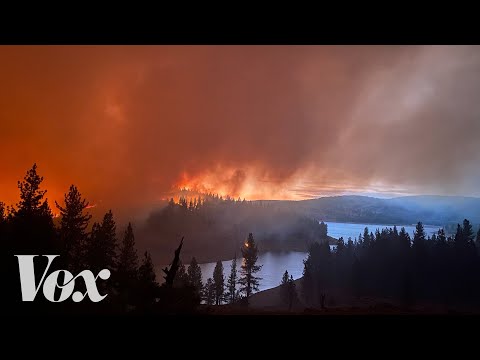
Another common usage is in the context of fire science. The term 'wildland fire' is the standard way to refer to any non-structure fire that occurs in the vegetation. You might see sentences like, 'The wildland fire was fueled by dry brush and high winds.' In this case, 'wildland' acts as an adjective modifying 'fire.' This is a very common construction in news reports and safety briefings. It distinguishes the event from a house fire or a controlled agricultural burn. Understanding this distinction is vital for anyone working in emergency services or environmental policy.
Scientists are studying how wildland ecosystems recover after a period of prolonged drought.
Finally, 'wildland' can be used in a more philosophical or literary sense to represent the unknown or the untamed. 'He felt a strange pull toward the wildland, away from the noise of the city.' Here, the word takes on a more evocative quality, representing a place of solitude and reflection. While the word is technical, its roots in 'wild' allow it to carry this emotional weight. Whether you are writing a scientific paper or a personal essay, 'wildland' provides a precise yet evocative way to describe the natural world in its purest form.
- Adjectival Usage
- The wildland habitat is crucial for the survival of the endangered spotted owl.
The project aims to restore the wildland to its pre-industrial state by removing invasive species.
Many rural communities are located in the wildland-urban interface, increasing their vulnerability to fires.
You are most likely to hear the word wildland in professional, academic, or news-related contexts. It is a staple of environmental reporting, especially during the summer months when wildfire risks are high. News anchors will often report on 'wildland firefighters' battling blazes in remote areas. In these broadcasts, the word is used to immediately signal to the audience that the fire is not in a city or town, but in the natural landscape. This helps listeners visualize the scale and the type of terrain involved, which usually requires different firefighting techniques than urban fires.
- News Media
- 'Crews are making progress on the wildland fire that has already consumed five thousand acres of forest.'
In academic settings, such as university lectures on ecology, geography, or environmental science, 'wildland' is used as a precise descriptor. Professors might discuss 'wildland fragmentation,' which refers to how roads and buildings break up large natural areas into smaller, isolated pieces. This is a critical concept in conservation biology because fragmented wildlands cannot support the same level of biodiversity as large, contiguous ones. Students are expected to use 'wildland' in their research papers and presentations to demonstrate a professional grasp of the subject matter. It is a word that carries academic authority.
The professor explained that wildland preservation is the cornerstone of any successful climate mitigation strategy.
Government agencies and non-profit organizations also use 'wildland' extensively in their documentation and public outreach. The U.S. Forest Service, for example, frequently uses the term in its management plans. You might see signs at the entrance of a national forest that mention 'wildland ethics' or 'wildland safety.' In these contexts, the word is used to educate the public about their responsibilities when visiting natural areas. It frames the land not just as a playground for recreation, but as a complex system that needs to be respected and protected. When an organization uses 'wildland,' they are often appealing to a sense of stewardship.
- Government Reports
- 'The annual wildland health assessment shows a decline in native grass species due to overgrazing.'
You might also hear 'wildland' in the context of outdoor recreation and adventure sports. Hikers, climbers, and backcountry skiers often use the term to describe the remote areas they explore. However, even in these informal settings, the word usually retains a bit of its technical flavor. A hiker might say, 'We’re heading deep into the wildland this weekend,' implying a trip that goes beyond the standard, well-marked trails. It suggests a higher level of difficulty and a more authentic experience of nature. In this way, 'wildland' becomes a badge of honor for those who seek out the most remote parts of the world.
The documentary highlighted the struggle of indigenous communities to protect their ancestral wildland from logging interests.
Finally, the word is increasingly heard in discussions about urban planning and 'green infrastructure.' As cities look for ways to become more resilient to climate change, they are looking at how to integrate 'wildland' elements—like natural wetlands or forests—into their urban designs. You might hear a city planner talk about 'wildland corridors' that allow nature to penetrate into the heart of the city. This usage reflects a growing recognition that the 'wild' and the 'urban' are not completely separate, but are part of a single, interconnected system. Hearing 'wildland' in a city council meeting shows how far the term has traveled from its purely rural origins.
- Urban Planning
- 'Our goal is to create a wildland buffer that protects the city from storm surges and provides a habitat for local birds.'
The podcast discussed the psychological benefits of spending time in wildland environments, away from digital distractions.
During the fire season, the local radio station provides daily updates on wildland fuel moisture levels.
One of the most frequent mistakes people make is confusing wildland with 'wildlife.' While they are related, they refer to completely different things. 'Wildland' refers to the physical area—the land, the trees, the rocks, and the water. 'Wildlife' refers to the animals that live in that area—the bears, the birds, and the insects. You cannot say 'The wildland was running through the forest'; you must say 'The wildlife was running through the wildland.' This distinction is crucial for clear communication, especially in scientific or environmental contexts where precision is expected.
- Wildland vs. Wildlife
- Mistake: 'We saw a lot of wildland on our safari.' Correct: 'We saw a lot of wildlife in the wildland on our safari.'
Another common error is using 'wildland' as a synonym for 'wilderness' without considering the nuance. While they are very similar, 'wilderness' often carries a more legal or philosophical connotation. In the United States, for example, a 'Wilderness Area' is a specific legal designation with very strict rules (no motorized vehicles, no permanent structures). 'Wildland' is a broader, more general term that includes these wilderness areas but also includes other undeveloped lands that might have fewer restrictions. Using 'wildland' when you specifically mean a legally protected 'wilderness' can lead to confusion in policy discussions.
Don't confuse the general term wildland with the specific legal designation of 'Wilderness.'
A third mistake is using 'wildland' to describe a park or a garden. A city park, even if it has many trees, is not a wildland because it is heavily managed, landscaped, and surrounded by urban development. A wildland must be 'uncultivated' and 'undeveloped.' If the land is regularly mowed, planted with non-native species, or has paved paths every few meters, it has lost its status as a wildland. Using the word too loosely can devalue its meaning and obscure the importance of truly natural, untouched spaces. It’s better to use 'green space' or 'parkland' for managed areas.
- Wildland vs. Parkland
- Mistake: 'Central Park is a beautiful wildland in the middle of New York.' Correct: 'Central Park is a beautiful parkland in the middle of New York.'
Spelling and grammar also trip people up. Some might try to write it as two words ('wild land'), which is not necessarily wrong in a general sense, but 'wildland' as a single word is the standard term in environmental science and land management. Additionally, because it is a collective noun, people sometimes struggle with whether to use it as singular or plural. As mentioned before, 'wildland' (singular) refers to the concept or a specific area, while 'wildlands' (plural) refers to multiple areas. Using 'wildlands' when you are talking about a single forest can sound slightly off-target.
The report highlighted the need for better wildland (not wild land) protection strategies.
Finally, avoid using 'wildland' to describe land that is simply 'empty' or 'abandoned.' An abandoned parking lot or a vacant city lot is not a wildland. A wildland is a functioning ecosystem. While nature might eventually reclaim an abandoned lot, it takes a long time before it can be considered a wildland. The term implies a level of ecological integrity and natural history that a simple 'empty lot' does not possess. Be careful not to use 'wildland' as a fancy word for 'trashy' or 'neglected' land.
- Wildland vs. Vacant Land
- Mistake: 'The wildland behind the old factory is full of rusted cars.' Correct: 'The vacant lot behind the old factory is full of rusted cars.'
True wildland is a complex ecosystem, not just a place where humans have stopped building.
Always check if the area you are describing is truly 'uncultivated' before calling it a wildland.
While wildland is a precise term, there are several other words you can use depending on the context and the level of formality you want to achieve. The most common alternative is 'wilderness.' As discussed, 'wilderness' is often more evocative and suggests a place completely untouched by man. It is a great choice for creative writing or philosophical discussions. However, if you are writing a technical report or a news story about fire management, 'wildland' is the more appropriate and professional choice.
- Wildland vs. Wilderness
- 'Wildland' is technical and broad; 'Wilderness' is evocative and often implies a specific legal or spiritual status.
Another alternative is 'backcountry.' This word is very popular among outdoor enthusiasts like hikers and skiers. It refers to remote areas that are far from roads and developed facilities. While 'wildland' describes the land itself, 'backcountry' often describes the experience of being in that land. You might say, 'We went into the backcountry to find some pristine wildland.' 'Backcountry' is less formal than 'wildland' and is rarely used in scientific papers, but it is perfect for travel blogs or casual conversation.
The wildland is the ecological reality; the backcountry is the adventurer's playground.
'Hinterland' is another interesting word that can sometimes replace 'wildland.' It refers to the remote areas of a country, away from the coast or the main cities. However, 'hinterland' often implies a relationship to a city—it is the area that supports the city or is 'behind' it. 'Wildland' does not necessarily have this city-centric connotation; it stands on its own. Use 'hinterland' when you want to emphasize the distance from civilization, but use 'wildland' when you want to emphasize the natural state of the environment.
- Wildland vs. Hinterland
- 'Wildland' focuses on the ecology; 'Hinterland' focuses on the geographical distance from urban centers.
For specific types of wildland, you can use more descriptive terms like 'scrubland,' 'shrubland,' 'moorland,' or 'heath.' These words tell the reader exactly what kind of vegetation is present. 'Scrubland' implies low, stunted trees and bushes, often in dry climates. 'Moorland' is a term common in the UK for open, uncultivated upland areas, often covered in heather. If you know the specific type of terrain, using these words can make your writing much more vivid. However, 'wildland' remains a useful 'catch-all' term when you are talking about these areas collectively.
The vast wildland of the plateau is mostly comprised of high-altitude shrubland.
Finally, in very formal or academic writing, you might see the term 'unmanaged land' or 'natural area.' These are very dry, clinical terms that lack the evocative power of 'wildland.' They are useful when you want to be extremely objective and avoid any romantic or emotional overtones. However, for most purposes, 'wildland' strikes the perfect balance between scientific precision and descriptive power. It acknowledges the land as a living, breathing entity rather than just a 'resource' or an 'area.'
- Wildland vs. Natural Area
- 'Wildland' sounds more active and robust; 'Natural area' sounds more like a passive designation on a map.
Choosing between wildland and its synonyms depends entirely on your intended audience and tone.
The poet spoke of the 'untamed wildland,' while the surveyor noted it as 'unimproved acreage.'
How Formal Is It?
Wusstest du?
While 'wildland' sounds like an ancient word, its modern technical use in 'wildland firefighting' only became standard in the mid-1900s to distinguish it from city firefighting.
Aussprachehilfe
- Pronouncing 'wild' as 'willed' (like the past tense of will).
- Dropping the 'd' sound in the middle, making it sound like 'wile-land'.
- Stressing the second syllable instead of the first.
- Confusing the pronunciation with 'wetland'.
- Pronouncing 'land' with a schwa sound like 'lund'.
Schwierigkeitsgrad
The word is easy to recognize but often appears in complex technical texts.
Requires knowledge of specific collocations like 'wildland fire' to use naturally.
Pronunciation is straightforward, but it's not a common word in daily conversation.
Often heard in news reports about fires or environmental issues.
Was du als Nächstes lernen solltest
Voraussetzungen
Als Nächstes lernen
Fortgeschritten
Wichtige Grammatik
Compound Nouns
Wildland fire, where 'wildland' acts as an adjective.
Collective Nouns
The wildland is (singular) vs. The wildlands are (plural).
Articles with Geographic Areas
Use 'the' when referring to a specific wildland.
Adjective Placement
The 'vast, untouched' wildland (order of adjectives).
Prepositional Phrases
Deep 'in' the wildland; 'across' the wildland.
Beispiele nach Niveau
The wildland has many tall trees.
Land that is natural and has no houses.
Wildland is a noun here.
Animals live in the wildland.
The natural area.
Used with the article 'the'.
I like to see the wildland.
The natural land.
Direct object of the verb 'see'.
Is there a wildland near your house?
A natural area.
Used in a question.
The wildland is very big.
The natural space.
Subject of the sentence.
We walk in the wildland.
In the natural area.
Prepositional phrase 'in the wildland'.
The wildland is green in summer.
The natural land.
Adjective 'green' describes the wildland.
Birds fly over the wildland.
Over the natural land.
Preposition 'over'.
The government wants to protect the wildland.
The undeveloped natural area.
Infinitive phrase 'to protect the wildland'.
A wildland fire can be very dangerous.
A fire in a natural area.
Wildland acts as an adjective for 'fire'.
They are studying the plants in the wildland.
The natural ecosystem.
Present continuous tense.
There are no roads in this wildland.
This natural area.
Negative 'no roads'.
The wildland provides a home for bears.
The natural habitat.
Third-person singular verb 'provides'.
We saw many flowers in the wildland.
In the natural land.
Past tense 'saw'.
Is the wildland safe for hiking?
The natural area.
Adjective 'safe' describes the wildland.
The wildland is far from the city.
The natural land.
Prepositional phrase 'far from'.
The expansion of the city is destroying the local wildland.
The natural, undeveloped land.
Present continuous 'is destroying'.
Wildland management is important for preventing large fires.
Taking care of natural areas.
Compound noun 'Wildland management'.
Many rare species are found only in this wildland.
This specific natural area.
Passive voice 'are found'.
The hikers spent three days exploring the wildland.
The remote natural area.
Gerund 'exploring' following 'spent time'.
We must preserve the wildland for future generations.
The natural world.
Modal verb 'must'.
The wildland ecosystem is very delicate.
The natural system of life.
Wildland as an adjective for 'ecosystem'.
They are mapping the wildland to track animal movements.
The natural territory.
Infinitive of purpose 'to track'.
The wildland was once much larger than it is today.
The natural land.
Comparative 'larger than'.
The wildland-urban interface poses a significant risk during fire season.
The area where houses meet nature.
Technical term 'wildland-urban interface'.
Conserving wildland is a key strategy for maintaining biodiversity.
Protecting undeveloped land.
Gerund 'Conserving' as the subject.
The report highlights the impact of pollution on the wildland.
The natural environment.
Noun phrase 'impact of pollution on'.
Volunteers are working to restore the degraded wildland.
The damaged natural area.
Adjective 'degraded' modifies 'wildland'.
The wildland provides essential services like water filtration.
The natural landscape.
Metaphorical use of 'services'.
New laws were passed to limit development in the wildland.
The undeveloped territory.
Passive voice 'were passed'.
The wildland's beauty attracts thousands of tourists every year.
The beauty of the natural land.
Possessive form 'wildland's'.
Scientists are concerned about wildland fragmentation.
Breaking up natural areas.
Technical noun 'fragmentation'.
The integrity of the wildland is threatened by invasive species.
The health and wholeness of the natural area.
Abstract noun 'integrity'.
Wildland conservation requires a multi-disciplinary approach.
Protecting natural areas using many sciences.
Adjective 'multi-disciplinary'.
The policy aims to balance economic growth with wildland preservation.
Keeping the land natural.
Parallel structure 'growth with preservation'.
Anthropogenic factors are rapidly altering the wildland landscape.
Human-caused factors.
Advanced adjective 'anthropogenic'.
The wildland serves as a critical carbon sink for the planet.
A place that absorbs carbon.
Scientific term 'carbon sink'.
Encroachment into the wildland has led to increased human-wildlife conflict.
Moving into natural areas.
Noun 'encroachment'.
The study examines the resilience of wildland ecosystems to drought.
The ability of nature to recover.
Noun 'resilience'.
Wildland corridors are essential for maintaining genetic diversity.
Paths for animals to travel.
Technical term 'corridors'.
The sublime vastness of the wildland evokes a sense of primordial wonder.
The ancient and powerful natural world.
High-level vocabulary: 'sublime,' 'primordial'.
Legislative efforts to gazette the wildland met with fierce opposition.
To officially designate the land.
Formal verb 'gazette'.
The wildland's ecological equilibrium is a testament to millions of years of evolution.
The balance of nature.
Noun 'equilibrium'.
We must navigate the complex socio-political landscape of wildland management.
The social and political issues.
Compound adjective 'socio-political'.
The wildland remains a bastion of biodiversity in an increasingly urbanized world.
A strong, protected place.
Metaphorical use of 'bastion'.
The inherent value of wildland transcends mere utilitarian considerations.
Goes beyond just being useful.
Verb 'transcends'.
The study posits that wildland restoration is vital for regional climate stability.
Suggests or claims.
Formal verb 'posits'.
The wildland's silence was a stark contrast to the cacophony of the city.
A very loud and confused noise.
Contrast 'silence' vs 'cacophony'.
Häufige Kollokationen
Häufige Phrasen
— Moving away from civilization into natural areas.
They disappeared into the wildland for weeks.
— The ecological and aesthetic benefits of natural land.
The project aims to preserve wildland values.
— The overall condition of a natural ecosystem.
Wildland health is declining due to the drought.
— Natural materials found in undeveloped areas.
The tribe relies on wildland resources for medicine.
— The moral principles of interacting with nature.
Hikers should follow wildland ethics to protect the land.
— Precautions taken when visiting remote natural areas.
Wildland safety is a top priority for park rangers.
— The specific environment where a species lives in nature.
The owl needs a specific wildland habitat to nest.
— The line where natural land meets developed land.
The fence marks the wildland boundary.
— The process of returning land to its natural state.
Wildland restoration takes many years of hard work.
— The breaking up of large natural areas into smaller pieces.
Wildland fragmentation is a major threat to wildlife.
Wird oft verwechselt mit
Wildlife refers to animals; wildland refers to the land.
Wetland is land saturated with water; wildland is any undeveloped land.
Woodland specifically means land covered in trees; wildland is broader.
Redewendungen & Ausdrücke
— A strong desire to return to nature or a simpler way of life.
He finally answered the call of the wildland and moved to the mountains.
literary— To be physically lost, or metaphorically confused by nature's complexity.
Without a map, you will surely be lost in the wildland.
neutral— The most remote and central part of a natural area.
They set up camp in the very heart of the wildland.
poetic— Someone who loves nature and feels most at home in the wild.
She may live in the city, but she is wildland at heart.
informal— The act of bringing natural land under human control (often used critically).
The pioneers spent decades taming the wildland.
historical— The fresh air and revitalizing feeling of being in nature.
A breath of the wildland was exactly what he needed.
poetic— The point where safety ends and the unknown begins.
We stood at the wildland's edge, peering into the dark trees.
dramatic— People or organizations dedicated to protecting nature.
The rangers are the true guardians of the wildland.
honorific— The hidden beauty or mysteries of the natural world.
The wildland secrets are only revealed to those who wait.
literary— The sounds of nature, or an advocate for environmental protection.
He became the voice of the wildland in the parliament.
metaphoricalLeicht verwechselbar
They both describe natural areas.
Wilderness is often a legal term for land with zero human impact. Wildland is a broader ecological term that can include managed areas.
The national park contains both managed wildland and protected wilderness.
They share the root word 'wild'.
Wildlife are the living organisms (animals/plants). Wildland is the physical space they inhabit.
We need to protect the wildland to save the wildlife.
Both refer to uncultivated land.
Wasteland is a negative term for useless or ruined land. Wildland is a positive or neutral term for a natural ecosystem.
The desert is a vibrant wildland, not a barren wasteland.
Both describe natural terrain.
Woodland is specific to forests. Wildland includes deserts, grasslands, and tundra as well.
The region's wildland consists of both woodland and open prairie.
Both are areas with nature.
Parkland is managed and often landscaped for people. Wildland is uncultivated and natural.
The city's parkland is beautiful, but I prefer the rugged wildland.
Satzmuster
The wildland is [adjective].
The wildland is green.
There are [noun] in the wildland.
There are bears in the wildland.
We must [verb] the wildland.
We must protect the wildland.
The [noun] of the wildland is [adjective].
The beauty of the wildland is amazing.
[Gerund] wildland is essential for [noun].
Preserving wildland is essential for biodiversity.
The wildland-urban interface [verb] [noun].
The wildland-urban interface increases fire risk.
The [adjective] nature of the wildland [verb] [noun].
The primordial nature of the wildland evokes deep wonder.
Despite [noun], the wildland remains [adjective].
Despite encroachment, the wildland remains a bastion of life.
Wortfamilie
Substantive
Verben
Adjektive
Verwandt
So verwendest du es
Common in environmental and news contexts, rare in daily casual speech.
-
Using 'wildland' to mean 'wildlife'.
→
We saw many types of wildlife in the wildland.
Wildland is the place; wildlife are the creatures.
-
Calling a city park a 'wildland'.
→
The city park is a great green space.
Wildlands must be uncultivated and undeveloped.
-
Spelling it as 'wiledland'.
→
The wildland fire was huge.
The root is 'wild,' not 'wile.'
-
Using 'wildland' as a verb.
→
We are rewilding the land.
Wildland is a noun, not a verb.
-
Confusing 'wildland' with 'wasteland'.
→
The wildland is a beautiful ecosystem.
Wasteland implies the land is useless or ruined; wildland is natural.
Tipps
Use for Precision
Use 'wildland' when you want to be precise about undeveloped land that isn't necessarily a forest.
Professional Tone
In professional environmental writing, 'wildland' is preferred over 'the wild' or 'the woods'.
Fire Safety
When discussing fire safety, always use 'wildland fire' to refer to fires in natural vegetation.
Wildland vs. Wildlife
Always double-check that you are referring to the land (wildland) and not the animals (wildlife).
Broad Application
Remember that wildland can be a desert, a tundra, or a prairie, not just a forest.
Singular vs. Plural
Use 'wildland' for the general concept and 'wildlands' for specific, multiple areas.
One Word
Stick to the one-word spelling 'wildland' for a more modern and professional look.
Learn the Interface
Memorize the phrase 'wildland-urban interface' if you are interested in urban planning or safety.
Identify in News
When you see 'wildland' in a headline, expect a story about the environment or natural disasters.
Stress the First Syllable
Make sure to emphasize the 'WILD' part of the word when speaking.
Einprägen
Eselsbrücke
Think of 'Wild' + 'Land'. It's land that is still wild. No houses, no roads, just wild nature.
Visuelle Assoziation
Imagine a vast forest with a 'No Buildings Allowed' sign. That is a wildland.
Word Web
Herausforderung
Try to use 'wildland' in a sentence about your favorite natural place. Then, try to use 'wildland fire' in a sentence about the weather.
Wortherkunft
The word is a compound of 'wild' and 'land.' 'Wild' comes from the Old English 'wilde,' meaning untamed or in a natural state. 'Land' comes from the Old English 'land,' meaning ground or territory. The combination has been used for centuries but became a more formal technical term in the 20th century.
Ursprüngliche Bedeutung: Land that is in its natural, untamed state.
Germanic (English)Kultureller Kontext
Be careful when using 'wildland' to describe land that is home to indigenous people; they may not see it as 'wild' but as their home.
In the US and Canada, 'wildland' is a very common term in government and environmental jobs.
Im Alltag üben
Kontexte aus dem Alltag
Environmental News
- wildland fire update
- threatened wildland
- conservation efforts
- habitat loss
Academic Research
- wildland fragmentation
- ecosystem services
- biodiversity hotspot
- land-use change
Outdoor Recreation
- backcountry wildland
- leave no trace
- remote terrain
- wilderness area
Government Policy
- wildland management plan
- protected status
- resource allocation
- public land
Urban Planning
- wildland-urban interface
- green buffer
- fire risk assessment
- sustainable development
Gesprächseinstiege
"Have you ever visited a truly remote wildland area?"
"Do you think the government is doing enough to protect our wildlands?"
"What are the biggest threats to the wildland in your country?"
"Would you prefer to live in a city or near a wildland area?"
"How do you feel when you hear about a massive wildland fire in the news?"
Tagebuch-Impulse
Describe a time you felt connected to nature while in a wildland setting.
Argue for or against the development of a local wildland for new housing.
How does the concept of 'wildland' differ from a city park in your mind?
Write a story about a character who gets lost in a vast, unexplored wildland.
Reflect on the importance of wildland preservation for the future of the planet.
Häufig gestellte Fragen
10 FragenIn modern environmental and technical contexts, it is almost always written as one word: 'wildland.' While 'wild land' is grammatically correct as an adjective and a noun, 'wildland' is the standard professional term.
A forest is a specific type of wildland that is covered in trees. 'Wildland' is a broader term that includes forests, but also includes deserts, grasslands, and other undeveloped areas.
It is called a 'wildland fire' because these fires can happen in grasslands, shrublands, and other areas that are not technically forests. The term is more inclusive and accurate for fire management.
Unless your backyard is a vast, uncultivated, and undeveloped natural area, 'wildland' is probably not the right word. It usually refers to large-scale natural landscapes.
It is less common in daily British English than 'wilderness' or 'moorland,' but it is frequently used by UK conservation organizations and environmental scientists.
It refers to the zone where human-made structures (like houses) meet undeveloped wildland. This area is often at high risk for wildfires.
It is generally a positive or neutral word. It emphasizes the natural and ecological value of the land, unlike 'wasteland' which is negative.
In these cases, it describes the type of firefighting or management being performed.
The plural is 'wildlands.' It is used when referring to multiple different natural areas or a broad regional collection of such lands.
It is pronounced WILD-land, with the stress on the first syllable. 'Wild' rhymes with 'child' and 'land' is pronounced like the ground.
Teste dich selbst 185 Fragen
Write a sentence using 'wildland' to describe a place you would like to visit.
Well written! Good try! Check the sample answer below.
Explain why wildland conservation is important in three sentences.
Well written! Good try! Check the sample answer below.
Describe the difference between 'wildland' and 'wildlife'.
Well written! Good try! Check the sample answer below.
Use the phrase 'wildland-urban interface' in a sentence about fire safety.
Well written! Good try! Check the sample answer below.
Write a short paragraph about a wildland fire.
Well written! Good try! Check the sample answer below.
What does 'pristine wildland' mean to you?
Well written! Good try! Check the sample answer below.
Write a formal sentence about wildland management.
Well written! Good try! Check the sample answer below.
Describe a wildland landscape using three adjectives.
Well written! Good try! Check the sample answer below.
Argue for the protection of a local wildland area.
Well written! Good try! Check the sample answer below.
Write a story opening set in a remote wildland.
Well written! Good try! Check the sample answer below.
Use 'wildland fragmentation' in a sentence.
Well written! Good try! Check the sample answer below.
How can we restore a degraded wildland?
Well written! Good try! Check the sample answer below.
Write a sentence about 'wildland ethics'.
Well written! Good try! Check the sample answer below.
Describe a 'wildland corridor'.
Well written! Good try! Check the sample answer below.
Use 'anthropogenic' and 'wildland' in the same sentence.
Well written! Good try! Check the sample answer below.
Write a child-friendly definition of wildland.
Well written! Good try! Check the sample answer below.
What is the 'heart of the wildland'?
Well written! Good try! Check the sample answer below.
Write a sentence using 'wildlands' (plural).
Well written! Good try! Check the sample answer below.
Explain 'wildland health' in your own words.
Well written! Good try! Check the sample answer below.
Write a sentence about 'wildland safety'.
Well written! Good try! Check the sample answer below.
Describe a wildland area you have seen in a movie or book.
Read this aloud:
Du hast gesagt:
Speech recognition is not supported in your browser. Try Chrome or Edge.
How would you explain 'wildland fire' to a child?
Read this aloud:
Du hast gesagt:
Speech recognition is not supported in your browser. Try Chrome or Edge.
Do you think it's important to protect wildlands? Why?
Read this aloud:
Du hast gesagt:
Speech recognition is not supported in your browser. Try Chrome or Edge.
What are the dangers of hiking in a remote wildland?
Read this aloud:
Du hast gesagt:
Speech recognition is not supported in your browser. Try Chrome or Edge.
How does wildland management help prevent fires?
Read this aloud:
Du hast gesagt:
Speech recognition is not supported in your browser. Try Chrome or Edge.
What is the 'wildland-urban interface' in your city?
Read this aloud:
Du hast gesagt:
Speech recognition is not supported in your browser. Try Chrome or Edge.
Describe a 'pristine' landscape.
Read this aloud:
Du hast gesagt:
Speech recognition is not supported in your browser. Try Chrome or Edge.
Why is 'wildland fragmentation' bad for wolves?
Read this aloud:
Du hast gesagt:
Speech recognition is not supported in your browser. Try Chrome or Edge.
What are 'wildland ethics'?
Read this aloud:
Du hast gesagt:
Speech recognition is not supported in your browser. Try Chrome or Edge.
How would you describe the 'sublime' vastness of a wildland?
Read this aloud:
Du hast gesagt:
Speech recognition is not supported in your browser. Try Chrome or Edge.
What is 'wildland restoration'?
Read this aloud:
Du hast gesagt:
Speech recognition is not supported in your browser. Try Chrome or Edge.
Is there any wildland near where you live?
Read this aloud:
Du hast gesagt:
Speech recognition is not supported in your browser. Try Chrome or Edge.
What is the role of a wildland firefighter?
Read this aloud:
Du hast gesagt:
Speech recognition is not supported in your browser. Try Chrome or Edge.
How does climate change affect wildland health?
Read this aloud:
Du hast gesagt:
Speech recognition is not supported in your browser. Try Chrome or Edge.
What is a 'wildland corridor'?
Read this aloud:
Du hast gesagt:
Speech recognition is not supported in your browser. Try Chrome or Edge.
What does 'primordial' mean to you?
Read this aloud:
Du hast gesagt:
Speech recognition is not supported in your browser. Try Chrome or Edge.
Why is the word 'wildland' better than 'the woods' in a report?
Read this aloud:
Du hast gesagt:
Speech recognition is not supported in your browser. Try Chrome or Edge.
What are 'wildland resources'?
Read this aloud:
Du hast gesagt:
Speech recognition is not supported in your browser. Try Chrome or Edge.
How do you feel when you are in a wildland area?
Read this aloud:
Du hast gesagt:
Speech recognition is not supported in your browser. Try Chrome or Edge.
What is the 'wildland boundary'?
Read this aloud:
Du hast gesagt:
Speech recognition is not supported in your browser. Try Chrome or Edge.
Listen for the word 'wildland' in this sentence: 'The wildland fire is now 50% contained.'
What does the speaker mean by 'wildland management'?
Identify the technical term: 'We are monitoring the wildland-urban interface.'
Is the speaker talking about animals or land? 'The wildland is very vast.'
What is the tone of the speaker? 'This pristine wildland must be saved.'
What is the subject of the lecture? 'Today we discuss wildland fragmentation.'
What happened to the wildland? 'The wildland was degraded by mining.'
What is the ranger explaining? 'Follow wildland ethics at all times.'
What is the news anchor reporting? 'A new wildland corridor has been established.'
What is the scientist studying? 'We are looking at wildland resilience.'
Where is the fire? 'It's a wildland fire in the northern hills.'
What does 'anthropogenic' mean in this context? 'Anthropogenic threats to the wildland...'
What is the benefit of the wildland? 'It acts as a carbon sink.'
What is the legal term used? 'The wildland was gazetted last month.'
What is the feeling described? 'The sublime beauty of the wildland...'
/ 185 correct
Perfect score!
Summary
The word 'wildland' is a precise noun for undeveloped natural areas. For example: 'The protection of the local wildland is vital for the survival of endangered species.' It is more technical than 'wilderness' and is essential for discussing environmental policy.
- Wildland refers to vast, uncultivated, and undeveloped natural areas like forests and grasslands that exist in their original state without human infrastructure.
- It is a technical term frequently used in environmental science, land management, and news reports, particularly concerning wildfire prevention and conservation efforts.
- The word emphasizes the ecological value of land that is not used for agriculture or urban development, highlighting its role in supporting biodiversity.
- Commonly seen in phrases like 'wildland fire' or 'wildland-urban interface,' it distinguishes natural landscapes from structural or manicured environments like parks.
Use for Precision
Use 'wildland' when you want to be precise about undeveloped land that isn't necessarily a forest.
Professional Tone
In professional environmental writing, 'wildland' is preferred over 'the wild' or 'the woods'.
Fire Safety
When discussing fire safety, always use 'wildland fire' to refer to fires in natural vegetation.
Wildland vs. Wildlife
Always double-check that you are referring to the land (wildland) and not the animals (wildlife).
Beispiel
The crew hiked deep into the wildland to clear dry brush.
Verwandte Inhalte
In Videos ansehen
Mehr Environment Wörter
abyss
B2Ein Abgrund ist ein extrem tiefes oder scheinbar bodenloses Loch oder eine Kluft.
acclimate
C1Sich an ein neues Klima zu akklimatisieren, kann mehrere Wochen dauern.
adaptation
B2Anpassung ist der Prozess der Veränderung für einen neuen Zweck. Es kann auch eine Verfilmung eines Buches sein.
afforestation
B2Afforstung ist die Neuanlage von Wald auf Flächen, die zuvor nicht bewaldet waren.
air
A1Luft ist das unsichtbare Gasgemisch, das die Erde umgibt.
ambient
B2Bezieht sich auf die umgebende Umgebung oder die Hintergrundbedingungen eines bestimmten Bereichs, wie z. B. Temperatur oder Licht. Als Substantiv bezeichnet es speziell ein Genre elektronischer Musik, das sich durch atmosphärische Klänge und das Fehlen eines anhaltenden Taktes auszeichnet. Beschreibt die allgemeine Atmosphäre oder die Bedingungen um Sie herum, wie Temperatur oder Licht. Es kann auch eine Art von Musik sein, die eine ruhige Stimmung ohne starken Beat erzeugt.
antimanment
C1Antimanagement bezeichnet die systematische Opposition gegen oder die Umkehrung menschlicher Steuerung und Intervention innerhalb eines bestimmten Systems oder einer Umgebung. Es bezieht sich typischerweise auf die Politik, natürlichen oder organischen Prozessen zu gestatten, sich ohne externe Kontrolle oder Aufsicht zu entwickeln.
aquifer
B2Ein Grundwasserleiter ist eine unterirdische Schicht aus wasserführendem Gestein, Kies, Sand oder Schluff, aus der Grundwasser mittels eines Brunnens gewonnen werden kann. Er dient als natürliches Speichersystem, das einen Großteil des Süßwasserbedarfs der Welt deckt. (An aquifer is an underground layer of water-bearing rock, gravel, sand, or silt from which groundwater can be extracted using a water well. It serves as a natural storage system that meets a large part of the world's freshwater needs.)
arid
C1Arid beschreibt ein Klima oder Land, das extrem trocken ist, weil es sehr wenig Regen erhält.
aridity
C2Die Aridität der Region verhindert den Ackerbau.

