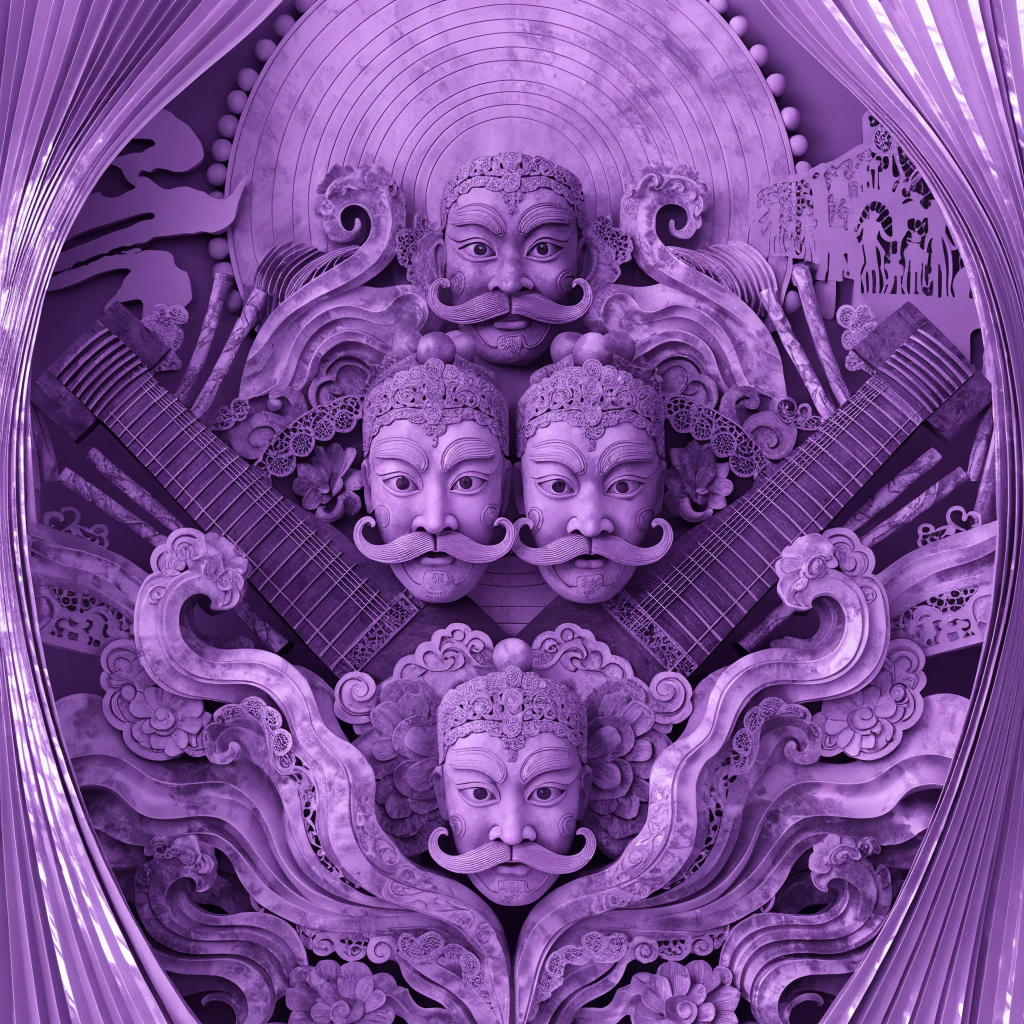
Las Sombras Chinas: Un Arte Antiguo
En China hay un arte muy antiguo. Se llama Sombras Chinas. Este arte usa luz y sombra. Con la luz, las figuras se mueven en una pantalla blanca. Las figuras son de personas y animales. Los artistas cuentan historias bonitas.
Las Sombras Chinas tienen mucha historia. Es un teatro especial. Muestra cuentos de héroes y de dioses. La gente en China y en otros países gusta mucho de este arte. Es una tradición muy bonita y antigua.
Gramática destacada
Patrón: Presente Simple (Verbos -ar)
"Este arte usa luz y sombra."
El presente simple describe acciones que pasan ahora o son habituales. Para verbos regulares que terminan en '-ar', como 'usar', quitamos '-ar' y añadimos '-a' para 'él/ella/usted'.
Patrón: Verbo Ser
"Las figuras son de personas y animales."
El verbo 'ser' se usa para describir cosas permanentes, como la identidad o la naturaleza de algo. 'Son' se usa cuando hablamos de más de una cosa (plural).
Pon a prueba tu comprensión
10 preguntas · A1 Principiante · 1 vista previa gratis
Pon a prueba lo que aprendiste en este artículo. ¡Responde todas las preguntas para ganar XP!
¿Cómo se llama el arte antiguo de China?
¿Quieres terminar el quiz?
9 preguntas más te esperan. ¡Regístrate gratis para desbloquear el quiz completo y ganar XP!
Regístrate gratis¿Ya tienes cuenta? Acceder
Desglose de preguntas
¿Cómo se llama el arte antiguo de China?
Tu respuesta:
Respuesta correcta: Sombras Chinas
Las Sombras Chinas usan luz y sombra.
Tu respuesta:
Respuesta correcta: Verdadero
¿Qué significa la palabra 'antiguo'?
Tu respuesta:
Respuesta correcta: Viejo
Los artistas _______ historias bonitas.
Tu respuesta:
Respuesta correcta: cuentan
The Magic of Chinese Shadow Puppetry
Chinese Shadow Puppetry is a very old and beautiful type of theater. It started in China more than 2,000 years ago during the Han Dynasty. People call it Piyingxi. It is one of the oldest ways to tell stories in the world.
According to an old legend, Emperor Wu was very sad because his favorite wife died. A man made a puppet from leather to look like her. He put the puppet behind a screen with a light. The Emperor saw the shadow and felt better. This was the first shadow puppet show.
In a show, performers use puppets made of leather or paper. They move the puppets behind a white screen. A bright light makes a shadow on the other side. The performers also sing and play music. They tell stories about heroes and old legends.
Shadow puppetry is very important because it is like early cinema. Today, it is still popular in many parts of China. It is more interesting than a normal movie because the puppets move so gracefully.
Gramática destacada
Patrón: Past Simple
"It started in China more than 2,000 years ago during the Han Dynasty."
We use the past simple to talk about things that finished in the past. For regular verbs, we add '-ed' to the end of the verb.
Patrón: Comparatives
"It is more interesting than a normal movie because the puppets move so gracefully."
We use 'more' with long adjectives like 'interesting' to compare two things. We also use the word 'than' after the adjective.
Pon a prueba tu comprensión
11 preguntas · A2 Básico · 1 vista previa gratis
Pon a prueba lo que aprendiste en este artículo. ¡Responde todas las preguntas para ganar XP!
When did Chinese shadow puppetry start?
¿Quieres terminar el quiz?
10 preguntas más te esperan. ¡Regístrate gratis para desbloquear el quiz completo y ganar XP!
Regístrate gratis¿Ya tienes cuenta? Acceder
Desglose de preguntas
When did Chinese shadow puppetry start?
Tu respuesta:
Respuesta correcta: More than 2,000 years ago
Emperor Wu felt better after seeing the shadow puppet show.
Tu respuesta:
Respuesta correcta: Verdadero
What does 'legend' mean?
Tu respuesta:
Respuesta correcta: An old story from the past
In a show, performers use puppets made of _____ or paper.
Tu respuesta:
Respuesta correcta: leather
What do the performers do during the show?
Tu respuesta:
Respuesta correcta: They sing and play music
The Magic of Chinese Shadow Puppetry
Chinese Shadow Puppetry, also known as Piyingxi, has fascinated audiences for more than 2,000 years. This traditional art form has survived through many dynasties and remains an important part of Chinese culture today. It is often described as the world’s earliest version of cinema because it uses light and shadows to tell stories.
Legend says that shadow puppetry was invented for Emperor Wu of Han. After his favorite concubine died, the Emperor was extremely sad. To help him feel better, an artist created a puppet from leather which looked like the woman. When the puppet's shadow was projected onto a screen, the Emperor felt as if she had come back to life. Since then, this art has been used to tell stories about heroes and gods.
The puppets are usually made from donkey or ox leather. These materials are treated until they become thin and translucent. Then, they are painted with bright colors. During a performance, the puppets are held behind a white cloth screen. A bright light is shone from behind, which creates the shadows that the audience sees. The performers must be very skilled because they have to move the puppets while singing and playing musical instruments.
In recent years, shadow puppetry has been recognized by UNESCO as an intangible cultural heritage. Although modern movies and television have become more popular, many young artists are still learning this craft. They want to ensure that these ancient stories, which have been told for centuries, are not forgotten. This beautiful tradition continues to connect the past with the present through the simple magic of light and shadow.
Gramática destacada
Patrón: Present Perfect
"Chinese Shadow Puppetry, also known as Piyingxi, has fascinated audiences for more than 2,000 years."
The present perfect (have/has + past participle) is used here to describe an action that started in the past and continues to the present. It emphasizes the duration of the art form's popularity.
Patrón: Passive Voice
"The puppets are usually made from donkey or ox leather."
The passive voice (be + past participle) is used to focus on the object (the puppets) rather than who is making them. This is common when describing a process or a general fact.
Pon a prueba tu comprensión
11 preguntas · B1 Intermedio · 1 vista previa gratis
Pon a prueba lo que aprendiste en este artículo. ¡Responde todas las preguntas para ganar XP!
Why is shadow puppetry often compared to cinema?
¿Quieres terminar el quiz?
10 preguntas más te esperan. ¡Regístrate gratis para desbloquear el quiz completo y ganar XP!
Regístrate gratis¿Ya tienes cuenta? Acceder
Desglose de preguntas
Why is shadow puppetry often compared to cinema?
Tu respuesta:
Respuesta correcta: Because it uses light and shadows to tell stories
Emperor Wu invented the first shadow puppet himself.
Tu respuesta:
Respuesta correcta: Falso
What does 'translucent' mean?
Tu respuesta:
Respuesta correcta: Allowing some light to pass through
The puppets are usually made from donkey or ox _____.
Tu respuesta:
Respuesta correcta: leather
Which organization recognized shadow puppetry as a cultural heritage?
Tu respuesta:
Respuesta correcta: UNESCO
El Teatro de Sombras Chino: Un Legado Ancestral de Luz y Fantasía
El Teatro de Sombras Chino, conocido como <em>Piyingxi</em>, es una forma de arte escénico milenaria que cautiva al público mediante la delicada interacción de luz, sombra y sonido. Con una historia que se extiende por más de dos milenios, hasta la venerable Dinastía Han, este arte ancestral es considerado por muchos como un precursor enigmático del cine moderno.
Su origen se entrelaza con una leyenda conmovedora. Se narra que el Emperador Wu de Han, sumido en una profunda tristeza tras la pérdida de su amada concubina, ansiaba su retorno. Un ingenioso consejero, para aliviar su pena, utilizó siluetas de piel de burro para proyectar la imagen de la concubina en una cortina, evocando así su presencia. Este acto, que buscaba conmemorar a un ser querido, marcó el nacimiento de una tradición que, a pesar de sus humildes comienzos, estaba destinada a perdurar y evolucionar.
A lo largo de los siglos, el <em>Piyingxi</em> trascendió su función cortesana para convertirse en una vibrante expresión cultural arraigada en la vida del pueblo. Las figuras, meticulosamente elaboradas con pieles de animales translúcidas y coloreadas, cobran vida detrás de una pantalla iluminada. Sus intrincados detalles y la maestría con la que los titiriteros manipulan las varillas, permiten delinear personajes llenos de expresividad que interactúan en escenarios dinámicos.
La narrativa del Teatro de Sombras a menudo se inspira en el rico folclore chino, epopeyas históricas y leyendas de dioses y héroes. Cada historia, acompañada por música tradicional interpretada con instrumentos de cuerda y percusión, y a menudo por canto en vivo, no solo entretiene sino que también transmite valores morales y enseñanzas culturales a las nuevas generaciones. Es un espejo de la sociedad, reflejando sus creencias, sus luchas y sus aspiraciones.
En la actualidad, el Teatro de Sombras Chino ha sido reconocido por la UNESCO como Patrimonio Cultural Inmaterial de la Humanidad, un testimonio de su inmenso valor. Sin embargo, como muchas artes tradicionales, enfrenta desafíos en el mundo contemporáneo. Es imperativo que se salvaguarde y se promueva esta forma artística única para asegurar que su magia y su legado sigan iluminando el futuro, permitiendo que las sombras del pasado continúen contando sus historias efímeras pero eternas.
Gramática destacada
Patrón: El Pluscuamperfecto de Indicativo
"Se narra que el Emperador Wu de Han, sumido en una profunda tristeza tras la pérdida de su amada concubina, ansiaba su retorno."
El pluscuamperfecto de indicativo se usa para hablar de una acción pasada que ocurrió antes que otra acción también pasada. Se forma con el verbo 'haber' en imperfecto ('había', 'habías', etc.) seguido del participio pasado del verbo principal.
Patrón: Oraciones Subordinadas de Relativo
"Es una forma de arte escénico milenaria que cautiva al público mediante la delicada interacción de luz, sombra y sonido."
Las oraciones subordinadas de relativo (o adjetivas) se usan para añadir información sobre un sustantivo (el antecedente) al que hacen referencia. Se introducen por pronombres relativos como 'que', 'quien', 'cuyo', 'donde', 'cuando', etc.
Patrón: El Subjuntivo en Oraciones de Valoración o Necesidad
"Es imperativo que se salvaguarde y se promueva esta forma artística única."
El subjuntivo se utiliza después de expresiones impersonales que denotan valoración, opinión o necesidad ('es importante que', 'es necesario que', 'es imperativo que'). Indica que la acción no es un hecho, sino un deseo, una obligación o una valoración subjetiva.
Pon a prueba tu comprensión
11 preguntas · B2 Intermedio alto · 1 vista previa gratis
Pon a prueba lo que aprendiste en este artículo. ¡Responde todas las preguntas para ganar XP!
¿Cuál es la función principal del Teatro de Sombras Chino, según el artículo?
¿Quieres terminar el quiz?
10 preguntas más te esperan. ¡Regístrate gratis para desbloquear el quiz completo y ganar XP!
Regístrate gratis¿Ya tienes cuenta? Acceder
Desglose de preguntas
¿Cuál es la función principal del Teatro de Sombras Chino, según el artículo?
Tu respuesta:
Respuesta correcta: Transmitir valores morales y enseñanzas culturales.
El origen del Teatro de Sombras Chino está relacionado con una leyenda sobre un emperador y su concubina.
Tu respuesta:
Respuesta correcta: Verdadero
¿Qué significa la palabra 'arraigada' en el contexto del artículo?
Tu respuesta:
Respuesta correcta: Que está muy establecida o tiene raíces profundas.
Las figuras del <em>Piyingxi</em> son meticulosamente elaboradas con pieles de animales ______ y coloreadas.
Tu respuesta:
Respuesta correcta: translúcidas
¿Qué tipo de instrumentos acompañan las narrativas del Teatro de Sombras?
Tu respuesta:
Respuesta correcta: Instrumentos de cuerda y percusión.
The Ephemeral Silhouette: Decoding the Cultural Resonance of Chinese Shadow Puppetry
Rarely has an art form managed to bridge the chasm between the mystical and the mundane as effectively as Chinese Shadow Puppetry, or Piyingxi. Emerging from the depths of the Han Dynasty, its genesis is steeped in a melancholic legend. It was the profound grief of Emperor Wu that allegedly catalyzed the birth of this art form, as he sought to 'summon' the shadow of his deceased favorite concubine. Through this spectral evocation, a two-millennium-old tradition was born, serving as a historical precursor to the modern cinematic experience. This ancestral medium, which utilizes light, shadow, and song, represents a sophisticated synthesis of craftsmanship and performance art that has endured through centuries of dynastic shifts.
The technical execution of Piyingxi is a testament to meticulous craftsmanship. Traditionally, puppets are fashioned from translucent donkey or ox hide, treated until it possesses a leather-like durability yet maintains a delicate clarity. These articulated figures are then dyed with vibrant mineral pigments, allowing colors to radiate through the screen when backlit. Not only does the performance require vocal dexterity, but it also demands a profound mastery of physical coordination. Puppeteers must synchronize their movements with operatic singing and traditional percussion, creating a seamless tapestry of storytelling. The preservation of such intricate craftsmanship necessitates a commitment to ancestral techniques that are increasingly threatened by the juggernaut of digital globalization.
The cultural resonance of shadow puppetry extends beyond mere entertainment. For centuries, it served as a vital medium for disseminating folklore, historical epics, and moral allegories to a largely illiterate populace. The socio-cultural fabric of rural China, once the stronghold of these performances, relied on these traveling troupes to bring both news and spiritual guidance. Scarcely had the art form reached its zenith during the Qing Dynasty before it faced the encroaching shadows of modernity. The transition from a courtly amusement to a rural folk tradition allowed it to survive political upheavals, yet the current era of rapid urbanization poses a different kind of existential threat.
Today, the resilience of Piyingxi is being tested. What remains at the heart of this struggle is the dichotomy between maintaining historical authenticity and adapting to contemporary sensibilities. While some troupes have integrated digital backdrops to appeal to younger audiences, critics argue that the ethereal quality of the manual light source is irreplaceable. The recognition of shadow puppetry as a UNESCO Intangible Cultural Heritage has provided a necessary impetus for its survival, encouraging the establishment of museums and formal training programs. Ultimately, the survival of Piyingxi depends on its ability to enchant a new generation, proving that even in an age of high-definition screens, the simple interplay of light and shadow can still evoke a sense of wonder and philosophical reflection on the human condition.
Gramática destacada
Patrón: Inversion with negative/restrictive adverbs
"Rarely has an art form managed to bridge the chasm between the mystical and the mundane as effectively as Chinese Shadow Puppetry."
When using restrictive words like 'rarely' or 'scarcely' at the beginning of a sentence for emphasis, the auxiliary verb is placed before the subject.
Patrón: Cleft Sentences for Emphasis
"It was the profound grief of Emperor Wu that allegedly catalyzed the birth of this art form."
Cleft sentences (It + be + subject + that/who) are used to focus on a specific piece of information, highlighting the cause or the agent of an action.
Patrón: Nominalisation
"The preservation of such intricate craftsmanship necessitates a commitment to ancestral techniques."
Nominalisation involves turning verbs or adjectives into nouns (e.g., 'preserve' to 'preservation'). This creates a more formal, academic tone suitable for C1 level writing.
Pon a prueba tu comprensión
12 preguntas · C1 Avanzado · 1 vista previa gratis
Pon a prueba lo que aprendiste en este artículo. ¡Responde todas las preguntas para ganar XP!
What historical event is traditionally credited with the invention of shadow puppetry?
¿Quieres terminar el quiz?
11 preguntas más te esperan. ¡Regístrate gratis para desbloquear el quiz completo y ganar XP!
Regístrate gratis¿Ya tienes cuenta? Acceder
Desglose de preguntas
What historical event is traditionally credited with the invention of shadow puppetry?
Tu respuesta:
Respuesta correcta: Emperor Wu's mourning of his concubine
The article suggests that shadow puppetry was purely a form of courtly entertainment and never reached the general public.
Tu respuesta:
Respuesta correcta: Falso
Which word describes the quality of being jointed to allow movement?
Tu respuesta:
Respuesta correcta: Articulated
The transition from courtly amusement to a rural folk tradition allowed the art to survive political _____.
Tu respuesta:
Respuesta correcta: upheavals
According to the text, what is a primary threat to the survival of Piyingxi today?
Tu respuesta:
Respuesta correcta: The juggernaut of digital globalization
Critics believe that digital backdrops perfectly replicate the ethereal quality of manual light sources.
Tu respuesta:
Respuesta correcta: Falso
The Ephemeral Intersection of Light and Lore: A Critical Appraisal of Chinese Shadow Puppetry
Were one to deconstruct the semiotics of Chinese Shadow Puppetry, or Piyingxi, one would find a sophisticated synthesis of craftsmanship and narrative that transcends mere entertainment. Originating in the Han Dynasty, this art form is often mythologized as an imperial panacea for grief. Legend posits that Emperor Wu, devastated by the passing of his favorite concubine, sought solace through a shamanistic ritual that projected her likeness onto a screen—a spectral incarnation that supposedly bridged the chasm between the living and the dead. This primordial cinematic experience, while steeped in folklore, serves as a poignant precursor to modern visual storytelling, establishing a complex interplay between presence and absence. The ontological weight of these shadows suggests that reality is not merely what is seen, but what is suggested through the filter of memory and light.
The technical execution of Piyingxi demands an almost atavistic devotion to detail. The puppets, typically fashioned from cured donkey or ox hide, are treated until they achieve a degree of translucency that allows light to permeate their vibrant hues. Each figure is meticulously articulated, with joints that facilitate a fluid, lifelike movement, enabling the puppeteers to execute choreography of immense nuance. Behind the illuminated screen, the performers operate these figures with bamboo rods, their movements synchronized with operatic singing and traditional instrumentation. This multi-sensory experience is not merely an aesthetic endeavor; it is a profound articulation of cultural continuity, reflecting the deep-seated values of the society from which it emerged. Whether depicting epic battles from the Three Kingdoms or theological allegories, the medium remains a vessel for the collective unconscious.
However, the contemporary landscape presents a formidable challenge to the preservation of this evanescent tradition. In an era dominated by high-definition digital media, the flickering shadows of the Piyingxi screen may appear anachronistic to some. Yet, to dismiss it as a vestigial remnant of a bygone age would be to overlook its intrinsic value as a medium of communal memory. The pedagogical function of shadow puppetry, historically used to disseminate moral values and historical knowledge to illiterate populations, remains a testament to its social utility. One might argue that the simplicity of the shadow is precisely what allows for a more profound imaginative engagement from the audience, as they are required to fill in the gaps left by the two-dimensional silhouettes.
Furthermore, the scholarly discourse surrounding shadow puppetry often emphasizes its role as a precursor to the cinematograph. The projection of light through a translucent medium to create a narrative sequence is, in essence, the fundamental principle of film. Scarcely had the 19th-century pioneers of cinema begun their experiments when the parallels with Eastern shadow play became apparent. This historical lineage suggests that the human appetite for projected illusions is a universal trait, one that transcends geographical and temporal boundaries. It is a paradoxical synthesis of the tangible and the intangible, where the physical puppet is secondary to the light it obstructs.
Lest the art form succumb to total obsolescence, concerted efforts must be made to integrate it into modern educational frameworks. The veneration of Piyingxi should not be confined to museums; rather, it should be revitalized through innovative collaborations with contemporary artists. Only then can the ethereal beauty of the shadow play continue to illuminate the collective consciousness of future generations. Should the world lose this delicate balance of light and darkness, it would lose a vital link to its own imaginative past. The survival of Piyingxi is not merely a matter of cultural heritage, but a preservation of the human capacity for wonder in its most elemental form.
Gramática destacada
Patrón: Subjunctive Mood with 'Were'
"Were one to deconstruct the semiotics of Chinese Shadow Puppetry, or Piyingxi, one would find a sophisticated synthesis..."
This formal structure uses 'were' instead of 'was' or 'if' to express a hypothetical or contrary-to-fact situation. It is common in academic or literary English to heighten the level of formality.
Patrón: Negative Inversion
"Scarcely had the 19th-century pioneers of cinema begun their experiments when the parallels with Eastern shadow play became apparent."
When using restrictive adverbs like 'scarcely' or 'hardly' at the beginning of a sentence, the subject and auxiliary verb are inverted. This emphasizes the timing and adds a dramatic, scholarly tone.
Patrón: Inverted Conditional (Should)
"Should the world lose this delicate balance of light and darkness, it would lose a vital link to its own imaginative past."
This is a formal alternative to 'If the world should lose...'. It functions as a first or second conditional but is more common in high-level prose to express a possibility and its consequence.
Pon a prueba tu comprensión
12 preguntas · C2 Dominio · 1 vista previa gratis
Pon a prueba lo que aprendiste en este artículo. ¡Responde todas las preguntas para ganar XP!
According to the article, what was the legendary catalyst for the creation of shadow puppetry?
¿Quieres terminar el quiz?
11 preguntas más te esperan. ¡Regístrate gratis para desbloquear el quiz completo y ganar XP!
Regístrate gratis¿Ya tienes cuenta? Acceder
Desglose de preguntas
According to the article, what was the legendary catalyst for the creation of shadow puppetry?
Tu respuesta:
Respuesta correcta: An emperor's attempt to mourn a lost loved one
The puppets used in Piyingxi are traditionally made from silk to ensure they are light enough to move.
Tu respuesta:
Respuesta correcta: Falso
Which word describes something that is vanishing or quickly fading?
Tu respuesta:
Respuesta correcta: Evanescent
The puppets are treated until they achieve a degree of _____ that allows light to pass through them.
Tu respuesta:
Respuesta correcta: translucency
What does the author suggest about the relationship between Piyingxi and modern cinema?
Tu respuesta:
Respuesta correcta: They share a fundamental principle of using light to create narrative sequences.
The author argues that the simplicity of the shadows actually encourages more imaginative participation from the audience.
Tu respuesta:
Respuesta correcta: Verdadero
Sombras Chinas: Un Arte Antiguo
Hola. Esto es China. Aquí hay un arte. Se llama 'sombras chinas'. Es muy antiguo. Hay figuras. Son de papel. La luz hace sombras grandes. Las sombras cuentan historias. Son historias de China. Es un arte bonito. ¡Adiós!
Gramática destacada
Patrón: Hay (There is/There are)
"Aquí hay un arte."
"Hay" significa "existe". Se usa para decir que algo está presente en un lugar. Por ejemplo, "Hay un libro" o "Hay dos libros". No cambia para singular o plural.
Pon a prueba tu comprensión
10 preguntas · A0 Pre-principiante · 1 vista previa gratis
Pon a prueba lo que aprendiste en este artículo. ¡Responde todas las preguntas para ganar XP!
¿De dónde es este arte?
¿Quieres terminar el quiz?
9 preguntas más te esperan. ¡Regístrate gratis para desbloquear el quiz completo y ganar XP!
Regístrate gratis¿Ya tienes cuenta? Acceder
Desglose de preguntas
¿De dónde es este arte?
Tu respuesta:
Respuesta correcta: China
¿Las sombras chinas son un arte nuevo?
Tu respuesta:
Respuesta correcta: Falso
¿Qué significa 'luz'?
Tu respuesta:
Respuesta correcta: Claridad
La _______ hace sombras grandes.
Tu respuesta:
Respuesta correcta: luz

