The Beautiful Yellow Mountain
Mount Huangshan is a famous mountain in China. It is very beautiful. Many people visit this place every year. It has high peaks and green trees.
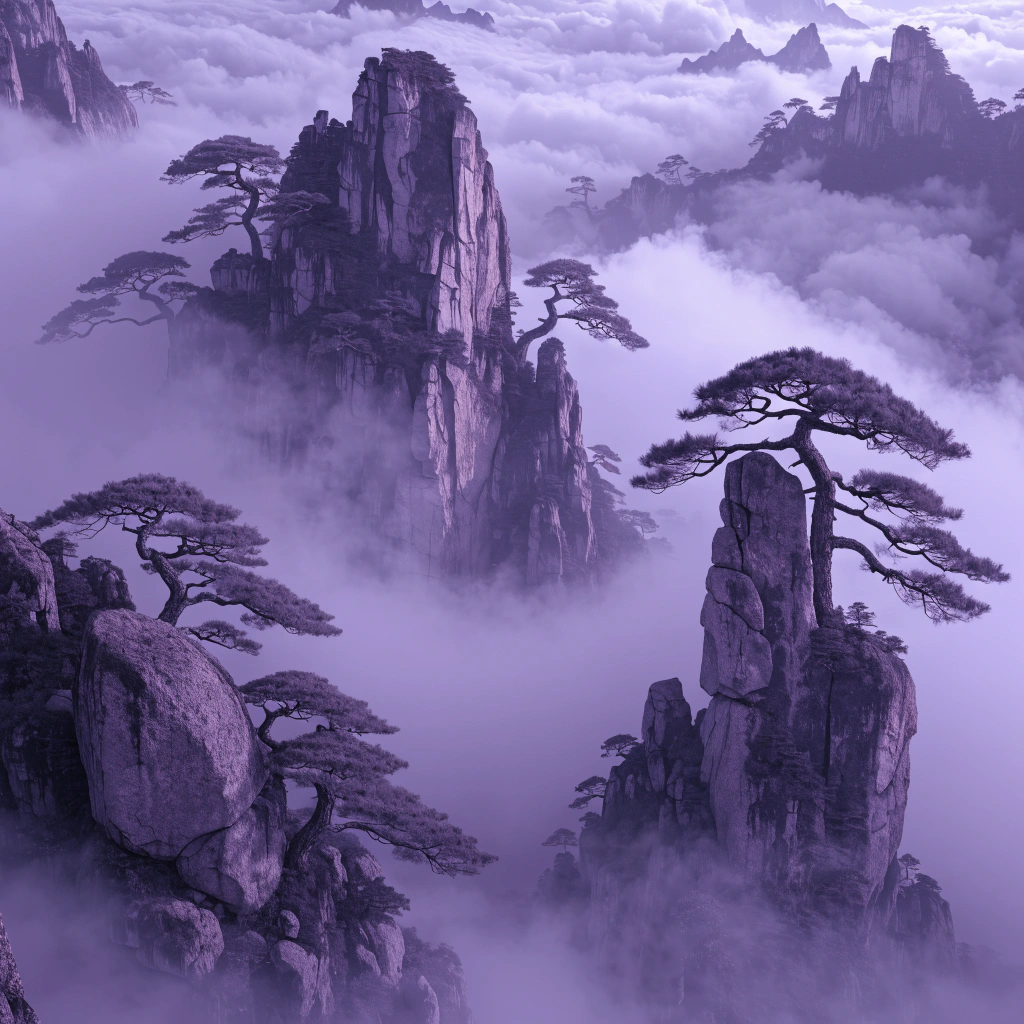
The mountain has many old pine trees. They grow on the rocks. There are also many clouds. Sometimes, you see a 'sea of clouds' below you. It looks like water.
There are hot springs too. The water is warm and nice. People like to walk and take photos. It is a special place in China.
Gramática destacada
Patrón: Present Simple 'to be'
"Mount Huangshan is a famous mountain in China."
We use 'is' with singular subjects like 'Mount Huangshan' to describe a fact or a state.
Patrón: Plural Nouns
"It has high peaks and green trees."
To make a noun plural in English, we usually add '-s' to the end of the word, like peak to peaks.
Pon a prueba tu comprensión
10 preguntas · A1 Principiante · 1 vista previa gratis
Pon a prueba lo que aprendiste en este artículo. ¡Responde todas las preguntas para ganar XP!
Where is Mount Huangshan?
¿Quieres terminar el quiz?
9 preguntas más te esperan. ¡Regístrate gratis para desbloquear el quiz completo y ganar XP!
Regístrate gratis¿Ya tienes cuenta? Acceder
Desglose de preguntas
Where is Mount Huangshan?
Tu respuesta:
Respuesta correcta: China
The mountain has many old pine trees.
Tu respuesta:
Respuesta correcta: Verdadero
What does 'mountain' mean?
Tu respuesta:
Respuesta correcta: A very high hill
The water in the hot springs is _____.
Tu respuesta:
Respuesta correcta: warm
The Beautiful Yellow Mountain of China
Mount Huangshan is a very famous mountain in the south of China. It is in Anhui Province. Many people call it the 'Yellow Mountain.' It is more beautiful than many other mountains because it has strange rocks and very old pine trees.
In the year 747, people named the mountain after the Yellow Emperor. Some old stories say he found a special drink there to live forever. Today, visitors go there to see the 'Four Wonders.' These wonders are the tall granite peaks, the ancient trees, the natural hot springs, and the 'sea of clouds.' When there are many clouds, the mountain looks like an island in a white ocean.
The weather is often cold at the top, but the views are amazing. Climbing the mountain is harder than walking in a park, but it is a great experience. Many artists and poets visited this place in the past because they loved the nature there. It is one of the most important places in Chinese history.
Gramática destacada
Patrón: Comparatives
"It is more beautiful than many other mountains."
We use 'more + adjective + than' for long adjectives like 'beautiful' to compare two things. For short adjectives like 'hard', we add '-er' to the end, such as 'harder than'.
Patrón: Past Simple
"Many artists and poets visited this place in the past."
We use the Past Simple to talk about finished actions in the past. For regular verbs, we add '-ed' to the base form of the verb.
Pon a prueba tu comprensión
11 preguntas · A2 Básico · 1 vista previa gratis
Pon a prueba lo que aprendiste en este artículo. ¡Responde todas las preguntas para ganar XP!
Where is Mount Huangshan located?
¿Quieres terminar el quiz?
10 preguntas más te esperan. ¡Regístrate gratis para desbloquear el quiz completo y ganar XP!
Regístrate gratis¿Ya tienes cuenta? Acceder
Desglose de preguntas
Where is Mount Huangshan located?
Tu respuesta:
Respuesta correcta: In the south of China
The mountain was named after a famous king or emperor.
Tu respuesta:
Respuesta correcta: Verdadero
What does 'ancient' mean?
Tu respuesta:
Respuesta correcta: Very old
Mount Huangshan is a very _____ mountain in China.
Tu respuesta:
Respuesta correcta: famous
Why did artists visit the mountain in the past?
Tu respuesta:
Respuesta correcta: Because they loved the nature
The Magic of Mount Huangshan: China's Yellow Mountain
Mount Huangshan, which is also known as the Yellow Mountain, is one of the most famous places in China. It is located in the southern part of Anhui Province. For many centuries, this mountain has been celebrated by artists and poets who have been inspired by its beauty. It was named after the legendary Yellow Emperor in 747 CE because people believed he had found the secret to living forever on its slopes.
The mountain is famous for its 'Four Wonders.' First, there are the oddly-shaped granite peaks. Many of these rocks look like animals or people, which makes them very popular for photography. Second, there are the ancient pine trees. These trees have grown in strange shapes because they have survived in the cracks of the rocks for hundreds of years. The most famous one is the 'Greeting Pine,' which looks like it is welcoming guests.
The third wonder is the 'sea of clouds.' This amazing sight happens when the clouds are lower than the mountain tops, so it looks like the peaks are islands in a white ocean. Finally, there are the natural hot springs that offer relaxation to tired hikers. These springs stay warm all year round.
In the past, climbing the mountain was a very difficult journey. However, modern paths and cable cars have been built to make the trip much easier for tourists. Thousands of people visit every year to watch the sunrise from the summits. Huangshan has been listed as a UNESCO World Heritage site because of its incredible natural beauty and cultural importance. It is a place that has been painted in traditional Chinese art for generations. If you enjoy nature and history, this mountain is a destination that should not be missed.
Gramática destacada
Patrón: Present Perfect Passive
"For many centuries, this mountain has been celebrated by artists and poets."
This is used to describe an action that started in the past and continues to be true or relevant now. We form it using 'has/have been' plus the past participle.
Patrón: Relative Clauses
"Mount Huangshan, which is also known as the Yellow Mountain, is one of the most famous places in China."
Relative clauses provide extra information about a noun. We use 'which' for things and 'who' for people to join two sentences together.
Pon a prueba tu comprensión
11 preguntas · B1 Intermedio · 1 vista previa gratis
Pon a prueba lo que aprendiste en este artículo. ¡Responde todas las preguntas para ganar XP!
Where is Mount Huangshan located?
¿Quieres terminar el quiz?
10 preguntas más te esperan. ¡Regístrate gratis para desbloquear el quiz completo y ganar XP!
Regístrate gratis¿Ya tienes cuenta? Acceder
Desglose de preguntas
Where is Mount Huangshan located?
Tu respuesta:
Respuesta correcta: Southern Anhui Province
The mountain was named after the legendary Yellow Emperor.
Tu respuesta:
Respuesta correcta: Verdadero
What does the word 'summits' mean?
Tu respuesta:
Respuesta correcta: The highest points of the mountain
The 'sea of _____' is one of the Four Wonders of the mountain.
Tu respuesta:
Respuesta correcta: clouds
Why is Huangshan a UNESCO World Heritage site?
Tu respuesta:
Respuesta correcta: Because of its natural beauty and cultural importance
Monte Huangshan: La Majestuosidad Natural y Mística de China
Enclavado en el sur de la provincia de Anhui, el Monte Huangshan, o la Montaña Amarilla, se erige como un icono paisajístico y cultural de China, trascendiendo su mera existencia geográfica para convertirse en una fuente inagotable de inspiración en la historia, el arte y la literatura del país. Su renombre no solo radica en su impresionante belleza natural, sino también en las profundas raíces históricas y legendarias que lo envuelven, atrayendo a innumerables visitantes y artistas a lo largo de los siglos.
Fue en el año 747 d.C. cuando esta montaña adquirió oficialmente su nombre actual en honor al legendario Emperador Amarillo, Huang Di, una figura seminal en la mitología china, considerado el antepasado de todos los chinos Han. La leyenda narra que Huang Di no solo gobernó con sabiduría, sino que también dedicó parte de su vida a la búsqueda de la inmortalidad, y se dice que fue en las laderas de Huangshan donde descubrió un elixir que le confirió la vida eterna, un relato que añade una capa de misticismo y sacralidad al lugar.
La fama de Huangshan se cimenta firmemente en sus "Cuatro Maravillas", elementos que, en conjunto, crean un paisaje de una singularidad inigualable. En primer lugar, sus picos de granito, de formas caprichosas y a menudo escarpadas, se alzan majestuosamente, desafiando la gravedad con siluetas que parecen esculpidas por una mano divina. Estas formaciones rocosas, a menudo cubiertas por una vegetación exuberante, invitan a la contemplación y a la imaginación.
Complementando la grandiosidad de los picos, se encuentran los antiguos pinos retorcidos, que crecen desafiando las condiciones adversas de la altura y el clima. Sus ramas contorsionadas y sus troncos nudos retorcidos son un testimonio de resiliencia y una obra de arte natural, cada uno con una personalidad única que ha sido inmortalizada en incontables pinturas y poemas. Además, la "mar de nubes" es un fenómeno meteorológico recurrente que transforma el paisaje en un espectáculo etéreo, donde los picos parecen islas flotando sobre un vasto océano algodonoso, ofreciendo vistas panorámicas que quitan el aliento.
Finalmente, los manantiales de aguas termales naturales, cuyas propiedades curativas han sido apreciadas durante milenios, ofrecen un refugio de relajación y bienestar. La combinación de estos elementos convierte a Huangshan en un destino que va más allá de lo meramente turístico; es una experiencia que conecta al visitante con la esencia de la naturaleza y la rica herencia cultural china. Su reconocimiento como Patrimonio de la Humanidad por la UNESCO subraya su valor universal excepcional, consolidándolo como uno de los paisajes más impresionantes y culturalmente significativos del planeta.
Gramática destacada
Patrón: Voz Pasiva con "ser" + participio
"Fue en el año 747 d.C. cuando esta montaña adquirió oficialmente su nombre actual en honor al legendario Emperador Amarillo, Huang Di."
La voz pasiva se utiliza para enfatizar la acción o el objeto de la acción, en lugar del sujeto que la realiza. Se forma con el verbo "ser" conjugado y el participio pasado del verbo principal, que concuerda en género y número con el sujeto paciente.
Patrón: Oraciones de Relativo con preposición
"Finalmente, los manantiales de aguas termales naturales, cuyas propiedades curativas han sido apreciadas durante milenios, ofrecen un refugio de relajación y bienestar."
Las oraciones de relativo introducidas por pronombres relativos como "cuyo/a/os/as" (que significa "de quien" o "del cual") se usan para añadir información sobre un sustantivo mencionado anteriormente. La preposición "cuyas" aquí indica posesión y concuerda con el sustantivo al que se refiere.
Patrón: Verbos en Subjuntivo para expresar propósito o resultado
"Sus ramas contorsionadas y sus troncos nudos retorcidos son un testimonio de resiliencia y una obra de arte natural, cada uno con una personalidad única que ha sido inmortalizada en incontables pinturas y poemas."
Aunque este ejemplo no contiene un subjuntivo explícito de propósito, el texto utiliza otras estructuras complejas. Un ejemplo de subjuntivo de propósito podría ser "para que el visitante conecte..." El subjuntivo se utiliza a menudo en cláusulas subordinadas para expresar deseos, dudas, emociones, o en cláusulas de propósito introducidas por "para que" o "a fin de que".
Pon a prueba tu comprensión
11 preguntas · B2 Intermedio alto · 1 vista previa gratis
Pon a prueba lo que aprendiste en este artículo. ¡Responde todas las preguntas para ganar XP!
¿Cuál de las siguientes afirmaciones sobre el Monte Huangshan es correcta según el artículo?
¿Quieres terminar el quiz?
10 preguntas más te esperan. ¡Regístrate gratis para desbloquear el quiz completo y ganar XP!
Regístrate gratis¿Ya tienes cuenta? Acceder
Desglose de preguntas
¿Cuál de las siguientes afirmaciones sobre el Monte Huangshan es correcta según el artículo?
Tu respuesta:
Respuesta correcta: Es famoso por sus "Cuatro Maravillas".
La leyenda dice que el Emperador Amarillo descubrió un elixir de la inmortalidad en el Monte Huangshan.
Tu respuesta:
Respuesta correcta: Verdadero
¿Qué significa la palabra "renombre" en el contexto del artículo?
Tu respuesta:
Respuesta correcta: Fama o prestigio.
Los picos de granito de Huangshan tienen formas _____ y a menudo escarpadas.
Tu respuesta:
Respuesta correcta: caprichosas
¿Qué fenómeno meteorológico transforma el paisaje en un "espectáculo etéreo"?
Tu respuesta:
Respuesta correcta: La "mar de nubes".
The Ethereal Grandeur of Huangshan: A Synthesis of Nature and Cultural Identity
Rarely does a geographical feature command such universal reverence across centuries as Mount Huangshan, the celebrated Yellow Mountain of Anhui Province. While many landscapes offer aesthetic pleasure, Huangshan provides a profound convergence of geological wonder and mythological depth. It was the legendary Yellow Emperor, or Huang Di, for whom the mountain was renamed in 747 CE, following accounts that he had discovered an elixir of immortality amidst its mist-shrouded peaks. This nomenclature shift marked the transition of the site from a mere topographical curiosity to a sacred manifestation of Chinese heritage. Today, it stands not just as a UNESCO World Heritage site, but as a living canvas that has dictated the aesthetic principles of Chinese art for over a millennium.
Central to the allure of Huangshan are its 'Four Wonders,' which collectively create a sublime atmosphere that borders on the supernatural. The grotesque granite peaks, formed through millions of years of glacial activity and tectonic shifts, present a jagged silhouette against the horizon. Clinging to these precipitous cliffs are the ancient Huangshan pines; these resilient trees, some over a thousand years old, have adapted to the sparse soil by extending their roots deep into rock crevices. Furthermore, the 'sea of clouds'—an atmospheric phenomenon where vapor settles below the summits—transforms the mountain into a series of islands in a celestial ocean. Completing this quartet are the natural hot springs, which have long been lauded for their therapeutic properties. The synthesis of these elements creates a landscape that feels inherently ephemeral, yet geologically enduring.
From a critical perspective, the cultural significance of Huangshan cannot be overstated. It is through the lens of traditional 'shanshui' (mountain-water) painting that most scholars analyze its impact. The mountain did not merely inspire artists; it defined the very vocabulary of their brushwork. The jagged lines and ethereal mists found in the works of the Shitao or the Xinan School are direct reflections of Huangshan’s unique topography. This artistic legacy, however, brings with it a modern dilemma: the commodification of the sublime. The preservation of such a delicate ecosystem remains a paramount concern as millions of tourists flock to witness the scenery that once offered solitary meditation for monks and poets. Balancing the economic imperatives of tourism with the ecological necessity of conservation is a challenge that requires nuanced management.
Ultimately, Huangshan represents a paradox of permanence and change. While the granite peaks remain steadfast, the shifting mists and the evolving human relationship with the site ensure that no two visits are ever identical. What remains constant is the mountain's ability to evoke a sense of transcendence, reminding the observer of the intricate bond between the natural world and the human spirit.
Gramática destacada
Patrón: Inversion with Negative/Restrictive Adverbs
"Rarely does a geographical feature command such universal reverence across centuries as Mount Huangshan."
When an adverb with a negative or restrictive meaning (like 'rarely', 'never', 'seldom') starts a sentence, the subject and auxiliary verb are inverted for emphasis. This is a common feature of high-level academic or literary writing.
Patrón: Cleft Sentences
"It was the legendary Yellow Emperor, or Huang Di, for whom the mountain was renamed in 747 CE."
Cleft sentences use 'It + be' to focus on a specific piece of information (the Yellow Emperor). This construction emphasizes the subject and clarifies historical agency.
Patrón: Nominalisation
"The preservation of such a delicate ecosystem remains a paramount concern."
Nominalisation involves turning verbs (preserve) into nouns (preservation). This creates a more formal, objective tone and allows the writer to focus on the concept rather than the action.
Pon a prueba tu comprensión
12 preguntas · C1 Avanzado · 1 vista previa gratis
Pon a prueba lo que aprendiste en este artículo. ¡Responde todas las preguntas para ganar XP!
What prompted the renaming of the mountain in 747 CE?
¿Quieres terminar el quiz?
11 preguntas más te esperan. ¡Regístrate gratis para desbloquear el quiz completo y ganar XP!
Regístrate gratis¿Ya tienes cuenta? Acceder
Desglose de preguntas
What prompted the renaming of the mountain in 747 CE?
Tu respuesta:
Respuesta correcta: Legends regarding the Yellow Emperor's search for immortality
The 'sea of clouds' refers to a literal ocean located at the base of the mountain.
Tu respuesta:
Respuesta correcta: Falso
What does 'ephemeral' mean in the context of the article?
Tu respuesta:
Respuesta correcta: Lasting a very short time
The author argues that the mountain has dictated the aesthetic _____ of Chinese art for a millennium.
Tu respuesta:
Respuesta correcta: principles
What modern challenge does the author highlight regarding Huangshan?
Tu respuesta:
Respuesta correcta: The commodification of the sublime through mass tourism
The Shinan School of painting was influenced by the topography of Huangshan.
Tu respuesta:
Respuesta correcta: Verdadero
The Lithic Sublime: A Cultural and Ontological Deconstruction of Mount Huangshan
To contemplate Mount Huangshan, or the Yellow Mountain, is to engage with a landscape that functions less as a mere geological entity and more as a cultural palimpsest. Located in the southern reaches of Anhui Province, this massif has, for over a millennium, served as the quintessential visual shorthand for the Chinese aesthetic of the sublime. While its topographical grandeur is undeniable, its significance is deeply rooted in a historical shift that occurred in 747 CE. It was during this period that the mountain was renamed in honor of the legendary Yellow Emperor, Huang Di, who was purported to have achieved transcendence and discovered the elixir of immortality within its craggy confines. This nomenclature shift effectively transformed a physical space into a hallowed site of Taoist alchemy and imperial mythmaking.
Geologically, Huangshan is a marvel of idiosyncratic granite formations, the result of Mesozoic crustal movements and subsequent glacial erosion. These lithic sentinels, often assuming anthropomorphic or zoomorphic shapes, provide the scaffolding for what are traditionally termed the 'Four Wonders.' Among these, the ancient twisted pines (Pinus hwangshanensis) are perhaps the most evocative. These trees, some exceeding a thousand years in age, exhibit a tenacious resilience, their roots boring into the seemingly impenetrable granite. This juxtaposition of the immutable rock and the organic, adaptive flora serves as a potent allegory in Chinese philosophy for the harmonious coexistence of strength and flexibility. Seldom has a topographical feature so thoroughly permeated the collective consciousness of a civilization as these pines have in the Chinese literati tradition.
Equally vital to the mountain's ethereal allure is the 'Sea of Clouds.' This meteorological phenomenon occurs when moisture-laden air from the Yangtze River basin is forced upward, condensing into a dense shroud that obscures the valleys while leaving the summits isolated like islands in a celestial ocean. It is within this nebulous realm that the distinction between the terrestrial and the divine becomes blurred. For the poets and painters of the Tang and Ming dynasties, the shifting mists provided a masterclass in the concept of 'void' (kong), a fundamental tenet of Buddhist and Taoist thought. Were one to traverse the precipitous ridges during the vernal equinox, the experience would transcend mere sightseeing, evolving into a meditative encounter with the ephemeral nature of reality.
Furthermore, the mountain's influence on the 'Huangshan School' of painting cannot be overstated. Artists such as Shitao and Hongren sought to capture not the literal likeness of the peaks, but their 'shanshui' (mountain-water) spirit. Their work emphasizes the confluence of sharp, calligraphic lines and vast, atmospheric washes, mirroring the mountain's own internal contradictions. In contemporary discourse, the tension between the preservation of this UNESCO World Heritage site and the pressures of mass tourism remains a subject of academic hedging. While scholars acknowledge the necessity of economic development, there is a pervasive concern that the vestiges of the mountain's historical tranquility may be eroded by the very popularity that ensures its protection. Ultimately, Huangshan remains an enduring testament to the power of a landscape to shape the intellectual and spiritual contours of a nation, standing as a lithic monument to the human quest for the infinite.
Gramática destacada
Patrón: Negative Inversion
"Seldom has a topographical feature so thoroughly permeated the collective consciousness of a civilization..."
Used for rhetorical emphasis, the auxiliary verb 'has' precedes the subject 'a topographical feature' because the sentence begins with the negative adverb 'Seldom'.
Patrón: Conditionals with Inversion (Subjunctive)
"Were one to traverse the precipitous ridges during the vernal equinox, the experience would transcend mere sightseeing."
This is a formal alternative to 'If one were to traverse'. It uses the subjunctive 'were' to discuss a hypothetical situation in a sophisticated, academic tone.
Patrón: Cleft Sentences
"It is within this nebulous realm that the distinction between the terrestrial and the divine becomes blurred."
This structure (It + is + [phrase] + that) is used to focus on a specific piece of information, in this case, the location where the blurring of distinctions occurs.
Pon a prueba tu comprensión
12 preguntas · C2 Dominio · 1 vista previa gratis
Pon a prueba lo que aprendiste en este artículo. ¡Responde todas las preguntas para ganar XP!
What prompted the renaming of the mountain in 747 CE?
¿Quieres terminar el quiz?
11 preguntas más te esperan. ¡Regístrate gratis para desbloquear el quiz completo y ganar XP!
Regístrate gratis¿Ya tienes cuenta? Acceder
Desglose de preguntas
What prompted the renaming of the mountain in 747 CE?
Tu respuesta:
Respuesta correcta: A tribute to a legendary emperor seeking immortality
The 'Sea of Clouds' phenomenon is caused by air from the Yangtze River basin.
Tu respuesta:
Respuesta correcta: Verdadero
Which word best describes something that is delicate and seems otherworldly?
Tu respuesta:
Respuesta correcta: Ethereal
The mountain is described as a cultural _____, bearing traces of history and art over centuries.
Tu respuesta:
Respuesta correcta: palimpsest
What does the text suggest about the 'Huangshan School' of painting?
Tu respuesta:
Respuesta correcta: It aimed to capture the spiritual essence rather than literal accuracy.
The article suggests that scholars are entirely unconcerned about the impact of tourism on Huangshan.
Tu respuesta:
Respuesta correcta: Falso

