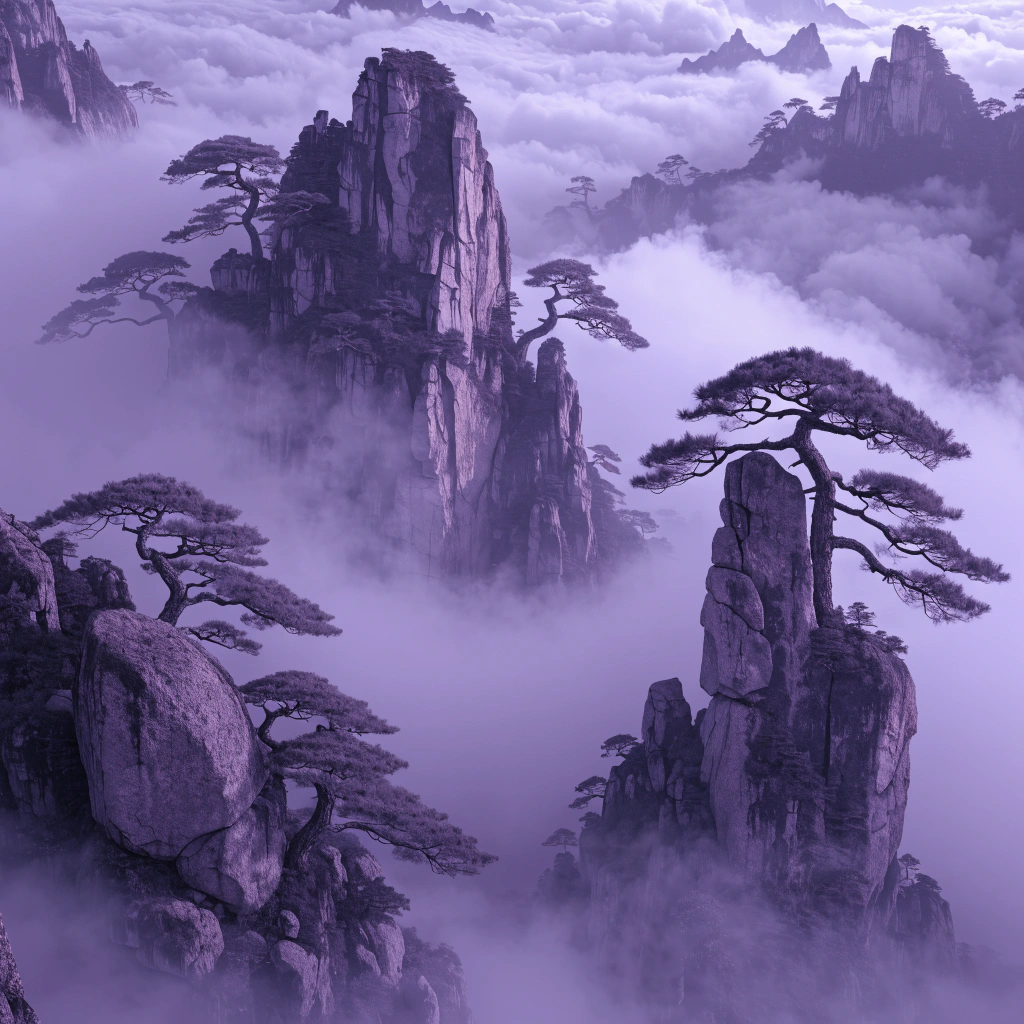
The Beautiful Yellow Mountain
Mount Huangshan is a famous mountain in China. It is very beautiful. Many people visit this place every year. It has high peaks and green trees.
The mountain has many old pine trees. They grow on the rocks. There are also many clouds. Sometimes, you see a 'sea of clouds' below you. It looks like water.
There are hot springs too. The water is warm and nice. People like to walk and take photos. It is a special place in China.
语法聚焦
句型: Present Simple 'to be'
"Mount Huangshan is a famous mountain in China."
We use 'is' with singular subjects like 'Mount Huangshan' to describe a fact or a state.
句型: Plural Nouns
"It has high peaks and green trees."
To make a noun plural in English, we usually add '-s' to the end of the word, like peak to peaks.
测试你的理解
10 个问题 · A1 初学 · 1 次免费预览
测试你从这篇文章中学到的知识。回答所有问题即可获得经验值!
题目详情
Where is Mount Huangshan?
你的回答:
正确答案: China
The mountain has many old pine trees.
你的回答:
正确答案: 正确
What does 'mountain' mean?
你的回答:
正确答案: A very high hill
The water in the hot springs is _____.
你的回答:
正确答案: warm
The Beautiful Yellow Mountain of China
Mount Huangshan is a very famous mountain in the south of China. It is in Anhui Province. Many people call it the 'Yellow Mountain.' It is more beautiful than many other mountains because it has strange rocks and very old pine trees.
In the year 747, people named the mountain after the Yellow Emperor. Some old stories say he found a special drink there to live forever. Today, visitors go there to see the 'Four Wonders.' These wonders are the tall granite peaks, the ancient trees, the natural hot springs, and the 'sea of clouds.' When there are many clouds, the mountain looks like an island in a white ocean.
The weather is often cold at the top, but the views are amazing. Climbing the mountain is harder than walking in a park, but it is a great experience. Many artists and poets visited this place in the past because they loved the nature there. It is one of the most important places in Chinese history.
语法聚焦
句型: Comparatives
"It is more beautiful than many other mountains."
We use 'more + adjective + than' for long adjectives like 'beautiful' to compare two things. For short adjectives like 'hard', we add '-er' to the end, such as 'harder than'.
句型: Past Simple
"Many artists and poets visited this place in the past."
We use the Past Simple to talk about finished actions in the past. For regular verbs, we add '-ed' to the base form of the verb.
测试你的理解
11 个问题 · A2 基础 · 1 次免费预览
测试你从这篇文章中学到的知识。回答所有问题即可获得经验值!
Where is Mount Huangshan located?
题目详情
Where is Mount Huangshan located?
你的回答:
正确答案: In the south of China
The mountain was named after a famous king or emperor.
你的回答:
正确答案: 正确
What does 'ancient' mean?
你的回答:
正确答案: Very old
Mount Huangshan is a very _____ mountain in China.
你的回答:
正确答案: famous
Why did artists visit the mountain in the past?
你的回答:
正确答案: Because they loved the nature
The Magic of Mount Huangshan: China's Yellow Mountain
Mount Huangshan, which is also known as the Yellow Mountain, is one of the most famous places in China. It is located in the southern part of Anhui Province. For many centuries, this mountain has been celebrated by artists and poets who have been inspired by its beauty. It was named after the legendary Yellow Emperor in 747 CE because people believed he had found the secret to living forever on its slopes.
The mountain is famous for its 'Four Wonders.' First, there are the oddly-shaped granite peaks. Many of these rocks look like animals or people, which makes them very popular for photography. Second, there are the ancient pine trees. These trees have grown in strange shapes because they have survived in the cracks of the rocks for hundreds of years. The most famous one is the 'Greeting Pine,' which looks like it is welcoming guests.
The third wonder is the 'sea of clouds.' This amazing sight happens when the clouds are lower than the mountain tops, so it looks like the peaks are islands in a white ocean. Finally, there are the natural hot springs that offer relaxation to tired hikers. These springs stay warm all year round.
In the past, climbing the mountain was a very difficult journey. However, modern paths and cable cars have been built to make the trip much easier for tourists. Thousands of people visit every year to watch the sunrise from the summits. Huangshan has been listed as a UNESCO World Heritage site because of its incredible natural beauty and cultural importance. It is a place that has been painted in traditional Chinese art for generations. If you enjoy nature and history, this mountain is a destination that should not be missed.
语法聚焦
句型: Present Perfect Passive
"For many centuries, this mountain has been celebrated by artists and poets."
This is used to describe an action that started in the past and continues to be true or relevant now. We form it using 'has/have been' plus the past participle.
句型: Relative Clauses
"Mount Huangshan, which is also known as the Yellow Mountain, is one of the most famous places in China."
Relative clauses provide extra information about a noun. We use 'which' for things and 'who' for people to join two sentences together.
测试你的理解
11 个问题 · B1 中级 · 1 次免费预览
测试你从这篇文章中学到的知识。回答所有问题即可获得经验值!
Where is Mount Huangshan located?
题目详情
Where is Mount Huangshan located?
你的回答:
正确答案: Southern Anhui Province
The mountain was named after the legendary Yellow Emperor.
你的回答:
正确答案: 正确
What does the word 'summits' mean?
你的回答:
正确答案: The highest points of the mountain
The 'sea of _____' is one of the Four Wonders of the mountain.
你的回答:
正确答案: clouds
Why is Huangshan a UNESCO World Heritage site?
你的回答:
正确答案: Because of its natural beauty and cultural importance
The Misty Majesty of Mount Huangshan: A Cultural and Natural Icon
Mount Huangshan, widely regarded as the most enchanting mountain range in China, stands as a testament to the country's profound natural beauty and cultural heritage. Located in the southern Anhui Province, its name was officially changed in 747 CE to honor the legendary Yellow Emperor, who, according to folklore, sought the elixir of immortality among its misty peaks. Today, it remains a site of pilgrimage for both nature enthusiasts and those seeking artistic inspiration. The mountain's unique atmosphere has been preserved through centuries of literature and art, making it a cornerstone of Chinese identity.
The mountain is celebrated for its 'Four Wonders,' a collection of natural phenomena that have fascinated visitors for centuries. First, the uniquely shaped granite peaks rise dramatically from the earth, often appearing to pierce the sky. Second, the ancient pine trees, which have adapted to the rocky terrain by growing in twisted, gravity-defying shapes, are considered symbols of resilience. Furthermore, the 'sea of clouds' offers a surreal experience where the summits emerge from a dense layer of mist, creating an ethereal landscape that seems to belong to another world. Finally, the natural hot springs provide a tranquil escape for weary travelers after a long ascent up the steep stone steps.
Beyond its physical attributes, Mount Huangshan has exerted a significant influence on Chinese art and literature. It served as the primary inspiration for the Shanshui (mountain-water) style of painting, which emphasizes the spiritual connection between humanity and nature. Poets have long composed verses praising its majesty, often reflecting on the fleeting nature of life compared to the mountain's enduring presence. Consequently, the site was designated a UNESCO World Heritage site in 1990, ensuring that its ecological and cultural value is protected for future generations.
While the mountain attracts millions of tourists annually, conservation efforts are crucial to maintaining its delicate ecosystem. The balance between accessibility and preservation is delicate; however, strict regulations have been implemented to protect the rare flora and fauna. For anyone visiting China, experiencing the sunrise from one of the summits is often described as a life-changing event, offering a moment of profound clarity amidst the vastness of the natural world. It is a place where the physical and spiritual realms seem to converge, leaving a lasting impression on all who visit.
语法聚焦
句型: Relative Clauses with 'which'
"Second, the ancient pine trees, which have adapted to the rocky terrain by growing in twisted, gravity-defying shapes, are considered symbols of resilience."
This non-defining relative clause provides extra information about the pine trees. It is separated by commas and uses 'which' to add descriptive detail without changing the core meaning of the sentence.
句型: Passive Voice
"Its name was officially changed in 747 CE to honor the legendary Yellow Emperor."
The passive voice is used here to focus on the action (the naming) and the recipient (the mountain) rather than who specifically changed the name. It is formed using 'was' + the past participle 'changed'.
句型: Present Perfect Tense
"The mountain is celebrated for its 'Four Wonders,' a collection of natural phenomena that have fascinated visitors for centuries."
The present perfect 'have fascinated' is used to describe an action that started in the past and continues to be true or relevant in the present. It emphasizes the duration of the fascination.
测试你的理解
11 个问题 · B2 中高级 · 1 次免费预览
测试你从这篇文章中学到的知识。回答所有问题即可获得经验值!
What was the primary reason the mountain was renamed in 747 CE?
题目详情
What was the primary reason the mountain was renamed in 747 CE?
你的回答:
正确答案: To honor the legendary Yellow Emperor
The 'Shanshui' style of painting focuses on the spiritual link between humans and nature.
你的回答:
正确答案: 正确
Which word describes something that lasts for a very short duration?
你的回答:
正确答案: Fleeting
The ancient pine trees are considered symbols of ____ because they grow in harsh, rocky terrain.
你的回答:
正确答案: resilience
What does the 'sea of clouds' refer to in the text?
你的回答:
正确答案: A weather pattern where mist settles below the peaks
The Ethereal Grandeur of Huangshan: A Synthesis of Nature and Cultural Identity
Rarely does a geographical feature command such universal reverence across centuries as Mount Huangshan, the celebrated Yellow Mountain of Anhui Province. While many landscapes offer aesthetic pleasure, Huangshan provides a profound convergence of geological wonder and mythological depth. It was the legendary Yellow Emperor, or Huang Di, for whom the mountain was renamed in 747 CE, following accounts that he had discovered an elixir of immortality amidst its mist-shrouded peaks. This nomenclature shift marked the transition of the site from a mere topographical curiosity to a sacred manifestation of Chinese heritage. Today, it stands not just as a UNESCO World Heritage site, but as a living canvas that has dictated the aesthetic principles of Chinese art for over a millennium.
Central to the allure of Huangshan are its 'Four Wonders,' which collectively create a sublime atmosphere that borders on the supernatural. The grotesque granite peaks, formed through millions of years of glacial activity and tectonic shifts, present a jagged silhouette against the horizon. Clinging to these precipitous cliffs are the ancient Huangshan pines; these resilient trees, some over a thousand years old, have adapted to the sparse soil by extending their roots deep into rock crevices. Furthermore, the 'sea of clouds'—an atmospheric phenomenon where vapor settles below the summits—transforms the mountain into a series of islands in a celestial ocean. Completing this quartet are the natural hot springs, which have long been lauded for their therapeutic properties. The synthesis of these elements creates a landscape that feels inherently ephemeral, yet geologically enduring.
From a critical perspective, the cultural significance of Huangshan cannot be overstated. It is through the lens of traditional 'shanshui' (mountain-water) painting that most scholars analyze its impact. The mountain did not merely inspire artists; it defined the very vocabulary of their brushwork. The jagged lines and ethereal mists found in the works of the Shitao or the Xinan School are direct reflections of Huangshan’s unique topography. This artistic legacy, however, brings with it a modern dilemma: the commodification of the sublime. The preservation of such a delicate ecosystem remains a paramount concern as millions of tourists flock to witness the scenery that once offered solitary meditation for monks and poets. Balancing the economic imperatives of tourism with the ecological necessity of conservation is a challenge that requires nuanced management.
Ultimately, Huangshan represents a paradox of permanence and change. While the granite peaks remain steadfast, the shifting mists and the evolving human relationship with the site ensure that no two visits are ever identical. What remains constant is the mountain's ability to evoke a sense of transcendence, reminding the observer of the intricate bond between the natural world and the human spirit.
语法聚焦
句型: Inversion with Negative/Restrictive Adverbs
"Rarely does a geographical feature command such universal reverence across centuries as Mount Huangshan."
When an adverb with a negative or restrictive meaning (like 'rarely', 'never', 'seldom') starts a sentence, the subject and auxiliary verb are inverted for emphasis. This is a common feature of high-level academic or literary writing.
句型: Cleft Sentences
"It was the legendary Yellow Emperor, or Huang Di, for whom the mountain was renamed in 747 CE."
Cleft sentences use 'It + be' to focus on a specific piece of information (the Yellow Emperor). This construction emphasizes the subject and clarifies historical agency.
句型: Nominalisation
"The preservation of such a delicate ecosystem remains a paramount concern."
Nominalisation involves turning verbs (preserve) into nouns (preservation). This creates a more formal, objective tone and allows the writer to focus on the concept rather than the action.
测试你的理解
12 个问题 · C1 高级 · 1 次免费预览
测试你从这篇文章中学到的知识。回答所有问题即可获得经验值!
What prompted the renaming of the mountain in 747 CE?
题目详情
What prompted the renaming of the mountain in 747 CE?
你的回答:
正确答案: Legends regarding the Yellow Emperor's search for immortality
The 'sea of clouds' refers to a literal ocean located at the base of the mountain.
你的回答:
正确答案: 错误
What does 'ephemeral' mean in the context of the article?
你的回答:
正确答案: Lasting a very short time
The author argues that the mountain has dictated the aesthetic _____ of Chinese art for a millennium.
你的回答:
正确答案: principles
What modern challenge does the author highlight regarding Huangshan?
你的回答:
正确答案: The commodification of the sublime through mass tourism
The Shinan School of painting was influenced by the topography of Huangshan.
你的回答:
正确答案: 正确
The Lithic Sublime: A Cultural and Ontological Deconstruction of Mount Huangshan
To contemplate Mount Huangshan, or the Yellow Mountain, is to engage with a landscape that functions less as a mere geological entity and more as a cultural palimpsest. Located in the southern reaches of Anhui Province, this massif has, for over a millennium, served as the quintessential visual shorthand for the Chinese aesthetic of the sublime. While its topographical grandeur is undeniable, its significance is deeply rooted in a historical shift that occurred in 747 CE. It was during this period that the mountain was renamed in honor of the legendary Yellow Emperor, Huang Di, who was purported to have achieved transcendence and discovered the elixir of immortality within its craggy confines. This nomenclature shift effectively transformed a physical space into a hallowed site of Taoist alchemy and imperial mythmaking.
Geologically, Huangshan is a marvel of idiosyncratic granite formations, the result of Mesozoic crustal movements and subsequent glacial erosion. These lithic sentinels, often assuming anthropomorphic or zoomorphic shapes, provide the scaffolding for what are traditionally termed the 'Four Wonders.' Among these, the ancient twisted pines (Pinus hwangshanensis) are perhaps the most evocative. These trees, some exceeding a thousand years in age, exhibit a tenacious resilience, their roots boring into the seemingly impenetrable granite. This juxtaposition of the immutable rock and the organic, adaptive flora serves as a potent allegory in Chinese philosophy for the harmonious coexistence of strength and flexibility. Seldom has a topographical feature so thoroughly permeated the collective consciousness of a civilization as these pines have in the Chinese literati tradition.
Equally vital to the mountain's ethereal allure is the 'Sea of Clouds.' This meteorological phenomenon occurs when moisture-laden air from the Yangtze River basin is forced upward, condensing into a dense shroud that obscures the valleys while leaving the summits isolated like islands in a celestial ocean. It is within this nebulous realm that the distinction between the terrestrial and the divine becomes blurred. For the poets and painters of the Tang and Ming dynasties, the shifting mists provided a masterclass in the concept of 'void' (kong), a fundamental tenet of Buddhist and Taoist thought. Were one to traverse the precipitous ridges during the vernal equinox, the experience would transcend mere sightseeing, evolving into a meditative encounter with the ephemeral nature of reality.
Furthermore, the mountain's influence on the 'Huangshan School' of painting cannot be overstated. Artists such as Shitao and Hongren sought to capture not the literal likeness of the peaks, but their 'shanshui' (mountain-water) spirit. Their work emphasizes the confluence of sharp, calligraphic lines and vast, atmospheric washes, mirroring the mountain's own internal contradictions. In contemporary discourse, the tension between the preservation of this UNESCO World Heritage site and the pressures of mass tourism remains a subject of academic hedging. While scholars acknowledge the necessity of economic development, there is a pervasive concern that the vestiges of the mountain's historical tranquility may be eroded by the very popularity that ensures its protection. Ultimately, Huangshan remains an enduring testament to the power of a landscape to shape the intellectual and spiritual contours of a nation, standing as a lithic monument to the human quest for the infinite.
语法聚焦
句型: Negative Inversion
"Seldom has a topographical feature so thoroughly permeated the collective consciousness of a civilization..."
Used for rhetorical emphasis, the auxiliary verb 'has' precedes the subject 'a topographical feature' because the sentence begins with the negative adverb 'Seldom'.
句型: Conditionals with Inversion (Subjunctive)
"Were one to traverse the precipitous ridges during the vernal equinox, the experience would transcend mere sightseeing."
This is a formal alternative to 'If one were to traverse'. It uses the subjunctive 'were' to discuss a hypothetical situation in a sophisticated, academic tone.
句型: Cleft Sentences
"It is within this nebulous realm that the distinction between the terrestrial and the divine becomes blurred."
This structure (It + is + [phrase] + that) is used to focus on a specific piece of information, in this case, the location where the blurring of distinctions occurs.
测试你的理解
12 个问题 · C2 精通 · 1 次免费预览
测试你从这篇文章中学到的知识。回答所有问题即可获得经验值!
What prompted the renaming of the mountain in 747 CE?
题目详情
What prompted the renaming of the mountain in 747 CE?
你的回答:
正确答案: A tribute to a legendary emperor seeking immortality
The 'Sea of Clouds' phenomenon is caused by air from the Yangtze River basin.
你的回答:
正确答案: 正确
Which word best describes something that is delicate and seems otherworldly?
你的回答:
正确答案: Ethereal
The mountain is described as a cultural _____, bearing traces of history and art over centuries.
你的回答:
正确答案: palimpsest
What does the text suggest about the 'Huangshan School' of painting?
你的回答:
正确答案: It aimed to capture the spiritual essence rather than literal accuracy.
The article suggests that scholars are entirely unconcerned about the impact of tourism on Huangshan.
你的回答:
正确答案: 错误

