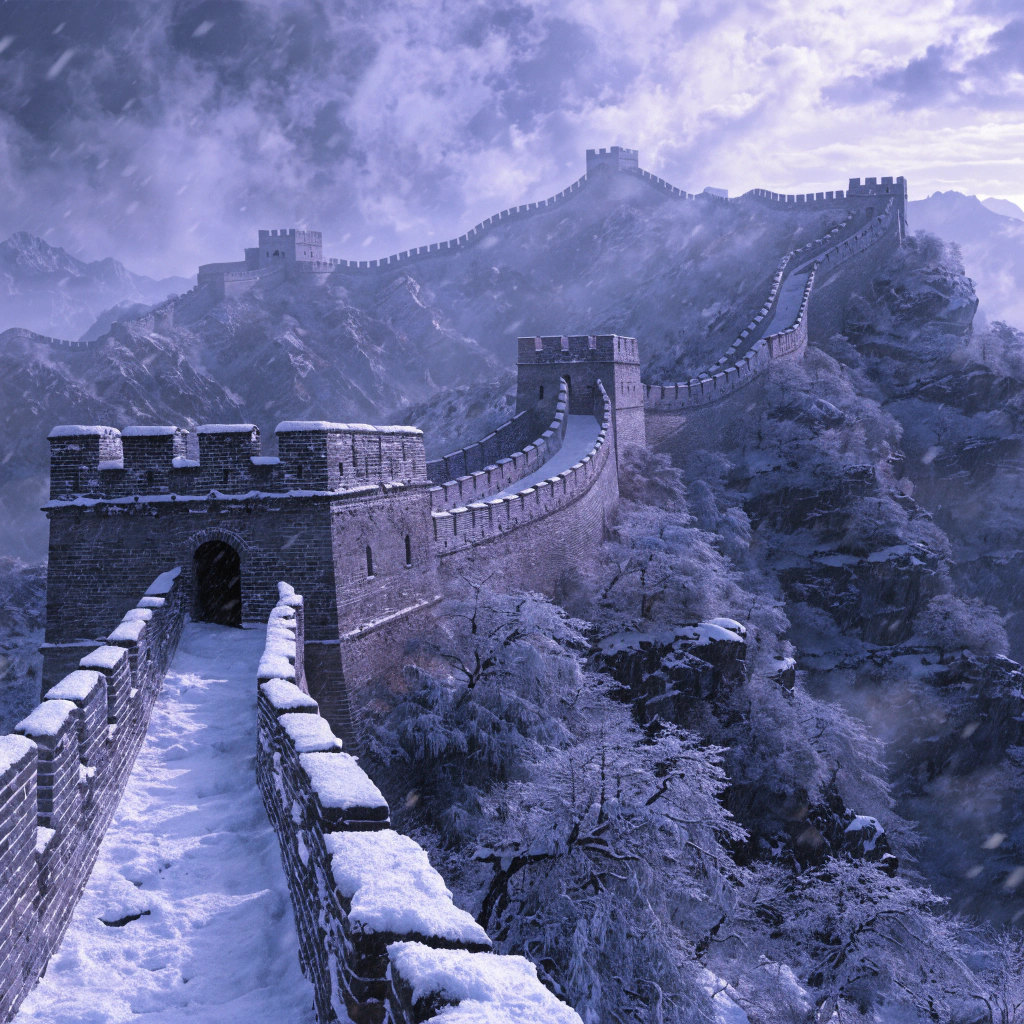
The Great Wall: Mutianyu
The Great Wall of China is very long and old. It is in the mountains. The Mutianyu section is famous and beautiful. It is near Beijing.
There are many watchtowers on the wall. People walk on the stone path. The wall is made of stone and brick. It is very strong.
You can see green trees and hills. It is a great place for photos. Many tourists visit every year. They like the view from the wall.
Gramática destacada
Patrón: Present Simple (to be)
"The Great Wall of China is very long and old."
We use 'is' with singular subjects to describe facts or states. In this sentence, it describes the age and size of the wall.
Patrón: There are
"There are many watchtowers on the wall."
We use 'There are' to say that more than one thing exists. It is followed by a plural noun like 'watchtowers'.
Pon a prueba tu comprensión
10 preguntas · A1 Principiante · 1 vista previa gratis
Pon a prueba lo que aprendiste en este artículo. ¡Responde todas las preguntas para ganar XP!
Where is the Mutianyu section?
¿Quieres terminar el quiz?
9 preguntas más te esperan. ¡Regístrate gratis para desbloquear el quiz completo y ganar XP!
Regístrate gratis¿Ya tienes cuenta? Acceder
Desglose de preguntas
Where is the Mutianyu section?
Tu respuesta:
Respuesta correcta: Near Beijing
The wall is made of stone.
Tu respuesta:
Respuesta correcta: Verdadero
What is a 'view'?
Tu respuesta:
Respuesta correcta: Everything you can see from a place
The wall is very _____ and old.
Tu respuesta:
Respuesta correcta: long
La Gran Muralla China: La Hermosa Sección de Mutianyu
La Gran Muralla China no es solo una pared, sino muchas partes. Fue construida hace muchísimos años, durante siglos, para proteger el imperio chino de ataques. Una sección muy famosa y bonita es Mutianyu.
Mutianyu está a unos 70 kilómetros al noreste de Pekín, la capital de China. Esta parte de la Muralla es muy popular porque tiene vistas espectaculares de las montañas verdes y los árboles. Fue construida principalmente durante la Dinastía Ming, entre los años 1368 y 1644. Los soldados la usaban para vigilar y defender las fronteras.
Hoy, Mutianyu es un lugar ideal para visitar. Puedes caminar por la Muralla y sentir su larga historia. También hay un teleférico para subir y bajar fácilmente, lo cual es muy cómodo. Muchas personas dicen que es una de las secciones más hermosas y mejor conservadas de toda la Gran Muralla. Es un lugar importante y muy interesante para aprender sobre la cultura y la historia de China.
Gramática destacada
Patrón: Pretérito Indefinido (Pasado Simple)
"Fue construida hace muchísimos años."
Usamos el pretérito indefinido para hablar de acciones que empezaron y terminaron en el pasado. Es una acción completa y específica. Por ejemplo, 'fue construida' significa que la construcción terminó.
Patrón: Comparativos de Superioridad (más + adjetivo + que/de)
"es una de las secciones más hermosas de toda la Gran Muralla."
Para decir que algo tiene una cualidad en mayor grado que otra cosa, usamos 'más' seguido de un adjetivo y luego 'que' o 'de'. Aquí, 'más hermosas de' compara Mutianyu con otras secciones de la Muralla.
Pon a prueba tu comprensión
10 preguntas · A2 Básico · 1 vista previa gratis
Pon a prueba lo que aprendiste en este artículo. ¡Responde todas las preguntas para ganar XP!
¿Cuál era el propósito principal de la Gran Muralla China?
¿Quieres terminar el quiz?
9 preguntas más te esperan. ¡Regístrate gratis para desbloquear el quiz completo y ganar XP!
Regístrate gratis¿Ya tienes cuenta? Acceder
Desglose de preguntas
¿Cuál era el propósito principal de la Gran Muralla China?
Tu respuesta:
Respuesta correcta: Para proteger el imperio de ataques.
La sección de Mutianyu está muy lejos de la capital, Pekín.
Tu respuesta:
Respuesta correcta: Falso
¿Qué significa la palabra 'proteger' en el artículo?
Tu respuesta:
Respuesta correcta: Defender
Mutianyu fue _____ principalmente durante la Dinastía Ming.
Tu respuesta:
Respuesta correcta: construida
Exploring the Magnificent Mutianyu Great Wall
The Great Wall of China is one of the world's most famous landmarks. It was built over many centuries to protect the borders of the Chinese empire. Although many people think it is just one long wall, it is actually a complex network of fortifications and trenches. This massive structure has been studied by historians for a long time, and it remains a symbol of human engineering.
The Mutianyu section, which is located about 70 kilometers northeast of Beijing, is widely regarded as a favorite for travelers. It was constructed during the Ming Dynasty between 1368 and 1644. This part of the wall has been restored carefully to keep its original appearance. It is famous because it is surrounded by beautiful green mountains and dense forests, making it a very significant historical site.
One of the most iconic features of Mutianyu is the large number of watchtowers. These towers were used by soldiers who had to guard the empire. From these high points, they could send signals to other parts of the wall. Today, visitors have enjoyed the incredible views from these towers, which offer a perfect look at the surrounding landscape.
To reach the top, modern technology has made the journey easier. Tourists can use a cable car to go up, and some even choose to take a fun slide back down the mountain. Since 1987, the Great Wall has been recognized as a UNESCO World Heritage site. It represents the history and strength of the Chinese people, and it is a place that everyone should visit at least once.
Gramática destacada
Patrón: Passive Voice (Past Simple)
"It was built over many centuries to protect the borders of the Chinese empire."
We use the passive voice when the action is more important than the person who did it. It is formed using 'was/were' and the past participle of the verb.
Patrón: Relative Clauses
"The Mutianyu section, which is located about 70 kilometers northeast of Beijing, is widely regarded as a favorite for travelers."
Relative clauses give more information about a noun. We use 'which' for things and 'who' for people to connect two ideas into one sentence.
Pon a prueba tu comprensión
11 preguntas · B1 Intermedio · 1 vista previa gratis
Pon a prueba lo que aprendiste en este artículo. ¡Responde todas las preguntas para ganar XP!
Why was the Great Wall originally built?
¿Quieres terminar el quiz?
10 preguntas más te esperan. ¡Regístrate gratis para desbloquear el quiz completo y ganar XP!
Regístrate gratis¿Ya tienes cuenta? Acceder
Desglose de preguntas
Why was the Great Wall originally built?
Tu respuesta:
Respuesta correcta: To protect the borders of the empire
The Great Wall is one single, continuous wall without any breaks.
Tu respuesta:
Respuesta correcta: Falso
What does 'landmark' mean?
Tu respuesta:
Respuesta correcta: A famous and recognizable building or object
The Mutianyu section is famous because it is surrounded by green _____.
Tu respuesta:
Respuesta correcta: mountains
How can tourists reach the top of the Mutianyu section today?
Tu respuesta:
Respuesta correcta: By cable car
The Architectural Majesty of Mutianyu: A Journey Through China's History
The Great Wall of China is frequently celebrated as a singular, continuous structure; however, it is more accurately described as a vast, intricate network of defensive fortifications. Among its numerous segments, the Mutianyu section stands out as an exceptional example of Ming Dynasty engineering. Located roughly 70 kilometers from Beijing, this specific stretch offers a unique perspective on how the Chinese empire sought to consolidate its power and protect its borders from nomadic incursions.
Historically, the construction of the Great Wall spanned several centuries, but the Mutianyu section was primarily rebuilt during the 14th century. It was designed with strategic precision, featuring twenty-two watchtowers densely packed along its 2.5-kilometer length. This density is relatively rare compared to other sections, suggesting that this particular pass was of vital importance for the defense of the capital. The architecture is characterized by its crenellated parapets, which allowed soldiers to fire at invaders while remaining shielded from return fire.
Furthermore, the aesthetic appeal of Mutianyu cannot be overstated. Surrounded by lush forests and steep mountains, the wall follows the natural contours of the landscape, creating a harmonious blend of man-made structure and nature. Unlike the more crowded Badaling section, Mutianyu has been preserved in a way that maintains its historical integrity while providing modern accessibility. Visitors can ascend the steep inclines via cable cars, yet the rugged essence of the fortifications remains palpable.
From an analytical standpoint, the Great Wall represents both a triumph of collective human effort and a symbol of isolationist policy. While it successfully deterred many small-scale raids, its effectiveness against large-scale invasions was often debated by historians. Nevertheless, the sheer scale of the project remains awe-inspiring. The logistical challenges of transporting materials to such high altitudes during the Ming era were immense, requiring thousands of laborers and sophisticated coordination.
In conclusion, the Mutianyu section of the Great Wall serves as more than just a tourist destination; it is a profound historical monument. It encapsulates the architectural ingenuity of a bygone era and continues to fascinate scholars and travelers alike. As a UNESCO World Heritage site, it remains a powerful reminder of China's historical complexity and its enduring legacy in the modern world.
Gramática destacada
Patrón: The Passive Voice
"The Mutianyu section was primarily rebuilt during the 14th century."
The passive voice is used to emphasize the action or the object being acted upon. It is formed using the verb 'be' and the past participle of the main verb.
Patrón: Discourse Markers for Contrast
"The Great Wall of China is frequently celebrated as a singular, continuous structure; however, it is more accurately described as a vast, intricate network..."
Words like 'however' are used to transition between ideas that contrast with each other. They help the reader follow complex logical shifts in academic writing.
Patrón: Participial Phrases
"Located roughly 70 kilometers from Beijing, this specific stretch offers a unique perspective..."
A participial phrase acts as an adjective to modify a noun. In this case, 'Located...' provides background information about 'this specific stretch' without using a full relative clause.
Pon a prueba tu comprensión
11 preguntas · B2 Intermedio alto · 1 vista previa gratis
Pon a prueba lo que aprendiste en este artículo. ¡Responde todas las preguntas para ganar XP!
What makes the Mutianyu section unique compared to other parts of the Great Wall?
¿Quieres terminar el quiz?
10 preguntas más te esperan. ¡Regístrate gratis para desbloquear el quiz completo y ganar XP!
Regístrate gratis¿Ya tienes cuenta? Acceder
Desglose de preguntas
What makes the Mutianyu section unique compared to other parts of the Great Wall?
Tu respuesta:
Respuesta correcta: It has a high density of watchtowers
The Mutianyu section was originally constructed entirely from scratch in the 14th century.
Tu respuesta:
Respuesta correcta: Falso
What does 'ingenuity' mean in the context of the article?
Tu respuesta:
Respuesta correcta: Cleverness and inventiveness
The wall follows the natural _____ of the landscape, creating a harmonious blend.
Tu respuesta:
Respuesta correcta: contours
Where is the Mutianyu section located in relation to Beijing?
Tu respuesta:
Respuesta correcta: 70 kilometers Northeast
The Mutianyu Bastion: A Synthesis of Ming Strategy and Aesthetic Grandeur
The Great Wall of China is frequently, albeit erroneously, characterized as a singular, monolithic entity. In actuality, it constitutes a sprawling palimpsest of historical interventions spanning over two millennia. Among its various segments, the Mutianyu section emerges as a particularly compelling subject of study, representing the zenith of Ming Dynasty fortification. Situated approximately 70 kilometers northeast of Beijing, Mutianyu serves as a testament to the sophisticated military engineering and strategic foresight of the 14th to 17th centuries. The consolidation of imperial power during the Ming Dynasty necessitated a radical rethink of northern border security. Consequently, the Mutianyu section was reconstructed upon the rugged foundations of earlier Northern Qi structures, which had fallen into disrepair. This layering of history exemplifies the wall's status as a palimpsest. What distinguishes Mutianyu from other, perhaps more frequented, sections like Badaling is its unique architectural density. It is the sheer density of these watchtowers that underscores the strategic importance of this particular pass. Featuring twenty-two watchtowers within a mere 2.5-kilometer stretch, the section allowed for rapid communication via smoke signals and facilitated concentrated defense against potential incursions from the Mongolian steppes. Seldom does one encounter an architectural feat that so seamlessly melds defensive utility with such breathtaking aesthetic harmony. The wall follows the undulating ridges of the mountains, its granite blocks carved to withstand both the ravages of time and the intensity of siege warfare. The topography of the region, characterized by precipitous cliffs and dense forests, provided a natural deterrent, which the Ming engineers exploited with remarkable prowess. The crenelated parapets, designed to provide cover for archers, still stand as silent sentinels over the valley below. Moreover, the idiosyncrasies of Mutianyu extend to its physical layout. Both the inner and outer parapets are crenelated, a feature seldom seen in other sections, which typically only fortified the side facing the enemy. This suggests a nuanced defensive strategy designed to address threats from multiple directions or perhaps internal rebellions. Furthermore, the restoration of Mutianyu has been praised by conservationists for its meticulous adherence to historical authenticity. Unlike sections that have been overly 'Disneyfied'—a term used to describe the sanitization and commercialization of heritage sites for mass tourism—Mutianyu retains a sense of rugged grandeur. This preservation allows the visitor to grasp the magnitude of the original endeavor without the distraction of modern artifice. The granite blocks, some weighing over a ton, were transported up these steep inclines without the aid of modern machinery, a feat of logistics that continues to baffle contemporary engineers. Critically, the wall is more than a relic of isolationism; it is a manifestation of the complex interplay between sedentary civilizations and nomadic cultures. While the wall was ostensibly built for exclusion, it also facilitated trade and cultural exchange at its gates. Today, as visitors traverse its granite steps, the wall prompts a reflection on the nature of borders and the enduring human impulse to protect and define territory. The Mutianyu section, with its blend of strategic rigor and natural beauty, remains an indispensable chapter in the narrative of human civilization.
Gramática destacada
Patrón: Inversion
"Seldom does one encounter an architectural feat that so seamlessly melds defensive utility with such breathtaking aesthetic harmony."
Inversion is used here by placing 'Seldom' at the beginning of the sentence for emphasis, requiring the auxiliary verb 'does' to come before the subject 'one'. This structure is common in formal C1 writing to highlight rarity or importance.
Patrón: Cleft Sentence
"It is the sheer density of these watchtowers that underscores the strategic importance of this particular pass."
A cleft sentence (It + be + subject + that/who) is used to focus on a specific piece of information. Here, it emphasizes 'the sheer density' as the primary reason for the wall's strategic value.
Patrón: Nominalization
"The consolidation of imperial power during the Ming Dynasty necessitated a radical rethink of northern border security."
Nominalization turns verbs (consolidate, rethink) into nouns (consolidation, rethink). This creates a more academic and concise tone, allowing the writer to discuss complex concepts as entities.
Pon a prueba tu comprensión
12 preguntas · C1 Avanzado · 1 vista previa gratis
Pon a prueba lo que aprendiste en este artículo. ¡Responde todas las preguntas para ganar XP!
What is the primary reason the author considers Mutianyu unique compared to other sections?
¿Quieres terminar el quiz?
11 preguntas más te esperan. ¡Regístrate gratis para desbloquear el quiz completo y ganar XP!
Regístrate gratis¿Ya tienes cuenta? Acceder
Desglose de preguntas
What is the primary reason the author considers Mutianyu unique compared to other sections?
Tu respuesta:
Respuesta correcta: Its architectural density and dual crenelation
The Mutianyu section was built entirely from scratch by the Ming Dynasty without any previous foundations.
Tu respuesta:
Respuesta correcta: Falso
What does the word 'precipitous' mean in the context of the article?
Tu respuesta:
Respuesta correcta: Dangerously high or steep
The _____ of imperial power during the Ming Dynasty necessitated a radical rethink of security.
Tu respuesta:
Respuesta correcta: consolidation
According to the text, what does the term 'Disneyfied' imply about some heritage sites?
Tu respuesta:
Respuesta correcta: They have been overly commercialized and sanitized
The article suggests that the Great Wall served only as a tool for isolation and never for trade.
Tu respuesta:
Respuesta correcta: Falso
The Architectural Dialectic of the Mutianyu Ramparts: A Synthesis of Ming Defensive Stratagems and Topographical Integration
The Great Wall of China is often erroneously perceived by the layperson as a monolithic, continuous architectural entity. In reality, it represents a convoluted palimpsest of defensive stratagems and fortifications spanning two millennia. Among the disparate sections that constitute this gargantuan network, the Mutianyu section in the Huairou District stands as a quintessential paradigm of Ming Dynasty (1368–1644) military ingenuity. This particular stretch, located approximately seventy kilometers northeast of Beijing, offers an unparalleled synthesis of formidable engineering and topographical integration.
Historically, the Mutianyu section served as a vital northern bastion, protecting the imperial capital and the Ming tombs from nomadic incursions. Its construction, primarily utilizing granite, reflects a significant departure from the earlier earth-and-wood ramparts of the Qin and Han eras. The density of watchtowers at Mutianyu is particularly noteworthy; seldom has a defensive structure employed such a concentrated arrangement of vantage points, with twenty-two towers punctuated along a mere 2.5-kilometer stretch. This architectural density was not merely for aesthetic grandiosity but served a pragmatic tactical function, allowing for seamless communication and crossfire capabilities against potential assailants.
The topography of the region played a decisive role in the wall’s trajectory. Nestled amidst undulating peaks and dense arboreal landscapes, the wall appears to oscillate with the natural contours of the mountain ridges. This juxtaposition between the rigid, man-made granite and the fluid, organic landscape creates a visual dialogue that transcends its original martial purpose. Were one to traverse the steep gradients of the 'Ox Horn Edge,' the sheer physical exertion required would underscore the formidable nature of the terrain that the Ming engineers sought to harness.
Furthermore, the crenelation of the Mutianyu section is unique in its dual-sided design. While most sections of the Great Wall feature battlements only on the outer edge, Mutianyu boasts crenelations on both the interior and exterior parapets. This suggests that the garrison stationed here was prepared for a multi-directional assault, reflecting the precarious socio-political climate of the period. It is imperative that the modern observer recognize these nuances, as they reveal the profound psychological underpinnings of an empire that perceived itself as a besieged island of civilization amidst a sea of perceived 'barbarism.'
In contemporary discourse, the preservation of Mutianyu presents a complex challenge. Albeit a restored section, it manages to retain a vestige of its historical gravitas, avoiding the overt commercialization that has arguably compromised the authenticity of the Badaling section. However, the tension between heritage conservation and the exigencies of mass tourism remains palpable. It is essential that the site remain a testament to human perseverance rather than merely a backdrop for ephemeral tourist experiences. The scholarly consensus suggests that any further restoration should be undertaken with extreme caution, lest the historical integrity of the masonry be subsumed by modern artifice.
Ultimately, the Mutianyu section of the Great Wall is more than a relic of isolationist policy; it is a profound intersection of culture, geography, and military science. Its enduring presence invites us to contemplate the nature of borders—both physical and conceptual. Whether viewed as a symbol of exclusion or a masterpiece of structural resilience, the wall remains an indelible part of the global cultural landscape, demanding a sophisticated analysis that moves beyond the superficiality of its monumental scale.
Gramática destacada
Patrón: Negative Inversion
"Seldom has a defensive structure employed such a concentrated arrangement of vantage points."
This pattern places a negative or restrictive adverb at the beginning of the sentence for emphasis, requiring the auxiliary verb to come before the subject. It is common in formal, academic, or literary English to create a more dramatic or sophisticated tone.
Patrón: Inverted Conditional (Subjunctive)
"Were one to traverse the steep gradients of the 'Ox Horn Edge,' the sheer physical exertion required would underscore the formidable nature of the terrain."
The use of 'Were' at the start of the clause replaces 'If one were to...' This is a formal way of expressing a hypothetical or counterfactual condition. It enhances the scholarly register of the text.
Patrón: Present Subjunctive
"It is essential that the site remain a testament to human perseverance rather than merely a commercialized spectacle."
The base form of the verb ('remain' instead of 'remains') is used after certain adjectives of necessity or importance. This structure emphasizes the importance of a desired state or action.
Pon a prueba tu comprensión
12 preguntas · C2 Dominio · 1 vista previa gratis
Pon a prueba lo que aprendiste en este artículo. ¡Responde todas las preguntas para ganar XP!
According to the article, what is a primary tactical advantage of the high density of watchtowers at Mutianyu?
¿Quieres terminar el quiz?
11 preguntas más te esperan. ¡Regístrate gratis para desbloquear el quiz completo y ganar XP!
Regístrate gratis¿Ya tienes cuenta? Acceder
Desglose de preguntas
According to the article, what is a primary tactical advantage of the high density of watchtowers at Mutianyu?
Tu respuesta:
Respuesta correcta: It enabled seamless communication and crossfire against attackers.
The Mutianyu section was primarily constructed using earth and wood, similar to the Qin Dynasty sections.
Tu respuesta:
Respuesta correcta: Falso
What does the term 'crenelation' refer to in the context of the wall?
Tu respuesta:
Respuesta correcta: The alternating high and low sections of the battlements.
The wall appears to _____ with the natural contours of the mountain ridges.
Tu respuesta:
Respuesta correcta: oscillate
What does the dual-sided crenelation at Mutianyu suggest about the garrison's defensive strategy?
Tu respuesta:
Respuesta correcta: They were prepared for assaults originating from both inside and outside the wall.
The author argues that Mutianyu has retained more historical authenticity than the Badaling section.
Tu respuesta:
Respuesta correcta: Verdadero

