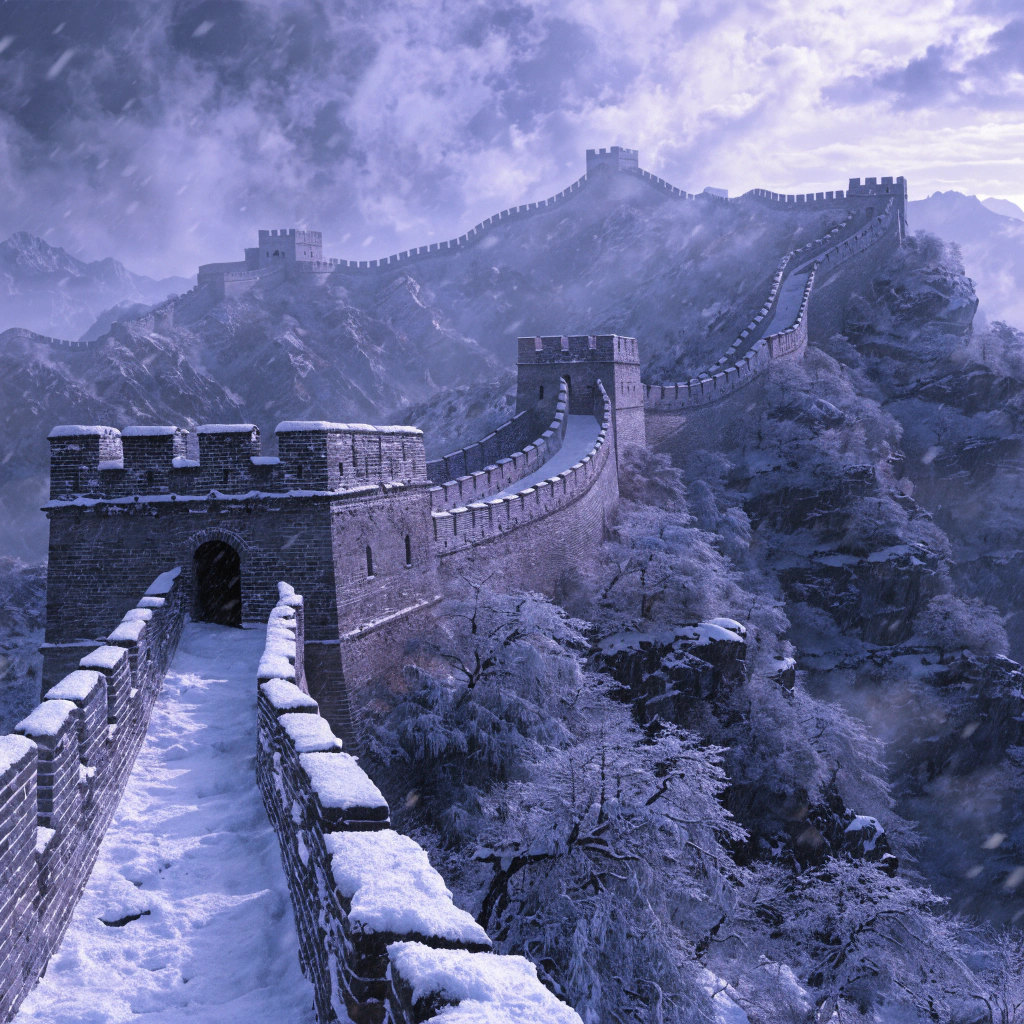
The Great Wall: Mutianyu
The Great Wall of China is very long and old. It is in the mountains. The Mutianyu section is famous and beautiful. It is near Beijing.
There are many watchtowers on the wall. People walk on the stone path. The wall is made of stone and brick. It is very strong.
You can see green trees and hills. It is a great place for photos. Many tourists visit every year. They like the view from the wall.
Gramática em destaque
Padrão: Present Simple (to be)
"The Great Wall of China is very long and old."
We use 'is' with singular subjects to describe facts or states. In this sentence, it describes the age and size of the wall.
Padrão: There are
"There are many watchtowers on the wall."
We use 'There are' to say that more than one thing exists. It is followed by a plural noun like 'watchtowers'.
Teste sua compreensão
10 perguntas · A1 Iniciante · 1 pré-visualização grátis
Teste o que aprendeu neste artigo. Responda todas as perguntas para ganhar XP!
Where is the Mutianyu section?
Quer finalizar o quiz?
9 perguntas a mais estão esperando por você. Cadastre-se grátis para desbloquear o quiz completo e ganhar XP!
Cadastrar grátisJá tem conta? Entrar
Detalhamento das perguntas
Where is the Mutianyu section?
Sua resposta:
Resposta correta: Near Beijing
The wall is made of stone.
Sua resposta:
Resposta correta: Verdadeiro
What is a 'view'?
Sua resposta:
Resposta correta: Everything you can see from a place
The wall is very _____ and old.
Sua resposta:
Resposta correta: long
Mutianyu: Uma Parte Especial da Grande Muralha da China
A Grande Muralha da China é uma construção muito famosa no mundo. Ela não é uma parede só, mas muitas partes diferentes conectadas. Há muito tempo, pessoas construíram a Muralha para proteger a China de outros povos do norte. A maior parte da Muralha que visitamos hoje foi construída durante a Dinastia Ming, entre os anos 1368 e 1644. Ela foi muito importante para a segurança do império.
Uma parte muito bonita e bem conservada da Muralha é a seção de Mutianyu. Ela está localizada a cerca de 70 quilômetros a nordeste de Pequim, a capital da China. É relativamente fácil chegar lá de carro. Mutianyu é conhecida por sua paisagem verde e suas antigas torres de vigia. Muitos visitantes gostam de Mutianyu porque ela é mais fácil de andar e tem vistas espetaculares comparada a outras seções.
Lá, você pode caminhar na Muralha e ver paisagens incríveis. Também há um teleférico e um trenó para subir e descer, o que torna a visita mais divertida. Mutianyu é um lugar histórico e muito bonito para visitar. É uma experiência especial e inesquecível na China.
Gramática em destaque
Padrão: Pretérito Perfeito Simples
"Ela foi muito importante para a segurança do império."
Usamos o Pretérito Perfeito Simples para falar de ações que começaram e terminaram no passado. Indica algo que aconteceu em um momento específico e não continua no presente. Por exemplo, 'ela foi' significa que algo 'era' no passado e agora não é mais.
Padrão: Comparativos
"ela é mais fácil de andar e tem vistas espetaculares comparada a outras seções."
Usamos comparativos para comparar duas coisas. Para dizer que algo é 'mais' que outra coisa, usamos 'mais + adjetivo + que/do que'. Para dizer 'menos', usamos 'menos + adjetivo + que/do que'.
Teste sua compreensão
11 perguntas · A2 Elementar · 1 pré-visualização grátis
Teste o que aprendeu neste artigo. Responda todas as perguntas para ganhar XP!
Sobre a Grande Muralha da China, o texto diz que ela é...
Quer finalizar o quiz?
10 perguntas a mais estão esperando por você. Cadastre-se grátis para desbloquear o quiz completo e ganhar XP!
Cadastrar grátisJá tem conta? Entrar
Detalhamento das perguntas
Sobre a Grande Muralha da China, o texto diz que ela é...
Sua resposta:
Resposta correta: muitas partes diferentes conectadas
A seção de Mutianyu fica muito longe de Pequim e é difícil de chegar.
Sua resposta:
Resposta correta: Falso
O que significa a palavra 'Proteger'?
Sua resposta:
Resposta correta: Defender de perigo ou de algo ruim
Mutianyu é conhecida por sua paisagem _____ e suas torres antigas.
Sua resposta:
Resposta correta: verde
Qual dinastia construiu a maior parte da Muralha que vemos hoje?
Sua resposta:
Resposta correta: Dinastia Ming
A Grande Muralha da China: Explorando Mutianyu
A Grande Muralha da China é uma das construções mais impressionantes da história humana. Na verdade, ela não é uma única muralha, mas sim uma vasta rede de fortificações que foram construídas ao longo de mais de dois milênios. Embora suas origens remontem ao século VII a.C., as seções mais famosas e bem preservadas foram erguidas durante a Dinastia Ming, entre 1368 e 1644, para proteger o império contra invasões do norte.
Entre as muitas seções da Muralha, Mutianyu se destaca como uma das mais bonitas e acessíveis. Localizada a cerca de 70 quilômetros a nordeste de Pequim, esta parte da Muralha é conhecida por sua paisagem deslumbrante e pela excelente condição de suas torres de guarda. Muitos turistas e estudantes de português têm visitado Mutianyu, e tem sido um destino popular para quem busca uma experiência autêntica e menos lotada do que outras seções.
A seção de Mutianyu foi restaurada cuidadosamente, mantendo suas características originais. Ela oferece aos visitantes uma experiência confortável, com teleférico e cadeirinhas que levam ao topo da Muralha. Para aqueles que buscam um pouco mais de aventura, há também um tobogã divertido para descer. É um lugar onde a história se encontra com a natureza de uma forma espetacular, e onde se pode sentir a magnitude do que foi construído pelos antigos imperadores chineses. A vista panorâmica do alto é inesquecível, e os visitantes podem caminhar por vários quilômetros ao longo desta estrutura milenar que tem resistido ao tempo.
Gramática em destaque
Padrão: Voz Passiva (ser + particípio)
"as seções mais famosas e bem preservadas foram erguidas durante a Dinastia Ming."
A voz passiva é usada para dar destaque à ação e ao objeto que a recebe, em vez de quem a pratica. É formada com o verbo "ser" (no tempo verbal adequado) e o particípio do verbo principal. Neste caso, as seções foram o foco da ação de erguer.
Padrão: Orações Subordinadas Adjetivas com "que"
"uma vasta rede de fortificações que foram construídas ao longo de mais de dois milênios."
As orações subordinadas adjetivas, introduzidas por "que", servem para adicionar uma informação ou característica sobre um substantivo. Elas funcionam como um adjetivo para a palavra anterior, neste caso, descrevendo as "fortificações".
Teste sua compreensão
11 perguntas · B1 Intermediário · 1 pré-visualização grátis
Teste o que aprendeu neste artigo. Responda todas as perguntas para ganhar XP!
Qual é a principal função da Grande Muralha da China, mencionada no texto?
Quer finalizar o quiz?
10 perguntas a mais estão esperando por você. Cadastre-se grátis para desbloquear o quiz completo e ganhar XP!
Cadastrar grátisJá tem conta? Entrar
Detalhamento das perguntas
Qual é a principal função da Grande Muralha da China, mencionada no texto?
Sua resposta:
Resposta correta: Para proteger o império contra invasões do norte.
A Grande Muralha da China é uma única estrutura contínua.
Sua resposta:
Resposta correta: Falso
O que significa a palavra 'deslumbrante'?
Sua resposta:
Resposta correta: Algo muito bonito e impressionante.
A seção de Mutianyu oferece um __________ divertido para descer.
Sua resposta:
Resposta correta: tobogã
Onde Mutianyu está localizada?
Sua resposta:
Resposta correta: A nordeste de Pequim.
A Grande Muralha da China: Explorando a Seção de Mutianyu
A Grande Muralha da China, uma das mais impressionantes maravilhas arquitetônicas e históricas do mundo, não é uma estrutura contínua, mas sim uma complexa rede de muros, trincheiras e fortificações edificadas ao longo de mais de dois milênios. Embora suas origens remontem ao século VII a.C., as seções mais icônicas e bem preservadas foram construídas durante a Dinastia Ming (1368–1644), com o propósito primordial de proteger o império contra as incursões nômades do norte.
Entre as diversas seções que compõem essa majestosa obra, a de Mutianyu destaca-se como uma das mais belas e historicamente significativas. Localizada a aproximadamente 70 quilômetros a nordeste de Pequim, ela é facilmente acessível e oferece uma experiência memorável aos visitantes. Sua popularidade reside não apenas na sua beleza cênica, mas também na sua excelente restauração, que preserva a autenticidade da estrutura original, ao mesmo tempo em que proporciona comodidades modernas para o turismo.
A seção de Mutianyu é conhecida por suas torres de vigia densamente espaçadas, que se elevam a cada poucas centenas de metros, e por sua parede sinuosa que serpenteia pelas montanhas verdejantes. A arquitetura aqui é particularmente robusta, com parapeitos em ambos os lados do muro, o que não é comum em todas as seções da Muralha. Isso sugere uma importância estratégica considerável para esta área no passado.
Para facilitar o acesso e a exploração, Mutianyu oferece um teleférico e um teleférico de gôndola, permitindo que os visitantes alcancem o topo da muralha com conforto. Para a descida, além das opções de subida, há a emocionante pista de tobogã, que proporciona um encerramento divertido e único à visita. Essa combinação de história, paisagens deslumbrantes e infraestrutura turística de qualidade faz de Mutianyu um destino imperdível para quem deseja vivenciar a grandiosidade da Grande Muralha.
É fundamental que se compreenda que a Grande Muralha transcende a mera função defensiva; ela representa um testemunho duradouro da engenhosidade humana, da resiliência e da vasta história da China. Visitar Mutianyu é, portanto, mais do que um passeio turístico; é uma imersão em um legado cultural que continua a fascinar e inspirar gerações em todo o mundo.
Gramática em destaque
Padrão: Uso do Subjuntivo para Expressar Propósito
"É fundamental que se compreenda que a Grande Muralha transcende a mera função defensiva."
O modo subjuntivo é frequentemente usado após expressões como 'é fundamental que', 'é importante que', 'é necessário que', para indicar uma necessidade, um desejo ou um propósito. Neste caso, 'que se compreenda' expressa a ação que se espera ou se considera essencial que aconteça.
Padrão: Construções Impessoais com 'se'
"É fundamental que se compreenda que a Grande Muralha transcende a mera função defensiva."
A partícula 'se' é utilizada para formar construções impessoais, onde o sujeito da ação não é especificado ou é generalizado. Neste exemplo, 'se compreenda' significa 'que as pessoas compreendam' ou 'que haja compreensão', tornando a afirmação mais geral e formal.
Padrão: Uso do Particípio Passado como Adjetivo ou em Voz Passiva
"Entre as diversas seções que compõem essa majestosa obra, a de Mutianyu destaca-se como uma das mais belas e historicamente significativas. Localizada a aproximadamente 70 quilômetros a nordeste de Pequim..."
O particípio passado ('localizada', 'edificadas', 'preservadas') é usado para descrever uma característica resultante de uma ação, funcionando como um adjetivo. Também é crucial na formação da voz passiva, indicando que o sujeito sofre a ação, como em 'foram construídas'.
Teste sua compreensão
11 perguntas · B2 Intermediário superior · 1 pré-visualização grátis
Teste o que aprendeu neste artigo. Responda todas as perguntas para ganhar XP!
Qual foi o principal objetivo da construção da Grande Muralha durante a Dinastia Ming?
Quer finalizar o quiz?
10 perguntas a mais estão esperando por você. Cadastre-se grátis para desbloquear o quiz completo e ganhar XP!
Cadastrar grátisJá tem conta? Entrar
Detalhamento das perguntas
Qual foi o principal objetivo da construção da Grande Muralha durante a Dinastia Ming?
Sua resposta:
Resposta correta: Proteger o império contra ataques nômades do norte.
A Grande Muralha da China é uma única e contínua estrutura.
Sua resposta:
Resposta correta: Falso
O que significa a palavra 'incursões' no contexto do artigo?
Sua resposta:
Resposta correta: Ataques rápidos e inesperados em território inimigo.
A seção de Mutianyu é conhecida por suas torres de _____ densamente espaçadas.
Sua resposta:
Resposta correta: vigia
Qual das seguintes opções de descida é oferecida na seção de Mutianyu?
Sua resposta:
Resposta correta: Uma pista de tobogã.
The Mutianyu Bastion: A Synthesis of Ming Strategy and Aesthetic Grandeur
The Great Wall of China is frequently, albeit erroneously, characterized as a singular, monolithic entity. In actuality, it constitutes a sprawling palimpsest of historical interventions spanning over two millennia. Among its various segments, the Mutianyu section emerges as a particularly compelling subject of study, representing the zenith of Ming Dynasty fortification. Situated approximately 70 kilometers northeast of Beijing, Mutianyu serves as a testament to the sophisticated military engineering and strategic foresight of the 14th to 17th centuries. The consolidation of imperial power during the Ming Dynasty necessitated a radical rethink of northern border security. Consequently, the Mutianyu section was reconstructed upon the rugged foundations of earlier Northern Qi structures, which had fallen into disrepair. This layering of history exemplifies the wall's status as a palimpsest. What distinguishes Mutianyu from other, perhaps more frequented, sections like Badaling is its unique architectural density. It is the sheer density of these watchtowers that underscores the strategic importance of this particular pass. Featuring twenty-two watchtowers within a mere 2.5-kilometer stretch, the section allowed for rapid communication via smoke signals and facilitated concentrated defense against potential incursions from the Mongolian steppes. Seldom does one encounter an architectural feat that so seamlessly melds defensive utility with such breathtaking aesthetic harmony. The wall follows the undulating ridges of the mountains, its granite blocks carved to withstand both the ravages of time and the intensity of siege warfare. The topography of the region, characterized by precipitous cliffs and dense forests, provided a natural deterrent, which the Ming engineers exploited with remarkable prowess. The crenelated parapets, designed to provide cover for archers, still stand as silent sentinels over the valley below. Moreover, the idiosyncrasies of Mutianyu extend to its physical layout. Both the inner and outer parapets are crenelated, a feature seldom seen in other sections, which typically only fortified the side facing the enemy. This suggests a nuanced defensive strategy designed to address threats from multiple directions or perhaps internal rebellions. Furthermore, the restoration of Mutianyu has been praised by conservationists for its meticulous adherence to historical authenticity. Unlike sections that have been overly 'Disneyfied'—a term used to describe the sanitization and commercialization of heritage sites for mass tourism—Mutianyu retains a sense of rugged grandeur. This preservation allows the visitor to grasp the magnitude of the original endeavor without the distraction of modern artifice. The granite blocks, some weighing over a ton, were transported up these steep inclines without the aid of modern machinery, a feat of logistics that continues to baffle contemporary engineers. Critically, the wall is more than a relic of isolationism; it is a manifestation of the complex interplay between sedentary civilizations and nomadic cultures. While the wall was ostensibly built for exclusion, it also facilitated trade and cultural exchange at its gates. Today, as visitors traverse its granite steps, the wall prompts a reflection on the nature of borders and the enduring human impulse to protect and define territory. The Mutianyu section, with its blend of strategic rigor and natural beauty, remains an indispensable chapter in the narrative of human civilization.
Gramática em destaque
Padrão: Inversion
"Seldom does one encounter an architectural feat that so seamlessly melds defensive utility with such breathtaking aesthetic harmony."
Inversion is used here by placing 'Seldom' at the beginning of the sentence for emphasis, requiring the auxiliary verb 'does' to come before the subject 'one'. This structure is common in formal C1 writing to highlight rarity or importance.
Padrão: Cleft Sentence
"It is the sheer density of these watchtowers that underscores the strategic importance of this particular pass."
A cleft sentence (It + be + subject + that/who) is used to focus on a specific piece of information. Here, it emphasizes 'the sheer density' as the primary reason for the wall's strategic value.
Padrão: Nominalization
"The consolidation of imperial power during the Ming Dynasty necessitated a radical rethink of northern border security."
Nominalization turns verbs (consolidate, rethink) into nouns (consolidation, rethink). This creates a more academic and concise tone, allowing the writer to discuss complex concepts as entities.
Teste sua compreensão
12 perguntas · C1 Avançado · 1 pré-visualização grátis
Teste o que aprendeu neste artigo. Responda todas as perguntas para ganhar XP!
What is the primary reason the author considers Mutianyu unique compared to other sections?
Quer finalizar o quiz?
11 perguntas a mais estão esperando por você. Cadastre-se grátis para desbloquear o quiz completo e ganhar XP!
Cadastrar grátisJá tem conta? Entrar
Detalhamento das perguntas
What is the primary reason the author considers Mutianyu unique compared to other sections?
Sua resposta:
Resposta correta: Its architectural density and dual crenelation
The Mutianyu section was built entirely from scratch by the Ming Dynasty without any previous foundations.
Sua resposta:
Resposta correta: Falso
What does the word 'precipitous' mean in the context of the article?
Sua resposta:
Resposta correta: Dangerously high or steep
The _____ of imperial power during the Ming Dynasty necessitated a radical rethink of security.
Sua resposta:
Resposta correta: consolidation
According to the text, what does the term 'Disneyfied' imply about some heritage sites?
Sua resposta:
Resposta correta: They have been overly commercialized and sanitized
The article suggests that the Great Wall served only as a tool for isolation and never for trade.
Sua resposta:
Resposta correta: Falso
The Architectural Dialectic of the Mutianyu Ramparts: A Synthesis of Ming Defensive Stratagems and Topographical Integration
The Great Wall of China is often erroneously perceived by the layperson as a monolithic, continuous architectural entity. In reality, it represents a convoluted palimpsest of defensive stratagems and fortifications spanning two millennia. Among the disparate sections that constitute this gargantuan network, the Mutianyu section in the Huairou District stands as a quintessential paradigm of Ming Dynasty (1368–1644) military ingenuity. This particular stretch, located approximately seventy kilometers northeast of Beijing, offers an unparalleled synthesis of formidable engineering and topographical integration.
Historically, the Mutianyu section served as a vital northern bastion, protecting the imperial capital and the Ming tombs from nomadic incursions. Its construction, primarily utilizing granite, reflects a significant departure from the earlier earth-and-wood ramparts of the Qin and Han eras. The density of watchtowers at Mutianyu is particularly noteworthy; seldom has a defensive structure employed such a concentrated arrangement of vantage points, with twenty-two towers punctuated along a mere 2.5-kilometer stretch. This architectural density was not merely for aesthetic grandiosity but served a pragmatic tactical function, allowing for seamless communication and crossfire capabilities against potential assailants.
The topography of the region played a decisive role in the wall’s trajectory. Nestled amidst undulating peaks and dense arboreal landscapes, the wall appears to oscillate with the natural contours of the mountain ridges. This juxtaposition between the rigid, man-made granite and the fluid, organic landscape creates a visual dialogue that transcends its original martial purpose. Were one to traverse the steep gradients of the 'Ox Horn Edge,' the sheer physical exertion required would underscore the formidable nature of the terrain that the Ming engineers sought to harness.
Furthermore, the crenelation of the Mutianyu section is unique in its dual-sided design. While most sections of the Great Wall feature battlements only on the outer edge, Mutianyu boasts crenelations on both the interior and exterior parapets. This suggests that the garrison stationed here was prepared for a multi-directional assault, reflecting the precarious socio-political climate of the period. It is imperative that the modern observer recognize these nuances, as they reveal the profound psychological underpinnings of an empire that perceived itself as a besieged island of civilization amidst a sea of perceived 'barbarism.'
In contemporary discourse, the preservation of Mutianyu presents a complex challenge. Albeit a restored section, it manages to retain a vestige of its historical gravitas, avoiding the overt commercialization that has arguably compromised the authenticity of the Badaling section. However, the tension between heritage conservation and the exigencies of mass tourism remains palpable. It is essential that the site remain a testament to human perseverance rather than merely a backdrop for ephemeral tourist experiences. The scholarly consensus suggests that any further restoration should be undertaken with extreme caution, lest the historical integrity of the masonry be subsumed by modern artifice.
Ultimately, the Mutianyu section of the Great Wall is more than a relic of isolationist policy; it is a profound intersection of culture, geography, and military science. Its enduring presence invites us to contemplate the nature of borders—both physical and conceptual. Whether viewed as a symbol of exclusion or a masterpiece of structural resilience, the wall remains an indelible part of the global cultural landscape, demanding a sophisticated analysis that moves beyond the superficiality of its monumental scale.
Gramática em destaque
Padrão: Negative Inversion
"Seldom has a defensive structure employed such a concentrated arrangement of vantage points."
This pattern places a negative or restrictive adverb at the beginning of the sentence for emphasis, requiring the auxiliary verb to come before the subject. It is common in formal, academic, or literary English to create a more dramatic or sophisticated tone.
Padrão: Inverted Conditional (Subjunctive)
"Were one to traverse the steep gradients of the 'Ox Horn Edge,' the sheer physical exertion required would underscore the formidable nature of the terrain."
The use of 'Were' at the start of the clause replaces 'If one were to...' This is a formal way of expressing a hypothetical or counterfactual condition. It enhances the scholarly register of the text.
Padrão: Present Subjunctive
"It is essential that the site remain a testament to human perseverance rather than merely a commercialized spectacle."
The base form of the verb ('remain' instead of 'remains') is used after certain adjectives of necessity or importance. This structure emphasizes the importance of a desired state or action.
Teste sua compreensão
12 perguntas · C2 Domínio · 1 pré-visualização grátis
Teste o que aprendeu neste artigo. Responda todas as perguntas para ganhar XP!
According to the article, what is a primary tactical advantage of the high density of watchtowers at Mutianyu?
Quer finalizar o quiz?
11 perguntas a mais estão esperando por você. Cadastre-se grátis para desbloquear o quiz completo e ganhar XP!
Cadastrar grátisJá tem conta? Entrar
Detalhamento das perguntas
According to the article, what is a primary tactical advantage of the high density of watchtowers at Mutianyu?
Sua resposta:
Resposta correta: It enabled seamless communication and crossfire against attackers.
The Mutianyu section was primarily constructed using earth and wood, similar to the Qin Dynasty sections.
Sua resposta:
Resposta correta: Falso
What does the term 'crenelation' refer to in the context of the wall?
Sua resposta:
Resposta correta: The alternating high and low sections of the battlements.
The wall appears to _____ with the natural contours of the mountain ridges.
Sua resposta:
Resposta correta: oscillate
What does the dual-sided crenelation at Mutianyu suggest about the garrison's defensive strategy?
Sua resposta:
Resposta correta: They were prepared for assaults originating from both inside and outside the wall.
The author argues that Mutianyu has retained more historical authenticity than the Badaling section.
Sua resposta:
Resposta correta: Verdadeiro

