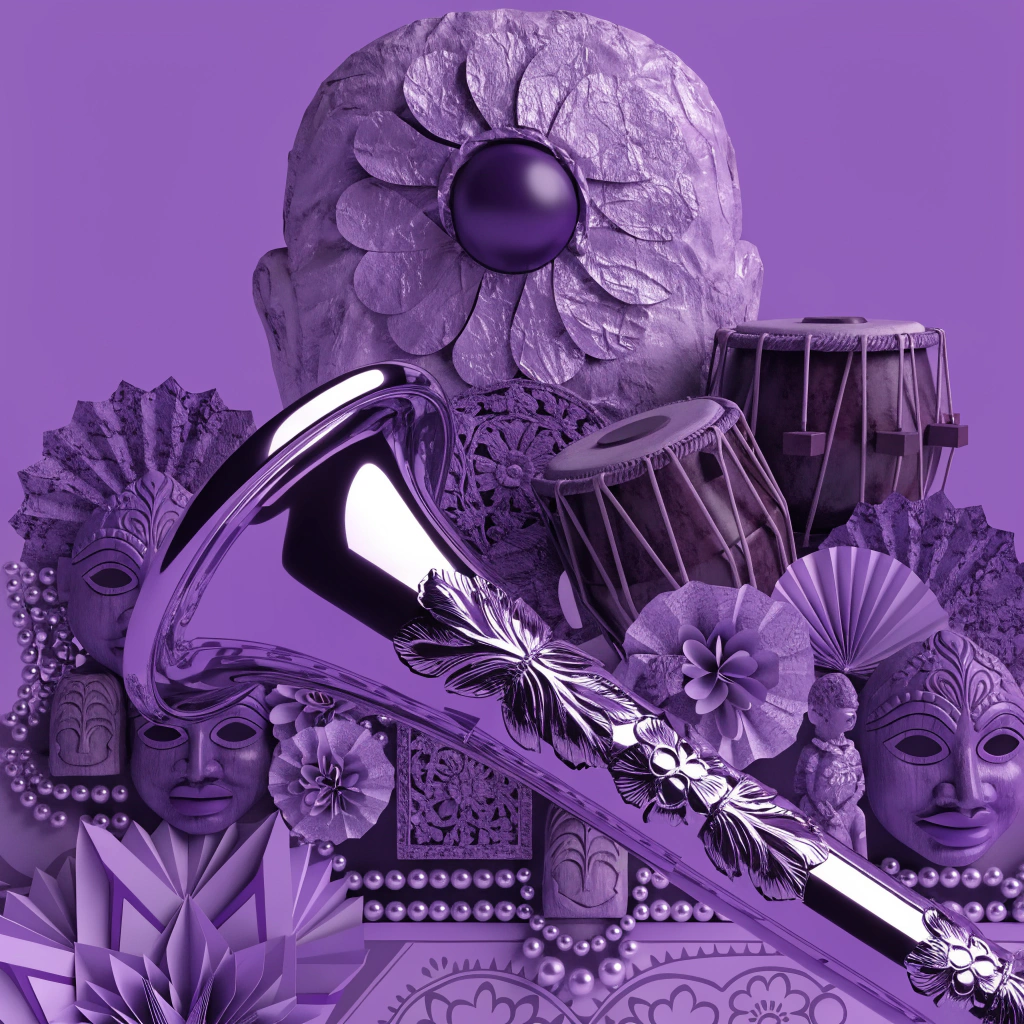
La Danza Chhau: Un Arte de India
Hola. Hoy, aprendemos sobre la danza Chhau. Es una danza especial de India. La danza Chhau es muy antigua y es parte de la cultura de este país. Los bailarines usan máscaras bonitas para la danza. Las máscaras son grandes y coloridas. La danza Chhau tiene movimientos de lucha y de acrobacia. También cuenta historias viejas. Hay tres tipos importantes de Chhau: Seraikella, Mayurbhanj y Purulia. Estos tipos son de diferentes lugares en India. La UNESCO dice que la danza Chhau es un tesoro cultural del mundo. ¡Es un arte maravilloso de India!
Gramática destacada
Patrón: El verbo 'Ser'
"Es una danza especial de India. Las máscaras son grandes y coloridas."
Usamos el verbo "ser" para hablar de cosas permanentes. Por ejemplo, para describir algo o decir de dónde es. "Es" es para singular y "son" es para plural.
Patrón: Sustantivos y adjetivos en plural
"Las máscaras son grandes y coloridas. Cuenta historias viejas."
Para hacer un sustantivo o adjetivo plural, generalmente agregamos -s o -es al final. Por ejemplo, "máscara" (singular) es "máscaras" (plural).
Pon a prueba tu comprensión
10 preguntas · A1 Principiante · 1 vista previa gratis
Pon a prueba lo que aprendiste en este artículo. ¡Responde todas las preguntas para ganar XP!
¿De dónde es la danza Chhau?
¿Quieres terminar el quiz?
9 preguntas más te esperan. ¡Regístrate gratis para desbloquear el quiz completo y ganar XP!
Regístrate gratis¿Ya tienes cuenta? Acceder
Desglose de preguntas
¿De dónde es la danza Chhau?
Tu respuesta:
Respuesta correcta: De India
Los bailarines de Chhau usan máscaras.
Tu respuesta:
Respuesta correcta: Verdadero
¿Qué significa 'especial'?
Tu respuesta:
Respuesta correcta: Algo diferente y muy importante
La danza Chhau es parte de la _____ de India.
Tu respuesta:
Respuesta correcta: cultura
Chhau: The Famous Mask Dance of India
Chhau is a traditional and famous dance from eastern India. It is very special because it started a long time ago in the states of Jharkhand, West Bengal, and Odisha. In 2010, UNESCO recognized it as an important part of world culture. Today, many people travel to India to see this amazing performance.
The dancers wear beautiful and colorful masks. These masks represent gods, animals, or famous characters from old stories. The dance is more athletic than other traditional dances in India. It uses movements from martial arts and acrobatics. Dancers jump high and move very fast because the stories are often about great battles.
There are three main styles of Chhau named after different regions. Some styles always use masks, but the Mayurbhanj style is different because it does not use them. People usually perform this dance outside during spring festivals. It is an exciting way to learn about Indian history and local art.
Gramática destacada
Patrón: Comparative Adjectives
"The dance is more athletic than other traditional dances in India."
We use 'more' with adjectives that have two or more syllables to compare two things. We usually put 'than' after the adjective to show what we are comparing it to.
Patrón: Past Simple
"In 2010, UNESCO recognized it as an important part of world culture."
We use the Past Simple to talk about finished actions at a specific time in the past. For regular verbs, we add '-ed' to the end of the base verb.
Pon a prueba tu comprensión
11 preguntas · A2 Básico · 1 vista previa gratis
Pon a prueba lo que aprendiste en este artículo. ¡Responde todas las preguntas para ganar XP!
Where did Chhau dance originally start?
¿Quieres terminar el quiz?
10 preguntas más te esperan. ¡Regístrate gratis para desbloquear el quiz completo y ganar XP!
Regístrate gratis¿Ya tienes cuenta? Acceder
Desglose de preguntas
Where did Chhau dance originally start?
Tu respuesta:
Respuesta correcta: Eastern India
Every style of Chhau dance uses masks.
Tu respuesta:
Respuesta correcta: Falso
What does 'athletic' mean?
Tu respuesta:
Respuesta correcta: Strong and good at physical movement
Dancers move fast because the stories are often about great _____.
Tu respuesta:
Respuesta correcta: battles
When do people usually perform this dance?
Tu respuesta:
Respuesta correcta: During spring festivals
El Chhau: Una Danza Ancestral de la India
El Chhau es una fascinante tradición de danza enmascarada que florece en los estados orientales de la India. Específicamente, esta forma artística se practica en Jharkhand, Bengala Occidental y Odisha. No es solo una danza; es una expresión cultural profunda que ha sido reconocida por la UNESCO como Patrimonio Cultural Inmaterial de la Humanidad. Esta distinción subraya su importancia y la necesidad de preservar sus raíces indígenas, las cuales se han mantenido vivas a lo largo de los siglos.
Esta danza única se caracteriza por su sofisticada mezcla de artes marciales, acrobacias impresionantes y narración de historias. Los bailarines, a menudo con máscaras elaboradas, representan episodios de epopeyas como el Ramayana o el Mahabharata, y también temas de la naturaleza o la vida cotidiana. Cada movimiento está lleno de energía y simbolismo, haciendo de cada actuación una experiencia visual y emocional para quienes la ven.
Existen tres estilos distintivos de Chhau, nombrados según las regiones donde se han desarrollado. El Seraikella Chhau es conocido por su gracia y delicadeza, con bailarines que a menudo usan máscaras muy expresivas. El Mayurbhanj Chhau, por otro lado, no utiliza máscaras y se centra más en movimientos vigorosos y acrobáticos. Finalmente, el Purulia Chhau es el más dramático, con máscaras grandes y coloridas, y se ejecuta con gran fuerza, generalmente durante festivales de primavera.
El Chhau no es solo un espectáculo; es una parte viva de la cultura india que se ha transmitido de generación en generación. A través de sus movimientos y sus historias, esta danza nos conecta con un pasado rico y una tradición que sigue evolucionando, manteniendo viva la historia y el espíritu de su gente. Es un testimonio de la riqueza cultural de la India, que ha logrado conservar sus formas artísticas más auténticas.
Gramática destacada
Patrón: La voz pasiva con 'ser' + participio
"Esta forma artística ha sido reconocida por la UNESCO como Patrimonio Cultural Inmaterial de la Humanidad."
Usamos la voz pasiva para poner el foco en la acción o en la cosa que recibe la acción, no en quién la hace. Se forma con el verbo 'ser' (en este caso, 'ha sido' porque es pretérito perfecto) y el participio pasado del verbo principal ('reconocida').
Patrón: Oraciones de relativo con 'que'
"El Chhau es una fascinante tradición de danza enmascarada que florece en los estados orientales de la India."
La palabra 'que' se usa para introducir una oración de relativo. Esta oración añade información importante sobre un sustantivo (aquí, 'tradición') sin necesidad de empezar una nueva frase. 'Que' puede referirse a personas o cosas.
Pon a prueba tu comprensión
11 preguntas · B1 Intermedio · 1 vista previa gratis
Pon a prueba lo que aprendiste en este artículo. ¡Responde todas las preguntas para ganar XP!
¿Qué es el Chhau, según el artículo?
¿Quieres terminar el quiz?
10 preguntas más te esperan. ¡Regístrate gratis para desbloquear el quiz completo y ganar XP!
Regístrate gratis¿Ya tienes cuenta? Acceder
Desglose de preguntas
¿Qué es el Chhau, según el artículo?
Tu respuesta:
Respuesta correcta: Una tradición de danza enmascarada de la India
Todos los estilos de Chhau utilizan máscaras.
Tu respuesta:
Respuesta correcta: Falso
¿Qué significa 'raíces' en el contexto del artículo?
Tu respuesta:
Respuesta correcta: El origen o la base de una cultura o tradición
El Chhau es una ______ cultural profunda.
Tu respuesta:
Respuesta correcta: expresión
El estilo Mayurbhanj Chhau no utiliza ______.
Tu respuesta:
Respuesta correcta: máscaras
El Chhau: La Danza India que Fusiona Arte Marcial y Narración
El Chhau, una manifestación artística única de la India oriental, representa una fascinante síntesis de danza, arte marcial y narración. Originario de los estados de Jharkhand, Bengala Occidental y Odisha, este estilo de danza enmascarada ha capturado la atención mundial por su singularidad y profundidad cultural, siendo reconocido por la UNESCO como Patrimonio Cultural Inmaterial de la Humanidad. Su rica tradición se arraiga en las costumbres tribales e indígenas, incorporando elementos rituales y festivos que lo convierten en un espectáculo vibrante y significativo.
Lo que distingue al Chhau es su capacidad para fusionar la vigorosidad de las artes marciales con la gracia de la danza clásica y la expresividad del teatro. Los bailarines, a menudo ataviados con máscaras elaboradas, ejecutan movimientos atléticos y acrobáticos que evocan escenas de epopeyas hindúes, folclore local y aspectos de la vida cotidiana. A través de estas representaciones, el Chhau no solo entretiene, sino que también transmite valores, mitos y tradiciones ancestrales a las nuevas generaciones, funcionando como un vehículo de cohesión social y cultural en las comunidades donde se practica.
Si bien el Chhau comparte una esencia común, existen tres subestilos principales, cada uno nombrado por la región donde florece y poseedor de características distintivas. El Chhau de Seraikella, practicado en Jharkhand, se caracteriza por su delicadeza y el uso prominente de máscaras que confieren a los bailarines una cualidad etérea y misteriosa, enfocándose en la expresión sutil y la belleza estética. Por otro lado, el Chhau de Purulia, de Bengala Occidental, es más vigoroso y dramático, con máscaras que representan deidades y demonios, y un mayor énfasis en la acción, el conflicto y la narrativa épica. Finalmente, el Chhau de Mayurbhanj, originario de Odisha, es el único de los tres que se realiza sin máscaras, permitiendo una mayor expresividad facial y enfatizando la fluidez de los movimientos corporales, lo que lo acerca más a una forma de danza pura.
La supervivencia del Chhau, en sus diversas formas, es fundamental para la preservación del patrimonio cultural de la India. Este arte milenario no solo es un espectáculo visualmente impactante, sino también un testimonio vivo de la riqueza cultural y la profunda conexión de la sociedad india con sus raíces históricas y espirituales. Es imperativo que los esfuerzos de conservación continúen para asegurar que las futuras generaciones puedan apreciar y aprender de esta invaluable tradición que sigue evolucionando y cautivando a audiencias en todo el mundo.
Gramática destacada
Patrón: La Voz Pasiva con 'se' / 'se' Impersonal
"El Chhau de Seraikella, practicado en Jharkhand, se caracteriza por su delicadeza y el uso prominente de máscaras..."
La estructura 'se + verbo en tercera persona' se utiliza para formar la voz pasiva refleja o para expresar acciones impersonales cuando el agente de la acción no es importante o no se menciona. En este caso, 'se caracteriza' indica que la delicadeza es una cualidad inherente o ampliamente reconocida del Chhau de Seraikella.
Patrón: Subjuntivo para Expresar Necesidad o Evaluación
"Es imperativo que los esfuerzos de conservación continúen para asegurar que las futuras generaciones puedan apreciar y aprender de esta invaluable tradición."
Cuando una frase comienza con expresiones de necesidad, importancia o evaluación (como 'es imperativo que', 'es fundamental que', 'es importante que'), el verbo de la oración subordinada debe ir en subjuntivo. Aquí, 'continúen' en subjuntivo refleja la necesidad u obligación de que los esfuerzos sigan.
Patrón: Conectores Discursivos de Contraste y Adición
"Si bien el Chhau comparte una esencia común, existen tres subestilos principales... Por otro lado, el Chhau de Purulia... Finalmente, el Chhau de Mayurbhanj..."
Los conectores discursivos como 'si bien' (aunque), 'por otro lado' (en contraste) y 'finalmente' (para concluir una enumeración) son cruciales para estructurar un texto B2. 'Si bien' introduce una concesión, 'por otro lado' marca una diferencia o contraste, y 'finalmente' indica el último punto de una serie, mejorando la coherencia y cohesión del discurso.
Pon a prueba tu comprensión
11 preguntas · B2 Intermedio alto · 1 vista previa gratis
Pon a prueba lo que aprendiste en este artículo. ¡Responde todas las preguntas para ganar XP!
¿Cuál de las siguientes afirmaciones describe mejor la característica distintiva del Chhau?
¿Quieres terminar el quiz?
10 preguntas más te esperan. ¡Regístrate gratis para desbloquear el quiz completo y ganar XP!
Regístrate gratis¿Ya tienes cuenta? Acceder
Desglose de preguntas
¿Cuál de las siguientes afirmaciones describe mejor la característica distintiva del Chhau?
Tu respuesta:
Respuesta correcta: Fusiona arte marcial, danza y narración.
El Chhau es reconocido por la UNESCO como Patrimonio Cultural Inmaterial de la Humanidad.
Tu respuesta:
Respuesta correcta: Verdadero
¿Qué significa la palabra 'ancestrales' en el contexto del artículo?
Tu respuesta:
Respuesta correcta: Pertenecientes a los antepasados o tiempos muy antiguos
El Chhau de Mayurbhanj es el único de los tres subestilos que se realiza sin ______.
Tu respuesta:
Respuesta correcta: máscaras
¿Cuál es el propósito principal del Chhau, además de entretener?
Tu respuesta:
Respuesta correcta: Transmitir valores, mitos y tradiciones a nuevas generaciones.
The Masked Metaphysics of Chhau: A Synthesis of Martial Rigour and Mythological Grandeur
Rarely has a performance art managed to bridge the chasm between raw martial energy and refined aesthetic storytelling as seamlessly as Chhau. Flourishing in the verdant landscapes of Jharkhand, West Bengal, and Odisha, this tradition is far more than a mere spectacle; it is a profound expression of regional identity. The recognition of Chhau by UNESCO as an Intangible Cultural Heritage of Humanity underscores its global significance, yet its true value lies in the idiosyncratic nuances of its three primary sub-styles: Seraikella, Mayurbhanj, and Purulia.
The meticulous preservation of these distinct sub-styles serves as a testament to the cultural resilience of eastern India. In the Seraikella and Purulia traditions, it is the mask that serves as the primary conduit for characterization. These masks are not merely decorative; they are evocative artifacts that dictate the dancer's movement, requiring a sophisticated level of physical prowess to convey emotion without facial expressions. Conversely, the Mayurbhanj style eschews the mask entirely, relying instead on the dancer's facial dexterity and muscular control to narrate tales from the Ramayana and Mahabharata. This dichotomy between masked and unmasked performance highlights the versatility inherent within the genre.
Underpinning the dance is a foundation of martial training. The movements—known as 'chalis' and 'ukhlis'—mimic the combat techniques of ancient warriors and the instinctive motions of animals. Such a synthesis of the martial and the mythic creates a burgeoning sense of dynamism on stage. Not only does the performance demand rigorous physical discipline, but it also necessitates a deep spiritual immersion. The dancer must embody the deity or demon they portray, transcending the ephemeral nature of the stage to reach a state of artistic transcendence.
However, the survival of Chhau in a globalized world is not without its challenges. The commercialization of traditional arts often risks diluting the authenticity of the form. While burgeoning interest from international audiences provides financial support, the quintessential essence of Chhau remains rooted in village festivals and local patronage. Critical analysis suggests that the future of Chhau depends on a delicate balance between modern innovation and ancestral fidelity. The resilience shown by traditional practitioners in the face of rapid urbanization is nothing short of remarkable. Ultimately, Chhau remains a vibrant, living archive of human creativity, demanding both our respect and our continued scholarly engagement.
Gramática destacada
Patrón: Negative Inversion
"Rarely has a performance art managed to bridge the chasm between raw martial energy and refined aesthetic storytelling as seamlessly as Chhau."
When we start a sentence with a negative or restrictive adverb like 'rarely', we invert the subject and the auxiliary verb. This adds emphasis and a formal tone characteristic of C1 level writing.
Patrón: Cleft Sentence
"In the Seraikella and Purulia traditions, it is the mask that serves as the primary conduit for characterization."
Cleft sentences (starting with 'It is...') are used to focus on a specific piece of information. Here, it emphasizes that the mask, rather than something else, is the key element.
Patrón: Nominalisation
"The meticulous preservation of these distinct sub-styles serves as a testament to the cultural resilience of eastern India."
Nominalisation involves turning verbs or adjectives into nouns (e.g., 'preserve' to 'preservation'). This makes the writing more abstract, formal, and concise.
Pon a prueba tu comprensión
12 preguntas · C1 Avanzado · 1 vista previa gratis
Pon a prueba lo que aprendiste en este artículo. ¡Responde todas las preguntas para ganar XP!
What is the primary focus of the article regarding the Chhau dance?
¿Quieres terminar el quiz?
11 preguntas más te esperan. ¡Regístrate gratis para desbloquear el quiz completo y ganar XP!
Regístrate gratis¿Ya tienes cuenta? Acceder
Desglose de preguntas
What is the primary focus of the article regarding the Chhau dance?
Tu respuesta:
Respuesta correcta: The synthesis of martial arts and storytelling within its regional styles.
Every sub-style of Chhau dance requires the use of a mask.
Tu respuesta:
Respuesta correcta: Falso
What does 'dichotomy' mean in the context of the article?
Tu respuesta:
Respuesta correcta: A division between two contrasting elements.
The dancer's physical _____ is essential to convey emotion when a mask is worn.
Tu respuesta:
Respuesta correcta: prowess
According to the text, what is a potential risk of the commercialization of Chhau?
Tu respuesta:
Respuesta correcta: The dilution of the form's authenticity.
The movements in Chhau are partly inspired by the behavior of animals.
Tu respuesta:
Respuesta correcta: Verdadero
The Epistemology of Movement: Deconstructing Chhau Dance as a Socio-Cultural Palimpsest
To analyze the Chhau dance of Eastern India is to engage with a multifaceted tapestry of history, mythology, and martial discipline that defies simplistic categorization. Flourishing across the states of Jharkhand, West Bengal, and Odisha, this performance tradition represents a profound confluence of indigenous tribal roots and the sophisticated aesthetics of classical Indian lore. Recognized by UNESCO as an Intangible Cultural Heritage of Humanity, Chhau is not merely a vestigial remnant of agrarian rituals; rather, it is a living, breathing synthesis of human prowess and spiritual didacticism. Seldom does a performance medium manage to encapsulate such a dichotomy between the visceral intensity of combat and the ethereal grace of narrative storytelling.
The dance is traditionally bifurcated into three distinct sub-styles, each eponymous with its region of origin: Seraikella, Mayurbhanj, and Purulia. While they share a common primordial foundation, their technical execution varies significantly. In the Seraikella and Purulia traditions, the mask is the central ontological device. By obscuring the dancer's physiognomy, the mask serves to depersonalize the performer, thereby elevating the character—be it a deity, a demon, or an animal—to a realm of universal archetypes. Were the masks to be discarded, the very essence of the Seraikella tradition would be irrevocably altered, as the mask dictates the specific idiosyncratic movements and postures required of the practitioner. Conversely, the Mayurbhanj variant is distinguished by its conspicuous absence of masks, necessitating that the dancer utilize facial expressions and intricate muscular control to convey the requisite affect.
Historically, the genesis of Chhau is inextricably linked to the military training of the region’s foot soldiers. The movements—known as 'chalis' and 'uphalis'—are derived from the daily chores of village housewives and the predatory maneuvers of wild animals, yet they are underpinned by a rigorous martial logic. It is imperative that the observer acknowledge the physical demands of this art form; the dancers must maintain a low center of gravity while executing acrobatic leaps and sudden, staccato pauses that demand exceptional core strength and balance. This athletic rigor is not merely for display; it serves a didactic purpose, illustrating the eternal struggle between dharma and adharma (righteousness and chaos) through the medium of the body.
In the contemporary era, Chhau faces the inevitable challenges of globalization and cultural homogenization. Lest the cultural significance of this art form be diluted by commercial interests, various practitioners and scholars have advocated for a more nuanced preservation strategy that respects the ritualistic origins of the dance. The ephemeral nature of live performance means that each rendition of Chhau is a unique ontological event, a fleeting moment where the primordial past and the precarious present intersect. As an academic pursuit, studying Chhau offers a window into the socio-political evolution of Eastern India, revealing how local identities are negotiated and performed through a synthesis of movement and myth. Ultimately, Chhau remains a sui generis phenomenon, a testament to the enduring power of embodied knowledge in an increasingly digitized world.
Gramática destacada
Patrón: Inversion with Negative Adverbials
"Seldom does a performance medium manage to encapsulate such a dichotomy between the visceral intensity of combat and the ethereal grace of narrative storytelling."
When using negative or restrictive adverbials like 'seldom' or 'rarely' at the beginning of a sentence for emphasis, the auxiliary verb and subject are inverted. This creates a formal, rhetorical tone typical of C2 academic writing.
Patrón: Second/Third Conditional with 'Were' Inversion
"Were the masks to be discarded, the very essence of the Seraikella tradition would be irrevocably altered."
This formal alternative to 'If the masks were to be discarded' uses inversion to express a hypothetical situation. It is used in scholarly prose to discuss theoretical possibilities and consequences.
Patrón: Negative Purpose Clauses with 'Lest'
"Lest the cultural significance of this art form be diluted by commercial interests, various practitioners and scholars have advocated for a more nuanced preservation strategy."
The conjunction 'lest' is used to express the intention of preventing something undesirable. It is followed by the subjunctive mood (the base form of the verb, e.g., 'be diluted'), adding a formal and cautionary tone to the sentence.
Pon a prueba tu comprensión
12 preguntas · C2 Dominio · 1 vista previa gratis
Pon a prueba lo que aprendiste en este artículo. ¡Responde todas las preguntas para ganar XP!
What is the primary function of the mask in Seraikella and Purulia Chhau according to the text?
¿Quieres terminar el quiz?
11 preguntas más te esperan. ¡Regístrate gratis para desbloquear el quiz completo y ganar XP!
Regístrate gratis¿Ya tienes cuenta? Acceder
Desglose de preguntas
What is the primary function of the mask in Seraikella and Purulia Chhau according to the text?
Tu respuesta:
Respuesta correcta: To depersonalize the performer and represent universal archetypes
The Mayurbhanj style of Chhau is characterized by its heavy use of elaborate masks.
Tu respuesta:
Respuesta correcta: Falso
Which word describes something that relates to the nature of being and existence?
Tu respuesta:
Respuesta correcta: Ontological
The text suggests that Chhau is a _____ of human prowess and spiritual didacticism.
Tu respuesta:
Respuesta correcta: synthesis
What historical activity is the movement vocabulary of Chhau inextricably linked to?
Tu respuesta:
Respuesta correcta: Military training of foot soldiers
The text argues that the athletic rigor of Chhau serves a didactic purpose regarding the struggle between righteousness and chaos.
Tu respuesta:
Respuesta correcta: Verdadero

