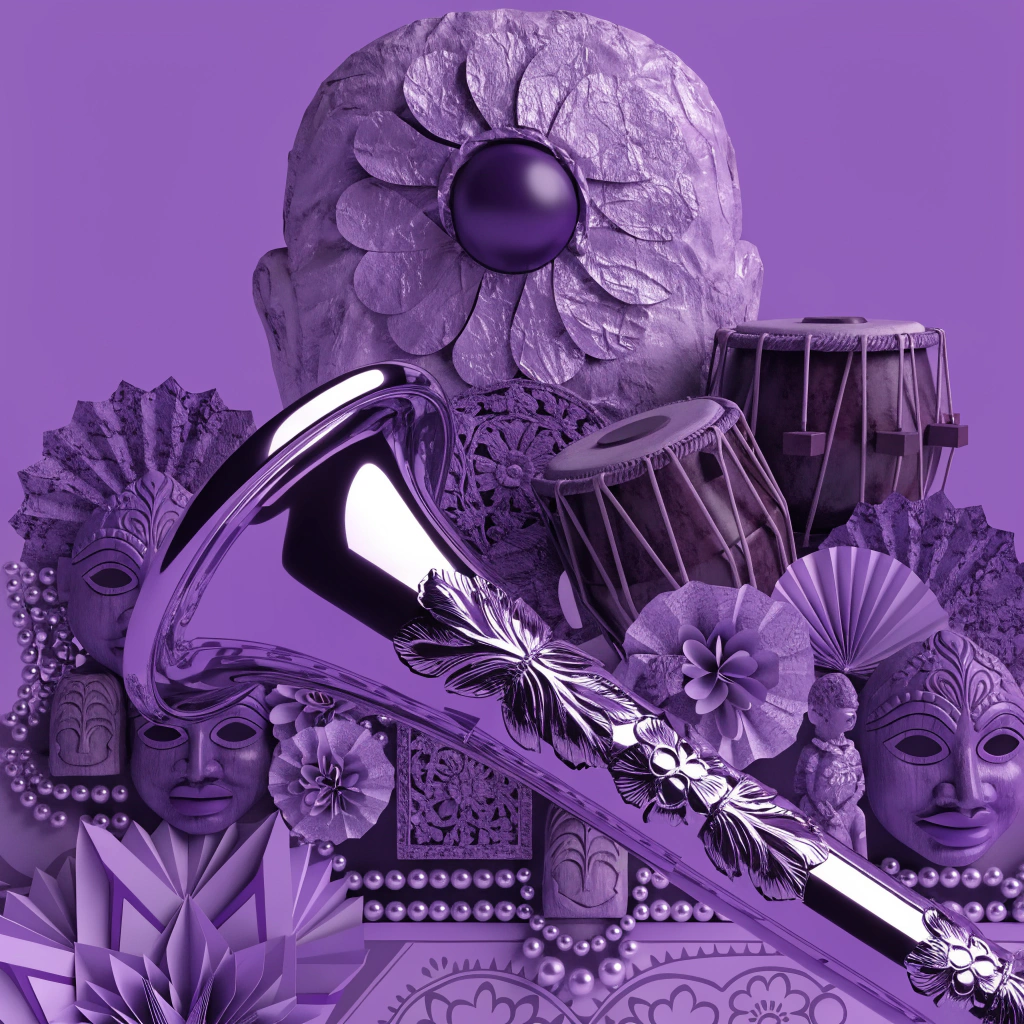
The Mask Dance of India
Chhau is a famous dance from India. People in West Bengal, Odisha, and Jharkhand dance it. It is very special. The dancers wear colorful clothes. Some dancers wear big masks. The masks show faces of gods or animals. The dance is strong and fast. Dancers jump and move like soldiers. They tell stories with their bodies. They use drums and flutes for music. Many people watch the dance at festivals. It is a beautiful part of Indian culture.
文法スポットライト
パターン: Present Simple (Be)
"Chhau is a famous dance from India."
We use 'is' with singular subjects to describe facts. It tells us what something is or where it is from.
パターン: Present Simple (Action Verbs)
"Dancers jump and move like soldiers."
We use the base form of the verb when the subject is plural. It describes general habits or actions.
理解度をチェック
10 問 · A1 初級 · 無料プレビュー 1回
この記事で学んだことをテストしよう。全問正解してXPを獲得!
Where is the Chhau dance from?
問題の内訳
Where is the Chhau dance from?
あなたの回答:
正解: India
The dancers wear masks.
あなたの回答:
正解: 正しい
What is a 'mask'?
あなたの回答:
正解: Something to cover the face
The dancers wear _____ clothes.
あなたの回答:
正解: colorful
Chhau: The Famous Mask Dance of India
Chhau is a traditional and famous dance from eastern India. It is very special because it started a long time ago in the states of Jharkhand, West Bengal, and Odisha. In 2010, UNESCO recognized it as an important part of world culture. Today, many people travel to India to see this amazing performance.
The dancers wear beautiful and colorful masks. These masks represent gods, animals, or famous characters from old stories. The dance is more athletic than other traditional dances in India. It uses movements from martial arts and acrobatics. Dancers jump high and move very fast because the stories are often about great battles.
There are three main styles of Chhau named after different regions. Some styles always use masks, but the Mayurbhanj style is different because it does not use them. People usually perform this dance outside during spring festivals. It is an exciting way to learn about Indian history and local art.
文法スポットライト
パターン: Comparative Adjectives
"The dance is more athletic than other traditional dances in India."
We use 'more' with adjectives that have two or more syllables to compare two things. We usually put 'than' after the adjective to show what we are comparing it to.
パターン: Past Simple
"In 2010, UNESCO recognized it as an important part of world culture."
We use the Past Simple to talk about finished actions at a specific time in the past. For regular verbs, we add '-ed' to the end of the base verb.
理解度をチェック
11 問 · A2 初級 · 無料プレビュー 1回
この記事で学んだことをテストしよう。全問正解してXPを獲得!
Where did Chhau dance originally start?
問題の内訳
Where did Chhau dance originally start?
あなたの回答:
正解: Eastern India
Every style of Chhau dance uses masks.
あなたの回答:
正解: 間違い
What does 'athletic' mean?
あなたの回答:
正解: Strong and good at physical movement
Dancers move fast because the stories are often about great _____.
あなたの回答:
正解: battles
When do people usually perform this dance?
あなたの回答:
正解: During spring festivals
The Magic of Chhau: India's Traditional Masked Dance
The Chhau dance is a traditional art form that has been performed for centuries in Eastern India. It is primarily found in the states of Jharkhand, West Bengal, and Odisha. This unique dance is famous because it combines martial arts, acrobatics, and storytelling into one energetic performance. Many experts believe that it is one of the most exciting cultural traditions in the world.
There are three main styles of Chhau, which are named after the specific regions where they originated. In the Purulia and Seraikella styles, the dancers wear beautiful, colorful masks that represent gods, demons, or animals. However, in the Mayurbhanj style, masks are not used at all. Instead, the performers use their facial expressions and body language to tell a story. These styles have been recognized by UNESCO as an Intangible Cultural Heritage because they are an essential part of India's identity.
The movements in Chhau are incredibly powerful. Dancers must be very strong because they perform high jumps and complex athletic moves. Most performers have practiced for many years to master these difficult skills, often starting when they are children. During the performance, stories from ancient legends are told through a combination of music and dance. The music is usually played on traditional instruments like large drums and flutes, which create a very dramatic atmosphere for the audience.
Today, Chhau is still performed during major spring festivals. It is a special time when local communities come together to celebrate their history. Although the modern world is changing quickly, these traditions have been kept alive by dedicated families. They continue to teach the younger generation so that the unique beauty of Chhau will never disappear. If you ever visit Eastern India, you should definitely watch a performance to see this amazing art form for yourself.
文法スポットライト
パターン: Present Perfect Passive
"The Chhau dance is a traditional art form that has been performed for centuries in Eastern India."
This pattern shows an action that started in the past and continues to the present. We use 'has been' + the past participle when the focus is on the action, not the person doing it.
パターン: Relative Clauses with 'That'
"In the Purulia and Seraikella styles, the dancers wear beautiful, colorful masks that represent gods, demons, or animals."
A relative clause gives more information about a noun. Here, 'that' introduces a clause that describes the specific types of masks used in the dance.
理解度をチェック
11 問 · B1 中級 · 無料プレビュー 1回
この記事で学んだことをテストしよう。全問正解してXPを獲得!
In which part of India is the Chhau dance primarily found?
問題の内訳
In which part of India is the Chhau dance primarily found?
あなたの回答:
正解: Eastern India
All three styles of Chhau dance use masks during the performance.
あなたの回答:
正解: 間違い
What does 'heritage' mean?
あなたの回答:
正解: Traditions and history of a society
In the Purulia style, the dancers wear beautiful _____ to represent gods or animals.
あなたの回答:
正解: masks
Why has UNESCO recognized Chhau dance?
あなたの回答:
正解: Because it is an essential part of cultural identity
The Masked Legacy: Exploring the Rhythms of Chhau Dance
Chhau dance is a vibrant and sophisticated tradition that flourishes in the eastern states of India, specifically Jharkhand, West Bengal, and Odisha. Recognized by UNESCO as an Intangible Cultural Heritage of Humanity, it represents a profound blend of indigenous culture, martial arts, and storytelling. This performance art is not merely entertainment; it is a dynamic expression of the community's history and spiritual beliefs, often performed during the spring festival of Chaitra Parva. Blending martial arts with storytelling, the performers bring ancient legends to life through a series of powerful movements and symbolic gestures.
The tradition is categorized into three distinct sub-styles, which are named after the regions where they originated: Seraikella Chhau, Mayurbhanj Chhau, and Purulia Chhau. While the Seraikella and Purulia styles are famous for their use of elaborate masks, the Mayurbhanj style is unique because it does not incorporate masks at all. In the masked versions, the facial expressions of the dancers are hidden, requiring them to convey emotion and narrative through intricate body movements. The masks themselves are masterpieces of craftsmanship, often made from paper-mâché and clay, then painted with vivid colors to represent gods, demons, or animals.
Technically, Chhau is an incredibly demanding art form. It combines the grace of traditional dance with the physical intensity of acrobatics and combat techniques. Performers often depict episodes from great Indian epics such as the Ramayana and the Mahabharata. By utilizing these ancient stories, the dance serves as a bridge between the past and the present, ensuring that the cultural legacy of the region is preserved for future generations. The music accompanying the dance is equally essential, featuring traditional drums like the dhol and the shehnai, which provide a rhythmic foundation for the dancers' energy.
In recent years, Chhau has faced the challenge of modernization. However, it continues to thrive as local communities and international organizations work together to promote its significance. Efforts have been made to provide better training for young artists, ensuring that the skills required for this complex performance are not lost. Consequently, Chhau remains a vital part of India's cultural landscape, captivating audiences with its artistic depth. As viewers witness the performers leaping across the stage, they are observing a living piece of history that continues to evolve while staying true to its roots.
文法スポットライト
パターン: Passive Voice
"The tradition is categorized into three distinct sub-styles."
The passive voice is used here to focus on the 'tradition' rather than who is doing the categorizing. It is formed using the verb 'to be' and the past participle.
パターン: Relative Clauses
"The tradition is categorized into three distinct sub-styles, which are named after the regions where they originated."
Non-defining relative clauses provide extra information about a noun. In this case, 'which' adds detail about the sub-styles.
パターン: Participle Phrases
"Blending martial arts with storytelling, the performers bring ancient legends to life."
Present participle phrases (-ing) can be used to describe two actions happening at the same time or to provide more information about the subject.
理解度をチェック
11 問 · B2 中上級 · 無料プレビュー 1回
この記事で学んだことをテストしよう。全問正解してXPを獲得!
Which state is NOT mentioned as a primary location for Chhau dance?
問題の内訳
Which state is NOT mentioned as a primary location for Chhau dance?
あなたの回答:
正解: Rajasthan
The Mayurbhanj style of Chhau is known for its use of colorful masks.
あなたの回答:
正解: 間違い
What does the word 'indigenous' mean in the context of the article?
あなたの回答:
正解: Native to a specific region
The dance serves as a bridge between the past and the present, ensuring that the cultural _____ is preserved.
あなたの回答:
正解: legacy
Why is Chhau considered a demanding art form?
あなたの回答:
正解: It combines dance with acrobatics and combat techniques.
The Masked Metaphysics of Chhau: A Synthesis of Martial Rigour and Mythological Grandeur
Rarely has a performance art managed to bridge the chasm between raw martial energy and refined aesthetic storytelling as seamlessly as Chhau. Flourishing in the verdant landscapes of Jharkhand, West Bengal, and Odisha, this tradition is far more than a mere spectacle; it is a profound expression of regional identity. The recognition of Chhau by UNESCO as an Intangible Cultural Heritage of Humanity underscores its global significance, yet its true value lies in the idiosyncratic nuances of its three primary sub-styles: Seraikella, Mayurbhanj, and Purulia.
The meticulous preservation of these distinct sub-styles serves as a testament to the cultural resilience of eastern India. In the Seraikella and Purulia traditions, it is the mask that serves as the primary conduit for characterization. These masks are not merely decorative; they are evocative artifacts that dictate the dancer's movement, requiring a sophisticated level of physical prowess to convey emotion without facial expressions. Conversely, the Mayurbhanj style eschews the mask entirely, relying instead on the dancer's facial dexterity and muscular control to narrate tales from the Ramayana and Mahabharata. This dichotomy between masked and unmasked performance highlights the versatility inherent within the genre.
Underpinning the dance is a foundation of martial training. The movements—known as 'chalis' and 'ukhlis'—mimic the combat techniques of ancient warriors and the instinctive motions of animals. Such a synthesis of the martial and the mythic creates a burgeoning sense of dynamism on stage. Not only does the performance demand rigorous physical discipline, but it also necessitates a deep spiritual immersion. The dancer must embody the deity or demon they portray, transcending the ephemeral nature of the stage to reach a state of artistic transcendence.
However, the survival of Chhau in a globalized world is not without its challenges. The commercialization of traditional arts often risks diluting the authenticity of the form. While burgeoning interest from international audiences provides financial support, the quintessential essence of Chhau remains rooted in village festivals and local patronage. Critical analysis suggests that the future of Chhau depends on a delicate balance between modern innovation and ancestral fidelity. The resilience shown by traditional practitioners in the face of rapid urbanization is nothing short of remarkable. Ultimately, Chhau remains a vibrant, living archive of human creativity, demanding both our respect and our continued scholarly engagement.
文法スポットライト
パターン: Negative Inversion
"Rarely has a performance art managed to bridge the chasm between raw martial energy and refined aesthetic storytelling as seamlessly as Chhau."
When we start a sentence with a negative or restrictive adverb like 'rarely', we invert the subject and the auxiliary verb. This adds emphasis and a formal tone characteristic of C1 level writing.
パターン: Cleft Sentence
"In the Seraikella and Purulia traditions, it is the mask that serves as the primary conduit for characterization."
Cleft sentences (starting with 'It is...') are used to focus on a specific piece of information. Here, it emphasizes that the mask, rather than something else, is the key element.
パターン: Nominalisation
"The meticulous preservation of these distinct sub-styles serves as a testament to the cultural resilience of eastern India."
Nominalisation involves turning verbs or adjectives into nouns (e.g., 'preserve' to 'preservation'). This makes the writing more abstract, formal, and concise.
理解度をチェック
12 問 · C1 上級 · 無料プレビュー 1回
この記事で学んだことをテストしよう。全問正解してXPを獲得!
What is the primary focus of the article regarding the Chhau dance?
問題の内訳
What is the primary focus of the article regarding the Chhau dance?
あなたの回答:
正解: The synthesis of martial arts and storytelling within its regional styles.
Every sub-style of Chhau dance requires the use of a mask.
あなたの回答:
正解: 間違い
What does 'dichotomy' mean in the context of the article?
あなたの回答:
正解: A division between two contrasting elements.
The dancer's physical _____ is essential to convey emotion when a mask is worn.
あなたの回答:
正解: prowess
According to the text, what is a potential risk of the commercialization of Chhau?
あなたの回答:
正解: The dilution of the form's authenticity.
The movements in Chhau are partly inspired by the behavior of animals.
あなたの回答:
正解: 正しい
The Epistemology of Movement: Deconstructing Chhau Dance as a Socio-Cultural Palimpsest
To analyze the Chhau dance of Eastern India is to engage with a multifaceted tapestry of history, mythology, and martial discipline that defies simplistic categorization. Flourishing across the states of Jharkhand, West Bengal, and Odisha, this performance tradition represents a profound confluence of indigenous tribal roots and the sophisticated aesthetics of classical Indian lore. Recognized by UNESCO as an Intangible Cultural Heritage of Humanity, Chhau is not merely a vestigial remnant of agrarian rituals; rather, it is a living, breathing synthesis of human prowess and spiritual didacticism. Seldom does a performance medium manage to encapsulate such a dichotomy between the visceral intensity of combat and the ethereal grace of narrative storytelling.
The dance is traditionally bifurcated into three distinct sub-styles, each eponymous with its region of origin: Seraikella, Mayurbhanj, and Purulia. While they share a common primordial foundation, their technical execution varies significantly. In the Seraikella and Purulia traditions, the mask is the central ontological device. By obscuring the dancer's physiognomy, the mask serves to depersonalize the performer, thereby elevating the character—be it a deity, a demon, or an animal—to a realm of universal archetypes. Were the masks to be discarded, the very essence of the Seraikella tradition would be irrevocably altered, as the mask dictates the specific idiosyncratic movements and postures required of the practitioner. Conversely, the Mayurbhanj variant is distinguished by its conspicuous absence of masks, necessitating that the dancer utilize facial expressions and intricate muscular control to convey the requisite affect.
Historically, the genesis of Chhau is inextricably linked to the military training of the region’s foot soldiers. The movements—known as 'chalis' and 'uphalis'—are derived from the daily chores of village housewives and the predatory maneuvers of wild animals, yet they are underpinned by a rigorous martial logic. It is imperative that the observer acknowledge the physical demands of this art form; the dancers must maintain a low center of gravity while executing acrobatic leaps and sudden, staccato pauses that demand exceptional core strength and balance. This athletic rigor is not merely for display; it serves a didactic purpose, illustrating the eternal struggle between dharma and adharma (righteousness and chaos) through the medium of the body.
In the contemporary era, Chhau faces the inevitable challenges of globalization and cultural homogenization. Lest the cultural significance of this art form be diluted by commercial interests, various practitioners and scholars have advocated for a more nuanced preservation strategy that respects the ritualistic origins of the dance. The ephemeral nature of live performance means that each rendition of Chhau is a unique ontological event, a fleeting moment where the primordial past and the precarious present intersect. As an academic pursuit, studying Chhau offers a window into the socio-political evolution of Eastern India, revealing how local identities are negotiated and performed through a synthesis of movement and myth. Ultimately, Chhau remains a sui generis phenomenon, a testament to the enduring power of embodied knowledge in an increasingly digitized world.
文法スポットライト
パターン: Inversion with Negative Adverbials
"Seldom does a performance medium manage to encapsulate such a dichotomy between the visceral intensity of combat and the ethereal grace of narrative storytelling."
When using negative or restrictive adverbials like 'seldom' or 'rarely' at the beginning of a sentence for emphasis, the auxiliary verb and subject are inverted. This creates a formal, rhetorical tone typical of C2 academic writing.
パターン: Second/Third Conditional with 'Were' Inversion
"Were the masks to be discarded, the very essence of the Seraikella tradition would be irrevocably altered."
This formal alternative to 'If the masks were to be discarded' uses inversion to express a hypothetical situation. It is used in scholarly prose to discuss theoretical possibilities and consequences.
パターン: Negative Purpose Clauses with 'Lest'
"Lest the cultural significance of this art form be diluted by commercial interests, various practitioners and scholars have advocated for a more nuanced preservation strategy."
The conjunction 'lest' is used to express the intention of preventing something undesirable. It is followed by the subjunctive mood (the base form of the verb, e.g., 'be diluted'), adding a formal and cautionary tone to the sentence.
理解度をチェック
12 問 · C2 マスター · 無料プレビュー 1回
この記事で学んだことをテストしよう。全問正解してXPを獲得!
What is the primary function of the mask in Seraikella and Purulia Chhau according to the text?
問題の内訳
What is the primary function of the mask in Seraikella and Purulia Chhau according to the text?
あなたの回答:
正解: To depersonalize the performer and represent universal archetypes
The Mayurbhanj style of Chhau is characterized by its heavy use of elaborate masks.
あなたの回答:
正解: 間違い
Which word describes something that relates to the nature of being and existence?
あなたの回答:
正解: Ontological
The text suggests that Chhau is a _____ of human prowess and spiritual didacticism.
あなたの回答:
正解: synthesis
What historical activity is the movement vocabulary of Chhau inextricably linked to?
あなたの回答:
正解: Military training of foot soldiers
The text argues that the athletic rigor of Chhau serves a didactic purpose regarding the struggle between righteousness and chaos.
あなたの回答:
正解: 正しい

