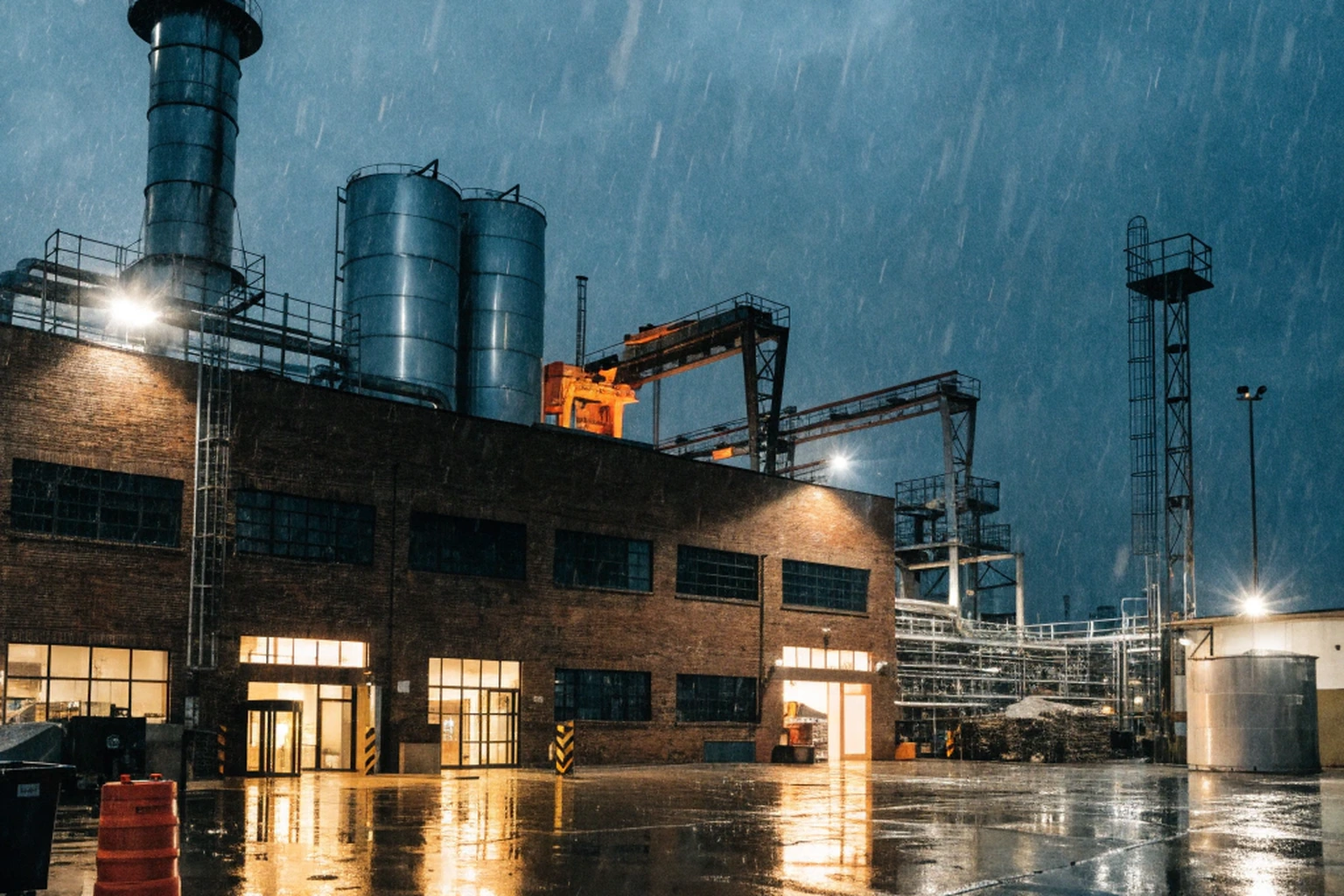
Mexico: A Country of Cars
Mexico is a big country. It makes many, many cars. Big companies have large factories in Mexico. Companies like Ford and Toyota are there.
A lot of people work in the factories. They build new cars every day. The people are good workers. They make very good cars.
Mexico sends the cars to other countries. Many cars go to the USA. Making cars is very important for Mexico.
Gramática destacada
Patrón: Present Simple Tense (3rd Person)
"Mexico sends the cars to other countries."
We use the Present Simple for facts. When the subject is 'he', 'she', or 'it' (like 'Mexico'), we add '-s' to the verb.
Patrón: Plural Nouns
"Big companies have large factories in Mexico."
To talk about more than one thing, we usually add '-s' to a noun. For example, one 'car' becomes many 'cars'.
Pon a prueba tu comprensión
10 preguntas · A1 Principiante · 1 vista previa gratis
Pon a prueba lo que aprendiste en este artículo. ¡Responde todas las preguntas para ganar XP!
What important product does Mexico make?
¿Quieres terminar el quiz?
9 preguntas más te esperan. ¡Regístrate gratis para desbloquear el quiz completo y ganar XP!
Regístrate gratis¿Ya tienes cuenta? Acceder
Desglose de preguntas
What important product does Mexico make?
Tu respuesta:
Respuesta correcta: Cars
The factories in Mexico are small.
Tu respuesta:
Respuesta correcta: Falso
What does 'factories' mean?
Tu respuesta:
Respuesta correcta: Big buildings to make things
A lot of ______ work in the factories.
Tu respuesta:
Respuesta correcta: people
Mexico: The World's Great Car Maker
Mexico is a very important country for making cars. Many years ago, it started to build big factories. Now, it is the top producer of cars in Latin America. Famous companies like Volkswagen and Ford have factories there because the Mexican workers are very skilled.
The car industry is bigger today than it was in the past. It is now the backbone of the national economy. Mexico exports many cars to the United States and other countries every year. This happens because Mexico is close to its neighbors and has good trade rules.
Making cars helps many people in Mexico. They get good jobs in the large factories. The country is a global leader in manufacturing. In the future, Mexico wants to build even more electric cars for the world.
Gramática destacada
Patrón: Comparative Adjectives
"The car industry is bigger today than it was in the past."
We use 'bigger than' to compare two things. For short adjectives, we add '-er' to the adjective and use 'than' after it.
Patrón: Past Simple
"Many years ago, it started to build big factories."
We use the Past Simple to talk about finished actions in the past. For regular verbs like 'start', we add '-ed' to the end.
Pon a prueba tu comprensión
11 preguntas · A2 Básico · 1 vista previa gratis
Pon a prueba lo que aprendiste en este artículo. ¡Responde todas las preguntas para ganar XP!
Which region is Mexico the top car producer in?
¿Quieres terminar el quiz?
10 preguntas más te esperan. ¡Regístrate gratis para desbloquear el quiz completo y ganar XP!
Regístrate gratis¿Ya tienes cuenta? Acceder
Desglose de preguntas
Which region is Mexico the top car producer in?
Tu respuesta:
Respuesta correcta: Latin America
Mexico does not send cars to the United States.
Tu respuesta:
Respuesta correcta: Falso
What does 'factory' mean?
Tu respuesta:
Respuesta correcta: A building where things are made
The country is a global _____ in manufacturing.
Tu respuesta:
Respuesta correcta: leader
Why do famous companies have factories in Mexico?
Tu respuesta:
Respuesta correcta: Because the workers are skilled
Mexico: A Global Engine for Cars
Mexico has become one of the most important places for making cars in the world. For many years, the automotive industry has been the backbone of the country's economy. Since the 1990s, when new trade agreements were signed, Mexico has transformed into a global manufacturing powerhouse. Today, the nation exports millions of vehicles to customers in the United States, Canada, and Europe.
Many famous car companies, which are known globally, have built large factories in different Mexican states. Industry giants such as Volkswagen, General Motors, Ford, BMW, and Toyota produce cars there. In fact, Mexico has been ranked as the seventh-largest producer of passenger vehicles in the world. It is also the number one producer in Latin America. This success is not recent; it has grown steadily over the last decade.
Why is Mexico so successful in this sector? One major reason is its location. Because it shares a border with the United States, cars that are made in Mexico can be shipped quickly and cheaply to North American markets. Furthermore, the country has a highly skilled workforce that specializes in assembling complex machines. These workers ensure that the vehicles meet high quality standards.
The industry does more than just assemble cars; it also produces many parts, such as engines and electronics. This complete supply chain creates thousands of jobs for local people. Recently, there has been a shift towards modern technology. Factories are now being updated to build electric vehicles. This change ensures that Mexico will remain a key player in the automotive world for a long time. The combination of experience, location, and innovation makes Mexico a true leader in automotive manufacturing.
Gramática destacada
Patrón: Presente Perfecto
"Mexico has become one of the most important places for making cars in the world."
Usamos el presente perfecto (has/have + participio pasado) para hablar de una acción que comenzó en el pasado y tiene un resultado en el presente. Aquí, muestra que el estatus de México como fabricante de autos es una realidad actual que resulta de un crecimiento pasado.
Patrón: Voz Pasiva
"Cars that are made in Mexico can be shipped quickly and cheaply."
Usamos la voz pasiva (be + participio pasado) cuando el objeto de la acción es más importante que la persona que la realiza. En esta frase, 'are made' (son hechos) enfatiza los autos, no los trabajadores que los fabrican.
Pon a prueba tu comprensión
11 preguntas · B1 Intermedio · 1 vista previa gratis
Pon a prueba lo que aprendiste en este artículo. ¡Responde todas las preguntas para ganar XP!
¿Cuál es la idea principal del artículo?
¿Quieres terminar el quiz?
10 preguntas más te esperan. ¡Regístrate gratis para desbloquear el quiz completo y ganar XP!
Regístrate gratis¿Ya tienes cuenta? Acceder
Desglose de preguntas
¿Cuál es la idea principal del artículo?
Tu respuesta:
Respuesta correcta: México se ha convertido en un importante centro global para construir autos.
México es el mayor productor de vehículos de pasajeros en todo el mundo.
Tu respuesta:
Respuesta correcta: Falso
¿Qué significa 'export'?
Tu respuesta:
Respuesta correcta: Enviar bienes a otro país para su venta.
La industria automotriz se describe como la _______ de la economía del país.
Tu respuesta:
Respuesta correcta: backbone
¿Cuál de estas compañías de autos se menciona en el texto?
Tu respuesta:
Respuesta correcta: Ford
Mexico: An Automotive Manufacturing Titan
When people think of Mexico, they often imagine beautiful beaches, ancient ruins, and a rich cultural heritage. However, in the global economy, Mexico is recognized for something entirely different: its robust industrial capacity. Specifically, the automotive industry has become the backbone of the nation's economy, driving significant growth and development over the last few decades.
Since the implementation of the North American Free Trade Agreement (NAFTA) in the 1990s, and its modern successor, the USMCA, Mexico has transformed into a manufacturing powerhouse. These trade agreements lowered barriers and encouraged foreign investment, allowing Mexico to integrate deeply into the North American supply chain. Consequently, the country is now the seventh-largest producer of passenger vehicles in the world and the undisputed leader in Latin America.
The success of this sector is not accidental; it is the result of strategic planning and geographic advantage. Mexico shares a long border with the United States, the world's largest consumer market. This proximity allows for lower transportation costs and faster delivery times compared to overseas competitors. Furthermore, the country has developed a skilled workforce and a complex infrastructure of suppliers that support major assembly plants.
Global automotive giants have taken notice. Companies such as Volkswagen, General Motors, Ford, BMW, and Toyota have established massive operations within the country. These facilities do not just assemble cars; they are also increasingly involved in engineering and design. The industry is pivotal to Mexico's export strategy, with vehicles and auto parts accounting for a substantial portion of total exports.
Looking ahead, the industry faces a new challenge: the transition to sustainability. As the world shifts towards electric vehicles (EVs), Mexico is adapting quickly. Significant investments are being made to retool factories for EV production, ensuring that the country remains a dominant player in the future of transportation. This evolution demonstrates that Mexico’s automotive sector is not only strong today but is also preparing effectively for the demands of tomorrow.
Gramática destacada
Patrón: Presente perfecto simple
"Specifically, the automotive industry has become the backbone of the nation's economy."
Este tiempo verbal relaciona una acción o estado pasado con el momento presente. Se usa aquí para mostrar que el crecimiento de la industria comenzó en el pasado y sigue siendo relevante e importante hoy en día.
Patrón: Voz pasiva
"Mexico is recognized for something entirely different."
La voz pasiva se usa cuando el enfoque está en la acción o en quien recibe la acción (México), en lugar de en quién la realiza. Es común en la escritura formal y académica.
Patrón: Marcadores del discurso
"Furthermore, the country has developed a skilled workforce."
Los marcadores del discurso como 'Furthermore' ayudan a organizar el texto. Le indican al lector que se está añadiendo información de apoyo adicional al punto anterior.
Pon a prueba tu comprensión
11 preguntas · B2 Intermedio alto · 1 vista previa gratis
Pon a prueba lo que aprendiste en este artículo. ¡Responde todas las preguntas para ganar XP!
¿Cuál es la razón principal que se menciona para el éxito automotriz de México?
¿Quieres terminar el quiz?
10 preguntas más te esperan. ¡Regístrate gratis para desbloquear el quiz completo y ganar XP!
Regístrate gratis¿Ya tienes cuenta? Acceder
Desglose de preguntas
¿Cuál es la razón principal que se menciona para el éxito automotriz de México?
Tu respuesta:
Respuesta correcta: Acuerdos comerciales estratégicos y geografía
México es actualmente el mayor productor de vehículos de pasajeros del mundo.
Tu respuesta:
Respuesta correcta: Falso
¿Qué significa 'pivotal' en el contexto del artículo?
Tu respuesta:
Respuesta correcta: Crucial o de importancia central
La industria automotriz se describe como la _____ de la economía de la nación.
Tu respuesta:
Respuesta correcta: backbone
¿Qué acuerdo se menciona como el sucesor del TLCAN (NAFTA)?
Tu respuesta:
Respuesta correcta: T-MEC (USMCA)
Gearing Up: Mexico's Ascent as an Automotive Titan
The transformation of Mexico’s economy over the last three decades has been nothing short of remarkable. Once primarily reliant on oil exports and agriculture, the nation has metamorphosed into a global manufacturing powerhouse, with the automotive sector serving as its undisputed cornerstone. It was the implementation of the North American Free Trade Agreement (NAFTA) in the 1990s, and its modern successor the USMCA, that acted as the primary catalyst for this industrial revolution. Rarely has a single policy framework so fundamentally altered the economic trajectory of a developing nation, precipitating a shift from simple assembly to complex, high-value production.
Today, Mexico stands as the seventh-largest producer of passenger vehicles worldwide and the premier manufacturer in Latin America. The sheer scale of operations is staggering; global giants such as Volkswagen, General Motors, Ford, Toyota, and BMW have not merely established outposts but have integrated their Mexican facilities into their core global strategies. This integration goes beyond physical assembly. The burgeoning network of suppliers, clustered particularly in the Bajío region and northern states, has created a dense ecosystem where just-in-time delivery is not an aspiration but a standard operational reality. Had this intricate supply chain not been meticulously cultivated, the sector’s explosive growth would have been severely constrained.
Critically, the perception of Mexico as a destination solely for cheap labour is outdated. While competitive wages remain a lucrative draw for foreign direct investment, it is the technical prowess of the workforce that sustains the industry’s evolution. The government and private sector have collaborated to align higher education with industrial needs, resulting in a steady stream of qualified engineers and technicians. Consequently, multinational corporations are increasingly relocating their Research and Development (R&D) centres to Mexico. No longer are Mexican plants simply assembling parts designed elsewhere; they are now active participants in the design and engineering of next-generation vehicles.
However, the industry faces a significant paradigm shift with the advent of electromobility. The transition to electric vehicles (EVs) demands a radical overhaul of existing infrastructure and manufacturing processes. This pivot requires stringent adherence to new environmental standards and massive capital investment to retool production lines. Yet, the sector has demonstrated remarkable resilience. In the wake of global supply chain disruptions caused by the pandemic, the trend of 'nearshoring'—relocating production closer to the end market—has further bolstered Mexico’s position. Companies eager to mitigate the risks of transoceanic logistics are flocking to Mexico, reinforcing its status as an indispensable partner to the North American market.
Ultimately, the automotive industry in Mexico is a testament to the power of strategic economic integration. The sophistication of its manufacturing capabilities defies the simplistic narratives of the past. As the world moves towards a greener, more automated future, Mexico’s ability to adapt its industrial base will determine whether it remains a passenger in the global economy or continues to drive the vehicle of progress.
Gramática destacada
Patrón: Inversion with Negative Adverbials
"Rarely has a single policy framework so fundamentally altered the economic trajectory of a developing nation."
When a sentence starts with a negative adverb (like 'rarely', 'never', 'seldom'), the subject and auxiliary verb are inverted for emphasis. This creates a more formal and dramatic tone.
Patrón: Cleft Sentences
"It was the implementation of the North American Free Trade Agreement (NAFTA)... that acted as the primary catalyst."
Cleft sentences (It was X that Y) are used to focus attention on a specific element of the sentence. Here, it emphasises that NAFTA specifically—and not something else—was the cause.
Patrón: Inverted Conditional (Third Conditional)
"Had this intricate supply chain not been meticulously cultivated, the sector’s explosive growth would have been severely constrained."
In formal English, 'if' can be omitted in conditional sentences by inverting the subject and auxiliary verb (e.g., 'Had I known' instead of 'If I had known'). This structure suggests a hypothetical past situation.
Pon a prueba tu comprensión
12 preguntas · C1 Avanzado · 1 vista previa gratis
Pon a prueba lo que aprendiste en este artículo. ¡Responde todas las preguntas para ganar XP!
According to the article, what was the primary driver for Mexico's industrial transformation?
¿Quieres terminar el quiz?
11 preguntas más te esperan. ¡Regístrate gratis para desbloquear el quiz completo y ganar XP!
Regístrate gratis¿Ya tienes cuenta? Acceder
Desglose de preguntas
According to the article, what was the primary driver for Mexico's industrial transformation?
Tu respuesta:
Respuesta correcta: The implementation of trade agreements like NAFTA
Mexico is currently the largest producer of passenger vehicles in the world.
Tu respuesta:
Respuesta correcta: Falso
Which word is closest in meaning to 'catalyst' as used in the text?
Tu respuesta:
Respuesta correcta: Stimulus
The automotive sector is described as the _____ of Mexico's manufacturing economy.
Tu respuesta:
Respuesta correcta: cornerstone
Why are multinational corporations moving R&D centres to Mexico?
Tu respuesta:
Respuesta correcta: Because of the technical prowess of the local workforce
What does 'burgeoning' mean?
Tu respuesta:
Respuesta correcta: Growing rapidly
The Mexican Automotive Nexus: A Study in Industrial Hegemony and Transnational Integration
Seldom has a nation’s industrial trajectory been so inextricably linked to the shifts of global trade paradigms as that of Mexico. Far from being a mere peripheral assembly hub, Mexico has emerged as a formidable powerhouse in the automotive sector, functioning as a primary engine for the nation's export-led growth. This metamorphosis, which began in earnest following the liberalization of trade in the 1990s, has been further solidified by the transition from NAFTA to the USMCA. Today, Mexico is the seventh-largest producer of passenger vehicles globally, representing a sophisticated nexus where logistical efficiency meets manufacturing excellence. The sheer ubiquity of global giants such as Volkswagen, General Motors, and BMW within the Mexican landscape underscores the country's strategic significance.
Were it not for the strategic implementation of these trade agreements, the current industrial agglomeration would likely have remained a nascent endeavor. These frameworks provided the legal and economic certainty necessary to attract massive Foreign Direct Investment (FDI), allowing Mexico to transcend its former status as a source of low-cost labor. Instead, it has become a linchpin of North American supply chains. The propensity for international firms to settle in central and northern clusters has created a specialized ecosystem where ancillary industries—ranging from electronics to high-precision metallurgy—thrive in tandem with Original Equipment Manufacturers (OEMs). This synergy is not merely a matter of proximity; it is a calculated geopolitical alignment that leverages Mexico’s extensive network of free trade agreements with over forty countries.
However, the industry is currently navigating a period of profound transition. The global shift toward electromobility presents both an existential challenge and an unparalleled opportunity. While Mexico’s internal infrastructure for electric vehicles (EVs) remains somewhat underdeveloped, the manufacturing sector is rapidly pivoting to meet the demands of the US market. Scholars and economists suggest that unless Mexico continues to ameliorate its energy infrastructure and invest in high-tech human capital, it risks falling behind in the global race for EV dominance. Nevertheless, the current trend of 'nearshoring'—the practice of relocating production closer to the end consumer—has revitalized interest in Mexican manufacturing, as companies seek to mitigate the risks associated with trans-Pacific supply chain disruptions.
From a scholarly perspective, the Mexican automotive model serves as a compelling case study in how a developing economy can integrate itself into global value chains. It is not without its critics, who point to the persistent wage disparities and the heavy reliance on external demand. Yet, the resilience of the sector is undeniable. The nation is often perceived to have been catapulted into a new era of industrialization, one characterized by automation and advanced robotics. As the industry looks toward the next decade, the focus must shift from pure assembly to higher-value-added activities, such as research and development. Only then can Mexico secure its position not just as a manufacturer, but as an innovator in the automotive world. The continued hegemony of the Mexican automotive sector depends on its ability to adapt to these shifting technological sands while maintaining the structural advantages that have served it so well since the late twentieth century.
Gramática destacada
Patrón: Inversion with Negative Adverbials
"Seldom has a nation’s industrial trajectory been so inextricably linked to the shifts of global trade paradigms as that of Mexico."
When using negative or restrictive adverbials like 'seldom' at the beginning of a sentence for emphasis, the auxiliary verb is placed before the subject.
Patrón: Inverted Mixed Conditional (Subjunctive)
"Were it not for the strategic implementation of these trade agreements, the current industrial agglomeration would likely have remained a nascent endeavor."
This formal structure replaces 'If it were not for...' by inverting the verb 'were' and the subject, used to discuss hypothetical conditions in the past or present.
Patrón: Passive Causative with Perfect Aspect
"The nation is often perceived to have been catapulted into a new era of industrialization."
This complex passive structure uses 'to have been' followed by a past participle to describe a state or action that occurred prior to the time of speaking, often used in academic hedging.
Pon a prueba tu comprensión
12 preguntas · C2 Dominio · 1 vista previa gratis
Pon a prueba lo que aprendiste en este artículo. ¡Responde todas las preguntas para ganar XP!
What is the primary factor the author attributes to Mexico's transition into an automotive powerhouse?
¿Quieres terminar el quiz?
11 preguntas más te esperan. ¡Regístrate gratis para desbloquear el quiz completo y ganar XP!
Regístrate gratis¿Ya tienes cuenta? Acceder
Desglose de preguntas
What is the primary factor the author attributes to Mexico's transition into an automotive powerhouse?
Tu respuesta:
Respuesta correcta: The strategic implementation of international trade agreements like NAFTA and USMCA.
The author suggests that Mexico's current internal infrastructure is fully prepared for the global shift to electric vehicles.
Tu respuesta:
Respuesta correcta: Falso
Which word best describes a situation where industries are clustered together to create a shared ecosystem?
Tu respuesta:
Respuesta correcta: Agglomeration
According to the text, what does 'nearshoring' entail?
Tu respuesta:
Respuesta correcta: Relocating manufacturing closer to the end consumer to reduce supply chain risks.
Critics of the Mexican automotive model point to wage disparities as a significant concern.
Tu respuesta:
Respuesta correcta: Verdadero
The automotive industry is described as a _____ for the North American supply chain, meaning it is vital to its success.
Tu respuesta:
Respuesta correcta: linchpin

