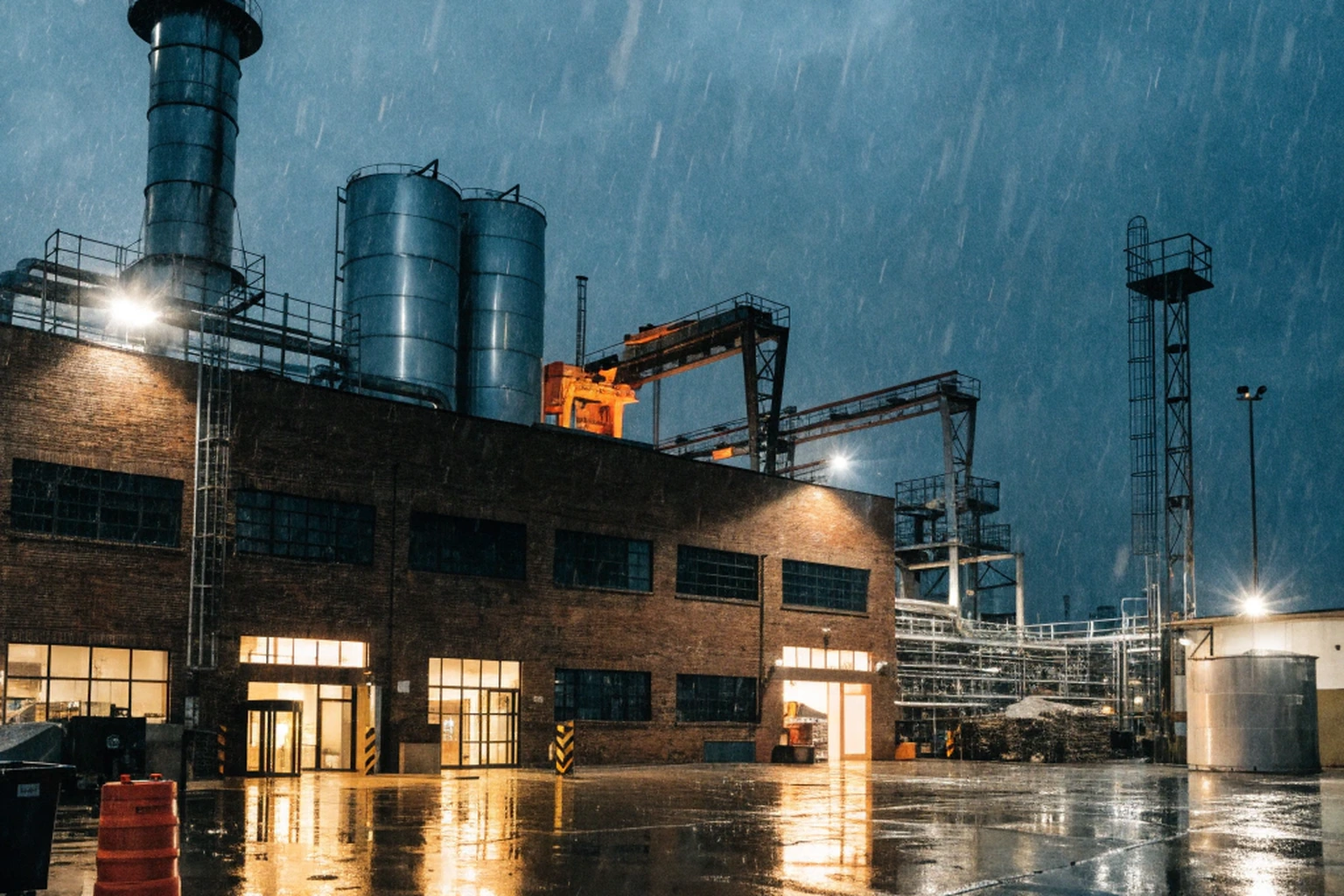
Mexico: A Country of Cars
Mexico is a big country. It makes many, many cars. Big companies have large factories in Mexico. Companies like Ford and Toyota are there.
A lot of people work in the factories. They build new cars every day. The people are good workers. They make very good cars.
Mexico sends the cars to other countries. Many cars go to the USA. Making cars is very important for Mexico.
Point grammaire
Structure: Le présent simple (3ème personne)
"Mexico sends the cars to other countries."
On utilise le présent simple pour les faits. Quand le sujet est 'he', 'she', ou 'it' (comme 'Mexico'), on ajoute un '-s' au verbe.
Structure: Les noms au pluriel
"Big companies have large factories in Mexico."
Pour parler de plus d'une chose, on ajoute généralement un '-s' à un nom. Par exemple, une 'car' devient plusieurs 'cars'.
Teste ta compréhension
10 questions · A1 Débutant · 1 aperçu gratuit
Teste ce que tu as appris dans cet article. Réponds à toutes les questions pour gagner des XP !
Quel produit important est fabriqué au Mexique ?
Tu veux terminer le quiz ?
9 questions supplémentaires t'attendent. Inscris-toi gratuitement pour débloquer le quiz complet et gagner des XP !
S'inscrire gratuitementTu as dj un compte ? Connexion
Bien joué !
Continue à pratiquer !
Déjà terminé — pas de XP supplémentaire
Inscris-toi pour gagner des XPDétail des questions
Quel produit important est fabriqué au Mexique ?
Ta réponse:
Bonne réponse: Voitures
Les usines au Mexique sont petites.
Ta réponse:
Bonne réponse: Faux
Que signifie 'factories' ?
Ta réponse:
Bonne réponse: Grands bâtiments pour fabriquer des objets
Beaucoup de ______ travaillent dans les usines.
Ta réponse:
Bonne réponse: people
Mexico: The World's Great Car Maker
Mexico is a very important country for making cars. Many years ago, it started to build big factories. Now, it is the top producer of cars in Latin America. Famous companies like Volkswagen and Ford have factories there because the Mexican workers are very skilled.
The car industry is bigger today than it was in the past. It is now the backbone of the national economy. Mexico exports many cars to the United States and other countries every year. This happens because Mexico is close to its neighbors and has good trade rules.
Making cars helps many people in Mexico. They get good jobs in the large factories. The country is a global leader in manufacturing. In the future, Mexico wants to build even more electric cars for the world.
Point grammaire
Structure: Comparative Adjectives
"The car industry is bigger today than it was in the past."
We use 'bigger than' to compare two things. For short adjectives, we add '-er' to the adjective and use 'than' after it.
Structure: Past Simple
"Many years ago, it started to build big factories."
We use the Past Simple to talk about finished actions in the past. For regular verbs like 'start', we add '-ed' to the end.
Teste ta compréhension
11 questions · A2 mentaire · 1 aperçu gratuit
Teste ce que tu as appris dans cet article. Réponds à toutes les questions pour gagner des XP !
Which region is Mexico the top car producer in?
Tu veux terminer le quiz ?
10 questions supplémentaires t'attendent. Inscris-toi gratuitement pour débloquer le quiz complet et gagner des XP !
S'inscrire gratuitementTu as dj un compte ? Connexion
Bien joué !
Continue à pratiquer !
Déjà terminé — pas de XP supplémentaire
Inscris-toi pour gagner des XPDétail des questions
Which region is Mexico the top car producer in?
Ta réponse:
Bonne réponse: Latin America
Mexico does not send cars to the United States.
Ta réponse:
Bonne réponse: Faux
What does 'factory' mean?
Ta réponse:
Bonne réponse: A building where things are made
The country is a global _____ in manufacturing.
Ta réponse:
Bonne réponse: leader
Why do famous companies have factories in Mexico?
Ta réponse:
Bonne réponse: Because the workers are skilled
Mexico: A Global Engine for Cars
Mexico has become one of the most important places for making cars in the world. For many years, the automotive industry has been the backbone of the country's economy. Since the 1990s, when new trade agreements were signed, Mexico has transformed into a global manufacturing powerhouse. Today, the nation exports millions of vehicles to customers in the United States, Canada, and Europe.
Many famous car companies, which are known globally, have built large factories in different Mexican states. Industry giants such as Volkswagen, General Motors, Ford, BMW, and Toyota produce cars there. In fact, Mexico has been ranked as the seventh-largest producer of passenger vehicles in the world. It is also the number one producer in Latin America. This success is not recent; it has grown steadily over the last decade.
Why is Mexico so successful in this sector? One major reason is its location. Because it shares a border with the United States, cars that are made in Mexico can be shipped quickly and cheaply to North American markets. Furthermore, the country has a highly skilled workforce that specializes in assembling complex machines. These workers ensure that the vehicles meet high quality standards.
The industry does more than just assemble cars; it also produces many parts, such as engines and electronics. This complete supply chain creates thousands of jobs for local people. Recently, there has been a shift towards modern technology. Factories are now being updated to build electric vehicles. This change ensures that Mexico will remain a key player in the automotive world for a long time. The combination of experience, location, and innovation makes Mexico a true leader in automotive manufacturing.
Point grammaire
Structure: Present Perfect Tense
"Mexico has become one of the most important places for making cars in the world."
We use the present perfect (has/have + past participle) to talk about an action that started in the past and has a result in the present. Here, it shows that Mexico's status as a car maker is a current reality resulting from past growth.
Structure: Passive Voice
"Cars that are made in Mexico can be shipped quickly and cheaply."
We use the passive voice (be + past participle) when the object of the action is more important than the person doing it. In this phrase, 'are made' emphasizes the cars, not the workers who make them.
Teste ta compréhension
11 questions · B1 Intermédiaire · 1 aperçu gratuit
Teste ce que tu as appris dans cet article. Réponds à toutes les questions pour gagner des XP !
What is the main idea of the article?
Tu veux terminer le quiz ?
10 questions supplémentaires t'attendent. Inscris-toi gratuitement pour débloquer le quiz complet et gagner des XP !
S'inscrire gratuitementTu as dj un compte ? Connexion
Bien joué !
Continue à pratiquer !
Déjà terminé — pas de XP supplémentaire
Inscris-toi pour gagner des XPDétail des questions
What is the main idea of the article?
Ta réponse:
Bonne réponse: Mexico has become a major global center for building cars.
Mexico is the largest producer of passenger vehicles in the entire world.
Ta réponse:
Bonne réponse: Faux
What does 'export' mean?
Ta réponse:
Bonne réponse: To send goods to another country for sale.
The automotive industry is described as the _______ of the country's economy.
Ta réponse:
Bonne réponse: backbone
Which of these car companies is mentioned in the text?
Ta réponse:
Bonne réponse: Ford
Mexico: An Automotive Manufacturing Titan
When people think of Mexico, they often imagine beautiful beaches, ancient ruins, and a rich cultural heritage. However, in the global economy, Mexico is recognized for something entirely different: its robust industrial capacity. Specifically, the automotive industry has become the backbone of the nation's economy, driving significant growth and development over the last few decades.
Since the implementation of the North American Free Trade Agreement (NAFTA) in the 1990s, and its modern successor, the USMCA, Mexico has transformed into a manufacturing powerhouse. These trade agreements lowered barriers and encouraged foreign investment, allowing Mexico to integrate deeply into the North American supply chain. Consequently, the country is now the seventh-largest producer of passenger vehicles in the world and the undisputed leader in Latin America.
The success of this sector is not accidental; it is the result of strategic planning and geographic advantage. Mexico shares a long border with the United States, the world's largest consumer market. This proximity allows for lower transportation costs and faster delivery times compared to overseas competitors. Furthermore, the country has developed a skilled workforce and a complex infrastructure of suppliers that support major assembly plants.
Global automotive giants have taken notice. Companies such as Volkswagen, General Motors, Ford, BMW, and Toyota have established massive operations within the country. These facilities do not just assemble cars; they are also increasingly involved in engineering and design. The industry is pivotal to Mexico's export strategy, with vehicles and auto parts accounting for a substantial portion of total exports.
Looking ahead, the industry faces a new challenge: the transition to sustainability. As the world shifts towards electric vehicles (EVs), Mexico is adapting quickly. Significant investments are being made to retool factories for EV production, ensuring that the country remains a dominant player in the future of transportation. This evolution demonstrates that Mexico’s automotive sector is not only strong today but is also preparing effectively for the demands of tomorrow.
Point grammaire
Structure: Present Perfect Simple
"Specifically, the automotive industry has become the backbone of the nation's economy."
This tense relates a past action or state to the present moment. It is used here to show that the industry's growth started in the past and is still relevant and important today.
Structure: Passive Voice
"Mexico is recognized for something entirely different."
The passive voice is used when the focus is on the action or the receiver of the action (Mexico), rather than who is performing the action. It is common in formal and academic writing.
Structure: Discourse Markers
"Furthermore, the country has developed a skilled workforce."
Discourse markers like 'Furthermore' help organize the text. They signal to the reader that additional, supporting information is being added to the previous point.
Teste ta compréhension
11 questions · B2 Intermédiaire supérieur · 1 aperçu gratuit
Teste ce que tu as appris dans cet article. Réponds à toutes les questions pour gagner des XP !
What is the main reason cited for Mexico's automotive success?
Tu veux terminer le quiz ?
10 questions supplémentaires t'attendent. Inscris-toi gratuitement pour débloquer le quiz complet et gagner des XP !
S'inscrire gratuitementTu as dj un compte ? Connexion
Bien joué !
Continue à pratiquer !
Déjà terminé — pas de XP supplémentaire
Inscris-toi pour gagner des XPDétail des questions
What is the main reason cited for Mexico's automotive success?
Ta réponse:
Bonne réponse: Strategic trade agreements and geography
Mexico is currently the largest producer of passenger vehicles in the world.
Ta réponse:
Bonne réponse: Faux
What does 'pivotal' mean in the context of the article?
Ta réponse:
Bonne réponse: Crucial or centrally important
The automotive industry is described as the _____ of the nation's economy.
Ta réponse:
Bonne réponse: backbone
Which agreement is mentioned as the successor to NAFTA?
Ta réponse:
Bonne réponse: USMCA
Gearing Up: Mexico's Ascent as an Automotive Titan
The transformation of Mexico’s economy over the last three decades has been nothing short of remarkable. Once primarily reliant on oil exports and agriculture, the nation has metamorphosed into a global manufacturing powerhouse, with the automotive sector serving as its undisputed cornerstone. It was the implementation of the North American Free Trade Agreement (NAFTA) in the 1990s, and its modern successor the USMCA, that acted as the primary catalyst for this industrial revolution. Rarely has a single policy framework so fundamentally altered the economic trajectory of a developing nation, precipitating a shift from simple assembly to complex, high-value production.
Today, Mexico stands as the seventh-largest producer of passenger vehicles worldwide and the premier manufacturer in Latin America. The sheer scale of operations is staggering; global giants such as Volkswagen, General Motors, Ford, Toyota, and BMW have not merely established outposts but have integrated their Mexican facilities into their core global strategies. This integration goes beyond physical assembly. The burgeoning network of suppliers, clustered particularly in the Bajío region and northern states, has created a dense ecosystem where just-in-time delivery is not an aspiration but a standard operational reality. Had this intricate supply chain not been meticulously cultivated, the sector’s explosive growth would have been severely constrained.
Critically, the perception of Mexico as a destination solely for cheap labour is outdated. While competitive wages remain a lucrative draw for foreign direct investment, it is the technical prowess of the workforce that sustains the industry’s evolution. The government and private sector have collaborated to align higher education with industrial needs, resulting in a steady stream of qualified engineers and technicians. Consequently, multinational corporations are increasingly relocating their Research and Development (R&D) centres to Mexico. No longer are Mexican plants simply assembling parts designed elsewhere; they are now active participants in the design and engineering of next-generation vehicles.
However, the industry faces a significant paradigm shift with the advent of electromobility. The transition to electric vehicles (EVs) demands a radical overhaul of existing infrastructure and manufacturing processes. This pivot requires stringent adherence to new environmental standards and massive capital investment to retool production lines. Yet, the sector has demonstrated remarkable resilience. In the wake of global supply chain disruptions caused by the pandemic, the trend of 'nearshoring'—relocating production closer to the end market—has further bolstered Mexico’s position. Companies eager to mitigate the risks of transoceanic logistics are flocking to Mexico, reinforcing its status as an indispensable partner to the North American market.
Ultimately, the automotive industry in Mexico is a testament to the power of strategic economic integration. The sophistication of its manufacturing capabilities defies the simplistic narratives of the past. As the world moves towards a greener, more automated future, Mexico’s ability to adapt its industrial base will determine whether it remains a passenger in the global economy or continues to drive the vehicle of progress.
Point grammaire
Structure: Inversion avec adverbes négatifs
"Rarely has a single policy framework so fundamentally altered the economic trajectory of a developing nation."
Lorsqu'une phrase commence par un adverbe négatif (comme 'rarely', 'never', 'seldom'), le sujet et l'auxiliaire sont inversés pour l'emphase. Cela crée un ton plus formel et dramatique.
Structure: Phrases clivées (mise en relief)
"It was the implementation of the North American Free Trade Agreement (NAFTA)... that acted as the primary catalyst."
Les phrases clivées ('It was X that Y') sont utilisées pour attirer l'attention sur un élément spécifique de la phrase. Ici, cela souligne que c'est l'ALENA spécifiquement — et pas autre chose — qui a été la cause.
Structure: Conditionnel inversé (Troisième conditionnel)
"Had this intricate supply chain not been meticulously cultivated, the sector’s explosive growth would have been severely constrained."
En anglais formel, 'if' peut être omis dans les phrases conditionnelles en inversant le sujet et l'auxiliaire (par exemple, 'Had I known' au lieu de 'If I had known'). Cette structure suggère une situation passée hypothétique.
Teste ta compréhension
12 questions · C1 Avancé · 1 aperçu gratuit
Teste ce que tu as appris dans cet article. Réponds à toutes les questions pour gagner des XP !
Selon l'article, quel a été le principal moteur de la transformation industrielle du Mexique ?
Tu veux terminer le quiz ?
11 questions supplémentaires t'attendent. Inscris-toi gratuitement pour débloquer le quiz complet et gagner des XP !
S'inscrire gratuitementTu as dj un compte ? Connexion
Bien joué !
Continue à pratiquer !
Déjà terminé — pas de XP supplémentaire
Inscris-toi pour gagner des XPDétail des questions
Selon l'article, quel a été le principal moteur de la transformation industrielle du Mexique ?
Ta réponse:
Bonne réponse: La mise en œuvre d'accords commerciaux comme l'ALENA
Le Mexique est actuellement le plus grand producteur de véhicules de tourisme au monde.
Ta réponse:
Bonne réponse: Faux
Quel mot est le plus proche par le sens de 'catalyst' tel qu'utilisé dans le texte ?
Ta réponse:
Bonne réponse: Stimulus
Le secteur automobile est décrit comme la _____ de l'économie manufacturière du Mexique.
Ta réponse:
Bonne réponse: cornerstone
Pourquoi les multinationales déplacent-elles leurs centres de R&D au Mexique ?
Ta réponse:
Bonne réponse: En raison des prouesses techniques de la main-d'œuvre locale
Que signifie 'burgeoning' ?
Ta réponse:
Bonne réponse: Croissant rapidement
The Mexican Automotive Nexus: A Study in Industrial Hegemony and Transnational Integration
Seldom has a nation’s industrial trajectory been so inextricably linked to the shifts of global trade paradigms as that of Mexico. Far from being a mere peripheral assembly hub, Mexico has emerged as a formidable powerhouse in the automotive sector, functioning as a primary engine for the nation's export-led growth. This metamorphosis, which began in earnest following the liberalization of trade in the 1990s, has been further solidified by the transition from NAFTA to the USMCA. Today, Mexico is the seventh-largest producer of passenger vehicles globally, representing a sophisticated nexus where logistical efficiency meets manufacturing excellence. The sheer ubiquity of global giants such as Volkswagen, General Motors, and BMW within the Mexican landscape underscores the country's strategic significance.
Were it not for the strategic implementation of these trade agreements, the current industrial agglomeration would likely have remained a nascent endeavor. These frameworks provided the legal and economic certainty necessary to attract massive Foreign Direct Investment (FDI), allowing Mexico to transcend its former status as a source of low-cost labor. Instead, it has become a linchpin of North American supply chains. The propensity for international firms to settle in central and northern clusters has created a specialized ecosystem where ancillary industries—ranging from electronics to high-precision metallurgy—thrive in tandem with Original Equipment Manufacturers (OEMs). This synergy is not merely a matter of proximity; it is a calculated geopolitical alignment that leverages Mexico’s extensive network of free trade agreements with over forty countries.
However, the industry is currently navigating a period of profound transition. The global shift toward electromobility presents both an existential challenge and an unparalleled opportunity. While Mexico’s internal infrastructure for electric vehicles (EVs) remains somewhat underdeveloped, the manufacturing sector is rapidly pivoting to meet the demands of the US market. Scholars and economists suggest that unless Mexico continues to ameliorate its energy infrastructure and invest in high-tech human capital, it risks falling behind in the global race for EV dominance. Nevertheless, the current trend of 'nearshoring'—the practice of relocating production closer to the end consumer—has revitalized interest in Mexican manufacturing, as companies seek to mitigate the risks associated with trans-Pacific supply chain disruptions.
From a scholarly perspective, the Mexican automotive model serves as a compelling case study in how a developing economy can integrate itself into global value chains. It is not without its critics, who point to the persistent wage disparities and the heavy reliance on external demand. Yet, the resilience of the sector is undeniable. The nation is often perceived to have been catapulted into a new era of industrialization, one characterized by automation and advanced robotics. As the industry looks toward the next decade, the focus must shift from pure assembly to higher-value-added activities, such as research and development. Only then can Mexico secure its position not just as a manufacturer, but as an innovator in the automotive world. The continued hegemony of the Mexican automotive sector depends on its ability to adapt to these shifting technological sands while maintaining the structural advantages that have served it so well since the late twentieth century.
Point grammaire
Structure: Inversion with Negative Adverbials
"Seldom has a nation’s industrial trajectory been so inextricably linked to the shifts of global trade paradigms as that of Mexico."
When using negative or restrictive adverbials like 'seldom' at the beginning of a sentence for emphasis, the auxiliary verb is placed before the subject.
Structure: Inverted Mixed Conditional (Subjunctive)
"Were it not for the strategic implementation of these trade agreements, the current industrial agglomeration would likely have remained a nascent endeavor."
This formal structure replaces 'If it were not for...' by inverting the verb 'were' and the subject, used to discuss hypothetical conditions in the past or present.
Structure: Passive Causative with Perfect Aspect
"The nation is often perceived to have been catapulted into a new era of industrialization."
This complex passive structure uses 'to have been' followed by a past participle to describe a state or action that occurred prior to the time of speaking, often used in academic hedging.
Teste ta compréhension
12 questions · C2 Maîtrise · 1 aperçu gratuit
Teste ce que tu as appris dans cet article. Réponds à toutes les questions pour gagner des XP !
What is the primary factor the author attributes to Mexico's transition into an automotive powerhouse?
Tu veux terminer le quiz ?
11 questions supplémentaires t'attendent. Inscris-toi gratuitement pour débloquer le quiz complet et gagner des XP !
S'inscrire gratuitementTu as dj un compte ? Connexion
Bien joué !
Continue à pratiquer !
Déjà terminé — pas de XP supplémentaire
Inscris-toi pour gagner des XPDétail des questions
What is the primary factor the author attributes to Mexico's transition into an automotive powerhouse?
Ta réponse:
Bonne réponse: The strategic implementation of international trade agreements like NAFTA and USMCA.
The author suggests that Mexico's current internal infrastructure is fully prepared for the global shift to electric vehicles.
Ta réponse:
Bonne réponse: Faux
Which word best describes a situation where industries are clustered together to create a shared ecosystem?
Ta réponse:
Bonne réponse: Agglomeration
According to the text, what does 'nearshoring' entail?
Ta réponse:
Bonne réponse: Relocating manufacturing closer to the end consumer to reduce supply chain risks.
Critics of the Mexican automotive model point to wage disparities as a significant concern.
Ta réponse:
Bonne réponse: Vrai
The automotive industry is described as a _____ for the North American supply chain, meaning it is vital to its success.
Ta réponse:
Bonne réponse: linchpin

